Author Archives: rajani

Thought on the Present Molecular Genetics

DOI: 10.31038/JMG.2019213

Mini Review

The working of molecular genetics is involved in finding out the genetic components, their structures, mechanism, dynamics and pathologic alterations in the disease. The final aim is to rectify to normal for the health of human being.

The components are the genetic flows that start from the DNA, which manifests the storage site of all the genes, replication, transcription and translation. Extensive work on DNA sequencing reached the milestone of completing 3 × 10⁹ nucleotide sequences in human and complete genomic sequences from many species. General mechanisms of replication by DNA polymerases and involved factors have been elegantly defined. The structure of four RNA polymerases (pol I, II, III and mitochondrial RNA polymerases) are well characterized. Hundreds offactors are known for co-transcriptional and post transcriptional processing, modifications and splicing.

To understand the progresses made so far, the present is a good time to define some specificity of factors involved in specific gene expression. For example, in replication, how the replication origins are recognized and what may be disturbed in cancer and other diseases. The RNA involvement in replication origin is different from the Okazaki RNA fragment and has not been well characterized. It is interesting to note that the changes in nucleolar transcription system during carcinogenesis is fascinating. But we still don’t know enough what specific aberrations may occur. Replication origins are interdigitated in rRNA genes. In human the rRNA genes are in 5 acrocentric chromosomes (chromosomes 13–15, 21 and 22) which place the rRNA genes in close proximity to centromeres and telomeres. The nucleolus is the site where rRNA is synthesized by RNA polymerase I but have been demonstrated that some of RNA polymerase II activity has effect on nucleolar RNA polymerase I activity such as aluRNA [2].

In the tumor cells, pre-rRNA is accumulating in the nucleolus which may be due to transcriptional hyperactivity but may be also involved in some mutations in the processing factors.

In the system of mRNA transcription, many diseases have been reported caused by altered transcription factors which include general transcription factors as well as specific transcription factors. The promoter mutations also causes the diseases.

The modifications of mRNA are also involved in processing as well as its translational activity.

More importantly, the splicing mechanisms of pre-mRNA are extensively worked out and found that > 300 different proteins may be involved.

Are the splicing mechanisms are universally same throughout the different pre-mRNAs or are there specific factors involved in for specific pre-mRNA splicing? The spliceosomes, EJC complex and other protein involved in mRNA maturation have been well characterized structurally.

It is interesting to note that the order of splicing is not always from 5’ to 3’ direction and one of well characterized splicing order is in the ovomucoid pre-mRNA maturation. The order of splicing sites are from first to last to be in order of 5/6→7/4→2/1→3 (or 5/6→7/4→2→3/1) [5, 7]. Efficient splicing is involved splicing code (GU, branch site, AG), enhancers, suppressors, RNA sequences, secondary structure and tertiary structures. It was interesting to find that SF2/ASF are more abundant in early spliced site at the splice sites 5/6 and SC35 is enriched in late splice site 3 in ovomucoid pre-mRNA.

SF2/ASF

SC35

SRp40

SRp55

hnRNP A1

1

8.3

6.7

3.3

6.7

3.3

2

6.0

6.0

2.0

4.0

5.3

3

0.4

10.0

4.0

8.0

3.3

4

6.7

3.3

5.0

5.0

4.2

5

13.3

8.3

5.0

5.0

6.7

6

6.7

5.0

8.3

6.7

6.7

7

10.0

3.3

10.0

5.0

3.3

Motifs are analyzes 60 nucleotide at the splice sites (total 120 nucleotide by adding 5’ splice site and 3’ splice site). Due to short exon 2 (20 nucleotides) the 3’ splice site 1 and 5’ splice site 2 are 50 nucleotides each). The above values are expressed in number of motifs per 100 nucleotides.

(ESE are screened by ESE finder 3 CSHL and hnRNP A1 is screened by HSF3; Human Splicing Factor finder 3)

Balance between enhancers and suppressors show impact on splicing but how these regulators are distributed in the genes are not well characterized. For example, although, hnRNP A1 has been reported to be suppressor of splicing, it may also confer some RNA structural stability in the complexes.

Although some people stress that RNA transcription is taking place near the nuclear membrane and exit to the cytoplasm, it is well known that chromosomal domains in the nuclear geography are not all at the nuclear membrane. Transcription sites in different chromosomes are located throughout within dynamic nucleoplasm [3, 6, 1]. The location of pre-mRNP maturation stays not as the static site but it is mobile in dynamic movement. The co-transcriptional splicing progresses when pre-mRNP is still attached to the transcription complex, and post transcriptional splicing is taking place after detachment from the transcription complex on the way out to the cytoplasm. The splicing regulators are also dynamic, moving from the storage site to the transcription site [8]. On the other hand, the dynamic pre-mRNP movement after detachment from the transcription site may encounter the splicing factor storage sites where additional splicing and maturation may take place. In the course of dynamic movement of mRNP from the transcription site, it is interesting that SF2/ASF sites are more abundant in early transcription region, and next followed by SC35 and other factors such as SRp40 and SRp55.

SF2/ASF and SC35 are binding not only to RNA but also to DNA and are there intronic active TSS are present?

Research on the stem-cell therapy, gene therapy, gene editing, antisense oligonucleotide therapy are very active with FDA approved nusinersen (Spinraza) for SMA and Exondys 51 for DMD and more to come.

Recent development on targeted protein degradation by small molecules may have future for the specific degradation of proteins with dominant negative mutations [4].

References

  1. Bolzer A, Kreth G, Solovei I, Koehler  D and Saracoglu K (2005) Three-Dimensional Maps of All Chromosomes in Human Male Fibroblast Nuclei and Prometaphase Rosettes. PLos Biology. 3: 0826–0842, e157.
  2. Caudron-Herger M, Pankert T, Seiler J, Németh A and Voit R et al (2015) Alu element-containing RNAs maintain nucleolar structure and function. EMBO J. 34: 2758–2774.
  3. Cmarko D, Verchure PJ, Martin TE, Dahmus ME and Krause S et al (1999) Ultrastructural Analysis of Transcription and Splicing in the Cell Nucleus after Bromo-UTP Microinjection. Mol. Biol Cell. 10: 211–223.
  4. Cromm PM and Crews CM (2017) Targeted Protein Degradation: From Chemical Biology to Drug Discovery. Cell Chem Biol. 24(9), 1181–1190.
  5. Lewin B (1994, 2008) RNA Splicing and Processing. Gene IX, Chapter 26, Pearson Prentice Hall, Peason Education, Inc. pp667–705.
  6. Pombo et al (1998) EMBO J. 17(6) 1768–1778
  7. Ro-Choi TS and Choi YC (2009) Thermodynamic Analyses of the Constitutive Splicing Pathway for Ovomucoid Pre-mRNA. Mol. Cells. 27, 1–10.
  8. Spector DL and Lamond AI (2011) Nuclear Speckles in the book The Nucleus.

PD-1 Inhibitors: To Go or To Stop? ; Review Articles

DOI: 10.31038/CST.2019423

Abstract

PD-1 receptor as one of the programmed cell death protein 1 receptor was firstly designated in the early 1990s assumed its manifestation through out initiation of programmed cell death in a T-cell hybridoma. Subsequently its early detection, numerous groups have recognized that arrangement of PD-1 through its ligand, programmed death ligand 1 (PD-L1), negatively regulates T-cell-mediated immune responses. Early preclinical indication proposed that stimulation of PD-1/PD-L1 signaling might work as a mechanism for tumors to escape “an antigen-specific T-cell immunologic response”. Accordingly, the Atezolizumab is one of a novel immunotherapy medication called “checkpoint inhibitors”. It functioning through interfering with the tumor’s ability to deactivate cancer combat immune cells called (T-cells). It objects a “protein hypothesis was developed that PD-1/PD-L1 blockade may be an effective cancer immunotherapy.

For instance, several PD-1/PD-L1 inhibitors stays to develop, predictive biomarkers, mechanisms of resistance, management interval and therapy up on disease progression and immune-related side effects, are main ideasessential of additional attention to enhance the anticancer effects of this group of immunotherapy.

Keywords

PD-1/ PD-L1 inhibitor, Immune checkpoint, Treatment beyond progression, Immune-related toxicity

Introduction

The main role of T cells is to differentiate healthy cells from diseased or malignant cells by the activation or deactivation of numerous receptors on the T-cell surface. As stated before, the malignant cells can escape recognition through “cell surface molecules” that interact with the receptors on T cells to, in essence, mimic the signals released by healthy cells. So, the immune system that rests inactive against malignant cells, allowing their un-regulated development and proliferation.

As these molecules and their associated receptors on T cells keep the immune system ‘‘in check,” by “inhibiting immune functioning”, they are mutually called “checkpoint proteins”. The Checkpoint inhibitors inhibit the effects of these checkpoint proteins.

Types of checkpoint Inhibitors

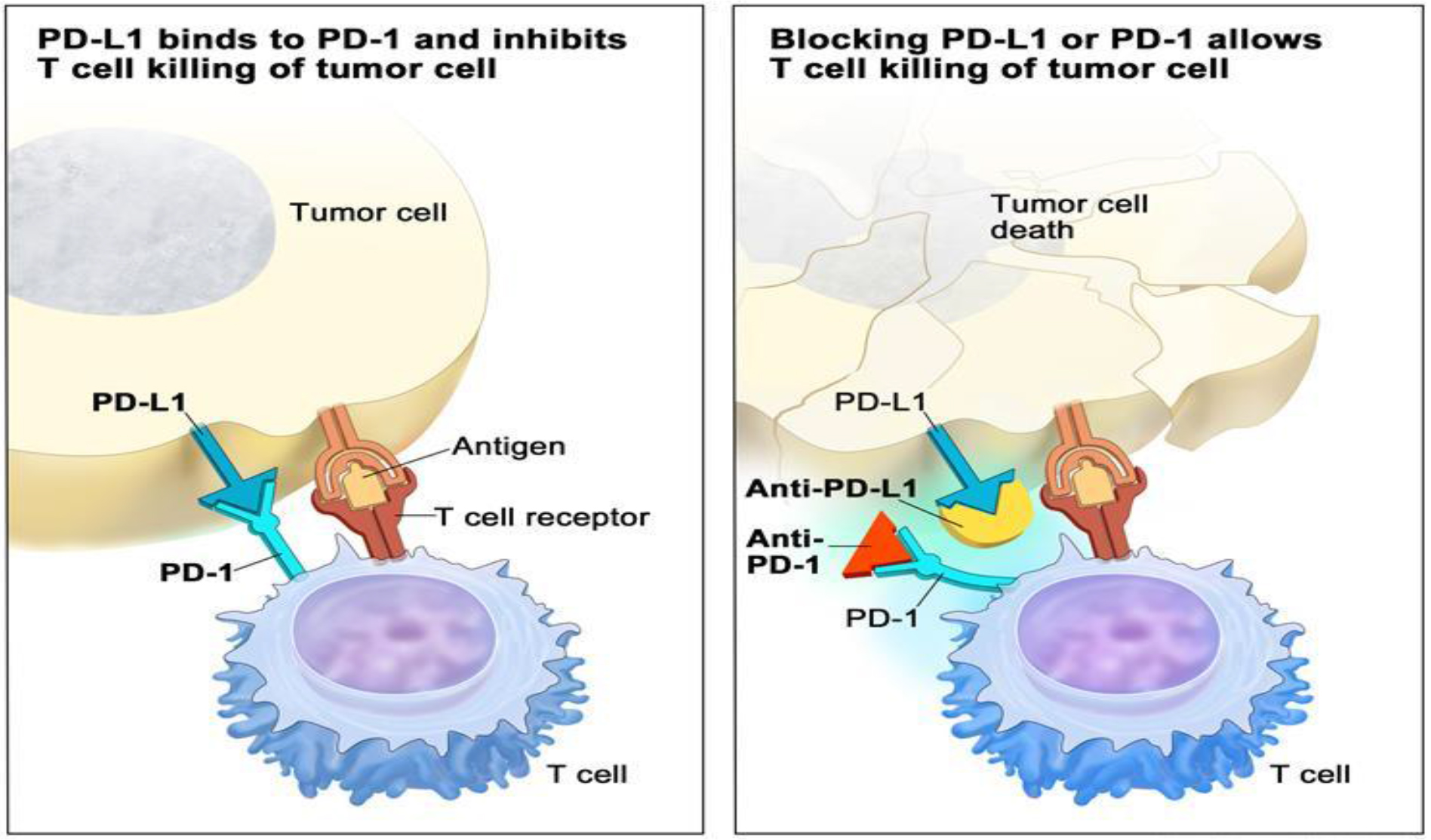
Three different groups that targets different checkpoint proteins (1) PD-L1: Programmed Death Ligand-1, (2) PD-1: Programmed Cell Death Protein-1 and (3) CTLA-4; Cytotoxic T-Lymphocyte Associated Protein 4, have been the chief target of investigation for the management of cancer patients with immunotherapy as new era.CTLA-4 and PD-1 are found on T cells. PD-L1 are on cancer cells (Figure- 1).

CST 2019-111 - Ayman Egypt_F1

Figure 1. PD-1 and PD-L1 sites of action

Immune checkpoint inhibitor. Checkpoint proteins, such as PD-L1 on tumor cells and PD-1 on T cells, help keep immune responses in check. The binding of PD-L1 to PD-1 keeps T cells from killing tumor cells in the body (left panel). Blocking the binding of PD-L1 to PD-1 with an immune checkpoint inhibitor (anti-PD-L1 or anti-PD-1) allows the T cells to kill tumor cells (right panel).

https: //www.cancer.gov/publications/dictionaries/cancer-terms/def/immune-checkpoint-inhibitor.

PD-1 and its Immune-inhibitory Mechanism

The programmed cell death 1 (PD-1) receptor is expressed on activated T cells, B cells, macrophages, regulatory T cells (Tregs), and natural killer (NK) cells. Binding of PD-1 to its B7 family of ligands, programmed death ligand 1 (PDL1 or B7-H1) or PD-L2 (B7-DC) results in suppression of proliferation and immune response of T cells. Activation of PD-1/PD-L1 signaling serves as a principal mechanism by which tumors evade antigen-specific T-cell immunologic responses. Antibody blockade of PD-1 or PD-L1 reverses this process and enhances antitumor immune activity. TCR, T-cell receptor; MHC, major histocompatibility complex; APC, antigen-presenting cell.

PD-1 functions through regulation of late-phase immune responses. The management is as suggested by the activation-induced expression of PD-1. The control of immune reactions also takes place in the peripheral tissues. PD-1 contains single IgV-like domains as in its extracellular region. The region also includes ITIM and ITSM. PD-1 requires ligation with the physiological ligand to suppress T-cell activation (Figure- 1).

PD-1 Function

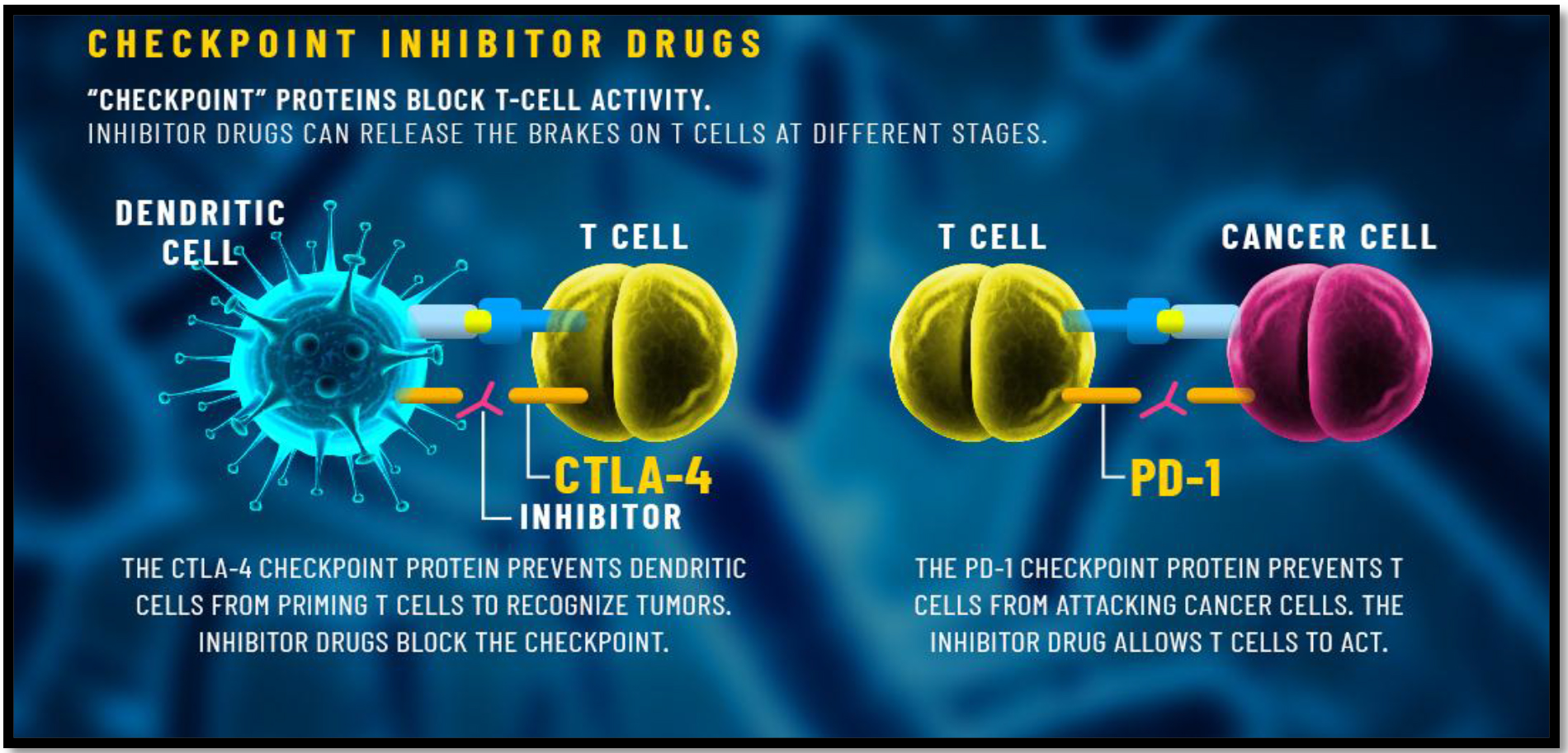
PD-1 and CTLA-4 can be applied at a diverse phase of immune reaction. They are also induced on the activated T-cells. PD-1 is shown on activated T-cells at a late effectors stage. In the condition of the chronic viral condition, there is a high persistence of PD-1 expression on CD8+ T-cells. Despite their distinct features, the CTLA-4 and PD-1 are both immune checkpoints.

They also regulate the immune responses at different stages. CTLA-4 can effectively block the activation of T-cells in the lymphoid organs. PD-1 functions effectively by inhibiting the effectors T-cells at a later stage of immune responses (Figure-2).

CST 2019-111 - Ayman Egypt_F2

Figure 2. PD-1 and CTLA-4 sites of action

jim-Allison-who-first-used-CTLA4-blockade-for-cancer-treatment-and-Honjo-who-originally-discovered-PD-1-new-Nobel-Laureates-of-Medicine-this-year-Custom-Graphic

Control of Cancerous Immunity by PD-1

PD-1 is essential for dampening the immune-surveillance for tumours. Tumors can express the PD-L1 and thus escaping the immune surveillance. PD-L1 interacts with PD-1 on T-cells and therefore and thus negatively regulates the immune responses [5].

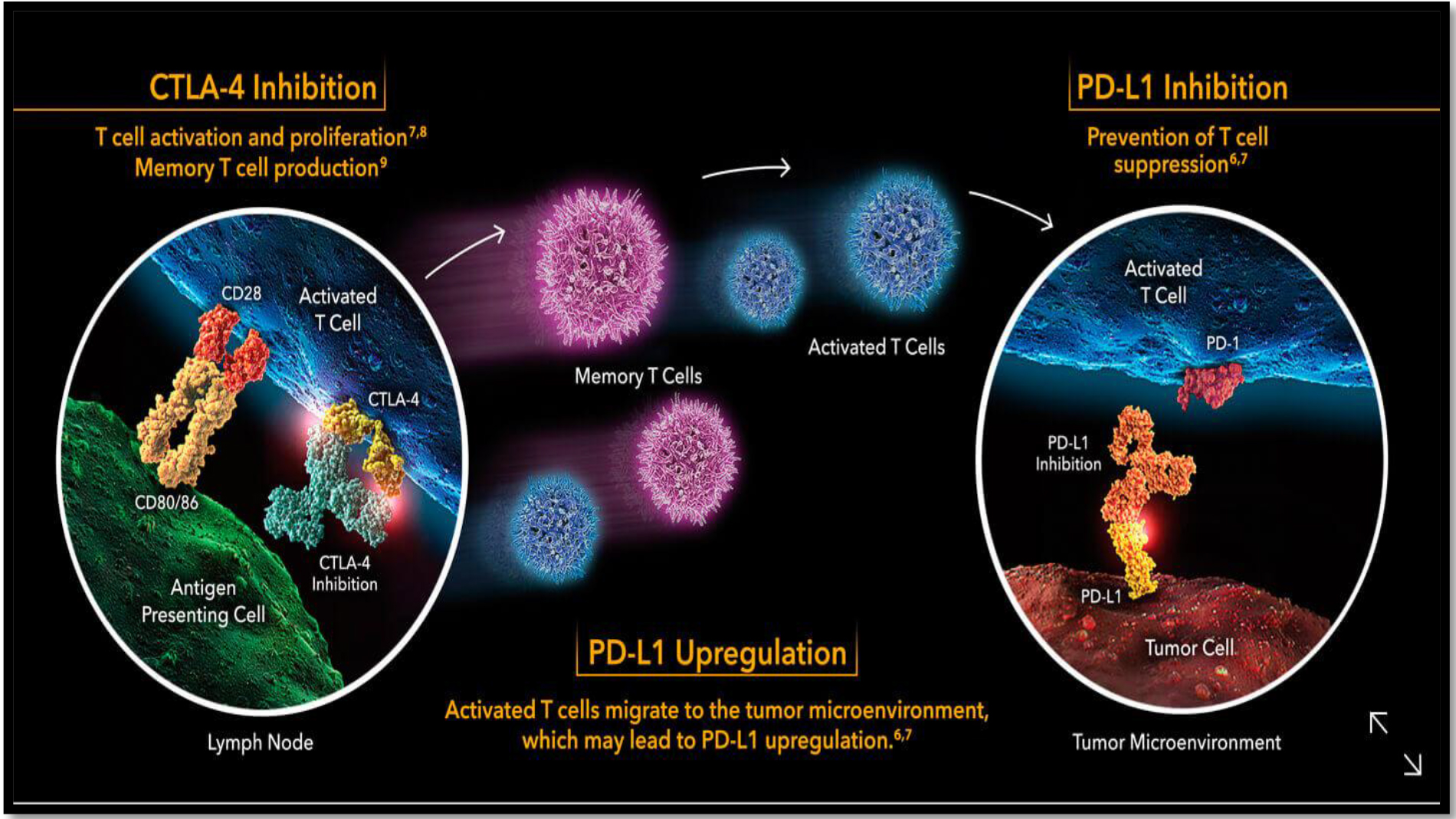
There is also a correlation between poor prognosis and high expression of PD-1 ligands on tumors. PD-1 blockade has previously successfully been used on metastatic tumors. Additionally, PD-1 has been identified to contain a higher therapeutic capacity than CTLA-4 blockade (Figure-3).

CST 2019-111 - Ayman Egypt_F3

Figure 3. PD-1 Function and Action

jim-Allison-who-first-used-CTLA4-blockade-for-cancer-treatment-and-Honjo-who-originally-discovered-PD-1-new-Nobel-Laureates-of-Medicine-this-year-Custom-Graphic

CST 2019-111 - Ayman Egypt_F4

Figure 4. PD-1 Inhibitors Side Effect

https: //www.esmo.org/content/download/124130/2352601/file/ESMO-Patient-Guide-on-Immunotherapy-Side-Effects.pdf

Role of PD-1 inhibitors in the treatment of cancer patients

1-Pembrolizumab (Keytruda) was developed by Merck and first approved by the Food and Drug Administration in 2014 for the treatment of melanoma. It was later approved for metastatic non-small cell lung cancer and head and neck squamous cell carcinoma. In 2017, it became the first immunotherapy drug approved for use based on the genetic mutations of the tumor rather than the site of the tumour.

Indications

  • Indicated for the treatment of patients with unresectable or metastatic melanoma.
  • Indicated for the adjuvant treatment of patients with melanoma with involvement of lymph node(s) following complete resection.
  • In combination with pemetrexed and platinum chemotherapy, is indicated for the first-line treatment of patients with metastatic non-squamous non‒small cell lung cancer (NSCLC), with no EGFR or ALK genomic tumor aberrations.
  • In combination with carboplatin and either paclitaxel or nabpaclitaxel, is indicated for the firstline treatment of patients with metastatic squamous NSCLC.
  • As a single agent, is indicated for the first-line treatment of patients with metastatic NSCLC whose tumors have high PD-L1 expression [tumor proportion score (TPS) ≥ 50%] as determined by an FDA-approved test, with no EGFR or ALK genomic tumor aberrations.
  • As a single agent, is indicated for the treatment of patients with metastatic NSCLC whose tumors express PD-L1 (TPS ≥1%) as determined by an FDA-approved test, with disease progression on or after platinum-containing chemotherapy. Patients with EGFR or ALK genomic tumor aberrations should have disease progression on FDA-approved therapy for these aberrations prior to receiving KEYTRUDA.
  • Indicated for the treatment of patients with recurrent or metastatic head and neck squamous cell carcinoma (HNSCC) with disease progression on or after platinum-containing chemotherapy. This indication is approved under accelerated approval based on tumor response rate and durability of response. Continued approval for this indication may be contingent upon verification and description of clinical benefit in the confirmatory trials.
  • Indicated for the treatment of adult and pediatric patients with refractory classical Hodgkin lymphoma (cHL), or who have relapsed after 3 or more prior lines of therapy. This indication is approved under accelerated approval based on tumor response rate and durability of response.
  • Indicated for the treatment of adult and pediatric patients with refractory primary mediastinal large B-cell lymphoma (PMBCL), or who have relapsed after 2 or more prior lines of therapy. This indication is approved under accelerated approval based on tumor response rate and durability of response. Continued approval for this indication may be contingent upon verification and description of clinical benefit in confirmatory trials.
  • Indicated for the treatment of patients with locally advanced or metastatic urothelial carcinoma (mUC) who are not eligible for cisplatin-containing chemotherapy and whose tumors express PD-L1 [combined positive score (CPS) ≥10], as determined by an FDA-approved test, or in patients who are not eligible for any platinum-containing chemotherapy regardless of PD-L1 status. This indication is approved under accelerated approval based on tumor response rate and duration of response. Continued approval for this indication may be contingent upon verification and description of clinical benefit in confirmatory trials.
  • Indicated for the treatment of patients with locally advanced or metastatic urothelial carcinoma (mUC) who have disease progression during or following platinum-containing chemotherapy or within 12 months of neoadjuvant or adjuvant treatment with platinum-containing chemotherapy.
  • Indicated for the treatment of adult and pediatric patients with unresectable or metastatic microsatellite instability-high (MSI-H) or mismatch repair deficient (dMMR)solid tumours that have progressed following prior treatment and who have no satisfactory alternative treatment options, or colorectal cancer that has progressed following treatment with fluoropyrimidine, oxaliplatin, and irinotecan.

2-Nivolumab (Opdivo) was developed by Bristol-Myers Squibb and first approved by the FDA in 2014 for the treatment of melanoma.

Indications

  • As a single agent is indicated for the treatment of patients with BRAF V600 mutation-positive un-resectable or metastatic melanoma. This indication is approved under accelerated approval based on progression-free survival. Continued approval for this indication may be contingent upon verification and description of clinical benefit in the confirmatory trials.
  • As a single agent is indicated for the treatment of patients with BRAF V600 wild-type un-resectable or metastatic melanoma.
  • In combination with YERVOY® (ipilimumab), is indicated for the treatment of patients with un-resectable or metastatic melanoma. This indication is approved under accelerated approval based on progression-free survival. Continued approval for this indication may be contingent upon verification and description of clinical benefit in the confirmatory trials.
  • Is indicated for the treatment of patients with metastatic non-small cell lung cancer (NSCLC) with progression on or after platinum-based chemotherapy. Patients with EGFR or ALK genomic tumor aberrations should have disease progression on FDA-approved therapy for these aberrations prior to receiving OPDIVO.
  • Indicated for the treatment of patients with advanced renal cell carcinoma (RCC) who have received prior anti-angiogenic therapy.
  • Indicated for the treatment of adult patients with classical Hodgkin lymphoma (cHL) that has relapsed or progressed after autologous hematopoietic stem cell transplantation (HSCT) and brentuximabvedotin or after 3 or more lines of systemic therapy that includes autologous HSCT. This indication is approved under accelerated approval based on overall response rate. Continued approval for this indication may be contingent upon verification and description of clinical benefit in confirmatory trials.
  • Indicated for the treatment of patients with recurrent or metastatic squamous cell carcinoma of the head and neck (SCCHN) with disease progression on or after platinum-based therapy.
  • Indicated for the treatment of patients with locally advanced or metastatic urothelial carcinoma who have disease progression during or following platinum-containing chemotherapy or have disease progression within 12 months of neoadjuvant or adjuvant treatment with platinum-containing chemotherapy. This indication is approved under accelerated approval based on tumor response rate and duration of response. Continued approval for this indication may be contingent upon verification and description of clinical benefit in confirmatory trials.
  • Indicated for the treatment of adult and pediatric (12 years and older) patients with microsatellite instability high (MSI-H) or mismatch repair deficient (dMMR) metastatic colorectal cancer (CRC) that has progressed following treatment with a fluoropyrimidine, oxaliplatin, and irinotecan. This indication is approved under accelerated approval based on overall response rate and duration of response. Continued approval for this indication may be contingent upon verification and description of clinical benefit in confirmatory trials.
  • Indicated for the treatment of patients with hepatocellular carcinoma (HCC) who have been previously treated with sorafenib. This indication is approved under accelerated approval based on tumor response rate and durability of response. Continued approval for this indication may be contingent upon verification and description of clinical benefit in the confirmatory trials.
  • Indicated for the adjuvant treatment of patients with melanoma with involvement of lymph nodes or metastatic disease who have undergone complete resection.

3-Cemiplimab (Libtayo) is a human programmed death receptor-1 (PD-1) monoclonal antibody that binds to PD-1 and blocks its interaction with programmed death ligands 1 (PD-L1) and 2 (PD-L2). The drug is being investigated as a treatment for various cancers and in September 2018 received approval in the USA for the treatment of patients with metastatic cutaneous squamous cell carcinoma or locally advanced cutaneous squamous cell carcinoma who are not candidates for curative surgery or curative radiation. This article summarizes the milestones in the development of cemiplimab leading to this first global approval for the treatment of advanced cutaneous squamous cell carcinoma.

Side Effects of PD-1 Inhibitors

Side effects from treatment with checkpoint inhibitors typically appear within weeks or a few months of starting treatment but can persist or first appear after treatment has finished. Immune-related side effects (sometimes referred to as immune-related adverse effects or irAEs) arising from treatment with checkpoint inhibitors can affect any organ or tissue, but most commonly affect the skin, colon, lungs, liver and endocrine organs (such as the pituitary gland or thyroid gland) [7]. Most immune-related side effects are mild to moderate and reversible if detected early and addressed appropriately.

Management of side effects

There are other side effects to checkpoint inhibitors which occur infrequently, but of which you should be aware, as follows [7]:

  • Neurological symptoms – according to an analysis of data from many clinical trials, these occur in approximately 4%–6% of people treated with CTLA-4 inhibitors or PD-1 inhibitors, or in up to 12% if treated with both types in combination, and manifests in a wide range of different ways (including muscle weakness, numbness and breathing difficulties); treatment for symptoms of Grade 2 or higher is based mainly on increasing strength oral or intravenous corticosteroids.
  • Rheumatological symptoms – mild or moderate muscle or joint pain occurs in 2%–12% of people treated with checkpoint inhibitors, more commonly with PD-1 inhibitors; treatment is mainly with oral analgesics (mild-to-moderate symptoms), low-dose oral corticosteroids (moderate symptoms), or for severe symptoms, consultation with a specialist and high-dose corticosteroids or intravenous immunosuppressive drugs may be necessary. Treatment with checkpoint inhibitors may need to be interrupted or stopped, depending on symptom severity.
  • Kidney symptoms – fewer than 1% of people treated with CTLA-4 inhibitors or PD-1 inhibitors experience kidney problems (although approximately 5% do so if treated with the two types of checkpoint inhibitors in combination); significant impairment of kidney function is treated with intravenous corticosteroids and specialist intervention, and may require checkpoint inhibitor treatment to be interrupted or stopped.
  • Cardiac symptoms – seen in less than 1% of people treated with CTLA-4 inhibitors or PD-1 inhibitors and includes a wide range of different types; these require early referral to a cardiologist and treatment with high-dose corticosteroids or other immunosuppressive drugs.

Conclusion

In the immunotherapy era, PD-1 inhibitors achieved strong response for many cancer patients either as an adjuvant or palliative treatment. The side effects appear as mild to moderate and can be managed as discovered early.

References

  1. Khanna P, Blais N, Gaudreau P, Corrales-Rodriguez L (2017) Immunotherapy Comes of Age in Lung Cancer. Clinical Lung Cancer. 2017; 18(1): 13–22.
  2. Iwai Y, Hamanishi J, Chamoto K, HonjoT (2017) Cancer immunotherapies targeting the PD-1 signaling pathway. Journal of Biomedical Science. 2017; 24(1).
  3. Zhang R, Li P, Li Q, Qiao Y and Xu T et al (2018) Radiotherapy improves the survival of patients with stage IV NSCLC: A propensity score matched analysis of the SEER database. Cancer Medicine. 2018; 7(10): 5015–5026.
  4. Almutairi A, Alsaid N, Martin J, Babiker H and McBride A et al (2018) Comparative efficacy and safety of immunotherapies targeting PD-1/PD-L1 pathway for previously treated advanced non-small cell lung cancer: Bayesian network meta-analysis. Journal of Clinical Oncology. 2018; 36(15_suppl): e21012-e21012.
  5. Ferris R. PD-1 targeting in cancer immunotherapy (2012) Cancer.; 119(23): E1-E3.
  6. TogashiY (2017). ISY9-2Translational research for predictive biomarkers and novel cancer immunotherapies beyond PD-1/PD-L1 blockade therapies. Annals of Oncology. 2017; 28 (suppl_9).
  7. Haanen JBAG, Carbonnel F, Robert C, et al (2017) Management of toxicities from immunotherapy: ESMO Clinical Practice Guidelines for diagnosis, treatment and follow-up. Ann Oncol 2017; 28(suppl_4): iv119-iv142.

Feeding Broccoli Floret Residues on Layers: II. Effects on Fatty Acid Deposition

DOI: 10.31038/IJVB.2019312

Abstract

A study was conducted to determine the effects of feeding Dried Broccoli Florets (DBF) to layers on egg yolk fatty acid deposition. Seventy-two layers were randomly allotted to four dietary treatments (six cage replicates with three hens each) and fed diets containing 0, 4, 8, and 12% DBF for 56 days. Results showed that inclusion of DBF decreased (linear effect, P< 0.001) concentrations of Saturated Fatty Acids (SFA) and increased (linear effect, P< 0.001) concentrations of poly-unsaturated fatty acids (PUFA). Egg yolk concentration of palmitic acid decreased (linear effect, P< 0.001) while linoleic (quadratic effect, P = 0.003) and linolenic (linear effect, P < 0.001) acid concentrations increased as the level of DBF in the diet increased. It was concluded that feeding DBF at 12% of the diet increased PUFA concentrations and decreased those of SFA.

Introduction

Broccoli (Brassica oleracea L. var. italica) is an important vegetable crop in Canada with an annual production of 32,000 tons. As with other vegetables, large amounts of broccoli wastes are generated during harvest, packaging and marketing. It has been estimated that about 40 to 50% of total broccoli produced is discarded during processing as a result of the high standards imposed by consumers and retailers, and due to consumer refusal at the retail level. Additional losses occur in the field, generating large quantities of florets, stems and leaves as crop residues. As broccoli production increases, there is a concomitant increase in the quantity of residues produced. These residues are often discarded into the environment where they pose major environmental concerns. There is growing interest in developing new feeds from waste vegetable such as broccoli by-products to replace conventional feeds. Recent research showed that broccoli residues such as broccoli leaves and stems and broccoli florets can be incorporated in layer diets to substitute conventional feeds such as soybean meal. Incorporation of dried broccoli leaves and stems up to 9% of the diets had no effect on egg production, but significantly improved egg quality with higher yolk xanthophyll and lower yolk cholesterol concentrations [1], In more recent study, [2] reported that feeding Dried Broccoli Florets (DBF) up to 12% of the diet had no negative effects on feed intake, egg production and feed efficiency and improve egg yolk color and α-tocopherol. Chemical analysis of different broccoli parts showed that florets contained higher CP (22.4%) but lower crude fiber (11.7%) concentrations than broccoli leaves and stems [3]. Broccoli florets are also a rich source of poly-unsaturated fatty acids which constitute 62% of the total fatty acids [3]. Inclusion of feeds rich in PUFA has been shown to increase n-3 PUFA deposition in egg yolks without compromising egg production [4–6]. To the best of our knowledge, no studies have investigated the effects of dried broccoli floret (DBF) residues on egg yolk fatty acid profile.

Materials and Methods

Birds and housing

All animal procedures were approved by the Animal Care Committee of the Faculty of Agricultural and Environmental Sciences of McGill University. This study was part of larger study in evaluating the effects of feeding DBF on layer performance and total tract nutrient retention [2]. Preparation, processing and chemical composition were reported [2]. A Total of 72 (64-week-old) White Leghorn laying hens were weighed and placed in 24 cages (3 birds/cage) with six cage replicates. Each cage representing one replicate, was assigned to one of four experimental diets containing 0, 4, 8 and 12% DBF for 56 days. Dried broccoli florets partially replaced corn and soy bean meal (Table 2). All diets were formulated to be iso-caloric and iso-nitrogenous according to [7] and were offered in a mash form. Feed and water were provided ad libitum. Birds. Birds received equal daily lighting time (16L: 8D) at constant room temperature.

Sample collection

Feed intake was measured by-weekly. Two eggs from each cage replicates were collected at random, cracked, and yolks were separated from the whites. Samples of pooled egg yolks (2 eggs/cage replicates/treatment) for each treatment were collected at week 2, 4, 6, and 8 of the experiment (n = 48). The yolk samples were frozen at −20 °C, freeze dried, and finely ground before fatty acid analysis. Methyl esters of fatty acids were prepared from yolk, feed, and DBF samples according to [8]. Acid composition of methyl esters was determined by gas chromatography as described by [6]

Statistical Analysis

Data were analyzed using the PROC MIXED procedure [9] with the following model:

Yijk = μ + Ti + Cij + eijk

Where: Yijk= observation, μ = overall mean,

Ti= fixed effect of ith treatment (i= 1, 2, 3 or 4),

Cij= random effect of jth cage within ith treatment (j = 1, 2, 3, 4, 5 or 6),

eijk= residual error (k = 1 or 2),

eijk ~ N (0, σ 2e).

The least significant difference method was used to identify statistically different means (P <0.05). Orthogonal contrasts were used to test for linear and quadratic effects of adding DBF to the diet. The least square mean method was used to identify differences among treatment means and statistical differences were declared at p < 0.05.

Data were analyzed by one-way ANOVA using the GLM procedure [9] with cages as experimental units. Least significant difference method was used to identify statistically different means (P < 0.05). Orthogonal contrasts were used to test for linear and quadratic effects of adding DBF to the diet.

Results

Linolenic acid (C18: 3n3) was the most abundant fatty acid followed by palmitic and oleic acid, respectively (Table 2). Dietary C18: 3n3 increased by 8.2, 24.5, and 61.2% as BDF increased by 4, 8, and 12%, respectively (Table 1).

Table 1. Ingredients and chemical composition of dietary treatments

Broccoli floret residue inclusion (%)

0.0

4.0

8.0

12.0

Ingredients (%)

Corn

53.68

51.64

49.61

47.57

Soybean

31.47

29.10

26.73

24.37

Dried broccoli floret residues

0.0

4.00

8.00

12.00

Limestone

10.31

10.29

10.27

10.25

Soybean oil

2.18

2.61

3.04

3.47

Mono-calcium phosphate

1.25

1.22

1.20

1.17

Mineral-vitamin mix1

0.50

0.50

0.50

0.50

Salt

0.27

0.28

0.29

0.30

Choline chloride

0.10

0.10

0.10

0.10

Sodium carbonate

0.08

0.08

0.08

0.08

Methionine

0.01

0.02

0.03

0.04

Calculated analysis

Metabolizable energy (kcal/kg)

2775.00

2775.00

2775.00

2775.00

Crude protein (%)

19.00

19.00

19.00

19.00

Total lysine, (%)

1.10

1.10

1.10

1.10

Total methionine (%)

0.30

0.30

0.30

0.30

Total Ca (%)

4.30

4.30

4.30

3.00

Total P (%)

0.60

0.60

0.60

0.60

Analyzed fatty acids (% of fatty acids)

C16: 0

13.4

12.4

12.5

12.5

C16: 1

0.1

0.1

0.1

0.1

C18: 0

2.5

2.5

2.6

3.0

C18: 1

21.2

21.6

20.9

18.8

C18: 2

54.9

54.9

54.1

53.6

C18: 3

4.9

5.3

6.1

7.9

C20: 4

0.2

0.7

0.7

0.9

C22: 6

0.1

0.3

0.3

0.3

1Composition of premix: Vitamin A 11,530 IU/kg; Vitamin D 2,400 IU/kg; Vitamin E 74.168 IU/kg; Cu 24mg/kg; Fe 200mg/kg; Mg 122mg/kg; Se 0.38mg/kg; Zn 131mg/kg; Co 0.46mg/kg; F 19mg/kg; I 0.80mg/kg.

Table 2. Chemical composition of broccoli floret residues

Parameters

%

Fatty acids (% of fatty acids)

C12: 0

0.2

C14: 0

5.4

C15: 0

0.3

C16: 0

22.8

C16: 1

3.6

C18: 0

2.1

C18: 1

17.6

C18: 2

15.1

C18: 3

35.4

C20: 0

0.5

C22: 0

10.3

C24: 0

0.5

Fatty acids (%)

1.8

Saturated (SFA) and mono-unsaturated (MUFA) fatty acids of egg yolk decreased (linear effect, P < 0.0001) with increasing dietary DBF (Table 5). The reductions in SFA and MUFA were mainly due to the declines in palmitic (quadratic effect, P = 0.0838) and oleic (linear effect, P < 0.0001) acids, respectively. In contrast, poly-unsaturated fatty acid (PUFA) concentrations in egg yolk increased (linear effect, P< 0.0001) as the level of dietary DBF increased.

Consequently, SFA: PUFA ratio decreased (linear effect, P< 0.0001) in yolks produced by layers fed DBF. As the level of dietary DBF increased, yolk linolenic acid content (quadratic effect, P = 0.011) with highest concentrations being achieved for layers fed 8 and 12% DBF diets. A similar increase in yolk linoleic (linear effect, P< 0.0001) content was also observed as the level of dietary DBF increased.

Discussion

Linolenic acid concentration of DBF constitutes 35.4% of the total fatty acids, which is consistent with the values reported for broccoli florets [9,10], The Fatty acid profile of egg yolk reflected the dietary fatty acid composition. The increase in PUFA and linolenic acid concentrations is likely due to the high levels of linolenic acid concentration in DBF-based diets (Table 1) and DBF (Table 2). Inclusion of DBF at 4, 8, and 12% of the diet were accompanied with significant increases (i.e. 23.3, 66.3, and 68.6%, respectively) in egg yolk deposition of linolenic acid when compared with the control diet. Feeding layers diets rich in linolenic acid such as cabbage residues [11], pasture [12], and flaxseed [4, 6] has been successfully used to increase the concentration of linolenic acid as well as other health promoting fatty acids in egg yolk. The lower egg yolk SFA and MUFA concentrations produced by layers fed DBF diets can be attributed to their lower concentrations in DBF diets and \ or the inhibitory effects of PUFA. It is well documented that PUFA inhibit the activity of 9∆ desaturase which is involved in MUFA synthesis [13, 14].

Table 3. Effects of broccoli floret residue inclusion on egg yolk fatty acid composition (% of fatty acids)1

Broccoli floret residue inclusion (%)

Inclusion effect

0.0

4.0

8.0

12.0

SEM

L2

Q3

Saturated fatty acids

C14: 0

0.26a

0.26a

0.24b

0.24b

0.005

0.005

< 0.001

C16: 0

27.21a

26.65b

26.06c

26.01c

0.143

<0.001

0.084

C18: 0

8.41

8.48

8.12

8.36

0.134

0.507

0.779

Mono-unsaturated fatty acids

C16: 1

2.55

2.35

2.11

2.14

0.12

0.423

0.633

C18: 1

38.76a

38.65a

36.13b

35.59b

0.282

<0.001

0.412

Poly-unsaturated fatty acids

C18: 2n-6

17.50b

18.74b

22.27a

22.03a

0.48

<0.001

0.138

C18: 3n-3

0.86c

1.06b

1.43a

1.45a

0.033

<0.001

0.011

C20: 2n-6

0.18

0.16

0.20

0.19

0.03

0.004

0.199

C20: 3n-6

0.18

0.17

0.19

0.19

0.004

0.154

0.536

C22: 1

1.89ab

1.87ab

1.80b

2.00a

0.046

0.216

0.020

C22: 6n3

1.07c

1.19b

1.20ab

1.28a

0.024

< 0.001

0.411

C24: 1

0.11

0.10

0.11

0.11

0.002

0.247

0.046

SFA4

35.87a

35.40a

34.50b

34.61b

0.175

<0.001

0.190

MUFA5

43.20

42.86

40.04

39.73

0.294

<0.001

0.985

PUFA6

20.61b

21.41b

25.39a

25.26a

0.314

<0.001

0.165

SFA: PUFA

1.75a

1.66a

1.36b

1.38b

0.025

<0.0001

0.0675

a-cMeans in the same row with different superscripts are different.
1The values are means of 6 replicate cages
2L: Linear effect
3Q: Quadratic effect
4SFA3: Saturated fatty acids
5MUFA: Mono-unsaturated fatty acids
6PUFA: Poly-unsaturated fatty acids

Conclusions

It was concluded that incorporation of DBF in layer diets reduced egg yolk concentrations of SFA and increased those of PUFA. Greater deposition of omega-3 fatty acids (e.g. C18: 3n3) can be achieved by 6 or 9% DBF.

References

  1. Hu C, Zou A, Wang D, Pan H, Zheng B, et al (2011) Effects of broccoli stems and leaves meal on production performance and egg quality of laying hens. Animal Feed Science and Technology 170: 117–121.
  2. Mustafa A, Baurhoo B (2018) Effect of feeding broccoli floret residues on leghorn layer performance and egg quality and nutrient digestibility. British Poultry Science 59: 430–434
  3. Campas-Baypoli ON, Nchez-Machado DS, Solano CB, Gaste´Lum JE, Reyes-Moreno C, et al (2009) Biochemical composition and physicochemical properties of broccoli flours. Int J Food SciNutr 60: 163–173.
  4. Jia W, Slominki BA, Guenter W, Humphreys A, Jones O (2008) The effect of enzyme supplementation on egg production parameters and omega-3 fatty acid deposition in laying hens fed flaxseed and canola seed. Poultry Science 87: 2005–2014.
  5. Nain S, Renema RA, Korver DR, Zuidhof MJ (2012) Characterisation of the n-3 polyunsaturated fatty acid Enrichment in laying hens fed an extruded flax enrichment source. Poultry Science 91: 1720–1732
  6. Huang S, Baurhoo B, Mustafa A (2018). Effects of extruded flaxseed on layer performance, nutrient digestibility, and yolk fatty acid composition. British Poultry Science 59: 463–469.
  7. NRC (1994) Nutrient Requirements of Poultry, 9th rev. ed. Nat. Acad. Press. Washington
  8. O’Fallon JV, Busboom JR, Nelson ML, Gaskins CT (2007) A direct method of fatty acid methyl ester synthesis: Application of wet meat tissues, oils and feedstuffs. J AnimSci 85: 1511–1521.
  9. Zhuang H, Hildebrand DF, Barth MM (1995) Senescence of broccoli buds is related to changes in lipid peroxidation. J Agric Food Chem 4310: 2585–2591.
  10. Murcia MA, Lo´pez-Ayerra B, Garc´ıa-Carmona F (1999). Effect of processing methods and different blanching times on broccoli: proximate composition and fatty acids. LWT J Food SciTechnol 32: 238–243
  11. Mustafa, A. and Baurhoo, B. (2017) Evaluation of dried vegetable residues for poultry: III Effects of feeding cabbage leaf residues on laying performance, egg quality, and apparent total tract digestibility. Journal of Applied Poultry Research, 27: 145–151
  12. Lopez-Bote CJ, Sanz Arias R, Rey AI, Castano A, Isabel B, et al (1998) Effect of free-range feeding on n-3 fatty acid and α-tocopherol content and oxidative stability of eggs. Anim Feed SciTechnol 72: 33–40
  13. Mahfouz MM, Smith TL, Kummerow FA (1984) Effect of dietary fats on desaturase activities and the bio-synthesis of fatty acids in rat-liver microsomes. Lipids 19: 214–222.
  14. Garg ML, Sebokova E, Wierzbicki A,Thomson AB, Clandinin MT (1988) Differential effects of dietary linoleic andα-linolenic acid on lipid metabolism in rat tissues. Lipids 23: 847–852.

How safe is your DNA extract?

DOI: 10.31038/IJVB.2019311

Abstract

Three of four extraction methods yielding high quality DNA from blood failed to remove all live Bacillus anthracis from the extraction arm of a molecular assay that provided a partial molecular fingerprint of endemic B. anthracis in Israel and distinguished B. anthracis from closely related gram-positive bacteria.

Key words

Bacillus anthracis; DNA extraction; biosafety, sequence analysis

Introduction

Anthrax is an infectious disease caused by the non-motile, gram-positive, spore forming bacterium, Bacillus anthracis. Three forms of infection occur depending on the route of infection; cutaneous (skin), inhalation (lungs) and gastrointestinal. Edema toxin, lethal toxin, protective antigen, and capsular antigen are the virulence factors associated with B. anthracis pathogenesis. These factors are encoded on two plasmids, pX01 [1] and pX02 [2, 3]. The pX01 plasmid (185 kb) encodes the protective antigen, pag [4], the lethal factor, lef [5], and the edema factor, cyc [6], while the pX02 plasmid (95 kb) encodes three genes required for capsule formation, Cap A, Cap B, and Cap C [7]. Both plasmids must be present for B. anthracis to be pathogenic. Non-pathogenic, live B. anthracis agricultural vaccines have been produced from B. anthracis strains that lack either the plasmid pX01 (Pasteur vaccine strains) or pX02 (Sterne vaccine strains).

B. anthracis produces very stable spores when growth conditions become less than optimal. These spores remain viable in the soil for years and can infect domestic and wild animal. Humans can become infected with anthrax accidentally after coming in contact with the spores, by handling products from infected animals, by inhaling anthrax spores from contaminated animal products, and by eating undercooked meat from infected animals. Exposure can also be deliberate by acts of war or bioterrorism.

In any suspected anthrax outbreak (infection of one or more organism in an anthrax free region) it is important to know within a clinically relevant time whether pathogenic B. anthracis is actually present and in which organisms. A rapid molecular identification technique involves extracting DNA and characterizing it after PCR amplification using published B. anthracis specific primers validated for natural and weaponized anthrax and using commercially available extraction systems. The first requirement when establishing such an identification protocol is to determine whether the extracted DNA needs to be treated as a potential biological hazard (e.g., still contained infectious bacteria or spores) or just as a biochemical hazard (e.g., non-infectious DNA that might produce a false positive if reaction mixtures became contaminated).

Methods

Extraction of DNA from clinical samples spiked with B. anthracis

Bacteremia was mimicked by spiking fresh human blood from blood count Vacutainer® (Becton, Dickinson and Company, USA) tubes with bacteria from overnight liquid broth cultures of seven Israeli veterinary bovine isolates of B. anthracis isolated between 1980 and1990, obtained from the Clinical Bacteriology Laboratory, The Kimron Veterinary Institute, Israel, from seven non-B. anthracis, gram-positive clinical bacterial isolates obtained from the Bacteriology Laboratory, Sheba Medical Center, Tel Hashomer, Israel, and from Pasteur and Stern B. anthracis vaccine strains. PCR-quality DNA was prepared using four different procedures: DNA extraction using GeneReleaser (Bio Ventures, Incorporated, Murfreesboro, TN, USA), High Pure DNA Extraction Kits (Roche Diagnostics, Mannheim, Germany), and DNA Easy Tissue Kits (QIAGEN GMBH, Hilden, Germany), or by pre-heating aliquots of spiked blood at 95°C for 15 minutes before adding the PCR reaction mix.

Biosefety of DNA extracts

Aliquots of DNA from each procedure were shaken overnight in broth at 37C to determine whether they still contained any viable B. anthracis.

Molecular identification of B. anthracis genomic and plasmid DNA

The genomic and plasmid primers used in this study for PCR amplification, listed in Table 1, were chosen for the reasons outlined below.

Table 1. PCR primers used to amplify Bacillis anthracis genomic and plasmid DNAs.

Primer name

 Primer sequence

Genomic: vrrA [Ref (8, 9)]

GPR1

5’-CGT AGT TCA CGA ACT GCA TCT-3’

GPR2

5’-ATG ATG TAT CTA ATG CGG CGT-3’

EWA1

5’-TAT ggT Tgg TAT TgC Tg-3’

EWA2

5’-Atg gTT CCg CCT TAT Cg-3’

GPR4

5’-ACA ACT ACC ACC gAT ggC-3’

GPR5

5’-TTA TTT ATC ATA TTA gTT ggA TTC g-3’

Genomic: BA813 [Ref (11, 15, 14)]

Ba813 R1

5’-TTA ATT CAC TTG CAA CTg ATg gg-3’

Ba813 R2

5’-AAC gAT AgC TCC TAC ATT Tgg Ag-3’

Plasmid X01: pag [Ref (11, 15, 14)]

pag67

5’-CAg AAT CAA gTT CCC Agg gg-3’

pag68

5-’TCg gAT AAg CTg CCA CAA gg-3’

Pag23

5’-CTA Cag ggg ATT TAT CTA TTC C-3’

Pag24

5’-ATT gTT ACA TgA TTA TCA gCg g-3’

Plasmid X02: Cap A [Ref (8)]

CapA-F

5’-CAG AAg CAg TAg CAC CAg TAA-3’

CapA-R

5’-ATT TTC ACC AgC ACC CAC-3’

CapA-Fnes

5’-TgA CgA Tgg TTg gTg ACA-3’

CapA-Rnes

5’-CCT TAT TgT ATC TTT AgT TCC C-3’

B. anthracis Genomic DNA

The 1110 nt vrrA template defined by primer pair GPR1 / GPR2 was chosen for the genomic template since it was reported to contain two to six copies of a variable number tandem repeat (VNTR) of 5’caatatcaacaa-3’ and primers recognizing this template had been shown to distinguished B. anthracis from closely related gram positive bacteria such as Bacillus cereus, B. thuringiensis and B. mycoides [8, 9]. A further advantage is that since the copy number is conserved in progeny [9], the VNTR vrrA copy number would provide a partial B. anthracis fingerprint. A full molecular fingerprint of any B. anthracis isolate would require a series of PCR reactions targeting this vrrA template and 5 additional genomic and 2 plasmid VNTR sites [10]. While these additional reactions might help distinguish endemic strains from introduced strains, they are not necessary for rapid primary identification of B. anthracis infections. Two internal primer pairs were chosen. Depending on VNTR copy number, the GPR4 / GPR5 primer pair amplifies a 378 to 426 nt sub-fragment of vrrA, while the EWA1 / EWA2 pair amplifies a 142 to 190 nt sub-fragment within the GPR4 / GPR5 template. The advantage of using the GPR4/GPR5 primer pair stems from the fact that it had been validated for weaponized anthrax in an outbreak in the USSR [8], whereas it is easier to distinguish VNTR copy number by gel electrophoresis with the shorter EWA1 / EWA2 pair. Results were compared with the BA813R1 BA3R2 primer pair that amplified another genomic template BA813.

B. anthracis Plasmid DNA

One genomic template from each plasmid was chosen since pathogenicity required the presence of both plasmids. Specifically, pag and Cap A were chosen to represent the pX01 and pX02 plasmids, respectively, from among published PCR and nested PCR procedures for identifying pag, lef, cyc, and Cap A genes [11–14] since the primers for pag had been validated for many diverse strains including suspected weapon-modified organisms and a large database of sequence information existed for comparative molecular epidemiology of both [13, 7].

Preparation of positive control DNA for PCR

PCR amplification products from genomic DNA, Cap A, and pag from a field isolate of B. anthracis amplified using GPR-F / GPR-R , CAP-R / CAP F, and PAG67 / PAG 68 primer pairs, respectively, were cloned in pGEM-T-easy plasmids (Promega, Madison WI, USA) and transfected into JM109 competent bacteria (Promega, Madison WI, USA) according to manufacturers instructions. Plasmid DNA purified using Wizard Plus SV Minipreps DNA Purification System. (Promega, Madison, WI) and overnight cultures of transfected bacteria served as positive controls for all PCR reactions. The expected sizes were 377–425 nt, 397 nt, and 747 nt, respectively.

PCR Amplification

Two different PCR reactions were chosen, one based on a single tube Ready-to-go PCR bead assay (GE Healthcare Amersham Biosciences, Piscataway, NJ, USA) where all reagents except primers are stored at room temperature and the other using a commercial combination of Taq polymerases, in this study AmpliTaq Gold (Applied Biosystems by Life Technologies, Foster City, CA, USA), and optimized five-fold concentrated Taq reaction buffer chosen from among buffers A to H from a PCR Optimizer Kit (Invitrogen Ltd, Paisley, UK). The optimal buffers for PCR for genomic DNA were buffers E and to a lesser extent B for primer pair EWA1 / EWA2, buffer B for pag primers, and buffers A and B for Cap A primers (12 – 25 pmol of each primer per reaction mix). To simplify and unify procedures, all further amplifications with AmpliTaq Gold were with 5x B buffer (300 mM Tris-HCl, 75 mM ammonium sulfate, and 10 mM magnesium chloride at pH 8.5). The following amplification conditions were used for PCR: Activation at 93°C for 10 min; 60° for 2 min; 72° for 2 min; 35 cycles of 93°C for 45 seconds, 55°C for 45 seconds, and 72°C for 90 seconds; and a final elongation at 72°C for 10 minutes. PCR products were visualized by ethidium bromide staining after gel electrophoresis on 2% agarose gels.

DNA sequencing

The consensus sequences for pag and Cap A amplification products of 701 and 359 nt, respectively, were determined for templates amplified with external primer pairs. PCR products were purified after gel electrophoresis using QIAgen MiniElute PCR product kits (QIAgen GMBH, Hilden, Germany), and sequenced on an automatic ABI sequencer (Applied Biosystems Inc., Foster City, CA) by the Biological Services Department of the Weizmann Institute of Science, Rehovot, Israel. The Cap A, pag and vrrA sequences from two isolates have been deposited in the GenBank (accession numbers HQ536626 to HQ53631.

Results

Biosafety of DNA preparations

Aliquots of DNA were incubated to determine whether the biohazardous mixture of blood and B. anthracis had been converted into a non-viable biochemical by each of four DNA extraction procedures. Aliquots of DNA were incubated overnight in broth. No viable bacteria were recovered from DNA solutions extracted with the QIAgen DNA Easy Tissue Kit when manufacturers’ instructions were followed. In contrast, viable B. anthracis was recovered in overnight cultures of DNA prepared from B. anthracis-spiked blood cultures using GeneReleaser (Bio Ventures, Incorporated , Murfreesboro, TN, USA) and High Pure DNA Extraction Kit (Roche Diagnostics, Mannheim, Germany) according to manufacturers’ recommendations or after incubation at 95°C for 15 minutes. To further reduce the chance for viable bacteria remaining in extracted DNA and to increase DNA yield from gram-positive bacteria, we used the QAIgen DNA Easy Tissue Kit for all further preparations and added a manufacturer-suggested option of a 30-minute pre-digestion with 20 mg/ml lysozyme (Sigma) as a mandatory part of the DNA preparation protocol.

All four DNA preparation procedures yielded PCR quality DNA that was amplifiable by all of the primer sets described in Table 1 in both PCR assays. BA813 genomic primer pairs were able to detect as few as 15 to 40 colony-forming units, whereas vrrA, pag (PAG67/PAG68) and Cap A (EWA1/EWA2) primer pairs required ten-fold more bacteria in both PCR systems. In non-nested single reaction AmpliTaq Gold PCR, internal primer pairs were much better than external pairs when intensities of amplification products were compared. There was a lower threshold of detection when nested PCR was used for both assays, however in the Ready-to-go assay, a single PCR using internal primers gave bands only slightly less intense than those for nested PCR.

PCR of DNA from all blood samples spiked with Israeli field isolates of B. anthracis yielded bands of the expected sizes for vrrA, pag and Cap A for each pair of template specific primers. Those spiked with vaccine strains yielded vrrA and only the appropriate plasmid-encoded genes. Specifically pag template was absent for Pasteur vaccine and Cap A template was absent for Stern vaccine. The consensus sequences for pag, Cap A, and genomic DNA amplification products of 701nt, 348 nt, and 127 nt respectively, from seven Israeli veterinary B. anthracis strains isolated between 1980 and 1990 were determined for templates amplified with external primer pairs for pag and Cap A, and internal primers WA1 and WA2 for genomic DNA. All seven Israeli isolates had identical pag sequences, except for nucleotide 50 that was either a C or a T. All seven isolates had identical Cap A sequences. Finally, there were four perfect repeats of a 5’-CAATATCAACAA-3’ VNTR in the vrrA genomic sequence as determined by electrophoresis of GPR4 / GPR5 PCR products on 2% agarose gels and by sequencing. The four perfect repeats were flanked by imperfect repeat elements 5’- CAATATCAACAg-3’ and 5’-CAATAcCcgCAA-3’ upstream and downstream of the 4 perfect repeats, i.e. the sequence was 5’- CAATATCAACAg CAATATCAACAA CAATATCAACAA CAATATCAACAA CAATATCAACAA CAATAcCcgCAA-3’. Sequences for all three regions from isolates representing the two variants of pag are available from the GenBank nucleotide sequence database HQ536626 to HQ536630.

Discussion

We have described conditions for extraction of DNA for Bacillus anthracis diagnosis that can be performed in level 2 national clinical and veterinary laboratories using easily acquired commercial kits and components that can be easily transported to level 1 hospital or field hospitals in an emergency. All four DNA preparation procedures produced PCR quality DNA from spiked blood samples designed to mimic B. anthracis bacteremia. Both sets of B. anthracis genomic primers amplified the correct template in DNA from all Israeli B. anthracis isolates.

Diagnostic results should be provided in a clinical relevant time within the framework of practical biosafety procedures. Biosafety is always an issue when using a procedure to convert a biohazardous biological into a non-biohazardous biochemical. Preparation of PCR–quality B. anthracis DNA is no exception. Three of the four DNA preparation procedures evaluated left viable B. anthracis in the DNA solution. The addition of a pre-extraction lysozyme digestion step to further insure destruction of viable bacteria adds only 45 to 60 minutes to a PCR diagnostic procedure that can be completed within five and a half hours.

All of the four DNA extraction procedures may be used, provided that appropriate levels of personal protective equipment and environmental protective measures suitable for potential biohazards from viable B. anthracis are used at all times. Equipment must be decontaminated immediately after use and all biological and biochemical material must be disposed under strict isolation and decontamination procedures in less than 24 hours to prevent spore formation by any bacteria that remained viable. DNA solutions may be stored frozen, but unless specifically tested must be considered as biohazardous even when a given procedure has been repeatedly proven safe in the past. This is best illustrated by a recent PubMed notification (X-Promed-Id: 20090331.1226) from March 31, 2009 7: 22: 47 AM IDT, entitled ANTHRAX, LABORATORY EXPOSURE – FRANCE (02) that described exposure from an inadequately heat inactivated sample where “As before, a check loopfull was plated out on sheep agar for each supernatant, but because of the many hundreds of times this had been done before without anything growing [the culture had always been killed], the technician took the 6 vials of heated supernatant out of the Level 3+ lab and went to the Level 2 DNA laboratory before she had read the check plates the next day…” which in this instance were positive. Testing aliquots for viable B. anthracis delays results by a day and precludes moving the assay to level 1 laboratory. When overnight broth cultures are positive, the amplified stock of B. anthracis must be safely disposed.

In conclusion, don’t assume that your DNA extract is free from infectious pathogens; test it routinely to be sure.

Acknowledgement

The Israel Ministries of Health and Agriculture supported this work. Special thanks for the support of the late Dr. Avraham Mates who headed the Israeli Public Health Services Laboratories.

Conflicts of Interest: The authors affirm that there are no conflicts of interest.

References

  1. Mikesell P, BE Ivins, J D Ristroph, and T M Dreier (1983) Evidence for plasmid-mediated toxin production in Bacillus anthracis. Infect Immun 39: 371–6.
  2. Green BD, L Battisti, TM Koehler, CB Thorne and BE Ivins (1985) Demonstration of a capsule plasmid in Bacillus anthracis. Infect Immun 49: 291–7.
  3. Uchida I, T Sekizaki, K Hashimoto, and N Terakado (1985) Association of the encapsulation of Bacillus anthracis with a 60 megadalton plasmid. J Gen Microbiol 131: 363–7.
  4. Vodkin M H and SH Leppla (1983) Cloning of the protective antigen gene of Bacillus anthracis. Cell 34: 693–7.
  5. Robertson DL and SH Leppla (1986) Molecular cloning and expression in Escherichia coli of the lethal factor gene of Bacillus anthracis. Gene 44: 71–8.
  6. Mock M, E Labruyere, P Glaser, A Danchin, and A Ullmann (1988) Cloning and expression of the calmodulin-sensitive Bacillus anthracis adenylate cyclase in Escherichia coli.Gene 64: 277–84.
  7. Makino S, C Sasakawa, I Uchida, N Terakado, and M Yoshikawa (1988) Cloning and CO2-dependent expression of the genetic region for encapsulation from Bacillus anthracis. Mol Microbiol 2: 371–6.
  8. Jackson PJ, ME Hugh-Jones, DM Adair, G Green, KK Hill et al (1998) PCR analysis of tissue samples from the 1979 Sverdlovsk anthrax victims: the presence of multiple Bacillus anthracis strains in different victims. Proc Natl Acad Sci USA 95: 1224–9.
  9. Jackson PJ, EA Walthers, AS Kalif, KL Richmond, DM Adair et al (1997) Characterization of the variable-number tandem repeats in vrrA from different Bacillus anthracis isolates. Appl Environ Microbiol 63: 1400–5.
  10. Keim P, L B Price, AM Klevytska, K L Smith, J M Schupp et al (2000) Multiple-locus variable-number tandem repeat analysis reveals genetic relationships within Bacillus anthracis. J Bacteriol 182: 2928–36.
  11. Fasanella A, S Losito, T Trotta, R. Adone, S Massa et al (2001) Detection of anthrax vaccine virulence factors by polymerase chain reaction. Vaccine 19: 4214–8.
  12. Keim P, A M Klevytska, L B Price, J M Schupp, G Zinser, et al (1999) Molecular diversity in Bacillus anthracis. J Appl Microbiol 87: 215–7.
  13. Price LB, M Hugh-Jones, PJ Jackson, and P Keim (1999) Genetic diversity in the protective antigen gene of Bacillus anthracis. J Bacteriol 181: 2358–62.
  14. Ramisse V, G Patra, H Garrigue, J L Guesdon, and M Mock (1996) Identification and characterization of Bacillus anthracis by multiplex PCR analysis of sequences on plasmids pXO1 and pXO2 and chromosomal DNA. FEMS Microbiol Lett 145: 9–16.
  15. Patra G, P Sylvestre, V Ramisse, J Therasse, and J L Guesdon (1996) Isolation of a specific chromosomic DNA sequence of Bacillus anthracis and its possible use in diagnosis. FEMS Immunol Med Microbiol 15: 223–31.

Usability Testing of the Online Stress Management Intervention (STREAM) for Cancer Patients: Results and Implementations

DOI: 10.31038/CST.2019422

Abstract

Background: Online health interventions are becoming increasingly frequent. However, to prove effective and satisfy the specific needs of cancer patients, the standardized steps of development are crucial. This includes structured usability testing to identify potential usability issues in the patient-specific context early during the development process of a new program.

Methods: Usability of a newly developed online stress management program was prospectively assessed in patients with solid tumors undergoing systemic treatment. In an academic computer-lab facility, each patient was asked to fulfill 16 tasks, which covered key components of the program including website navigation, login-in to secure area, filling-in forms, accessing audio files, and contacting the trial team. Usability problems during these tasks were identified via the think-aloud method and video recording and categorized. General usability was tested with the System Usability Scale (SUS).

Results: A total of 165 tasks from 11 patients were analyzed. Overall usability was high (mean System Usability Scale score 83.6) exceeding the pre-defined cut-off of 70. Participants solved 97% (160/165) of all tasks, the majority (76%) independently. A total of 122 specific usability problems were identified, predominantly concerning website functionality (50.8%) and navigation (29.5%).

Conclusions: Structured usability testing of a novel online intervention in the target population of cancer patients allowed for identification and subsequent correction of a significant number of usability problems. This crucial step allowed for a patient-friendly, self-explanatory online program with enhanced user-specific functionality, navigation and terminology before embarking on the subsequent randomized trial.

Keywords

Cancer, internet-based, online, healthcare, usability, technical implications

Introduction

The use of internet-based health care interventions is growing rapidly enabling certain aspects of mental health care to be delivered to the patient without the need for face-to-face interactions. Internet-based cognitive behavioral therapy for common mental health problems such as anxiety disorders and depression can provide effective, acceptable and practical health care for those who otherwise might remain untreated [1]. Internet interventions can also fill an important gap in cancer care. Cancer patients and their caregivers frequently use the Internet as a source of information [2, 3] and appropriately designed online tools can augment and increase the availability of psychosocial care by making participation convenient, confidential and less stigmatizing [2, 4]. Nevertheless, problems with high dropout rates [5, 6] and low level of engagement have been reported with some internet interventions [7]. The usability of an internet intervention is a key aspect that determines whether it will be used by the patient or not [7]. The few existing guidelines stress the importance of conducting formalized usability testing of internet-based health care interventions in the target population, hereby assessing whether the end user can work with the webpage during specific tasks [2]. Usability is defined as ‘‘the extent to which a product can be used by specified users to achieve specified goals with effectiveness, efficiency, and satisfaction in a specified context of use’ (ISO 9241-11) [8]. In formalized usability testing the observed usability problems are grouped to identify flaws within the system, ultimately leading to design improvements that remove these barriers [9].

Aim of our study

Usability testing was conducted as part of the development process of the web-based stress management program for newly diagnosed cancer patients undergoing treatment “STREAM” (STRess Aktiv Mindern; Active Stress Reduction). The aim was to improve the final website (www.stress-aktiv-mindern.ch) specifically for use by cancer patients in a subsequent randomized trial. Here we describe the usability testing process, and identify key aspects of online intervention tools that are relevant for the development process of other online interventions for cancer patients.

Patients and Methods

Cancer patients (Table 1) who were undergoing systemic anti-cancer treatment at the Medical Oncology outpatient department of the University Hospital Basel were invited to participate in this study. The usability trial was conducted at the computer laboratory of the Center of Human-Computer Interaction of the Department of Psychology at the University of Basel. The Ethics Committee northwest/central Switzerland (EKNZ) approved the study and informed consent was obtained from all participant.

Table 1. Information on socio-demographics, medical history, internet skills and usage

Demographics

Age group <65 years
(N = 5)

Age group ≥ 65 years
(N = 6)

Total (N = 11)

Age

Mean (SD), range

51 (10.4), 37–63

70.5 (3.4), 68–77

61.64 (12.35), 37–77

Gender

Female

2

3

5

Male

3

3

6

Highest educational level

Apprenticeship

2

2

Business Academy

2

3

5

College

3

3

University

1

1

Medical information

Cancer type

Breast Cancer

2

2

4

Prostate Cancer

1

1

Lung Cancer

2

2

Ovarian Cancer

1

1

Colon Cancer

1

1

Glioblastoma

1

1

Hodgkin Lymphoma

1

1

Current treatmenta

Surgery

1

3

4

Radiotherapy

1

1

Chemotherapy

3

4

7

Hormonal treatment

2

2

4

Other

1

2

3

Ongoing side effects

5

5

10

Internet skills

Internet Usage (Years)

Mean (SD), range

15.8 (9.0), 5–35

16.17 (7.37), 8–25

16 (7.71), 5–30

Internet Usage (Frequency)b

Mean (SD), range

3 (0), 3–3

2.67 (.52), 2–3

2.82 (.41), 2–3

a) Patients might undergo more than one treatment
b) 0 = several times per month, 1 = once a week, 2 = several times per week, 3 = daily

Patients first completed a pre-test questionnaire that assessed socio-demographic data, medical history, and computer skills. Patients then executed 16 tasks (for an overview see Table 2) on the website using the ‘think-aloud’ method. This method encourages patients to think aloud while solving a problem, thereby giving observers an insight into the participant’s cognitive processes. A task designed to familiarize patients with the think-aloud method was also included. The 16 tasks covered the most important steps within the public area of the website (including the website overview, registration, and login function) and included a sample module of the secured area of the website that covered website navigation, filling-in forms, use of audio files, and contacting the trial team. Literature suggests that the majority of usability problems and flaws can be identified with as few as eight to ten subjects [9]. Overall usability was assessed with the validated System Usability Scale (SUS) questionnaire [10]. All usability tasks were videotaped and the recordings were used to assess usability. A coding manual for the analyses of behavior and performance was created by consensual expert judgment and later applied by these experts to each participant and task.

Table 2. Overview of usability problems and implications

Overall Usability Problems

Number of problems (N = 122)

100%

Category

Terminology (T)

Navigation (N)

Content (C)

Functionality (F)

Other (O)

11

36

5

62

8

9.0

29.5

4.1

50.8

6.6

Problem description

Number of users affected

Category

Severitya

Implications

Overall

  • Required form fields were not filled out

10 /11

F

I

Mark mandatory form fields using color or asterisks

  • Unclear error messages

6 / 11

T

I

Define terms clearly and use them consequently

  • Text was not read

3 / 11

C/T

II

Reduce text to a minimum and use simple-to-understand language

  • Cursor orientation (e.g. participants started typing while mouse cursor was not yet in a form field)

5 / 11

F/ N

II

Automatically place the cursor in the first form field

Specific for public area

  • Substantial information was overlooked

4 / 11

C

I

Display important information within user’s view, without the need to scroll

  • Label confusion (e.g. “sign up” versus “register”)

7 / 11

T

I

Define terms clearly and use them consistently

Specific for private area

  • Unintentional logouts

6 / 11

F

I

Prevent unintentional logouts

  • No feedback was given upon successful saving processes

4 / 11

F

I

Give feedback to inform the user about the system’s current status

  • System feedback was not noticed

5 / 11

F

I

Place system feedback within users focus of attention

  • Sequentially navigation within module was not intuitive

11 / 11

N

I

Use color to differentiate between visited subsites and not yet visited subsites

  • New interaction possibility (e.g. lightbox) caused disorientation

6 / 11

F

II

Use known and established interaction patterns

  • Mapping between labels and form field unclear

6 / 11

N

II

Place labels visually close to the form field

  • Scale labeling unclear

2 / 11

T

II

Define terms clearly and use them consistently

a Classification of problem severity: (I) Major problems that have a large impact on the user’s interaction and are experienced by many users = Immediate changes needed; (II) Medium problems experienced by only a few users but with a large impact on the user interaction or experienced by many users but with a small impact on the user interaction = Should be changed

Effectiveness was measured by task success and characterized by the degree of help needed (“some help” and “a lot of help”). Problems were categorized in terms of terminology, navigation, content, functionality, and ‘others’. The severity of each specific usability problem was rated by a usability expert based on the impact each problem had on the user [9]. Major problems were defined as those that had a large impact on the user’s interaction such as creating significant delay and frustration or had an impact on a persons’ workflow and were experienced by many users. Medium problems were those experienced by only a few users that had a large impact on the user interaction, or those experienced by many users but with a small impact on the user interaction. Efficacy was assessed by measuring the time-on-task and the time for navigating to the right place for task completion. Self-reported data concerning satisfaction with the STREAM tool were collected using a Likert Scale (1–6) and after every task.

Results

Data from 11 participants (Table 1) who solved 165 tasks (Table 2) were analyzed. Data analyses according to pre-specified age groups (<65/ ≥65 years) did not reveal any significant differences (data not shown).

Overall usability

The mean SUS score was 83.6 indicating that the overall usability of the STREAM web-based stress management program clearly exceeded the pre-defined cut-off for good overall usability of 70 [11].

Effectiveness and efficacy

Participants solved 97% (160/165) of all tasks (Table 2). Thereof, 76% (121) tasks were solved independently, 16% (26) with some help, and 8% (13) with a lot of help. The mean time spent on tasks was 39 minutes 47 seconds (SD: 78: 03; range 26: 13–64: 47 minutes).

Specific usability problems

A total of 122 specific usability problems were identified (Table 2). These predominantly concerned website functionality (50.8%) and navigation (29.5%).

Satisfaction

Participants indicated they were satisfied with the platform with an overall rating of 4.91 (on a scale 1–6). They described the intervention as clear, structured, and professional. Moreover, 73% (8/11) of the participants indicated that they would continue to use the program themselves and all participants stated they would recommend the platform to other cancer patient.

Discussion and implications

Our results show that structured usability testing with the target population is an important step during the standardized development of online health interventions. Our online stress management program STREAM is aimed at cancer patients who are undergoing active treatment. The overall usability of the STREAM website was rated as good and well above the pre-defined cut-off for usability; however, our analysis identified 122 specific usability problems.

A multidisciplinary team consisting of an oncologist, psychologists, human-computer interaction researchers, and software engineering specialists analyzed and subsequently solved these problems. The solutions to these problems were all relatively straightforward. Therefore, the crucial step is to first identify the problems, and this is greatly facilitated by evaluating the usability of the tool by the target patient population. Interestingly, usability in terms of solving tasks independently (effectiveness), the time spent on tasks (efficacy), and user satisfaction did not differ between young (<65 years) and older (≥65 years) patients. The likely explanation for this is that participants in both age groups had a similar frequency and duration of Internet use (Table 1). The specific usability problems identified in this analysis allow some general recommendations: First, it is essential to introduce simple but specific wording and use it consistently throughout the program. Second, users should be able to view the entire page without using the scroll function. To enable this, text should be concise and written in simple to understand language. Third, the intuitive use of a webpage is essential and this will solve the majority of minor usability problems (Table 2). Finally, a close collaboration with the software engineering specialist is extremely important to find good and affordable implementation solutions. A limitation of this study is that the testing was done in the laboratory and may not reflect the use of the program at home. If problems occurred during the use of the online program, participants were able to ask for assistance. Second, the small sample size may also limit the generalizability of our results. However, it is important to note that usability tests are qualitative methods that aim to reveal the most important issues that may arise during a patient’s interaction with a webpage.

In conclusion, our study highlights the importance of conducting a professional usability test with the target population during the development of an online intervention, as recommended by current guidelines [2]. This preparative step allowed for identifying several important but easy to resolve usability problems by integrating the end user (cancer patients) with the development of the STREAM online program. It influenced the development process and enabled us to implement a revised version of this tool prior to launching the randomized controlled trial (clinicaltrials.gov NCT02289014) assessing the efficacy and feasibility [12, 13] of the STREAM tool for newly diagnosed cancer patients.

Authorship

Grossert A: Conceptualization, Data Curation, Formal Analysis, Investigation, Methodology, Validation, Visualization, Writing –Original Draft Preparation, Writing – Review & Editing

Heinz S: Conceptualization, Data Curation, Formal Analysis, Investigation, Methodology, Validation, Visualization, Writing –Original Draft Preparation, Writing – Review & Editing

Müller L: Data Curation, Formal Analysis, Investigation, Writing – Review & Editing

Gaab J: Writing – Review & Editing

Urech C: Writing – Review & Editing, Financial support

Berger Th: Writing – Original Draft Preparation, Writing – Review & Editing

Hess V: Conceptualization, Formal Analysis, Methodology, Validation, Writing – Original Draft Preparation, Writing – Review & Editing, Financial support

Acknowledgements

This study was supported by the Swiss National Science Foundation (PP00P3_139155/1 to VH; PP00P1_144824 to TB) and Swiss Cancer Research (KFS-3260-08-2013). We thank Sebastian Westhues and Laurin Stoll of YooApplications AG Basel for their innovative software solutions. We thank Jamie Ashman of Prism Ideas for language editing of the manuscript. We also thank the patients and their families for participating in this study.

Abbreviations

STREAM   STRess Aktiv Mindern; Active Stress Reduction

EKNZ   Ethics Committee northwest/central Switzerland

SUS   System Usability Scale

Competing interests

The authors declare that they have no conflicts of interest.

Funding Information

The Swiss National Science Foundation (PP00P3_139155/1 to VH; PP00P1_144824 to TB) and Swiss Cancer Research (KFS-3260-08-2013) supported this study.

References

  1. Andrews G, Cuijpers P, Craske MG, McEvoy P et al. (2010) Computer therapy for the anxiety and depressive disorders is effective, acceptable and practical health care: a meta-analysis. PloS one. 5(10): e1319610.1371/journal.pone.0013196. [Crossref]
  2. Leykin Y, Thekdi SM, Shumay DM, Munoz RF et al. (2012) Internet interventions for improving psychological well-being in psycho-oncology: review and recommendations. Psycho-oncology. 21(9): 1016-102510.1002/pon.1993. [Crossref]
  3. van de Poll-Franse LV, van Eenbergen MC. (2008) Internet use by cancer survivors: current use and future wishes. Supportive care in cancer: official journal of the Multinational Association of Supportive Care in Cancer. 16(10): 1189–119510.1007/s00520-008-0419-z. [Crossref]
  4. Owen JE, Klapow JC, Roth DL, Nabell L et al. (2004) Improving the effectiveness of adjuvant psychological treatment for women with breast cancer: the feasibility of providing online support. Psycho-oncology. 13(4): 281–29210.1002/pon.733. [Crossref]
  5. David N, Schlenker P, Prudlo U, Larbig W (2013) Internet-based program for coping with cancer: a randomized controlled trial with hematologic cancer patients. Psycho-oncology. 22(5): 1064-107210.1002/pon.3104. [Crossref]
  6. Carpenter KM, Stoner SA, Schmitz K, McGregor BA et al (2012) An online stress management workbook for breast cancer. Journal of behavioral medicine. 10.1007/s10865-012-9481-6. [Crossref]
  7. Gorlick A, Bantum EO, Owen JE. (2014) Internet-based interventions for cancer-related distress: exploring the experiences of those whose needs are not met. Psycho-oncology. 23(4): 452-45810.1002/pon.3443. [Crossref]
  8. ISO 9241-11, Ergonomic requirements for office work with visual display terminals (VDTs), Part 11: Guidance on usability, vol. 2017. Geneva, Switzerland: International Standardization Organization (ISO); 1998.
  9. Tullis T, Albert B (2013) Measuring the User Experience. Collecting, Analyzing, and Presenting Usability Metrics. Waltham, USA: Morgan Kaufmann;
  10. Kortum PT, Bangor A (2013) Usability Ratings for Everyday Products Measured With the System Usability Scale. International Journal of Human–Computer Interaction. 29(2): 67-7610.1080/10447318.2012.681221.
  11. Measuring Usability with the System Usability Scale (SUS) http: //www.measuringu.com/sus.php. 2017/1/11.
  12. Urech C, Grossert A, Alder J, Scherer S et al. (2018) Web-Based Stress Management for Newly Diagnosed Patients With Cancer (STREAM): A Randomized, Wait-List Controlled Intervention Study. Journal of clinical oncology: official journal of the American Society of Clinical Oncology. 36(8): 780-78810.1200/JCO.2017.74.8491. [Crossref]
  13. Grossert A, Urech C, Alder J, Gaab J et al. (2016) Web-based stress management for newly diagnosed cancer patients (STREAM-1): a randomized, wait-list controlled intervention study. BMC cancer. 16(1): 83810.1186/s12885-016-2866-0. [Crossref]

MN Virus

DOI: 10.31038/CST.2019421

My Hypothesis: is the

CST 2019-102 - Raja Tunisia_F1

“The agent na + acts constantly on the circulatory rotation of the neurons, which accentuates the operational deficiency of the cellular rhythm in normal state, the agent ca acts on the bone system and indirectly on the cardiac rhythm. Body Gravity is based on the magnetic field of each neuron. Neurons provide the transmission of a bioelectric signal called nerve impulse. Neurons have two physiological properties: excitability or the ability to respond to stimulations and convert them into nerve impulses, and conductivity, which is the ability to transmit impulses. The source of the body’s energies is the mitochondria, the power plant of the cells. This relativity provokes the law of body weight with respect to the atmospheric deficiency.”

The human body encompasses three functional energies:

1- Energy A CST 2019-102 - Raja Tunisia_F2 Cognition

It is a substantial energy; it acts on the level of the blood circulation by allowing it to renew itself. The component cells circulate at a steady rate at the heart rate and react according to the intensity of the body’s magnetic energy. It is the level crossing of the blood system, it deteriorates the infectious level of blood while proceeding to the multiplication of red and white blood cells, the functional ion of this energy are located at the level of the central axis of the liver. The substantial energy acts at the level of the blood circulation allowing it to renew itself. The component cells circulate at a steady rate at the heart rate and react according to the intensity of the magnetic energy and that in the parallel direction of the sun. This explains that the rejection of toxins at the level of the lymph acts on the protection of the body of any destructive energy.

2- Energy B CST 2019-102 - Raja Tunisia_F2 Body

It is functional and self-defense energy of the body, the rejection of toxins at the level of the lymph acts on the protection of the body from all destructive energy at the moment when the radioactive rays act directly on the vision of the producing cells.

3- Energy C CST 2019-102 - Raja Tunisia_F2 Brain

It is an impulsive energy that allows the elimination of any toxic body accessing the envelopment of neurons that are made of a very thin but very strong connective and protective tissue acting on the lymph. Its texture is formed from chromosomes very rich in proteins and iron, it mainly participates in the constitution of embryonic cells, this element projects rays that act directly on the gray matter fighting in this way any radioactive body or viral foreign For this reason, in the event of failure, a malfunction occurs which in turn causes the elimination of the agent, so a substantial imbalance in the bones appears. This imbalance subsequently affects the spinal cord and causes lesions via atmospheric radioactive waves.

The Relativity

Substantial energy has some cellular fragments of the lymph and it is at this level that the nerve of the senses is located which is the motor of the brain. The root is located at the spine L5 / S1 which is the most important region because it is the center of gravity and is the source of any organic failure. The gray matter is the only essence of the bone mechanism. This liquid contains 1 billion 175,000 active cells, each cell contains a neuron, each neuron comprises the set of: an atom of oxygen + an atom of iron + a volume of magnesium ,each atom is enveloped by a thin wall containing an electric charge this charge represents the life of the body. Impulsive energy propagates very powerful and undetectable rays that act on the gray matter and cause heat that is distributed at the body level and expands as a function of the body’s magnetic field; these rays are propagated by solar energy. It acts on the circulatory rotation of the neurons, which accentuates the operational deficiency of the cellular rhythm in a normal state; the calcium reacts on the bone circuit and indirectly on the cardiac rhythm thing which controls the law of the gravity of the organism compared to atmospheric deficiency. The electrical intensity expands the circuits feeding the gray matter; this pressure causes a force of gravity on the cells composing the tissues and proceeds to the electric charge of the chromosomes that makes a movement: The functional energy.

CST 2019-102 - Raja Tunisia_F3

Pain Syndrome

In case the Body energies’ Relativity fails as soon as the toxins roll up carbon, which weakens the activity of the oxygen agent and leads to an imbalance in the iron rate in the body the pain takes place. It is caused by an atmospheric virus: MN originating from an atmospheric failure and affecting in depth the body metabolism. The cure must be fixed on a Remedy that is placed under an external application that reacts on the lymph and spreads to the Gray matter. Its active effect at the level of the organism will not allow any shaking of the defensive cells at the level of the organism and reacts directly on the gray matter and act on the heart and cell rhythm and goes up to the neurons.

A – The Definition of Pain:

Pain is a feeling of strong pressure that unites discomfort and choking from the outside to the inside with a higher than normal vibration of the energy of the body which causes a cooling or warming of the affected tip.

B – Different types of pain:

  1. Pain is localized or spread = Inflammatory pain.
  2. Pain is transverse = Viral pain.

In Practice

The medical therapy must be based on natural agents. The destruction of the cell itself must be fixed on a remedy that is placed under an external application that reacts on the lymph and spreads to the gray matter. Its active effect at the level of the organism will not allow any shaking of the defensive cells at the level of the organism and reacts directly on the gray matter and its detection will only be positive if the body is really impoverished in iron, the agent act on the heart and cell rhythm and goes up to the radiation of neurons. As a result to my Hypothesis I innovated a product as a gel for external application, its composition is natural, gives tenacity and rebalances the body energies and leaves room for remarkable body immunity.

The proposed treatment is based on natural therapy. Gravity G- is an Energetic treatment product is presented as a cream or gel, for external application; its composition is natural, gives tenacity and rebalances the body energies that leaves place for remarkable body immunity. Gravity G- Gel will be the cure therapy rebalancing. It fights the body energy affects. It acts on several levels.

Example: Used As a Pain treatment: When applied to the affected area of the body to eliminate pain in extreme intensity. And annihilates the perception of the pain or its translation in terms of intensity.

Conclusion

Pain is an infection caused by an external atmospheric virus originating from an atmospheric failure and affecting in depth the body metabolism. Summarizing, relativity leads us to study in an innovative way the human body movement and its coordination with the cognition and brain.

The excess of carbon attributes to an immune weakness at the level of the antibodies and subsequently at the level of the nervous system which becomes compressed by the continuous influx of the arterial pressure, The Main cause of the failure in the Body energies’ relativity Is the MN Atmospheric virus , the components of this viral cell are spheric virus derivative from APOPHIS. Previously known by Asteroid 2004 MN4.

The Impact of Accountable Care Units on Patient Outcomes

DOI: 10.31038/IMROJ.2019414

Abstract

Background: Effective hospital teams can improve outcomes, yet, traditional hospital staffing, leadership, and rounding practices discourage effective teamwork and communication. Under the Accountable Care Unit model, physicians are assigned to units, team members conduct daily structured interdisciplinary bedside rounds, and physicians and nurses are jointly responsible for unit outcomes.

Objectives: To evaluate the impact of ACUs on patient outcomes.

Design: Retrospective, pre-post design with concurrent controls.

Patients: 23,406 patients admitted to ACU and non-ACU medical wards at a large academic medical center between January 1, 2008 and December 31, 2012.

Measures: In-hospital mortality and discharge to hospice, length of stay, 30-day readmission.

Results: Patients admitted to ACUs were less likely to be discharged dead or to hospice (-1.8 percentage point decline [95% CI: -3.3, -0.3; p = .015]) ACUs did not reduce 30 day readmission rates or have a significant effect on length-of-stay.

Conclusions: Results suggest ACUs improved patient outcomes. However, it is difficult to identify the impact of ACUs against a backdrop of low inpatient mortality and the development of a hospice unit during the study period.

Keywords

quality improvement, teamwork, hospital medicine, care standardization

Introduction

Under the traditional model of inpatient staffing, hospitals nurses and allied health professionals are assigned to a unit, while hospital medicine physicians treat patients on multiple units. Care is delivered asynchronously. Physicians see patients when their schedules permit, usually early in the morning or in the late afternoon and update orders at those times. Nurses and other professionals care for patients separately. They may not see the physician during rounds, and their priorities for patient care may be different from those of the physician. In our experience, they often obtain information from second-hand sources or the often difficult-to-decipher notes in patients’ charts.

The traditional, physician-centric model of inpatient care poses significant coordination and incentive problems. Beginning in October 2010, Emory University Hospital re-organized two medical units into Accountable Care Units (ACU® units). In the ACU care model, hospital-based physicians are assigned to a home unit where they can focus on the patients in the unit and work with the same nurse team. By assigning physicians to home units with other unit-based personnel such as nurses and having teams engage in structured interdisciplinary bedside rounds, ACUs enable clinicians to recognize preventable hospital complications and signs of deterioration or diagnostic error that might otherwise have been missed and implement a coordinated response.

Previous publications on the ACU model have been mostly descriptive in nature [1–4]. Using electronic medical records and a pre-post study design with concurrent controls, we retrospectively evaluated the effect of ACUs on patient mortality, length of stay, and readmissions at Emory University Hospital.

Methods

Intervention

Emory University Hospital is a 500 bed teaching hospital in Atlanta, Georgia. Prior to the implementation of ACUs, hospital medicine physicians at Emory University Hospital treated patients in as many as eight units. In the first unit to be organized into an ACU, patients were divided between five physician care teams prior the re-organization. Beginning in October 2010, Emory University Hospital assigned two physician care teams to each of two newly-constituted ACU units. ACUs combine a number of interventions, some of which have been implemented at other hospitals [5–8] , into a single, cohesive bundle.

ACU physician teams were assigned to units and included one hospital medicine attending physician, one internal medicine resident, and three interns. Within an ACU, two teams rotated call schedules over a 24 hour period. The team on-call admitted every patient who arrived at the unit. The same nurse teams continued to staff each unit as before the reorganization.

ACUs standardize communication through a series of brief but highly scripted intra- and inter-professional exchanges to review patients’ conditions and care plans. Each shift change begins with a five minute huddle where the departing staff hands over the unit to the incoming staff. During the huddle, the departing staff alerts the incoming staff to patient- and quality-related issues. After the huddle, nurses hand over individual patients at the bedside using a structured format, highlighting patient-level factors that might indicate patient instability or are outside the expected range. Once a day, each patient’s care team meets for structured interdisciplinary bedside rounds. Structured interdisciplinary bedside rounds bring the bedside nurse, attending physician, and unit-based allied health professionals to the bedside every day with the patient and family members to review the patient’s current condition, response to treatment, care plan, and discharge plan collaboratively [5–8]. Evidence-based actions, such as “bundles” to prevent hospital acquired conditions, are embedded in structured interdisciplinary bedside rounds, and reported on by the patient’s nurse. A scripted, standard communication protocol reduces extraneous communication and focuses the structured interdisciplinary bedside round team’s attention on aspects of patients’ conditions that are responsive to staff attention and effort.

A unit leadership dyad, consisting of a nurse manager and senior physician, set explicit expectations for staff and manage unit process and performance. Physicians operating in the traditional model may be unaware of unit-level quality protocols and outcome measures. As part of the re-organization, a data analyst prepared quarterly unit-level performance reports describing rates of in-hospital mortality, blood stream infections, 30-day readmissions and patient satisfaction scores and length of stay. These reports are used by hospital administrators to set goals for the ACU leadership team and may figure into the performance evaluations of ACU administrators. Readers interested in additional details about the ACU model are urged to consult previous publications [1–4].

Following implementation of ACUs, physician teams assigned to ACUs saw patients on only 1.5 units, with 90% of their patients located in the ACUs, compared to non-ACU physician teams, which cared for patients spread across 6 to 8 units every day.1 The number of patient encounters per day for the ACU physician teams increased from 11.8 in the year before the ACUs (when the teams were not unit based) to 12.9 in the four years following implementation [1]. No changes were made to nurse staffing levels (1 to 4 or 5 nurses per patient).

During the study period, Emory University Hospital created two ACUs, but medical patients were also admitted to seven other units in the hospital. The units that became ACUs were selected because nearly all the patients were under the care of hospital medicine attending physicians so we could designate them as hospital medicine units. In other units, hospital medicine patients were mixed in with patients from other specialties (for example, cardiology). The assignment of patients to ACUs or other medical units was determined by bed control officers based on a mix of criteria that can include bed availability, relative patient wait times, and individual judgement. Bed managers know patients’ names, medical record number, and admitting diagnosis when they assign patients to units. They do not know have access to other prognostic indicators.

Study Sample

The study sample includes patients ages 18 and older admitted to the medical units of Emory University Hospital between January 1, 2008 and December 31, 2013. Following an intent-to-treat framework, we grouped patients who were transferred into ACUs during their hospital stay with non-ACU patients. Patients admitted to surgical, orthopedic, observation, or other specialty units (e.g. medical oncology) were excluded from the analysis, as were patients with cystic fibrosis who are treated only within one of the two ACUs. Patients in the control group were spread across 38 units, though 70% were in just 8 of these units.

Data and Outcome Variables

All study variables are captured in Emory’s internal electronic medical record and administrative data systems. We evaluated the impact of ACUs on in-hospital mortality, discharge to hospice, length of stay, readmission or emergency department visit to Emory University hospital within 30 days, and hospital-acquired urinary tract infection and deep vein thrombosis and pulmonary embolism. We counted a patient as having hospital-acquired urinary tract infection and deep vein thrombosis and pulmonary embolism if their records listed ICD-9 codes for these condition but not if they were among the present-on-admission ICD-9 codes.

Emory University Hospital opened an on-site hospice during the study period in November 2010, potentially reducing the barriers to transferring patients from the hospital to hospice care. While discharge to hospice is in many cases an indication of appropriate care, the opening of the inpatient hospice complicates efforts to measure trends in in-patient mortality. The opening of the unit may be responsible for changes in the site of death for patients admitted to the hospital over time. For this reason, we highlight the impact of ACUs on the combined outcome of in-hospital death or discharge to hospice.

Statistical Analysis

We compared patient characteristics between ACUs and control units using chi-squared tests. We estimated the impact of ACUs on these outcomes using a difference-in-difference study design (equivalently, a pre/post study with a concurrent control group). The pre period was January 1, 2008 to October 31, 2010. The post period was November 1, 2010 to December 31, 2012. We calculated the change in outcomes between the pre and post periods among patients admitted to the units that became ACUs and the change among patients in the control group. The difference of these changes is the difference-in-difference estimator. It assesses changes in outcomes in the units that became ACUs relative to changes in the control group. It assumes that absent any change in policy (i.e., the implementation of ACUs), trends in outcomes among patients admitted to the ACUs would have mirrored trends among patients in the control group. We calculated 95% confidence intervals for unadjusted estimates using z-tests. We used logistic regression with robust standard errors to estimate adjusted effects for in-hospital mortality and hospice discharges and readmissions. We used Poisson regression with robust standard errors to estimate adjusted effects for length of stay. We calculated standard errors and 95% confidence intervals for the difference-in-difference estimator using the Delta method [9].

In multivariable analysis, we adjusted estimates for patient age group, sex, race, primary payer, admission source (hospital or skilled nursing facility versus other), and Elixhauser comorbidities (based on all diagnosis codes) [10] that were present in at least 2.5% of patients in the sample. About one-third of the sample had missing values for admission source. We included each Elixhauser comorbidities as a separate variable in the model rather than collapsing the conditions into a count to avoid imposing unnecessary restrictions on the relationship between conditions and outcomes. Conditions are not mutually exclusive.

Estimates from difference-in-difference models may be biased if there are pre-existing trends in outcomes that differ between ACU and non-ACU units. We tested for pre-existing trends by estimating a model that included, in addition to the variables described above, indicators for the years in the pre-period (2008 to 2010) and these year indicators interacted with treatment group (ACU versus non ACU). We assessed the significance of the year-group interactions and used a likelihood ratio test to compare the model fit with a model that omitted the year-group interactions [11].

Estimates of the impact of ACUs on in-hospital mortality and hospice discharge rates may be biased by differences in length of stay. An intervention that reduces length of stay but does not affect mortality rates will reduce in-hospital mortality rates by shifting the place of death from the hospital to the community. In a sensitivity analysis we assessed the robustness of logistic regression estimates by estimating a Weibull survival model with robust standard errors of the time to hospice discharge or in-hospital death. Records for patients who were not discharged to hospice or dead are censored.

Results

There were 23,403 patients included in the study sample, of whom 10,639 were admitted to the ACU units (including patients admitted to the units before they became ACUs) and 12,764 patients in the control group. There are significant differences in some of the characteristics of ACU and control group patients in the pre and post periods (Table 1), but most differences are qualitatively small. There are some clinically meaningful differences in patients’ diagnoses. For example, in the pre-ACU period, 8.2% of patients in the control group had a solid tumor compared to 6.7% in the ACU group.

The unadjusted proportion of ACU patients discharged to hospice or dead declined from 7.7% to 5.8% (Figure 1) or -2.0 (95% CI: -2.9, -1.0) percentage points. The unadjusted proportion of patients discharged to hospice and dead both declined. A reduction in in-hospital mortality rates accounted for 70% of the decline (= [2.5–1.1] ÷ 2).

IMROJ 2019-105 - Jason Stein USA_figure1

Figure 1. Discharge destination in ACUs and control units

Table 1. Sample characteristics

  Pre

 Post


All


Control patients

ACU patients

P-value

Control patients

ACU patients

P-value

N (%)

N (%)

N (%)

N

23,403

6,219

5,499

6,545

5,140

Age

<0.001

.043

18–49

6,580

(28.1)

1,721

(27.7)

1,577

(28.7)

1,827

(27.9)

1,455

(28.3)

50–64

5,760

(24.6)

1,459

(23.5)

1,477

(26.9)

1,582

(24.2)

1,242

(24.2)

65–74

3,900

(16.7)

1,000

(16.1)

904

(16.4)

1,089

(16.6)

907

(17.6)

75–84

3,850

(16.5)

1,063

(17.1)

883

(16.1)

1,051

(16.1)

853

(16.6)

85+

3,313

(14.2)

976

(15.7)

658

(12.0)

996

(15.2)

683

(13.3)

White

11,719

(50.1)

3,314

(53.3)

2,796

(50.8)

.008

3,195

(48.8)

2,414

(47.0)

.047

Male

9,939

(42.5)

2,542

(40.9)

2,393

(43.5)

.004

2,746

(42.0)

2,258

(43.9)

.032

Insurance status

.024

.965

Medicare

12,079

(51.6)

3,144

(50.5)

2,728

(49.6)

3,470

(53.0)

2,737

(53.2)

Medicaid

2801

(12.0)

632

(10.2)

642

(11.7)

849

(13.0)

677

(13.2)

Self-pay

1598

(6.8)

416

(6.7)

400

(7.3)

439

(6.7)

343

(6.7)

Private/Other

2504

(10.7)

5,171

(83.1)

4,457

(81.1)

5,257

(80.3)

4,120

(80.2)

Admitted from facility

2504

(10.7)

798

(12.8)

503

(9.1)

<0.001

730

(11.2)

473

(9.2)

0.001

Diagnoses

Congestive heart failure

1,998

(8.5)

438

(7.0)

389

(7.1)

.948

653

(10.0)

518

(10.1)

.857

Pulmonary circulation disorders

1,211

(5.2)

331

(5.3)

252

(4.6)

.066

399

(6.1)

229

(4.5)

<0.001

Hypertension

719

(3.1)

148

(2.4)

179

(3.3)

.004

217

(3.3)

175

(3.4)

.790

Other neurological disorders

2,869

(12.3)

530

(8.5)

631

(11.5)

<0.001

867

(13.2)

841

(16.4)

<0.001

Chronic pulmonary disease

1,205

(5.1)

287

(4.6)

268

(4.9)

.511

352

(5.4)

298

(5.8)

.326

Diabetes

895

(3.8)

188

(3.0)

201

(3.7)

.057

258

(3.9)

248

(4.8)

.020

Renal failure

1,531

(6.5)

234

(3.8)

315

(5.7)

<0.001

473

(7.2)

509

(9.9)

<0.001

Liver disease

796

(3.4)

142

(2.3)

215

(3.9)

<0.001

211

(3.2)

228

(4.4)

.001

Metastatic cancer

694

(3.0)

248

(4.0)

170

(3.1)

.009

152

(2.3)

124

(2.4)

.750

Solid tumor

1,548

(6.6)

512

(8.2)

371

(6.7)

.002

365

(5.6)

300

(5.8)

.547

Fluid and electrolyte disorders

1,814

(7.8)

410

(6.6)

379

(6.9)

.519

506

(7.7)

519

(10.1)

<0.001

Deficiency anemias

672

(2.9)

150

(2.4)

176

(3.2)

.010

179

(2.7)

167

(3.2)

.104

The unadjusted proportion of patients in the control group discharged to hospice or dead declined from 7.9% to 7.1%, or -0.8 (95% CI: -1.7, 0.1) percentage points. A decline in the proportion of patients discharged dead was offset by an increase in the proportion discharged to hospice.

Adjusted estimates of the impact of ACUs are displayed in the last columns of Table 2. (Full regression results are available in the Appendix Table.) The adjusted estimate of the impact of ACUs on the composite outcome of discharged dead or to hospice is -1.8 (95% CI: -3.3, -0.3; p = .015) percentage points. The adjusted difference-in-difference estimate of the impact of ACUs on length of stay is negative but not statistically significant (-0.5 days [95% CI: -1.2, -0.3; p =.21]). The estimates for 30 day readmissions and hospital-acquired urinary tract infections are close to 0. The estimate of the impact of ACUs on the occurrence of pulmonary embolism/deep vein thrombosis was positive and borderline significant (0.6 percentage points [95% CI: -0.05, 1.3] p = .07).

Table 2. Changes in outcomes among ACU and non-ACU patients


Time period


Pre-ACU


Post-ACU


Unadjusted difference

P-value

Adjusted difference

P-value

In-hospital mortality (%)

ACU

2.5

(2.1,

2.9)

1.1

(0.8,

1.4)

-1.4

(-1.9,

-0.9)

Control

3.5

(3.0,

4.0)

2.0

(1.6,

2.3)

-1.5

(-2.1,

-1.0)

Difference

-1.0

(-1.6,

-0.4)

-0.9

(-1.3,

-0.4)

0.1

(-0.6,

0.9)

.765

-0.1

(-0.7,

0.8)

0.88

Hospice discharge (%)

ACU

5.2

(4.6,

5.8)

4.6

(4.1,

5.2)

-0.6

(-1.4,

0.3)

Control

4.4

(3.9,

4.9)

5.1

(4.6,

5.6)

0.7

(0.0,

1.5)

Difference

0.8

(0.1,

1.6)

-0.5

(-1.2,

0.3)

-1.3

(-2.4,

-0.2)

.023

-1.8

(-3.2,

-0.4)

0.013

In-hospital mortality and hospice discharge (%)

ACU

7.7

(7.0,

8.5)

5.8

(5.1,

6.4)

-2.0

(-2.9,

-1.0)

Control

7.9

(7.2,

8.6)

7.1

(6.5,

7.7)

-0.8

(-1.7,

0.1)

Difference

-0.1

(-1.1,

0.8)

-1.3

(-2.2,

-0.4)

-1.2

(-2.5,

0.2)

.083

-1.8

(-3.3,

-0.3)

0.015

Length of stay (days)

ACU

6.5

(6.3,

6.7)

6.4

(6.2,

6.6)

-0.1

(-0.4,

0.2)

Control

5.1

(4.6,

5.7)

5.4

(5.2,

5.5)

0.2

(-0.3,

0.8)

Difference

1.4

(0.8,

2.0)

1.0

(0.8,

1.3)

-0.4

(-1.0,

0.3)

.281

-0.5

(-1.2,

0.3)

0.21

30 day readmissions (%)

ACU

22.2

(21.1,

23.3)

21.0

(19.8,

22.1)

-1.2

(-2.8,

0.3)

Control

22.3

(21.3,

23.4)

20.9

(19.9,

21.9)

-1.4

(-2.9,

0.0)

Difference

-0.1

(-1.7,

1.4)

0.1

(-1.4,

1.5)

0.2

(-1.9,

2.3)

.852

0.3

(-1.8,

2.4)

0.80

Urinary tract infection (%)

ACU

5.2

(4.6,

5.8)

6.6

(6.0,

7.3)

1.4

(0.5,

2.3)

Control

5.5

(4.9,

6.0)

6.7

(6.1,

7.3)

1.3

(0.4,

2.1)

Difference

-0.2

(-1.1,

0.6)

-0.1

(-1.0,

0.8)

0.1

(-1.1,

1.4)

.819

0.01

(-1.2,

1.2)

0.99

Pulmonary embolism/Deep vein thrombosis (%)

ACU

1.8

(1.4,

2.2)

2.0

(1.7,

2.4)

0.2

(-0.3,

0.8)

Control

1.8

(1.5,

2.2)

1.6

(1.3,

1.9)

-0.2

(-0.7,

0.2)

Difference

0.0

(-0.5,

0.4)

0.4

(-0.1,

0.9)

0.5

(-0.2,

1.2)

.167

0.6

(-0.05,

1.3)

0.07

Models that included year-group interactions rejected the hypothesis of pre-existing trends for discharge status and readmissions (see Appendix for details). In the survival model estimating time to in-hospital death or discharge to hospice, the hazard ratio for the interaction of the ACU group indicator and the post period indicator was less than one but did not achieve significance at α = 0.05 threshold (0.80 [95% CI: .63 to 1.00]; p = .052).

Discussion

Results indicate that ACUs reduced the proportion of patients discharged dead or to hospice. Length of stay declined in ACUs relative to control units, but the effect was mostly driven by an increase in length of stay in control units rather than a decrease in ACUs. ACUs did not appear to affect readmission rates. The opening of an inpatient hospice unit coincided with the introduction of ACUs, making it more difficult to identify the discrete impact of ACUs. However, physicians in all units of the hospital could transfer patients to the inpatient hospice unit, and so it should not have differentially affected outcomes in ACU versus non-ACU patients. The proportion of patients discharged to hospice actually declined slightly in the units that implemented ACUs. This pattern may reflect mean-reversion (the hospice discharge rate was higher in ACU units in the pre-period).

Given the low rates of in-hospital mortality in this patient population and hospital-wide efforts to reduce in-hospital mortality, patient discharge status may not be particularly sensitive to the quality of care. The regular rotation of residents and movement of other unit staff through the hospital may have spread some of the features of ACUs and their processes, resulting in hospital-wide improvements in outcomes.

Consistent with our predetermined analysis plan, we evaluated trends in ACU units relative to trends in control units. However, there were baseline differences in mortality rates and length of stay.

ACUs did not reduce the occurrence of hospital-acquired urinary tract infections and pulmonary embolism/deep vein thrombosis, at least as measured from billing records. It is unclear whether these results reflect a failure of ACUs to improve care or whether they reflect “surveillance bias” [12] : ACU teams may be more likely to recognize and diagnose patients with these conditions. The hospital implemented an initiative to more accurately document patients’ conditions during the study period, which may account for the increase in urinary tract infection rates.

Lacking access to information about patient health after discharge, we were unable to determine the impact of being admitted to an ACU on long-term outcomes. Patients discharged too early may experience adverse outcomes. We found that readmission rates were similar between the ACU and control groups, suggesting that patients were not being discharged from ACUs prematurely.

Although we evaluated the impact of ACUs in a single, large academic medical center, there are no elements or features of the ACU model that would prevent it from being expanded to other care settings. ACUs have already been implemented in community hospitals in the US, Canada (see http: //www.rqhealth.ca/department/patient-flow/accountable-care-unit accessed April 19th 2019) and Australia (see http: //www.cec.health.nsw.gov.au/quality-improvement/team-effectiveness/insafehands accessed April 19th 2019).

Most prior studies on teams in inpatient and outpatient settings focus on single specialty teams (e.g. psychiatric care) and teams designed to address a specific quality issue (e.g., hospital acquired infections) [13,14].A recent report on the implementation of an Accountable Care Teams model, which shares many of the features of ACUs, at Indiana University Health Methodist Hospital found that implementation was associated with reductions in length of stay and costs but did not affect readmission rates or patient satisfaction [15].The assignment of hospitalists to units at Northwestern Memorial Hospital improved communication but did not increase physician-nurse agreement on patients’ care plans [16].

High risk industries with excellent safety records have recognized the value of teams to improving outcomes. ACUs, with their emphasis on patient-centered, interprofessional collaboration, were designed to address shortcomings of the traditional model of hospital organization. Our findings suggest that these and other features of the model were associated with reductions in the proportion of patients discharged dead or to hospice but did not affect other outcomes. Unfortunately, we were unable to assess the degree of fidelity of the study units to all features of the ACU model. Futures studies should include estimates of the extent to which units are implementing all four essential components of the model in estimating the effects of the model on distal outcomes.

Funding: Agency for Healthcare Research and Quality, R03 HS 022595-01

Conflicts of Interest: Dr Stein and Dr Chadwick are officers of 1Unit, a company that helps hospitals set up and run Accountable Care Units. Drs Howard, Shapiro, Murphy, and Ms Overton do not have any conflicts of interest.

References

  1. Stein J, Murphy DJ, Payne C et al. (2015) A Remedy for fragmented hospital care. Harvard Business Review-New England Journal of Medicine Online Forum: Leading Healthcare Innovation.
  2. Stein J, Payne C, Methvin A, et al. (2015) Reorganizing a Hospital Ward as an Accountable Care Unit. J Hosp Med 10: 36–40.
  3. Castle B, Shapiro S (2016) Accountable Care Units: A Disruptive Innovation in Acute Care delivery. Nurs Adm Q 40: 14–23.
  4. Shapiro S (2015) Accountable care at Emory Healthcare: Nurse-led interprofessional collaborative practice. VOICE of Nursing Leadership 13: 6–9
  5. Pronovost P, Berenholtz S, Dorman T, et al. (2003) Improving communication in the ICU using daily goals. J Crit Care 18: 71–75.
  6. O’Mahony S, Mazur E, Charney P, et al. (2007) Use of multidisciplinary rounds to simultaneously improve quality outcomes, enhance resident education, and shorten length of stay. J Gen Intern Med 22: 1073–1079.
  7. Cowan M, Shapiro M, Hays R, et al. (2006) The effect of a multidisciplinary hospitalist/physician and advanced practice nurse collaboration on hospital costs. J Nurs Adm 36: 79–85.
  8. Vazirani S, Hays RD, Shapiro MF, et al. (2005) Effect of a multidisciplinary intervention on communication and collaboration among physicians and nurses. Am J Crit Care 14: 71–77
  9. Dowd BE, Greene WH, Norton EC (2014) Computation of Standard Errors. Health Serv Res 49: 731–750.
  10. Elixhauser A, Steiner C, Harris DR, Coffey RM (1998) Comorbidity measures for use with administrative data. Med Care 36: 8–27.
  11. Volpp KG, Small DS, Romano PS (2013) Teaching hospital five-year mortality trends in the wake of duty hour reforms. J Gen Intern Med 28: 1048–1055.
  12. Bilimoria KY, Chung J, Ju MH, et al. (2013) Evaluation of surveillance bias and the validity of the venous thromboembolism quality measure. JAMA 310: 1482–1489.
  13. Bosch M, Faber M, Cruijsberg J, et al. (2009) Effectiveness of patient care teams and the role of clinical expertise and coordination: a literature review. Med Care Res Rev 66: 5S-35S.
  14. Pannick S, Davis R, Ashrafian H, Byrne BE, Beveridge I, et al (2015) Effects of Interdisciplinary Team Care Interventions on General Medical Wards: A Systematic Review. JAMA Intern Med. 175: 1288–98.
  15. Kara A, Johnson C, Nicely A, Neimeier MR, Hui SL (2015) Redesigning inpatient care: Testing the effectiveness of an Accountable Care Team model. Journal of Hospital Medicine 10: 773–779.
  16. O’Leary KJ, Wayne DB, Landler MP, et al. (2009) Impact of localizing physicians to hospital units on nurse-physician communication and agreement on the plan of care. J Gen Intern Med 24: 1223–1227.

LDL and beyond: New emerging LDL biomarkers in lipidology

DOI: 10.31038/JCRM.2019225

Abstract

Lipidology as super-specialty is evolving both in terms of risk prediction but also to uncover the hidden mysteries within humans suffering from atherosclerotic cardiovascular disease (ASCVD) associated complication with apparently similar LDL concentration and particle size. Over decades since LDL discovery in 1950, the science has covered miles to allow us to learn more about the villainous nature of LDL lipoprotein i.e., ApoB, size wise fractions of LDL particles especially the small dense and large buoyant LDL types and oxidized LDLs. However, the recent evidence suggest exploring the morphology of LDLp within plaques suggest the varying concentration of sphingolipids to phosphatidylcholine in LDL-aggregates. This discovery has allowed newer insights into the pathophysiological mechanisms leading to plaque instability and rupture though an accelerated atherosclerotic mechanistic phenomena. This newer development will also allow us to segregate individuals with similar LDL phenotypes in terms of concentration and particle size to end up with ASCVD related complications. This brief communication discusses briefly discusses the recent LDL-plaque relationship and highlights new lipid biomarkers to further allow personalized segregation of cardiovascular disease (CVD) risk.

Key words

LDL-cholesterol (LDLc), small dense LDL-cholesterol (sdLDLc), Large buoyant LDL-cholesterol (lbLDLc), LDL-aggregates, Oxidized LDL, Lipoprotein associated phospholipase A2 (Lp-LPA2), ApoB

1. Introduction

While cholesterol was acknowledged as one of the components being present in the blood from 16th century onwards, it was Oncley et al in 1950 who isolated the beta globulin from fraction-III by means of ultracentrifugation. [1] Since then it was realized that the increasing LDL lipoprotein concentration emerged strongly as a risk for various atherosclerotic cardiovascular diseases (ASCVD) and was thus included as a primary prevention target parameter. [2] Though multiple studies have highlighted LDL lipoprotein concentration as the culprit, but later research further dissected LDL fractions to identify particle size to be more related with ASCVD. [3] Down the line researchers were able to segregate LDL particles between two broad categories including small dense LDL particles (sdLDc) and large buoyant LDL particles (lbLDLc), where the former category is associated with more atherogenicity and ASCVD. [4] Guidelines followed the initial research and quickly adopted the concept of particle size and some labs even marketed the LDL-particle size as of now. [5] The traditional concept of LDL cholesterol concentration measurements is still, however in vogue across the world and evolved from calculation based methods to directly measuring techniques which have improved at least the precision of LDL measurement. [6] Form the point of view developing and under developed economies the strategy still remains the most cost-effective, well-understood in terms of data interpretation and feasibility in terms of instrument availability. While the reliance on conventional lipid profile data currently seem to be the logical option for many set ups across the globe still, there are gaps with this “LDL concentration approach” to predict ASCVD risk. [7] LDL Lipoprotein structure has more to offer, than just the cholesterol content as the origin from VLDL to movement within circulation and with dumping down physiologically through LDL receptors into liver and pathologically into vasculature is highly variable between subjects. [8] Data suggest simple LDL concentration measures does not provide optimal appraisal of ASCVD in many subjects. Ramasamy et al in his very recent publication has clearly highlighted the limitations in lipid measurement technologies to highlight the need to develop biomarkers to better predict cardio vascular disease (CVD) risk. [7] Lawler et al using Nuclear Magnetic Resonance (NMR) Spectroscopy evaluated different fractions of LDL particles and concluded that small LDL particle was associated with CVD risk.[9] Finally literature at least now clearly acknowledges the LDL sub-fractions to be differently linked with ASCVD, and the whole lipoprotein risk evaluation using traditional lipid markers are poorly equated with future CVD prediction. [10]

2. Emerging biomarkers in Lipidology

a. Small dense LDL-cholesterol (sdLDLc)

The initial search comes in through discovery of LDL-fractions where an initial broader categorization was made as to segregate LDL particles into two categories i.e., sdLDLc and large buoyant LDL cholesterol (lbLDLc). sdLDLc in current research has been considered as risk for CVD. [11] However, lbLDLc were not considered atherogenic which clearly challenges the use of LDLc in clinics for identifying ASCVD risk.

b. ApoB measurements

Alongside the protein components within lipoprotein also entered clinical market as ApoA as surrogate for HDLc and ApoB for LDLc. The Insulin Resistance Atherosclerosis Study (IRAS) have graded ApoB measurements to be more predicative than LDLc.[12] However, research shows ApoB not to provide any additional information than conventional LDLc. [13,14]

c. Lipoprotein associated phospholipase A2 (Lp-LPA2)

This enzyme is found mainly in LDLc where it helps contributes to atherosclerosis but confers some anti-atherogenic advantages to HDLc as well. Lp-PLA(2) studies collaboration group have identified a strong association of enzyme activity and mass with various ASCVD adverse outcomes like stroke, heart diseases and hypertension. Similarly, Anderson J et al have demonstrated Lp-LPA2 as an independent risk factor for predicting coronary artery disease (CAD). [16] Though appealing in terms of its role to cleave oxidized phospholipids and acting as a chemo-attractant to bring inflammatory proteins and cells to unstable plaque, still large trials like JUPITER and HPS have not found additional benefit of its utilization for both primary and secondary prevention of ASCVD than conventional LDLc. [17,18] Another issues haunting Lp-PLA(2) is the measurement variability due to assay formats, which stands mandatory before its clinical use in routine. [19] So it seems that Lp-PLA(2) use in clinical arena is bound to face delays or may never be used due to incoming better markers.

d. LDL Particles

Over the last 2 decades LDL particles have been found to have multiple sizes, where the literature has identified varying atherogenic potential for LDL-sub particles. Gourgari et al have identified in a study LDL-particle size to be higher in polycystic ovarian syndrome subjects (PCOS) in comparison to controls which was related with markers of inflammation and insulin resistance. [20] Similarly others have highlighted LDL particles to be more related with ASCVD. [3] However, the contrasting evidence highlighted in the Multi-Ethnic Study of Atherosclerosis(MESA) observed slightly greater benefit by using LDLp/HDLp ratio but identified this risk prediction for coronary heart disease (CHD) to get attenuated after adjustment of standard lipid variables. [21]

e. Oxidized LDL

For some time researchers did thrive on the concept of LDL concentration and particle size, but emerging evidence from kinetic studies identified various post-translational modifications like oxidative changes. [22, 23] These oxidized LDL (oxLDLc) are considered to result in certain “damage associated molecular patterns” (DAMP), which are later to result in vascular inflammation. [22] So oxLDLc within vessel walls can act as new LDL biomarkers; however, no standardized lipid lowering therapy is yet available to prevent this oxidative damage in LDL.[23]

f. LDL-aggregates

Within vessel wall it has been demonstrated that LDL particles aggregate. [24] These aggregates of LDL particles within arterial walls are quite atherogenic and can cause changes like conversion of macrophages into foam cells and accumulation within smooth muscles to cause accelerated atherosclerosis and plaque formation by the enzyme sphingomyelinase (SMase). [24, 23] LDL-aggregates, though not in correlation with conventional lipid and inflammatory markers but still have been observed to change with lifestyle modifications, use of PCSK9 inhibitors and other treatment modalities. These LDL-aggregates are distinguished by the fact that they have increase sphingolipids to phospatidylcholine ratio, which accelerates the process of atherosclerosis and in turn predispose plaques to rupture.Therefore, LDL-aggregates may emerge as powerful diagnostic and monitoring tool in future. [23–25]

3. Futuristic incorporation in lipid clinic care pathways

While current clinical market poses both economic issues and lack of quality research, still visibility is now here that conventional lipid markers are not able to predict ASCVD in multiple cases and the need is ever appreciated for advance lipid biomarkers to address both personalized medicine and health economics. The below mentioned algorithm is meant for a dedicated lipid clinic where an individualized diagnosis of lipid pathology could be diagnosed to avoid pan-medical trials and to provide specific interventional approached to reduce ASCVD risk for the patients and genetic solutions for the family members.

This data, albeit discussed recently in literature replies to the critical question raised in the clinics that “why ASCVD prevalence did not correspond with LDL concentration and particle size?” Deeper insight intoLDLp interaction within plaque, ratio of sphingolipid / phosphatidylcholine as prevails within LDLp and the activity of sphingomyelinase (SMase) all finally converge towards plaque progression, rupture and thus the acute consequences resulting from the ASCVD. It is anticipated that SMase activity and genetic alterations in LDL aggregation will probably follow these phenotypic changes to clarify the mutations and polymorphisms underlying the varying development of plaques and onward ASCVD risk among individuals.

4. Closing remarks

Incorporation overtime to address one of the crucial villains to cause ASCVD would require additional biomarker arsenal to allow meaningful data to segregate risk prediction among individuals with similarities baseline LDL phenotypes i.e., Aggregation-prone LDLp and Aggregation-resistant LDLp. In this regard advanced lipid clinics can extend help to incorporate LDL particle measurements, phenotyping of LDL classes, functional assays to asses to learn LDL aggregation and oxidized LDL types. Molecular diagnostics can also be added to specifically diagnose the underlying genetic pathology. A one-time assessment can help predict risk for ASCVD related morbidity and mortality along with avoiding people with unnecessary lifelong medication, concerns and as a very powerful primary prevention tool. Perhaps larger tertiary care set ups in country should develop tools and arsenals to perform advanced lipid testing within dedicated lipid clinics to address the multifactorial pathogenesis of ASCVD to address the pushing needs to “personalized medicine”, cost-effective care provision and finally to segregate .patients who need lipid lowering treatment or otherwise.

Consent for publication: Not applicable (No individual data was presented)

Competing interests: The author has no competing interests to declare.

Data funding: There are no funding sources to disclose.

JCRM 2019-108 - SikhindharKhan UK_F1

Figure 1. The process of LDLp entry into carotid intima, to changeswithin the plaque resulting in plaque instability and onward rupture.

JCRM 2019-108 - SikhindharKhan UK_F2

Figure 2. Evolution LDL biomarkers for predicting adverse ASCVD consequences

References

  1. Oncley JL, Gurd FRM, Melin M (1950) Preparation and properties of serum and plasma proteins XXV. Composition and properties of human serum β-lipoprotein. J. Am. Chem. Soc. 68: 458–464.
  2. Piepoli MF, Hoes AW, Agewall S, Albus C, Brotons C, Catapano AL, et al. (2016) ESC Scientific Document Group. 2016 European Guidelines on cardiovascular disease prevention in clinical practice: The Sixth Joint Task Force of the European Society of Cardiology and Other Societies on Cardio vascular Disease Prevention in Clinical Practice (constituted by representatives of 10 societies and by invited experts) Developed with the special contribution of the European Association for Cardiovascular Prevention & Rehabilitation (EACPR). Eur Heart J. 37(29): 2315–2381. doi: 10.1093/eurheartj/ehw106. [Crossref]
  3. Otvos JD, Mora S, Shalaurova I, Greenland P, Mackey RH, Goff DC Jr. (2011) Clinical implications of discordance between low-density lipoprotein cholesterol and particle number. J Clin Lipidol. 5(2): 105–13. doi: 10.1016/j.jacl.2011.02.001. [Crossref]
  4. Srisawasdi P, Vanavanan S, Rochanawutanon M, Kruthkul K, Kotani K, Kroll MH (2015) Small-dense LDL/large-buoyant LDL ratio associates with the metabolic syndrome. Clin Biochem. 48(7–8): 495–502. doi: 10.1016/j.clinbiochem.2015.01.011. [Crossref]
  5. Kulkarni KR (2006) Cholesterol profile measurement by vertical auto profile method. Clin Lab Med. 26(4): 787–802. [Crossref]
  6. Miller WG, Myers GL, Sakurabayashi I, Bachmann LM, Caudill SP, Dziekonski A, et al. (2010) Seven direct methods for measuring HDL and LDL cholesterol compared with ultracentrifugation reference measurement procedures. Clin Chem. 56(6): 977–86. doi: 10.1373/clinchem.2009.142810. [Crossref]
  7. Ramasamy I (2018) Update on the laboratory investigation of dyslipidemias. Clin Chim Acta. 479: 103–125. doi: 10.1016/j.cca.2018.01.015. [Crossref]
  8. Silva IT, Almeida-Pititto Bd, Ferreira SR (2015) Reassessing lipid metabolism and its potentialities in the prediction of cardiovascular risk. Arch Endocrinol Metab. 59(2): 171–80. doi: 10.1590/2359-3997000000031. [Crossref]
  9. Lawler PR, Akinkuolie AO, Chu AY, Shah SH, Kraus WE, Craig D, et al. (2017) Atherogenic Lipoprotein Determinants of Cardiovascular Disease and Residual Risk Among Individuals With Low Low-Density Lipoprotein Cholesterol. J Am Heart Assoc. 6(7). pii: e005549. doi: 10.1161/JAHA.117.005549. [Crossref]
  10. Diffenderfer MR, Schaefer EJ (2014) The composition and metabolism of large and small LDL. Curr Opin Lipidol. 25(3): 221–6. doi: 10.1097/MOL.0000000000000067. [Crossref]
  11. Gerber PA, Nikolic D, Rizzo M (2017) Small dense LDL: an update. Curr Opin Cardiol. 32(4): 454–459. doi: 10.1097/HCO.0000000000000410. [Crossref]
  12. Williams K, Sniderman AD, Sattar N, D’Agostino R Jr, Wagenknecht LE, Haffner SM (2003) Comparison of the associations of apolipoprotein B and low-density lipoprotein cholesterol with other cardiovascular risk factors in the Insulin Resistance Atherosclerosis Study (IRAS). Circulation. 108(19): 2312–6. [Crossref]
  13. Fernández-Friera L, Fuster V, López-Melgar B, Oliva B, García-Ruiz JM, Mendiguren J, et al. (2017) Normal LDL-Cholesterol Levels Are Associated With Subclinical Atherosclerosis in the Absence of Risk Factors. J Am Coll Cardiol. 70(24): 2979–2991. doi: 10.1016/j.jacc.2017.10.024. [Crossref]
  14. Sniderman AD, Robinson JG (2018) ApoB in clinical care: Pro and Con. Atherosclerosis. pii: S0021-9150(18)31456-4. doi: 10.1016/j. atherosclerosis.2018.11.001. [Crossref]
  15. Lp-PLA (2) Studies Collaboration, Thompson A, Gao P, Orfei L, Watson S, Di Angelantonio E, Kaptoge S, et al. (2010) Lipoprotein-associated phospholipase A(2) and risk of coronary disease, stroke, and mortality: collaborative analysis of 32 prospective studies. Lancet. 375(9725): 1536–44. doi: 10.1016/S0140-6736(10)60319-4. [Crossref]
  16. Anderson JL (2008) Lipoprotein-associated phospholipase A2: an independent predictor of coronary artery disease events in primary and secondary prevention. Am J Cardiol. 101(12A): 23F-33F. doi: 10.1016/j.amjcard.2008.04.015. [Crossref]
  17. Ridker PM, MacFadyen JG, Wolfert RL, Koenig W (2012) Relationship of lipoprotein-associated phospholipase A2mass and activity with incident vascular events among primary prevention patients allocated to placebo or to statin therapy: an analysis from the JUPITER trial. Clin Chem 58: 877–86.
  18. Heart Protection Study Collaborative Group. Lipoprotein-associated phospholipase A2 activity and mass in relation to vascular disease and nonvascular mortality. J Intern Med 2010;268: 348–58. [Crossref]
  19. McConnell JP, Jaffe AS (2008) Variability of lipoprotein-associated phospholipase A2 measurements. Clin Chem. 54(5): 932–3. doi: 10.1373/clinchem.2008.103358. [Crossref]
  20. Gourgari E, Lodish M ,Shamburek R, Keil M, Wesley R, Walter M, et al. (2015) Lipoprotein Particles in Adolescents and Young Women With PCOS Provide Insights Into Their Cardiovascular Risk. J Clin Endocrinol Metab. 100(11): 4291–8. doi: 10.1210/jc.2015–2566. [Crossref]
  21. Steffen BT, Guan W, Remaley AT, Paramsothy P, Heckbert SR, McClelland RL, et al. (2015) Use of lipoprotein particle measures for assessing coronary heart disease risk post-American Heart Association/American College of Cardiology guidelines: the Multi-Ethnic Study of Atherosclerosis. Arterioscler Thromb Vasc Biol. 35(2): 448–54. doi: 10.1161/ATVBAHA.114.304349. [Crossref]
  22. Choi SH, Sviridov D, Miller YI (2017) Oxidized cholesteryl esters and inflammation. Biochim Biophys Acta Mol Cell Biol Lipids. 1862(4): 393–397. doi: 10.1016/j.bbalip.2016.06.020. [Crossref]
  23. Laufs U, Weingärtner O (2018) Pathological phenotypes of LDL particles. Eur Heart J. 39(27): 2574–2576. doi: 10.1093/eurheartj/ehy387.
  24. Deevska GM , Sunkara M, Morris AJ, Nikolova-Karakashian MN (2012) Characterization of secretory sphingomyelinase activity, lipoprotein sphingolipid content and LDL aggregation in ldlr-/- mice fed on a high-fat diet. Biosci Rep. 32(5): 479–90. doi: 10.1042/BSR20120036. [Crossref]
  25. Ruuth M, Nguyen SD, Vihervaara T, Hilvo M, Laajala TD, Kondadi PK, et al. (2018) Susceptibility of low-density lipoprotein particles to aggregate depends on particle lipidome, is modifiable, and associates with future cardiovascular deaths. Eur Heart J. 39(27): 2562–2573. doi: 10.1093/eurheartj/ehy319. [Crossref]

Mediastinal Mass in a Brain Tumor Patient Treated with Chemotherapy: Lymphoma after Temozolomide

DOI: 10.31038/JCRM.2019224

Abstract

Patients with brain tumors are frequently treated with combination chemotherapy and radiation therapy. Alkylating agents, such as Temozolomide, have known carcinogenic effects and are associated with secondary malignancies. This case illustrates the FDG PET / CT findings of an astrocytoma patient treated with Temozolomide presenting with an unknown mediastinal mass, with lymphoma being the most likely diagnosis.

Keywords

Temozolomide, brain tumor, astrocytoma, secondary malignancy, Fluorodeoxyglucose (FDG) PET / CT, lymphoma

Case Report

Figure 1. A 41-year-old male with a history of brain tumor and prior chemotherapy presented with numerous symptoms including back pain. He underwent tumor resection resulting in a pathologic diagnosis of transformed astrocytoma and also received Temozolomide therapy (50 mg/m2) over approximately 4 years. Upon presentation, an MRI revealed leptomeningeal spread, and additionally, a posterior mediastinal mass. Subsequently, a PET/CT was obtained following intravenous administration of 14.2 mCi of fluorine-18 fluorodeoxyglucose (18F-FDG). This study demonstrated intense uptake in the mediastinal mass (Figure 1; A-transaxial CT; B- transaxial FDG PET; C-transaxial fused PET / CT; D-maximum intensity projection FDG PET).

JCRM 2019-110 - Austin Dixon USA_F1

Figure 1.

Biopsy confirmed lymphoid malignancy suspicious for Hodgkin’s disease. Brain tumor therapies with radiation and Temozolomide have demonstrated clinical efficacy [1]. The differential diagnosis for a secondary malignancy in patients with brain malignancies treated with Temozolomide includes hematologic malignancies, however, the only solid malignancy previously reported is lymphoma [2–10]. A recent literature review demonstrated 5 reported cases of lymphoma [7]. All of the other 12 patients either had myelodysplasia or aplastic anemia [7].

Metastatic disease from primary brain tumors outside of the nervous system is extremely uncommon occurring in <2% of the cases; this is attributed to physical barriers including the dura mater and the thickened basement membrane of the blood vessels [11]. In the clinical context of a brain tumor previously treated with Temozolomide, and a suspected extracranial malignant tumor by FDG PET / CT, lymphoma is the primary diagnostic consideration.

REFERENCES

  1. Stupp R, Taillibert S, Kanner AA, Kesari S, Steinberg DM, Toms SA, Taylor LP, Lieberman F, Silvani A, Fink KL, Barnett GH, Zhu JJ, Henson JW, Engelhard HH, Chen TC, Tran DD, Sroubek J, Tran ND, Hottinger AF, Landolfi J, Desai R, Caroli M, Kew Y, Honnorat J, Idbaih A, Kirson ED, Weinberg U, Palti Y, Hegi ME, Ram Z. Maintenance therapy with tumor- treating fields plus temozolomide vs temozolomide alone for glioblastoma: A randomized clinical trial. Jama. 2015; 314: 2535–2543
  2. Karremann M, Kramer N, Hoffmann M, Wiese M, Beilken A, Corbacioglu S, Dilloo D, Driever PH, Scheurlen W, Kulozik A, Gielen GH, von Bueren AO, Durken M, Kramm CM. Haematological malignancies following temozolomide treatment for paediatric high- grade glioma. European journal of cancer (Oxford, England : 1990). 2017; 81: 1–8
  3. Goyal S, Singh RR, Balukrishna S, Bindra M, Backianathan S. An early and rare second malignancy in a treated glioblastoma multiforme: Is it radiation or temozolomide? Journal of clinical and diagnostic research : JCDR. 2015; 9: Td05–07
  4. Broes K, Van Ginderachter L, Joosens E, Maes A, Theunissen K, Schepers S, Deben K, Claes J, Mebis J, Cox T. Secondary non-hodgkin lymphoma of the ethmoid sinus after temozolomide. B-ent. 2015; 11: 73–76
  5. Van Ginderachter L, Cox T, Drijkoningen R, Achten R, Joosens E, Maes A, Theunissen K, Mebis J. Non-hodgkin lymphoma after treatment with extended dosing temozolomide and radiotherapy for a glioblastoma: A case report. Case reports in oncology. 2013; 6: 45- 49
  6. Momota H, Narita Y, Miyakita Y, Shibui S. Secondary hematological malignancies associated with temozolomide in patients with glioma. Neuro-oncology. 2013; 15: 1445- 1450
  7. Clark SW, Taylor J, Wang DL, Abramson JS, Batchelor TT. Plasmablastic lymphoma after standard-dose temozolomide for newly diagnosed glioblastoma. Neurology. 2013; 81: 93- 94
  8. Natelson EA, Pyatt D. Temozolomide-induced myelodysplasia. Advances in hematology. 2010; 2010: 760402
  9. Sharma A, Gupta D, Mohanti BK, Thulkar S, Dwary A, Goyal S, Muzumder S, Das P. Non- hodgkin lymphoma following temozolomide. Pediatric blood & cancer. 2009; 53: 661–662
  10. Su Y-W, Chang M-C, Chiang M-F, Hsieh R-K. Treatment-related myelodysplastic syndrome after temozolomide for recurrent high-grade glioma. Journal of Neuro- Oncology. 2005; 71: 315–318
  11. Ray A, Manjila S, Hdeib AM, Radhakrishnan A, Nock CJ, Cohen ML, Sloan AE. Extracranial metastasis of gliobastoma: Three illustrative cases and current review of the molecular pathology and management strategies. Molecular and clinical oncology. 2015; 3: 479–486

Association Between Age and Short-Term Patient Reported Pain Scores After Complex Spinal Fusion for Adult Deformity Correction: Is Perception of Pain Different?

DOI: 10.31038/JCRM.2019223

Abstract

OBJECTIVE: Complex spinal deformities requiring ≥5 fusion levels is challenging, and significantly impacts the quality of life for the patients. Patient reported pain scores are becoming increasingly important as it sheds insight into the patient’s perception of health stat, as well as serving as a proxy of satisfaction for patients with spine deformity undergoing corrective surgery. However, with an aging population, the impact of age on perception of pain before and after undergoing complex deformity correction is understudied. The aim of this study was to evaluate whether there was an association between age and patient-reported pain scores after complex spinal fusions.

METHODS: The medical records of 92 adult (≥18 years old) spine deformity patients undergoing elective, primary complex spinal fusion (≥5 levels) for deformity correction at a major academic institution from 2010 to 2015 were reviewed. Patients were grouped by age: young (<65 years old) and older (≥65 years old). We identified 43 (46.7%) patients ≥65 years old and 49 (53.3%) <65 years old (Elderly: n = 43 vs. Young: n = 49). Patient demographics, comorbidities, intraoperative and postoperative complication rates were collected for each patient. Inpatient patient-reported pain scores and ambulatory status were also collected. The primary outcome of this study was patient-reported pain scores.

RESULTS: Patient demographics and comorbidities were slightly different between both cohorts, with the Elderly cohort having a greater proportion of patients with hypertension, hyperlipidemia, and osteoarthritis, Table 1. The median number of fusion levels operated, length of surgery, estimated blood loss, and complication rates were similar between both cohorts, Table 2. Moreover, the post-operative complication profiles between the cohorts were also similar, except for the Elderly having a higher rate of post-operative delirium (16.3% vs. 0.0%), Table 3. Baseline (p = 0.1885), First-(p = 0.3331) and Last-(p = 0.1990) post-operative patient reported pain scores were similar between cohorts, Table 4. However, the Elderly cohort trended to have a greater reduction of pain from baseline to Last pain score, compared to the Young cohort (Elderly: -2.4 ± 4.1 vs. Young: -0.69 ± 4.5, p = 0.0556), Table 4. While ambulation immediately before discharge was similar in both groups, the Elderly cohort had significantly fewer ambulatory steps on the first post-operative ambulatory day compared to Young cohort (Elderly: 40.2 ± 63.4 vs. Young: 106.0 ± 134.6, p = 0.0042), Table 4.

CONCLUSIONS: Our study suggests that age may have an impact in patient perception of pain and improvement after complex spinal fusions (≥5 levels). Consideration of patients’ age may facilitate tailored pain management and physical therapy regimens in deformity patients undergoing correction surgery.

INTRODUCTION

In the last decade, patient-reported outcomes (PRO) measures have grown to be a significant proxy for overall quality of care [1]. In spine surgery, many hospitals use a variety of PRO metrics as a mean to qualify surgical effectiveness and satisfaction [2,3]. One particular PRO that has been shown to have the greatest influence on patients’ functional status and satisfaction has been pain scores. Pain is the driving factor for most patients to undergo elective deformity correction surgery. In a study by author et al. of xx patients undergoing deformity surgery, demonstrated that 80% of patients presenting to clinic have pain as a driving factor. Complex spine surgery involving 5-levels and greater impact patients significantly, however it has provided tremendous quality of life, functionality and pain reduction. Identifying risk factors that influence perception of pain after deformity correction surgery is necessary to better overall quality of care.

With an aging population, there has been an expansion of patients presenting with adult spine deformity (ASD) [4,5]. Elderly patients undergoing complex spine deformity surgery have unique surgical challenges due to increasing medical comorbidities, fragility and physiological changes associated with age. Similarly, geriatric patients present with a varying perception of pain, functionality and disability. Previous studies have demonstrated mixed associations with age and pain scores, with some demonstrating a negative correlated with age [6,7], greater pain with increasing age[8–10], and even no correlation at all [11–13]. However, previous studies have mostly looked at spinal fusions involving less than 3 levels, with a paucity of data in complex spinal fusion (≥5 levels) patients.

The aim of this study was to evaluate whether there was an association between age and patient-reported pain scores after complex spinal fusions.

METHODS

The medical records of 92 adult (≥18 years old) spine deformity patients undergoing elective, primary complex spinal fusion (≥5 levels) for deformity correction at a major academic institution from 2010 to 2015 were reviewed. Institutional review board approval was obtained prior to study initiation. Inclusion criteria included patients with 1) available demographics and treatment; 2) who underwent an elective, primary complex spinal fusion (≥5 levels) for deformity correction; and 3) who had baseline and post-operative patient reported pain scores. Patients were grouped by age: young (<65 years old) and older (≥65 years old). We identified 43 patients (46.7%) ≥65 years old and 49 patients (53.3%) <65 years old (Elderly: n = 43 vs. Young: n = 49). Patient demographics, comorbidities, intraoperative and postoperative complication rates were collected for each patient. Inpatient patient-reported pain scores and ambulatory status were also collected. The primary outcome of this study was the difference in patient-reported pain scores between elderly and young patients undergoing complex spine deformity surgery.

Baseline characteristics and demographic variables evaluated included patient age, sex, and body mass index (BMI). Comorbidities included depression, anxiety, chronic obstructive pulmonary disease (COPD), diabetes, congestive heart failure (CHF), coronary artery disease (CAD), atrial fibrillation (A-Fib), prior myocardial infarction (MI), hypertension (HTN), hyperlipidemia (HLD), and osteoarthritis. Other preoperative variables collected included alcohol use, smoking status, and home narcotic use.

Intraoperative variables included number of fusion levels, operative time, estimated blood loss (EBL), administration of packed red blood cell (PRBC) or cell-saver transfusions, and whether an osteotomy was performed. Other operative variables assessed included use of somatosensory stimulus evoked potentials (SSEP), transcranial motor evoked potentials (TcMEP), electromyography (EMG), and fluoroscopy. Additionally, whether patients received bone graft and intra-operative drain placement were also collected. Intraoperative complications collected included spinal cord injury, nerve root injury, and incidental durotomy.

Postoperative complications included length of stay in hospital (LOS), ICU transfer rate, delirium, urinary tract infection (UTI), fever, ileus, deep and superficial surgical site infection (SSI), wound dehiscence, draining wounds, pneumonia, hypertension (HTN), hypotension, hematoma, anemia, MI, weakness, sensory deficit, and urinary retention.

Baseline and post-operative inpatient patient-reported pain scores and ambulatory status were also collected. Pain scores were recorded on a scale from 0 to 10 first post-operative day and prior to discharge. Ambulatory status included the number of days from the operating room to ambulation, the number of steps of first ambulatory steps, and the number of steps of last ambulatory steps.

Parametric data were expressed as means ± standard deviation (SD) and compared using the Student’s t-test. Nonparametric data were expressed as median [interquartile range] and compared via the Mann-Whitney U test. Nominal data were compared with the χ2 test. A multivariate nominal logistic regression was used to assess the association between age and patient-reported pain scores. All tests were two-sided and were statistically significant if the p-value was less than 0.05. Statistical analysis was performed using JMP®, Version 13. SAS Institute Inc., Cary, NC, 1989–2007.

RESULTS

Patient Demographics and Preoperative Variables

There were 92 adults (≥18 years old) who met the inclusion criteria of this study (Elderly: n = 43; Young: n = 49), Table 1. Overall, the average age for the Elderly cohort was 71.6 ± 4.7 years and for the Young cohort was 41.4 ± 16.8 years. There were no significant differences in gender or BMI between the cohorts (Elderly: 26.8 ± 4.3 kg/m2 vs. Young: 41.4 ± 16.8 kg/m2, p = 0.7759), Table 1. The prevalence of some comorbidities between the cohorts were similar, including depression (p = 0. 5103), anxiety (0. 7253), COPD (p = 0. 3116), diabetes (p = 0. 3733), CHF (p = 0. 3729), CAD (p = 0. 0656), A-Fib (p = 0. 1253), and prior MI (p = 0. 3116). The Elderly cohort had a higher rate of HTN (Elderly: 72.1% vs. Young: 34.7%, p = 0.0003), HLD (Elderly: 55.8% vs. Young: 24.5%, p = 0.0021), and osteoarthritis (Elderly: 53.5% vs. Young: 16.3%, p = 0.0002) but a lower percentage of alcohol use (Elderly: 41.9% vs. Young: 20.4%, p = 0. 0257). Current smoking (p = 0.4929) and pre-operative narcotic use (p = 0. 2971) did not differ between the cohorts, Table 1.

Table 1. Demographic and Comorbidities

Variables

Elderly
(n = 43)

Young
(n= 49)

P-Value

Female (%)

72.1

65.3

0.4845

Age (Years)

71.6 ± 4.7

41.4 ± 16.8

<0.0001*

BMI (kg/m2)

26.8 ± 4.3

27.2 ± 7.2

0.7759

Depression (%)

30.2

36.7

0.5103

Anxiety (%)

25.6

22.5

0.7253

COPD (%)

9.3

4.1

0.3116

Diabetes (%)

14.0

8.2

0.3733

CHF (%)

2.3

6.1

0.3729

CAD (%)

18.6

6.1

0.0656

A-Fib (%)

9.3

2.0

0.1253

Prior MI (%)

9.3

4.1

0.3116

HTN (%)

72.1

34.7

0.0003*

HLD (%)

55.8

24.5

0.0021*

Osteoarthritis (%)

53.5

16.3

0.0002*

Alcohol Use (%)

41.9

20.4

0.0257*

Current Smoker (%)

11.6

16.7

0.4929

Pre-Op Narcotic Use (%)

54.8

43.8

0.2971

Intraoperative Variable and Complications

The median number of fusion levels (Elderly: 9 [7–10] vs. Young: 9 [7–13], p = 0.2844) and operative time (Elderly: 339.3 ± 147.0 mins vs. Young: 312.7 ± 103.1, p = 0.3232) were similar between cohorts, Table 2. The Young cohort had a higher rate of SSEP (Elderly: 25.0% vs. Young: 46.5%, p = 0.0415) and TcMEP (Elderly: 7.5% vs. Young: 34.9%, p = 0.0025), but the utilization of EMG (p = 0.8070) and fluoroscopy (p = 0.1064) were similar between cohorts, Table 2. The Elderly cohort also had a higher rate of PRBC Transfusions (Elderly: 70.0% vs. Young: 38.8%, p = 0.0030), Table 2. There were no significant differences in the other surgical variables, including intra-operative EBL (Elderly: 1544.8 ± 1265.0 mL vs. Young: 1384.2 ± 1521.1 mL, p = 0.5819), cell-saver transfusions (Elderly: 76.7% vs. Young: 67.4%, p = 0.3179), and the performance of osteotomy (Elderly: 18.6% vs. Young: 14.3%, p = 0.5758) between the cohorts, Table 2. There were also no significant differences in nerve root/spinal cord injuries (p = 0.000) or incidental durotomy (p = 0.5854), Table 2. The proportion of patients receiving bone graft (p = 0.1732) and having a drain placement (p = 0.8986) were also similar between the cohorts, Table 2.

Table 2. Intraoperative Variables and Complications

Variables

Elderly
(n = 43)

Young
(n= 49)

P-Value

Median # of Levels [IQR]

9 [7 – 10]

9 [7 – 13]

0.2844

Osteotomy (%)

18.6

14.3

0.5758

SSEP (%)

25.0

46.5

0.0415*

TcMEP (%)

7.5

34.9

0.0025*

EMG (%)

25.0

22.7

0.8070

Fluoroscopy (%)

50.0

67.4

0.1064

Bone Graft (%)

88.4

95.9

0.1732

Operative Time (mins)

339.3 ± 147.0

312.7 ± 103.1

0.3232

EBL (mL)

1544.8 ± 1265.0

1384.2 ± 1521.1

0.5819

PRBC Transfusions (%)

70.0

38.8

0.0030*

Cell Saver Transfusions (%)

76.7

67.4

0.3179

Drain Placement (%)

88.4

87.5

0.8986

Nerve/Spinal Cord Damage (%)

0.0

0.0

0.000

Durotomy (%)

9.3

6.3

0.5854

SSEP = Sensory Stimulus Evoked Potentials; TcMEP = Transcranial Motor Evoked Potentials;

Postoperative Complications

There were no significant differences in overall LOS between the cohorts (Elderly: 8.3 ± 5.4 days vs. Young: 6.4 ± 3.1 days, p = 0.0525) or ICU transfer (Elderly: 56.1% vs. Young: 50.0%, p = 0.5657), Table 3. Compared to the Elderly group, the Elderly cohort experienced a significantly higher incidence of post-operative delirium (Elderly: 16.3% vs. Young: 0.0%, p = 0.0033) and anemia (Elderly: 58.1% vs. Young: 29.2%, p = 0.0053), Table 3. There were no significant differences in the incidence of other post-operative complications, including UTI (p = 0.1314), fever (p = 0.2102), ileus (p = 0.4929), Deep SSI (0.2437), wound dehiscence (p = 0.5053), draining wounds (p = 0.1349), superficial SSI (p = 0.3476), pneumonia (p = 0.3412), HTN (p = 0.0670), hypotension (p = 0.8379), hematoma (p = 0.9373), MI (p = 0.1308), weakness (p = 0.8084), sensory deficits (p = 0.000), and urinary retention (p = 0.2093), Table 3.

Table 3. Postoperative Complications

Variables

Elderly
(n = 43)

Young
(n= 49)

P-Value

LOS (Days)

8.3 ± 5.4

6.4 ± 3.1

0.0525

ICU Transfer (%)

56.1

50.0

0.5657

Delirium (%)

16.3

0.0

0.0033*

UTI (%)

9.3

2.1

0.1314

Fever (%)

4.9

12.5

0.2102

Ileus (%)

11.6

16.7

0.4929

Deep SSI (%)

7.3

2.1

0.2437

Wound Dehiscence (%)

4.7

2.1

0.5053

Draining Wound (%)

4.7

0.0

0.1349

Superficial SSI (%)

0.0

2.1

0.3476

Pneumonia (%)

0.0

2.1

0.3412

Hypertension (%)

11.6

2.1

0.0670

Hypotension (%)

14.0

12.5

0.8379

Hematoma (%)

2.3

2.1

0.9373

Anemia (%)

58.1

29.2

0.0053*

MI (%)

4.7

0.0

0.1308

Weakness (%)

7.0

8.3

0.8084

Sensory Deficit (%)

0.0

0.0

0.0000

Urinary Retention (%)

2.3

8.3

0.2093

Pre- and Post-Operative Patient Reported Pain Scores and Ambulatory Status

Baseline pain scores (Elderly: 6.0 ± 2.7 vs. Young: 5.1 ± 3.5, p = 0.1885) as well as the first pain score (Elderly: 6.4 ± 3.0 vs. Young: 5.8 ± 2.7, p = 0.3331) and the last pain score (Elderly: 3.5 ± 3.5 vs. Young: 4.4 ± 3.1, p = 0. 1990) were similar between both cohorts, Table 4. There were no significant differences between the change from baseline to first pain score (Elderly: +0.44 ± 3.4 vs. Young: +0.71 ± 3.8, p = 0.7180), but the elderly trended to have a greater reduction of pain (Elderly: -2.4 ± 4.1 vs. Young: -0.69 ± 4.5, p = 0.0556), Table 4. Additionally, there were no significant differences in the number of days from the operating room to ambulation (p = 0.9904) or the number of steps of last ambulatory steps (p = 0.0789), Table 4. However, the Elderly cohort had significantly fewer ambulatory steps on the first post-operative ambulatory day compared to Young cohort (Elderly: 40.2 ± 63.4 vs. Young: 106.0 ± 134.6, p = 0.0042), Table 4.

Table 4. Pre- and Post-Operative Patient Reported Pain Scores and Ambulatory Status

Variables

Elderly
(n = 43)

Young
(n= 49)

P-Value

Pain Scores

Baseline Pain Score

6.0 ± 2.7

5.1 ± 3.5

0.1885

First Pain Score

6.4 ± 3.0

5.8 ± 2.7

0.3331

Last Pain Score

3.5 ± 3.5

4.4 ± 3.1

0.1990

∆Baseline-First Pain Score

+0.44 ± 3.4

+0.71 ± 3.8

0.7180

∆Baseline-Last Pain Score

-2.4 ± 4.1

-0.69 ± 4.5

0.0556

Ambulatory Status

Days from OR to Ambulation (Days)

2.0 ± 1.4

2.0 ± 1.3

0.9904

# of Steps of First Ambulatory Steps (ft)

40.2 ± 63.4

106.0 ± 134.6

0.0042*

# of Steps of Last Ambulatory Steps (ft)

189.1 ± 153.3

271.7 ± 278.1

0.0789

DISCUSSION

In this retrospective study, we show that elderly patients (≥65 years old) had a greater pain reduction compared to younger patients after complex spinal fusions (≥5 levels) for adult deformity correction.

Previous studies have demonstrated associations between age and complications after adult deformity correction surgery. In a retrospective review of 206 patients undergoing spinal fusion for scoliosis correction, Smith et al. found that total perioperative complications were significantly higher in the 65–85 year age range than in 25–44 and 44–85 year age ranges [10]. Similarly, in another retrospective analysis of 46 patients who underwent a thoracic or lumbar arthrodesis (≥5 spinal levels), Daubs et al. demonstrated that patients older than age 69 years had a 9-fold greater likelihood to have a major complication [12]. In another retrospective review of a prospective multicenter study of 480 patients who underwent spinal surgery for deformity correction, Soroceanu et al. demonstrated that older age trended to be a predictor for a higher medical complication rate [14]. Analogous to the aforementioned studies, our study showed that elderly patients had increasing rates of post-operative anemia and incidences of delirium compared to the younger cohort.

Along with complication rates, previous studies have explored the impact age has on PROs after deformity correction surgery. In the Smith et al. study of 206 patients, the authors showed that elderly patients had initial greater disability and greater neck and back pain [10]. In a retrospective study of 55 patients who underwent ≥5 levels of spinal fusion to the sacrum with iliac fixation, Elsamadicy et al. found no significant difference in pain scores between young and elderly cohorts after surgery[13]. Similarly, in the retrospective analysis of 46 patients who underwent a thoracic or lumbar arthrodesis (≥5 spinal levels), Daubs et al. reported that age had no impact on disability (ODI) scores [12]. Our study showed that elderly patients trended to have worse pain scores before spinal fusion, but the surgery brought a greater improvement of pain than the younger cohort by their last day in the hospital. This suggests that elderly people have better patient-reported outcomes and that spinal surgery may be more beneficial for them than the younger cohort.

Previous studies have also looked at the impact of age on long-term patient-reported outcomes collected during follow-up. In a retrospective review of 374 patients who had undergone a 3-column pedicle subtraction osteotomy, Scheer et al. showed that the older patients had greater improvement in 2-year disability and Scoliosis Research Society-22 questionnaire (SRS) total scores [9]. Furthermore, disability scores and leg pain at 2-year follow up were significantly more improved among elderly patients than younger ones [9]. In contrast, in a multicenter prospective study of 56 patients who underwent primary spinal deformity surgery for scoliosis, Birdwell et al. found that age had no effect on rates of improvement in pain in a 2-year follow-up [11]. In a prospective study of 40 patients with posterior reconstruction with an instrumented fusion from the thoracic spine to the sacrum, Crawford et al. demonstrated that the elderly cohort had worse Physical Component Score (PCS) but higher MCS scores at baseline [17]. However, at two-year follow-up, there were no significant differences in any of the scores [17].

In an era of trying to reduce medical costs, a few studies have looked at the impact of age and pain on cost following surgery. In a retrospective analysis of 76 US patients undergoing spinal fusion (≥5 levels) for deformity correction, Yagi et al. reported that direct hospital costs for the initial surgery averaged to $71,638 ± 23,246 and 2-year follow up costs came out to be $44,479 ± 10,943 [18]. In a retrospective study of a prospective, consecutive, multicenter database of 514 patients who underwent surgery for adult spinal deformity, Fischer et al. demonstrated that age greater than 55 years was associated with cost-effectiveness, as measured by cost/QALY [19]. Two important factors that affect cost are pain medication use and hospital length of stay. In a retrospective study of 78 postoperative patients requiring morphine, Macintyre et al. found that the strongest correlator with increased morphine requirement was increasing age [8]. In a prospective longitudinal study of 752 patients who underwent an elective laminectomy and fusion for degenerative lumbar conditions, Sivaganesan et al. found that the average 90-day cost of surgery was $29,295, and the amount of preop and postop opioid use was a significant driver of that cost [20]. Concerning length of stay, in a retrospective study of 55 patients who underwent ≥5 levels of spinal fusion to the sacrum with iliac fixation, Elsamadicy et al. found no difference length of stay between young and elderly cohorts [13]. In contrast, in a prospective cohort study of 411 patients admitted to a New York hospital with a hip fracture, Morrison et al. found that greater pain is associated with longer length of stay and long-term functional impairment, both of which increases costs [21]. Analogously, in the Romano et al. study of 10,416 patients, the authors reported that patients older than 70 years of age were had a 1.8 times longer length of stay those 31–40 years of age [16]. In a retrospective study of 480 patients undergoing surgery for adult spinal deformity, McCarthy et al. found that a 1-year increase in patient age increased index costs by $2,600, and an extra day in the hospital increased index costs by $4,600 [22]. Thus, reducing pain, and therefore pain medication use, and hospital length of stay would help drive down the costs of complex spinal surgery.

This study has limitations with potential implications for study interpretation. Although all variables were recorded pre-, peri-, and postoperatively, they were reviewed retrospectively and, as such, are limited by the weaknesses inherent to retrospective analyses. Furthermore, a relatively small patient sample size from only one academic center was used, making broad conclusions difficult and potentially biasing our results for particular patient population or treatment paradigms. Despite these limitations, this study has demonstrated that an elderly age is associated with a greater reduction in pain after complex spinal fusion (≥5 levels) for deformity correction.

CONCLUSIONS

Our study suggests that age may have an impact in patient perception of pain and improvement after complex spinal fusions (≥5 levels). Consideration of patients’ age may facilitate tailored pain management and physical therapy regimens in deformity patients undergoing correction surgery.

References

  1. McGirt MJ, Parker SL, Asher AL, Norvell D, Sherry N, Devin CJ. (2014) Role of prospective registries in defining the value and effectiveness of spine care. Spine (Phila Pa 1976). 39(22 Suppl 1): S117–128. [Crossref]
  2. Black N. (2013) Patient reported outcome measures could help transform healthcare. BMJ (Clinical research ed). 346: f167. [Crossref]
  3. Yamashita K, Ohzono K, Hiroshima K. (2006) Patient satisfaction as an outcome measure after surgical treatment for lumbar spinal stenosis: testing the validity and discriminative ability in terms of symptoms and functional status. Spine (Phila Pa 1976). 31(22): 2602–2608. [Crossref]
  4. Di Capua J, Lugo-Fagundo N, Somani S, et al. (2018) Diabetes Mellitus as a Risk Factor for Acute Postoperative Complications Following Elective Adult Spinal Deformity Surgery. Global Spine J. 8(6): 615–621. [Crossref]
  5. Cowan JA, Jr., Dimick JB, Wainess R, Upchurch GR, Jr., Chandler WF, La Marca F. (2006) Changes in the utilization of spinal fusion in the United States. Neurosurgery. 59(1): 15–20; discussion 15–20. [Crossref]
  6. De Benedittis S, Lorenzetti A, Migliore M, Spagnoli D, Tiberio F, Villani RM. (1996) Postoperative Pain in Neurosurgery: A Pilot Study in Brain Surgery. Neurosurgery. 38(3): 466–470. [Crossref]
  7. Wallace MS, Wallace AM, Lee J, Dobke MK. (1996) Pain after breast surgery: a survey of 282 women. PAIN®. 66(2): 195–205. [Crossref]
  8. Macintyre PE, Jarvis DA. (1996) Age is the best predictor of postoperative morphine requirements. Pain. 64(2): 357–364. [Crossref]
  9. Scheer J, Lafage V, Smith J, et al. Impact of age on the likelihood of reaching a minimum clinically important difference in 374 three-column spinal osteotomies: Clinical article. Vol 202014. [Crossref]
  10. Smith JS, Shaffrey CI, Glassman SD, et al. (2011) Risk-Benefit Assessment of Surgery for Adult Scoliosis: An Analysis Based on Patient Age. Spine. 36(10): 817–824. [Crossref]
  11. Bridwell KH, Berven S, Glassman S, et al. (2007) Is the SRS-22 Instrument Responsive to Change in Adult Scoliosis Patients Having Primary Spinal Deformity Surgery? Spine. 32(20): 2220–2225. [Crossref]
  12. Daubs MD, Lenke LG, Cheh G, Stobbs G, Bridwell KH. (2007) Adult Spinal Deformity Surgery: Complications and Outcomes in Patients Over Age 60. Spine. 32(20): 2238–2244. [Crossref]
  13. Elsamadicy AA, Adogwa O, Sergesketter A, et al. (2017) Impact of Age on Change in Self-Image 5 Years After Complex Spinal Fusion (≥5 Levels). World neurosurgery. 97: 112–116. [Crossref]
  14. Soroceanu A, Burton DC, Oren JH, et al. (2016) Medical Complications After Adult Spinal Deformity Surgery: Incidence, Risk Factors, and Clinical Impact. Spine (Phila Pa 1976). 41(22): 1718–1723. [Crossref]
  15. Wang MC, Chan L, Maiman DJ, Kreuter W, Deyo RA. (2007) Complications and mortality associated with cervical spine surgery for degenerative disease in the United States. Spine (Phila Pa 1976). 32(3): 342–347. [Crossref]
  16. Romano PS, Campa DR, Rainwater JA. (1997) Elective Cervical Discectomy in California: Postoperative In-Hospital Complications and Their Risk Factors. Spine. 22(22): 2677–2692. [Crossref]
  17. Crawford CH, Carreon LY, Bridwell KH, Glassman SD. (2012) Long fusions to the sacrum in elderly patients with spinal deformity. European Spine Journal. 21(11): 2165–2169. [Crossref]
  18. Yagi M, Ames CP, Keefe M, et al. (2018) A cost-effectiveness comparisons of adult spinal deformity surgery in the United States and Japan. European Spine Journal. 27(3): 678–684. [Crossref]
  19. Fischer CR, Terran J, Lonner B, et al. (2014) Factors Predicting Cost-effectiveness of Adult Spinal Deformity Surgery at 2 Years. Spine Deformity. 2(5): 415–422. [Crossref]
  20. Sivaganesan A, Chotai S, Parker SL, McGirt MJ, Devin CJ. (2018) Drivers of Variability in 90-Day Cost for Elective Laminectomy and Fusion for Lumbar Degenerative Disease. Neurosurgery. [Crossref]
  21. Morrison RS, Magaziner J, McLaughlin MA, et al. (2003) The impact of post-operative pain on outcomes following hip fracture. Pain. 103(3): 303–311. [Crossref]
  22. McCarthy IM, Hostin RA, Ames CP, et al. (2014) Total hospital costs of surgical treatment for adult spinal deformity: an extended follow-up study. The Spine Journal. 14(10): 2326–2333. [Crossref]