Author Archives: rajani

Chorionic Villi Expression of Two Vascular Endothelial Growth Factor Proteins in Normal Human Pregnancy

DOI: 10.31038/IGOJ.2018132

Abstract

Introduction: Alternate splicing of vascular endothelial growth factor (VEGF)-A gene yields a number of proteins of varying amino acid lengths ranging from 121 to 206 amino acids. Recently, other isoforms of VEGF have been recognized that form from alternate splicing of the C-terminal region of exon 8 of VEGF gene. These sister isoforms are known as VEGFxxxb, where xxx denotes the number of amino acids present in the protein. During human pregnancy, VEGF165 and its receptors are recognized as master regulator of placental angiogenesis; and both VEGF165 and VEGF165b proteins are secreted by cytotrophoblasts. The present study compares the temporal expression of both isoforms of VEGF in chorionic villi tissues, throughout gestation, in normal human pregnancy.

Methods: Placentas were obtained from elective termination of pregnancy or term delivery. Tissues collected were dissected in saline to identify chorionic villi without associated decidua. VEGF protein expressions were determined by ELISA using monoclonal antibody to human VEGF165 and VEGF165b proteins as capture antibody, DY293B and DY3045, respectively (R&D Systems, Minneapolis, MN). Non-parametric test considered p<0.05 as significant.

Results: Both isoforms of VEGF were detected in 166 chorionic villi samples analyzed. The expression patterns of the two proteins differed markedly throughout gestation. While VEGF165 showed a minor dip in the second trimester, VEGF165b showed a peak during that time. The two isoforms were positively and significantly correlated in second and third trimesters of pregnancy.

Conclusions: The data reveal that both isoforms of VEGF play key roles in regulating the angiogenic balance throughout gestation in normal human pregnancy. We hypothesize that VEGF165b protein expression in placental tissues could be a physiological phenomenon to restrain overexpression of VEGF165 during placental development, which if left unchecked, could lead to pregnancy-related complications as pregnancy advanced.

Keywords

ELISA, Throughout Gestation, Uncomplicated Human Pregnancy, VEGF165, VEGF165b

Introduction

Placental angiogenesis plays a pivotal role in instituting a fetomaternal circulation and in establishing the placental villous tree that contributes to the development of the placenta throughout human pregnancy. Of the many angiogenic factors that were investigated e.g., five members of VEGF family, four members of the angiopoitin family, and one member of large ephrin family; vascular endothelial growth factor (VEGF) was recognized as the one specific for blood vessel formation [1–3]. Gene knockout studies have provided convincing evidence for a central role of VEGF in fetal and placental angiogenesis. Targeted homozygous null mutations of VEGF receptors in mice demonstrated failure in hematopoiesis, formation of blood islands and blood vessels, resulting in embryonic death by day 8 of pregnancy [4]. Carmeliet et al. further demonstrated that loss of a single VEGF allele in a mouse model led to gross developmental deformities in vessel formation that resulted in embryonic death between day 11 and 12 of mouse pregnancy. The authors concluded that not only fetal and placental angiogenesis were dependent on VEGF, but a threshold level of VEGF had to be achieved for normal vascular development to occur [5].

The VEGF A gene has eight exons. Alternate splicing of VEGF mRNA accounts for five isoforms of VEGF proteins: VEGF121, VEGF145, VEGF165, VEGF189 and VEGF206, of which VEGF165 isoform is most abundant in vivo [6]. In the past decade, the complexity of VEGF165 biology further intensified when it was found that alternate splicing of exon 8 at the C-terminal region of VEGF gene could yield yet other isoforms of VEGF. While the number of amino acids in the sister isoforms remained the same, there were however alternate open reading frames of six amino acids at the C-terminal region of the sister isoforms. The sister isoforms were identified as VEGFxxxb, xxx referring to the number of amino acids present in the protein [7]. The splicing event modifies the C-terminal region of the VEGF protein from CDKPRR (VEGFxxx) to SLTRKD (VEGFXXXb). The replacement of the six amino acids alters the tertiary structure of the newly formed protein, as the disulfide bond that was previously formed between cysteine 160 at the C-terminal region with cysteine 146 of exon 7, could no longer be formed. The terminal two arginine molecules (RR) being replaced with lysine and aspartic acid (KD) further modifies the overall charge of the protein; and replacement of proline (P) residue with arginine (R) additionally transforms the structure of the C-terminal domain [7].

In a previous study, placental expressions of VEGF165 and VEGF165b were examined in which the comparison was made between uncomplicated and complicated pregnancies at term [8]. In an earlier study, we have examined placental expression of VEGF165b throughout gestation in normal human pregnancy [9]. The two growth factors of VEGF are secreted by cytotrophoblasts; and are implicated in placental angiogenesis in human pregnancy. We, therefore, undertook the present study to simultaneously investigate the expressions of both VEGF165 and VEGF165b in placental tissues, throughout gestation, in women with uncomplicated pregnancy. Understanding the simultaneous temporal changes in these two growth factors of VEGF as placenta develops, we consider, would be extremely valuable.

Materials and Methods

The investigative protocol for the study was approved by the Human Subject Ethics Committee of the BronxCare Health System, New York, protocol # 10101304. Discarded placental tissue samples were collected within approximately 30 minutes of the procedures from normal pregnant women who underwent elective termination of pregnancy at 6 weeks to 23 weeks and 6 days; and from normal women who delivered uncomplicated singleton pregnancies at term. Placentas from missed abortion or from pregnancies complicated with diabetes, hypertension, chronic renal disease, and chronic peripheral vascular disease or with major fetal anomalies were excluded. The approved protocol allowed the collection of the following clinical information regarding the women from whom placental tissues were obtained. These included: maternal age, parity, race/ethnicity (self-reported), gestational age (as determined by ultrasound or by initial date of the last menstrual period), reason for pregnancy termination (whether elective, for maternal medical reasons or for fetal indications), and medicine(s) administered to induce termination of pregnancy. Placentas from pregnancies 7- 23 weeks and 6 days were collected from the elective termination group, and those from 37 to 42 weeks of gestation were collected from term delivery group. Placentas delivered below 37 weeks of gestation were not included because these placentas are considered as preterm.

Soon after collection, the placental tissues were processed to obtain chorionic villi samples by a method described earlier [10]. Briefly, portions of each placenta were first thoroughly washed in cold saline to remove maternal blood and were then dissected in saline to collect free floating chorionic villi that were not anchored to the basal plate nor were emerging from the chorionic plate surface vessels. Pieces of these chorionic villi samples were placed in separate tubes, each tube bearing the same ID# designated for that placenta. Tissues and clinical information were de-identified before exiting the delivery suites. The sample collection tubes were then transported to the laboratory on ice and stored at -800C until assay.

Chorionic villi VEGF165 and VEGF165b protein expressions were simultaneously determined by enzyme-linked immunoassay (ELISA) methods. The capture antibodies for the ELISA kits were monoclonal antibodies to human proteins VEGF165 (DY293B) and VEGF165b (DY3045), respectively (R&D Systems, Minneapolis, MN). Chorionic villi samples were homogenized in Reagent Diluent 2 (R&D Systems, Minneapolis, MN), and supernatants following centrifugation of the homogenate at 13000 rpm for 2 minutes were used to determine the free forms of the isoforms based on the manufacturer’s protocols. Simultaneous analysis of both VEGF isoforms meant that we carried out both VEGF165 and VEGF165b proteins assays using chorionic villi tissues samples isolated from the same placentas, the assays were not carried out using the same aliquots. A Tecan infinite 200 Pro microplate reader (Tecan Systems Inc., San Jose, CA) set at 450 nm with wavelength correction set at 540 nm was used to measure absorbance. The sensitivity of VEGF165 ELISA was 31.3 pg/ml and that of VEGF165b ELISA was 62.5 pg/ml. Intra-assay and inter-assay variations for both assay kits were between 7–10%.

Statistical Analyses

The statistical software package SPSS, version 25 (IBM Corporation, Armonk, NY) was used for statistical analyses. First, the normality of the data was statistically analyzed which showed that the data was not normally distributed. Hence, non-parametric statistics were applied. The data was grouped by trimesters and the following non-parametric tests were performed: 1) Kruskal Wallis test (an alternative test to One-Way-ANOVA) was used to explore the differences in VEGF isoform expressions among the trimester groups. (It is important to note that KW test does not provide post–hoc data the way one-way-ANOVA does). 2) The non-parametric Mann Whitney U test was applied to compare two trimester groups at a time against each other. 3) Spearman Rank correlation coefficient test was applied to summarize the strength and direction of a relationship between the variables as well as between the variables and gestational age in days. A p<0.05 was considered statistically significant.

Results

The demographic characteristics of women from whom placental samples were obtained showed comparable maternal age among the three trimester groups (28.2 ± 6.5, 28.2 ± 6.1 and 30.0 ± 6.8 years, for first, second and third trimester groups, respectively). Race/ethnicity was self-reported, and the distribution pattern was 30% Black, 60% Hispanic, 2% Caucasian and 8% of other ethnic origin. When 166 placentas were grouped by trimester the data showed that 71 placentas collected from elective termination of pregnancy were in the first trimester, with an average gestational age of 8 weeks; 33 placentas collected also from elective termination of pregnancy were in the second trimester, with an average gestational age of 16 weeks; and 62 placentas collected from term delivery were from third trimester, with an average gestational age of 39 weeks and 2 days.

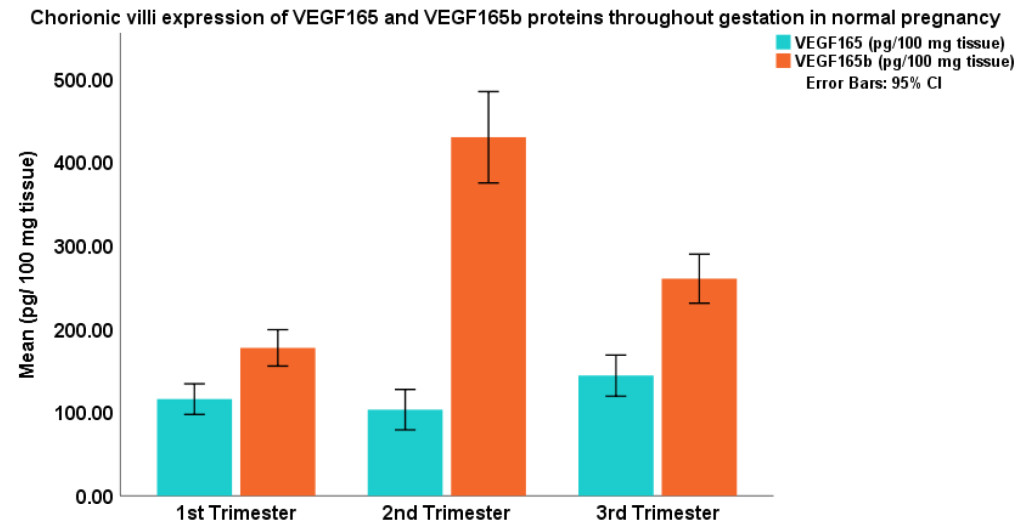
In this study, non-parametric statistics were applied because the data were skewed. Kruskal Wallis test results revealed that VEGF165 protein expression was not statistically different among the three trimester groups, the expression of VEGF165b protein, however, was significantly different (p=0.0001). In (Table 1) the 25th, 50th and 75th percentile values of the two VEGF isoforms are shown. The expression patterns of the two proteins are shown graphically in (Figure 1), which depicts two entirely different expression patterns for the two isoforms of VEGF throughout gestation in normal human pregnancy. While VEGF165 protein showed a minor dip in the second trimester of pregnancy, the expression patterns of VEGF165b showed a significant peak during that time. Pairwise comparison of trimester groups using Mann Whitney U test further revealed that the expression pattern of VEGF165 was not significantly different, but VEGF165b protein expression in each trimester was significantly different from the other (p=0.0001).

Table 1. Chorionic villi VEGF Protein Expressions throughout Gestation in Normal Pregnancy

Groups

N

VEGF165 (pg/ 100 mg tissue)

VEGF165b (pg/100 mg tissue)

25th Percentile

50th Percentile

75th Percentile

25th Percentile

50th Percentile

75th Percentile

1st Trimester

71

68.00

87.45

147.30

122.06

166.51

240.00

2nd Trimester

33

50.80

68.40

148.10

297.42

428.97

529.66

3rd Trimester

62

77.25

110.95

212.80

175.09

256.52

344.98

VEGF165 : Vascular Endothelial Growth Factor165 ; VEGF165b: Vascular Endothelial Growth Factor165b;   GA: gestational age in days. The first trimester placental chorionic villi samples were from 70/7–120/7 weeks gestation, the average GA was 81/7 weeks; second trimester were from 121/7 to 236/7 weeks, the average GA was 160/7 weeks; and the third trimester term were from 370/7 to 414/7 weeks of gestation, the average GA 392/7 weeks.  Homogenized human placental chorionic villi samples were analyzed using assay kit from R&D Systems, Minneapolis, MN; to determine VEGF165 and VEGF165b protein expressions.  Data were not normally distributed hence non-parametric statistics were used and 25th, 50th and 75th percentile values of VEGF165 and VEGF165b are shown.
IGOJ 2018-113 - Jayasri Basu USA_F1

Figure 1. GA: gestational age.

The first trimester placental chorionic villi samples were from 70/7-120/7 weeks gestation, the average GA was 81/7 weeks; second trimester were from 121/7 to 236/7 weeks, the average GA was 160/7 weeks; and the third trimester term were from 370/7 to 414/7 weeks of gestation, the average GA 392/7 weeks.

Correlation between the two proteins of VEGF as well as between the isoforms of VEGF and gestational age were examined in this study. Spearman’s correlation test results revealed that expression of VEGF165b protein was significantly and positively correlated with gestational age in days in the first trimester of normal pregnancy (r= +0.299, p=0.011, (Table 2). The table also depicts the test results of Spearman’s correlation between the two isoforms. The data reveal a significant positive correlation in the second (r = +0.376, p=0.031) and third trimester (r=+0.271, p=0.033), of normal pregnancy.

Table 2. Correlation between VEGF165, VEGF165b and Gestational Age in Days throughout gestation

VEGF165

VEGF165b

First Trimester
(N=71)

VEGF165

Correlation
Coefficient
Sig. (2-tailed)

1.000

0.070
0.564

GA

Correlation
Coefficient
Sig. (2-tailed)

0.029
0.159

0.299*
0.011

SecondTrimester
(N=33)

VEGF165

Correlation
Coefficient
Sig. (2-tailed)

1.000

0.376*
0.031

GA

Correlation
Coefficient
Sig. (2-tailed)

-0.149
0.409

0.013
0.944

Third Trimester
(N=62)

VEGF165

Correlation
Coefficient
Sig. (2-tailed)

1.000
0.916

0.271*
0.033

GA

Correlation
Coefficient
Sig. (2-tailed)

-0.027
0.833

-0.112
0.385

VEGF165 : Vascular Endothelial Growth Factor165 ; VEGF165b: Vascular Endothelial Growth Factor165b; GA: gestational age in days. Data were not normally distributed hence Spearman’s correlation was applied. Significant positive correlation was seen between VEGF165b and GA in the first trimester of pregnancy.  The two VEGF proteins were significantly and positively correlated in the second and third trimester of normal pregnancy.

Conclusion

In this study, chorionic villi samples were isolated from each placenta, and VEGF165 and VEGF165b protein expressions were determined by ELISA that used monoclonal antibody to human VEGF165 or VEGF165b protein as the capture antibody in each case. VEGF protein expression and that of its receptors are closely regulated to times of vasculogenesis and angiogenesis [11]. In this study, both isoforms of VEGF proteins were identified in all 166 chorionic villi samples that were analyzed suggesting that both proteins of VEGF may exert regulatory roles in pregnancy-linked angiogenesis in normal human pregnancy.

The angiogenic potential of VEGF165 has been confirmed by several bioassays that measured VEGF receptor expression during embryogenesis and tissue repair [11], capillary growth in vivo in developing chick chorioallantonic membrane [12], and a temporal and spatial correlation between VEGF and ocular angiogenesis in a primate model [13]. These studies affirmed VEGF signaling pathways to be the master regulator of angiogenesis [11–14]. The pro-angiogenic potential of VEGF165 results from six amino acids at its C-terminus e.g., CDKPRR [7, 15]. Involvement of VEGF165 in human pregnancy, particularly in placental development has also been recognized. Reports on the placental expressions of VEGF165 protein state that the protein increases in first 10 weeks of normal pregnancy, but as pregnancy advances, VEGF and its receptor VEGFR-2 concentrations decline. In these reports, VEGF was suggested to increase vascular permeability, vasodilation and angiogenesis [16–18]. It is also suggested to be involved in the formation and maintenance of the trophoblastic plugs that block the spiral arteries in the first trimester of normal pregnancy [19]. Figure 1 depicts that VEGF165 protein expression is somewhat lower in the second trimester of normal pregnancy. This data is consistent with the finding of an immunohistochemical study that reported VEGF165 antigen staining to be weaker in mid-gestational placental tissues, compared to the intensity of staining for the protein in the first or third trimester placental samples [20].

The isoform VEGF165b has not been investigated in as much detail as VEGF165. VEGF165b protein is expressed in normal tissues of lung, pancreas, colon, skin and brain [7, 21, 22]. Reports reveal that VEGF165b constitute 50% or more of total VEGF expressed in most non-angiogenic tissue [23]. Investigators have alleged that VEGF165b is not pro-angiogenic in vivo [23] and it actively inhibits VEGF165 mediated endothelial cell proliferation and migration in vitro [4, 7, 21–23]. VEGF165b is further reported to inhibit physiological angiogenesis in developing mammary tissue, in transgenic animals, overexpressing VEGF165b [24]. Moreover, VEGF165b is reported to inhibit angiogenesis in vivo in six other different tumor models [21–25]. The results of the present study on chorionic villi VEGF165b protein expression throughout gestation in normal human pregnancy are similar to the results we have reported earlier [9]. Our studies underscore the importance of VEGF165b antigen in normal human pregnancy. Identification of VEGF165b protein in this study, in all 166 chorionic villi samples that were collected throughout all trimesters of human pregnancy validates this notion. This temporal variation in VEGF165b protein in human pregnancy perhaps reflects that VEGF165b protein expression is more stringently controlled at each phase of human gestation, and that the isoform may play a more active role in placental development. The spatial activation of VEGF165b protein at various phases of human gestation as seen in the study emphasizes that placental angiogenesis could be more dependent on VEGF165b isoform.

VEGFR-2 is the predominant signaling receptor for VEGF-mediated angiogenesis [26]. Phosphorylation of VEGFR-2 on tyrosine residue at 1052 position of the molecule generates a highly dynamic and complex signaling system that triggers angiogenic response [4, 21, 26]. The binding affinities of VEGFR-2 are identical between VEGF165 and VEGF165b isoforms. However, VEGF165b is less efficient than VEGF165 in inducing phosphorylation on Y1052 residue [27]. The lower ability of VEGF165b to induce VEGFR2 phosphorylation on Y1052 is due to its incapacity to induce optimal rotation of the intracellular domain of the receptor molecule that is required for phosphorylation to occur [27]. Reduced Y1052 phosphorylation induces rapid inactivation of the kinase domains of the receptors resulting in weak activation of the signaling pathways [23]. Recent studies have shown that VEGF165b can stimulate VEGFR-2, ERK1/2 and Akt phosphorylation in endothelial cells, however, the induced phosphorylation is weaker than that promoted by VEGF165 [21, 28]. VEGF165b is currently not considered as anti-angiogenic but as a weakly angiogenic form of VEGF [28].

Establishment of functional fetal and placental circulations is some of the earliest strategic events during embryonic/placental development [29, 30]. The significant positive correlation seen between chorionic villi VEGF165b protein expression and gestational age in first trimester of pregnancy in this study (Table 2) suggests that VEGF165b may contribute to the development of villous vascular network in early pregnancy. An increase in expression of plasma VEGF165b protein in first trimester of normal pregnancy has been reported by other investigators, and the authors suggest that failure in the upregulation of VEGF165b protein in the plasma in the first trimester of pregnancy was a predictive marker of preeclampsia [31]. Simultaneous increase of both isoforms of VEGF in human placental tissues in the third trimester of pregnancy has also been reported by other investigators [8]. The large increase in transplacental exchange which supports the exponential increase in fetal growth and uterine blood flow during the last half of gestation is suggested to depend primarily on the dramatic growth of placental vascular beds [32]. Vascular density of the placental cotyledons remains relatively constant throughout mid-gestation and increases dramatically during the last third of gestation in association with dramatic fetal growth [32, 33]. In third trimester of normal pregnancy, both fetal development and demands are at its peak; and our data show a positive correlation between VEGF165 and VEGF165b during this time. Hence, it may be suggested that angiogenic modification of placental vasculature that allows maximum blood to flow through may depend on the synergistic action of both isoforms of VEGF.

Our present findings suggest a notable difference between tumor and placental angiogenesis. It is widely reported that in human tumors, up-regulation of VEGF165 protein occurs with a proportional drop in VEGF165b levels; indicating that in tumor angiogenesis the balance between the two isoforms of VEGF is lost [34]. However, the findings of the present study suggest that gestational age-specific expression of both VEGF isoforms is necessary for optimal placental angiogenesis and growth to results in a successful viable outcome.

That hypoxic environment favors VEGF165-induced angiogenesis and tumorigenic growth is well known [35]. In an earlier study we have demonstrated that placental environment switches from a hypoxic to a normoxic environment beyond the first trimester of normal human pregnancy [36]. We hypothesize that perhaps during this transitional period from first to second trimester of normal pregnancy, placental oxidative environment per se regulate the alternate splicing of exon 8 of the VEGF gene. In hypoxic condition proximal splicing of exon 8 may be favored, which up-regulates the expression of VEGF165 protein. In a normoxic state, distal splicing of exon 8 may be favored, whereby the expression of VEGF165b protein gets up-regulated. That switch in the partial pressure of oxygen at the end of first trimester of normal pregnancy can modify the expression pattern of two proteins has been reported earlier, between placental derived growth factor and VEGF [37]. It is feasible that this switch in the spliceosome at the end of the first trimester may be the contributing factor that may have resulted in the peak VEGF165b protein expression seen in the second trimester of this study. It is likely that this dependence of placental growth on VEGF165b beyond the first trimester could be a physiological phenomenon to restrain any overexpression of VEGF165 which if left un-checked, could perhaps lead to pregnancy-related complications as pregnancy advanced.

The limitation of our study is that we have not confirmed our data by western blot, polymerase chain reaction or by immunohistochemical methods. We acknowledge that cells respond to extracellular stimuli through a series of signaling cascades. When a receptor is activated, varieties of proteins are recruited to interact with each other to generate a cascade of sequential steps that result in a biological effect [38]. Signaling molecules are common to several pathways and often form a complex intracellular network [38]. Yet, in this study we have not examined other isoforms of VEGF, their receptors or other factors that may have also been involved in placental angiogenesis. We believe that addition of all these factors would have made the study more complex and any conclusions drawn from the study would have been extremely difficult to interpret. The strength of our study is our relatively larger sample size in each of the trimester groups. Simultaneous expressions of these two important VEGF proteins in human chorionic villi tissue throughout gestation in normal human pregnancy have not been reported before. In this study, stringent ELISA methods using monoclonal antibodies to human VEGF165 and VEGF165b human proteins were used as capture antibodies. The manufacturer claims that DY293B capture antibody that was used does not cross react with placental growth factor (PIGF), VEGF-B167, VEGF-B186, VEGF-C, VEGF-D, recombinant (rh) human VEGF R1(Flt-1)/Fc Chimera or with rhVEGF R2(KDR)/Fc Chimeras. Similarly, the monoclonal capture antibody DY3045 does not cross react with rhhuman VEGF121, VEGF162, VEGF165, rhVEGF R3/Fc, VEGF R1/Fc or VEGF R-2/Fc Chimeras. Furthermore, the detection methods used were sensitive, allowing the detection of VEGF165 as low as 31.2 and VEGF165b as low as 62.5 pg/ml, respectively. The study underscores the importance of VEGF165b in placental angiogenesis in normal human pregnancy. We speculate that placental oxidative environment might influence the C-terminal VEGF angiogenic switch, whereby different VEGF variants could be formed from a single VEGF gene; that play key roles in regulating angiogenic balance during normal human pregnancy. It may be suggested that gestational age-specific expression of both VEGF165 and VEGF165b isoforms may be necessary for a successful viable outcome.

Acknowledgement

The authors would like to thank Dr. CM Salafia for her guidance for the study, and the staff members of the Department of Obstetrics & Gynecology at BronxCare Health System for their support. For this research, outside grants were not sought. The study was funded by the Residency Program of the BronxCare Health System.

Declaration of Interest: The authors declare no conflicts of interest with respect to the research, authorship and/or publication of this article.

References

  1. Ferrara N (1999) Vascular endothelial growth factor: molecular and biological aspects. Curr Top Microbiol Immunol 237: 1–30.
  2. Dvorak HE, Nagy JA, Feng D, Brown LF, Dvorak AM (1999) Vascular permeability factor/vascular endothelial growth factor and the significance of microvascular hyperpermeability in angiogenesis. Curr Top Microbiol Immunol 237: 97–132.
  3. Eriksson U, Alitalo K (1999) Structure, expression and receptor-binding properties of novel vascular endothelial growth factors. Curr Top Microbiol Immunol 237: 41–57.
  4. Mustonen T, Alitalo K (1995) Endothelial receptor tyrosine kinases involved in angiogenesis. J Cell Biol 129: 895–898.
  5. Carmeliet P, Ferreira V, Breier G, Pollefeyt S, Kieckens L, et al. (1996) Abnormal blood vessel development and lethality in embryos lacking a single VEGF allele. Nature 380: 435–439.
  6. Tischer E, Mitchell R, Hartman T, Silva M, Gospodarowicz D, et al. (1991) The human gene for vascular endothelial growth factor. Multiple protein forms are encoded through alternative exon splicing. J Biol Chem 266: 11947–11954.
  7. Bates DO, Cui TG, Doughty JM, Winkler M, Sugiono M, et al. (2002) VEGF165b, an inhibitory splice variant of vascular endothelial growth factor, is down-regulated in renal cell carcinoma. Cancer Res 62: 4123–4131.
  8. Bates DO, MacMillan PP, Manjaly JG, Qiu Y, Hudson SJ, et al. (2006) The endogenous anti-angiogenic family of splice variants of VEGF, VEGFxxxb, are down-regulated in pre-eclamptic placentae at term. Clin Sci (Lond) 110: 575–585.
  9. Basu J, Seeraj V, Gonzalez S, Salafia CM, Mishra A, et al. (2017) Vascular endothelial growth factor165b protein expression in the placenta of women with uncomplicated pregnancy. J Clin Obstet Gynecol Infertility 1: 1–6.
  10. Basu J, Agamasu E, Bendek B, Salafia CM, Mishra A, et al. (2018) Correlation between placental matrix metalloproteinase-9 and tumor necrosis factor-α protein expression throughout gestation in normal human pregnancy. Reprod Sci. 25: 621–627.
  11. Peters KG, DeVries C, Williams LT (1993) Vascular endothelial growth factor receptor expression during embryogenesis and tissue repair suggests a role in endothelial differentiation and blood vessel growth. Proc Natl Acad Sci 90: 8915–8919.
  12. Ausprunk DH, Knighton DR, Folkman J (1974) Differentiation of vascular endothelium in the chick chorioallantois: a structural and autoradiographic study. Dev Biol 38: 237–248.
  13. Miller JW, Adamis AP, Shima DT, D’Amore PA, Moulton RS, et al. (1994) Vascular endothelial growth factor/ vascular permeability factor is temporally and spatially correlated with ocular angiogenesis in a primate model. Am J Path 145: 574–584.
  14. Ribatti D, Crivellato E (2012) “Sprouting angiogenesis”, a reappraisal. Dev Biol 372: 157–165.
  15. Keyt BA, Berleau LT, Nguyen HV, Chen H, Heinsohn H, et al. (1996) The carboxyl-terminal domain (111–165) of vascular endothelial growth factor is critical for its mitogenic potency. J Biol Chem 271: 7788–7795.
  16. Vuckovic M, Ponting J, Terman BI, Niketic V, Seif MW, et al. (1996) Expression of vascular endothelial growth factor receptor, KDR, in human placenta. J Anat 188: 361–366.
  17. Cooper JC, Sharkey AM, Charnock-Jones DS, Palmer CR, Smith SK (1996) VEGF mRNA levels in placentae from pregnancies complicated by pre-eclampsia. Br J Obstet Gynaecol 103: 1191–1196.
  18. Shiraishi S, Nakagawa K, Kinukawa N, Nakano H, Sueishi K (1996) Immunohistochemical localization of vascular endothelial growth factor in the human placenta. Placenta 17: 111–121.
  19. Alfaidy N, Hoffmann P, Boufettal H, Samouh N, Aboussaouira T, et al. (2014)The multiple roles of EG-VEGF/Prok1 in normal and pathological placental angiogenesis. BioMed Res Int 2014, Article ID 451906.
  20. Jackson MR, Carney EW, Lye SJ, Ritchie JW (1994) Localization of two angiogenic growth factors (PDECGF and VEGF) in human placenta throughout gestation. Placenta 15: 341–353.
  21. Qiu Y, Hoareau-Aveilla C, Oltean S, Harper SJ, Bates DO (2009) The anti-angiogenic isoforms of VEGF in health and disease. Biochem Soc Trans 37: 1207–1213.
  22. Bates DO, Harper SJ (2005) Therapeutic potential of inhibitory VEGF splice variants. Future Oncol 1: 467–473.
  23. Woolard J, Wang WY, Bevan HS, Qiu Y, Morbidelli L, et al. (2004) VEGF165b, an inhibitory vascular endothelial growth factor splice variant: mechanism of action, in vivo effect on angiogenesis and endogenous protein expression. Cancer Res 64: 7822–7835.
  24. Qiu Y, Bevan HS, Weeraperuma S, Wratting D, Murphy D, et al. (2008) Mammary alveolar development during lactation is inhibited by the endogenous anti-angiogenic growth factor isoform VEGF165b. The FASEB J 22: 1104–1112.
  25. Varey AH, Rennel ES, Qiu Y, Bevan HS, Perrin RM, et al. (2008) VEGF165b, an antiangiogenic VEGF-A isoform, binds and inhibits bevacizumab treatment in experimental colorectal carcinoma: balance of pro-and antiangiogenic VEGF-A isoforms has implications for therapy. Br J Cancer 98: 1366–1379.
  26. Rahimi N, Costello CE (2015) Emerging roles of post-translational modifications in signal transduction and angiogenesis. Proteomics 15: 300–309.
  27. Kawamura H, Li X, Harper SJ, Bates DO, Claesson-Welsh L (2008) Vascular endothelial growth factor receptor (VEGF)-A165b is a weak in vitro agonist for VEGF receptor-2 due to lack of coreceptor binding and deficient regulation of kinase activity. Cancer Res 68: 4683–4692.
  28. Catena R, Larzabal L, Larrayoz M, Molina E, Hermida J, et al. (2010) VEGF121b and VEGF165b are weakly angiogenic isoforms of VEGF-A. Mol Cancer 9: 320.
  29. Ramsey EM (1982) The placenta, human and animal. New York: Praeger.
  30. Patten BM (1964) Foundations of embryology, 2nd (edn). New York: McGraw-Hills.
  31. Bills VL, Varet J, Millar A, Harper SJ, Soothill PW, Bates DO (2009) Failure to up-regulate VEGF165b in maternal plasma is a first trimester predictive marker for pre-eclampsia. Clin Sci 116: 265–272.
  32. Reynolds LP, Redmer DA (1995) Utero-placental vascular development and placental functions. J Anim Sci 73: 1839–1851.
  33. Kaufmann P, Mayhew TM, Charnock-Jones DS (2004) Aspects of human fetoplacental vasculogenesis and angiogenesis. II. Changes during normal pregnancy. Placenta 25: 114–126.
  34. Peiris-Pagès M (2012) The role of VEGF165b in pathophysiology. Cell Adh Migr 6: 561–568.
  35. Cao Y, Linden P, Shima D, Browne F, Folkman J (1996) In vivo angiogenic activity and hypoxia induction of heterodimers of placenta growth factor/vascular endothelial growth factor. J Clin Invest 98: 2507–2511.
  36. Basu J, Bendek B, Agamasu E, Salafia CM, Mishra A, et al. (2015) Placental oxidative status throughout normal gestation in women with uncomplicated pregnancies. Obstet Gynecol Int  276095: 1–6.
  37. Ahmed A, Dunk C, Ahmad A, Khaliq A (2000) Regulation of placental vascular endothelial growth factor (VEGF) and placenta growth factor (PLGF) and soluble Flt-1 by oxygen—A review. Placenta 21: 16-S24.
  38. Ferretti C, Bruni L, Dangles-Marie V, Pecking AP, Bellet D (2007) Molecular circuits shared by placental and cancer cells, and their implications in the proliferative, invasive and migratory capacities of trophoblasts. Human Reprod Update 13: 121–141.
The Morphological Features of a Cervical Cancer Cells Membrane under Reflected Light Microscope

DOI: 10.31038/AWHC.2018134


A technique for revealing surface morphology of human cervical cancer cells has been developed to facilitate early diagnostics of a pre-cancer and cancer cells under reflected light microscopy. The offered method was borrowed from optical microscopy of a solid state surface where the Metallographic Inverted Microscopy (MIM) are usually used. Unlike common accepted transmitted light microscopy for biological applications MIM technique allows to reveal a morphology and topology of a biological cells surface without any treatment by chemicals (fixing, staining, drying, freezing et al). The MIM method was demonstrated by analyzing fresh native smears from epithelium of uterine neck. MIM micrographs of 167 patients with diagnosis cervical cancer allow visualizing on the cancer cells surface numerous of the Light Reflective Formations (LRF). It is supposed that LRF are connected with exocytosis on the cell membrane. For smears of cervix epithelium throughout the field of view of a microscope numerous ballooning-outs , which have a mean size from 0.1-0.5 to 1.2 -1.3 mkm, are seen located on the cell surface. It is accepted that in result of a cancer cell metabolism a granules or vesicles originate inside of cell and move towards cell surface to release its contents. Visualization of such morphological formations has however been limited, partly due to the difficulties with imaging native living or structurally intact cells because convenient transmitted light microscopy technique do not reveal surface cell features which are usually removed after fixing, drying and other treatments of smears. We suppose that offered method to visualize cell topography in air without fixation and dehydration may be alternative and complementary to Pap-test.

Keywords

Cervical Cancer, Reflected Light Microscopy, Cell Membrane, Smears.

Introduction

Cervical cancer is the second most common cancer in women worldwide. More than 80% of cervical cancers occur in the developing world where the least resources exist for management. Most cases of cervical cancer can be prevented by screening measures which detects precancerous lesions and subsequent treatment. Indeed in many countries where screening programs have been established, the morbidity and mortality of cervical cancer have been sharply reduced. Unfortunately many developing countries have not necessary resources and infrastructure for screening program so the annual cases of cervical cancer accounts 493 000 and deaths about 273,500 [1].

Currently, optical microscopy techniques are the primary method for cell visualization, with microscopic characteristics of cells traditionally used for diagnosis and classification of cancers [1]. However, because the differences in characteristics can be subtle, accurate detection can be challenging and ambiguous [2,3]. Particularly at present time the key accepted technique in the world to detect cervical cancer cells is Papanicolau (Pap) test [1]. To realize Pap-test need to visualize pathological peculiarities of nuclear, cytoplasm and cell shape. For this purpose need to fix smears, and next many step treatments by chemicals (staining by dyes, washing, dehydration etc). This procedures lead to destruction of alive cells, removing very important diagnostic signs and artifacts emergence. Besides there is another problem with analyzing Pap smears, connected with drying changes in cells due to delays in applying the fixing procedure. It is very difficult to evaluate smears that have dried in air and still distinguish abnormal cells. Sample handling and its evaluation of Pap-test is a time consuming procedure and demands a sophisticated testing infrastructure and highly trained professionals to evaluate the cytological test as a result, the vast majority of women in the developing world do not have access to life-saving screening programs [4]. To reach the main goal of cervical cancer screening we need to find an accessible, simple, low cost, highly sensitive and fast complementary or substitutive method to detect cervical cancer cells instead of the Pap-test.

One of lacks of modern clinical cytology is use basically transmitted light optical microscopes. But clinical cytology almost does not pay attention to such important element of a cellular structure as features of membrane topography. The last can be result of infringement of a metabolism of all whole cell or only components of the membrane [4]. Structural changes of an external membrane can arise due to external physical and chemical factors, or thank to internal response to immune stresses. Meanwhile in the standard clinical microscopy techniques the surface of cells in smears is not investigated. According to the accepted rules smears of a patient undergo many step chemical processing. In so way rather valuable probably diagnostic signs of pathological cells will removed. Quite probably that as a result of processing occurrence in structure of objects of the various artifacts distorting the analysis [5].

For partial elimination of above mentioned shortcomings it is offered to use the optical microscopes working in reflected light. Besides it is possible to notice that received pictures of a cellular structure in an offered method of the analysis sometimes with such features which can be received only using a raster electronic microscope. At slanting illumination of a surface of analyzed cells, fine pattern of their structure get volume perception that facilitates decoding of results of the analysis.

Another high resolution tools such as the atomic force (AFM) or scanning electron microscopes (SEM) let us to see cell membrane and organelle more in detail but they operate in environments too harsh for living cells that leads to its damage. Typically, cells have to be treated with chemicals for fixation, dehydration and drying, and in the case of the SEM, coated with metal. Recently proposed Bioimprint method [6] is a soft lithography replication technique used to create a time-shot replica of biological cells in a polymer during curing. Cells at near-native states can be imprinted into a photo-curable polymer, and the imprint analyzed without imaging directly impacting on cell viability. A technique for permanently capturing a replica impression of biological cells has been developed to facilitate analysis using nanometer resolution imaging tools, namely AFM. The transfer of nanometer scale biological information is presented as an alternative imaging technique at a resolution beyond that of optical microscopy.

James K. Gimzewski, Jianyu Rao (Nat. Nanotechnol. DOI: 10.1038/nnano.2007.388) find that AFM can be used to distinguish metastatic cancer cells from normal cells on the basis of stiffness rather than shape. The cancer cells are significantly squishier than the normal cells, and the method promises to improve cancer diagnostics. The researchers find that metastatic cancer cells are nearly four times softer than normal cells.

This paper presents an alternative method for studying biological cells using a optical metallographic inverted microscope (MIM) technique, to enable imaging of the surface topography of human cervical cancer cells. Here we present a new optical-probe technique based on light-scattering microscopy that is able to detect precancerous and early cancerous changes in cell-rich epithelia.

Methods

Smears from uterine neck were collected for patients with diagnosis cervical cancer. Smears were collected by Ayre’s spatula after exposing the cervix by a Cusco’s speculum. Samples collected were transferred to glass slides. Glass slides were preliminarily cleaned thoroughly in a 2 vol.% detergent followed by repeated washing in pure deionized water. Two set of slides were prepared for each patient and fixed by 95% ethanol. Relevant information was obtained from the patient and recorded on a specially designed proforma. The first sets of marked slides were then sent to cytology laboratory to view at high magnification with MIM without fixing and any treatment by dyes. This native smears has been observed under optical reflected microscope “Neophot-2”. For each smear under investigation from 4 to 10-13 field of view was captured. In this case we watched a morphology and topology of cell membrane and captured these images on digital photocamera. This measurement has been performed in Institute of Electronics Uzbek Academy of Science. Both practitioner and patient can then see smears image in color. The results are then used as a basis for prescribing supplements.

The second set of smears was prepared on glass and fixed by 95% ethanol and stained with Papanicolaou dyes and were then sent to Pathology Institute and each slide was then carefully examined by a cytopathologist to distinguish normal cells from leased one. Relevant information was recorded on a specially designed proforma on PC and was marked on the slides. It was clearly specified whether smear was satisfactory or not. Slides showing some abnormal changes in the cellular pattern were further scrutinized by a cytopathologist. Images has been observed on optical microscope “JENAMED-2” and captured by digital high Resolution Microscopy Camera AxioCam MRc Rev. 3 FireWire.

Results and Discussion

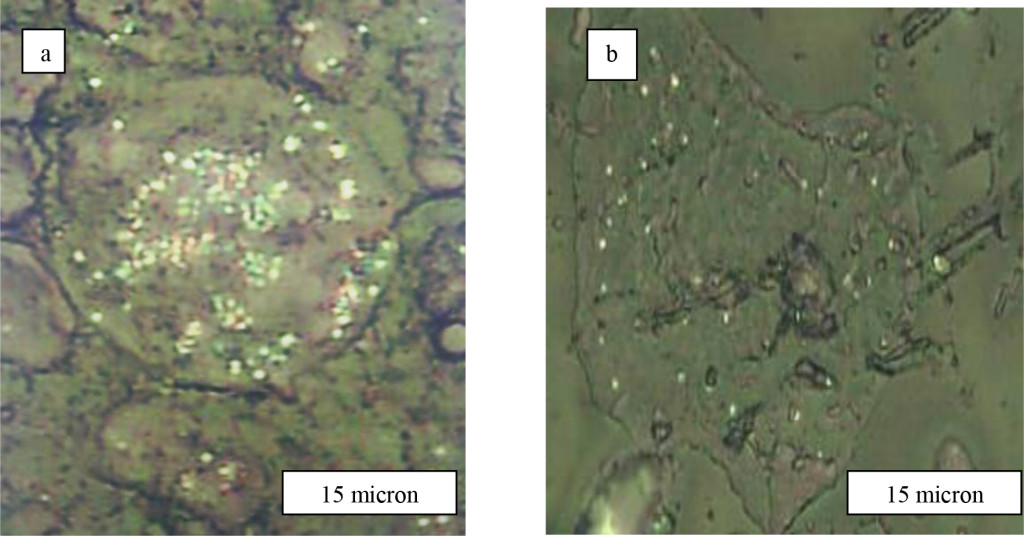
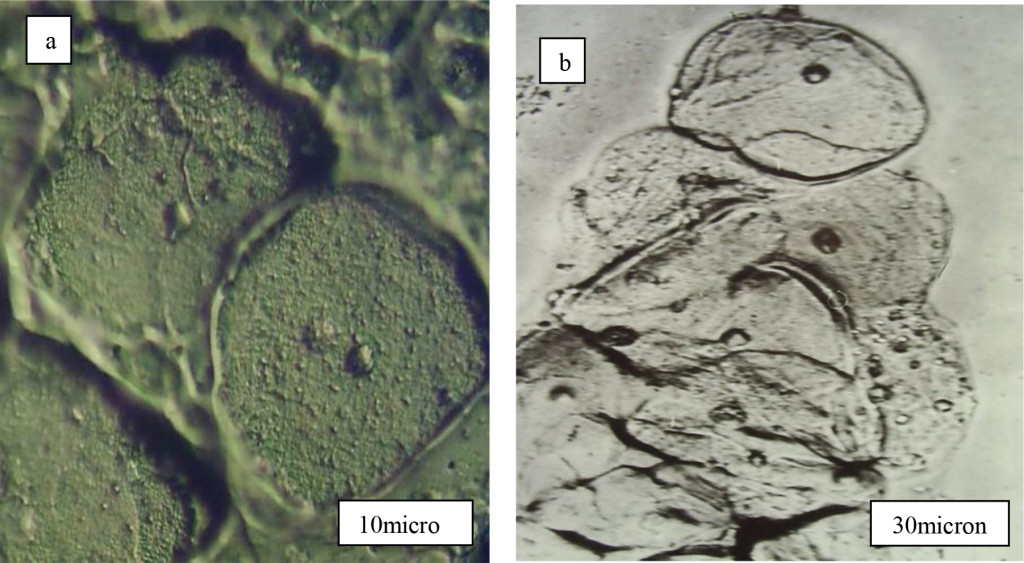
Cervical normal and cancer cells was evaluated both traditional Pap-test and new MIM technique. On the figure 1 we can see image of normal cell (control smears) surface captured by MIM technique. with pronounced nuclear. Three kinds of multilayer epithelial cells were observed in control smears (Figure 1 b). Epithelial cells of upper layer had polygonal shape with smoothed cell surface and size about 30-60 mkm with small (about 6 mkm ) nuclear. Cells of more deep layers had smaller size. Parabasal cells of cervix epithelial layer had round shape with size 12-17 mkm and coarse nuclear enclosed by cytoplasm. Minor auto flora around cells was observed. Fine granularity was observed in cell cytoplasm of upper and deeper epithelial layers.

AWHC-18-115-Adkham Paiziev_ Uzbekistan_F1

Figure 1. Control cervical smears with normal epithelial cells. a-separate cells, b-parabasal cells of many layer pavement cervix epithelium.

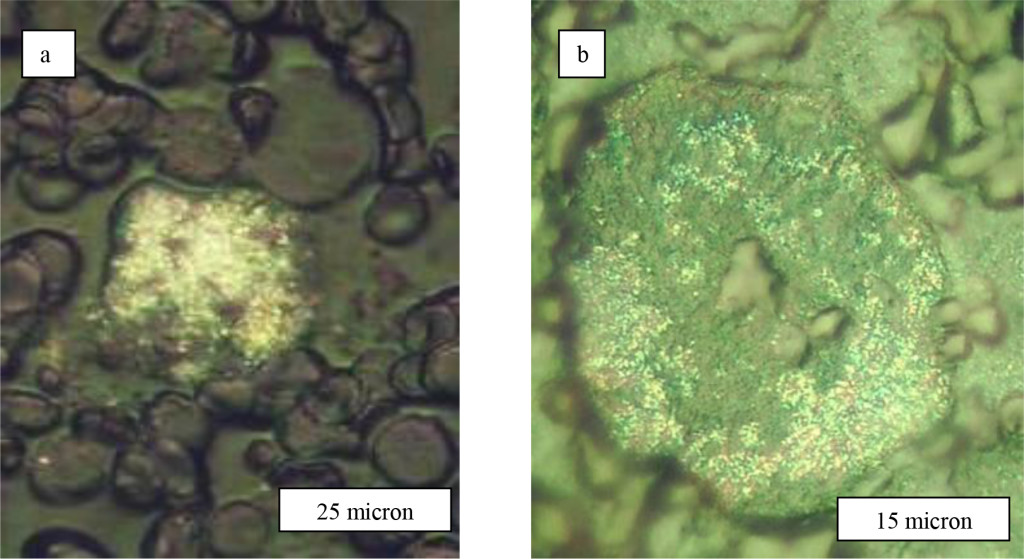
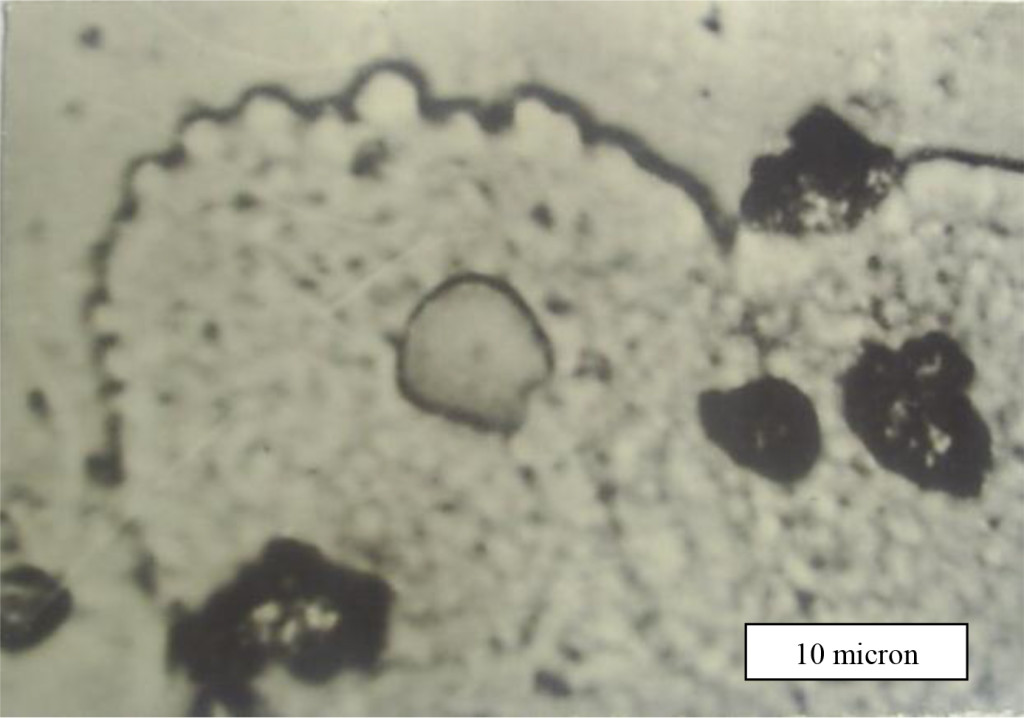
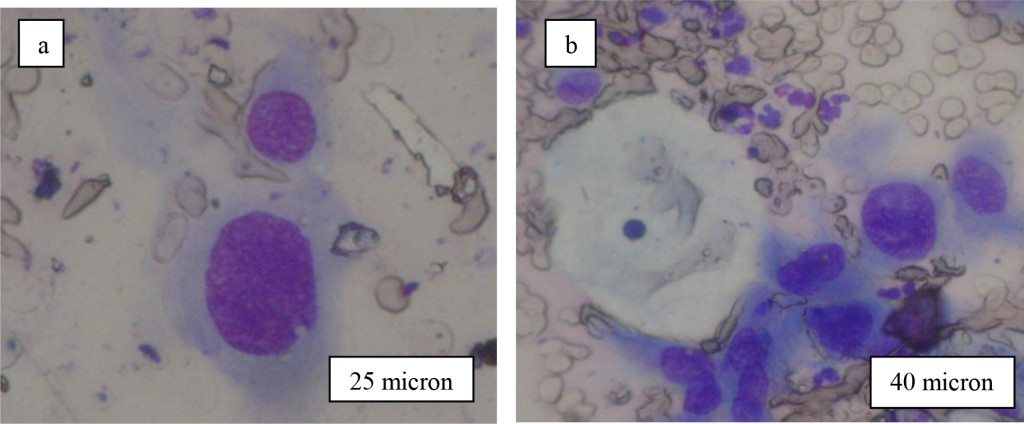
In the case of traditional Pap-test cervical smears was fixed and stained by dyes (Figure 2). Here we can basically see content of cells (nuclear, nucleolus, cytoplasm, vacuole etc) and their shape. Hyperchromic pronounced enlarged nuclear rounded shape, anomalous ratio between nuclear and cytoplasm usually is main diagnostic peculiarity of Pap-test to distinguish cancer and normal cells. But Pap-test do not permit to see cancer cell membrane destruction due to removing any diagnostic signs on cell membrane. Offered here MIM technique deals with native smears and let us to see just membrane morphology in reflected light. Indeed for cervical cancer cells we observed ballooning–out of cell membrane with specific distribution around nuclear (Figure 2). This ballooning-out formations have high light reflectivity due to its content and smooth shape and named by us Light Reflecting Formations (LRF) (Figure 2.). They have rather small diameter (0.3-0.5 microns) and consequently were accurately observed only at big optical magnifications (800-1000×).

AWHC-18-115-Adkham Paiziev_ Uzbekistan_F2

Figure 2. Typical view of cervical cells after staining by dyes (Pap-smears).

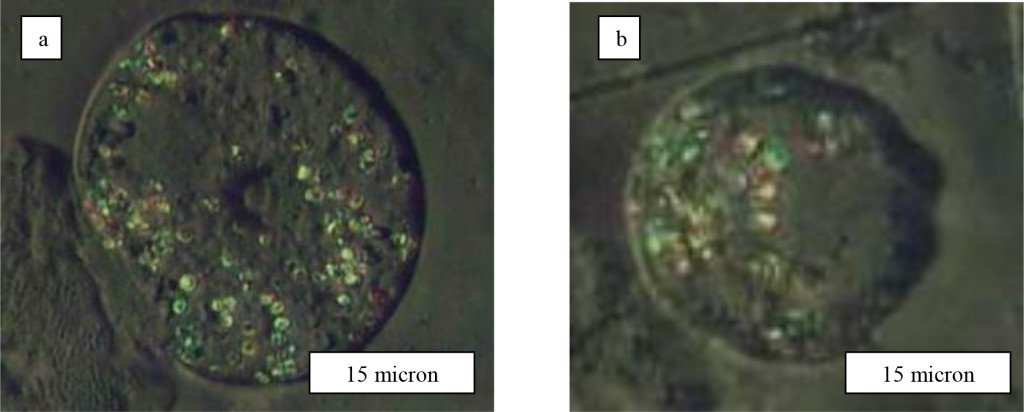
For cervical epithelial cells two rinds of LRF arrangement on cell membrane are possible. The first variant is connected with presence of LRF only on polygonal cells from the top layer of multicellular epithelium (Figure 1). Thus LRF can settle down on a surface of cell membranes as by the piece (them it is possible even to count (Figure 3 a,b), and in the form of high density LRF associations (Figure 4а, b).

AWHC-18-115-Adkham Paiziev_ Uzbekistan_F3

Figure 3. Cervical cells of upper epidermal layer of patients with diagnosis Cr. coli uteri

AWHC-18-115-Adkham Paiziev_ Uzbekistan_F4

Figure 4. Assosiations of  LRF on  cervical cells of upper epidermal layer of patients  with diagnosis  а-Cr. coli uteri  and   b-Cr. corporis  uteri T1N0M0

The second really observable variant of LRF in cervical smears is connected with cells of intermediate and parabasal layers (Figure 5а). In intermediate roundish cells besides LRF it is sometimes shown clumpy granularity of cytoplasm and excentricly located nuclear (Figure 5а). In parabasal cells of the bottom epidermal layers from cervix LRF in size 12-15 microns basically settle down separately (Figure 5b). Thus, experimental data indicate that for cervical cancer cells LRF are observed on polygonal top layer epidermal cells or only on bottom layer cells. In the first case for some patients the surface of epithelial cells contained isolated LRF which was possible even to count them by the piece (Figure 3). But for other women similar cells have been entirely was choked up LRF (Figure 5а). It is not clear yet what is reason so difference in LRF arrangement on a cervical cancer cell surface, and density its distribution along membrane. The nature of LRF occurrence and a its chemical compound is not clear yet too The analysis of the literature let us to assume that observed structural phenomenon in cervical smears may be connected with strengthened vacuolisation of cytoplasms and intensive aerobic glycolysis (fermentation) in cancer cells [7].

AWHC-18-115-Adkham Paiziev_ Uzbekistan_F5

Figure 5. Neoplastic  intermediate (а) and parabasal (b) cells of many layer epithelium  of cervix.

AWHC-18-115-Adkham Paiziev_ Uzbekistan_F6

Figure 6. Ballooning–out of cervical cancer cells membrane.

Really, in the course of experiment we accurately observed intensive process of a cell membrane reorganization of cervical cancer cells. The location of the LRF on the cell membrane is shown in Fig. 4 too for patients with late stage of disease, where they are seen predominantly concentrated at areas around the nucleus. The diameter of non-dysplastic cell nuclei is typically 5 mkm, whereas dysplastic nuclei can be as large as 10 mkm and more.

The nature and mechanism formation these features of cancer cells are not understood up to now but they are potentially associated with exocytosis. It is accepted that in result of a cancer cell metabolism a granules or vesicles originate inside of cell and move towards cell surface to release its contents. Visualization of such morphological formations has however been limited, partly due to the difficulties with imaging native living or structurally intact cells because convenient transmitted light microscopy techniques do not reveal surface cell features which are usually removed after fixing, drying and other treatments of smears.

Much is yet to be known about the nature of cervical cancer cells and until now there has not been a reliable, simple method for cervical cell testing. We suppose that offered MIM method to visualize cell topography in air without fixation and dehydration may be alternative and complementary to Pap-test. Being able to directly view membrane structures regulated by exocytosis will enable researchers to analyze the secretory nature and response of cells, yielding insights into drug responses and effects [6]. Considerable variability in the sizes of LRF, as well as dynamic formation and grouping of these structures around the nucleus, illustrates that cells have diverse morphologies.

Conclusion

A technique for revealing surface morphology of human cervical cancer cells has been developed to facilitate early diagnostics of a pre-cancer and cancer cells under reflected light microscopy. The offered method was borrowed from optical microscopy of a solid state surface where the Metallographic Inverted Microscopy (MIM) is usually used. Unlike common accepted transmitted light microscopy for biological applications MIM technique allows to reveal a morphology and topology of a biological cells surface without any treatment by chemicals (fixing, staining, drying, freezing et al). The MIM method was demonstrated by analyzing fresh native smears from epithelium of uterine neck. MIM micrographs of 167 patients with diagnosis cervical cancer allow visualizing on the cancer cells surface numerous of the Light Reflective Formations (LRF). It is supposed that LRF are connected with exocytosis on the cell membrane. For smears of cervix epithelium throughout the field of view of a microscope numerous ballooning-outs, which have a mean size from 0.1-0.5 to 1.2 -1.3 mkm, are seen located on the cell surface. It is accepted that in result of a cancer cell metabolism a granules or vesicles originate inside of cell and move towards cell surface to release its contents. Visualization of such morphological formations has however been limited, partly due to the difficulties with imaging native living or structurally intact cells because convenient transmitted light microscopy techniques do not reveal surface cell features which are usually removed after fixing, drying and other treatments of smears. We suppose that offered method to visualize cell topography in air without fixation and dehydration may be alternative and complementary to Pap-test.

Acknowledgement

This work has been supported by Grant № X11-001 of Coordination Center for Science and Technology Republic of Uzbekistan.

References

  1. Koss LG (1989) The Papanicolaou test for cervical cancer detection. A triumph and a tragedy. JAMA 261: 737–743. [crossref]
  2. Hamby L (2002) Gene expression patterns and breast cancer. Cancer Genetics News, Spring 4: 1
  3. Palaoro LA, Blanco AM, Gamboni M, Rocher AE, Rotenberg RG (2007) Usefulness of ploidy, AgNOR and immunocytochemistry for differentiating benign and malignant cells in serous effusions. Cytopathology 18: 33–39.
  4. Goldie SJ, Gaffikin L, Goldhaber-Fiebert JD, Gordillo-Tobar A, Levin C, et al. (2005) Cost-effectiveness of cervical-cancer screening in five developing countries. N Engl J Med 353: 2158-2168. [crossref]
  5. DaCosta RS, Wilson BC, Marcon NE (2007) Fluorescence and spectral imaging. ScientificWorldJournal 7: 2046–2071. [crossref]
  6. Muys JJ, Alkaisi MM, Melville DOS, Nagase J, Sykes P, et al. (2006) Cellular transfer and AFM imaging of cancer cells using Bioimprint. Journal of Nanobiotechnology 4: 1–10.
  7. Mirabal YN, Chang SK, Atkinson EN, Malpica A, Follen M, et al. (2002) Reflectance spectroscopy for in vivo detection of cervical precancer. J Biomed Opt 7: 587–594. [crossref]

Social Determinants of Ideal Body Image: Comparing the Impact for Men and Women

DOI: 10.31038/AWHC.2018133

Abstract

Background: Traditional Ghanaian culture has held that the ideal body image for women favors a larger size as symbolic of wealth and status.

Objectives: This investigation evaluated the complex relationship between social and cultural variables and the body image perspectives of women and men residents of Cape Coast, Ghana in an attempt to provide a framework for assessing the diverse factors that influence body image.

Methods: An oral survey was administered by the investigators to 400 outpatients at the Regional Central Hospital. The survey included questions on body image; weight changes; media exposure; social and cultural influences on ideal image; food security; and select SF-36 questions.

Results: Both women and men selected an Ideal Body Image (IBI) figural silhouette that represented a size greater than a normal body mass index. Television was the most frequently identified source of media exposure and had the greatest influence on IBI. Some 21.1% of participants reported that their IBI was highly influenced by television, without a statistically significant difference between men and women. Women were significantly more likely to report being highly influenced by newspapers and magazines than men (18.3% versus 10.7%, p = 0.046). Women and men who were highly or moderately influenced by family opinions were significantly more likely to be dissatisfied with current body image than those not influenced by family (80.5% versus 64.8%, p = 0.017), (75.4% versus 48.0%, p = 0.001), respectively.

Conclusion: Social media exposure is common for the inhabitants of Cape Coast. Television was the most influential form of media on the body image. Social relationships were also an important determinant of body image dissatisfaction.

Keywords

Body Mass Index, Cultural Determinants, Current Body Image, Ghana, Ideal Body Image, Social Media

Financial Support: Scholars in Medicine Program, Harvard Medical School

Introduction

The influences on body image can be multifaceted and include social, cultural, media and relationship determinants. An understanding of such influences on women’s and men’s body image can assist health care providers to address the risks for noncommunicable illnesses such as hypertension and diabetes that are linked to an increased body mass index (BMI) as well as to introduce preventive measures or medical treatments 1,2].

One of the most broadly accepted theories of the determinants that influence body image is the sociocultural model, which suggests that standards of attractiveness set by Western society are unattainable for the vast majority of individuals, leading to a disparity between ideal and reality 3–8]. In a previous study assessing the ideal body image of women residing in Accra, Ghana and testing the hypothesis that the ‘traditional build’ is the ideal, the investigators instead found that the majority of women selected the IBI as one that represented a normal body mass index, and the least healthy image was that figure that represented morbidly obesity 2]. A direct relationship exists between media exposure and thin body size for women and body image dissatisfaction, with most finding a small-to-medium effect from media 9–12]. Studies focused exclusively on men have demonstrated a relationship between body image dissatisfaction and exposure to images of idealized bodies, many with a particular focus on the idea that exposure to images of enhanced male muscularity can modify male ideal body image [13–16]. Because body image and dissatisfaction appear to be highly specific to the cultural context in which they are developed, conclusions drawn in Westernized countries should not be applied directly to other countries or even across ethnic and racial lines [17, 18]. Studies in both developing and developed countries have documented body image dissatisfaction in various degrees across cultures and have confirmed the association of exposure to media images of so-called western ideals of attractiveness with such dissatisfaction [19]. This investigation evaluated the complex relationship between social and cultural variables and the body image perspectives of residents of Cape Coast, Ghana, a medium sized regional capital city [20].

Material and Methods

Study setting and population

The study was conducted at the Central Regional Hospital (now Cape Coast Teaching Hospital) in Cape Coast, Ghana, the capital of the Central Region of Ghana. The metropolis covers an area of about 122 square kilometers with a population of approximately 170.000. The Central Regional Hospital in Cape Coast serves as the main referral center for both primary and secondary healthcare facilities within the Central Region. The 400-bed hospital serves the residents within the Cape Coast municipality [21]. The study population included participants attending the Out-Patient Department (OPD) between June and July 2012. English-speaking Ghanaian men and women 18 years or older were approached as they entered the waiting area of the OPD. English is the official language of Ghana, and many regional languages exist in spoken form. Exclusion criteria included age less than 18 years, pregnancy or lactation status, residence outside the metropolis and inability to communicate sufficiently in English to complete the survey. Few patients approached ( < 5%) declined the survey or were consider ineligible because of language restrictions.

Survey

Participants were asked to complete survey administered by the investigators comprised of the following components: demographic information; exposure and impact of media and cultural influences including television, radio, print materials, billboards, Internet cell phones, family, spouse, friends and religion; food access and select questions from the Medical Outcome Short Study Form-36 [22–25]. Each participant was provided with a card indicating their personal measurements, their BMI and waist/hip ratio, and an explanation of each measurement (underweight, normal, overweight, obese) as a token of appreciation of their participation.

Figural Stimuli

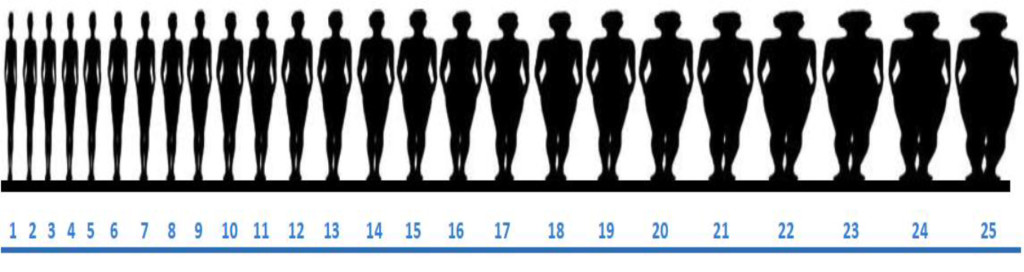
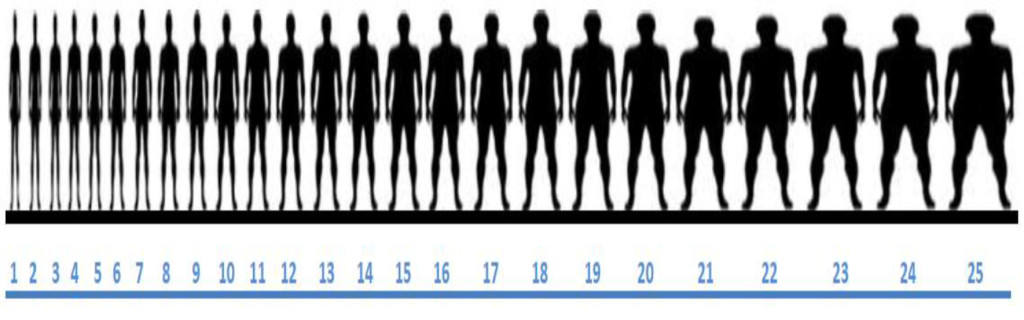
Culturally appropriate figural stimuli for men and women were created based upon the mean height and weights obtained from the Women’s Health Study of Accra from 2003 [1]. Twenty-five individual silhouettes were created ranging from a representation of underweight figures to morbidly obese figures, uniformly changing in size by 10% increments (Figure 1, 2). Silhouette 8 represents the middle of the normal body mass index range. Participants were presented with two printed posters depicting images of men and women and asked to identify, by number, the figure that most closely matched their current body image (CBI), that of their spouse/partner, as well as an ideal body image (IBI) for self, spouse/partner, and Ghanaian men and women in general.

AWHC-18-114 - Rosemary B Duda_ USA_F1

Figure 1. Figural stimuli silhouettes – Women (Figure 8 represents the mid-range of a normal body mass index).

AWHC-18-114 - Rosemary B Duda_ USA_F2

Figure 2. Figural stimuli silhouettes – Men (Figure 8 represents the mid-range of a normal body mass index).

Anthropomorphic Measures

Anthropometric measurements were taken with participants wearing light street clothes without shoes [2]. Height and weight were obtained and recorded to the nearest 0.1 centimeters and 0.1 kilograms, respectively, with a standing measuring stick and a calibrated, portable scale. Waist and hip measurements were collected to the nearest 0.5 centimeters with a flexible tape measure designed for body measurements. WHO STEPS protocols were followed, with the tape measure fitted snuggly, and with waist defined as the midpoint between the lower margin of the last palpable rib and the top of the iliac crest and hip defined as the widest portion of the buttocks [26].

Statistical Analysis

BMI was calculated for each participant and categorized according to WHO standards, with underweight ≤ 18.5, normal weight 18.6–24.9, overweight ≥ 25.0 and obese ≥ 30.0. A body image dissatisfaction score (DS) was calculated by subtracting the figure selected as the IBI for self from that selected as the CBI (DS = CBI – IBIself). Statistical analysis was performed using SPSS version 16.0 for Windows and included descriptive statistics for frequency and mean values Fisher’s Exact Test (FET) 1-sided, student T-test, chi-square test, Pearson correlation, binary logistic regression analysis and multinomial regression analysis.

Institutional Review Board Approval

The investigation was approved by the Institutional Review Boards at Harvard Medical School, Boston, MA, USA and the University of Cape Coast School of Medical Sciences, Cape Coast, Ghana. Verbal consent was considered sufficient for participation in the survey and an informed consent signature waiver obtained.

Results

Participant characteristics

A total of 400 patients agreed to participate in this study. There was an equivalent number of male and female participants (49% versus 51%) and no statistically significant difference between gender and mean age, highest level of education attained, marital status, religion, and environment of birth and current residence
(Table 1). Women, however, were two times more likely to be unemployed compared with men (14.2% versus 7.7%, p = 0.026 FET), univariate analysis Odds Ratio (OR) = 2.0, 95 CI % (1.03–3.90), p = 0.039. Responses to the Medical Outcome Short Study Form-36 revealed that most of the participants (81.7%) reported they were in good to excellent health, were in much or somewhat better health compared to last year (53.0%) and were somewhat to very happy at the time of survey (85.1%).

Table 1. Participant Characteristics.

Men

n (%)

Women

n (%)

p-value

Participants

196 (49)

204 (51)

NS

Mean Age

33.8

32.5

NS

Highest Education level

NS

No Formal Education

2 (1.0)

7 (3.4)

Primary

5 (2.6)

8 (3.9)

Junior High (JSS)

26 (13.3)

25 (12.2)

Senior High (SSS)

81 (41.3)

84 (41.0)

Tertiary

73 (37.2)

75 (36.6)

Graduate

8 (4.1)

6 (2.9)

Relationship Status

NS

None

62 (31.6)

41 (19.8)

Unmarried Relationship

43 (21.9)

71 (34.3)

Married

84 (42.9)

70 (33.8)

Divorced

5 (2.6)

13 (6.3)

Widowed

0 (0)

12 (5.8)

Employment Status

0.026

Employed

181 (92.3)

175 (85.8)

Not Employed

15 (7.7)

29 (14.2)

Children

NS

None

101 (51.5)

109 (52.7)

Religion

NS

Christian

177 (90.3)

189 (92.6)

Muslim

17 (8.7)

12 (5.9)

None/Other

2 (1.0)

3 (1.5)

Environment, birth

NS

Urban

98 (50.3)

114 (56.2)

Semiurban

26 (13.3)

22 (10.8)

Rural

71 (36.4)

67 (33.0)

Environment, current

NS

Urban

59 (30.1)

68 (33.3)

Semiurban

117 (59.7)

120 (58.8)

Rural

19 (9.7)

14 (6.9)

NS = Not Significant

Body Mass Index

Height and weight measurements were available for all 400 participants. The distribution of BMI and gender are shown (Table 2). Obesity was identified significantly more often in women compared with men (20.1% versus 6.1%, p < 0.001), OR 1.6, 95% CI (1.25–1.96), p < 0.001.

Table 2. Body Mass Index by Gender.

Body Mass Index

Men

n (%)

Women

n (%)

Overall

n (%)

Underweight

10 (5.1)

10 (4.9)

20 (5.0)

Normal Weight

132 (67.3)

92 (45.1)

224 (56.0)

Overweight

42 (21.4)

61 (29.9)

103 (25.8)

Obese

12 (6.1)

41( 20.1)

53 (13.2)

Mean

23.3

25.9

24.6

Range

16.9 – 38.1

14.7 – 45.6

14.7 – 45.6

Current Body Image

The most frequently selected CBI for women were figures 11, 13, and 14 (9.3% each), larger than the silhouette representing the middle range of a normal BMI. The mean ± standard deviation current body image (CBI) silhouette selected by women was figure 14.5 ± 4.5 (range 1 to 25). Only 8 women (3.9%) selected figure 8 (mid-range of normal BMI) as their CBI. There was a significant correlation (r = 0.727, p < 0.001) between BMI and CBI silhouette for women.

The most frequently selected CBI for men were figures 10, 12, 13, and 14 (9.2, 12.8, 14.8 and 11.2%, respectively), as found with the women, larger than the silhouette representing the middle range of BMI. Only 5 men (2.6%) selected figure 8 (mid-range of normal BMI) as their CBI. The mean ± standard deviation current body image (CBI) silhouette selected by men was figure 13 ± 3.7 (range 2 to 24). There was also a significant correlation between increasing CBI silhouette selected and increasing BMI for men (r = 0.603, p < 0.001).

Ideal Body Image for Women and Men

Both women and men selected a figure that represented a size larger than Silhouette 8, the middle of the normal body mass index range. The most frequently selected silhouette for women to represent their ideal body image (IBI) for themselves was figure number 14 (mean figure 13.6 + 3.6, range 1 – 25). The most frequently selected silhouette for IBI by men for themselves was figure number 13 (mean figure 13.8 + 3.6, range 2 – 25). There was also a significant correlation between BMI and IBI for both women and men. The Pearson correlation between BMI and IBI for women was (r = 0.260, p < 0.001) and between CBI and IBI for women was (r = 0.551, p < 0.001). The Pearson correlation between BMI and IBI was (r = 0.141, p = 0.049) and between CBI and IBI for men was (r = 0.596, p < 0.001).

Women and men most frequently selected figure 13 as the IBI for a spouse/significant (15.6% and 17.1%, respectively). The most frequently selected IBI for a Ghanaian woman in general by women was figure 14 (15.5%, range 7–25, r = 0.480, p < 0.001). Figure 15 (13.5%, range 2–23) was most commonly selected by men as the IBI for a Ghanaian woman. In comparison, women and men both selected figure 15 as the IBI for men (range 7 – 25 and 4 to 25, respectively). There was a significant correlation between a man’s IBI for himself and for a man in general (r = 0.553, p < 0.001).

Dissatisfaction Score

The dissatisfaction score (DS) was calculated by subtracting the IBI from the CBI for women and men. Less than one-third (32.6%) of participants had a DS = 0, indicating the CBI = IBI. There was no significant difference between women and men with a DS = 0 (29.4% versus 35.9%, OR 1.34, 95% CI (0.88, 2.0), p = 0.168) (Table 3). However, women were significantly more likely to select an IBI smaller than the CBI compared with men (42.2% versus 28.4%, OR 1.51, 95% CI 1.18–1.94, p = 0.001). On a multivariate analysis, the variables significantly associated with a DS = 0 included: children (any versus none), stable weight for the past year, anticipating a stable weight in the next year, being less likely to have been told as an adult to gain or lose weight, and being less likely to be influenced by spouse/partner (Table 4). In addition, 64.6% of participants with a DS = 0 had a normal BMI; however, for each BMI category, most participants were dissatisfied with CBI (p < 0.001) (Table 5).

Table 3. Dissatisfaction score = Current Body Image – Ideal Body Image by Gender.

Dissatisfaction

Women (%)

Men (%)

Total (%)

p-value

CBI = IBI

29.4

35.9

32.6

NS

CBI < IBI

28.4

42.1

35.1

NS

CBI > IBI

42.2

22.1

32.2

0.001

NS = Not Significant

Table 4. Variables significantly associated with Dissatisfaction Score (DS) = 0 on multivariate analysis.

Variable

DS = 0 (%)

DS = Any (%)

OR

95% CI

p-value

Children, any

40.1

25.6

2.6

1.5, 4.1

< 0.001

Stable weight past year

34.1

24.1

1.6

1.2, 2.3

 0.003

Anticipate stable weight next year

56.1

27.1

1.9

1.4, 2.5

< 0.001

Told to gain weight as an adult

27.2

35.9

1.8

1.1, 3.0

0.028

Told to lose weight as an adult

20.4

39.1

1.9

1.1, 3.4

0.027

Influenced by spouse

20.9

46.2

2.5

1.5, 4.1

< 0.001

Table 5. Body Mass Index and Dissatisfaction Score.

Body Mass Index

DS = 0

DS = Any

p-value

%

%

Underweight

10.5

89.5

<0.001

Normal weight

37.5

62.5

<0.001

Overweight

35.0

65.0

<0.001

Obese

15.1

84.9

<0.001

Total

32.6

67.4

DS = Dissatisfaction Score

On multivariate analysis, a smaller IBI (DS = CBI > IBI) versus a larger IBI (DS = CBI < IBI) was statistically associated with: attempt to lose weight by caloric restriction, attempt to lose weight by exercise, told as an adult to lose weight, expect weight to decrease over the next year, and agree that weight has a very large effect on health, report no television viewing. Variables associated with a larger versus a smaller IBI included: unmarried status, attempt to increase weight with food (51.1% versus 18.6%), and told as an adult to gain weight (Table 6). Pertinent variables not associated with DS include environment of birth, environment of current residence, and media (television, radio, billboards, and internet usage), family, friends, religion, and food security.

Table 6. Multivariate analysis for variables that influence a positive or negative Dissociation Score.

Variable

CBI > IBI (%)

CBI < IBI  (%)

OR

95% CI

p value

Decrease weight by restricting caloric intake

67.4

12.1

5.2

2.2, 12.3

<0.001

Advise to lose weight as an adult

75.0

9.3

14.5

6.0, 35.2

<0.001

Decrease weight with exercise

71.3

19.3

10.4

5.9, 18.4

<0.001

Effect of weight on health  is very large effect

47.3

34.3

1.6

1.1, 2.3

0.007

Expected weight to decrease next year

64.3

7.9

2.7

1.9, 3.9

<0.001

No television viewing

76.0

49.6

1.9

1.2, 8.3

0.016

Unmarried status

57.4

72.1

1.5

1.1, 2.4

0.045

Increased weight by increasing caloric consumption

18.6

51.1

3.0

1.3, 6.8

0.010

Told as an adult to increase weight

17.1

61.2

3.7

1.7, 8.1

0.001

CBI = Current Body Image; IBI = Ideal Body Image; OR = Odds Ratio; CI = Confidence Interval

Media Influence and Ideal Body Image

A majority of participants reported exposure or access to each form of media assessed (Table 7). There was a significant difference in exposure to radio and newspaper/print between women and men. Men were significantly more likely to listen to the radio (OR = 2.51, 95% CI 1.13, 5.59) and read the newspaper (OR = 1.10, 95% CI 1.02, 1.16, p = 0.004) compared with women. A radio and television was present in 92.3% and 92.5% of all households, respectively. In addition, 97% of all participants had access to a cell phone and 60.2 percent had access to the Internet, with no statistical significant difference between women and men (97.1% versus 96.9%, p = 0.587 and 58.3% versus 62.2%, p = 0.243, respectively).

Table 7. Media Exposure and Influence on Ideal Body Image for Self by Gender.

Variable

Radio

Television

Newspaper/Print

Access overall (%)

92.2

90.8

64.7

     Women

89.2

88.7

57.8

     Men

95.4

92.9

71.8

     p value

0.016

0.105

0.002

Exposed 7 days per week (%)

71.8

75.2

14.0

     Women

69.1

76.5

8.8

     Men

74.5

74.0

19.5

     p value

0.140

0.322

0.002

Highly Influenced (%)

18.0

21.1

14.6

     Women

16.2

24.0

18.3

     Men

20.0

17.9

10.7

     p value

0.363

0.142

0.046

Not Influenced (%)

41.4

36.8

51.8

     Women

45.1

38.2

50.0

     Men

37.4

35.4

53.6

     p value

0.128

0.536

0.425

p -value represents difference between women and men for each variable.
NA = Not Applicable. Access to billboards not asked as they are ubiquitous in the region.
Analysis performed by Fisher’s Exact test, (2-sided).

Television was the most frequently identified source of media exposure and had the largest influence on IBI. Television was viewed daily by 75.2% of participants and 21.1% of participants reported that their IBI was highly influenced by television, without a statistically significant difference between men and women. Television was significantly associated with dissatisfaction, with those watching television seven days a week having significantly higher dissatisfaction score compared with those not watching television (–0.70 v. 0.48, p < 0.001). Although they read less print media overall, women were significantly more likely to report being highly influenced by newspapers and magazines than men (18.3% versus 10.7%, p = 0.046). Women who were highly or moderately influenced by friend or family opinions were significantly more likely to be dissatisfied (any versus none) with CBI compared with women not influenced at all (77.8% versus 60.0%, p = 0.011, and 80.5% versus 64.8%, p = 0.017, respectively, FET 2 sided). Women’s dissatisfaction score was not significantly associated with influence of television, radio, print media, billboards, spouse, or religion. However, men who were highly or moderately influenced by spouse or friend opinions were significantly more likely to be dissatisfied with CBI compared with men not influenced at all (63.3% versus 44.4%, p = 0.049, FET, 1-sided, and 75.4% versus 48.0%, p = 0.001, FET 2 sided, respectively). Men’s dissatisfaction score was not significantly associated with influence of television, radio, print media, billboards, family, or religion.

Social Influences and Ideal Body Image

Cultural, social and family determinants also had modest influence on IBI for self (Table 8). A spouse/partner had the overall influence on IBI (29.2%), although there was no statistical difference based upon participant gender. Women were significantly more likely to be influenced by friends compared with men (OR = 1.07, 95% CI 1.02, 1.14, p = 0.013).

Table 8. Cultural, Social and Family Influences on Ideal Body Image for Self by Sex.

Variable

Family

Spouse*

Friends

Religion

Highly Influenced (%)

19.3

29.2

18.8

12.8

     Women

22.1

26.6

23.5

9.8

     Men

16.4

32.0

13.9

16.1

     p value

0.164

0.529

0.015

0.074

Not Influenced (%)

45.4

31.8

39.2

73.6

     Women

43.1

35.3

39.2

74.5

     Men

47.7

28.1

39.2

72.5

     p value

0.422

0.180

1.000

0.501

* Included only if married.
Analysis performed by Fisher’s Exact test, (2-sided).

Social and family influences on gaining/losing weight were assessed for childhood and adulthood. During childhood, most participants were not encouraged to lose weight (91.7%), but almost one-third were told to gain weight (34.5%). Women were significantly more likely to have been told to gain weight as a child compared with men (OR = 1.68, 95% CI 1.10, 2.55, p = 0.015). In contrast, adult women were more likely to be told to lose weight compared with adult men (OR = 2.52, 95% CI 1.64, 3.88). Women were much more likely to have attempted weight loss compared with men. Women were significantly more likely to attempt to lose weight by dieting, (47.1% versus 18.4%, OR = 3.9, p < 0.001, CI = 2.0–7.9), exercising (48.5% versus 31.1%, OR 2.1, p = 0.001, CI = 1.4–3.1) and diet pills (10.8% versus 5.6%, p = 0.045, FET 1-sided).

Additional Health Related Determinants Influence on IBI

An open-ended question inquired about other possible factors that may influence IBI. Most respondents provided no additional types of influence (72%). However, of the 113 (64 men and 71 women) who did provide an open ended response, 53.1% of men and 33.8% of women stated improved health-related reasons as an important influence on their body image, while 23.9% of men and 17.0% of women mentioned a desire to appear more attractive. Only 3.1% of men and 5.6% of women noted social pressures as an external influence on IBI.

Discussion

Ghana provides a particularly unique environment to study body image. First, traditional Ghanaian culture has favored a larger image as ideal that for women, symbolic of wealth and higher status [27–30]. Second, there exists interplay between traditional and modern cultures resulting from rapid economic development, urbanization, modernization and social changes such as shifts in gender roles and exposure to western cultural practices and norms [20]. Further, rural-urban migration continues to occur at a rapid pace, with the rural proportion of Ghana’s total population dropping each year since 1960 and recently dropping below 50% [31]. The implication is that more and more traditional Ghanaian values are being brought along with such migrants to the city, even as recent migrants are exposed to new cultural values in the urban environment. Finally, the growing prevalence of overweight and obesity coupled with increasing longevity mean a rapidly increasing burden of chronic disease for Ghana, a problem that is pervasive in much of the developing world [32, 33]. Because of its position as a key parameter in understanding overweight and obesity and in shaping emotional health, body image is an important public health concern [34, 35].

The choice of 25 figures with standard variation ordered by increasing size was based on the example of the BIAS-BD figural drawing scale, the original version of which depicted 17 human figures [36]. Subsequent research on effective use of figural stimuli has shown that figural stimuli products using a discrete number of images (rather than a size range) and with images arranged in ascending/descending size order [as opposed to random) are the most accurate and effective as research tools [37]. While static figures obviously limit the creativity with which participants can express their ideal body image perspectives, we did test for and confirm that they were accurate in representing a participant’s current body image in regards to BMI, and we limited our investigation of body image to size rather than including other considerations such as shape or build.

We investigated determinants in combination with body image perspectives to better understand the factors that shape Ghanaians’ weight and their ideas about weight. Our study found a notable disparity between men and women in terms of proportion overweight and obesity, with 50.0% of women categorized as overweight or obese compared with 27.5% of men. These numbers are consistent with previous findings in Cape Coast [38]. We found only a few correlates for overweight or obesity, none of which provided a satisfying explanation for this gender disparity. As expected, age correlated with weight for both genders, as did number of children. Men were significantly more likely than women to be employed, and work of all types has been found to contribute to a less sedentary lifestyle [39] and lower rates of overweight/obesity; however, employment status was not correlated with BMI for men or women in our study. Further study might delve deeper into the relationship between employment type and body weight. We also found no relationship between education level and BMI, although such a relationship has been found in previous research in the region [28, 40].

We found no correlation between location of residence and BMI, although this has also been shown to be an important correlate of BMI [41]. This may be accounted for by the fact that participants are relatively mobile as – approximately 28.5% had lived in at least four places in their lives—and that a large number (37.5%) had lived in one or both of the two largest cities in Ghana (Accra or Kumasi) at some point, suggesting that even semi-urban and rural residents may have significant exposure to urban environments. Studies on body image have shown that both men and women are influenced by the figures they see in the media and in particular television, and that media exposure often creates unrealistic expectations for body image, leading to increased body dissatisfaction [4,13, 42]. One of the most notable findings in our research was the high level of media exposure reported by participants. These high levels of media exposure suggest that Ghanaians are susceptible to media influences that may influence their body image perceptions. One limitation to this assumption is that we did not examine amounts of daily media exposure, nor did we attempt to document the type of content participants were exposed to, both of which might have helped us better understand our participants and the influences on them.

We observed a significant relationship between high levels of television viewership and body image dissatisfaction within our sample population, suggesting the plausible presence of media content that may influence people’s body image ideals. Interestingly, unmarried men who watched television were significantly more likely to choose an IBI larger than their CBI, indicating a desire to be larger than their current size. Other studies have reported similar findings, and have suggested that men may be under increasing pressure to develop greater degrees of muscularity [4]. Indeed, formal and informal comments from men during the course of the survey confirmed that many were interested in being larger and more muscular.

Social interactions and body dissatisfaction relationships with friends and family were shown to be influential determinants in the establishment of body image, and in determining how an individual is affected by their body image [43]. Research in the United States has shown the influence of social relationships and support organizations on body image can be incredibly powerful in both positive and negative ways [44, 45]. We found that both spouse/partner and friends had a negative rather than positive influence on female body image, with women who identified strong influences from these determinants having greater body image dissatisfaction scores. However, family influence was not correlated with dissatisfaction, which may suggest either that adults are less influenced by the opinions of their families, or that family members are more likely to be supportive, making them less apparent as a source of influence.

Although our question about self-reported influence did not reveal as strong a relationship between social forces and dissatisfaction as we found for television, our secondary social influences questions, which assessed whether participants had ever been told to change their weight, were incredibly telling. Among a wide variety of factors, being told to change weight as an adult was the most strongly associated with body image dissatisfaction, and what participants had been told was tied to the type of dissatisfaction they experienced, with those who had been told to gain weight favoring a smaller ideal, and those who had been told to lose weight favoring a smaller one. This supports the idea that negative messages about weight from social networks are very powerful.

The concept of influence from media and relationships seemed to be an idea that some participants were familiar, while others appeared to have a much more difficult time contextualizing the way in which images, ideas or other people could affect their personal body image concept. This may have led to some participants providing arbitrary or inaccurate answers to our influences questions. Further study into body image in this context is warranted. In particular, drawing out more detailed information about the types of influences present in Ghanaian media, adding qualitative inquiry methods to our work and perhaps determining novel ways to inquire about the concept of influence would all be helpful in revealing more about body image attitudes in Ghana.

References

  1. Duda RB, Jumah NA, Hill AG, Seffah J, Biritwum (2006) Interest in healthy living outweighs presumed cultural norms for obesity for Ghanaian women. Health and Quality of Life Outcomes 4: PMC 1544332.
  2. Duda RB, Jumah NA, Hill AG, Seffah J, Biritwum R (2007) Assessment of the ideal body image of women in Accra, Ghana. Trop Doct 37: 241–244. [crossref]
  3. Thompson J, Heinberg M, Altabe M, Tantleff-Dunn S (1999) Exacting Beauty: Theory, assessment and treatment of body image disturbance. American Psychological Association, Washington DC. USA.
  4. Thompson JK, Heinberg LJ (1999) The Media’s Influence on Body Image Disturbance and Eating Disorders: We’ve Reviled Them, Now Can We Rehabilitate Them? Journal of Social Issues 55: 339–353.
  5. Cash TF, Smolak L (2011) Understanding body image: historical and contemporary perspectives. In: Cash TF, Smolak L (eds.). Body image: a handbook of science, practice, and prevention. Guilford Press, New York, USA Pg No: 3–11.
  6. Cash TF (2012) Cognitive-behavioral perspectives on body image. In: Cash TF (ed.). Encyclopedia of body image and human appearance. Oxford, Elsevier Pg No: 334–342.
  7. Laus MF, Kakeshita IS, Costa TM, Ferreira ME, Fortes Lde S, et al. (2014) Body image in Brazil: recent advances in the state of knowledge and methodological issues. Rev Saude Publica 48: 331–346. [crossref]
  8. Holland G, Tiggemann MA (2016) systematic review of the impact of the use of social networking sites on body image and disordered eating outcomes. Body Image 17: 100–110.
  9. Grabe S, Ward LM, Hyde JS (2008) The role of the media in body image concerns among women: a meta-analysis of experimental and correlational studies. Psychol Bull 134: 460–476. [crossref]
  10. Want SC (2009) Meta-analytic moderators of experimental exposure to media portrayals of women on female appearance satisfaction: Social comparisons as automatic processes. Body Image 6: 257–269.
  11. Fernandez S, Pritchard M (2012) Relationships between self-esteem, media influence and drive for thinness. Eat Behav 13: 321–325. [crossref]
  12. Cafri G, Yamamiya Y, Brannick M, Thompson JK (2005) The Influence of Sociocultural Factors on Body Image: A Meta-Analysis. Clinical Psychology: Science and Practice 12: 421–433.
  13. Blond A (2008) Impacts of exposure to images of ideal bodies on male body dissatisfaction: a review. Body Image 5: 244–250. [crossref]
  14. Leit RA, Gray JJ, Pope HG (2002) The media’s representation of the ideal male body: A cause for muscle dysmorphia? International Journal of Eating Disorders 31: 334–338.
  15. Daniel S, Bridges SK (2010) The drive for muscularity in men: media influences and objectification theory. Body Image 7: 32–38. [crossref]
  16. Agliata D, Tantleff-Dunn S (2004) The impact of media exposure on males’ body image. Journal of Social and Clinical Psychology 23: 7–22.
  17. Kronenfeld LW, Reba-Harrelson L, Von Holle A, Reyes ML, Bulik CM (2010) Ethnic and racial differences in body size perception and satisfaction. Body Image 7: 131–136. [crossref]
  18. Yates A, Edman J, Aruguete M (2004) Ethnic differences in BMI and body/self-dissatisfaction among Whites, Asian subgroups, Pacific Islanders, and African-Americans. J Adolesc Health United States 34: 300–307.
  19. Swami V, Frederick DA, Aavik T, Alcalay L, Allik J, et al. (2010) The Attractive Female Body Weight and Female Body Dissatisfaction in 26 Countries Across 10 World Regions: Results of the International Body Project I. Personality and Social Psychology Bulletin 36: 309–325.
  20. Agyei-Mensah S, de-Graft Aikins A (2010) Epidemiological transition and the double burden of disease in Accra, Ghana. J Urban Health 87: 879–897. [crossref]
  21. Central Regional Hospital (2008) Central Regional Hospital, Cape Coast: 2008 Annual Report. Cape Coast Central Regional Hospital, interberton road, Cape Coast, Ghana.
  22. Ware JE Jr (2008) Improvements in short-form measures of health status: introduction to a series. J Clin Epidemiol 61: 1–5. [crossref]
  23. Ware JE Jr (2003) Conceptualization and measurement of health-related quality of life: comments on an evolving field. Arch Phys Med Rehabil 84: 43–51. [crossref]
  24. Ware JE, Kosinski M (2001) Interpreting SF-36 summary health measures: a response. Qual Life Res 10: 405–413. [crossref]
  25. Stewart A, Ware J (1992) Measuring Function and Well-Being: The Medical Outcomes Study Approach. 1st  (edn). Duke University Press Books, Durham, USA.
  26. WHO (2011) Waist circumference and waist-hip ratio: report of a WHO expert consultation, Geneva, 8–11 December 2008. WHO Press, Geneva.
  27. Smith AD (2009) Girls being force-fed for marriage as fattening farms revived. The Observer.
  28. Addo J, Smeeth L, Leon DA (2009) Obesity in urban civil servants in Ghana: association with pre-adult wealth and adult socio-economic status. Public Health 123: 365–370. [crossref]
  29. Cogan JC, Bhalla SK, Sefa-Dedeh A, Rothblum ED (1996) A Comparison Study of United States and African Students on Perceptions of Obesity and Thinness. Journal of Cross-Cultural Psychology 27: 98–113.
  30. Cassidy CM (1991) The good body: when big is better. Med Anthropol 13: 181–213. [crossref]
  31. Bank W (2013) World dataBank: World Development Indicators. Washington DC, USA.
  32. Amuna P, Zotor FB (2008) Epidemiological and nutrition transition in developing countries: impact on human health and development. Proc Nutr Soc 67: 82–90. [crossref]
  33. Caballero B (2001) Introduction. Symposium: Obesity in developing countries: biological and ecological factors. J Nutr 131: 866–870.
  34. Krentz AJ (2006) Self-image in obesity: clinical and public health implications. J R Soc Med 99: 215–217. [crossref]
  35. Muennig P, Jia H, Lee R, Lubetkin E (2008) I think therefore I am: perceived ideal weight as a determinant of health. Am J Public Health 98: 501–506. [crossref]
  36. Gardner RM, Jappe LM, Gardner L (2009) Development and validation of a new figural drawing scale for body-image assessment: the BIAS-BD. J Clin Psychol 65: 113–122. [crossref]
  37. Gardner RM, Brown DL (2011) Method of presentation and sex differences when using a revised figural drawing scale to measure body size estimation and dissatisfaction. Percept Mot Skills 113: 739–750. [crossref]
  38. Amegah A, Lumor S, Vidogo F (2011) Prevalence and Determinants of Overweight and Obesity in Adult Residents of Cape Coast, Ghana: A Hospital-Based Study. African Journal of Food, Agriculture, Nutrition and Development 11: 4828–4846.
  39. Van Domelen DR, Koster A, Caserotti P, Brychta RJ, Chen KY, et al. (2011) Employment and physical activity in the U.S. Am J Prev Med 41: 136–145. [crossref]
  40. Dake FA, Tawiah EO, Badasu DM (2011) Sociodemographic correlates of obesity among Ghanaian women. Public Health Nutr 1285–1291.
  41. Ziraba AK, Fotso JC, Ochako R (2009) Overweight and obesity in urban Africa: A problem of the rich or the poor? BMC Public Health 9: 465. [crossref]
  42. Derenne JL, Beresin EV (2006) Body image, media, and eating disorders. Acad Psychiatry 30: 257–261. [crossref]
  43. Field AE, Austin SB, Camargo CA, Taylor CB, Striegel-Moore RH, et al. (2005) Exposure to the Mass Media, Body Shape Concerns, and Use of Supplements to Improve Weight and Shape Among Male and Female Adolescents. Pediatrics 116: 214–220.
  44. Pole M, Crowther JH, Schell J (2004) Body dissatisfaction in married women: the role of spousal influence and marital communication patterns. Body Image. Netherlands 267–278.
  45. Eisenberg ME, Berge JM, Fulkerson JA, Neumark-Sztainer D (2010) Weight comments by family and significant others in young adulthood. Body Image. Elsevier Ltd Netherlands 2011: 12–19.

Dental Injuries Following Segmented Le Fort I Osteotomy – A Retrospective Radiographic Study of 101 Patients

DOI: 10.31038/JDMR.2018122

Abstract

Segmented Le Fort I osteotomy is a surgical procedure which allows the posterior segments to be repositioned more coronally to close an open bite, as well as correcting transverse discrepancies. The aim of this retrospective study was to assess the prevalence of injuries to teeth and surrounding hard tissues in patients who had undergone the Le Fort I osteotomy procedure with maxillary segmentation. In total, 101 patients were included according to predetermined criteria. Radiographs from the 6-month postoperative follow-up were reviewed in all patients. Complications such as root fractures, root resorptions, periodontal defects, sclerotic and osteolytic processes were noted. Intraoral periapical radiographs were primarily reviewed and where unavailable, panoramic radiographs were instead used. In addition, preoperative and postoperative radiographs up to 30 months were reviewed in patients with found radiographic changes at 6 months. In cases with root fracture, the medical record was reviewed in search of any additional treatment. Seven root fractures were noted in total. Only one tooth required replacement, in this case with a dental implant. Clinically significant complications to teeth adjacent to vertical osteotomies from the Le Fort I osteotomy with maxillary segmentation were uncommon.

Keywords

Complications; Interdental Osteotomy; Le Fort I Osteotomy; Maxillary Segmentation; Orthognathic Surgery

Introduction

Transverse discrepancies and anterior open bite can be successfully treated with a combination of fixed orthodontic appliances and maxillary segmentation [1, 2]. If an open bite exists on a level occlusal plane, it can be surgically corrected in one piece by reducing the height of the maxilla, mostly in the posterior portion, after a one piece Le Fort I osteotomy. A step in the occlusal plane, however, necessitates segmentation of the maxilla for proper correction of the discrepancy [3]. The segmented Le Fort I osteotomy is a surgical procedure which allows the surgeon to reposition each segment into the desired positions so that a narrow maxilla can be widened or to close an open bite. In such operations, vertical interdental osteotomies are performed in order to segment the maxilla. There are to our knowledge relatively few studies reporting on complications to teeth and surrounding bone tissue in conjunction with vertical interdental osteotomies. Kahnberg and colleagues reported a low incidence of hard tissue complications and iatrogenic damage to teeth [4] while another study by Schultes et al. indicaes that interdental osteotomies may result in severe periodontal tissue breakdown and segmental loss of teeth [5]. Schou et al. and Morgan and Fridrich did not find that interdental osteotomies lead to significant marginal bone destruction [6, 7] which was later confirmed in two studies published more recently [8, 9]. The aim of this retrospective study was to assess the prevalence of injuries to teeth and surrounding hard tissues following the segmented Le Fort I osteotomy.

Materials and Methods

Patients subjected to segmented Le Fort I osteotomy between January 2005 and December 2015 at the Department of Oral and Maxillofacial Surgery, The Sahlgrenska Academy, University of Gothenburg were included in the study according to following inclusion and exclusion criteria:

Inclusion criteria

  • Undergone segmented Le Fort I osteotomy with or without simultaneous mandibular surgery between January 2005 and December 2015.
  • Combined orthodontic and surgical treatment.
  • Available intra-oral and/or panoramic radiographs 6 months postoperatively.

Exclusion criteria

  • Undergone segmented Le Fort I osteotomy without preoperative orthodontic treatment.
  • No available intra-oral or panoramic radiographs 6 months postoperatively.
  • Undergone the operation more than once.

A total of 101 patients (mean age 22.8 years, median age 21 years, range 17–61 years, SD = ±7.56) were included (Table 1). The most common diagnosis necessitating maxillary segmentation was an anterior open bite, which meant the maxilla was typically segmented into four pieces. Radiographs were analysed under dimmed lighting on computer monitors (HP Elite Display E222, 1920×1080) by two authors (G.M and J.M.W). When agreement between authors was not reached, the radiographs in question were presented to an oral and maxillofacial radiologist (H.L) for decision. Primarily, intraoral periapical radiographs were examined and secondarily panoramic radiographs. Radiographs for all 101 patients were analysed at 6 months after surgery with respect to teeth and surrounding tissues adjacent to the interdental osteotomies. The following radiographic changes were noted: osteolytic processes (i.e. widened periodontal ligament spaces (WPLs) and periapical osteolyses), sclerotic processes, marginal bone loss, angular bony defects, root resorptions and root fractures. The preoperative and all follow up radiographs up to 30 months postoperatively were analysed in cases with found radiographic changes at radiographs taken at the 6-month recall.

Table 1. Collected data at the 6-month recall.

Sex

Male

60

Female

41

Radiographs

Intra-oral and panoramic

42

Panoramic only

59

Interdental osteotomies

Unilateral

10

Bilateral

91

Surgical procedure

The surgical procedure was carried out as follows [1, 10]: Incisions were made in the buccal sulcus, extending from the second premolar to the inferior aspect of the nasal spine. The periosteum was then elevated at the superior aspect of the incision, extending posteriorly to expose the lateral wall of the maxillary sinus. Nasal mucosa was then elevated from the piriform aperture and osteotomies were then carried out, beginning with a cut extending from the piriform rim to the zygomatic buttress and posteriorly through the lateral wall of the maxillary sinus. After sectioning the lateral nasal wall, the maxilla was then disengaged from the pterygoid bone using an osteotome inferior to the pterygomaxillary cleft. The lateral wall of the sinus was then separated using an osteotome in a posterior direction. At this point in the operation, maxillary segmentation was carried out. This was done by elevating the periosteum in the region of the inter dental osteotomy, most commonly between the canine and the first premolar bilaterally. The buccal cortical bone was cut with a bur and the osteotomy was then completed with an osteotome. The maxilla was at this stage down fractured with inferior pressure on the anterior teeth. Complete mobilization of the maxilla was obtained with an osteotome applying force in an anterior direction from the maxillary tuberosity. The maxillary segmentation was completed proceeding from the superior aspect of the maxilla. Stainless steel wires were used to fixate the maxilla to the mandible, with a surgical splint for guidance. The maxillomandibular complex was then fixated with titanium plates and screws in the desired position. Soft tissue was closed beginning with appropriate positioning of the facial muscles, concluding with closure of the mucosa.

Statistical analysis

The Two-Proportion Z-Test (SPSS Inc., Chicago, Illinois, USA) was utilised in order to assess the correlation of the proportion of the radiographic changes with the type of radiograph analysed and also comparing unilateral with bilateral osteotomies. p < 0.05 was considered statistically significant.

Results

The results are summarised in (Table 2). Ninety-one patients underwent bilateral interdental osteotomies and 11 patients unilateral. 384 teeth were therefore examined at the 6-month follow-up. All 35 patients with radiographic changes at 6 months had preoperative radiographs available, one of which underwent the unilateral osteotomy, meaning 138 teeth were examined at this point. At the 18-month recall, radiographs for 25 patients were available and 98 teeth were included. At 30 months, only one patient had radiographs available, meaning the inclusion of 4 teeth. Overall, 35% of patients were found to have some form of radiographic changes at the 6-month recall. Male and female patients had an equal likelihood of having radiographic changes at 6 months. Fifty percent of patients with intraoral radiographs were found to have radiographic changes and 24% in the group with only panoramic radiographs available. This difference was statistically significant (z = 2.7, p < 0.01). Ten percent of patients with unilateral osteotomies and 37% of patients with bilateral osteotomies exhibited radiographic changes, but this difference was not statistically significant (z = 1.7, p > 0.05).

Table 2. Summary of radiographic changes.

Preop.

+6 months

+18 months

+30 months

(n = 138)

(n = 384)

(n = 98)

(n = 4)

WPL

7

4

1

0

Periapical osteolysis

3

5

2

0

Sclerotic process

2

5

1

0

Marginal bone loss

1

3

2

0

Angular bony defect

0

7

4

0

Root resorption

20

29

21

0

Root fracture

0

7

2

1

Total defects

33

60

33

1

WPL: widened periodontal ligament space

Osteolytic processes

The osteolytic processes registered were periapical radiolucencies and widened periodontal ligament spaces (WPLs). At the initial 6-month follow-up, 4 of teeth adjacent to the osteotomies were found to have WPLs, two of which were seen on the preoperative radiographs. The remaining two teeth had no visible WPLs at 18 months. However, an additional WPL was found on a different tooth at this point. Five teeth were found exhibiting periapical osteolytic processes at the 6-month mark, one of which was present preoperatively. At the 18-month follow-up, only two of the patients (two of the teeth) had available radiographs, where one tooth exhibited a remaining periapical radiolucency. Another of the patients, with an affected tooth, who lacked 18-month radiographs did have a 30-month follow-up, however, where the periapical radiolucency was no longer visible.

Sclerotic processes

Five teeth were found to have sclerotic processes at 6 months, two of which were visible preoperatively. At the 18-month recall, one of the teeth with postoperative sclerosis lacked radiographs and in the remaining two, the scleroses were no longer visible.

Marginal bone loss and angular bony defects

Three osteotomy sites were found to have a marginal bone level located ≥ 3 mm from the CEJ 6 months postoperatively, two of these sites had a reduced marginal bone level compared with radio- graphs taken preoperatively. At 6 months, the marginal bone level at these two sites was measured at 7 mm and 4.5 mm respectively, compared to 1.5 mm and 2 mm at radiographs taken before surgery. Two of these patients were examined with panoramic radiographs at 18 months and no further bone loss could be detected. The third patient, with marginal bone loss of 2.5 mm, did not have available radiographs at 18 months. Seven interproximal tooth surfaces were found exhibiting adjacent angular bony defects at 6 months, none of which were visible on the preoperative radiographs. At the 18-month followup, one of the bony defects lacked radiographs, and of the remaining 6, two were no longer present.

Root resorptions

Twenty-nine teeth were found with root resorptions at 6 months, 20 of which were present preoperatively, indicating that 9 had arisen after surgery. Two of these teeth lacked radiographs at 18 months, and an additional 6 teeth were registered as having root resorptions that were not noted in earlier radiographs.

Root fractures

Seven teeth (5 premolars and 2 canines) were found with root fractures at 6 months, none of which were present preoperatively (Figure 1). At 18 months, three of these teeth lacked radiographs and in one other case the intraoral radiograph did not capture the area with the root fracture. Of the three remaining teeth examined at 18 months, one was still visible and had healed into the bone, one was examined only with panoramic imaging and was no longer discernible. The third tooth was eventually extracted and replaced with an implant. There was a 30-month follow-up for one of the fractures not examined at 18 months, where it could still be seen to be healed into the bone.

Discussion

The aim of this study was to assess the prevalence of injuries to teeth and surrounding hard tissues adjacent to vertical interdental osteotomies in patients who had undergone the Le Fort I osteotomy with maxillary segmentation. The main drawback of this study was the relatively small proportion of intraoral radiographs covering the interdental osteotomy area. A majority of the patients had only panoramic radiographs available, hindering the detection of the subtle radiographic changes which were the subject of this study. There was significantly fewer radiographic changes found on panoramic radiographs (z = 2.7, p < 0.01). Intraoral radiographs are more appropriate in the detection of these radiographic changes due to their higher resolution [11]. We suggest therefore that intraoral radiographs are taken in cases where interdental osteotomies have been performed, as a complement to extraoral imaging techniques. Panoramic radiographs are taken routinely during the follow up of patients undergoing orthognathic surgery for evaluation of healing of bone segments and fixation material. Overlapping in the upper premolar region and superimposition of osteosynthesis plates was not uncommon in some of the panoramic radiographs included in this study, making it difficult to distinguish radiographic changes in these cases. According to Lofthag Hansen and co-workers, periapical lesions not detected on intraoral radiographs may be visible when using CBCT [12]. Routine use of three-dimensional imaging techniques in the follow-up of patients undergoing orthognathic surgery is however not justified, due to the relatively high radiation exposure.

JDMR-18-109-Lars Rasmusson_ Sweden_F1

Figure 1. Periapical radiograph of a patient presenting with root fracture of 24.

To this study’s advantage is the relatively large patient sample included, increasing the generalisability of the results. No differences were found between the sexes with regards to the proportion of radiographic changes found. Ten percent of patients that underwent a unilateral interdental osteotomy exhibited radiographic changes at 6 months compared to 37% in the group with bilateral osteotomies. This difference was not found to be statistically significant, perhaps owing to the small population in this study that underwent the unilateral variant. A higher prevalence in the bilateral group would be expected in that a patient is more likely to receive dental injury when two interdental osteotomies are performed compared to one.

Four teeth in this study were found to have periapical osteolytic processes not present on preoperative radiographs, three of these teeth had additional follow-up radiographs, where two of the periapical osteolyses were no longer visible, indicating that healing had occurred in these cases. It is possible that the presence of periapical osteolyses is due to the teeth being devitalised by the operation. A study by Bell showed that horizontal osteotomy cuts within 5 mm of the apices of adjacent teeth could disturb pulpal blood circulation and thus risk devitalising the teeth [13]. In the present study however, the horizontal osteotomies were seen radiographically to be of adequate distance from the apices. Another possibility is that vertical osteotomies in close proximity to the apex of the adjacent teeth have disturbed the blood circulation in a similar manner. Nevertheless, none of the affected teeth underwent endodontic treatment within the confines of this study. Kahnberg et al. proposed that endodontic treatment should be considered in cases where the tooth is symptomatic. They also recommend regular clinical follow-up in cases where a periapical osteolysis is radiographically visible [4].

In this patient material, two percent (7 of 384) of the teeth were damaged during the vertical interdental osteotomy procedure, resulting in root fractures, one of which was subsequently replaced by an implant. The root fracture that was replaced with an implant was due to the fracture line reaching the level of the marginal bone, thwarting healing into the bone. Horizontal root fractures located within the coronal third of the root are associated with poor prognosis [14]. Orthodontic tipping of the roots of adjacent teeth away from the planned vertical osteotomy site is important to reduce the risk of iatrogenic root fracture [10] and could perhaps also serve to reduce the risk of compromised pulpal blood flow. Our results regarding postoperative loss of teeth are in line with what was reported by Kahnberg et al., Ho et al. and Rodrigues et al. [4, 8, 9]. Schultes et al. reported a higher incidence of postoperative tooth loss, likely due to the high prevalence of periodontal injury in that study [5]. Root resorption was seen in 29 teeth at the 6 month follow up, 20 of which were visible preoperatively. These findings imply that the vast majority of root resorptions in this study were due to the orthodontic pretreatment [15, 16]. In a study utilising CBCT, it has been shown that root resorptions can be detected in varying degrees in almost all teeth following treatment with fixed orthodontic appliances [17]. Root resorptions that were detected postoperatively may be influenced by surgical trauma and/or orthodontic treatment. Marginal bone loss was detected in two osteotomy sites which is comparable to what is reported by Schou et al. and Kahnberg et al. [4, 6]. Small, subclinical alterations in marginal bone level were however not registered in this study. One limitation of intraoral and panoramic radiographs in assessing the marginal bone level is that measurements can only be performed at the interproximal sites. Orthodontic forces have been shown to lead to a significant reduction of the crestal height at the buccal, lingual and palatal aspects of teeth. [18].

Radiographic changes present on preoperative radiographs indicate a non-surgical etiology. When taking this into account, the proportion of patients with radiographic changes falls from 35% to 28%. On the level of individual teeth adjacent to the osteotomy sites, the corresponding risk for a tooth adjacent to the osteotomy site would be 9% in this study, as 34 teeth exhibited radiographic changes at the 6-month follow-up which were not present preoperatively. However, had patients with only panoramic radiographs available at 6 months been excluded from this study, due to the aforementioned lower resolution of panoramic radiographs, the risk of incurring radiographic changes to an individual tooth adjacent to the vertical osteotomy could be said to be 15% (excluding findings present preoperatively).

Conclusion

Overall it can be concluded from this study that the risk posed to teeth adjacent to vertical osteotomies in conjunction with Le Fort I osteotomies is low, with 1 in 384 teeth included in this study requiring extraction and replacement.

Conflict of interest: We have no conflicts of interest to disclose.

Ethical approval: Ethical approval was not required.

References

  1. Kahnberg KE (2007) Transverse expansion of the maxilla using a multisegmentation technique. Scand J Plast Reconstr Surg Hand Surg 41: 103–108.
  2. Silva I, Suska F, Cardemil C, Rasmusson L (2013) Stability after maxillary segmentation for correction of anterior open bite: a cohort study of 33 cases. J Craniomaxillofac Surg 41: e154–158. [crossref]
  3. Hupp JR, Ellis E, Tucker MR (2014) Contemporary Oral and Maxillofacial Surgery. St Louis MO: Elsevier Pg No: 520–539.
  4. Kahnberg KE, Vannas-Löfqvist L, Zellin G (2005) Complications Associated with Segmentation Of The Maxilla: A Retrospective Radiographic Follow Up Of 82 Patients. International Journal of Oral and Maxillofacial Surgery 34: 840–845.
  5. Schultes G, Gaggl A, Kärcher H (1998) Periodontal disease associated with interdental osteotomies after orthognathic surgery. J Oral Maxillofac Surg 56: 414–417. [crossref]
  6. Schou S, Vedtofte P, Nattestad A, Stoltze K (1997) Marginal bone level after LeFort I osteotomy. British Journal of Oral and Maxillofacial Surgery 35: 153–156.
  7. Morgan TA, Fridrich KL (2001) Effects of the multiple-piece maxillary osteotomy on the periodontium. Int J Adult Orthodon Orthognath Surg 16: 255.
  8. Ho MW, Boyle MA, Cooper JC, Dodd MD, Richardson D (2011) Surgical complications of segmental Le Fort I osteotomy. Br J Oral Maxillofac Surg 49: 562–566. [crossref]
  9. Rodrigues DB, Campos PSF, Wolford LM, Ignácio J, Gonçalves JR (2018) Maxillary Interdental Osteotomies Have Low Morbidity for Alveolar Crestal Bone and Adjacent Teeth: A Cone Beam Computed Tomography-Based Study. J Oral Maxillofac Surg S0278–2391: 30111–30113.
  10. Andersson L, Kahnberg KE, Pogrel MA (2010) Oral and Maxillofacial Surgery 2010; Chichester: John Wiley & Sons Ltd Pg No: 1009–1012.
  11. White S, Pharoah M (2014) Oral radiology 2014; St. Louis, Missouri: Elsevier Pg No: 177.
  12. Lofthag-Hansen S, Huumonen S, Gröndahl K, Gröndahl HG (2007) Limited cone-beam CT and intraoral radiography for the diagnosis of periapical pathology. Oral Surg Oral Med Oral Pathol Oral Radiol Endod 103: 114–119. [crossref]
  13. Bell WH (1969) Revascularization and bone healing after anterior maxillary osteotomy. A study using adult rhesus monkeys. Journal of Oral Surgery 27: 249.
  14. Cvek M, Andreasen JO, Borum MK (2001) Healing of 208 intra-alveolar root fractures in patients aged 7–17 years. Dent Traumatol 17: 53–62. [crossref]
  15. Goldson L, Henrikson CO (1975) Root resorption during Begg treatment; a longitudinal roentgenologic study. Am J Orthod 68: 55–66. [crossref]
  16. Linge L, Linge B (1991) Patient characteristics and treatment variables associated with apical root resorption during orthodontic treatment. American Journal of Orthodontics and Dentofacial Orthopedics 99: 35–43.
  17. Lund H, Gröndahl K, Gröndahl HG (2012) Cone beam computed tomography evaluations of marginal alveolar bone before and after orthodontic treatment combined with premolar extractions. Eur J Oral Sci 120: 201–211. [crossref]
  18. Lund H, Gröndahl K, Hansen K, Gröndahl HG (2012) Apical root resorption during orthodontic treatment. A prospective study using cone beam CT. Angle Orthod 82: 480–487. [crossref]

Endocrine Disruptors-caused Faulty Hormonal Imprinting: Focus on Women

DOI: 10.31038/AWHC.2018132

Abstract

Hormonal imprinting is a physiological process, when hormone receptors and the target hormone meet in the first occasion, perinatally. This process is needed for the normal function of the receptor-hormone complex and valid for life. However, hormone-like molecules also can bind to the developing receptor causing faulty imprinting and its consequences: altered binding of hormones, inclination to diseases, manifestation of diseases, disturbing the physiological hormonal regulation. The faulty imprinting also has a lifelong effect. Industrial, communal, nutritional and medical endocrine disruptors are faulty imprinters and their variables as well, as amounts are enormously growing in the human environment. The faulty imprinting influences also the microsomal enzyme system. Numerous diseases, manifested at adult age can be deduced to perinatal faulty hormonal imprinting and the higher sensitivity of women to drugs (more adverse reactions) could be explained by perinatal events. The extremely growing variants and amount of endocrine disruptors could rearrange the whole endocrine system, which could be disastrous or useful alike in the future.

Keywords

Bisphenol A, DOHaD, Endocrine Regulation, Steroid Hormones, Perinatal Period, Functional Teratogens

Introduction

During fertilization the genom of the women’s egg contain the maternal informations and the paternal informations are brought by the sperm. After the fusion of two germ cells the zygote is existing, which is able to develop further to the complete organism (individuum), controlled by the fused genome (ontogeny). The zygote is totipotent which means that it is able for developing to any organs (cells) of the organism however, during the ontogenetic development there is a continuous loss of potencies, to pluripotent (multipotent) and at last to unipotent cells, which are able to produce cells (by cell division) similar to the mother-cell, or are unable to divide (e.g. nerve cells) at all. This means that during the ontogenetic development a continuous narrowing of potencies happens which is resulted in diffent types of cells, with different structure and function. Therefore, in different cell types of the organism different genes are manifested (are working, giving information for function), while others are closed by methylation of the cytosin nucleotids of DNA. The organization of these different units is the duty of the neuroendocríne system in which the direct transmitter humoral components are the hormones. However, the neuroendocrine system can regulate only such functions, which are permitted by the genes, which are open for giving information to the given functions.

The Physiological and Faulty Hormonal Imprinting

The hormones are present in the blood circulation, where any cells of the organism can meet them. However, only such cells can decipher the message contained by the hormone, which have cell membrane or nuclear receptors for the given hormone, which can bind the hormone and after that can transmit the coded information into the cytoplasm or into the nucleus. These receptors are specific for a given hormone, nevertheless this specificity also develops gradually during the ontogenetic development. During the embryonal and early fetal period of human life maternal hormones (passed across the placenta) are dominating however, at the end of the fetal and during the perinatal period (prenatally, at birth and early postnatally) the „homegrown” hormones appear and hormonal imprinting is taking place, conforming the receptors for themselves. This imprinting is necessary, without it the fitting of receptor-hormone system is not working well [1]. The setting is valid for life and inherits to cell to cell inside the cell line as well as to the progenies of the individuum, as it is an epigenetic process, which alters the methylation pattern of a given gene (the expression of the gene), without disturbing the nucleotid sequences [2]. However in this critical perinatal period the receptors’ specificity is weak, what means that other members of a hormone family or synthetic hormones, hormone-like molecules also can be bound by them and the amount of imprinter is also very important. In this case a faulty hormonal imprinting can develop, which is also have a lifelong validity and causes disturbed functions, with abnormal binding of hormones in adult age [3]. Consequently, disturbed functions appear in behavior [4–6], sexuality [6–8], body composition [9], in bone development [10]; the neurotransmitter production of brain is also altered and immune functions are changed (e.g. autoimmunity develops). One single encounter with very low doses of hormone-like molecules in the critical perinatal period is enough for the provocation of faulty imprinting and for the manifestation of their consequences in adult age. The hormonal imprinting which was observed, described and experimentally justified by us (at first in 1980) [11] was the first in the series of new theories which lead to metabolic imprinting [12], immunological imprinting [13] and to the developmental origin of health and disease (DOHaD) [14]. As hormonal imprinting is an epigenetic process, the alterations happened in the perinatal period can be manifested at any time of life and also can be manifested in the progenies and by this, epigenetic alterations of the future generations are settled on the already changed genetic arrangements. This is important as the response of a faulty imprinted cell or organism would be different from which is observed in the present time.

The Endocrine Disruptors

Endocrine disruptors are molecules similar to (first of all, steroid) hormones, which are present in our environment and can enter into our organism by air, water, food, drug consumption and can be bound by hormone receptors influencing cell functions, stimulating or hindering them. Endocrine disruptors has been always present during the evolution of men in our environment as e.g. aromatic hydrocarbons produced by volcanic eruptions, food components (phytoestrogens, present in soy and other vegetables), smoke etc. However, they were not named to „endocrine disruptors” as their such effects were not known and their amount was insignificant. At present, in our modern (industrial) age their variety is high, their amount is large and both are enormously growing. They causes a crisis in the endocrine system as well in the systems, which are seriously influenced by the distorted endocrine system.

Endocrine disruptor exposures are believed harmful in adult age and this is demonstrated by many research data and statistics. However, they are more harmful in the critical periods of development, mainly in the time of hormonal imprinting. In this case they are causing faulty hormonal imprinting with lifelong consequences. In animal experiments single treatment with aromatic hydrocarbons (benzpyrene or dioxin) are decreasing the binding capacity of glucocorticoid receptor as well as estrogen receptor. Vitamin D3 (which is not a vitamin in reality, but a steroid-like hormone having receptors in the cytoplasmic-nuclear steroid receptor family [15], lifelong decreases the sexual activity (libido) of female and male rats, similar to industrial or communal endocrine disruptors [16].

Faulty Hormonal Imprinting and Functional Teratogenicity of Endocrine Disruptors

Teratogen materials, which evoke morphological alterations which are visible at birth are known from immemorial time and these are most effective during the embryonal period and their effects gradually decreases whith the time passed and vanishes after birth. Faulty hormonal imprinting does not provoke morphologically observable important alterations, but changes in functions of cells organs or systems which are manifested in diseases. They are not diagnosed at birth however, manifested later, mostly in adults. This is a functional teratogenity, without organic changes. An other difference to the morphological (real) teratogens that the possibility for exposure is longer: the perinatal period is the late phase of intrauterine development for morphological teratogens however, faulty imprinting can be provoked at any time e.g. also postnatally, few days or weeks after birth and other critical periods of life. The absolute need for taking place is the multiplication and differentiation of the touched cells.

Faulty hormonal imprinting inclines to diseases, alters behaviors, influences cell-responses to attacks, etc. In the scientific literature there are extreme amount of experimental data and also human observations can be found however, in the frame of a short review paper only a selection of them can be shown. Nevertheless they are represantatively demonstrate the importance and amount of the problems caused by it in the present modern age.

Sexual and Behavioral Problems Caused by Faulty Hormonal Imprinting

Perinnatal exposure to TCDD (2,3,7,8-tetrachlorodibenzo-p-dioxin) an environmental contaminant (originated from volcanic eruptions as well as from exhaust gas of cars) and industrial or agricultural imprinters (bisphenol A, vinclozolin) pushes the boy-adventageous sex-ratio (more boys are delivered than girls) for the adventage of girls after paternal exposure (in human [16] and also to maternal exposure [17]) (in rats and mice). Bisphenol A (the well known plasticizer and representative of endogen disruptors) by prenatal and lactational exposure, changes the behavior of adults. Prenatal bisphenol A exposure provokes externalizing behavior in 2 years old children, especially in females [18] and abolishes the differences between male and female sexual behavior [19] and also modifies sexual behavior in female mice. It also alters sex difference in affective disorders. There is such opinion which calls attention to the future problems with school age. Some experiments and observations point to the possible association between early bisphenol A exposures (perinatal imprinting) and autism spectrum disorders)[19,20]. Pubertal bisphenol A exposures caused long term alterations in microglia of the prefrontal cortex when this was lower in males and higher in females [21]. There were also alterations in body weight and composition. Perinatal treatment and adolescent reexposure exacerbated adverse effects in females and reduce differences in males. Symptoms of sex dependent anxíety/depression appeared in 7–9 years girls without expression in boys after gestational bisphenol A exposures [22]. Altered sociosexual and mood disorders were observed in animal models and children after developmental exposure by bisphenol A [23].

Other Problems Caused by Faulty Hormonal Imprinting

Reproductive organs and puberty

First in the US and later in Europe an alteration in the timing of puberty (decline) was observed and also the growing number of obesity for which environmental factors, mainly endocrine disruptors was believed as responsible, by influencing genetic factors [24] These problems were observed after imprinting with polychlorinated biphenyls, polibrominated biphenyls, DDT and phtalate esters [25]. Both puberty age and menarche age were influenced [26, 27]. The perinatal endocrine exposures can provoke central precocious puberty or isolated breast development in 2 months to 4 year old girls [28].

Growing number of human (male and femele) infertility and decreased fertility were observed [29]. In the case of perinatal exposure by bisphenol A decreased methylation of DNA and increased histone H3 acetylation were observed in the cerebral cortex and hippocampus, affecting the liver, gut, adipose tissue endocrine pancreas, mammary gland and reproductive tract functions [30]. Maternal programming was also altered [31]. Neonatal exposure to diethylstilbestrol (DES) caused early or delayed puberty, depending on the dose [32] by affecting hypothalamus and hippocampus. This is supported by rodent and human data [33]. Exposure in people is a result of contamination of foods or inhalation (e.g.house or occupational dust). Endocrine disruptors (bisphenol A and phtalates) negatively influence the function of the immune system, altering T cell subsets, B cell functions, dendritic cell and macrophage biology, and provoking autoimmune diseases [34,35]. They have a controversial role in influencing longevity [36]. The developing immune system, the cells of which have steroid (estrogen) hormone receptors is very sensitive to the presence of endocrine disruptors [35]. Faulty imprinting by endocrine disruptors could be responsible for pathological development of bones as well, as for changes in bone mineralization and osteoporotic fractures or other bone problems [37–41].

Gender differences in adverse drug reactions between men and women

It is very difficult to compare data of gender differences in the past-time adverse reaction to drugs, with relatively fresh (which were won in the time of endocrine disruptors) data as earlier always mens’data were studied and dosages of drugs were also prescribed exclusively for men [42–44]. However, new data show that women have 1.5 to 1.7-fold greater risk for adverse drug reactions than men [43]. For example, anti-bacterial and anti-inflammatory drugs cause more adverse reactions in females, as compared to males [42]. Cardiovascular diseases are the first case in mortality and disability of women [44]. There is a similar situation in case of addictions: considering alcohol intoxication compared to men, women metabolize alcohol less than men, it become intoxicated drinking half as much, develop cirrhosis more rapidly and have a greater risk of dying from alcohol-related accidents [45]. Drug abuse and dependence are not identical in males and females and females are less successful in quitting of alcoholism and nicotinism.

Conclusion

As most of the known endocrine disruptors are steroid hormone-like molecules, the functions [46], which are regulated by physiological steroid hormones are disturbed by them. The palette of these functions is broad, from sexuality to immunity and the period in which their effects are manifested is also very broad. They already disturb the sexual (male-female) ratio at birth, pushing it to the adventage of females, cause malformations of sexual organs (micropenis, cryptorchidism and hypospadias), provoke, as functional teratogens, faulty hormonal imprinting. However there are other critical periods of life (development) at weaning, during adolescence and for continuously dividing cells, during the whole life. In these cases endocrine disruptors are also able to provoke hormonal imprinting, which can modify the perinatal setting however, the effect of them less serious, than the perinatal one.

The difference between males and females in adverse drug reactions can be explained by sex differences in pharmacokinetics and pharmacodynamics, in which the liver microsomal enzyme system has an important role. The hormonal imprinting touches not only the hormonal system but also the (microsomal) enzyme system [47,48] and this interferes into the different adverse drug reactions by males and females. There is a gender-dependent metabolism which is influenced by microsomal enzymes which are different in the two sexes [49]. This influences pharmacokinetics and consequently toxicity. As was mentioned, this factor can give some explanation to the differences in adverse reactions by males and females, and faulty hormonal imprinting can disturb this process. This means that in contrast to the real (morphological ) teratogens faulty hormonal imprinting does not causes morphological alterations, which are visible to the naked eye, however alterations in the hormonal or receptorial system as well, as in the enzyme system, durably changing the function of the cells, which are regulated by hormones. This renders likely (though the animal and human data are modest) that women (females) are more sensitive to faulty imprinters and some of their adverse reactions (and the overweight of women in adverse reactions) can be wrote to the expense of faulty perinatal hormonal imprinting.

It was mentioned that a single low dose of an endocrine disruptor seems to be enough for the provocation of faulty hormonal imprinting if it arrives in the optimal time for doing it (e.g.perinatal critical period). It is not surprizing if somebody consider that during the differentiation of the brain, when the direction of sexual development is determined, a part per billion of testosterone and about twenty parts per trillion of estradiol (endogeneous estrogen) actually predict entirely different brain structures, behavioral traits, enzyme levels and receptor levels in tissues [50]. It must be consider that the brain is basically female and it must be exposed to testosterone and related hormones for transforming to male . This means, that the receptorial system is ready to accept the imprinters, the developmental window is open for setting by single minimal doses of hormone-like materials (endocrine disruptors) and this is „exploited” by them (faulty imprinters). The gender differences in sensitivity and its epidemiological importance should be considered.

The late manifestation of alterations after the faulty hormonal imprinting makes more difficult to recognize the participation of faulty imprinting in the manifestation of a disease, or in the changes of behavior. It is supposed, that prenatal exposure to bisphenol A may be related to increased behavioral problems in school age boys, but not girls. However, although serious problems are expectable very difficult to forecast their quality and quantity. At any rate, thorough observations would be needed, for avoiding the problems. However, it seems to be difficult really to avoid, as the variants and amount of different endocrine disruptors are enormously growing because of the claims of the industry, which wants to earn a lot of money, and the people, who want to live more comfortable. In additon, when a new molecule justifies its usefulness in the industry or as a medicament, it is not known (however sometimes could be guessed, but the expected pleasant effects suppresses anxiety), that it will be an endocrine disruptor. Fortunately, it is known that during pregnancy new exogeneous molecules must be avoided however, it is not known by lay medical practitioners and laywomen, that this regulation -in the light of faulty imprinting- must be extended to the whole period of pregnancy and also postnatally.

The task of medicine is to help people in the avoidance of illnesses or to heal ill people. This is done by giving advices or after diagnosing a disease, giving therapy for healing, which is mostly done by prescribing drugs. However, some drugs are endocrine disruptors themselves, for example anticoncipients and some vitamins. Anticoncipients are used for avoiding pregnacy, consequently they do not cause faulty imprinting in the person (women), who intakes it. However, the wast products of metabolized anticoncipients are present in the urine and contaminates drinking water, which is drinked by other, (pregnant) women. If we know, that minute amounts of an endocrine disruptor is able to provoke faulty imprinting, this could be done by the communal water. This is obvious, however can not be declared without exact measurements. Other medicaments are not tested for imprintership before running to circulation and can also contaminate the waters, or influence the endocrine system of developing fetus, directly. Drugs entering into breastmilk also can be faulty imprinters [51] and it is also known that most of baby foods are soy-based, consequently contain phytoestrogens (coumestrol, genistein and daidzein), which are known faulty imprinters [52–54]. Lipid soluble vitamins are prescribed by doctors and can be bought in pharmacies however, also can be purchased without prescription in self-service shops [55]. This shows that mankind is not prepared for the invasion and effects of faulty imprinters.

Afterwords

Pessimistically grasping, the growing of disruptor-inventar and the amount of disruptors, the future of mankind seems to be dangerous and threatening, as -endocrine disruptors -by faulty hormonal imprinting- can attack the whole endocrine system and the desorganization of the gene-level determined well- functioning system could cause hitherto unknown diseases or proliferation of known malignancies. In addition, the alterations are inherited to the progenies, epigenetically. However, there is -optimistically- an other version [55]: some of the endocrine disruptors internalized into the present endocrine system and new (better) functions will be manifested, which will be better suited to the continuously transformed world. Some examples had been observed to such transformation in the past, e.g. the infiltration of lipid soluble vitamins (e.g.vitamin A and D -hormones) and their prominent function in animal (human) life [56] . As can not be known what scenario will be the winner, the protection of women (as mothers) from endocrine disruptor effects is a very important mission of the present day mankind.

References

  1. Csaba G, Nagy SU (1985) Influence of the neonatal suppression of TSH productiion (neonatal hyperthyroidism) on response of TSH production in adulthood. J Endocrinol Invest 8: 557–559. [crossref]
  2. Csaba G (2011) The biological basis and clinical significance of hormonal imprinting, an epigenetic process. Clin Epigenetics 2: 187–196. [crossref]
  3. Csaba G (1984) The present state in the phylogeny and ontogeny of hormone receptors. Horm Metab Res 16: 329–335. [crossref]
  4. Nakamura K, Itoh K, Dai H, Han L, Wang X, et al. (2012) Prenatal and lactational exposure to low-doses of bisphenol A alters adult mice behavior. Brain Dev 34: 57–63. [crossref]
  5. Wolstenholme JT, Taylor JA, Shetty SR, Edwards M, Connelly JJ, et al. (2011) Gestational exposure to low dose bisphenol A alters social behavior in juvenile mice. PLoS One 6: e25448. [crossref]
  6. Chen F, Zhou L, Bai Y, Zhou R, Chen L (2014) Sex differences in the adult HPA axis and affective behaviors are altered by perinatal exposure to a low dose of bisphenol A. Brain Res 1571: 12–24. [crossref]
  7. Evans SE, Kobrosly RW, Barrett ES, Thurston SW, Calafat AM, et al. (2014) Prenatal bisphenol A exposure, maternally reported behavior in boys and girls. Neurotoxicology 45, 91–99.
  8. Csaba G (2017) The Present and Future of Human Sexuality: Impact of Faulty Perinatal Hormonal Imprinting. Sex Med Rev 5: 163–169. [crossref]
  9. Rubin BS, Paranjpe M, DaFonte T, Schaeberle C, Soto AM, et al. (2017) Perinatal BPA exposure alters body weight and composition in a dose specific and sex specific manner: The addition of peripubertal exposure exacerbates adverse effects in female mice. Reprod Toxicol 68: 130–144.
  10. Csaba G (2018) Bone manifestation of faulty perinatal hormonal imprinting: a review. Curr Pediatr Rev 25. [crossref]
  11. Csaba G (1980) Phylogeny and ontogeny of hormone receptors: the selection theory of receptor development and hormonal imprinting. Biol Rev Camb Philos Soc 55: 47–63.
  12. Hanley B, Dijane J, Fewtrell M, Grynberg A, Hummel S, et al. (2010) Metabolic imprinting, programming and epigenetics – a review of present priorities and future opportunities. Br J Nutr 104: 1–25.
  13. Lemke H, Tanasa RI, Trad A, Lange H (2009) Benefits and burden of the maternally-mediated immunological imprinting. Autoimmun Rev 8: 394–399.
  14. Barker DJ (2007) The origins of the developmental origins theory. J Intern Med 261: 412–417. [crossref]
  15. Lorenzen M, Boisen IM, Mortensen LJ, Lanske B, Juul A, et al. (2017) Reproductive endocrinology of vitamin D. Mol Cell Endocrinol 453: 103–112. [crossref]
  16. Ishihara K, Warita K, Tanida T, Sugawara T, Kitagawa H, et al. (2007) Does paternal exposure to 2,3,7,8-tetrachlorodibenzo-p-dioxin (TCDD) affect the sex ratio of offspring? J Vet Med Sci 69: 347–352. [crossref]
  17. Yonemoto J, Ichiki T, Takei T, Tohyama C (2005) Maternal exposure to 2,3,7,8-tetrachlorodibenzo-p-dioxin and the body burden in offspring of long-evans rats. Environ Health Prev Med 10: 21–32. [crossref]
  18. Kubo K, Arai O, Omura M, Watanabe R, Ogata R, et al. (2003) Low dose effects of bisphenol A on sexual differentiation of the brain and behavior in rats. Neurosci Res 45: 345–356. [crossref]
  19. Hashemi F, Tekes K, Laufer R, Szegi P, Tóthfalusi L, et al. (2013) Effect of a single neonatal oxytocin treatment (hormonal imprinting) on the biogenic amine level of the adult rat brain: could oxytocin-induced labor cause pervasive developmental diseases? Reprod Sci 20: 1255–1263.
  20. Stein TP, Schluter MD, Steer RA, Guo L (2015) Bisphenol A Exposure in Children With Autism Spectrum Disorders. Autism Res 8: 272–283. [crossref]
  21. Wise, LM, Sadowski RM, Kim T, Willing J, Juraska JM (2016) Long-term effects of adolescent exposure to bisphenol A on neuron and and glia number in the rat prefrontal cortex: Differences between the sexes and cell type. Neurotoxicology 53: 186–192.
  22. Perera F, Nolte ELR, Wang Y, Margolis AE, Calafat AM, et al. (2016) Bisphenol A exposure and symptoms of anxiety and depression among inner city children at 10–12 years of age. Environ Res 151: 195–202. [crossref]
  23. Hicks HD, Sullivan AV, Cao J, Sluzas E, Rebuli M, et al. (2016) Interaction of bisphenol A (BPA) and soy phytoestrogens on sexually dimorphic sociosexual behaviors in male and female rats. Horm Behav 84: 121–126.
  24. Parent AS, Franssen D, Fudvoye J, Pinson A, Bourgignon JP (2016) Current changes in pubertal timing: Revised vision in relation with environmental factors including endocine disruptors. Endocr Dev 29: 174–184.
  25. Den Hond E, Schoeters G (2006) Endocrine disrupters and human puberty. Int J Androl 29: 264–271. [crossref]
  26. Massart F, Parrino R, Seppia P, Federico G, Saggese G (2006) How do environmental estrogen disruptors induce precocious puberty? Minerva Pediatr 58: 247–254.
  27. Schoeters G, Den Hond E, Dhoge W, van Larebeke N, Leijs M (2008) Endocrine disruptors and abnormalities of pubertal development. Basic Clin Pharmacol Toxicol 102: 168–175.
  28. Leonardi A, Cofini M, Rigante D, Lucchetti L, Cipolla C, et al. (2017) The effect of bisphenol A on puberty: a critical review of the medical literature. Int J Environ Res Public Health 14.
  29. Tomza-Marciniak A, StÄ™pkowska P, Kuba J, Pilarczyk B (2018) Effect of bisphenol A on reproductive processes: A review of in vitro, in vivo and epidemiological studies. J Appl Toxicol 38: 51–80. [crossref]
  30. Kumar D, Thakur MK (2017) Effect of perinatal exposure to Bisphenol-A on DNA methylation and histone acetylation in cerebral cortex and hippocampus of postnatal male mice. J Toxicol Sci 42: 281–289. [crossref]
  31. Schneider, JE, Brozek JM, Keen-Rhinehart E (2014) Our stolen figures: the interface of sexual differentiation, endocrine disruptors, maternal programming, and energy balance. Horm Behav 66: 104–119.
  32. Bourguignon JP, Franssen D, Gerard A, Jannsen S, Pinson A, et al. (2103) Early neuroendocrine disruption in hypothalamus and hippocampus: developmental effects including female sexual maturation and implications for endocrine disrupting chemical screening. J Neuroendocrinol 25: 1079–1087.
  33. Rasier G, Toppari J, Parent AS, Bourgignon JP (2006) Female sexual maturation and reproduction after prepubertal exposure to estrogens and endocrine disrupting chemicals: a review of rodent and human data. Mol Cell Endocrinol 25: 254–255.
  34. Rogers JA, Metz L, Yong VW (2013) Review: Endocrine disrupting chemicals and immune responses: a focus on bisphenol A and its potential mechanisms. Mol Immunol  53: 421–430.
  35. Csaba G (2014) Immunoendocrinology: faulty hormonal imprinting in the immune system. Acta Microbiol Immunol Hung 61: 89–106. [crossref]
  36. Csaba G (2018) Immunity and longevity. Acta Microbiol Immunol Hung 65: 1–17.
  37. Karabélyos C, Horváth C, Holló I, Csaba G (1999) Effect of perinatal synthetic steroid hormone (allylestrenol, diethylstilbestrol) treatment (hormonal imprinting) on the bone mineralization of the adult male and female rat. Life Sci 64: 105–110.
  38. Karabélyos C, Horváth C, Holló I, Csaba G (1998) Effect of neonatal glucocorticoid treatment on bone mineralizaton of adult non-treated, dexamethasone-treated or vitamin D3-treated rats. Gen Pharmacol 31: 789–791.
  39. Karabélyos C, Horváth C, Holló I, Csaba G (1998) Effect of neonatal vitamin D3 treatment (hormonal imprinting) on the bone mineralization of adult non-treated and dexamethason-treated rats. Hum Exp Toxicol 17: 424–429.
  40. Karabélyos C, Horváth C, Holló I, Csaba G (1999) Effect of perinatal synthetic steroid hormone (allylestrenol, diethylstilbestrol) treatment (hormonal imprinting) on the bone mineralization of the adult male and female rat. Life Sci 64: 105–110.
  41. Curtis EM, Krstic N, Cook E, D’Angelo S, Crozier SR, et al. (2018) Gestational vitamin D supplementation leads to reduced perinatal RXRA DNA methylation: Results from the MAVIDOS trial. J Bone Miner Res 2018 Oct 15. [crossref]
  42. Zopf Y, Rabe C, Neubert A, Janson C, Btune K, et al. (2009) Gender-based differences in drug prescription: relation to adverse drug reactions. Pharmacology 84: 333–339.
  43. Rademaker M (2001) Do women have more adverse drug reactions? Am J Clin Dermatol 2: 349–351. [crossref]
  44. Baggio G, Corsini A, Floreani A, Giannini S, Zagonel V (2013) Gender medicine: a task for the third millennium. Clin Chem Lab Med 51: 713–727. [crossref]
  45. Greenfield SF (2002) Women and alcohol use disorders. Harv Rev Psychiatry 10: 76–85. [crossref]
  46. Lymperi S, Giwercman A (2018) Endocrine disruptors and testicular function. Metabolism 86: 79–90. [crossref]
  47. Csaba G, Dobozy O, Szeberényi S (1987) A single neonatal treatment with methylcholanthrene or benzo(a)pyrene alters microsomal enzyme activity for life. Acta Physiol Hung 70: 87–91. [crossref]
  48. Csaba G, Szeberényi S, Dobozy O (1986) Influence of single neonatal treatment with allylestrenol or diethylstilbestrol on microsomal enzyme activity of rat liver in adulthood. Med Biol 64: 197–200. [crossref]
  49. Waxman DJ (1984) Rat hepatic cytochrome P-450 isoenzyme 2c. Identification as a male-specific, developmentally induced steroid 16 alpha hydroxylase and comparison to a female-specific cytochrome P-450 isoenzyme. J Biol Chem 25: 15481–15490.
  50. Hood E (2005) Are EDCs blurring issues of gender? Environ Health Perspect 113: 670–677. [crossref]
  51. Csaba G (2018) Lifelong impact of breastmilk transmitted hormones and endocrine disruptors. J Clin Endocrinol Res In Press 2018.
  52. Bar-El DS, Reifen R (2010) Soy as an endocrine disruptor: cause for caution? J Pediatr Endocrinol Metab 23: 855–861. [crossref]
  53. Csaba G (2018) Effect of endocrine disruptor phytoestrogens on the immune system: Present and future. Acta Microbiol Immunol Hung 65: 1–14. [crossref]
  54. Bennetau-Pelissero C (2016) Risks and benefits of phytoestrogens: where are we now? Curr Opin Clin Nutr Metab Care 19: 477–483. [crossref]
  55. Csaba G (2018) The role of endocrine disruptors in future human endocrine evolution: The ED-exohormone system. Current Trends Endocrinol under publication.
  56. Csaba G (2017) Vitamin-caused faulty perinatal hormonal imprinting and its consequences in adult age. Physiol Int 104: 217–225. [crossref]

Applicability of Digital Platform for Evaluation of Fine Motor Skills in Young Children

DOI: 10.31038/IJOT.2018115

Abstract

Fine motor control is important for object manipulation in daily living. Children with developmental delay, cerebral palsy or congenital upper limb abnormalities may have fine motor deficits. In recent years, digital platform for cognitive and motor assessment has been introduced to the field of health and education to optimize development in early childhood. In this study, content validity and construct validity of a new instrument named iDevChild (a tablet application) were evaluated. The iDevChild is a prototype of fine motor test in digital platform. Four occupational therapists were recruited to review the content validity of the test items of iDevChild. Twenty-five typically developing children were recruited from three kindergartens to receive two clinical fine motor tests and two subtests of iDevChild. All of the children were able to complete these tests successfully. Moderate and significant correlations were found between the scores of the tests. Further study on other subtests (e.g. bilateral coordination) and the reliability of the tool with larger sample size is recommended.

Keywords

Fine Motor, Instrument, Digital Platform, In-Hand Manipulation, Visual Motor Integration, Children

Introduction

Fine motor control is important for object manipulation in daily living (e.g. buttoning, screwing a bottle or drawing with a pencil). Fine motor skills include reaching, grasping, visual motor integration, in-hand manipulation and bilateral coordination [1]. Children with developmental delay, cerebral palsy or congenital upper limb abnormalities may have fine motor deficits. Most of the fine motor assessment batteries for young children are rated by examiner according to the assessment criterion. In recent years, digital platform for cognitive and motor assessment has been introduced to the field of health and education to optimize development in early childhood [2]. The digital platform with standardized procedures can help the health care professionals to collect reliable data and to reduce the cost (e.g. time and money) in administration of the test and training. The current study examined the applicability of a prototype of digital platform to evaluate fine motor control in children aged from 3 to 6 years old.

Material and Method

The digital platform of fine motor assessment applied in this study is named iDevChild (Innodimension, Hong Kong). The iDevChild is a tablet application (App) offering assessment and training of fine motor skills. Its subtests of fine motor assessment are: visual motor integration, in-hand manipulation and bilateral coordination. The examinee is required to follow the standardized procedures of each test item. By using a tablet and associated accessories (e.g. touch screen pencil and conductive rotational knob), performance of the examinee can be recorded and then uploaded to the Cloud. For instance, one of the test items of visual motor integration requires the examinee to draw within boundary (figure 1). The speed of completion and the area out-of-boundary could be retrieved from the report in form of CSV file. Another test item of in-hand manipulation requires the examinee to rotate a rotational knob for 3 consecutive times of 360 degree, and visual feedback on the extent of completion of the task will be shown to the examinee on the screen of tablet (figure 2). The speed of rotation and the number of time of releasing the rotation knob would be stated on the CSV file. Other than obtaining quantitative data, clinician can download a file from the Cloud to review the performance of the examinee.

In this study, content validity and construct validity of two subtests of iDevChild (visual motor integration and in-hand manipulation) were evaluated. To examine the content validity, a panel of 4 experts (occupational therapists) was interviewed. They completed a questionnaire of a 5-point Likert scale (totally agree = 5; strongly agree = 4; agree = 3; disagree = 2; strongly disagree = 1) to rate the representativeness and relevance of the test items of iDevChild. The panel members were also required to comment on the feasibility of applying the tool on children aged from 3 to 6 years old. For the construct validity, correlations between the scores of iDevChild and two clinical fine motor tests (Hong Kong Preschool Fine Motor Screening Test and Beery-Buktenica Developmental Test of Visual-Motor Integration–Sixth Edition) were examined. In this study, 25 typically developing children were recruited from 3 kindergartens. Informed consent form from their parents were obtained prior to the study. The children completed all the tests within 60 minutes in two or more sessions. Short breaks were offered between the sessions to avoid physical and mental fatigue of the children.

IJOT 18 - 105_F1

Figure 1. Subtest item of visual motor integration: Drawing within boundary.

IJOT 18 - 105_F2

Figure 2. Subtest item of in-hand manipulation: Rotation.

Results

There are several key findings. First, the area of out-of-boundary (test item of visual motor integration of iDevChild) had significant negative correlation with age, the score of Hong Kong Preschool Fine Motor Screening Test and the score of Beery-Buktenica Developmental Test of Visual-Motor Integration (correlation coefficients, rs ≥ –0.55; ps < .01). Second, the number of times of releasing the rotation knob (test item of in-hand manipulation reflecting the angle of rotation) of iDevChild had significant negative correlations with age and the score of the Hong Kong Preschool Fine Motor Screening Test (rs ≥ –0.55; ps < .01). Third, the expert panel members responded positively toward the feasibility of the iDevChild in evaluating the fine motor control of the young children. All the children were able to complete the test items of the iDevChild successfully.

Discussion and Conclusion

Older children and children having better performance in the clinical fine motor tests were found to perform better in iDevChild (subtests of visual motor integration and in-hand manipulation). These findings showed that the iDevChild has similar construct to the clinical fine motor tests. The iDevChild is a prototype of fine motor assessment tool in digital platform. By using tablet accessories, accurate assessment results and big data on fine motor performance of children could be obtained. It may provide a new way of measurement for in-hand manipulation since there is limited current evaluation tools in addressing in-hand manipulation of young children.[3] Furthermore, clinician can evaluate the fine motor control of client remotely through the digital platform. It may be applicable to other age group (e.g. adult or elderly) or clinical condition (e.g. before or after receiving hand surgery). This may foster the delivery or monitoring of health care service in remote area. In this study, we examined the content validity and construct validity of two subtests (visual motor integration and in-hand manipulation) of iDevChild on 25 children only. Further study on other subtests (e.g. bilateral coordination) and the reliability of the tool with larger sample size is recommended.

Acknowledgement

We would like to thank the children, schools and occupational therapists for their participation in this project. We are thankful to Dr. Vincent Lau and the staff of Innodimension for their technical advice and material support to this project.

Funding

The travelling expenses of researchers in this project are partially sponsored by Department of Rehabilitation Sciences, The Hong Kong Polytechnic University.

References

  1. Siu AMH, Lai CYY, Chiu ASM, Yip CCK (2011) Development and validation of a fine-motor assessment tool for use with young children in a Chinese population. Res Dev Disabil 32: 107–114. [Crossref]
  2. Pitchford N, Outhwaite LA (2016) Can touch screen tablets be used to assess cognitive and motor skills in early years primary school children? A cross-cultural study. Front Psychol 7: 1666. [Crossref]
  3. Raja K, Katyal P, Gupta S (2016) Assessment of in-hand manipulation: Tool development. International Journal of Health & Allied Sciences 5: 235–246.

Kinematic Investigation, of a New Flexible Orthopedic Screw (FlexyScrew) for Repairing the Torn Scapholunate Ligament, with the Use of 3D-CT/Scan-Covariant Method and Demonstration on a 3D-Printed Model

DOI: 10.31038/IJOT.2018114

Abstract

Kinematic analysis with the use of 3D-CT/scan-reconstruction and covariant analysis gives the ability to have a detail kinematic prescription of the Scaphoid and Lunate bones and further of the Scapholunate joint when the wrist gets the extreme positions. This analysis can be used in the design criteria for the development of a new type screw FlexyScrew.

Data obtained from the 3D-CT/scan-reconstruction and the use of covariant analysis give a detail kinematic analysis of the Scaphoid and lunate bones. This data was used as the technical guidelines for constructing the FlexyScrew. Further a 3D-printed model of the Scapholunate joint which is based on the above analysis simulate the conditions in which the FlexyScrew can operate.

It was verified, that insertion of the FlexyScrew in the appropriate position does not disturb the 3D joint movement between the Scaphoid and Lunate bones. Moreover the spring of the Flexyscrew allows the relative motion, translation and rotation, of Scaphoid and Lunate bones and generally can follow in a satisfactory way the movements of the joint.

The insertion of the FlexyScrew seems to offer a good alternative method for the difficult and problematic carpal Scapholunate surgeries. This simple kinesiological method of analysis with the appropriate flexible screw can be applied also to other unstable joints, caused by ligamentous injuries, for example replacing the torn Anterior Cruciate Ligament in the knee joint.

Keywords

FlexyScrew, Orthopaedic, CT/scan, Scapholunate, Spring, Ligament

Introduction

The Scapholunate (Sc-L) joint is of major importance to the kinematics of the wrist, the injury of which can lead to radiocarpal dislocations or fractures- dislocations [1] and subsequently to the dissociation of the SL ligament and the instability of the carpus [2].

Various surgical methods which use autografts (tendons, articular capsules etc) have been proposed for the rehabilitation of the Sc-L joint instability and prevention of SLAC. Except for these methods, several types of implants, that are currently available, are used in procedures similar to RASL procedure [3] and various types of orthopaedic screws have been developed for Sc-L instability. Herbert Whipple screw (Herbert/Whipple, 2008) which is placed through scaphoid and lunate bone was developed [4] for the treatment from Sc-L ligament injury [5], SLIC screw joining scaphoid and lunate, was also proposed [6] and a prototype screw with helical coil cut design using solid screw from Zimmer® was developed by Helical Products Company Inc [7].

In previous work, we have already presented a new orthopaedic screw [8–11] named FlexyScrew (FS), because of its unique characteristic flexible middle spring portion. The FS is intended to repair the Sc-L unstable joint with a simple surgical technique for insertion and novel removal [12]. FS is based on a general biomechanical concept and potentially could be used on a number of other unstable joints with torn ligaments, like the anterior cruciate knee ligament, with the appropriate design modifications.

The insertion of the FS in the S-L joint should ideally substitute the function of the torn ligaments and restore fully the dynamics and kinematics of the joint. We have already studied the biomechanical forces of the Sc-L ligament complex [13] for the spring stiffness constant specifications of the FS. In addition to the stability that it must provide to the Sc-L joint, the FS must also cover the kinematics in the extreme positions of the wrist, flexion-extension and radio-ulnar deviation.

This work aims at studying the behavior of the FS via the kinematic analysis of the Sc-L joint, demonstrating the effectiveness and the functionality of the screw, in a 3D-printed model replicating the exact anatomic characteristics of the bones and the screwed joint.

In the present analysis we adopted the matrix method for the kinematic representation, considered as better applied in voxelized bone-data. We performed kinematic analysis in the neutral and all four extreme positions of the wrist using CT/scan and 3D/reconstruction of the scaphoid and lunate bones. By using co-variant analysis on bone data, we obtained the centroids and three principal axes for the Sc and L in the neutral and the four extreme positions of the wrist.

Methods and Materials

The healthy wrist of one of the authors, a male of 50 years old, was offered to be subjected to a CT/scan, with a General Electric, model Optima CT/660 tomograph. The scan was performed in four extreme positions of the wrist figure 2 flexion-extension, radio-ulnar deviation and in neutral as a reference position.

Sc-L Kinematic

The tomographic data (dicom file), from the CT scan, was analyzed with the help of the open code (3D Slicer), and the stereolithographic (STL) files obtained from the voxelized volume of Sc and L, were isolated with the method of Region of Interest (ROI) as shown in figure 3.

Suitable code was also developed, based on the open source code Octave@, for reading the STL bone files and for obtaining the centroid and the principal axis system for each bone using covariant matrix transformations. Principal axis directions and the centroid coordinates are characteristic and unique for each bone mass distribution in the 3D-space Figure 1 and therefore can be used to follow the motion of the bones.

IJOT 18 - 104_F1

Figure 1. Lunate with the 1st principal axis (yellow) with respect the fixed coordinate system X (red arrow), Y (green arrow), Z (blue arrow-direction of the CT-tomograph). Left-neutral position. Right-wrist extension.

IJOT 18 - 104_F2

Figure 2. Wrist in flexion position (Left). Wrist in extension position. A special silicon base for the wrist (right)

IJOT 18 - 104_F3

Figure 3. 3D reconstruction of the wrist. Hand in the neutral position. Sc and L are depicted also in extension (magenta). Frontal-palmar view, Z axis is the scanner table Axis (Left). Bone pairs of Sc and L in neutral (grey) to extension (magenta). View the capitate cavity. X-Y plane of the CT scanner coil (Right).

Thus the exact kinematic parameters of: a) the translation of the centroid, and b) the rotation of the principal axes system from the neutral and each of the extreme positions of the Sc and L bones are displayed in table 1.

Table 1. Covariant analysis (Eigenvector, principal axes) for Sc & L in each position of the wrist.

Sc in N p

Sc in E p

Sc in F p

Sc in RD p

Sc in UD p

1st PA EVect.

X

Y

Z

X

Y

Z

X

Y

Z

X

Y

Z

X

Y

Z

-0.474

0.718

0.509

-0.568

0.015

0.822

-0.400

0.916

-0.021

-0.503

0.815

0.285

-0.349

0.634

0.689

2nd PA EVect.

0.100

-0.531

0.841

0.193

-0.969

0.151

0.008

-0.019

-0.999

0.264

0.460

-0.847

0.176

-0.678

0.713

3d PA EVect.

0.874

0.449

0.179

0.799

0.244

0.548

-0.916

-0.400

-0.001

-0.822

-0.351

-0.477

0.920

0.371

0.125

L in N p

L in E p

L in F p

L in RD p

L in UD p

1st PA EVect.

X

Y

Z

X

Y

Z

X

Y

Z

X

Y

Z

X

Y

Z

-0.542

0.767

0.341

-0.610

0.639

0.467

-0.604

0.795

-0.039

-0.476

0.879

-0.014

-0.435

0.650

0.622

2nd PA EVect.

-0.701

-0.637

0.319

-0.715

-0.698

0.019

-0.706

-0.512

0.487

-0.863

-0.464

0.198

0.642

0.708

-0.291

3d PA EVect.

0.462

-0.066

-0.884

0.338

-0.323

0.883

0.367

0.322

0.872

0.168

0.106

0.980

-0.630

0.272

-0.726

Abbreviations: PA = Principal Axis, Sc = Scaphoid bone, L = Lunate bone, EVect. = Eigenvector, N = Neutral, E = Extension, F = Flexion, RD = Radial Deviation of wrist, UD = Ulnar Deviation of wrist, p = position.

Relative rotations of the principal axis within an error of ±1° and relative distances of the centroids within an error of ± 0.5 mm were calculated and are displayed in table 2.

Table 2a. Kinematic Study (relative solid angle) of the 1st Principal Axis in flexion, extension, radial & ulnar deviation with respect to the initial neutral position of the wrist.

1st principal axis in the initial-neutral position

2nd Principal axis in the initial-neutral position

3rd Principal axis in the initial-neutral position

1st principal axis of the Sc in Extension

46°

49°

25°

1st principal axis of the L in Extension

11°

18°

16°

1st principal axis of the Sc in Flexion

33°

146°

169°

1st principal axis of the L in Flexion

22°

12°

23°

1st principal axis of the Sc in radial deviation

14°

159°

63°

1st principal axis of the L in radial deviation

22°

15°

20°

1st principal axis of the Sc in ulnar deviation

13°

12°

1st principal axis of the L in ulnar deviation

19°

175°

162°

Table 2b. Centroid distances in different wrist positions.

Distances between the centroids of the Sc and L bones (+- 0.5mm)

neutral

17.9

flexion

16.9

extension

19.5

radial deviation

19.4

neutral

17.9

For practical anatomic reasons and in order for the data to become more easily available to the radiologist and hand surgeon, additional information of the major principal axis for Sc and L bones is given with respect to the global fixed (X, Y, Z) reference system in table 3a.

Table 3a. Angles of the Major, 1st Principal Axis, for Sc & L bone with respect to the global or reference axis X.Y, Z. Z is the longitudinal axis of the CT scanner table. (N.=Neutral, Flex.=Flexion, Ext.=Extension, Rad. D=Radial Deviation, Uln. D=Ulnar Deviation).

Angle of 1st Principal Axis

with x-Axis

Angle of 1st Principal Axis

with y-Axis

Angle of 1st Principal Axis

with z-Axis

N.

Flex.

Ext.

Rad. D.

Uln. D.

N.

Flex.

Ext.

Rad. D

Uln. D

N.

Flex.

Ext.

Rad. D.

Uln. D.

Scaphoid

118°

114°

125°

120°

111°

44°

24°

89°

35°

51°

1.5°

91°

35°

73°

46°

Lunate

123°

127°

128°

119°

116°

40°

37°

50°

28°

49°

70°

92°

62°

91°

52°

Table 3b. Angles between shafts AB and CD and spring elongation of the FS in the extreme positions of the wrist.

Angle AB-CD in neutral (degrees)

Angle

AB-CD in flexion

(degrees)

Angle AB-CD

in ext.

(degrees)

Angle AB-CD in radial D. (degrees)

Angle AB-CD in ulnar D.

(degrees)

Spring Elongation in neutral

(mm)

Spring Elongation in flexion

(± 0.5 mm)

Spring Elongation in extension

(± 0.5 mm)

Spring Elongation in radial D.

(± 0.5 mm)

Spring Elongation in ulnar D.

(± 0.5 mm)

0

35

23

33.5

53.5

0

0.03

0.03

1.68

– 0.24

The screw

The FS Figure 4, was constructed from stainless steel 316, with 7.7mm outer diameter , threaded step 1.3 mm, core diameter 4.5mm, total length 20 mm, spring length 3.2 mm, spring coil length and outer diameter 0.8mm and 6.5 mm respectively. The specifications kinematic data for extension and rotation of the flexible part of the screw are given in Tables 2–3.

IJOT 18 - 104_F4

Figure 4. The Flexible screw (FS). AB and CD the solid screwed part of the FS. Note that the midportion BC (the spring) is without any deformation (left). A k-wire has inserted through the cannulated FS in order to depict the flexibility (middle). FS in detail-Hexagonal cross section of the core for the insertion of the guide wire & the screw driver (right).

The screw is surgically designed to be inserted in the neutral position in a predetermined path, along a straight line ABCD Figure 4, opened with guide drilling.

The AB and CD segment of the screw is inside the Sc and the L bone mass respectively. Obviously BC represents the flexible spring portion of the FS Figure 5, which lies in the mid joint space.

IJOT 18 - 104_F5

Figure 5. The Flexyscrew and the spring in the Sc-L midjoint space in the neutral position from STL files processed (left). Detail of the Flexyscrew and the spring in the Sc-L midjoint in neutral position: from the capitate cavity (right).

As the Sc-L joint moves from the neutral to each of the extreme positions the middle spring of the FS deforms and flexes, following the motion of the bones.

The STL files were prepared for 3D printing with freeCad. Holes were opened on the bone volumes files, for the FS insertion and the 1st principal axis table 1. Subsequently the Sc and L bone STL files, were printed with ABS plastic material in a Zortax M200 3D printer. A k-wire was inserted through the 1st principal axis hole (see black arrow Figure 6a). Then the FS was screwed through the already opened hole (see red arrow Figure 6a).

IJOT 18 - 104_F6

Figure 6. (a)Hand posture in neutral position. Yellow: Z-axis of the CT/table, red: X-axis, blue: Y-axis. Black arrow: 1st principal axis of the Sc, red arrow: axis of the FS in neutral position. Detail (b) the 1st principal axis with y-axis at 44o (see Table 3a). (c) The spring can deform and flex over 180–110=700 degrees easily attainable in all directions. Therefore can satisfy all the calculated values of the Table 3b.

Results

Biometric data from covariant analysis

Eigenvectors for each of the three principal axes, of the Sc and L obtained from the covariant analysis are given in Table 1.

Translation of the bones

The centroids in radial and extension have maximum displacement of almost 19mm but generally we don’t have big centroid displacements from the initial neutral position which is approximately 17.9mm.

Rotation of the bones (relative & absolute)

In order to describe and analyze the actual kinesiology of the two bones in the extreme positions of the wrist, specifically for the rotation of the bones, the relative solid angles of the 1st principal axis, with respect to the neutral position, are presented in Table 2a. The 2nd and 3d principal axes are perpendicular-orthogonal to the 1st principal axis and thus omitted for simplicity reasons.

Concerning the absolute rotations of the bones the 1st principal axis with respect to XYZ global reference system angles are presented in Table 3a.

The Sc-L 3D printed model complex was placed in the XYZ fixed wire system, (Z is the axis of the CT/table). The 1st principal axis in 44° angle with the Y axis, and the z-axis (axis of the CT/scan table) is almost collinear (1.5°) with the 1st principal axis in neutral position being depicted in Figure 6b.

The FS

The FS is inserted in a straight line (ABCD) Figure 4, entering from the Sc entry point to the L bone as defined from the guide k-wire. Our kinematic analysis gives the transformation CD solid part into the L in relation to AB solid screw part into the Sc. Maximum angles between the solid parts of the FS were found to be 53.5° and 33.5° (see Table 3b) for ulnar and radial deviation and 35° and 23° for flexion and extension, respectively.

Maximum displacements of the spring BC is 1.68mm Table 3b in radial deviation. Small compression of the spring in ulnar deviation is -0.24mm. For extension and flexion the spring dimension does not alter significantly within experimental error.

The 3D-printed model

The 3D-printed model of the Sc-L joint with the screw embodied (Figure 6) was studied by visual inspection with the help of a protractor. In the extreme 4 positions of the wrist, flexion, extension, radial and ulnar deviation, the corresponding FS solid parts AB and CD are displaced and rotated following the kinematics of the Sc and L bones. It is obvious from Figure 6c that the FS makes an easy rotation of 70°, a value which is well over the maximum deflection of 53.5° for ulnar deviation as obtained in Table 3b.

Discussion

Various kinematic methods are offered in literature for the description of the scaphoid and lunate, such as a) coordinate Measuring Machine b) simple radiologic study with x-rays [14] c) markers in wrist cadavers recorded by stereoradiography [15] d) CT/scan tomography [16]. Other investigators exploit principal axis registration method and Helical Axis Motion parameters (HAM) [17]. Recent literature studied carpal kinematics using 3D-CT/scan. Snel, J.G et al [18] used the Finite Helical Axis (FHA) and registration techniques for the kinematics of the wrist and give data for the capitate bone. In the present work, we use covariant analysis for obtaining the principal axis of individual bones which is more practical for voxelized solids.

Sc-L kinematics

Short et al [19] in 24 cases, found that when the wrist extends 30°, the scaphoid extends approximately 20°. In the same position the lunate extends about 12°. During wrist 50° flexion, the scaphoid flexes about 35° and the lunate flexes about 25°. The relative motion between these two bones was about 8° to 10°.

In another study [20], during maximum flexion of the wrist the scaphoid extends about 28.2° and the lunate extends about 17.6° for the same position.

 Litchman stated that scaphoid and lunate “bind the proximal row into a unit of rotational stability”. Thus in radial and ulnar deviation the amount of intercarpal rotation allowed by the system is approximately 4° at the scapholunate joint. However in flexion and extension, there can be as much as 30° at the scapholunate joint” [21].

Julio [22–23] stated that “from neutral to dorsiflexion, the lunate rotates approximately 28° and the scaphoid 30°. From neutral to complete volarflexion the lunate rotates 30° and the scaphoid 60°. From these studies, it is understood that the rotation between the bones, relative to each other, is maximum 30°. Therefore, for their design implants criteria, relative rotation of the leading edge and trailing edge was set to 30° maximum.

On average the scaphoid extends about 50° and flexes about 58°, supinates about 6° and deviates about 4° in radial direction from start to finish. The lunate extends about 38°, pronates 5° and deviates 3° when the wrist moves from the neutral position. During radial deviation, the lunate flexes about 11°, radially deviates about 8.6° and pronates about 6°. During ulnar deviation of the wrist, the lunate extends 32°, ulnarly deviates about 16° and supinates about 5° [24].

For clinical purposes, estimation of physiological limits of Sc and L movements and positions is mainly based on 2D x-ray analysis, as a more empirical and convenient method for practical reasons. The Lunate during flexion of the wrist flexes and demonstrates an angle of 50° with the axis of the radius. During extension the L also extends and forms an angle of 35° [25]. The average Sc-L angle in full flexion is 76° and decreases in 35° in full extension [26].

Ruby et al [27] finds that from full radial to full ulnar deviation the Sc rotates 51° and the L rotates 35° in contrast with Horri et al who could not find such differences among the two bones and gives an average of 36°, 38° for the Sc and L respectively.

Normal carpal bone motion with respect to the radius, is also measured by means of biplanar radiographic apparatus and gives in HAM representation, angles for the Sc 55°, 56.1°, 12.8°,22,7° from neutral to flexion, extension, radial deviation and ulnar deviation respectively. For the L 45.1°, 31.2°, 13°, 25.4° from neutral to flexion, extension, radial deviation and ulnar deviation respectively [28]. Kobayashi,[15] gives for the carpal bone motion relative to the radius, for the Sc 40°, 52°, 4°, 17° and for the L 23°, 30° , 2°, 22° mean values for flexion, extension, radio-ulnar deviation respectively. The Sc and L bones are rotating around an axis which coincides with the dorsal portion of the Sc-L ligament assumed as the axis of Sc-L joint rotation forming a Sc-L angle 62° and 27° for flexion and extension of the wrist respectively [29].

Upal gives a rotation for the Sc 51.1° in a mixed flexed position (with supination) and 89.9 ° for a mixed extended position (with pronation) and for the L 52 ° and 81.3 ° respectively.

Since the different investigators do not use the same kinematic frames of reference and analyses, it is difficult to make an effective comparison between their respective studies. Furthermore, the meaning of individual matrix elements may be obvious but it is often difficult to visualize body attitude when all matrix elements are applied.

Concerning the classic literature’s Sc-L angle in one dimension radiographic plane, our result for this angle is 35° Table 3b for flexion and 23° in extension of the wrist and as already mentioned this angle represents also the angle between the axes through the two solid parts of the flexyscrew AB-CD.

The Sc also rotates more than the L in flexion and extension as seen from the 1st principal axis angles Table 2a.

On the other hand in radial and ulnar deviation, the L performs larger rotation than the Sc. Rotations of the bones for extension and flexion are found to be larger than those of the two deviations.

The large differences observed among all investigators can be explained by the fact that the motion of the bones in the 3D-space differs from the 2D projection on the radiographic plate. Radiographic images are normal projections of the 3D positions of the bones. In addition radiographic data is obtained by drawing lines from anatomic landmarks of the external surface of the bones and not axes passing through the centroids as in our 3D analysis. Our reported angles, as expected, are larger than those obtained from the radiographic data, since our values refer to the epicenter and are not inscribed angles.

Length of the Flexible section

In an intact wrist, the average distance between scaphoid and lunate is approximately 1.6 mm in maximum flexion and 1.2 mm in maximum ulnar deviation [30]. The max elongation of the FS spring as shown in Table 3b is 1.68 mm in radial deviation and there is a small compression -0.24 mm in ulnar deviation. Otherwise minimal elongations of the spring are observed in flexion and extension.

As a general comment from Table 2b we can infer that the bones do not translate a lot, but instead rotate almost perfectly about their centroids as is expected from a well functional joint with minimal friction.

3D-printed and FS-model

By visual inspection of the 3D printed Sc-L model, the joint was not found to be obstructed by the flexible spring part of the FS. Also the maximum reported angle between the two solid parts of the screw AB-CD were found to be 53.5°, a value that is easily attainable from the FS as shown in Figure 6. The maximum spring extension of ±2 mm due to centroid displacements of the Sc and L were found to be technically possible in the construction of the FS.

Finally, the main pearls of the FS could be summarized as:

  1. FS is not disturbing the Sc-L joint movement.
  2. The spring allows the relative motion, translation and rotation of Sc and L closer to the physiological motive.
  3. The insertion technique is simple for the hand surgeons since uniaxial insertion can replace the cumbersome and problematic difficult operations for Sc-L instability.

Concerning our kinematic method could be extended and easily applied to any other joint in order to provide technical specifications for custom made FS.

References

  1. Apergis M (2013) Fractures-dislocations of the wrist. (1stedn), Springer-Verlag, Italy Pg No: 223–295.
  2. Cooney PW, Linscheid LR, Dobyns HJ (1998) The Wrist: Diagnosis and Operative Treatment. In: Cooney PW, Linscheid LR, Dobyns HJ (eds.). (1stedn), Mosby Publisher, Missouri, USA Pg No: 501–524.
  3. Rosenwasser MP, Miyasajsa KC, Strauch RJ (1997) The RASL procedure: reduction and association of the scaphoid and lunate using the Herbert screw. Tech Hand Up Extrem Surg 1: 263–272. [crossref]
  4. Budoff JE (2008) Treatment of acute lunate and perilunate dislocations. J Hand Surg Am 33: 1424–1432. [crossref]
  5. Acumed – Acutrak 2® Standard. Available from: http://www.acumed.net/product/19. Accessed January 11th 2008.
  6. Sucec MC, Tuller TC (2006) Bone Connector with Pivotable Joint. United States Patent US 20060271054.
  7. Kabir S (2008) Flexible Screw Design for Bone Implant Application [Thesis]. Virginia Commonwealth University.
  8. Nikolopoulos F, Kefalas V (2013) Orthopedic Screw. Greece Patent GR 1008012.
  9. Nikolopoulos F, Kefalas V (2015) Orthopedic Screw. Greece Patent GR 1008431.
  10. Nikolopoulos F, Kefalas V (2018) Orthopedic Screw with tool of insertion. Greece Patent GR 1009280.
  11. Nikolopoulos F, Kefalas V (2017) Kinematic Analysis of a Flexible Orthopedic Screw (FlexyScrew) with the Use of CT/scan 3D Reconstruction and Technique Demonstration for Repairing the Scapholunate Rupture of the Wrist. 28th Annual Meeting of the European Society for Biomaterials. Megaron Athens International Conference, Athens, Greece.
  12. Nikolopoulos F, Poulilios A, Vidalis G, Kefalas V (2015) A New Screw and Technique for the Treatment of Ruptured Multiaxial Joint Ligaments: A Preliminary Study on the Scapholunate Dissociation of the Wrist. PeerJ PrePrints 3: 810v1.
  13. Nikolopoulos F, Apergis E, Kefalas V, et al (2011) Biomechanical Properties of the Scapholunate Ligament and the Importance of its Portions in the Capitate Intrusion Injury. Clinical Biomechanics 26: 819–823.
  14. Schernberg F (1990) Roentgenographic examination of the wrist: a systematic study of the normal, lax and injured wrist. Part 1: The standard and positional views. J Hand Surg Br 15: 210–219. [crossref]
  15. Kobayashi M, Berger RA, Nagy L, et al (1997) Normal kinematics of Carpal Bones: A Three Dimensional Analysis of Carpal Bone Motion Relative to the Radius. J Biomech 30: 787–793.
  16. Crisco JJ, McGovern RD (1998) Efficient Calculation of Mass Moments of Inertia for Segmented Homogenous Three-dimensional Objects. J Biomech 31: 97–101.
  17. Upal MA (2003) Carpal Bone Kinematics on Combined Wrist Joint Motions May Differ From the Bone Kinematics During Simple Wrist Motions. Biomed Sci Instrum 29: 272–277.
  18. Snel JG, Venema HW, Moojen TM, Ritt JP, Grimbergen CA, et al (2000) Quantitive in Vivo Analysis of the Kinematics of Carpal Bones from Three-Dimensional CT Images Using a Deformable Surface Model and a Three-Dimensional Matching Technique. Med Phys 27: 2037–2047.
  19. Short WH, Werner FW, Fortino MD, Mann KA (1997) Analysis of the kinematics of the scaphoid and lunate in the intact wrist joint. Hand Clin 13: 93–108. [crossref]
  20. Werner FW, Short WH, Green JK (2005) Changes in Patterns of Scaphoid and Lunate Motion During Functional Arcs of Wrist Motion Induced by Ligament Division. J Hand Surg 30: 1156–1160
  21. Lichtman DM (1988) The Wrist and its Disorder. Philadelphia: W.B. Saunders Company Pg No:14–45.
  22. Taleisnik J (1985) The Wrist. New York: Churchill Livingstone Pg No: 3–25.
  23. Walsh JJ, Berger RA, Cooney WP (2002) Current Status of Scapholunate Interosseous Ligament Injuries. Journal of the American Academy of Orthopaedic Surgeons 10: 32–42.
  24. Cooney PW, Linscheid LR, Dobyns HJ (1998) The Wrist: Diagnosis and Operative Treatment. In: Cooney PW, Linscheid LR, Dobyns HJ (eds.). (1stedn), Mosby Publisher, Missouri, USA Pg No: 501–526.
  25. Schmidt HM, Lanz U (2004) Surgical Anatomy of the Hand. (1stedn), New York: Thieme Pg No: 76.
  26. Cooney PW, Linscheid LR, Dobyns HJ (1998) The Wrist: Diagnosis and Operative Treatment. In: Cooney PW, Linscheid LR, Dobyns HJ (eds.). (1stedn), Mosby Publisher, Missouri, USA Pg No: 212.
  27. Ruby LK, Cooney WP 3rd, An KN, Linscheid RL, Chao EY (1988) Relative Motion of Selected Carpal Bones: A Kinematic Analysis of the Normal Wrist. J Hand Surg 13: 1–10.
  28. Horii E, Garcia-Elias M, An KN, et al (1991) A kinematic study of luno-triquetral dissociation. J Hand Surg 16: 355–362.
  29. Ritt MJ, Linscheid RL, Cooney WP, Berger RA, An KN (1998) The Lunotriquetral Joint: Kinematic Effects of Sequential Ligament Sectioning, Ligament Repair, and Arthrodesis. J Hand Surg Am 23: 423–445.
  30. Short WH, Werner FW, Green JK, Masaoka S (2002) Biomechanical evaluation of ligamentous stabilizers of the scaphoid and lunate. J Hand Surg Am 27: 991–1002. [crossref]

Oral Glucose Tolerance Test with Cooked Rhizomes of Zingiber Officinale (Ginger)

DOI: 10.31038/EDMJ.2019311

Abstract

Rhizomes of Zingiber officinale (ginger) are used as a spice in many culinary dishes of Bangladesh. Since a number of scientific reports are present on the beneficial effects of raw ginger in Type 2 diabetes mellitus, it was of interest to determine the anti-hyperglycemic efficacy of cooked (boiled) ginger through oral glucose tolerance test (OGTT) in mice. The OGTT results showed that when administered at doses of 50, 100, 200 and 400 mg per kg body weight, methanolic extract of cooked ginger (MEZOC) reduced blood glucose in glucose-loaded mice by 8.0, 20.3, 29.2, and 32.0%, respectively. By comparison, a standard antihyperglycemic drug, glibenclamide, when administered at a dose of 10 mg per kg, reduced blood glucose levels by 48.8%. The results suggest that cooked ginger retains efficiency in lowering blood glucose. Since cooking causes ginger to be less pungent, partaking of ginger in such a manner may prove to be more acceptable to diabetic patients and help control their blood glucose concentrations.

Key words

diabetes, ginger, OGTT, Zingiber officinale, Zingiberaceae

Introduction

The prevalence of diabetes and particularly Type 2 diabetes is increasing throughout the world. [1] The disease is characterized by high blood glucose levels (hyperglycemia) and cannot be completely cured with allopathic or traditional medicines, although drugs are available to reduce elevated blood glucose levels. Left unchecked, hyperglycemia can lead to both microvascular and macrovascular complications. [2] Since blood glucose and any other associated complications arising from diabetes needs continuous monitoring and may necessitate visits to doctors and taking of costly drugs, treatment is costly and on the most part unaffordable and unavailable to the rural population and particularly the poorer sections of the rural people of Bangladesh. As such, the rural people of Bangladesh and indeed many other countries are dependent on traditional medicinal practitioners, who mostly use plant-based medicines for lowering elevated blood glucose [3].

The rhizomes of Zingiber officinale Roscoe (Zingiberaceae), otherwise known as ginger have found use in ethnomedicine for treatment of diabetes. [4] Different scientific studies have also shown that ginger can reduce hyperglycemia and ameliorate diabetes-induced complications. [4–6] However, in the various scientific studies conducted thus far on humans or animals, either raw ginger or dried ginger powder or various solvent extracts of raw or dried ginger were used. Ginger is a very popular spice in Bangladesh and used in a number of culinary dishes. People also drink hot tea in which raw ginger slices have been steeped to alleviate coughs, cold and sore throat. Raw ginger is pungent in taste and is often disliked. On the other hand cooked or boiled ginger loses the pungency and can be consumed without any possible dislikes. It was therefore of interest to determine whether cooked (boiled) rhizome slices of Z. officinale retains its antihyperglycemic property as determined through oral glucose tolerance test (OGTT). The objective of the present study was to evaluate the oral glucose tolerance efficacy of methanol extracts of cooked rhizomes of Z. officinale (MEZOC).

Methods and Materials

Plant material collection

Rhizomes of Z. officinale were collected from a vegetable market in Dhaka city. The rhizomes were identified by a competent botanist at the University of Development Alternative.

Preparation of methanolic extract of cooked Z. Officinale rhizomes (MEZOC)

For preparation of methanol extract of cooked rhizomes of Z. officinale, rhizomes were sliced and cooked (boiled) in water for 30 minutes. 50g of the powder was extracted with 250 ml methanol over 48 hours. Methanol was evaporated at 40oC and the extract was dissolved in Tween 20 prior to administration to mice by gavaging. The final weight of the extract was 2.17g.

Chemicals and Drugs

Glibenclamide and glucose were obtained from Square Pharmaceuticals Ltd., Bangladesh. All other chemicals were of analytical grade. Glucometer and strips were purchased from Lazz Pharma, Bangladesh.

Animals

Swiss albino mice were used in the present study. The animals were of both sexes and weighed between 18–20g. Mice were obtained from the International Centre for Diarrhoeal Disease Research, Bangladesh (ICDDR,B). The animals were acclimatized for three days prior to actual experiments. During this time, the animals were fed with mice chow (supplied by ICDDR,B) and water ad libitum. The study was conducted following approval by the Institutional Animal Ethical Committee of University of Development Alternative, Dhaka, Bangladesh. Care was taken that the animals did not suffer from any unnecessary pain during the acclimatization or experimental period.

Oral Glucose Tolerance Tests For Evaluation Of Antihyperglycemic Activity

Oral glucose tolerance test (OGTT) was carried out as per the procedure previously described by Joy and Kuttan [7] with slight modification. Mice fasted for 12 hours were grouped into six groups of five mice each. The various groups received different treatments like Group 1 received vehicle (1% Tween 20 in water, 10 ml/kg body weight) and served as control, Group 2 received standard drug (glibenclamide, 10 mg/kg body weight). Groups 3–6 received, respectively, MEZOC at doses of 50, 100, 200 and 400 mg per kg body weight. The amount of Tween 20 administered was same in both control and experimental mice. Following a period of one hour as described earlier, all mice were orally administered 4g glucose per kg of body weight. Blood samples were collected 120 minutes after the glucose administration through puncturing heart following previously published procedures. Blood glucose levels were measured with a glucometer. The percent lowering of blood glucose levels were calculated according to the formula described below.

Percent lowering of blood glucose level = (1 – We/Wc) × 100,

where We and Wc represents the blood glucose concentration in glibenclamide or MEZOC administered mice (Groups 2-6), and control mice (Group 1), respectively [8].

Statistical analysis

Experimental values are expressed as mean ± SEM. Independent Sample t-test was carried out for statistical comparison. Statistical significance was considered to be indicated by a p value < 0.05 in all cases [8].

Results

When administered at doses of 50, 100, 200 and 400 mg per kg body weight, methanolic extract of cooked ginger (MEZOC) reduced blood glucose in glucose-loaded mice by 8.0, 20.3, 29.2, and 32.0%, respectively. By comparison, a standard antihyperglycemic drug, glibenclamide, when administered at a dose of 10 mg per kg, reduced blood glucose levels by 48.8%. The results suggest that even after boiling, Z. officinale rhizomes can be effective in their antihyperglycemic or blood glucose reducing capacities. The results are shown in (Table 1).

Table 1. Lowering action of MEZOC on blood glucose level in hyperglycemic mice following 120 minutes of glucose loading.

Treatment

Dose (mg/kg body weight)

Blood glucose level (mmol/l)

% lowering of blood glucose level

Control

10 ml

6.70 ± 0.14

Glibenclamide

10 mg

3.42 ± 0.10

48.8*

(MEZOC)

50 mg

6.16 ± 0.11

8.0*

(MEZOC)

100 mg

5.34 ± 0.19

20.3*

(MEZOC)

200 mg

4.74 ± 0.18

29.2*

(MEZOC)

400 mg

4.22 ± 0.12

37.0*

All administrations were made orally. Values represented as mean ± SEM (standard error of mean), (n=5); *P < 0.05; significant compared to hyperglycemic control animals.

Discussion

The active component of ginger for its glucose lowering effect has been attributed to 6-gingerol.[9] The compound has not been described to be a volatile compound, but rather produced through thermal degradation of gingerols or shogaols.[10] This can explain the finding that cooked or boiled ginger can retain its blood glucose lowering effect. Overall, the results suggest that boiled ginger can be consumed by diabetic persons to lower their blood glucose, but the amounts to be consumed need to be scientifically studied.

Authorship

All authors contributed to the design and actual conducting of the experiment. The corresponding author wrote the manuscript, which was read and approved by all authors.

Acknowledgment

The authors are grateful to Mr. Sohel for assistance during the experiment and to the University of Development Alternative for providing space for maintaining mice and conducting the experiment. The work was funded by the authors.

References

  1. Kalra S, Kumar A, Jarhyan P, Unnikrishnan AG (2015) Endemic or epidemic? Measuring the endemicity index of diabetes. Indian J Endocrinol Metab 19: 5–7. [crossref]
  2. Fowler MJ (2016) Microvascular and macrovascular complications in diabetes mellitus: Distinct or continuum. Indian J Endocrinol Metab 29: 116–122.
  3. Ocvirk S, Kistler M, Khan S, Talukder SH (2013) Traditional medicinal plants used for the treatment of diabetes in rural and urban areas of Dhaka, Bangladesh–an ethnobotanical survey. J Ethnobiol Ethnomed 9: 43.
  4. Wang J, Ke W, Bao R, Hu X (2017) Beneficial effects of ginger Zingiber officinale Roscoe on obesity and metabolic syndrome: a review. Ann N Y Acad Sci 1398: 83–98.
  5. Shidfar F, Rajab A, Rahideh T, Khandouzi N, Hosseini S, et al. (2015) The effect of ginger (Zingiber officinale) on glycemic markers in patients with type 2 diabetes. J Complement Integr Med 12: 165–170. [crossref]
  6. Akhani SP, Vishwakarma SL, Goyal RK (2004) Anti-diabetic activity of Zingiber officinale in streptozotocin-induced type I diabetic rats. J Pharm Pharmacol 56: 101–105.
  7. Joy KL, Kuttan R (1999) Anti-diabetic activity of Picrorrhiza kurroa extract. J Ethnopharmacol 67: 143–148. [crossref]
  8. Hossain AI, Faisal M, Rahman S, Jahan R (2014) A preliminary evaluation of antihyperglycemic and analgesic activity of Alternanthera sessilis aerial parts. BMC Complement Alternat Med 14: 169–173.
  9. Chakraborty D, Mukherjee A, Sikdar S, Paul A (2012) [6]-gingerol isolated from ginger attenuates sodium arsenite induced oxidative stress and plays a corrective role in improving insulin signaling in mice. Toxicol Lett 210: 34–43.
  10. Zhan K, Wang C, Xu K, Yin H (2008) [Analysis of volatile and non-volatile compositions in ginger oleoresin by gas chromatography-mass spectrometry]. Se Pu 26: 692–696. [crossref]

Genotypes and Biotypes Variation of Bovine Viral Diarrhea Virus from Persistently Infected Dairy Cattle in Java, Indonesia

DOI: 10.31038/IJVB.2018235

Abstract

The objective of this research was to study the genotype and biotype of BVDV variability among PI dairy cattle in Java, Indonesia between 2016 and 2017. Two hundred isolated buffy coat from dairy cattles that had low reproductive performance and never been vaccinated in Java were used in this studies. Using antigen capture Elisa, 12 out of 200 dairy cattles were positive for the presence of protein Erns BVDV (6.0%). The PI status was confirmed by multiple sequential viral molecular detection. Through phylogenetic and nucleotide sequence analysis of the 5’-Untranslated Region (5’UTR) of the samples investigated, it was determined that all the 12 field positive samples had the BVDV-1 genotype. Three IP-BVDV positive samples (2282-15, 0610-14 and 0813-2) sharing highest similarity (99% homology) with subgenotype BVDV-1c AY763030-1 and KF896608 isolates from Australia. Using Immuno Peroxidase Monolayer Assay (IPMA) the biotype of all the samples were identified as noncytopathic-BVDV. All of the informations would be necessary for designing the diagnostic tool and/or vaccine that match the circulating BVDV subgenotype.

Keywords

Bovine Viral Diarrhea Virus, Genotype, Biotype, 5’-Untranslated Region, Immuno Peroxidase Monolayer Assay

Introduction

Bovine Viral Diarrhea Virus (BVDV), a pestivirus belong to Flaviridae family, is an infectious pathogen affecting cattle in most part of the world [1]. In infected animals, the clinical manifestations caused by BVDV are mainly related to reproductive inefficiency such as poor conception rate, lengthened of calving intervals, congenital malformations, abortions, birth of weak calves and reduction in milk yield resulting significant economic losses to cattle industry worldwide [2, 3]. However, the most devastating consequences is the birth of Persistently Infected (PI) calf which occur when the cows infected by noncytopathic BVDV virus between 30 and 125 days of gestation. Persistently infected calves are immunotolerant and the main source of BVDV transmission in the herd since they shed large amount of the virus throughout their entire lives. Identification of persistent infected calves among cattle population is one of the most important but challenging strategy to control the disease from spreading [4]. Since the persistently infected animals are often born normal and can reach adulthood without any specific clinical signs [1, 5].

Genetically, BVDV is a positive sense single stranded RNA virus of approximately 12.3 kb in length with one Open Reading Frame (ORF) and is flanked on both sides by 5’ and 3’ untranslated regions [6]. Serologically and molecularly, BVDV has been differentiated into two genotypes BVDV-1 and BVDV-2 [7, 8] . Each genotype can be divided into two biotypes, cytopathic (CP) and non-cytopathic based on their cytopathogenecity on cell culture [1, 9] . To date there are many reports on genetic variations of BVDV from many countries [8, 10, 11, 12] but BVDV-1 remains the dominant genotype that has spreading worldwide. The genetic diversity that occur among BVDV isolates is mainly related to the nature characteristic for RNA viruses. According to [13] neither biotype nor genotype are not clinical sign specific. Eventhough the presence of genetic variations of BVDV-1 have not been accepted by the International Committee on Taxonomy of Viruses yet, but they are widely used in molecular epidemiology since the knowledge about the diversity has practical implications to control the occurance of BVDV new variants and to design effective vaccine against the BVDV present in a country [14, 15].

The objective of this study was to study the variation of the genotype and biotype of the BVDV isolated from persistently infected dairy cattle in Java, Indonesia, during 2016–2017, based upon the 5’ untranslated regions. That information is needed for designing the diagnostic tool and/or vaccine that match to the circulating BVDV in Indonesia.

Methods and Materials

Samples

A total of 200 dairy cattle that have low reproductive performance and never been vaccinated were used in this study. The whole blood was withdrawn through coccygeal vein using EDTA-vacutainer tube (Beckton Dickensen) and buffy coat were isolated according to [16]. The presence of the BVDV in the herd was analyzed using antigen capture ELISA (ACE) technique.

Antigen Capture Elisa (ACE)

The presence of protein Erns in the buffy coat were tested individually using Antigen Capture ELISA (IDEXX herdcheck BVDV Antigen Test Kit) as described by the manufacture. Fifty microliters (50 µl) of detection antibodies were dropped into each microwell. Fifty microliters of positive control, negative control and buffy coat samples were added into appropriate well, mixed the content of each well by gently tapping the microplate and incubated for 120 minutes at room temperature. After incubation, empty the liquid in each well followed by washing using 300 µl washed buffer/well for three to five times. One hundred microliters of anti-bovine HRP conjugated were then added into each well and incubated for another 30 minutes at room temperature. After incubation, excess conjugate were removed from microwell by washing the plate three to five times using washed buffer as previously described. One hundred microliters of substrat solution containing 3, 3’, 5, 5’ Tetramethylbenzidine (TMB) were added into each well and the plate was incubated for 10 minutes in the dark at room temperature for color development. The reaction was terminated by adding 100 µl of stop solution into each well. The absorbance of the controls and the samples were measured and recorded at 450 nm in absorbance microplate reader (Bio-Rad Model 680. 2000 Alfred Nobel Drive, Hercules, CA 94547) [17]. The blood samples from the cattles that positive based on ACE test were re-taken 4 weeks later to confirm the persistency of BVDV infection.

RNA Extraction and RT-PCR

The Viral RNA from 200 µl buffy coat suspensions and positive control isolate were extracted using Viral Nucleic Acid Extraction Kit II (Geneaid) as described by the manufacturer instruction. The extracted RNA was subjected to reverse transcription and PCR amplification in one-step reactions using MyTaqTM One-Step RT-PCR Kit (Bioline) according to manufacturer’s specification, in Personal Combi Thermocycler Biometra (37079 Goettingen Germany). Pairs of specific primers for 5’UTR regions of the BVDV genome [18]
(Table 1) were used for amplification of BVDV in the buffy coat. Thermal conditions were as follows: 62°C for 30 min of reverse transcription, 94°C for 2 min of initial denaturing followed by 40 cycles of 94°C for 1 min, 62°C for 1 min, 65°C for 1 min and then final elongation at 65°C for 10 min.

Table 1. Oligonucleotide primers used in this study

Primers

Genotype

Sequence (5’-3’)

Product

References

Forward

BVDV

5’ TAG CCA TGC CCT TAG TAG GAC 3’

288 bp

[18]

Reverse

5’ ACT CCA TGT GCC ATG TAC AGC 3’

The BVDV genotyping was done using a nested PCR. In the first cycle of RT-PCR amplification, MyTaqTM One-Step RT-PCR Kit (Bioline) and primer set A (Table 2) was used. The PCR mixtures were then amplified under the following cycling condition: 42°C for 1 h of reverse transcription, 94°C for 3 min of initial denaturing followed by 30 cycles of 94°C for 30 s, 50°C for 45 s, 72°C for 1 min and then one cycle of final elongation at 72°C for 10 min. In the PCR second amplification, a 198 bp DNA product from the first amplication was used as a template for the second round RT-nested PCR. The PCR reaction was prepared similarly to the first amplification but without RT enzyme and primer set B (Table 2). Thermal conditions for the second amplification were as follows: 94°C for 2 min of initial denaturing followed by 30 cycles of 94°C for 30 s, 50°C for 45 s and 72°C for 1 min followed by final elongation at 72°C for 7 min.

Table 2. Oligonucleotide primers for genotyping used in this study

Primers

Genotype

Sequence (5’-3’)

Product

References

Sense Set A

BVDV-1 and/or BVDV-2

5’ GTA GTC GTC AGT GGT TCG 3’

198 bp

[19]

Antisense Set A

5’ GCC ATG TAC AGC AGA GAT 3’

Sense Set B

5’ CGA CAC TCC ATT AGT TGA GG 3’

105 bp

Antisense Set B

5’ GTC CAT AAC GCC ACG AAT AG 3’

All the PCR products were separated on a 1.5% agarose gel, stained after electrophoresis with ethidium bromide and visualised using ultraviolet transillumination. Two isolates contain Singer strain and 890 strain were respectively used as BVDV type 1 and BVDV type 2 control.

For sequencing, PCR products were purified using High Pure PCR Product Purification Kit (Roche Life Science, Mannheim, Germany). Forward and reverse 5’-UTR sequences for each sampel were aligned and used in phylogenetic analysis. The sequences were compared to other previously publlished sequences. The sequence identities of nucleotide, as well as the estimation of the evolutionary divergence between sequences were analysed using DNA-Baser and Mega7 software, respectively [20]. The same tool was used to perform Neighbor-Joining analysis.

Immunoperoxidase Monolayer Assay (IPMA)

Immuno peroxidase monolayer assay were used for determination of BVDV biotype. Microtitration flat bottom plate wells were seeded with 100, 000 cells/ml Madin-Darby bovine kidney (MDBK) cells and incubated at 37°C in 5% CO2 atmosphere. After 24 hours, MDBK cells in every well were inoculated with 50 µl of the positive isolates. For non-infected control, the MDBK cells in the microtitration plate well was added with 50 µl distilled water. The MDBK infected and non-infected cells were incubated for another 72-hours at 37°C in 5% CO2 atmosphere. After incubation, the microtitration plates were drained, rinsed three times with wash buffer, and fixed with fixing buffer containing 35% acetone in phosphate-buffered saline (PBS, pH 7, 4) and 0, 02% bovine serum albumin for 10 minutes at room temperature. After fixation the cells were then incubated with 50 µl blocking serum solution for 10 minutes. After the incubation, the remnant of blocking serum solution left on the well was drained off. Fifty microliters monoclonal antibody anti BVDV 15c5 (1: 100 dilution) were added onto infected and non-infected MDBK cells and incubated for 60 minutes at room temperature. After incubation, the microtitration plate was drained and then rinsed 3 times with wash buffer (PBS solution containing 0.05% Tween 20) of 2 minutes each and drained off. Into each well was then added 50 µl with a secondary antibody solution-labeled with biotin and incubated for 10 minutes at room temperature. After incubation, the microtitration plate was drained and then rinsed 3 times with wash buffer 2 minutes each and drained off. Fifty microliters of streptavidin peroxidase conjugated solution were added into each microtitration well followed by another incubation step for 15 minutes. Following the incubation, the microtitration plate was drained and then rinsed 2 times 1 minute each with wash buffer. Fifty microliters of the mixed-substrate (H2O2) chromogen (3.3’-diaminobenzidine) solution were added into each well and left to react with the cells for 1 hour. The enzymatic reaction was stopped by rinsing the microtitration plate with tap water, drained off and followed by counterstaining the cells with hematoxylin for 3 minutes. The cells were then examined under light microscope [21].

Results

In this study, using antigen capture Elisa, 12 out of 200 dairy cattles were positive for the presence of protein Erns BVDV (6.0%). For confirming the virus persistence, blood samples from BVDV positive animals were re-taken and re-tested one month apart using RT-PCR technique. The results show specific product at 288 bp visible on the 1.5% agarose gel (Figure 1).

IJVB 2018-110 - Hastari Indonesia_F1

Figure 1. PI-BVDV detection by RT-PCR conventional technique. (Lane 1: negative control, lane 2: DNA marker 100 bp, lane 3: positive control, lane 4 – 7 PI-BVDV positive from field samples).

Using the oligonucleotide primers pairs listed in Table 2, after the first amplification, the DNA bands from all field samples and positive control either BVDV-1 and BVDV-2 were clearly visible at 198 bp (Figure 2). After the second amplification, the BVDV genotype 1 were no longer visible but BVDV genotype 2 should be clearly seen at 105 bp. In this study, however, only 890 strain (BVDV-2 positive control) showed positive result (Figure 3). Based on the sequence analysis, all of the positive samples in this study were clustered within the BVDV-1 genotype and no evidence for the presence of BVDV genotype 2.

IJVB 2018-110 - Hastari Indonesia_F2

Figure 2. First PCR amplification of RNA extracted from positive PI-BVDV samples. (Lane 1: negative control, lane 2: DNA marker 50 bp, lane 3: Singer strain BVDV-1 positive control, lane 4–7: BVDV-1 positive from field samples).

IJVB 2018-110 - Hastari Indonesia_F3

Figure 3. First PCR amplification of RNA extracted from positive PI-BVDV samples. (Lane 1: DNA marker 50 bp, lane 2: negative control, lane 3: Singer strain BVDV-1 positive control, lane 4, 5, 7, 8: BVDV-1 positive field samples, lane 6: 890 strain BVDV-2 positive control).

Discussion

Of the 200 animals tested 12 (6%) were positive for persistently infected BVDV (PI- BVDV). Regardless of their prevalence, PI-BVDV animals are the main source of infection within the herd [22]. The generation of persistently infected animals is more often when BVDV infection occur in-utero between 45 to 130 days of gestation period. Many PI-BVDV animals can be clinically healthy, although their life expectancy is low (< 2 years). However, according to [23]. PI-BVDV animals that can live beyond the age of 2 years were possibly related to the nonpathogenecity of the virus. The age range of the positive PI-BVDV animals in this study is between 2 weeks – 36 months. According to [16] and [24] in close confinement housing operation a PI animal can infect up 90% of the herd regardless of their prevalence. Results of this study have verified how well the persitently infected animals in a dairy herd with no BVDV vaccination had infected cattle in the same herd and confirm the magnitude of the infection in concentrate cattle production system.

The genetic variations of the PI-BVDV field positive samples in this study was done by determining the nucleotide sequences of the 5’UTR region that are highly conserved among all of the pestiviruses. High conservation permits rapid and accurate acquisition of the sequence data but may not be good target for interfering phylogeny [25, 26]. Based on the result, the genetic typing of viral RNA revealed that among PI-BVDV positive animals all were BVDV genotype 1 (BVDV-1). The result is in agreement with previous research finding done by [27] and [28]. BVDV-1 is distributed more widely throughout the world compared to BVDV-2 [26]. BVDV-2 was first reported in the USA but later has been described in European and Asian countries at lower rate than BVDV-1 [29, 30, 31].

Based on the phylogenetic analysis (Figure 4, Table 3), 9 of the samples clustered within the BVDV-1a subgenotype whereas 3 other samples belong to the BVDV-1c subgenotype. The result showed that the majority of BVDV subgenotype identified since 2015 in dairy cattle in Java is BVDV-1a [28]. Further result revealed that isolates number 2282–15, 0610–14 and 0813–2 sharing high similarity (98% homology) with the representative subgenotype BVDV-1c Genebank accession number AY763030–1 and KF896608 from Australia. The result is logic since the majority of dairy cattle used in this study were historically coming from Australia in which the BVDV-1c sub-genotype is predominant [32]. Using different genomic regions (NS5B) and larger samples (588) tested for genotyping of BVDV, [27] had found 4 BVDV-1 subgenotypes (1a, 1b, 1c, 1d) in cattle in Java. BVDV variability were generally analyzed using different genomic regions such as 5’UTR [33], NPRO [34], E2 [35], NS2–3 [36] and NS5B [37] and the result is not comparable to each other. Time periods for sampling also has an effect on the result of BVDV subgenotyping [28].Factor that influence the spread of the BVDV sub genotypes is unclear and do not appear to be affected by vaccine used but rather in part reflect the antigen diversity between strains [38]. According to [29], the genetic variation of the BVDV in a given geographic area has been largely influenced by animal movement within countries and/or introduction from other countries.

IJVB 2018-110 - Hastari Indonesia_F4

Figure 4. Phylogenetic tree of the 5’ untranslated regions (UTR) of BVDV strains and isolates. The tree was generated from comparative alignment of sequences from 288bp of the 5’UTR of the BVDV genome,

Table 3. Summary of genomic form of BVDV isolated from persistently infected dairy cattle in this study

No.

Isolate #

BVDV Biotype

BVDV Genotype

BVDV subgenotype

1.

JT-2282–15

NCP**

Type 1

1-c

2.

JT-0610–14

NCP

Type 1

1-c

3.

0813–2

NCP

Type 1

1-c

4.

0903–16

NCP

Type 1

1-a

5.

0783–16

NCP

Type 1

1-a

6.

0745–16

NCP

Type 1

1-a

7.

0805–14

NCP

Type 1

1-a

8.

5090–16

NCP

Type 1

1-a

9.

5069–17

NCP

Type 1

1-a

10.

5025–17

NCP

Type 1

1-a

11.

5031–17

NCP

Type 1

1-a

12.

0951–2

NCP

Type 1

1-a

**NCP=non-cytopathic

In this study, staining using IPMA technique was performed on MDBK cells that had infected with BVDV isolates obtained from cows with persistent BVDV infections. Positive results were characterized by brownish precipitates in single-layer cells (Figure 5). In the cells culture, within 24–48 hours after inoculation the virus did not cause vacuolization in the cytoplasm and / or cell damage. This suggests that the biotype of IP-BVDV in this study was non-cytopathic (NCP-BVDV) and proved that PI animals only have NCP-BVDV biotype. The NCP biotype is mostly occur in virus that transmitted vertically and is considered as a marker for persistentcy of BVDV in the herd [39]. Cytopathology in tissue culture does not correlate with virulence of the virus in vivo. In another word biotype is not clinical manifestation specific [13, 40]. Based on epidemiologic studies, NCP-BVDV is a more common biotype than BVDV cytopathic [39] .

IJVB 2018-110 - Hastari Indonesia_F5

Figure 5. Immunoperoxidase monolayer assay (IPMA) in Madin Darby Bovine Kidney (MDBK) immune cells infected with serum that does not contain BVD virus (negative control).

IJVB 2018-110 - Hastari Indonesia_F6

Figure 6. Biocytes of MDBK cells infected with non-cytopathic BVDV field isolates for 72 hours. Using IPMA cell-positive staining infected with BVDV appears brownish in the cytoplasm and nucleus.

The results of the study confirm the presence of the persistently- infected BVDV dairy cattles and provide information about BVDV biotypes and subgenotypes that are dominant among PI-BVDV positive dairy catttles, in Java, Indonesia between 2016 and 2017. All of the informations will be necessary for designing the diagnostic tool and/or a vaccine that match the circulating BVDV subgenotype in Indonesia in the future.

Author’s contribution

Sugiyono played a valuable role in blood sampling and preparing the buffy-coat from the whole blood for further analyses. Raden Wasito had responsibility in doing the IPMA. Hastari Wuryastuti had role in doing the RNA extraction, PCR analysis and sequencing. All researchers participated equally in preparing the manuscripts for journal publication.

Acknowledgment

The authors greatly acknowledge to the Direktorat Riset dan Pengabdian Masyarakat Direktorat Jenderal Penguatan Riset dan Pengembangan, Kementrian Riset, Teknologi, dan Pendidikan Tinggi and Gadjah Mada University for financial support through Penelitian Dasar Unggulan Perguruan Tinggi, Gadjah Mada University No.195/UN1/DITLIT/DIT-LIT/LT/2018 Tanggal 5 Maret, 2018. The authors are deeply grateful for the thoughtful advice given by Prof. Dr. Roger K. Maes, Michigan State University, East Lansing, MI, USA during the preparation of this manuscript.

References

  1. Brodersen BW (2014) Bovine Viral Diarrhea Virus infections: Manifestations of infection and recent advances in understanding pathogenesis and control. Vet Pathol 51: 453–464.
  2. Heuer C, Healy A, Zerbini C (2007) Economic effects of exposure to bovine viral diarrhea virus on dairy herds in New Zealand. J Dairy Sci 90: 5428–5438. [crossref]
  3. Richter V, Lebl K, Baumgartner W, Obritzhauser W, Kasbohrer A, Pinior B, et al (2017) A systematic worldwide review of the direct monetary losses in cattle due to bovine viral diarrhea virus infection. Vet J 220: 80–87.
  4. Stalder H, Hug C, Zanoni R, Vogt HR, Peterhans E, Schweizer M, Bachofen C, et al (2016) A nationwide database linking information on the hosts with sequence data of their virus strains: A useful tool for the eradication of bovine viral diarrhea (bvd) in Switzerland. Virus Res 218: 49–56.
  5. Thomann B, Tschopp A, Magouras I, Meylan M, Schupbach-Regula G, Hasler B, et al (2017) Economic evaluation of the eradication program for bovine viral diarrhea in the Swiss dairy sector. Prev Vet Med 145: 1–6.
  6. Meyers G, Thiel HJ (1996) Molecular characterization of pestiviruses. Adv Virus Res 47: 53–118. [crossref]
  7. Ridpath JF (2003) BVDV genotypes and biotypes: practical implications for diagnosis and control. Biologicals 31: 127–131. [crossref]
  8. Yesilbag K, Alpay G, Becher P, et al (2017) Variability and global distribution of subgenotypes of bovine viral diarrhea virus. Viruses 9: 128–146.
  9. Ammari M, McCarthy FM, Nanduri B, et al (2012) Understanding the pathogenesis of cytopathic and noncytopathic bovine viral diarrhea virus infection using proteomics. In: Heazlewood J (Ed.). Proteomics Application in Biology. In Tech Pg No: 53–66.
  10. Vilcek S, Paton DJ, Durkovic B, Strojny L, Ibata G, et al (2001) Bovine viral diarrhoea virus genotype 1 can be separated into at leasteleven genetic groups. Arch Virol 146: 99–115.
  11. Zhang J-J, Ma C, Li X-Z, Liu Y-X, Huang K, et al (2013) Genetic diversity of bovine viral diarrhoea virus in beijing region, China from 2009 to 2010. Afr J Microbiol Res 7: 4934–4939.
  12. Bazzucchi M, Bertolotti L, Giammarioli M, Casciari C, Rossi E, Rosati S, DeMia MG, et al (2017) Complete genome sequence of a bovine viral diarrhea virus subgenotype 1h strain isolated in Italy. Am Soc Microbiol 5: 1697–1716.
  13. Ahn BC, Walz PH, Kennedy GA, Kapil S, et al (2005) Biotype, genotype, and clinical presentation associated with bovine viral diarrhea virus (BVDV) isolates from cattle. Intern. J Appl Res Vet Med 3: 319–325.
  14. Simmonds P, Becher P, Collett MS, Gould EA, Heinz FX, et al (2012) Family Flaviridae. In: King, A.M.Q., Adams MJ, Carston EB, Lefkowitz EJ (Eds.). Virus Taxonomy Ninth Report of the International Committee on Taxonomy of Viruses. Elsevier Academic Press, Amsterdam, Boston, Heidelberg Pg No: 1003–1020.
  15. Moennig V, and Becher P (2018) Control of bovine viral diarrhea. Pathogens 7: 29–40.
  16. Peddireddi L, Foster KA, Poulsen EG, An B, Hoang QH, et al (2018) Molecular detection and characterization of transient bovine viral diarrhea virus (BVDV) infections in cattle commingled with ten BVDV persistently infected cattle. J Ve. Diag Invest : 1–10.
  17. Wuryastuti H, Putro PP, Wasito R, et al (2014) Identifikasi, isolasi dan propagasi virus penyebab infeksi persisten bovine viral diarrhea pada sapi untuk produksi isolat lokal unggulan. Laporan Penelitian Unggulan Perguruan Tinggi.Tahun Pertama. Universitas Gadjah Mada 2014.
  18. Weinstock D, Bhudevi B, Castro AE, et al (2001) Single-tube single-enzyme reverse transcriptase PCR assay for detection of bovine viral diarrhea virus in pooled bovine serum. J Clin Microbiol 39: 343–346.
  19. El-Kholy AA, Bolin SR, Ridpath JF, Arab RMH, Abou-Zeid AA, et al (1998) Use of polymerase chain reaction to simultaneously detect and type bovine viral diarrhea viruses isolated from clinical specimens. Rev Sci Tech Off Int Epiz 17: 733–742.
  20. Kumar S, Stetcher G. Tamura K, et al (2016) Mega7: Molecular evolutionary genetics analysis version 7.0 for bigger datasets. Mol Biol Evol 3: 1870–4.
  21. Wuryastuti H, and Wasito R. Application of the immunoperoxidase monolayer assay to characterize non-cytopathic bovine viral diarrhea virus of Indonesian samples. Indon J Biotech. 1997: 154–158.
  22. Fulton RW (2015) Impact of species and subgenotypes of bovine viral diarrhea virus on control by vaccination. Anim Health Res Rev 16: 40–54. [crossref]
  23. El-Bogoury GF, El-Nahas EM, Khadr KA, Ali NM, et al (2014) Isolation and genotyping of bovine viral diarrhea virus: Field isolates from infected cattle in Kaluobia during 2011. BVMJ 23: 6–10.
  24. Houe H (1999) Epidemiological features and economical importance of bovine viral diarrhea virus (BVDV) infections. Vet Microbiol 64: 89–107.
  25. Bedekovic T, Lojkic I, Lemo N, CAC Z, Cvetnic Z et al (2012) Genetic typing of Croation bovine viral diarrhea virus isolates. Vet Archiv 82: 449–462.
  26. Soltan MA, Wilkes RP, Elsheery MN, Elhaig MM, Riley MC, et al (2015) Circulation of bovine viral diarrhea virus-1 (BVDV-1) in dairy cattle and buffalo farms in Ismailia Province, Egypt. J Infec Dev Ctries 9: 1331–1337.
  27. Saepulloh M, and Sendow I (2015) Identification and characterization of bovine viral diarrhea virus from Indonesian cattle. J Vet 16: 1–7.
  28. Wuryastuti H, Putro PP, Wasito R, Maes, RK, et al (2015) Genetic variability of Bovine Viral Diarrhea Virus in persistently infected cattle in Central Java, Indonesia. Merit Res J Microbiol Biol Sci 3: 031–036.
  29. Luzzago C, Lauzi S, Ebranati E, Giammarioli M, Moreno A, et al (2014) Extended genetic diversity of bovine viral diarrhea virus and frequency of genotypes and subtypes in cattle in Italy between 1995 and 2013. Bio Med Res Pg No: 147–151.
  30. Fulton RW, Whitley EM, Johnson BJ, Ridpath JF, Kapil S, et al (2006) Prevalence of bovine viral diarrhea virus (BVDV) in persistently infected cattle and BVDV subtypes in affected catle in beef herds in south central United States. Can. J. Vet Res 73: 283–291.
  31. Jackova A, Novackova M, Pelletier C, Audeval C, Gueneau E, et al (2008) The extended genetic diversity of BVDV-1: typing of BVDV isolates from France. Vet Res Commun 32: 7–11. [crossref]
  32. Hay KE, Ambrose RC, Morton JM, Horwood PF, Gravel JL, et al (2016) Effects of exposure to bovine viral diarrhea virus 1 on risk of bovine respiratory disease in Australian feedlot cattle. Prev Vet Med 126: 159–169.
  33. Abe Y, Tamura T, Torii S, Wakamori S, Nagai M, et al (2016) Genetic and antigenic characterization of bovine viral diarrhea viruses isolated from cattle in Hokkaido, Japan. J Vet Med Sci 781: 61–70.
  34. Ridpath JF, Fulton RW, Kirkland P, Neil JD, et al (2010) Prevalence and antigenic differences observed between bovine viral diarrhea virus subgenotypes isolated from cattle in Australia and feedlots in southwestern United States. J Vet Diagn Invest 22: 184–191.
  35. Silveira S, Weber MN, Mosena AC, daSilva MS, Streck AF, et al (2015) Genetic diversity of Brazilian Bovine Pestivirus detected between 1995 and 2014. Transbound Emerg Dis 64: 613–623.
  36. Xia H, Liu L, Wahlberg N, Baule C, Belak S, et al (2007) Molecular phylogenetic analysis of bovine viral diarrhea virus, a Bayesian approach. Virus Res 130: 53–62.
  37. Mishra N, Dubey R, Rajukumar K, Tosh C, Tiwari A, et al (2007) Genetic and antigenic characterization of bovine viral diarrhea virus type 2 isolated from Indian goats (Capra hircus). Vet Microbiol 124: 340–347.
  38. Ambrose RK, Gravel JL, Commins MA, Fowler EV, Mahony TJ (2018) In Vivo Characterisation of Five Strains of Bovine Viral Diarrhoea Virus 1 (Subgenotype 1c). Pathogens 7: E12 [crossref]
  39. Bazid AI, Nayel MA, Elsify AM, Zaghloul AH, Khalil SA, et al (2015) Molecular diagnosis and genotyping of Bovine viral diarrhea virus. Minufiya Vet J 9: 1–13.
  40. Ridpath JF (2005) Practical significance of heterogeneity among BVDV strains: Impact of biotype and genotype on U.S. control programs. Prev Vet Med 72: 17–30.

On the Threshold: What Concerns Healthy People about the Prospect of Cancer?

DOI: 10.31038/CST.2018345

Abstract

The paper introduces a case study aiming to answer the question of what concerns healthy people about the prospect of cancer? The results suggest two distinct mind-sets. The mind-set is Life-Quality Pursuers, who are concerned the result is temporary and think cancer is chronic disease. The second mind-set is Outcome-Worriers, who fear the outcome, and worry about no recovery. The Outcome-Worriers are concerned a lot about physical pains and symptoms like nausea and joint pain. Incorporating the results of Mind Genomics and the mind-sets into a short, online personal viewpoint identifier, permits the use of these scientific results to assign a new patient to one of the two mind-sets. The benefit is the ability to better communicate information and instructions to the patients, based on the nature of the messages to which they are like to be most receptive.

Keywords

Mind Genomics; segmentation; regression analysis; hospitalization; hospital services

Introduction

Fields of services have been quickly adopting personalization, recognizing the power behind personal messages. Hospital services offer a great possibility to personalize patient experience, in turn increasing hospital satisfaction and personal experience. Mapping patients’ needs and finding the best messages for different groups (or mind-sets) might seem a complex and difficult task, but has been made much simpler and quicker through a technology, Mind Genomics, originally designed for consumer products and services. Mind Genomics uses experimental design of ideas to map the mind of a given population and identify profoundly different mind-sets, requiring different messaging and person-to-person interactions.

The patient experience is becoming a focus of medical science [1]. The world of evidence-based research is a fact of life, but the medical establishment is beginning to acknowledge what individual practitioners have known from time immemorial. That knowing the patient’s value, preferences, emotional pre-disposition (i.e. mind-set) are important for patient collaboration leading to improved clinical outcomes [2, 3].

Interacting with patients in today’s medical environment presents challenges to both well- seasoned and inexperienced physicians. Unlike the previous generation, there exists a new paradigm of the patient-physician relationship which involves parties that very often have not established a history with each other. For the most part, the days of “knowing” your patient intimately have passed. Physicians in the primary care environment have limited time resources to interact with their patients. In the usual 15 minute time slot the practitioner must address the patients concerns, which may turn out to be different and even more important than why the visit was scheduled in the first place. The practitioner needs to become a negotiator, prioritizing the issues and making sure that issues the patient values are addressed, not only to meet the patient’s expectations but also to integrate the relationship paradigm within the comfort zone of the physician’s practice philosophy.

Unlike other chronic health concerns, the issues surrounding receiving a diagnosis of cancer compound the physician/patient interaction and bring it to the highest level, involving both the emotional and technical aspects of medicine. No physician wants to deliver the news that their patient has cancer. As mentioned above, the construct of today’s environment adds to the stress on both sides of the issue. In the historic, Marcus Welby, model of care the physician intimately knows his patient and has the advantage of knowing how they may react to the news. They may know how to break the news in a personalized way. In today’s more impersonal medicine, the interaction may be taking place between relative strangers.

The Contribution of Mind Genomics

One of the emerging issues is to understand the mind of the patient. Beyond this understanding of the patient who has the disease is to understand the mind of a patient anticipating a disease, or anticipating a new treatment. What do people think about when they are entering a course of treatment, or when they are contemplating the results of a test, or even of a doctor’s visit? Can science help understand the mind of patients and what to say and what not to say to the patient?

Mind Genomics, addresses how a particular mindset thinks thereby adding finesse to the situation. The doctor may not know his patient very well, but he now has a glimpse into how that patient thinks, into what is important to that patient and into what the patient fears from. Bad news can now be broken to the patient in a tailored manner allowing a balanced presentation that addresses biological concerns and psychosocial concerns.

Recent developments using principles of experimental psychology and marketing science suggest that one ought to consider approaches that are used to understand how people make decisions. Decision making in life consists of looking at a composition of messages, a compound message, and from this compound identify what is important, and respond to that which is important [4]. In other words, the newly emerging science posits that the traditional scientific method of isolating one variable, and exploring that one variable, simply will not work. The person exposed to this one-at-a-time test can change the response criterion, either in a conscious way to be politically correct, or in an unconscious way to avoid painful or embarrassing responses.

The results reported here are part of a larger effort to understand how to communicate with individuals, either before they become cancer patients, while they are patients, or after they have been patients. The research effort is modeled after the method of experimental design of ideas, so-called Mind Genomics. The ingoing premise is that one can understand the mind of the patient, and avoid politically correct ratings, by presenting the patients with combinations of messages, doing so quickly in order to prevent the respondent from responding in a considered, so-called rational fashion, but a fashion which may have little or nothing to do with the honest feelings. The Nobel Laureate in economics, Daniel Kahneman of Princeton University calls the intuitive approach ‘System 1 Thinking,’ to be distinguished from the more rational, more analytical way of thinking, which he calls ‘System 2 Thinking’ [5].

Cancer has long inspired fear as it is viewed as an unpredictable and external threat [6]. Despite advances in early diagnosis and treatment a third to half of the general population in the United States and United Kingdom say they fear cancer more than they fear any other disease [7]. Many people report experiencing significant cancer worry [8]. In a British study, participants worried about the threat to life and the emotional upset that a diagnosis would cause. Half of participants would worry about surgery, radiotherapy, chemotherapy, and loss of control over life. Worries about the social consequences were less common but about a half thought they would worry about financial problems or their social roles, and a quarter would be worried about effects on identity, important relationships, gender role, and sexuality. Women and younger people reported they would be more worried about the emotional, physical, and social consequences of a cancer diagnosis [9]. Cancer fears related to perceptions of proximity; strategies to keep the enemy at bay; the emotional, physical, and social implications of disease; and dying [10]. Thus, cancer fear consists of various interrelated fears. Cancer illness may be perceived as incapacitation and death resulting in different fears of cancer.

To date, there is no comprehensive understanding of the various fears and which messages to use with people when diagnosed with cancer. This study is in response to calls to understand what evokes fear of cancer in order to measure cancer fear, to allay counterproductive fears, or to encourage adaptive behaviors in those who may be deterred by their fears [10]

Usually researchers design a single question type of survey when collecting respondent’s point of view about a certain problem. This traditional scientific method of isolating one variable, and exploring that one variable, may not give us the right results, particularly when studying attitudes towards cancer.

The underlying rationale of Mind Genomics is based on conjoint analysis. Conjoint analysis enjoys a history with cancer studies, and so the world-view of testing compound messages should not be strange in research. The reader is referred to previously work using conjoint measurement to study responses to cancer: [11–20].

Mind-Genomics is based in part upon the notion that it is better to use the type of information presented to people in their daily lives. This information comprises a compound, incorporating many different types of messages which communicate different, but related information about a topic. Mind Genomics works with these ‘compound messages.’ These compound messages, also called vignettes, can be thought of as comprising a series of answers to unwritten but guiding questions. When used properly by researchers and even by younger students, the Mind Genomics exercise becomes, in turn, an extremely powerful way to teach critical thinking.

Mind Genomics features a number of statistical properties which allow it to uncover the mind of people in an efficient manner, hard-to-fake. The experimental design ensures that the elements appear in a manner making them statistically independent of each other. The independence of the components of the vignette, the individual messages or elements, allows for the deconstruction of the responses by statistical methods such as ordinary least-squares regression. Regression uncovers the contributory power of each element. Each test stimulus comprises a number of different messages, with the test stimulus, the vignette, presenting stimuli that must be reacted to at an ‘emotional and ‘intuitive’ level. It is simply impossible to ‘select the correct answer’ since so many parts of the vignette are varying simultaneously.

The experimental design used by Mind Genomics comprises a basic or ‘kernel’ design. The structure of the design is fixed. The underlying mathematical structure of the experimental design is maintained from respondent to respondent. The only thing which changes is the particular combination that the respondent evaluated. The change is effected by a permutation scheme, a method which allows the different sets of vignettes to cover a very wide range of combinations [18, 19]

Our goal is to collect responses to vignettes, with the responses reflecting their feelings about the problem in question. The design of Mind Genomics studies focuses on both feeling and thinking, incorporating the ways we process information [5]. Feeling, the real focus of Mind Genomics, is part of what Kahnemann calls System 1 (brain’s fast, automatic, intuitive approach) that is influential, guiding and steering System 2 (mind slower, analytical mode where reason dominates).

Method

The study was designed as a preliminary evaluation of the types of messages which might be relevant to, or appeal to, people who had not yet been diagnosed with a disease, but people who were aware of the disease. We used the Mind Genomics to quantify the impact of each element, and to test the possibility that there would exist different mind-sets about the disease within a group of randomly chosen individuals, not necessarily suffering from a disease. This approach differs from the more conventional research method, which works with targeted populations, those who already suffer from the condition or disease. We were trying to look at the general population ahead of such a situation.

Mind Genomics works by presenting respondents with different messages. The messages are simple, easy-to-understand combinations of words, painting a word picture. Mind Genomics begins by creating the raw material, silos or questions, which are general categories of messages dealing with different aspects of the patient, the lifestyle, the disease, and the treatment, respectively. In this study we created six such silos, or six questions which ‘tell a story.’ Each silo or question then requires six alternative answers or ‘elements,’ which paint a word picture. Table 1 presents the six different silos (questions), and the six elements (answers, messages) for each silo. [4, 19]

Table 1. The six silos (questions) and the six elements (answers) for each silo.

Silo (Question) A – What aspect of daily living do you worry that you will lose?

A1

Be able to perform daily routine physical activity… walking…sleeping…eating…

A2

Be able to cook for yourself and family

A3

Be able to take the moderate physical work

A4

Be able to spend time with family and friends

A5

Be able to play and enjoy physical activity… gardening…bicycling…

A6

Be able to fall to sleep fast

Silo (Question) B – What aspects of your social life do you worry that you will lose?

B1

Enjoy cultural activity…sharing ideas…maintain social life.

B2

Enjoy the time interacting with friends

B3

Keep the sense of well-being

B4

Perceived self-independence in daily life

B5

Feel emotional balance…

B6

Perceived autonomy in daily life…go shopping without assistance…

Silo (Question) C – What physical aspect of yourself do you want to maintain?

C1

Your hair keeps same amount as before intaking the medicine

C2

Your skin looks flushing

C3

Your weight is in the balanced range

C4

Your finger nails color looks better

C5

Your new hair starts to come back

C6

Special tattoo marked survival…

Silo (Question) D – What health issues do you think about or worry about?

D1

Worry about no recovery

D2

Expect full recovery

D3

Remission might happen

D4

Feel you are borrowing time by taking the medicine

D5

Knowing the result is temporary

D6

Thinking cancer is a chronic disease…

Silo (Question) E – What discomforts do you think about or worry about?

E1

Experience HEADACHE after intaking the medicine and treatment

E2

Experience NAUSEA after intaking the medicine and treatment

E3

Experience FATIGUE after intaking the medicine and treatment

E4

Experience JOINT PAIN after intaking the medicine and treatment

E5

Experience STOMACH ACHE after intaking the medicine and treatment

E6

Experience MUSCLE PAIN after intaking the medicine and treatment

Silo (Question) F – What aspects do you think about with respect to your family?

F1

Bring the Sadness to family

F2

Fear of the outcome

F3

Seek Compassion from family members

F4

Seek Empathy from family members

F5

Ask family members’ help with chores, such as cooking… cleaning…shopping… yard work…

F6

Attached to family emotional support

The actual experiment takes place with the respondent interacting with a computer screen. The screen introduces the topic, and instructs to read the each of 48 screens, and rate the screen as a totality on a rating scale shown below the screen. The 48 screens comprise different combinations of the elements, combined according to an experimental design. The design specifies the combinations, ensuring that the elements are statistically independent of each other, and that each element appears five times in the set of 48, and is absent 43 times. The experimental design creates 36 combinations, vignettes, comprising four elements from different silos, and 12 combinations comprising three elements from different silos. A silo could either be absent from a vignette, by design, or contribute at most one element. Finally, each respondent evaluated a unique set of 48 vignettes, allowing the set of elements to cover a wide ‘space’ (space-filling) in the set of alternative combinations. Figure 1 presents an example of a 4-element vignette.

CST 2018-118 - Howard USA_F1

Figure 1. An example of a 4-element vignette. The respondent was instructed to read the entire vignette or combination of elements as a single entity, and rate the combination as a single entity.

The study was conducted with Amazon’s Turk, a service which allows respondents to participate, and keeps the cost of the research low [13, 20]. Amazon Turk has been used extensively for research of this type, where there is no physical intervention.

The respondents who agreed to participate clicked the embedded link in their invitation email. The respondent was the led to the experiment, which begin with the following text on their screen:

Being diagnosed with cancer will most likely have an effect, physically and emotionally. We understand these challenges, and are dedicated to providing a holis tic treatment to help people who face cancer. We need you help to understand what concerns you during your cancer experiences.

You will be presented with short descriptions of things which might happen during the cancer treatment, and will be asked to rate the description on the basis of your concern:

1 = Not at all … 9 = Very much

Each description is unique, although it may appear similar to another one. Just rate each one and move on to the next. After you complete rating the descriptions, you will be asked questions for analysis purposes. Your answers are confidential, and they will not identify you in any way. They will not be used for any purpose or shared.

Thank you for participating in our study of cancer treatment. Your answers will help us better understand your physical and emotional concerns. Your answers are anonymous, and will not be used for any other purpose.

Analysis of the ratings

The data from the study comprises 41 sets of 48 rows of numbers. Each set of 48 rows, one set of 48 per respondent, comprises the respondent’s identification number, then 36 columns corresponding to the coding of the 36 elements as either absent (the number 0 in the cell), or present (the number 1 in the cell). The final column is the rating assigned by the respondent to the particular vignette or combination of elements.

Managers have a difficult time understanding the ‘meaning’ of a rating scale, often asking ‘where on the scale is the most important region?’ In order to accommodate their concerns for understanding, we transform the ratings, with ratings of 1–6 transformed to the number ‘0’ and ratings of 7–9 transformed to the number ‘100.’ This transformation loses some of the granular information, but in the end, the transformation of the 9-point Likert scale into a binary scale makes the interpretation of the results far easier for the user, and thus promotes the use of structured experiments to answer problems. The final transformation simply adds a very small random number (<10–5) to the transformed numbers, so that the binary scale of 0/100 is really a distribution of numbers near 0 and 100, respectively. This transformation has no effect on the results after modeling, but ensures that the OLS (ordinary least-squares) regression will always work.

We run OLS regressions for each respondent. We can do that because the up-front experimental design created the combinations or vignettes for each respondent. The data can be analyzed at the level of each respondent. Furthermore, the systematic permutation of the basic design ensure that we are not simply testing the same set of 48 combinations, but really taking different ‘snapshots’ from various angles. The appropriate simile here is the different ‘pictures’ taken by the MRI.

The model generated by OLS regression is expressed by the simple linear equation:

Binary Response = k0 + k1(A1) + k2(A2)…k36(F6)

The additive constant, k0, tells us the conditional probability of the respondent being concerned (rating the vignette 7–9) in the absence of elements. By the ingoing design, all the vignettes comprised 3–4 elements. The additive constant is an estimated value. It gives us a sense of the probability that a respondent would be concerned about cancer, even in the absence of elements.

Each element has a coefficient. The coefficient tells us the additive probability value that a combination would enjoy were the element to be inserted into the combination or vignette. The coefficient adds to the additive constant to produce a sum. Thus, a coefficient of +7 tells us that when the element is inserted into a vignette, the vignette will enjoy an additional 7% of the respondents rating it 7–9. Thus, were we to begin with the additive constant of 35 (35% probability of worrying), and then insert an element with a coefficient of +5 (e.g., Be able to perform daily routine physical activity… walking…sleeping…eating...), we would expect the percent of respondents who worry to increase from 35% to 40% (35 + 5). We can add or in some cases subtract with negative coefficients, for a total of four unrelated elements in a vignette.

Table 2 shows the data for the total panel sorted by the coefficient. Respondents clearly show a range of concerns.

Table 2. Performance of the 36 elements by total panel. The elements are ranked in terms of the size of the coefficient.

Total Sample

Base size

41

Additive constant

35

D1

Worry about no recovery

16

E2

Experience NAUSEA after intaking the medicine and treatment

15

F2

Fear of the outcome

14

F5

Ask family members’ help with chores, such as cooking… cleaning…shopping… yard work…

13

D5

Knowing the result is temporary

11

D4

Feel you are borrowing time by taking the medicine

11

F1

Bring the Sadness to family

10

E1

Experience HEADACHE after intaking the medicine and treatment

10

E4

Experience JOINT PAIN after intaking the medicine and treatment

8

E6

Experience MUSCLE PAIN after intaking the medicine and treatment

8

D6

Thinking cancer is a chronic disease…

7

E3

Experience FATIGUE after intaking the medicine and treatment

7

F3

Seek Compassion from family members

6

E5

Experience STOMACH ACHE after intaking the medicine and treatment

5

D2

Expect full recovery

5

A1

Be able to perform daily routine physical activity… walking…sleeping…eating…

5

F6

Attached to family emotional support

5

B2

Enjoy the time interacting with friends

4

C5

Your new hair starts to come back

4

C2

Your skin looks flushing

4

B1

Enjoy cultural activity…sharing ideas…maintain social life.

3

C1

Your hair keeps same amount as before intaking the medicine

3

D3

Remission might happen

3

A2

Be able to cook for yourself and family

2

C4

Your finger nails color looks better

2

A4

Be able to spend time with family and friends

2

B5

Feel emotional balance…

1

B6

Perceive autonomy in daily life…go shopping without assistance…

1

A5

Be able to play and enjoy physical activity… gardening…bicycling…

0

B3

Keep the sense of well-being

0

B4

Perceived self-Independence in daily life

0

F4

Seek Empathy from family members

–1

A3

Be able to take the moderate physical work

–1

C3

Your weight is in the balanced range

–1

A6

Be able to fall to sleep fast

–3

C6

Special tattoo marked survival…

–3

  1. The additive constant is 35. This means that in the absence of specific elements which add ‘meaning’ to the vignette, the likelihood is about a 1/3 of the respondents will say that they are concerned. In fact, simply saying the word ‘cancer’ does not immediately result in ‘concern.’ It is the specifics which drive the rating beyond the low starting value of 35.
  2. The nature of the issue, i.e., the ‘meaning’ of the message is what is important.
  3. The most dramatic issue, understandably, is that the respondent feels that there will be no recovery.
  4. The other key fears involve nausea (dealing with one’s own discomfort), having to ask the family to help (dealing with one’s independence, and being at the mercy of others.)
  5. Phrasing the concerns in terms of specifics (e.g. asking family members’ help with chores..) is more anxiety provoking in terms of concerns than phrasing the same concern, but without painting a ‘word picture’ (e.g., seek empathy from family members.)
  6. We conclude that it is both topic and language. We further conclude that it is specifics rather than generalities. Painting a word picture is more effective in driving concern than using general language. This is an important result to keep in mind when working with patients, to understand and to ameliorate their concerns.

Mind-sets

Table 2 reveals that some elements are more effective in driving concern, whereas other elements are less effective in driving concern. Table 2 also reveals that even among the strong-performing elements, there are differences in the nature of the elements which drive concern, namely those elements with high coefficients, e.g., +10 or higher. Previous efforts using Mind Genomics to study responses to meaningful issues suggest that across a wide spectrum of issues those elements with coefficients around 10 or more are likely to correspond to relevant aspects of one’s actual experiences. This value 10 is not fixed in stone, but rather a region of coefficients which covary with other measured behaviors. In some other studies, the region of important may begin with coefficients around 8 or higher.

One of the tenets of Mind Genomics is that there exist in the population different groups of ideas which are held by individuals. These are equivalent, at least metaphorically, to gene alleles. The ideas move together, and are held by a single individual. Through experiments such as the one reported here, we can get a sense of which ideas co-vary. Furthermore, a person is likely to have one set of ideas, or one mind genome, and not have another.

The mind genomes, here called mind-sets, are extracted from the array of data using the standard statistical methods known as cluster analysis. Each respondent generates 36 coefficients, one coefficient for each of the 36 elements. We estimate these 36 coefficients because the 48 combinations, the vignettes for each respondent, were created according to an experimental design, allowing us to the estimate the individual coefficients.

Keep in mind that the clustering is a heuristic. There are many variants of clustering, and no ‘right answer.’ Rather, the objective is to divide a set of objects into two or more groups which are more homogeneous than the original complete set. Our criteria for arriving at the final group of mind-sets for a single data source is to extract as few clusters or mind-sets as possible (parsimony), while at the same time making sure that the strongest performing elements in each cluster or mind-set ‘tell a story’ (interpretability.)

The clustering algorithm defines a distance between each pair of respondents, (1 – Pearson R). The Pearson R or correlation coefficient varies from a high of +1 when two variables are perfectly related (and thus distance = 0), to a low of -1 when two variables are perfectly, but inversely related (and thus the distance = 2.)

The clustering suggested that we need only two mind-sets, i.e., two clusters, to account for the strong performing elements. Table 3 shows these strong performers for each group, and the elements which fail to perform well, i.e., are of no concern to either mind-set.

Table 3. Performance of the elements for mind-sets 1 (Life-Quality Pursuer) and mind-set 2 (Outcome-Worrier).

Total Sample

Life- Quality Pursuer

Outcome-Worrier

Base size

41

22

19

Additive constant

35

37

33

Mind-Set 1 – Life-Quality Pursuer

D5

Knowing the result is temporary

11

13

8

F1

Bring the Sadness to family

10

13

8

D6

Thinking cancer is a chronic disease…

7

11

4

B2

Enjoy the time interacting with friends

4

10

–3

F2

Fear of the outcome

14

10

18

F5

Ask family members’ help with chores, such as cooking… cleaning…shopping… yard work…

13

10

16

Mind-Set 2 – Outcome Worrier

D1

Worry about no recovery

16

9

25

E2

Experience NAUSEA after intaking the medicine and treatment

15

8

24

E4

Experience JOINT PAIN after intaking the medicine and treatment

8

–2

20

F2

Fear of the outcome

14

10

18

F5

Ask family members’ help with chores, such as cooking… cleaning…shopping… yard work…

13

10

16

E1

Experience HEADACHE after intaking the medicine and treatment

10

5

17

E3

Experience FATIGUE after intaking the medicine and treatment

7

–2

17

E6

Experience MUSCLE PAIN after intaking the medicine and treatment

8

2

14

D4

Feel you are borrowing time by taking the medicine

11

9

13

E5

Experience STOMACH ACHE after intaking the medicine and treatment

5

–1

11

Not strong for either mind-set

F3

Seek Compassion from family members

6

5

7

D2

Expect full recovery

5

1

8

A1

Be able to perform daily routine physical activity… walking…sleeping…eating…

5

4

5

F6

Attached to family emotional support

5

6

3

C5

Your new hair starts to come back

4

1

8

C2

Your skin looks flushing

4

6

2

B1

Enjoy cultural activity…sharing ideas…maintain social life.

3

5

1

C1

Your hair keeps same amount as before intaking the medicine

3

4

1

D3

Remission might happen

3

6

–1

A2

Be able to cook for yourself and family

2

1

3

C4

Your finger nails color looks better

2

2

2

A4

Be able to spend time with family and friends

2

2

1

B5

Feel emotional balance…

1

2

–1

B6

Perceive autonomy in daily life…go shopping without assistance…

1

7

–5

A5

Be able to play and enjoy physical activity… gardening…bicycling…

0

2

–4

B3

Keep the sense of well-being

0

4

–5

B4

Perceive self-Independence in daily life

0

4

–5

F4

Seek Empathy from family members

–1

2

–4

A3

Be able to take the moderate physical work

–1

1

–4

C3

Your weight is in the balanced range

–1

3

–5

A6

Be able to fall to sleep fast

–3

–1

–4

C6

Special tattoo marked survival…

–3

0

–6

Mind Set 1 – Life-Quality Pursuer: They are concerned the result is temporary, and think cancer is chronic disease. They care about their family’s feelings and worry about bringing sadness to their family. More important is that with the understanding cancer is a chronic disease, they still want to preserve quality of life in the long-term treatment process. They are concerned about being able to maintain the sense of well-being, and the ability to enjoy the time with friends. To perceive autonomy in daily life is still important to them; they want to be able to go shopping without assistance. They care whether they are betrayed by appearance; e.g., their faces look flushed. They are less concerned about the pains and other symptoms during the treatment.

Mind-Set 2 – Outcome-Worrier: They worry about no recovery and fear the outcome. They are concerned a lot about physical pains and symptoms like nausea and joint pain. They also have some concerns of coping with family when ask for help. But they care less about perceived autonomy in daily life. They do not care about appearance and self-independence. It is not their concern whether or not they are still able to preserve the quality of life and keep the sense of well-being when they take the cancer treatment

Understanding the ‘new patient’ – Personal Viewpoint Identification

The foregoing material establishes the science. We now imagine the very common situation of a person presenting symptoms, who is diagnosed with cancer. How might the communication be improved beyond the sterile clinical information, and perhaps beyond the standard information conveyed to patients about what might be expected? We might imagine that were we to know the mind-set to which the presenting patient belongs, the communications can be fine-tuned in light of what we believe to most concern the person. The person who can be identified as to membership in a mind-set can receive the information to allay the fears.

One way to use the information about mind-sets creates a personal viewpoint identifier, a short questionnaire, perhaps comprising 4–8 simple questions, answered with an easy-to-use scale (disagree versus agree.) The pattern of responses to this short questionnaire can be scored to assign the person to one of the two mind-sets. The scoring can be done quickly at the time of the initial testing, or can be done as part of an annual patient checkup, by a doctor or a health plan / health insurer.

The rest of this section shows the application of the PVI, the personal viewpoint identifier.

The obtained coefficients express the extent of concerns with an element. This information enables us to find the most discriminating elements, e.g. those which differ the most between the mind-sets. After transforming the difference between the coefficients to a binary scale (e.g. not concerned and very concerned), we created a short, online-based system in order assign new respondents to one of the two mind-sets previously discovered.

Note:      The PVI for this study is available online at the following link http://162.243.165.37:3838/TT01/

The welcome screen introduces the project, and the task, furthermore any kind of identification option can also be inserted (Figure 2). In order to avoid order effect, the order of the questions is randomly assigned for each participant. In this given case, e-mail address is used but any other identification number, code or character string can also be used depending on the institution using the system. After answering all five question, the classification is done by pressing the Submit button.

CST 2018-118 - Howard USA_F2

Figure 2. Welcome screen of the 5-question personal viewpoint identification tool. Participants are instructed to answer the binary questions and to add their e-mail address.

In the next step (Figures 3A and 3B), the medical staff and/or participants see a result screen, showing their mind-set membership and a short introduction of the given mind-set. This screen can also be changed, e.g. mind-set membership may be presented only to the doctor, with the participant simply receiving a thank-you message. The system records the chosen options and final mind-set membership. Applying the PVI to patients in the hospital or to health group members reveals the nature of memberships in the general population, and can be correlated with outcomes and with patient ratings of their experience.

CST 2018-118 - Howard USA_F3

Figure 3A. Result screen of the personal viewpoint identification for a respondent whose ratings on the PVI assign the respondent to the Outcome-Worrier mind-set.

CST 2018-118 - Howard USA_F4

Figure 3B. Result screen of the personal viewpoint identification for a respondent whose ratings on the PVI assign the respondent to the Life-Quality-Pursuer mind-set.

Discussion

In this study we introduced a case study aiming to answer the question of what healthy people fear about the prospect of cancer? We used the conjoint based science of Mind-Genomics to identify psychographic mindsets. We uncovered two distinct mind-sets. One mindset comprises life-quality pursuers, who are concerned the consequences of cancer are temporary, they perceive cancer as a chronic disease. The second mindset comprises outcome-worriers who worry about no recovery and fear the outcome of death. They are concerned with physical pains and symptoms like nausea and joint pain.

Findings answer a lingering question regarding fears of cancer which to date was conceptualized as consisting of various interrelated fears. This study contributes to closing this gap by establishing an understanding of various fears by mindset segments, and outlining messages clinicians may use while communicating with people in each segment throughout the diagnosis process or when diagnosed with cancer.

The ‘bottom-line’ is that Mind Genomics allows clinicians to target the right messages with each person concerned regarding cancer by person’s belonging to one of the mindsets. Knowing the right psychographic messages before saying a word gives an undoubtedly huge advantage to doctors shaping effective communication and improving outcomes and well-being [3, 21]

Conclusions

Effective communication enhances patient collaboration, enhances patient adherence and promotes outcomes, life quality and well-being. Using the right communicative behavior, clinicians may be able to deter patient fears, build trust and encourage adaptive behaviors throughout the treatment process. Our findings may assist oncologists to easily provide patients with a balanced presentation that addresses both the System 1 concerns and the System 2 concerns garnered from the information gathered from the patient’s Viewpoint Identifier (VPI).

Acknowledgements

Author Attila Gere thanks the support of the Premium Postdoctoral Research Program of the Hungarian Academy of Sciences

References

  1. Ryan M, Kinghorn P, Entwistle VA, *Francis JJ (2014) Valuing patients’ experiences of healthcare processes: towards broader applications of existing methods. Social Science & Medicine 106: 194–203.
  2. Gabay G (2015) Perceived control over health, communication and patient-physician trust. Patient Educ Couns . S0738-3991: 30007–0 [crossref]
  3. Arbuthnott A, Sharpe D (2009) The effect of physician–patient collaboration on patient adherence in non-psychiatric medicine. Patient Education and Counseling 77: 60–67.
  4. Gabay G, Moskowitz HR, Silcher M, Galanter E (2017) Mind Genomics: The New Novum Organum: Policy, Perceptions and Emotions in Health. Pardes Academic Publishing
  5. Kahneman D (2011) Thinking, Fast and Slow. Macmillan. ISBN 978-1-4299-6935-2
  6. Vrinten C, McGregor LM, Heinrich M, von Wagner C, Waller J, et al. (2017) What do people fear about cancer? A systematic review and meta-synthesis of cancer fears in the general population. Psychooncology 26: 1070–1079. [crossref]
  7. Vrinten C, McGregor LM, Heinrich M, von Wagner C, Waller J, et al. (2017) What do people fear about cancer? A systematic review and meta-synthesis of cancer fears in the general population. Psycho-oncology 2016: 1070–1079.
  8. Vrinten C, Waller J, von Wagner C, Wardle J (2015) Cancer fear: facilitator and deterrent to participation in colorectal cancer screening. Cancer Epidemiol Biomarkers Prev 24: 400–405.
  9. Moser RP, McCaul K, Peters E, Nelson W, Marcus SE (2007) Associations of perceived risk and worry with cancer health-protective actions: data from the Health Information National Trends Survey (HINTS). J Health Psychol 12: 53–65. [crossref]
  10. Murphy PJ, Marlow LAV, Waller J, Vrinten C (2018) What is it about a cancer diagnosis that would worry people? A population-based survey of adults in England. BMC Cancer 18: 86. [crossref]
  11. Bridges JF, Mohamed AF, Finnern HW, Woehl A, Hauber AB (2012) Patients’ preferences for treatment outcomes for advanced non-small cell lung cancer: A conjoint analysis. Lung Cancer 77: 224–231.
  12. Bridges JF, Hauber AB, Marshall D, Lloyd A, Prosser LA, et al. (2011) Conjoint analysis applications in health—a checklist: a report of the ISPOR Good Research Practices for Conjoint Analysis Task Force. Value in Health 14: 403–413.
  13. Buhrmester M, Kwang T, Gosling SD (2011) Amazon’s Mechanical Turk: A New Source of Inexpensive, Yet High-Quality, Data? Perspect Psychol Sci 6: 3–5. [crossref]
  14. Marshall D, Bridges JF, Hauber B, Cameron R, Donnalley, et al. (2010) Conjoint analysis applications in health—how are studies being designed and reported? The Patient: Patient-Centered Outcomes Research , 3: 249–256.
  15. Pignone, Michael P, Brenner AT, Sarah Hawley, Stacey L, et al. (2012) Conjoint analysis versus rating and ranking for values elicitation and clarification in colorectal cancer screening. Journal of general internal medicine 27: 45–50.
  16. Ryan M (1999) Using conjoint analysis to take account of patient preferences and go beyond health outcomes: an application to in vitro fertilisation. Social science & medicine 48: 535–546.
  17. Ryan M, Farrar S (2000) Using conjoint analysis to elicit preferences for health care. BMJ 320: 1530–1533. [crossref]
  18. Gabay G, Moskowitz HR (2012) The algebra of health concerns: implications of consumer perception of health loss, illness and the breakdown of the health system on anxiety. Inter j of cons studies 36: 635–646.
  19. Gofman A, Moskowitz H (2010) Isomorphic permuted experimental designs and their application in conjoint analysis. Journal of Sensory Studies 25: 127–145.
  20. Beusterien K, Grinspan J, Kuchuk I, Mazzarello S, Clemons M, et al. (2014) Use of conjoint analysis to assess breast cancer patient preferences for chemotherapy side effects. The Ocologist 19: 127–134.
  21. Gabay G (2016) Exploring perceived control and self-rated health in re-admissions among younger adults: A retrospective study. Patient Education and Counseling 99: 800–806.
  22. Costa MLV, Ribeiro KDCB, Machado MAC, Costa ACLV, Montagnini AL (2006) Prognostic score in gastric cancer: the importance of a conjoint analysis of clinical, pathologic, and therapeutic factors. Annals of surgical oncology 13: 843–850.