Author Archives: rajani

fig 1

Experiences of Self-Reported Bullying in Minority Nurses within Acute Care Hospital Workplace Settings – A Grounded Theory Approach

DOI: 10.31038/IJNM.2021214

Abstract

Background: Thirty-five percent of all the known workforce in the United States, across all genders, races, and ethnicities are bullied at work. According to the Workplace Bullying Institute (2017) racial/ethnic minorities in the general population are bullied at a higher rate. By estimating that these trends would continue and remain applicable, racial/Ethnic minority female nurses, as a significant subset of nurses, maybe bullied at a higher rate than Caucasian counterparts. While nurses in the United States (US) who are studied in the health workplace are largely women, female minority wellbeing in the workforce is especially understudied primarily because minority nurses are subsumed in aggregate data that represents predominantly white women. There has been a longstanding goal to increase numbers of minority nurses in all areas of nursing practice but in particular in acute care to advance trust and confidence in quality of care with diverse communities served. The need for minority nurses and wanting to understand the experiences that would draw and keep them in the nurse workforce is a significant area in need of study.

Objective: The objective of this study was to give “voice” to the experience of minority nurses who self-identified as being bullied at work in acute care settings by understanding their experience. Two key areas of exploration were 1) understanding what is experienced and 2) using these data to create an explanatory model that could guide nursing organizations to create a welcoming environment for employment and success of minority nurses.

Design: Face-to-Face semi-structured recorded interviews and survey data including participant demographics and characteristics of professional life and range of support systems in each participant’s personal and professional life.

Setting area hospital(s): The study of nurses currently or formerly employed at Boston, Massachusetts area hospital was conducted at neutral locations outside of the workplace.

Participants: Purposive, typical sampling. Eighteen female minority nurses who work in acute care facilities in the Boston, MA area.

Methods: This study used a constructivist grounded theory method to examine the experiences of self-reported bullying of female racial/ethnic minority nurses in the acute care/hospital workplace.

Results: It was found that organizational racism and discrimination foster an environment where WPB against minorities can flourish. The workplace culture and facility processes appear not to mitigate these circumstances. These mechanisms serve to maintain the status quo and allows those with both formal and informal power to maintain control.

Conclusion: Minority female nurses who are subjected to bullying are forced to conserve their personal resources. They respond by becoming silent about their work conditions or by leaving the job. The consequences of this disengagement by a vital portion of the workforce negatively affects the individuals, the organization, and society.

Keywords

Minority nurses, Workplace bullying acute care workplace culture, Constructivist Grounded

Theory

What is Known About This Topic

. Workplace bullying is a burden on the individual, workplace, healthcare system, and economy

. Minorities are bullied at higher rates than others

What This Paper Adds

. Detailed account of the bullied experience of minority female nurses in the workplace

. A theory of the organizational mechanisms that support and perpetuate workplace bullying of minority female nurses.

The full account of this study resides in the University of Massachusetts Boston Doctoral Dissertation Library.

Introduction

Workplace Bullying (WPB) is intentional abusive behavior that is systematic and repeated to intimidate or control a person, therefore, making them a target [1]. This abusive behavior negatively impacts the individual and the workplace [2]. Bullying involves an imbalance of power, which can be actual or perceived between the target and the perpetrator [3]. Bullying behaviors can manifest as either overt acts such as demeaning in public or covert acts such as undermining. Grimes [4] notes that aggressive, abusive behavior leads to negative impacts on physical health and psychological safety, adversely contributing to poor patient care and medication errors.

The Workplace Bullying Institute conducted a study in 2010 and found that 35% of the workforce across all genders, races, and ethnicities reported experiencing bullying while at work. Within nursing, studies report a wide range of prevalence of 31% to 85%. While bullying can occur anywhere in the nursing field, a study conducted by Vessey and colleagues [5] found that it occurred more often in Acute Care Medical-Surgical areas (23%). The Workplace Bullying Institute found that minority groups are affected by bullying more than other groups and further reported that 39% of Hispanics, 43% of African Americans, 51% of Asians, and 36% of Caucasians are bullied (WBI, 2017). The same study reported that females (66%) were affected by bullying more than males (34%). The sample included 1008 individuals African Americans: 120; Hispanics: 130; Asian: 30; White: 681. Women made up 58% of the WPB targets and; Males 42%. Minorities currently make up 19.2% of the nursing population (American Association of Colleges of Nursing, 2020) [6]. The impact of WPB reaches all levels of society. At an individual level, the target experiences escalating stress levels manifesting into physiological and psychological disorders [7,8]. The effect of individual bullying also reaches the workgroup because the target’s ability to optimize the work unit’s contributions is impaired. For the organization, if bullying becomes embedded into the organization’s culture and multiple departments within an organization are affected, the lack of psychological safety caused by WPB prevents the organization from providing optimal care to all patients under their care. The impact of WBP affects healthcare costs. For example, the exact cost of WPB in the United States is unknown; however, in England, the estimated cost of workplace bullying is estimated to be around $3 billion/year [9]. In 2017 the United States spent 17.9% of the total Gross Domestic Product ($3.5 trillion or $10,739 per person) on healthcare. Being mistreated at work lead to a 42% increase in missed workdays in a sample size of 13,807 employees [10] calculated this to be around $4.1 billion. A prominent factor in healthcare costs is health disparities [11]. Since it is conjectured that WPB disproportionally affects minorities and nurses, the phenomenon of WPB becomes a barrier to recruitment and retention to address the factors that lead to health disparities. Retention and recruitment suffer, which may contribute to Hospital turnover, which is on the rise, currently standing at 19.1% [12]. Themes emerge from a review of the literature specific to bullying of minority nurses. First, minorities get bullied in the workplace at higher rates than others. Second, race/ethnicity is a stressor and agonist for WPB [13-15], and third institutional racism permeated the workplace. Workplace characteristics and ethnicity were predictive factors for bullying because it signaled to the workers that the prevailing culture is the dominant culture [14,16]. As a result, minority groups lived in fear of ongoing attacks and or anticipating attacks [17]. There was fear of retaliation. The theory of social identity suggests that minority groups are likely to be targets of bullying due to differences in appearance, communication style, and assimilation into the popular culture [18,19].

Nurses belonging to multiple minority groups experience bullying more than those nurses who only fall into one category of the racial-ethnic minority. Female minorities face challenges not necessarily faced to the same degree as male minorities.

Two questions emerged from gaps in knowledge from the literature:

1) What are the experiences of racial/ethnic minority nurses with workplace bullying? 2) What are the antecedents and consequences of WPB on racial/ethnic minority nurses? A constructivist grounded theory methodology aided in answering these questions.

Method

Constructivist Grounded theory is a qualitative research methodology that seeks to understand a social process where no adequate prior theory exists. It uses an inductive approach to generate a new theory. The theory culminates ideas and constructs operationalized by social structures and processes [20]. Constructivist grounded theory is a useful method to examine individual experiences with workplace bullying to uncover themes to explain and delineate the participants’ experiences.

Participants

The Purposive (typical) sampling technique enabled the recruitment of racial/ethnic female minority nurses who worked in acute care hospitals in a metropolitan city on the east coast of the U.S. (within the last year). Recruitment occurred through word of mouth and posting of recruitment flyers on sites like LinkedIn and Facebook. Nurses were eligible if they met the above criteria and which included: spoke and read English at a 10th-grade level; phone access; employed in an acute care hospital in the Metro Boston area either full or part-time; were aged 21 years or greater; identified as a racial/ethnic minority by definition; had access to a primary care provider. Excluded were those who presented with cognitive impairment, any bullying experience over two years ago, vulnerable populations, males (including minority male), and Caucasian females (see Table 1 Sample and Demographics).

Ethical Review

The study procedure included obtaining Investigation Review Board approval at the University of Massachusetts Boston.

Procedure

Communication with participants first involved the establishment of eligibility and willingness to participate. Next was a review of WPB’s definition and the determination of self-reported racial/ethnic minorities. If eligible, they filled out a written consent, demographics, and other participant information utilizing Qualtrics. A 60–90-minute interview was then scheduled and accomplished by the primary researcher in a suitable location. The interview was audio-recorded and transcribed into a sanitized written transcript. At the completion, they received a $25 gift card funded through the primary researcher’s resources. No outside funding sources contributed to this research. The final communication with participants involved a written brief of the study findings with an offer to discuss the study findings via a phone call. Throughout the study, a reflexivity journal was essential, considering the nature of the content discussed. With the negative emotion often generated, it was necessary to reflect on the researcher’s objectivity. Analysis of the memo log and entries were consistent with the process applied during coding. Memos allowed an overall perspective and guided the putting together concepts and linkages from the data. Memos were crucial to developing the subthemes, hypothesis, themes, and the theory that resulted.

Data Analysis

The data analysis process consisted of coding, comparing, memo writing, sampling, and theory production [21]. The process of coding involved an iterative process of initial coding and focused coding. During the initial open coding stage, the primary researcher reviewed data word by word and line by line. Probing questions guided the understanding of what was emerging from the data. These questions guided modifications to future interviews and coding. Two such examples center on the extreme negativity of the WPB experiences of the participants. One was the need to establish neutral, open coded terms where possible. Another example was to ask the participants if anything good came out of their experience. Research team members reviewed and discussed the coding throughout the coding and analysis process. For this study, a priori sample size initially was set at twenty interviews. Theoretical saturation was determined when three consecutive interviews gave no new concepts. Sampling continued to the point of terminal saturation. The sample size was adjusted [22] to eighteen after no new concepts emerged after the tenth interview. Data saturation was proved with no new concepts emerging after ten interviews however since eighteen interviews were completed at this time all data was included for analysis. An increase from 245 open codes after ten interviews yielded 13 initial axial coded groups or categories. There were no new axial coded groups or categories when increased to 395 open codes after 18 interviews. The categories were adjusted a couple of times, but there were no new meanings encountered. The constant comparison method [19] compared data with data, data with codes, and codes with data. The initial codes were open for modifications, but at the end of this stage, codes that are most frequent and or significant are identified, leading to focused coding where a review of the larger data segments took place. The data formulated into temporary conceptual positions with the application of the framework of axial associations. Data analysis software (NVivo 12) served as the base reservoir of the transcribed data, and Microsoft Excel was the vehicle for the data sorts. Theoretical coding involved analyzing the memos [23] to connect different categories and codes. The constant comparison method aided by the memos’ resulted in a final re-sorting and realignment of the concepts. Eleven final categories emerged, making up three major themes and three transitional or linking categories. Hypothesis aided in understanding the relationship between categories. From this process, the themes and theories were developed and solidified.

Findings

This study consisted of eighteen participants. Table 1. Presents the Demographic data. Participants included seven African/American; five Hispanic American; three Asian American; one Native American, and two identified as “other.” The participants represented a span of work experience. More than half of the participants were married or in committed relationships.

Table 1: Demographics

Gender

Number

Percent Range

Mean

Female

18

100

Race
African American

7

39

Asian/Asian American

3

17

Hispanic/Hispanic American

5

28

Native American

1

6

Other (English as a Second Language)

2

11

Marital Status
Married

13

72

Widowed

3

17

Single

2

11

Age
20-29

0

0

30-39

3

17

40-49

8

44 25-65

47.3

50-59

4

22

60-69

3

17

Educational Level
Doctoral

2

11

Masters

5

28

Bachelor

10

56

Associate

1

6

Diploma

0

0

Employment Status
Full Time

18

100

Part Time

0

0

Practice Area
Med/Surg

5

28

ICU

1

6

Prenatal

1

6

Other

11

61

Position Held
Staff

10

56

NP

1

6

Supervisor

0

0

Administer

6

33

Other

1

6

Employment Years
1-3 Years

3

17

4-6 Years

1

6

7-9 Years

1

6

10-12 Years

2

11

>12 Years

11

61

Static/Float Role
Static

16

89

Float

2

11

Characteristics of the participants related to their professional life and the range of support systems in each participant’s personal and professional life are in Table 2. The personal support system includes four types of supportive behaviors: emotional (expressions of empathy, love, trust, caring), instrumental (tangible aide), informational (advice, suggestions, and information), and appraisal (assists with self-appraisal) [24]. Seventeen participants reported receiving personal emotional support, with 13 (72.2%) listed as very supportive, while only 3 of 18 (16.7%) received very supportive professional help. None reported personal nonsupport. Six out of 18 (33.3%) did list professional support as unsupportive.

Table 2: Support Systems

Support Type

Number

Percent

Emotional

17

94

Instrumental

9

50

Informational

14

78

Appraisal

10

56

Personal Support Rating
Very Supportive

13

72

Somewhat Supportive

5

28

Neither Supportive now Unsupportive

0

0

Somewhat Unsupportive

0

0

Very Unsupportive

0

0

Professional Support Rating
Very Supportive

3

17

Somewhat Supportive

7

39

Neither Supportive nor Unsupportive

2

11

Somewhat Unsupportive

3

17

Very Unsupportive

3

17

A rich database from the interviews yielded the following results. Table 3 revealing participant’s reflection of what the experience meant to them and how they dealt with the effects of WPB. The selected samples of direct quotes from participants have been organized around three themes with the categories as links, merging to form a theory.

Table 3: Data Analysis

Themes GROUPS Axial Association
Organizational Injustice Racism A, B
Discrimination
Exclusion
Transition Opportunity C
Organizational Stability that Fosters WPB Facility Process C, D
Workplace Culture
Management Competency
Transition WPB Acts A
Survival Effects of WPB E, F
Coping
Transition Back to Organizational Stability Silence F
Phenomena that relates to the actions and interactions of WPB A
Causal conditions that resulted in the occurrence of WPB B
Attributes of the context of the WPB C
Intervening conditions that influence WPB D
Actions and interactional strategies participants used to cope with WPB E
Consequences of actions and interactions F

Organizational Injustice

First is the theme of organizational injustice, defined as instances of employees perceiving organizational actions, policies, decisions, or messaging to be unjust or unfair [25]. These are instances where employees perceived that they were mistreated compared to other employees, including actions that stemmed from feelings of superiority, inequality, or racism. The theme of organizational injustice includes three subthemes of racism, discrimination, and exclusion. Examples from the data representing these three subthemes follow.

Racism: A participant described a coworker whose actions conveyed aggression and hostility based on the participant’s race. The coworker’s actions conveyed racism. A participant noted:

“Comments would be made about anybody that’s of African American race; that they were dumdums and slow. Whenever there is African American or black nurses or nursing assistants in the classroom, she would say they will never get it; they are not going to get it. Those people are always slow. She said black people are known to be slow. She said those very words.”

Discrimination: A participant observed selection for positions based on race:

Right. So, the group of people that are getting these positions, and that can exercise this power. They are all white, But if it is a white person, then things get a little bit smoother, so you know what is going to happen based on the color of the nurse.”

Exclusion: The race or ethnicity-based discrimination and exclusion experienced by these participants is ubiquitous and ongoing. When individuals work for organizations that exhibit organizational racism, they can feel isolated or excluded from cooperation, social, training, or advancement opportunities.

Another participant started with a classic example of suppression of opportunity when directed not to present a project she had completed for her work unit:

“My assistant manager even did not want to allow me to present it. Wow, who is now still there? So, after the meeting, she said, ‘Oh, who wants to hear what N4 has to say.’ She was reluctant to allow me to present.”

The three subthemes are deeply interconnected, as organizational racism can be the root cause of both discrimination and exclusion. These data revealed the possibility that discrimination may occur throughout the organization during employee hiring, salary negotiations, training opportunities, and consideration for advancement. Discriminating against individuals in a minority group results in their exclusion from opportunities. The exclusion occurs via a deliberate “control of opportunity,” leading to the second theme maintaining the status quo.

Organizational Characteristics that Foster Bullying

The second theme relates to organizational characteristics and processes that foster bullying of female minority employees. There are three subsections of the facility process, workplace culture, and management competency. Many participants discussed the lack of resources to help with the experience of WPB. These resources include collective bargaining (union activities) and other employee assistance entities and the lack of management ability to understand and mitigate the situation. The notable facility factors highlighted to be inadequate included ineffective advice or assistance by employee assistance entities.

Regarding the effectiveness of the Union and other facility entities, a participant said:

“They implemented a couple of years ago, maybe last year,… a website… an anonymous website that you could go in. You do not have to go to your manager because we figured that the manager does not help, and H.R. does not help, and the Union does not help”.

When facility processes fail to result in productive actions, participants report it being a barrier to reporting problems. A participant illustrated how limitations in time constraints are a barrier to reporting issues:

Because EEO, at this hospital, you have to file a case within 21 days. It seems to me everywhere it is more than a few months. My lawyer had to write them, and they should excuse the time limit. Anyway, the system they have in place is rigged.”

Next is the workplace culture, which exists within the context of racism, discrimination, and exclusion. Workplace culture includes the subcomponents of teamwork, workload inequities, cliques, and informal power.

A participant stated that some managers found bullying to be humorous and were unable to take behavior issues seriously:

“There was another scrub he did not like because he had an accent. They had a physical fight. This is the culture I was in. When the manager came in, she was smiling, not taking it too seriously. It was fun for them.”

A participant demonstrated the normalization of bullying in the workplace:

“She got away with it because nobody was reporting it. I guess that was a cultural norm from what I heard, and that is how they always are. So, it was like cultural acceptance, a cultural norm”.

In the workplace, the objective of teamwork is to support the outcome of the work product. Cliques in a workplace, however, are formed to meet the individual needs of the workers. Participants in this study frequently spoke of race/ethnic-based cliques, which develop out of the need to improve a sense of control or power over their environment.

A participant described a clique at a granular level and how it impacts teamwork and team reliance.

“So you just get those other black nurses to help you. I remember days like; you come in ‘oh my God, I hope there’s somebody that looks like me. I hope there’s another black person here.’ And that’s what we are always saying under our breath.”

Workplace culture comprised accepted and repeated behaviors because they served some function that maintains the existing structure, even if those behaviors are detrimental to some people. Considering the workplace culture, its influence in perpetuating WPB is evident. Inasmuch, it is essential to look at the processes within the healthcare institution’s culture and structure, including management, leadership, and limitations of opportunities for participants. Informal power emerged as a critical component of workplace culture. Informal power is that which results from relationships that develop in the workplace. Informal power is obtained from relationships that employees build with each other and may come from additional influences such as intimidation, fear, and self-entitlement [26]. When a group of lower power individuals is combined with one of higher power the outcome of work teams suffers. The group begins to feel vulnerable and becomes aware of the power inequity raising intra-team power sensitivity. Resource threats in the group such as assignments, workload, unequal application of tardiness rules, and external resource threats such as budget cuts and layoffs bring forward intra-team struggles. This dysfunction results in adverse outcomes for team performance, organizational efficiency, and patient care [26].

Employees with no formal authority were able to wield influence over other employees supported informally by the workplace. Participant said:

I did have a coworker like that. It was kind of interesting because she was a friend with a couple of managers. And she would talk about how, ‘Oh, I’ll just see her tonight. I’ll talk to her later, regarding….’ She would always give you the impression that they were going out for drinks after work.”

The third of the three subthemes is management competency. Many participants do not directly challenge management’s competency; however, analysis of remarks points to this as a factor in their WPB experiences. Managers are responsible for the work environment that optimizes the quantity and quality of work accomplished [27]. The failure to create this environment can negatively impact the employees’ well-being and health and the work output. The loss of credibility of the manager based on their actions is an example of this. One participant stated:

“Earlier on, there had been a case where people had been stealing time, and it came to fruition with the awareness of Central Office. And they did an investigation that they charged that manager and her assistant with manipulation and stealing of time.”

Evidence that management is unwilling or incapable of acting appropriately or doing the right thing is the source of participants feeling disheartened and discouraged. A participant said:

“I tried to inform the Chief Nurse. That is when I realized that she might be part of it. Because nothing was ever done. I went to her when it happened. And then it was like what I told her, somehow was worked into my [doing the] bullying”.

Specific to race, ethnicity, and management cultural competency, Participant illustrated a management deficit: “So, I think it was a lack of understanding of me as an individual and a lack of respect of me as an individual.”

Some participants reported experiencing instances of their managers “gaslighting” them. The term “gaslighting” refers to one individual’s ability to erode the sense of another’s reality (Arabi, 2019). One participant spoke of staff that got together to come up with a typical story regarding a conflict at work:

“The manager says, ‘I need to hear from his side.’ And then the surgeon and other nurses got together and wrote me up. So, that is not the first time the surgeon demanded, and they all agreed. So, they said they all kind of coordinated. And the manager was very happy to get them on her side.”

An essential part of “gaslighting” and worthy of separate mention is false accusations. These set the stage for building a manufactured narrative about a target of WPB. A participant addressed this when accused by a supervisor of keeping a personal logbook about people’s activities in her office:

You can call the police right now and have them search like there’s nothing there. It’s not true. Then I found out from another colleague that everybody had been asked about their interactions with me. So, I was asked to leave, and I was told there’s a GYN position, right, you can take. And the irony of it was at the beginning of that same meeting; I was accused of refusing to see female patients.”

Survival

Last is the theme of Survival, which includes two subthemes: Effects of Workplace Bullying and Survival. Effects of workplace bullying describe the lived experience of female minority nurses regarding the reported WPB effects and serve as a validation that participants‘ descriptions of their experience correlate well with existing literature regarding the effects of WPB. Fifteen of eighteen participants interviewed for this study reported suffering from anxiety and stress. A participant said,

“I think… at first it was just…it started as nervousness and a little bit of anxiety of like, ‘Oh, I have to be perfect and like do everything right.” Another participant explained:

I kept records, and when I went to report it initially to the Director with the first incident, and he asked me if I wanted to go back to my department. And I said ‘no,’ because I couldn’t even walk down that hallway without getting a dry mouth and having my heart race.”

Another consequence of WPB is the effect of dehumanizing the victim. This aspect is often associated directly with the person’s ethnic or racial minority status. A participant experienced the following where a coworker deliberately referred to her by the wrong name:

“I will tell you what happened one day, the same surgeon that I told you who physically grabbed me…called me Natasha. He would call me Mila one day and Natasha, making fun of me and making jokes about my accent. And one day, I will never forget, he went around and said, ‘Look Mila’ and I said, ‘I am Natasha.’ So, I tried to make some jokes to get through this, but you get fed up with this.”

A Native American participant revealed that the impact of workplace bullying was demoralizing and dehumanizing:

“I remember going to the ‘bed meetings,’ and my counterparts would make the whooping noise to make jokes about Native Americans, and I just ignored them. And I didn’t realize that they were in the process of demoralizing and dehumanizing me.”

The effects discussed above demonstrate that these participants went through matches the effects and consequences of WPB, as reported in the literature. What is more, these events show context for their overall experience and why they had to attempt to cope with their lives and livelihoods.

Survival includes examples of coping. A significant finding of the study was that when minority female nurses are in workplaces where bullying routinely occurs, they can reach a point where they acknowledge that the bullying is unlikely to stop or change, regardless of their actions. Every participant had statements coded that related to coping. The interview results related to coping included emotion-focused coping, referring to the regulation of emotions generated by bullying events like anger or frustration, and problem-focused coping, referring to an effort to solve or mitigate the problem or avoid the problem in the future. It was clear from the following results that problem-focused coping far outweighed emotion-focused coping.

For one participant, the emotion-focused response was to cry, which represents a release of sad, frustrated, or otherwise negative emotions,

“And then after that, I start to cry because it’s, you know, bullying and bullying, bullying, I think that crying is the best thing. But I cry so heavily, you know, I felt like, how am I going to work tonight?”.

Prayer and other spiritual guidance aspects are the most frequently cited example in the emotion-focused coping category. Prayer is well established in human history as a mitigation strategy for stressful situations, and this continues into these examples from bullied minority female nurses in the workplace. A participant described using prayer and faith to get through the day: “Praying works for me all the time. So, it’s the prayer that’s kept me at work up to today. It works for me. I tell you 100% yes to that. And that’s what gets me through.

The consistent exposure to the WPB experience and lack of assistance from any external source left the participants working out how to survive their receiving treatment. Having no control over external factors, they turned to an internal factor they could control: to go silent about the treatment and or leave their position.

Problem-focused coping was concentrated on the strategy of silencing-the-self or leave the job. All participants made remarks about leaving the job where bullied, going silent about the bullying, or both. There is no ambiguity with many of the WPB participants driving their intention to leave that job. A participant stated: “Oh yes, right, this is why a nurse left the ward. I become the next target. And I decided to leave. This is why I left because you don’t attack me professionally.”

A response from another participant showed the desire to get away from the bully, “So, I knew the only way to get out was to apply for a different department where she would have no control.” When the interviewer asked, “What do you think would have happened if you had to stay in the same position?” her response was, “I knew I was going to quit.”

Repeated WPB experiences were behind a participant leaving other jobs as well:

I’ve left jobs because of bullying. I left the ICU position because I didn’t have ICU experience. I wanted to learn the ICU, and I had a nurse there, she was my preceptor, and she was just so, so mean and nasty.”

In the absence of mitigating circumstances, the WPB experience’s effects led directly to all eighteen participants’ decision to go silent and or leave the position where bullied.

Discussion

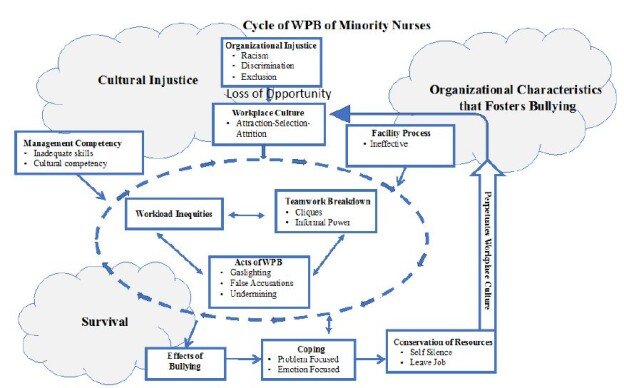
The purpose of this constructivist grounded theory study was to examine the overall experiences of self-reported bullying of female racial/ethnic minority nurses in the acute care/hospital workplace in their own voice through dialogue. Three significant themes describe the antecedents (cultural injustice), contributing factors (organizational stability), and the consequences of bullying (Survival) for the participants. Components of workplace bullying reveal a workplace environment and facility processes that synergistically form the context for experiencing bullying. Workplace culture, the overall work environment, the lack of teamwork, and the formation of workplace cliques represent the structure that makes workplace bullying possible. The participants described the processes that allow WPB to occur, including leadership passivity, lack of facility resources to support those experiencing WPB, deployment of informal power through favored persons as perpetrators of bullying, the vanishing of professional opportunities for those targeted, and sabotaging the quality of work of minority nurses. Ineffective organizational oversight was described that allowed workplace bullying to occur repeatedly while bullying and various coping strategies used against it resulted in self-silencing or leaving the job. The current literature on workplace bullying indicates that racial or ethnic minorities experience bullying more than non-minorities (WBI, 2017). However, contemporary literature lacks sufficient rigor on the racial/ethnic minorities’ perspectives and the circumstances surrounding their experiences. The purpose of this study was to bridge the gap in the literature by examining the experiences of female nurses who self-identify as racial/ethnic minorities that have faced bullying in an acute care hospital setting. This study aimed to understand how these experiences are unique to racial or ethnic minorities and describe specific factors that give rise to these unique experiences using a rigorous type of research inquiry. Understanding these unique bullying experiences and addressing the factors leading to bullying of racial/ ethnic minorities in acute care settings will have numerous benefits to society. The literature illustrates that health outcomes improve when nurses’ racial and ethnic makeup represent the communities they serve. However, if these same nurses are being bullied at higher rates, stripped of their voice, the attrition rate will outpace the replacement rate. The quality of care received by the corresponding patient population cannot improve. Understanding this group of nurses’ workplace bullying experience is essential for creating a supportive place to work. Three themes emerged from the data. These three themes and their subcategories describe the workplace bullying experiences of female minority nurses. They also describe the organizational factors that propagate and perpetuate bullying of these nurses. Figure 1 illustrates these mechanisms. This figure illustrates the mechanism of the perpetuation of workplace bullying in the nursing workgroup. From this view, we can focus on the role of organizational culture and the finding that within an environment fostered by the workplace culture, management competency, and facility process are the breakdown of real teamwork, the rise of cliques, and the inevitable workload inequities that result leading to the acts of WPB. There is a breakdown of collegiality and a lack of a common goal impacting the organization’s output. Coping with silence or leaving the position was the universal result.
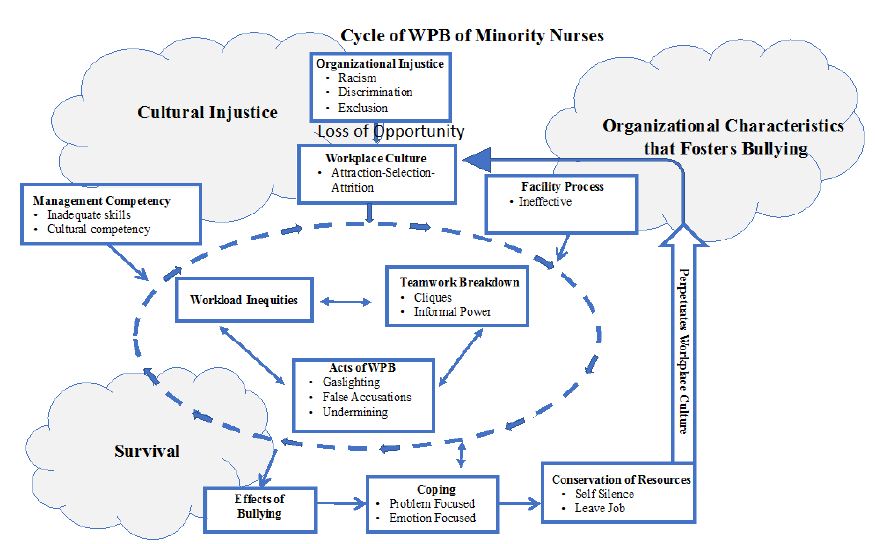
fig 1

Figure 1: Cycle of Workplace Bullying of Minority Nurses

The three themes and their relationship with each other revealed the core social process of bullying, maintaining the status quo through the deliberate attraction-selection-attrition of employees. Bullying maintained the status quo by perpetuating a culture where anyone who did not fit in with the dominant group of the organization was left with a choice to leave the job or become silent. Racism, discrimination, and exclusion make up the theme of organizational injustice, which results in the unfair allocation of opportunity for minority nurses. Racism and discrimination are foundational in all workplace settings, but the degree and how it is manifested may differ. Organizational injustice forms the backdrop and is a precursor for elements within the workplace culture to include facility process and management competency that did not function in a way that could stop or even significantly mitigate these actions. Facility processes were not effective mechanisms for surveillance, to assess the overall workplace culture, or to manage reports of WPB occurrences. One explanation for this could be the attraction and selection of employees that match the status quo in concert with the attrition of the minorities viewed as outliers. The victims of WPB had two options: to leave or be silent if they stayed. In this study, silence or to leave was functionally the same action as either helps maintain the status quo. Those who did not fit in could and did push back but only to the extent that they had personal and professional resources available. These mechanisms describe the theory of structural-functional bullying in nursing Figure 2.
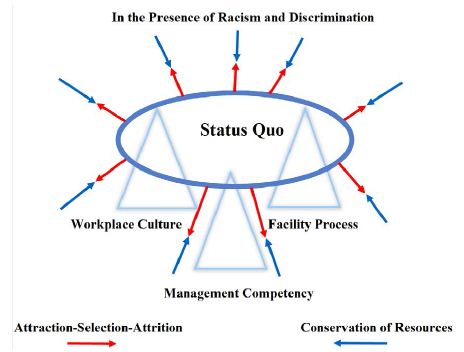
fig 2

Figure 2: Maintaining the Status Quo

Academic literature supports organizational injustice findings [28,29] stated that racism is the initial framework from which discrimination and exclusion can build. In a racist workplace, individuals are far more likely to be excluded and discriminated against [28,29] found that racism by individuals with hiring authority reflected the type of employees they select and to whom they provide promotional opportunities to. At an institutional level, racism becomes depersonalized. The lines between racism, bullying, and discrimination became blurry, and the inability to hold any person or entity directly accountable makes it challenging to address [30]. Workplace Characteristics that Promote Bullying, the data analysis shows that participants experienced flaws in facility processes such as confidential reports being shared with subjects and unions or human resources representatives failing to follow up on bullying reports. Additionally, workplace culture elements fostered bullying and occurred in a spectrum of minimizing complaints to enabling an outright hostile work environment. Participants reported a culture of employees protecting themselves and securing an environment that unfairly blames some employees. Finally, participants reported experiencing issues with managers who lacked credibility or managers who relied on bullying to force employees’ compliance. The attraction and selection of like-minded people that fit the dominant culture and the attrition of those that do not fit in explain the mechanism for workplace culture formation. The Attraction-Selection-Attrition model explains that organizational culture, and the social structure that emerges from it, is built and formed over time by the individuals within that organization. Facility processes such as the Union or other employees’ resources were inadequate to address reports of bullying. In theory, facility processes were in place to improve employee fairness, satisfaction [31,32]. Two typical facility processes in play here were union support for the nurse and the facility process for reporting issues detrimental to the organization and its people. The findings, however, showed little to no positive outcomes of these processes.

Managers in charge of workgroups were unable to mitigate bullying. Managers were recruiting bullies to collect information and bully others. They thrived in a culture of chaos where the employees were fighting with each other. Lack of cultural awareness and management competency may be an agonist for the prevalence of WPB against minorities.

Factors working together made up the workplace structure and culture, including the global environment, management competency, and cliques considered teamwork. These factors, when combined with facility process factors, set the stage for acts of WPB. Organizational complicity allowed the cliques to flourish, permitting discrimination and informal power by individual staff-level employees. Bullying action was allowed within this context, including tactics of gaslighting, false accusations, favoritism, exclusion, and undermining. These structures and techniques tended toward organizational stability though favoring the status quo. WPB was not inhibited, which in turn perpetuated a climate of bullying. The workplace culture that came forward in this study demonstrated how the current environment empowered bullies. Also, the same processes channeled bullying acts because bullies were protected. The result squelched opportunities and destruction of professional dreams that remained out of sight until the individual stories brought it out. The workplace culture demonstrated a contradiction between a caring environment’s expected nature and surface civility, with the participants’ aggressive, non-caring behaviors. As a result of the workplace characteristics, bullying acts were allowed to go on, causing participants to go into a survival mode as they tried to cope with the effects. Consistent with appraisal theory, Survival involved both emotion-focused coping and problem-focused coping. Resulting actions included deliberate attempts at resolution from which silence and leaving became the most common form. The nurse’s choice to consciously become silent seems to result from the desire to control the situation by conserving resources. The concept of resilience can be a factor for participants going through these traumatic events. On the surface, resilience is a term used to denote someone exposed to challenges but can adapt and move on. In biological theory, it involves the concept of natural selection and the phrase “survival of the fittest” [33]. The implication is those who should survive do end up surviving. Resilience [34] can have a positive connotation. Our society values this trait in people [35], but this view does not adequately explain these participants’ experiences with bullying and its aftermath. The self-silencing is not a form of resiliency and does not demonstrate acceptance. The silence is a deliberate effort to conserve resources. Self-silencing represents a functional mechanism to carry on. This study has shown that nurses may be erroneously viewed as “resilient” when, in reality, they may just be avoiding the “stigma” associated with getting bullied. This form of silencing occurs due to the limited energy available to minorities to counter the repulsive force and change the status quo. The minority nurse’s operational decision was to conserve resources and rely on personal support mechanisms to carry on. The self-silencing manifested in ways that were not mutually exclusive, including silence about how one was treated at work in their current position and being silent while leaving the job to take action against bullying. The nurse’s choice to consciously become silent seemed to result from the desire to control the situation by conserving resources. It emerged that self-silencing was mutually beneficial in the short term for both the participant and the organization. In contrast to the individual level experience of self-silencing, maintaining the status quo perpetuates the workplace culture. The status quo is supported by those who bully and self-silence or leave the job. In discussing the themes, another relevant concept is the concept of intersectionality. Kimberlie Crenshaw defines intersectionality as how race, class, gender, and other individual characteristics “intersect” with one another and overlap to influence societal and interpersonal interactions [36]. Intersectionality requires that consideration of the uniqueness of each individual and their personal experiences. As intersectionality became more complex for the participants (i.e., female, black, religious minority), the likelihood of being mistreated from all sources grew. This study’s revelation, needing further exploration in quantitative studies focusing on isolating related variables, separates the perceived impacts of race, gender, and unrelated personal quality on workplace bullying. Many individuals in the study perceived bullying instances to have a racial component, but others may have included a gender component. Women face bullying in the workplace, and individuals belonging to minority groups experience bullying in the workplace, so that those female minority nurses may experience bullying differently [37].

Implications for Policy

Health inequities and health disparities are a significant economic burden on government. For example, while the healthcare costs account for 17% of the gross domestic products, the health care quality in the United States is the lowest among all other industrialized nations [38]. With the increase of minorities in the U.S. population, examining minority nurses and the workplace’s specific challenges is essential in our society’s evolution. Minorities will soon become the majority of the U.S. population. Reducing WPB against minority nurses has ramifications well beyond the proper treatment of individuals. Evidence in the literature shows that improving the influx of minority healthcare workers may remedy the growing health disparities. To retain minorities in the healthcare space, federal governments, and organizations could consider instituting an anti-bullying framework. It is important to frame these findings with the quadruple aim of the Institute of Healthcare Improvement (IHI) for the future success of health care systems worldwide (IHI 2017) [39,40]. In keeping with IHI’s triple aims of excellent quality of care at an optimized cost while improving the health of the population served, one would argue that bullying’s organizational support provides a fertile ground for bullying to occur. Care suffers for both the nurse and the patient, increasing medical errors and decreasing the nurse’s sense of self. Increased turnover and other errors drive up the cost of care. This environment undermines the trust between the frontline nurse, the administration, and the public they serve. IHI’s fourth aim involves improving the work experience of healthcare workers. It links patients’ healthcare experience to the nurses’ overall work experience [41], underscoring the urgency of developing WPB mitigation strategies. Strategies could start with resources to improve cultural competency, focusing on implicit bias, multiple reporting avenues, awareness and training, building a functional support system, and assessing practical teamwork barriers in nursing. It is reported in the literature that many employees are afraid of reporting bullying incidents for fear of reprisal [42,43]. Multiple reporting avenues provide options for employees to select the reporting mechanism with which they feel most comfortable. Anonymous reporting mechanisms should be made available. Many employees perceive that their workplace structure supports a bullying culture [3,44]. It is essential to start, however, to build a culture of trust for employees. Awareness and training are a start to this. As organizations initiate intervention strategies, it is essential to note that reported bullying’s initial frequency and intensity may increase due to heightened awareness of bullying [45].

Study Limitations

This study has several limitations. One limitation is inherent to qualitative studies, in that it is not able to establish correlation or causation between specific variables. The participant sample for this study was appropriate for a qualitative study but too limited to be representative. The findings in this study are not applicable to all nurses, all female nurses, or even all minority female nurses. To establish causation, further studies would need to conduct randomized control trials which are representative of the population they include. However, the workplace factors such as cliques masquerading as teamwork can form the basis for intervention research utilizing model for improvement framework. Similarly, another limitation is the focus on female-only population. While the importance to understand the experiences of all groups of employees to isolate all factors that make up the multidimensional nature of WPB was perceived, this study focused just on female minority nurses due to their exposure to the microcosm of societal and organizational factors that are unique to female experience in a male-dominated society. These dominations operate to silence their voices. Furthermore, even within female participants, there are cultural variations within minority groups that could not be fully explored in a pilot study of this size. In order to fully understand the experience of minority nurses with workplace bullying, it would be important to compare male perspectives and identify areas of similarity and differences. Another limitation of this study was a lack of focus on individual attributes and how they interact with their coworkers. There are many factors which contribute to workplace bullying, including cooperation style, communication style, individual preferences, and inherent characteristics like race or gender. Without understanding the characteristics of the individual nursing being bullied and the individual doing the bullying, it is challenging to understand why bullying occurred and how it could be prevented in the future (Pallesen et al., 2017). Further studies could consider isolating variables which contributed to bullying, which may include the intersectionality of race, gender, and ethnicity and the WPB of nurses.

Conclusion

The constructivist grounded theory method provided a framework to guide participants in examining their bullying experiences in the acute care workplace. A significant finding was the extent to which racism and its companion concepts of discrimination and exclusion are connected. The summation of organizational processes and the participants’ use or non-use of resources revealed a workplace culture focused on maintaining the status quo. Three factors that supported this were workplace culture, management competency, and facility processes. Resistance from those that did not fit-in occurred only to the extent that they had personal and professional resources available. Many participants discussed the lack of resources to assist them in dealing with the environment. All participants made remarks that consisted of either leaving the job or going silent about the bullying. The consistency of such comments across participants clarifies that these coping-related responses, leaving the job or silencing, were crucial aspects of their WPB experience and how to carry on in its aftermath.

This study’s results support the Institute for Healthcare Improvement’s Quadruple Aim Initiative to improve the health of populations, enhance the experience of care for individuals, reduce the per capita cost of health care, and in particular increase the quality of the work experience for healthcare providers by allowing them to attain joy in work (IHI, 2017). Workplace psychological safety and the essential component of cultural competency are integral to improving, rebuilding, and reshaping workplace culture. By promoting cultural competency within its structure and processes, an organization could create a psychologically safe environment for all employees. Also, focusing on attaining joy in the workplace through psychological safety would create an environment where minority and all nurses would want to work, succeed, and flourish.

Funding

No external funding was used for this research.

Conflict of Interest

There are no conflicts of interest with the authors of this research.

Interview Guide

1. Tell me about your experience with workplace bullying?

2. The Bullying that you experienced: Was it an attack on you, personally, against your professionalism/competence, or against you by affecting your work tasks?

a. Personally

Did you have a personal relationship with the bully?

Did you or the bully try to have a personal relationship with each other?

Did the bully ever directly threaten you?

What do You Feel Now?

Are You Able to Move On?

b. Against your professionalism/competence:

Were there attempts to discredit you? Give examples

Do you feel that this has impacted your professional career?

Do you feel that this has impacted your personal life?

Do you feel that this has impacted your health?

c. Against you by affecting your work tasks:

3. Were there attempts to limit or otherwise interfere with your work? Give examples

4. Did this make you change anything you did? How?

5. Upstream Factors

a. Did your workplace tolerate behaviors consistently?

What were some examples of differences?

How did that make you feel?

What if anything, did you do because of this?

6. Did your workplace reward staff consistently?

a. What were some examples of differences?

How did that make you feel?

What if anything, did you do because of this?

7. Did you observe cliques in your workplace?

Did cliques have influence over decisions that affected your work there?

Did you feel pressure to join a clique?

Did this change anything you did or didn’t do at work?

Did this change how you felt at work?

8. Did you observe people attempting to exercise more authority than you thought they had?

a. Was this known to higher authority?

Did higher authority tolerate this?

Did this directly affect you at work?

Did this indirectly affect you at work?

9. Did you observe people at work ever deliberately violate known policy or procedure?

a. Did it affect your work?

Did it affect you?

Did it make you change anything you did at work?

What do you feel now?

Are you able to move on?

10. The bullying you experienced at work, do you feel it affected or changed anything in your life outside of work? Please tell me about that.

11. Has this impacted your personal life (can you explain)?

12. Downstream Factors

a. How do you cope with getting bullied?

b. Do you think getting bullied affects your ability to provide safe patient care?

c. Can you explain?

d. Has getting bullying affected your health?

Examples include: (anxiety, depression, psychological and physiological changes)

Have you had to seek medical or psychological treatment?

13. Reporting

a. Did you report the bullying to anybody?

Do you feel comfortable reporting bullying incidence at work?

Did you notice any consequence to you reporting bullying?

References

  1. Workplace Bullying Institute (2010) Workplace bullying: Recognize and prevent it.
  2. Askew DA, Schluter PJ, Dick ML (2013) Workplace bullying—What’s it got to do with general practice? Aust Fam Physician. 42: 186-188. [crossref]
  3. Hutchinson M, Vickers M, Jackson D, Wilkes L (2006) Workplace bullying in nursing: towards a more critical organizational perspective. Nursing Inquiry 13: 118-126. [crossref]
  4. Grimes-Holsinger V (2018) Reduction of workplace discord through self-awareness and personal de-escalation skills [unpublished doctoral dissertation]. Quinnipiac University.
  5. Vessey JA, DeMarco RF, Gaffney DA, Budin WC (2009) Bullying of staff registered nurses in the workplace: a preliminary study for developing personal and organizational strategies for the transformation of hostile to healthy workplace environments. Journal of Professional Nursing 25: 299-306. [crossref]
  6. American Association of Colleges of Nursing. (2011). Nursing Fact Sheet.
  7. Hurley J, Hutchinson M, Bradbury J, Browne G (2016). Nexus between preventive policy inadequacies, workplace bullying, and mental health: Qualitative findings from the experiences of Australian public sector employees. International Journal of Mental Health Nursing 25: 12-18. [crossref]
  8. Kivimaki M, Virtanen M, Vartia M, Elovainio M, Vahtera J, et al. (2003) Workplace bullying and the risk of cardiovascular disease and depression. Occupational and Environmental Medicine 60: 779-783.
  9. Kline R, Lewis D (2018) The price of fear: Estimating the financial cost of bullying and harassment to the NHS in England. Public Money & Management 39: 166-174.
  10. Asfaw AG, Chang CC, Ray TK (2014) Workplace mistreatment and sickness absenteeism from work: results from the 2010 National Health Interview survey. American Journal of Industrial Medicine 57: 202-213.
  11. LaVeist TA, Gaskin DJ, Richard P (2009) The economic burden of health inequalities in the United States. Washington, D.C.: Joint Center for Political and Economic Studies.
  12. Colosi B (2019) National health care retention and R.N. staffing Report.
  13. Allan HT, Cowie H, Smith P (2009) Overseas nurses’ experiences of discrimination: a case of racist bullying? Journal of Nursing Management 17: 898-906. [crossref]
  14. Chipps E, Stelmaschuk S, Albert NM, Bernhard L, Holloman C (2013) Workplace bullying in the OR: Results of a descriptive study. Association of Perioperative Nurses Journal 98: 479-493. [crossref]
  15. Shannon CA, Rospenda KM, Richman JA, Minich LM (2009) Race, racial discrimination, and the risk of work-related illness, injury, or assault: findings from a national study. Journal of Occupational and Environmental Medicine 51: 441-448. [crossref]
  16. Lindsey AP, Avery DR, Dawson JF, King EB (2017) Investigating why and for whom management ethnic representativeness influences interpersonal mistreatment in the workplace. Journal of Applied Psychology, 102: 1545-1563.
  17. Wang ML, Hsieh YH (2015) Do gender differences matter to workplace bullying? Work 53: 631-638. [crossref]
  18. Tajfel H, Turner JC (1986) The Social Identity Theory of Intergroup Behavior. In: S. Worchel and W. G. Austin, (Eds.), Psychology of Intergroup Relations, Hall Publishers, Chicago, pg: 7-24.
  19. Tajfel H, Turner JC (2004) The Social Identity Theory of Intergroup Behavior. Key readings in social psychology. In: Jost JT, Sidanius J (Eds,), Political psychology: Key readings, Key readings in social psychology, pg: 276-293. Psychology Press.
  20. Guba E, Lincoln Y (1994) Competing paradigms in qualitative research, In: Denzin N , Lincoln Y (Eds), Handbook of qualitative research. Pg: 105-117. Sage.
  21. Charmaz K, Thornberg R, Keane E (2018) Evolving grounded theory and social justice inquiry. In: NK Denzin, YS Lincoln (Eds.), The SAGE Handbook of Qualitative Research pg: 411-443 Sage.
  22. Breckenridge J, Jones D (2009) The grounded theory reviews. An International Journal 8: 1-71. http://www.groundedtheoryreview.com/wp-content/uploads/2012/06/ GT-Review-Vol8-no2.pdf#page=64.
  23. Strandmark KM, Rahm G, Wilde LB, Nordstrom G, Rystedt I (2017) Preventive Strategies and Processes to Counteract Bullying in Health Care Settings: Focus Group Discussions. Issues Mental Health Nursing 38: 113-121. [crossref]
  24. Malecki C, Demaray M (2003) What type of support do they need? Investigating Student Adjustment as related to emotional, Informational, Appraisal, and Instrumental Support. School Psychology Quarterly, 18: 231-252.
  25. Khattak MN, Khan MB, Fatima T, & Shah SZA (2019) The underlying mechanism between perceived organizational injustice and deviant workplace behaviors: Moderating role of personality traits. Asia Pacific Management Review 24: 201-211.
  26. Greer LL, Van Bunderen L, Yu S (2017) The dysfunctions of power in teams: A review and emergent conflict perspective. Research in Organizational Behavior 37: 103-124.
  27. Spence Laschinger HK, Fida R (2014) New nurses burnout and workplace well-being: The influence of authentic leadership and psychological capital. Elsevier 1: 19-28.
  28. Brewer LC, Cooper LA (2014) Race, Discrimination, and Cardiovascular Disease. Virtual Mentor 16: 455-460.
  29. Schilgen B, Nienhaus A, Handtke O, Schulz H, Mösko M (2017) Health situation of migrant and minority nurses: A systematic review. PloS one [crossref]
  30. Came H (2012) Institutional racism and the dynamics of privilege in public health, Thesis, Doctor of Philosophy (Ph.D.). University of Waikato, Hamilton, New Zealand.
  31. Mohammadpour A, Anumba C, Bulbul T, Messner J (2012) Facility management, industrial facilities, occupational safety, health care facilities, safety, decision making, information management. American Society of Civil Engineers Construction Research Congress 2012, Conference Information, May 21-23, 2012 | West Lafayette, Indiana, United States.
  32. Pallesen S, Nielsen MB, Magerøy N, Andreassen CS, et al. (2017) An Experimental Study on the Attribution of Personality Traits to Bullies and Targets in a Workplace Setting. Frontiers in psychology 8. [crossref]
  33. Mistry M, Latoo J (2009) Bullying: A growing workplace menace. British Journal of Medical Practitioners 3: 23-26.
  34. Rosa MW (2000) Some thoughts about resilience versus positive development, main effects versus interactions, and the value of resilience. Child Development 71: 567-569. [crossref]
  35. Oshio A, Taku K, Hirano M, Saeed G (2018) Resilience and big five personality traits: A meta-analysis. Personality, and Individual Differences 127: 54-60.
  36. Crenshaw K (1989) “Demarginalizing the Intersection of Race and Sex: A Black Feminist Critique of Antidiscrimination Doctrine, Feminist Theory and Antiracist Politics,” University of Chicago Legal Forum: Vol. 1989, Article 8.
  37. Woodrow C, Guest DE (2017) Leadership and approaches to the management of workplace bullying. European Journal of Work and Organizational Psychology 26: 221-233.
  38. Squires D, Anderson C (2015) U.S. health care from a global perspective: spending, use of services, prices, and health in 13 countries. Issue Brief (Common Fund). 15: 1-15. [crossref]
  39. Institute for Healthcare Improvement (2017) The triple aim or the quadruple aim? Four points to help set your strategy.
  40. Lewis N (2014) A primer on defining the triple aim. Institute for Healthcare Improvement.
  41. Bodenheimer T, Sinsky C (2014) From triple to quadruple aim: Care of the patient requires care of the provider. The Annals of Family Medicine 12: 573-576. [crossref]
  42. Johnson SL (2015) Workplace bullying prevention: a critical discourse analysis. Journal of Advanced Nursing 71: 2384-2392. [crossref]
  43. Rodwell J, Demir D, Steane P (2013) Psychological and organizational impact of bullying over and above negative affectivity: A survey of two nursing contexts. International Journal of Nursing Practice 19: 241-248. [crossref]
  44. Wilson BL, Diedrich A (2011) Bullies at work: The impact of horizontal hostility in the hospital setting and intent to leave. Journal of Nursing Administration 41: 453-458. [crossref]
  45. Chipps EM, McRury M (2012) The development of an educational intervention to address workplace bullying: a pilot study. Journal Nurses Staff Development 28: 94-8 [crossref]
Featured Image2

The Controversies Concerning the Prevalence of the Neurodevelopmental Conditions ADHD and Autism

DOI: 10.31038/JNNC.2021421


The neurodevelopmental disorders ADHD and autism are among the most important diagnoses in Child and Adolescent Psychiatry and are also important diagnoses in adult psychiatry [1]. The prevalence of diagnosed ADHD varies considerably between countries and regions and one region can report more than twice the prevalence in another region [2,3]. ADHD and autism have been found to have very high heritabilities which implies that environmental factors, although of importance, are not completely decisive for the prevalence of these conditions [4,5]. Studies of ADHD in different countries have shown approximately the same prevalence when using the same strict criteria [6]. The prevalence of ADHD in childhood has been estimated to be in the order of 5 to 6% [7].

Concerning autism, the prevalence has shown a very dramatic increase from less than 1‰ 50 years ago to more than 1% in recent reports. In Korea and some parts of Sweden prevalence estimates of 3-4 % have been reported [8-10]. One reason for this increase can be that more individuals with high functioning autism are diagnosed nowadays, who previously were not regarded as having autism. Going back 30 years in time, 80% of the patients with a diagnosis of autism also had an intellectual disability. In recent reports only about 20% of patients with autism have an intellectual disability [11].

Studies of ADHD and autism have shown that the increase in prevalence is explained by a higher number of patients with low severity of symptoms being diagnosed, while the prevalence of patients with severe symptom load has not increased in the last decade [12,13]. This implies that the increased prevalence is not explained by a true increase in these conditions, but rather a change in diagnostic practices. This has led to a debate among professionals and in the general society. Karlstad et al. have shown that the month of birth has an influence on the likelihood of being medicated for ADHD [14]. The principle of equal rights for all patients to get adequate treatment is obviously not fulfilled. Also concerning autism there has been reported large geographic variation [15]. There has been concerns of an “inflation” risk of being diagnosed with ADHD or autism, as many patients diagnosed have very mild symptoms that might be regarded as part of the normal variation.

This gives rise to several questions: Is there an over-diagnosing of these conditions? Is there a diagnostic substitution so that patients who formerly got another diagnosis now get a diagnosis of ADHD or autism? Are different attitudes and ideology among professionals of importance? There has been a debate between “biologists” and “anti-biologists” concerning these diagnoses as biological factors are regarded as etiologically important for both ADHD and autism. In southern Europe, where often psychodynamic theories are used for the diagnosis and treatment of psychiatric patients, especially concerning children and adolescents, few patients have been diagnosed with ADHD or autism [16,17]. In contrast, the northern European countries, Germany, the Netherlands, United Kingdom, USA, Canada, Australia, and New Zeeland are countries with a high diagnostic frequency of ADHD and autism. Attitudes and expectations from patients, parents, teachers, and the general society, as well as different resources, might influence the likelihood of getting a diagnosis of ADHD or autism. Diagnoses of ADHD or autism might also, in different degree in different geographic areas, be of importance for the patients in order to acquire support from the schools, and for the patients and families to get financial support.

A problem, when discussing the differences in prevalence, is that we do not know the “true” prevalence with absolute certainty, although population based studies point to a prevalence around 5-6 % for ADHD [1] and 1-2% for autism [8,15,18]. All over the world, there has been fast changes in the societies related to the introduction of modern information technology. There have been big changes in the educational system and the labor market, which might lead to increased anxiety among the youth and their parents. A diagnosis of ADHD or autism can lead to better support and protection from difficult demands from school and society. For many individuals a diagnosis of ADHD or autism can lead to a better self-understanding. The diagnoses ADHD and autism both have diffuse limits towards normality and other psychiatric conditions, which may lead to a risk for a displacement of the diagnostic borders. It is thus important to ascertain that there is a clinically significant functional impairment before a diagnosis can be considered. Functional impairment and quality of life are important factors to consider in all psychiatric conditions. The assessment of function and quality of life can be difficult and the ICF (International Classification of Functioning, disability, and health), which still is under development, should be used more extensively in the future [19]. A main problem is that the functioning of a person depends heavily on the environment (demands, expectations, support), i.e. not only the individual should be examined, but also the psycho-social environment. If the society has changed so that more and more individuals are exposed to stress, efforts should be made to reduce important societal stress factors instead of only treating individuals.

Is it possible to prevent over-diagnosing and at the same time give adequate support for patients with ADHD and autism and also to those with sub-clinical problems? These diagnoses share common genetic and environmental risk factors. They are also difficult to separate from other psychiatric diagnoses and from the normal variation. The diagnoses of ADHD and autism seem to constitute the tails of the normal distribution of human traits. Efforts should be made to ascertain that individuals have the same opportunities to get assessment and adequate treatment for their neurodevelopmental disorders, which means that the prevalence of these diagnoses across different geographic locations should not vary too much. What seems most important is that common principles are followed for the diagnostic assessments, including assessments of functional impairment, in diagnosing ADHD and autism. There should be a consensus regarding the cut-off levels for the required severity to get a diagnosis. Efforts to increase the knowledge of ADHD an autism in the society are also of importance. An increased tolerance for human diversity is important so that all individuals, with or without a diagnosis, can get adequate support and can feel that they have their righteous place in the society.

References

  1. Polanczyk GV, Salum GA, Sugaya LS, Caye A, Rohde LA (2015) Annual research review: a meta-analysis of the worldwide prevalence of mental disorders in children and adolescents. J Child Psychol Psychiatry 56:345–65. [crossref]
  2. Faraone SV, Sergeant J, Gillberg C, Biederman J (2003) The worldwide prevalence of ADHD: is it an American condition? World Psychiatry 2: 104-13.
  3. Atladottir HO, Gyllenberg D, Langridge A, Sandin S, Hansen SN, et al. (2015) The increasing prevalence of reported diagnoses of childhood psychiatric disorders: a descriptive multinational comparison. Eur Child Adolesc Psychiatry 24: 173-83. [crossref]
  4. Faraone SV, Perlis RH, Doyle AE, Smoller JW, Goralnick JJ, et al. (2005) Molecular genetics of attention-deficit/hyperactivity disorder. Biol Psychiatry. 57: 1313-23. [croosref]
  5. Tick B, Bolton P, Happé F, Rutter M, Rijsdijk F (2016) Heritability of autism spectrum disorders: a meta-analysis of twin studies. J Child Psychol Psychiatry 57: 585-95. [crossref]
  6. Banaschewski T, Becker K, Döpfner M, Holtmann M, Rösler M, et al. (2017) Attention-Deficit/Hyperactivity Disorder. Dtsch Arztebl Int 114:149-159. [crossref]
  7. Thomas R, Sanders S, Doust J, Beller E, Glasziou P (2015) Prevalence of attention-deficit/hyperactivity disorder: a systematic review and meta-analysis. Pediatrics 135: 994–1001. [crossref]
  8. Sasayama D, Kuge R, Toibana Y, Honda H (2021) Trends in Autism Spectrum Disorder Diagnoses in Japan, 2009 to 2019. JAMA Netw Open 4: e219234. [crossref]
  9. Schendel DE, Thorsteinsson E (2018) Cumulative incidence of autism into adulthood for birth cohorts in Denmark, 1980-2012. JAMA 320: 1811- 1813. [crossref]
  10. Rah SS, Hong SB, Yoon JY (2020) Prevalence and Incidence of Developmental Disorders in Korea: A Nationwide Population-Based Study. J Autism Dev Disord 50: 4504-4511. [crossref]
  11. Rydzewska E, Hughes-McCormack LA, Gillberg C, Henderson A, MacIntyre C, et al. (2019) Prevalence of sensory impairments, physical and intellectual disabilities, and mental health in children and young people with self/proxy-reported autism: Observational study of a whole country population. Autism 23: 1201-1209. [crossref]
  12. Rydell M, Lundström S, Gillberg C, Lichtenstein P, Larsson H (2018) Has the attention deficit hyperactivity disorder phenotype become more common in children between 2004 and 2014? Trends over 10 years from a Swedish general population sample. J Child Psychol Psychiatry 59: 863-871. [crossref]
  13. Arvidsson O, Gillberg C, Lichtenstein P, Lundström S (2018) Secular changes in the symptom level of clinically diagnosed autism. J Child Psychol Psychiatry 59: 744-751. [crossref]
  14. Karlstad Ø, Furu K, Stoltenberg C, Håberg SE, Bakken IJ (2017) ADHD treatment and diagnosis in relation to children’s birth month: Nationwide cohort study from Norway. Scand J Public Health 45: 343-349. [crossref]
  15. Sheldrick RC, Carter AS (2018) State-Level Trends in the Prevalence of Autism Spectrum Disorder (ASD) from 2000 to 2012: A Reanalysis of Findings from the Autism and Developmental Disabilities Network. J Autism Dev Disord 48: 3086-3092. [crossref]
  16. Ponnou S, Haliday H (2020) ADHD Diagnosis and Drug Use Estimates in France: A Case for Using Health Care Insurance Data. J Atten Disord. [crossref]
  17. Reale L, Bonati M (2018) ADHD prevalence estimates in Italian children and adolescents: a methodological issue. Ital J Pediatr 44:108. [crossref]
  18. Kim YS, Leventhal BL, Koh YJ, Fombonne E, Laska E, et al. (2011) Prevalence of autism spectrum disorders in a total population sample. American Journal of Psychiatry 168: 904–912. [crossref]
  19. Madden RH, Bundy A (2019) The ICF has made a difference to functioning and disability measurement and statistics. Disabil Rehabil 41: 1450-1462. [crossref]

Study of the Recurrence Rate in the Treatment in Use Group of Acupuncture and Moxibustion and Non-in Use Group of a Breast Cancer Post-operatively

DOI: 10.31038/JCRM.2021431

Abstract

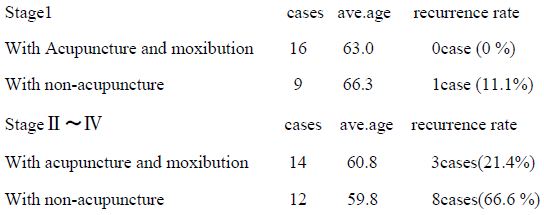
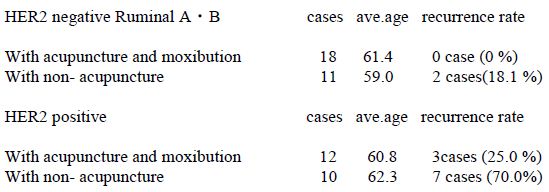
There is a lot of recurrence of breast cancer post-operatively and prescription of an anticancer drug is necessary. But it’s learned that treatment of acupuncture and moxibustion participates in autonomic nerve immunity. So the recurrence rate of 10 years later was considered while investigating a white-blood cell, the number of lymphocyte and monocytes, and TH1/TH2 and CA153, Treg cell every year and 10 years later to 51 cases which shared breast cancer patients of post-operatively with 2 groups. The first group is 30 cases used treatment of acupuncture and moxibustion and the second group is 21 cases of non-in use group, Treatment of acupuncture and moxibustion chose meridian treatment, Traditional Chinese Medicine treatment, Ono system treatment and Nagano system treatment from a pluses diagnosis according to each constitution. A result increased in a lymphocyte and TH1/TH2 ratio significantly 10 years later from the treatment front to non-in use group by a treatment group of acupuncture and moxibustion and T reg cell decreased 10 years later. The recurrence rate didn’t recognize a significant difference stage 1 and Ruminull A and B by low value, but a treatment in use group of acupuncture and moxibustion made recurrence decrease predominantly to non-in use group by stage 2, 3, 4 and HER2 extrovert group.

Keywords

Breast cancer post-operatively, TH1/TH2 ratio recurrence rate, Acupuncture and moxibution treatment Treg cell

Introduction

In Japan a survival rate is 90.6% for breast cancer postoperative ten years on stage 1. But stage 2 is 78.5% stage 3 is 33.0% stage 4 become 10.9%. Of course, a new anticancer agent and an antihormone drugs are developed. But I did not know drugs for effective cancer immunity. Acupuncture and moxibution treatment have participates in autonomic nerve immunity. We provide post-operative breast cancer patients, the first group was operated standard chemotherapy with non-use treatment of acupuncture which are 21 cases, and the second group was operated with treatment of acupuncture and moxibution which are 30 cases and we investigate cancer immunity for WBC TH1/TH2 CA153 Treg cell every year and 10 yaers later. And two groups comparative investigate the rate of recurrence.

Patient Target

Informed consent was got 51 patients of post-operative of breast cancer. One group 21 cases were admitted standard chemotherapy and second group 30 cases was admitted standard chemotherapy with acupuncture and moxibution treatment.

Approach

51 cases we investigate WBC count and Lymphocyte Monocyte percentage, TH1/TH2 ratio, Treg cell count (normal value 8.0 ~34.0%) and the presence of recurrence every year for 10 years later.

Acupuncture Method

Acupuncture and moxibution treatment have two effectiveness for human body [1,2]. One is sedative pain for sympathetic nerve and second is immunity effectiveness for parasympathetic nerve. We stimulate immunity effective that we stimulate disposal acupuncture needle (φ 0.02 mm) in depth 3-4 mm from the skin. And acupuncture point we select according pulse diagnosis traditional Chinese theory and Japanese nagano system, Ono system and meridian diagnosis system. For example, the nagano system suggest blood stasis stimulate tyuuhou (LV4) and syakutaku (L6), liver meridian emptiness stimulate eyou (B35) daityouyu (B25). Ono system suggest neck tenderness diagnosis tenntyuu (B10) is kidney meridian emptiness stimulate taikei (K3) and huyou (B59). Chinese traditional medicine suggest kidney meridian emptiness stimulate hukuryuu (K7) and keikyo (L6) [3-5]

Examination

For every year we examinate white blood cell count and lymph/monocyte percent, TH1/TH2 ratio, Treg cell count.

And breast cancer marker CA153 and the last existence of recurrence of local and distance for MRI and CT 10 years later.

Statistics

Significant difference between two groups for mann-whitney’s method.

Result

Group 1 (30 cases) enforced chemotherapy with acupuncture and moxibution treatment

First diagnosis WBC: 3080 ± 882 μ/mL, lymphocyte/monocyte:20.2 ± 4.6 /6.8 ± 2.4% TH1/TH2: 20.4 ± 12.8/4.9 ± 3.8 (ratio4.1) CA15-3:15.8 ± 6.8 μ/mL, Treg: 58.0 ± 14.8%. 1 year later WBC: 3409 ± 1084 μ/mL Ly/Mono:28.6 ± 35.5/4.5 ± 43.8%, TH1/TH2:24.8 ± 3.8/3.0 ± 0.8 (ratio8.2), CA15-3: 12.4 ± 3.8 u/mL Treg: 49.2 ± 20.1%. 5 years later WBC: 3808 ± 1209 μ/mL, Ly/Mono:30.4 ± 6.1/3.8 ± 2.0*, TH1/TH2:30.2 ± 3.8/3.0 ± 0.8 (ratio7.9) **CA15-3:10.8 ± 2.9 u/mL, Treg: 20.2 ± 13.4%***. 10 years later WBC: 3804 ± 2004 μ/mL Ly/Mono:31.2 ± 4.2/3.2 ± 1.6※, TH1/TH2:31.4 ± 6.8/3.0 ± 0.5 (ratio10.4) ※※ CA15-3:10.8 ± 2.9 u/mL, Treg:8.6 ± 5.5%※※※.

We saw significant difference 5 years later and 10 years later for the first diagnosis examination about lymphocyte/monocyte TH1/TH2 ratio and Treg cell. And recurrence rate stageⅠ cases (16 cases average age 63.0 y.o.) was 0% and stage II~IV cases (14 cases average age 60.8 y.o.) saw 3 cases recurrence and its ratio was 21.4%.

Second group was 21 cases enforced chemotherapy with non-acupuncture treatment.

First diagnosis: WBC: 2897 ± 998 μ/mL, Ly/Mono1 8.9 ± 3.9%, TH1/TH2:20.6 ± 8.8/5.2 ± 3.0 (ratio 6.8) CA15-3:28.9 ± 4.7 u/mL Treg: 55.2 ± 10.8%. 5 years later:WBC:3208 ± 1090 μ/mL Ly/Mono:20.8 ± 6.0/6.1 ± 3.6%, TH1/TH2:20.6 ± 8.8/5.2 ± 3.8 (ratio3.9) CA15-3:28.9 ± 5.0 u/mL, Treg: 52.4 ± 21.4%. 10 years later:WBC:3200 ± 826 μ/mL, Ly/Mono:18.4 ± 4.4/5.8 ± 4.0% TH1/TH2:18.4 ± 4.0/5.0 ± 3.8 (ratio4.8) CA15-3:20.4 ± 3.8 u/mL Treg: 50.2 ± 26.8%

We saw TH1/TH2 Treg cell no difference between every examination and recurrence ratio was stageⅠgroup (9 cases ave. age 66.3 y.o.) 11.1%. 1 case was seen bone metastasis. And stage II~IV 12 cases (ave. age59.8 y.o.) was seen 8 cases recurrence (66.6%) 10 years later (Figure 1).

fig 1

We saw significant difference to a relapse rate in an acupuncture treatment group and non-acupuncture group for stage II~IV ten years later. (Relative risk p<0.320).

The rise in ratio of TH1/TH2 and the drop of the Treg cell were in particular remarkable. (Relative risk p<0.021) and we saw Ruminal type A・B (HER2 negative) acupuncture treatment group are 18 cases seen recurrence 0 case (0%) but non-acupuncture group (11 cases) was seen recurrence 2 cases (18.1%) and HER2 positive group acupuncture treatment (12 cases) was seen recurrence 3 cases (25%) but non-acupuncture treatment (10 cases) was seen recurrence 7 cases (70%) for 10 years later (relative risk p<0.435) (Figure 2).

fig 2

Consideration

Standard chemotherapy is done after operation of the breast cancer, but the relapse rate is not low at all. It is thought that it has a drop of the cancer immunity and participation of the Treg cell. TH1 cell conduct killer T cell with the help of cytokine INFγ, IL-6 and TH2 cell disturb a function of cytokine [6-8]. In other words, we can induce cancer immunity will if the TH1/TH2 ratio is high. In addition, it is thought the Treg cell controls an effect of the chemotherapy [9-11]. We pay attention of the parasympathetic nerve of the acupuncture and moxibution treatment, I added acupuncture and moxibution treatment to the breast cancer postoperative cases. We thought the result acupuncture and moxibution treatment group watched the rise in TH1/TH2 ratio and drop of the Treg and reduced a relapse rate in predominance.

Conclusion

It can let cancer immunity have the top by a rise of TH1/TH2 and the drop of the Treg cell to use acupuncture and moxibustion treatment together during breast cancer postoperative chemotherapy and can reduce a recurrence in its turn. You should use acupuncture and moxibustion treatment together during chemotherapy.

References

  1. 水嶋丈雄著.鍼灸治療への科学的アプローチ.三和書籍.2012: 19-21. (Mizushima T.: Scientific approach of acupuncture and moxibution).
  2. 首藤伝明著.経絡治療のすすめ.医道の日本社.2015: 97-120. (Syudou D.: The advice for meridian treatment of acupuncture).
  3. 陸寿康著.鍼灸手技学.東洋学術出版社.1992: 100-120. (Riku K.: Maneuver study of acupuncture).
  4. 衷中会編.臓腑経絡・三焦の弁証と処方.医歯薬出版.2000: 263-273. (Demonstration of Entrail and meridian of traditional chinese medicine).
  5. 小野文恵著.鍼灸臨床入門.医道の日本社.1988: 10-28. (Oon.B.: Medical practice of acupuncture and moxibution).
  6. Sakaguchi S (2005) Nature Immunology 6(4): 345-352. [crossref]
  7. De Oliveira, CE et al, (2017) Molecular Cancer Therapeutics, September.
  8. Zwang NA, Leventhal JR (2017) Journal of the American Society of Nephrology 28(7). [crossref]
  9. Ohmi Y (1996) Tumor-specific targeting of T helper type I (TH1) cells by anti-CD3 ☓anti-c ErbB-2 bispecific antibody Cancer Immunol Immunother 48: 456-452. [crossref]
  10. Nishimara T (1999) Distinct roll on antihen-specific T helper type I (Th1) and Th2 cells in tumor eradication in vivo. Exp Med617-628. [crossref]
  11. Kitamura H (1999) The natural killer Tcell ligand α‐galactosylceramide demonstrates its immnnopotentiating effect by inducing IL-12 production by dendritic cells and IL-12 receptor expression on NKT cell J Med 1121-1127. [crossref]

Good Practices on Labour and Birth Care

DOI: 10.31038/IJNM.2021213


The implementation of good care practices for normal childbirth and the reduction of unnecessary interventions, recommended by the World Health Organization since 1996, has been reinforced by the Brazilian Ministry of Health through successive public policies [1]. The literature, however, suggests that there are gaps in the understanding of the work process of professionals who work in childbirth care, and there is low adherence to practices based on scientific evidence by the group [2]. A few decades ago, when a woman would begin labour, she would start the so-called pilgrimage in search of a bed in maternity wards. When she would get a place, she would be admitted without the right of a companion. Conducting labour included fasting, enteroclysis, trichotomy, routine venous hydration, routine oxytocin, collective pre-delivery, lithotomy delivery, routine episiotomy, kristeller maneuver, among other practices without scientific evidence. The parturients did not question the medical or nursing conduct. They remained passive throughout labour and delivery, entrusting their bodies to the “protagonists of birth”.

As it is an event that involves cultural processes, individual and social interactions, with different powers and legitimacy, the implementation of the new model develops with excessive delay. However, a lot has already been done, since this process is in full development and there is no turning back. Scientific evidence reveals that during labour and delivery it is extremely positive for the mother and the child the presence of a companion, the assessment of foetal well-being, the offer of liquids and a light diet, non-pharmacological pain relief, walking encouraged, freedom of position and movement, empathic support by service providers, the provision of information on the progress of labour or any guidance the parturient may require during this period [3,4]. Literature also suggests that good practices need to be disseminated and incorporated into the daily lives of all middle and senior professionals who permeate the birth scenario. However, if the proposal is to change the model with a theoretical and practical grounding of humanized obstetric care, orientation needs to take place since the training of these professionals, in order to compose the curriculum of the political-pedagogical project of the courses [5].

The existence of nursing residency programs has shown to be a particularly strong influence for changing the model, especially when the course is guided by the ideology of care centred on women, encouraging the use of good obstetric practices, reducing unnecessary interventions, the de-medicalization of health, the promotion of autonomy and women empowerment [5]. Bearing in mind that part of today’s preceptors come from the old training model that they have received as student-residents and reproduce the biomedical and hospital-focused models, there is a clear need for greater investment in obstetric residency programs, as well as in the processes of care providers’ work to promote a more innovative and less conservative approach to care [3]. Pedagogical practice is a process that is intrinsically linked to the articulation of theory and teaching practice, which is built and rebuilt in daily life and so it must be transformative and involve the multiple dimensions of the teaching-learning process, from teacher training, student profile, teaching methodology, learning objectives and curriculum, teaching strategies, educational assessment to the relationship between teacher and student [6]. In this context, it is suggested to strengthen actions that promote greater adherence to the best care practices, both in relation to the organization of labour and birth care, as well as the attitudes and values of health professionals, granting more in-depth training and qualification to care providers in order to improve care management using a holistic and evidence-based approach, centered on self-care, humanization, security, and human rights [3]. There are many challenges facing the proposal to change the model and include the training of new professionals, the qualification of the agents involved in training, and the organization of childbirth care services, in order to standardize and make use of good protocols and good clinical guidelines already published by the World Health Organization corroborating to the standardization of protocols, building trust among the team and assuring that everyone is guided by the same clinical precepts, regardless of where they were trained. The ongoing change in the labour and birth scenario is the result of countless collective processes that seek the implementation of well-conducted public policies, efforts by local administrators, change in the attitude of former workers in the face of new evidence, women’s organized movements and, without a doubt, the qualification of the training of new professionals forged in the expertise of Good Obstetric Practices.

References

  1. Gottems LBD, Carvalho EMP de, Guilhem D, Pires MRGM (2018) Boas práticas no parto normal: análise da confiabilidade de um instrumento pelo Alfa de Cronbach. Revista Latino-Americana de Enfermagem
  2. Carvalho EMP de, Göttems LBD, Pires MRGM (2015) Adherence to best care practices in normal birth: construction and validation of an instrument. Revista da Escola de Enfermagem da USP 49: 889-897.
  3. Carvalho EMP de, Amorim FF, Santana, LA, Göttems LBD (2019) Avaliação das boas práticas de atenção ao parto por profissionais dos hospitais públicos do Distrito Federal, Brasil. Ciência & Saúde Coletiva 24: 2135-2145.
  4. Leal MC, Bittencourt SA, Esteves-Pereira AP, Ayres BVS, Silva LBRAA, et al. (2019). Avanços na assistência ao parto no Brasil: resultados preliminares de dois estudos avaliativos. Cad Saúde Pública
  5. Carvalho EMP de, Göttems LB, Amorim FF, Guilhem DB (2020) The training of obstetric physicians and nurses to change the obstetric model in Brazil: A view of the preceptors in the training process. Journal of Nursing Education and Practice, 10.
  6. Fonseca NV, Carvalho EMP de, Göttems LBD (2020) A formação de técnicos de enfermagem para a promoção do cuidado à saúde da mulher. Comunicação em Ciências da Saúde.
fig 2a

River Ganga: Policy Interventions

DOI: 10.31038/GEMS.2021324

Abstract

Failure of various Ganga cleaning programmes in past 3 decades forced the Indian Government to launch yet another ambitious plan in 2015, named as “Namami Gange”. Apart from inclusion of few new initiatives, this plan is the repetition of previous plans in terms of approach, management, and overall agenda. Ganga, the national river of India, which has been globally recognized for decomposing organic wastes at the rate 15-25 times faster than any other river [1], is now one of the most polluted rivers of the world [2]. It indicates that there have been some untouched and/or neglected aspects in policy formulation, and most important, in understanding the peculiarity of this river.

Keywords

Namami Gange; policy; pollution; River Ganga

Issues of concern and political apathy

More than 2,900 million liters of sewage [3] and 700 million liters of industrial effluents [4] join the river on daily basis. 194 major drains along the river stretch also discharge approximately 9,300 million liters of waste per day [5]. In addition, there are thousands of villages along the 2,525 km of the river course, most of which are characterized by lack of hygiene and sanitation facilities, resulting in discharge of untreated waste. Solid waste, including plastics, also makes its way into the river [6]. Floating dead bodies, animal carcasses, mass bathing, and other ritualistic practices also contribute their significant share. To assimilate such a huge amount of waste, river does not have sufficient ecological flow owing to various hydropower stations, irrigation canals, and water abstraction for drinking / industrial / commercial purposes. Reduction in southwest monsoonal rainfall over the Ganga basin is also a reality [7]. All this has led to the situation where Ganga can no longer be able to provide its ecosystem services to the full extent. In past 30 years, numerous efforts took place at the government and institutional levels to purify the Ganga; but the complex web of centre-state relations, bureaucratic hurdles, and corruption have resulted only in the wastage of huge amount of public money with minimal results. Notably, in the starting phase of action plans, 100% funds were given by the central government. From 1993, 50:50 sharing of funds was adopted by states and centre, which later changed to 30:70 i.e. (involved) states were required to contribute 30% of capital, and operation and maintenance cost; while the central government contributed the rest 70%. This financial arrangement also proved to be unsustainable for the states in the long term and eventually, central government contributed 100% towards the funds as well as planning. In all these scenarios, local municipalities, which are the foundation stone for the implementation and success of any project, were left out of the decision making. These institutions have never been authorized to fund the operation and maintenance of the facilities through local resources, which ultimately resulted in the collapse of expensive infrastructure. Lack of political will, lacunae in enforcement of environmental laws, and unplanned developmental activities have further acted as catalysts in the malfunctioning of the entire system. Technological challenges have also played a significant role in the overall mis-management. Previous policies have mainly focused on the establishment of sewage treatment plants in order to arrest pollution in the river. Huge investments were made for the advanced energy intensive technologies; however, the issue which was forgotten was the local conditions to operate the facilities. Analysis reveals that at the planning stage, there was always existed massive gap between the vision and the on-ground implementation. Approach has always been to use the world class technologies, but constant inflow of funds to meet operation and maintenance cost, continuous power supply to run the facilities, skilled labor, and effective and responsible operation could not be ensured. It led to the under-performance and in some cases, shut-down of the wastewater treatment facilities. Nevertheless, in many of the cities where STPs were established, there is still no sewerage system for conveying city sewage up to the STPs, thus turning the whole purpose futile. On the other hand, open defecation practice is still prevalent in many rural and urban areas. Although government has created millions of toilets under its ‘Clean India Mission’, but their regular usage is doubtful because, in a country like India where 97 million people are surviving without any access to improved sources of drinking water [8], using water for sanitation is deemed as wastage. In such a situation it is not surprising that diarrhea alone is the third leading cause of childhood mortality in India [9]. What was wrong here was the lack of understanding to maintain co-relation between the sanitation and water availability. Development of water-less toilets would have been an attractive option to motivate people for their use.

Policy Recommendations

Till date, Ganga clean-up programmes in India have been designed on the lines of remediation plans of foreign rivers (e.g. Thames River, Rhine River etc.) forgetting the fact that Ganga is much different from those rivers. Ganga is a South Asian river which holds attributes of geographical, geological, social, and cultural uniqueness and therefore, management efforts are also needed to be exclusive.

Figuring out the full picture

It is known that ~70-80% pollution load in this river comes from the municipal sewage. However, rest of the pollution can be attributed to various industrial effluents and other important sources [10]. Incomplete estimation of the pollution sources and focus on only single issue has been one of the major reasons for the failure of previous policies. Solid waste dumping into the river has not been given much attention. Huge gap lies between the solid waste generation and available treatment capacity (Figure 1). Non-point source pollution is also very significant but it has been altogether neglected in earlier approaches. Agricultural pollution is the most significant non-point source, considering the fact that India is an agrarian country. Cultivation area is decreasing every year and therefore in order to enhance production, huge quantities of chemical fertilizers and pesticides are often applied blindly (Figure 2). Runoff from more than 6 million tons of fertilizers and 9000 tons of pesticides (including DDT) are added annually into the Ganga11. These agro-chemicals slowly accumulate in the river-bed sediments which often act as sink for various chemical species and heavy metals [12]. Hence, there is need to focus on such farming systems that will reduce agricultural pollution while maintaining farm income. More emphasis needs to be given for adoption of organic farming practices. Rural landscape management is also an impressive programme which ensures the conservation and management of ecosystems by handling non-point source pollution [13-14]. Government also needs to play an effective role for the formulation and implementation of laws and regulations in order to control pesticide/fertilizer pollution (Insert Fig 1-2).

FIG 1

Figure 1: Solid waste generation and available treatment capacity in the Ganga states Data source: Lok Sabha, India)

fig 2a

fig 2b

Figure 2: Increasing usage of chemical fertilizers (a) and decreasing land area under cultivation in India (b) depicts that significant amount of un-utilized chemicals might be contributing to non-point source pollution Data source: Agricultural statistics at a glance, India)

Previous policies also lacked initiatives for the estimation of river sediments. Sediments analysis in river bed is highly desirable as Ganga is supposed to carry approximately 403 – 660 × 10 [6] tonnes of sediments annually [15], of which 88% of the annual sediment load is restricted only during monsoons [16]. Further, high density of dams and barrages in upper reaches of Ganga trap the sediments and thus hinder their smooth flow resulting in the impact on overall ecological characteristics and water quality of the river. It is therefore advised that sediment load analysis and management should be made an inclusive part of the Ganga rejuvenation policies.

Coordinated efforts

In India, there are many governing bodies which work in an un-coordinated manner. There is Ministry of Jal Shakti, which is an apex body for formulation and administration of rules and regulations for development and regulation of water resources in India. Ministry of Environment, Forest, and Climate Change deals with conserving natural resources including rivers, along with the prevention and abatement of pollution. And, Ministry of Rural Development aims to provide urban amenities in rural areas. Apart from these, there are numerous other agencies, authorities, and pollution control boards at both the centre and state levels. Un-coordinated efforts among these bodies often lead to delays / non-implementation of the projects, mis-management of funds, corruption, duplicacies, conflicts, and finally, the failure of initiatives. To minimize such things, a tremendous upheaval is required in the existing system through a well-planned set-up with overall aim to curb pollution. Various non-governmental organizations, private enterprises, and public should also be involved. Proper documentation and information dissemination also needs to be maintained in order to keep the system transparent and accountable.

Embracing the change

Change in mindset and attitude plays a big role. As of now, there are numerous rules and regulations in the country, but those are hardly practiced. Upon violation, the common tendency among the citizens / industries is to bribe the officials and get away from the cumbersome process of litigation. Therefore, changes in the law-making and enforcement are highly desirable. Further, it is also necessary to carry out extensive ground level studies to estimate the performance of any advanced water treatment technology in Indian scenario before its implementation. Unsustainable development of numerous projects in the Ganga basin shall only paralyse the already suffering river [17] and therefore, impact/risk assessment methods should not be made lenient in order to promote development. Also, industries can be leveraged with the additional responsibility of treating and re-using their effluents to the maximum extent possible. Ganga rejuvenation is the responsibility of each and every citizen and hence, at the individual level there is immense need to bring changes in values, attitude, and behavior towards water. Education and awareness are extremely important for this. Importance of clean and uncontaminated water resources needs to be understood by everyone. Minimization of waste generation and attitude to re-use the things is highly recommended in this regard. Reducing the pressure on the ecosystem services which a river can provide might further help in the overall improvement in the health of the river.

Conclusion

There is necessity to understand the loopholes in the existing system and willingness to overcome. Comprehensive assessment of the policies is required before and after implementation and authorities need to be made accountable for their actions. Although, some initiatives are being taken by the Indian government but those are not enough. Effective policy framework along with the mass awareness is highly solicited in Indian context.

Declaration of Interest Statement

Authors declare that there are no conflicts of interest.

Funding

This research did not receive any specific grant from funding agencies in the public, commercial, or not-for-profit sectors.

References

  1. Bhargava DS (1981) Ganga, the most self purifying river. In: Proceedings of International Symposium on Water Resources Conservation, Pollution and Abatement, Roorkee, India.
  2. Rai B (2013) Pollution and conservation of Ganga River in modern India. J. Sci. Res. Pub 3 : 1-4.
  3. http://www.hindustantimes.com/delhi-news/ganga-receives-2-900-million-ltrs-of-sewage-daily/story-SApumDD2zFUTUtb3AtpC9K.html (accessed 12 October, 2017).
  4. http://www.dnaindia.com/india/report-700-mn-litres-of-waste-dumped-each-day-cpcb-2384790 (accessed 12 October, 2017).
  5. Central Pollution Control Board (CPCB) Report, Identified and priority drains in phase / segment wise, Personal Communication, 2017.
  6. Lebreton LCM, Zwet JV, Damsteeg JW, Slat B, Andrady A, et al. (2017) River plastic emissions to the world’s oceans. Nat Commun 8 : 1-10.
  7. Paul S, Ghosh S, Oglesby R, Pathak A, Chandrasekharan A, et al. (2016) Weakening of Indian summer monsoon rainfall due to changes in land use land cover. Sci Rep 6 : 1-10.
  8. http://www.who.int/water_sanitation_health/monitoring/jmp2012/fast_facts/en/ (accessed 20 August, 2017).
  9. Lakshminarayanan S, Jayalakshmy R (2015) Diarrheal diseases among children in India: Current scenario and future perspectives. J Nat Sci Biol Med 6 : 24-28. [crossref]
  10. Dwivedi S, Mishra S, Tripathi RD (2018) Ganga water pollution: A potential health threat to inhabitants of Ganga basin. Environ Int 117 : 327-338. [crossref]
  11. UNDP Human Development Report (1998) Oxford University Press, NewYork, , pg : 69.
  12. Pandey J, Singh R (2017) Heavy metals in sediments of Ganga River: up- and downstream urban influences. Appl Water Sci 7 : 1669-1678.
  13. Idda L, Madau FA, Orru E, Pulina P, Sini MP (2005) Efficacy of European policies on rural landscape: the case study of Sardinia (Italy), XIth Congress of the European Association of Agricultural Economists, , Copenhagen, Denmark.
  14. Estrada-Carmona N, Hart AK, DeClerck FAJ, Harvey CA, Milder JC (2014) Integrated landscape management for agriculture, rural livelihoods, and ecosystem conservation: An assessment of experience from Latin America and the Carribean. Landscape Urban Plan 129 : 1-11.
  15. Subramanian V, Ramanathan AL (1996) “Nature of sediment load in the Ganges-Brahmaputra River systems in India” in Sea-level rise and coastal subsidence, Coastal Systems and Continental Margins. Springer, Netherland 2 : pg : 151-168.
  16. Subramanian V (1996) The sediment load of Indian rivers – an update, Erosion and sediment yield: Global and regional perspectives, Proceedings of the Exeter Symposium. IAHS Publication no. 236.
  17. Pandit MK, Grumbine RE (2012) Potential effects of ongoing and proposed hydropower development on terrestrial biological diversity in the Indian Himalaya. Conser Bio 26 : 1061-1071. [crossref]
fig 12

Bionomic Parameters Significance in Covid-19 Contagion Dynamics, Monza-Brianza Province (Italy)

DOI: 10.31038/PEP.2021231

Abstract

Background: In etiopathology, a reductionistic asymmetry favors biology and marginalizes ecology. This misunderstanding is a challenge to overcome because health and disease depend on the entire life organization’s state. This research underlines how the Bionomics discipline is capable of completing the study on Covid-19 contagion dynamics in Monza-Brianza province.

Methodology: After a recall of the principles of Bionomics, the bionomic state of the Monza-Brianza (M-B) province is exposed. The bionomic functionality (BF) of each municipality, evaluated as landscape unit (LU), is compared with the mortality rate (MR) and the Covid-19 infections (%).

Results: Bionomic functionality (BF) emerges as the strongest correlation in opposition to the ecological density of the population, which becomes dominant after 2.5% of infected people. Other parameters, as PA (population age), seem to be less critical.

Interpretation: Environmental exposure and exchanges, and their interaction with the body’s biological systems and apparatuses, play an essential role in disease development. The main processes will be underlined. Significantly Prevention must change perspective, leading Medicine more systemic, from sick care to health care.

Keywords

Covid-19, Landscape Bionomics, contagion dynamics, macro-scale biologic processes.

Introduction

In many seminars and publications, Ingegnoli affirmed that traditional Biology focused on small scales (from biomolecule to the organism) is still mainly reductionist, so marginalizing broad scales (from community to landscape and biosphere). For instance, Medicine seems to be interested only in traditional Biology. Nevertheless, the ‘rock in the pond’ [1] of the Systemic Turn in scientific paradigms imposes to change our vision: biology does not concern only micro-scales.

We can see that the biological studies on bio-chemical molecules, genetics, viruses, metabolism brought to great successes, but also made insidious errors as, for instance, the statement of DNA as the “central dogma of molecular biology” [2], wrong because the DNA is not a set of formed characters but a set of potentialities [3]. Another tricking error is just the marginalization of macro-scales, which brought to refuse a proper scientific role to the researches in this field. In Medicine, we can see two reactions: (a) many researchers think even today to the fallacy of ecological aspects in etiology, and (b) some doctors app It is deepening the Systemic Theory,  the difference between what reciate the problems that come with environmental degradation but, generally, see them as someone else’s problem to solve, while they focus on repairing the damage. So, it is not entirely clear what the medical profession/students are meant to ‘do’ with the ecological problems and how they can use them to help patients. However, recently, some Medical communities recognize that human alteration of Earth’s ecological systems threatens humanity’s health. This fact has given rise to Global Health and Planetary Health, which are interdisciplinary while, first of all, they must be systemic and pursue a preferential relationship between advanced Ecology and Medicine [4].

This misunderstanding between Medicine and Ecology is a challenge: we must overcome this impasse! Thus, we cannot discuss the unity of Life, but we have to understand better how its scalar interrelations may influence our health. The alterations of Life at macro-scales can damage human health, not unlike at small ones. Note that the underestimation of the environment is rooted in Neo-Darwinian’s thinking: concepts such as the struggle for existence and natural selection are metaphors [5], not theories, so Darwin’s hypothesis becomes “the best-adapted individuals are more likely to have descendants.” Thus, other limits of Darwinism appear:

  • In biology, it is possible to demonstrate that the struggle for existence is less significant than cooperation and symbiosis [6, 7];
  • Mathematics has shown that in a complex system, a random variation always produces damage: e.g., Arnold, Moser, and Kolmogorov’s theory, [8];
  • Bio-semeiotics has shown that, in addition to genetic codes, there are other organic and mental codes [9] involved in evolution;
  • The epigenetic control of gene expression due to DNA methylation demonstrates that the phenotype is not directly expressed by the genotype [10], and part of the genome’s methylation pattern can be inherited in the Lamarckian sense.

The dependence of gene expression on the environment is now clear, as confirmed by Psycho-Neuro-Endocrine-Immunology [11]. We move from a mechanistic vision to a complex and systemic one: not only what is written in the sequence of the DNA bases matters, but also their modulation due to the information that the environment and behavior express.

After this introduction, we can see that overcoming the mentioned misunderstanding between Medicine and Ecology needs a theoretical premise on Landscape Bionomics [12] and an example of application that correlates bionomics, landscape health, and a disease’s incidence.  Starting from a recently published study on Covid-19 incidence in the province of Monza-Brianza at the beginning of this pandemic (March-November 2020) [13], it could be stimulating to complete the study on this contagion dynamics in the second substantial increase (November 20-May 21). Therefore, an innovative discussion will follow.

Theoretical References

From Traditional Ecology to Bionomics

Traditional Ecology asserts that Life organization consists of hierarchic levels: cell, organism, population, communities (i.e., the “biological spectrum” sensu EP Odum [14]) and their life support systems. However, we may observe that the world around Life (an organism, a community) concerns other life systems; so, the concept of ‘support’ must be changed into that of ‘integration’. That is why the concept of Life cannot be limited to a single organism or a group of species, but it also includes ecocoenotopes, landscapes, ecoregions, and the entire ecosphere (eco-bio-geo-noosphere): as all remember, the Gaia Theory [15] has claimed that the Earth can be considered a near-living entity.

Inquiring into what stated by Bionomics (i.e., the Theory of Life Organization on Earth) [12,16,17], Life on Earth is a complex open process, operating as a hyper-complex system with a continuous exchange of matter, energy, and information with its environment: information is the exchange (interrelation) that allows the emergence of cognitive distinction (order) between players (the components of the system). Thus, Life on Earth is organized in a hierarchy of six interrelated space-time-information levels (Tab.1)and each level cannot exist without its proper environment because of these integrations and exchanges.

Understanding the Systemic Theory, it is evident the difference between what exists (Real Systems: Life on Earth organized in Living Entities) and the different approaches to studying the environment (viewpoints). As exposed in Tab.1: it is a complete transformation of the main principles of traditional ecology by being aware that hierarchical levels are types of living complex systems; so, it is possible to define a state of health for each level.

Table 1: Hierarchic levels of Biological Organisation on the Earth

Scale of Real Systems

Viewpoints BIONOMICS
SPACE1 CONFIGURATION  

BIOTIC2


FUNCTIONAL3

CULTURAL-ECONOMIC4

Global (Earth)

Geosphere

Biosphere Ecosphere Noosphere

Geo-eco-bio-noosphere

Continental (Region)

Macro-chore

Biome Biogeographic system Regional Human systems

Ecoregion

Territorial (Province)

Chore

Set of communities Set of Ecosystems District Human systems

Landscape

Local (District)

Micro-chore

Community Ecosystems* Local Human systems

Ecocoenotope

Stationary

Habitat

Population Population niche Cultural/Economic

Meta-population

Singular

Living space

Organism Organism niche Cultural agent

Meta-organism

1= not only a topographic criterion, but also a systemic one; 2= Biological and general-ecological criterion;

3= Traditional ecological criterion; 4= Cultural intended as a synthesis of anthropic signs and elements;

Bionomics = Types of living entities really existing on the Earth as spatio-temporal-information proper levels

*The term Ecosystem may be available following the functional viewpoint but, if we refer to the whole system, it must be identified as Ecocoenotope.

Some Basic Concepts of Environmental Functionality

As one can read within the book “Frontiers of Life,” edited by Baltimore, Dulbecco, Jacob, and Levi-Montalcini and published by Treccani (Rome) and Academic Press (Boston) 1999-2001, the section on Landscape Ecology [18] already stated that…

(a) Processes allowing life definitions are ontological, but each specific biological level emerges, expressing these processes adequately.

(b) The relation between pathology and ecology of the systems will allow a diagnosis of each of them in a clinical sense.

(c) Territorial and regional space-time-information scale and the related living systems (landscape and ecoregions) are the most directly involved in human pathology insurgence.

(d) Both the landscape and the system of landscapes (=region[1]) are complex systems, existing as a biological entity within an entire Life’s Hierarchy, whose character and behavior are morethan the result of the action and interaction of natural and human components [18]. Thus,

(e) The landscape structure is not an ecological mosaic, as stated by conventional ecology, but an ecotissue: a multidimensional structure, as a histologic tissue, which represents the hierarchical intertwining of the ecological upper and lowers biological levels and of all their relationships within the landscape (Fig.1, a).

(f) As living systems, landscapes are self-organizing, adaptive, dynamic, self-regulating, dissipative, metastable.

(g) The crucial role in ensuring Life and structuring landscapes pertains to vegetation communities, the physiology of which leads to the concept of the ‘latent capacity of homeostasis’ of a phytocoenosis: it needs to dissipate their energy’s excess to maintain their organizational and metastability level, through a flux (Mcal/m2/year) evaluable by a systemic function, the Biological Territorial Capacity of Vegetation (BTC) [18,19].

The natural landscape units and sub-units, with the dominance of natural components and biological processes, capable of healthy self-regulation, represent the Natural Habitat (NH). By contrast, the transformed sub-units of human landscape (e.g., urban, industrial, and rural areas) but also the semi-human ones (e.g., semi-agricultural, plantations, ponds, managed woods), each with its proper weighted average value of human apport of subsidiary energy and technology, represent the systemic state function named Human Habitat (HH) able to evaluate how much men can affect and limit the natural systems’ self-regulation capability. Following Bionomics, the HH cannot be the entire territorial (geographical) surface (% of Landscape Unit, LU).

Processes, functions, and roles within landscapes, relating abiotic components, vegetation, fauna, and humans, are performed through formal elements organized as Landscape Apparatuses. The main Landscape Apparatuses can be defined as follows (Fig.1, b):

  1.  HGL = Hydro-geologic (emerging geotopes or elements dominated by geomorphic processes)
  2.  RNT = Resistant (elements with high metastability, e.g., forests)
  3.  RSL = Resilient (elements with high recovery Capacity, e.g., prairies or shrublands)
  4.  PRT = Protective (elements that protect other components or parts of the mosaic)
  5.  PRD = Productive (elements with high production of biomass: agricultural fields, meadows)
  6.  SBS = Subsidiary (systems of human energetic and work resources) as industrial and trade
  7. RSD = Residential (systems of human residence and dependent functions)

Note that both the natural and the anthropic Landscape Apparatuses present natural and human aspects (Fig.1b).

fig 1

Figure 1: (a) The concept of ecotissue is represented to the left (from Ingegnoli, 2002) [19]. (b) The main landscape apparatuses are expressed related to the concept of HH and NH. Both the pictures are referred to the Lombardy region, North of Italy.

The set of portions of the landscape apparatuses (within the examined LU) indispensable for an organism to survive is better known as Standard Habitat per capita (SH). It represents the state function strictly related to the previous concepts (m2/inhabitant) [12]. It is available for an organism (man or animal), divisible in all its components, biological and relational. In the case of human populations, we will have SHHH, that is an SH referred to the human habitat (HH):

SHHH = (HGL+PRD+RES+SBS+PRT) areas / N° of people [m2/inhabitant]

The connected Minimum Theoretical Standard Habitat per capita (SH*) is the state function estimated as dependent on (a) the minimum edible Kcal/day per capita [1/2 (male + female ) diet]; (b) the productive capacity (PRD) of the minimum field available to satisfy this energy for one year, taking into account the production of primary crops of organic farming; (c) an appropriate safety factor for current disturbances; (d) the need for natural or semi-natural protective vegetation for the cultivated patches[12]. It is estimable for each type of animal population too. Finally, the ratio SH/SH*, named Carrying Capacity (s) of a LU, is the state function able to evaluate the self-sufficiency of the human habitat (HH), a basilar question for sustainability and ecologicalterritorial planning.

Biological Territorial Capacity of Vegetation (BTC)

This function represents the fundamental state function of a territorial system, proved the fundamental role of vegetation communities (both natural and anthropized, even if with different significance) in managing the whole system’s energy to reach, rebalance and maintain its proper metastable equilibrium.

It can be studied on the basis of: (a) the concept of resistance stability; (b) the type of vegetation community; (c) its metabolic data (biomass, net or gross primary production, respiration, B, NP, GP R); (d) their metabolic relations R/GP (respiration/gross production) and (e) their order relations R/B (respiration/biomass) = dS/S (antithermic maintenance). Two coefficients can be elaborated:

ai = (R/GP)i / (R/GP)max      bi = (dS/S)min/(dS/S)i

ai measures the degree of the relative metabolic capacity of principal vegetation communities;

bi measures the degree of the relative anti-thermic (i.e., order) maintenance of the same central vegetation communities.

The degree of the homeostatic capacity of a phytocoenosis is proportional to its respiration. It can be expressed as the flux of energy that the phytocoenosis must dissipate to maintain its condition of order and metastability [Mcal/m2/year].

BTCi = (ai + bi ) Ri  w   (Mcal/m2/year)

where w = 1.4-1.6 (root biomass coefficient)

Therefore, the BTC function is essential because it is systemic and can evaluate the flux of energy available to maintain the order reached by a complex system.

The comparison between two very different agrarian landscapes near Milan in Fig.2 shows HH’s useful applications and BTC’s exposed concepts. Note that the BTC level difference is very sharp: Oltre-Po BTC = 1.75 Mcal/m2/year Vs. Chiaravalle BTC = 0.73 Mcal/m2/year, while the HH are closer. This example may also demonstrate bionomic principles’ capability to evaluate a complex ecological system’s health in a very synthetic view.

fig 2

Figure 2: The comparison between two very different agrarian landscapes near Milan. The difference in BTC level is very sharp and the two measures of HH, and BTC can demonstrate the capability of bionomic principles to evaluate the health of a complex ecological system in a very synthetic view. Bionomic Functionality and Landscape Information level are related to the ethological unconscious alarm recording process, as we will see later.

Bionomics Functionality (BF)

Focusing on the possibility to reach a simple way to frame the general health state of a territorial unit, after the study of 45 landscape units (in North Italy), an excellent correlation between the Biological Territorial Capacity of Vegetation (BTC) and the Human Habitat (HH) was found with an R2 = 0.95 and a Pearson’s correlation coefficient of 0.91 (significance = 2.93).

As we can see in Fig.3, it was possible to build the simplest mathematical model of bionomic normality, available for the first framing of landscape units’ dysfunctions.

fig 3

Figure 3: The HH/BTC model, able to measure the bionomics state of a LU. Dotted lines express the BF level, that is the bionomics functionality of the surveyed LU. From Ingegnoli [12].

Below normal values of bionomic functionality (BF= 1.15- 0.85), with a tolerance interval (0.10-0.15 from the curve of normality) we can register three levels of distorted BF: altered (BF = 0.85-0.65), dysfunctional (BF = 0.65-0.45) and highly degraded (BF < 0.45). The vertical bars divide the main types of landscapes, from Natural-Forest (high BTC natural) to Dense-Urban: each of them may present a syndrome.

Again, this model is indispensable to reach a first eco-bionomics diagnosis on the health of an examined landscape unit (LU), thus to give a simple suggestion of the eco-bionomic quality of the place where patients live, to control the effects of a territorial planning design, to study the landscape transformations, etc. It is a complex model because both HH and BTC are not two simple attributes, and their behavior is not linear.

Methodology

The Bionomic State of the Monza-Brianza (M-B) province (Lombardy)

The study on the environment-health alterations in M-B (2011-2017) had many reasons: this province presents the higher ecological density of population (25.1 people/ha) with a high human habitat (HH = 82 %), is the nearest to Milan, and it is characterized by a wide landscape gradient, from dense-urban to agricultural-protective.

The research started on the correlation between bionomic functionality (BF) and the mortality rate (MR), adding to M-B the area of Milan City (Ingegnoli & Giglio) [12, 20]. This basilar study allows the deep knowledge of the state of the environment following bionomics principles.

Pollution could be considered as homogeneous in our sample land area (Fig.4, left). The biological territorial capacity of vegetation (BTC) was estimated using field surveys (LaBiSV method, sensu Ingegnoli) [21,22,23], primarily referred to as forest patches. Fig.4, right, exposes the most significant set of forest assessments surveyed on the field. The fair value of the mean BTC = 5·84 Mcal/m2/year (a low value) is confirmed by the presence of 57·14 % of altered and weak forests, Vs. only 19·05 % of good ones (BTC > 7.0).

fig 4

Figure 4: In the Po plain, the distribution of air pollution is relatively homogeneous and one of the highest in the EU, ESA [24]. Not only Milan but also Monza-Brianza are inserted in this wide polluted area. (right) The bionomic state of the forest formations on the Province of Monza-Brianza shows only 19·05 % of the right conditions, and no one is truly optimal.

As shown in Fig.5, the blue line indicates a territory covered by the 55 + 17 = 72 municipalities (landscape units, LU) of the province of Monza-Brianza and Milan city (left). This land is compared with the bionomic metropolitan area of Milan (red), the N-E part of which is comprised in Monza-Brianza. Tab.2 shows the ecological and bionomic parameters per landscape type.

Bionomic principles and methods can find the landscape gradient, composed of six types (from agricultural to dense urban) and its relations with the mortality rate (MR), the bionomic functionality (BF), and the population Age (PA).  In Fig.5., the decrease of BF (blue) is related to MR’s increase (red). Elaborating the bionomic parameters (Tab.2) we note an average of BF = 0.78 (low value), indicating an altered environment.

fig 5

Figure 5: The blue line indicates the land area of experimentation: Monza-Brianza [Milan City is just South of Monza]. This territory covers 656 Km2 with a population of 2.3 x 10⁶ inhabitants and with a gradient of 6 landscape types. (base map from DUSAF-Ersaf). Note, in the plot, the inverse proportionality between MR (red) and BF (blue), while PA remains near constant. From [20].

Table 2: Gradient of landscape types emerged analysing 72 municipalities from Milan to the Brainza hills.

table 2

Covid-19 Contagion Dynamics in Monza Brianza (M-B)

Another figure (Fig.6) was developed for each municipality of M-B province, showing: Population (2018), FOR % (forest cover), URB% (urbanized), AGR % (cultivated land), HH% (Human Habitat), BTC (Mcal/m2/year), HS/HS* (Carrying Capacity), BF (Bionomic Functionality).  In October 2020 and May 2021, we added these data, the Covid-19 (infected people) and Covid-19 (%). The colors distinguishing the data are related to the landscape types of urban (violet), suburban (grey), and agrarian (yellow). The landscape gradient is very mixed, so a trend of instability emerges per each landscape type (here seven), even if the ecological density (ED) increases with urbanization.

Another figure (Fig.6) was developed for each municipality of M-B province, showing: Population (2018), FOR % (forest cover), URB% (urbanized), AGR % (cultivated land), HH% (Human Habitat), BTC (Mcal/m2/year), HS/HS* (Carrying Capacity), BF (Bionomic Functionality).  In October 2020  and May 2021, we added to these data, the Covid-19 (infected people) and Covid-19 (%). The colors distinguishing the data are related to the landscape types of urban (violet), suburban (grey) and agrarian (yellow). The landscape gradient is very mixed, so a trend of instability emerges per each landscape type (here seven), even if the ecological density (ED) increases with the urbanization.

fig 6

Figure 6: Note that the colors marking the data are related to the landscape types of urban (violet), suburban (grey) and agrarian (yellow). The landscape gradient is mixed, so a trend of instability emerges per each landscape type (2 agricultural, 2 rural, 2 suburban, 2 urban), even if the ecological density increases with the urbanization. Comparison between Covid-19 influence, Oct 20th Vs. May, 1st.

It is possible to demonstrate that bionomic parameters played a crucial role in infective development, not considered among the mentioned conventional factors. In Tab.4, the yellow, grey, and violet colours underline the data related to the rural, suburban, and urban-type landscapes. The bionomic data (HH, BTC, HS/HS*, and BF) are complex indicators obtained applying Landscape Bionomics’ principles and methods, as exposed in the cited volume Biological-Integrated Landscape Ecology [12].

The Covid-19 incidence in this Province [26], presents three phases: (a) March-May 2020, reaching about 5,000 infected, (b) September-October passed from 6,000 to 30,000 and (c) November 2020 – May 2021 from 30,000 to 75,000. The surveys to verify possible correlations with bionomic and ecological parameters were six: (i) April 19 (4,100 infected), (ii) July 31 (5,880 infected), (iii) October 20 (9,360 infected), (iv) November 16 (33,900), (v) March 30 (68,800), (vi) May, 01 (75,000) [24].

Results

The Mortality Rate as a function of BF

Previous research [20] demonstrated that the mortality rate (MR) is correlated with the BF (Fig.7). Note that even the population age (PA) is growing with the degradation of the LU, but the increase of MR is more than four times the increase of PA (0.76 Vs. 0.24); so, the rise of MR with Landscape degradation is mainly due to other physiologic and bionomic processes, first of all, the landscape diseases [12, 20].

fig 7

Figure 7: An evident increase of mortality rate MR [x 1000] is correlated with the increase of landscape dysfunction: we pass from MR = 7.64 in not altered landscapes (BF = 1.0) to MR = 9.5 in the landscape with deprivation of 50% (BF = 0.50) of the normal state. The correlation significance (Pearson) is 1.85.

To evaluate a preliminary Risk Factor from the MI-MB Model [BF = 0.78]:

ΔMRBF = (MRBF – MRBF=1) x 76% = (8.34 – 7.64) x 0.76 = 0.532 x10⁻³

The correlations Covid-19 Vs. bionomic parameters

The first correlation is presented in Fig.8, left (Oct-20). The trend line has a modest R2 value (0.1513) but its Pearson Coefficient [26] is sufficiently high (0.38). So, at proper bionomic functionality conditions (BF=1.0) the incidence of Covid-19 is pair to 0.90 %, while at weak BF=0.45, Covid-19=1.2 % (+133%).

The statistical population of 55 LU of Monza-Brianza province registers a minimum Pearson Coefficient value pair to 0.266. So, the correlation Covid-19 Vs. BF results 0.38/0.266 = 1,45: an available significance of correlation. A still more important correlation is expressed in Fig.8, dx, where the ecological density (ED), which represents the inverse of SH, presents in March 2021 a value of significance equal to 1.77.

fig 8

Figure 8: The most meaningful correlations between Covid-19 (%) and Bionomic parameters: (sx) bionomic functionality (BF) in the third survey (OCT, 20), and (dx) ecological density (ED) in the last survey (MAR, 21). Note that values on the y axis changes due to the increase of the disease incidence.

The tested parameters (Tab.3) where: (1) Ecological Density (ED) [people/ha], (2) Bionomic Function (BF) [BTC/BTCNORM], (3) Population Age (PA) [mean years], (4) Forest Cover (For) [% of LU], (5) Agricultural Land (Agr) [% of LU], (6) Urbanized Cover (Urb) [% of LU], (7) Human Habitat (HH) [% of LU]. The period: 423 days.

Table 3: Pearson Significances of the main Ecological-Bionomic Parameters Vs. Covid-19 contagion in Monza-Brianza Province: Note that Agr. and Urb. are comprised in ED, while For. And HH in BF (see Fig.10).

table 3

Remember that the essential bionomic parameters are: ED, relating Agrarian fields, Urban and Human Habitat; BF, relating Forest, Agriculture, Human Habitat; and Population Age. Note that ED presents an excellent average significance (ED = 1.18 ± 0.84); so, the standard deviation is very high. BF presents a bit less average but a better standard deviation: BF = 0.96 ± 0.40. The correlation significance of PA presents an average still more homogeneous but at a decidedly lower value: PA = 0.53 ± 0,17. Moreover, the averages of ED and BF are not significantly different (1.18 Vs. 0.96) but they seem to be in opposition: for the first 238 days ED (mean = 0.47) is low and BF high (mean BF = 1.27), while for the other period (185 days) is the contrary (ED = 1.81 Vs. BF = 0.65). Unlike the other parameters, PA remains lower and almost constant.

The Pearson’s correlation significances of the seven parameters are shown in Fig.9. Forest, Human Habitat, and their synthesis (BF) are shown in green and blue lines, while their opposites Agrarian, Urbanized, and their synthesis (ED), are shown in brown and red lines. PA (violet) remains near-constant, even if older people’s presence leads to high mortality.

fig 9

Figure 9: The dynamics of Pearson’s Correlation significances of the seven parameters. We can see two opposite trends, guided by BF (green) and ED (brown). PA (dotted blue) remains of lower significance and near constant.

To study the Covid-19 contagion dynamics we need to consider only the three main parameters significances (BF, ED) related to time (days) and the increase of infection percentages in the period (1.16 year) (Fig.10).

fig 10

Figure 10: Dynamics of the essential correlations significances between BF and ED in the first year of Covid-19 pandemic in the province of Monza-Brianza. Only when the contagion reached 2.5 % of the population, after 238 days, the ED became the leader environmental correlation in this territory.

This result is notable because the infection has grown where the environment was altered (BF average significance = 1.27) in the first 238 days (65.2 % of the year), leaving the ED contributions as marginal (average significance = 0.47). When the threshold of 2.5 % of infected people was exceeded, ED became the dominant correlation reducing the BF average significance to 0.64 (but not eliminating the correlation). So, a good BF can be considered a defense against infections, slowing down the contagion for 2/3 of a year.

Note that the ecological density ED (inhabitant/ha) is a bionomic parameter related to the concept of the human habitat (HH); so, it has nothing to do with the traditional geographic population density (GD, inhabitant/km2): being the average human habitat HH = 82 %, the ecological density ED = 26.3, while the geographic density GD = 21.5 (inhabitant/ha), with a difference of about + 22 %.

Discussion

Main Processes in Macro-Scale Biology: The Influence of Stress

We affirmed that health and disease depend on the state of the entire organization of life. Consequently, biology’s study should be extended to macro-scales, trying to understand their “anatomical” components, physiological processes and state functions, transformation processes, clinical-diagnostic evaluation, pathologies, and rehabilitation therapies. Here some examples:

box

All these sets of processes, and more, need a more advanced ecological discipline because the traditional General Ecology does not elaborate landscape principles and methods, and Landscape Ecology only partially. That is why Ingegnoli founded Landscape Bionomics’ new ecological discipline, the main criteria of which we presented in the second paragraph. It can, therefore, be shown that alteration of life at the macro-scales can damage human health no less than at the micro-scales, for instance, recalling point (3) ethological alarm signals and their stress influence (Fig.11).

fig 11

Figure 11: An example of how Biological macro-scale alterations and derived physiological processes are damaging human health. Environmental stress can be registered by the ethological concept of “value judgment”. The sympathetic nervous system and the hypothalamus-pituitary-adrenal axis mediate the integrated responses of the human organism to stress. Note the crucial importance of cortisol.

Many of the stressors are due to landscape structural dysfunctions, even in the absence of pollution. An Ethological Alarm Signal leads to environmental stress, which can be chronic. Stressors simultaneously activate:

(a) neurons in the hypothalamus, which secrete CRH (Corticotropin-releasing hormone), and

(b) adrenergic neurons

These responses potentiate each other. The final effect of the activation of neurons that secrete CRH is the increase in cortisol levels, while the net effect of adrenergic stimulation is to increase plasma levels of catecholamine (Dopamine, norepinephrine, and epinephrine).

The negative feedback exerted by cortisol can limit an excessive reaction, which is dangerous for the organism. However, when the stress became chronic, the circadian rhythm of melatonin/cortisol is altered. Plasma cortisol levels bring to a dominance of the Th2 immune circuit, with production of typical catecholamine (e.g., IL-4, IL- 5, IL-13) and the circuit Th17 [27].

Note that the Th2 immune response is not available to counteract viral infections, neo-plastic cells, auto-immune syndromes, which need a Th1 response. So, the premature death risk increases.

Widening the Categories of Environmental Alterations Influencing Human Health

Genome-Wide Association Studies (GWAS) revealed a limited causal effect (estimated less than 20%) of genetic susceptibility on phenotypic variance. Consequently, environmental exposure plays a crucial role in disease development, both in infectious (IDs) and non-communicable diseases (NCDs), such as viruses and bacterial infections (IDs), cancer, asthma, cardiovascular and endocrine diseases (NCDs). In reality, we have to underline that environmental exposure and exchanges, and their interaction with the body’s biological systems and apparatuses, play an essential role in disease development.

Note that the concept of exposure (e.g., the exposome, sensu Wild [33]) may be necessary but not sufficient because of the complex structures and interrelations of life. Even if, generally, only three categories are mentioned, we have to distinguish at least four categories of environmental alterations capable of influencing human health through exposure and interactions:

(a) internal processes, e.g., metabolism, hormonal balance, gut microbiota, aging, etc.,

(b) specific external factors, e.g., infections, pollutants, smoking, drugs, etc.,

(c) general external factors, e.g., socioeconomic status, technological behaviors, climate change, etc., and

(d) landscape structure/function alterations, e.g., concerning hierarchical relations, the biological territorial capacity of vegetation, vital space per capita, ratio human/natural habitats, etc. (see box).

Widening the concept of Anamnesis and Therapy Integration

We will see that Landscape Bionomics, while sustaining the listed physiological processes (green Box), opens new perspectives to etiopathology, health prevention and therapy integrations, and anamnesis. So, new linkages between the two disciplines, Landscape Bionomics and Medicine, emerge following the new systemic paradigm, both in diagnostic and therapeutic fields in etiology and anamnesis. We can indicate an answer to what is not entirely clear to the medical profession/students (see Introduction): what they are meant to ‘do’ with the ecological problems and how they can use them to help patients (Fig.12).

Fig.12 shows that the primary set of landscape syndromes can be grouped in six categories: (1) structural and hierarchical alterations, (2) excess processes alterations, (3) lack of protective agents, (4) cybernetic and information alterations, (5) agrarian landscape food and diet alterations, (6) chemical and physical pollutions. These processes, frequently cumulative (at least partly), lead to health damage with an interchange between the body’s external and internal life systems. MD’s responsibility is to repair the damage, but in doing this, MD should contact internal specialists and external ecojatra: at least to avoid reintroducing the patient into the same environment that contributed to the insurgence of the disease. Moreover, to add, first, a wider anamnesis and then an integrated therapy.

fig 12

Figure 12: This flow diagram tries to explain that MD have to repair the damages to human health but, being the majority of these damages due to environmental alterations and being the organism linked with body internal and external life systems, MD have to collaborate with internal and external specialists, arriving TO an integrated therapy.

Conclusion

In conclusion, we have to underline that environmental exposure and exchanges, and their interaction with the body’s biological systems and apparatuses, play an essential role in disease development. Studying the M-B province, we started showing the importance of broad-scale biology:

1.1) The mortality rate (MR) correlated with Bionomic Functionality (Pearson significance 1.85) 2015;

1.2) Bionomic Functionality correlated with Covid-19 % (Pearson significance 1.45) 2020, October;

1.3) Ecological Density correlated with Covid-19 % (Pearson significance 1.66), 2021, May;

1.4) Emergence of a Contagion dynamics: BF and ED inverted their dominance of correlation after the threshold of infected people = 2.5 %;

Therefore, we had to pass from qualitative to quantitative considerations related to macro-scale biology’s influence on human health scientifically, as suggested by landscape bionomics principles and methods. This fact underlines a more efficient control of environmental rehabilitation to enhance prevention against infectious (IDs) and non-communicable diseases (NCDs) [40] and indicates therapeutic integration between chemical and natural care.

On the other side, the possibility to evaluate the bionomic state of the landscape units and consequently to correlate its bionomic functionality (BF) with the mortality rate [21] reinforces the possibility to control the environmental syndromes and reduce the impacts of transformation, and advise the local Authorities for the necessity to ecological rehabilitation.

References

  1. Urbani-Ulivi L ed. (2019) The Systemic Turn in Human and Natural Sciences. A Rock in the Pond. Springer-Nature, Switzerland.
  2. Crick, FH (1958). On Protein Synthesis. In F. K. Sanders (ed.).Symposia of the Society for Experimental Biology, Number XII: The Biological Replication of Macromolecules. Cambridge University Press  138–163.
  3. Waddington CH (1961) The nature of life. Atheneum, New York.
  4. Frumkin H, Myers S (2020) Planetary Health, Protecting Nature to Protect Ourselves. Island Press, USA.
  5. Popper K, Lorenz K (1985) Il Futuro è Aperto. Bompiani.
  6. Margulis L (1975) Symbiotic theory of the origin of eukaryotic organelles; criteria for proof.In: Symposia of the Society for Experimental Biology 21-38. PMID. [crossref]
  7. Simard S, Roach WJ, Defrenne C et al. (2020) Harvest Intensity on Carbon Stocks and Biodiversity Are Dependent on Regional Climate in Dougles.Fir Forests of British Columbia. In: Frontiers I Forests and Global Change
  8. Scott-Dumas H (2014) The KAM story: a friendly introduction to the content history and significance of classical Kolmogorova Arnolda Moser Theory. In: World Sc. Publ.
  9. Barbieri M (2008) A new understanding of life. Naturwiessenshaften Pub.
  10. Holliday R (2006) Epigenetics : A Historical Overview. In : of Epigebetics Pp. 76-80.
  11. Bottaccioli F (2014) Epigenetica e Psiconeuroendocrinoimmunologia, le due facce della rivoluzione in corso nelle scienze della vita. Edra spa, Milano.
  12. Ingegnoli V (2015) Landscape Bionomics. Biological-Integrated Landscape Ecology. Springer, Heidelberg, Milan, New York Pp. XXIV + 431.
  13. Ingegnoli V, Giglio E (2020) Covid-19 Incidence and its Main Bionomics Correlations in the Landscape Units of Monza-Brianza Province, Lombardy. J Environ Sci Public Health 4 (4):349-366, USA.
  14. Odum EP (1971) Fundamentals of Ecology. Saunders, Philadelphia, USA.
  15. Lovelock J, Margulis L (1974) Atmospheric Homeostatsis by and for the Biosphere: the Gaia Hypothesis. Tellus
  16. Ingegnoli, V. (2011). Bionomia del paesaggio. L’ecologia del paesaggio biologico-integrata per la formazione di un “medico” dei sistemi ecologici. Springer-Verlag, Milano pp. XX+340.
  17. Ingegnoli V, Bocchi S, Giglio E (2017) Landscape Bionomics: a Systemic Approach to Understand and Govern Territorial Development. WSEAS Transactions on Environment and Development 13, pp. 189-195.
  18. Ingegnoli V (2001) Landscape Ecology. In: Baltimore D., Dulbecco R., Jacob F., Levi- Montalcini R. (Eds.) Frontiers of Life. New York, Academic Press Vol IV, pp 489-508.
  19. Ingegnoli, V (2002) Landscape Ecology: A Widening Foundation. Berlin, New York. Springer XXIII+357.
  20. Ingegnoli V, Giglio E (2017) Complex environmental alterations damages human body defence system: a new bio-systemic way of investigation. WSEAS Transactions on Environment and Development 170-180.
  21. Ingegnoli V, Giglio E (2005) Ecologia del Paesaggio: manuale per conservare, gestire e pianificare l’ambiente. Sistemi editoriali SE, Napoli pp. 685+XVI.
  22. Ingegnoli V. (2005) An innovative contribution of landscape ecology to vegetation science. Israel Journal of Plant Sciences 53: 155-166.
  23. Ingegnoli V, Pignatti S (2007) The impact of the widened Landscape Ecology on Vegetation Science: towards the new paradigm. Springer Link: Rendiconti Lincei Scienze Fisiche e Naturali, s.IX, vol.XVIII, pp. 89-122.
  24. ESA (2015) Air quality pollution. IUP, Heidelberg.
  25. Regione Lombardia (2021) Covid-19 Dashboard in Lombardy.
  26. Garson GD (2013) Correlation. Statistical Associates “Blue Book” Series Book 3.
  27. Bottaccioli F, Bottaccioli AG (2020) Psychoneuroendocrineimmunology and the science of integrated care, Edra, Milan.
  28. Ceccarelli S (2013) Produrre i propri semi. Manuale per accrescere la biodiversità e l’autonomia nella coltivazione delle piante alimentari. Libreria Editrice Fiorentina, Firenze.
  29. Ingegnoli V (2021) Enlighten the Intrinsic Relation Between Agricultural Landscape Health and Global Health. In: Raviglione M (coord.), Master on Global Health, Lesson on Disruption of Agrarian landscapes, slide 12 Unimi, Centre for Multidisciplinary Research in Health Science (Mach).
  30. Gogtay N, Giedd JN, Lusk L et al. (2009) Dynamic mapping of human cortical development during childhood through early adulthood. Proceedings of the National Academy of Sciences of the United States of America 101 (21), pp. 8174- 8179. [crossref]
  31. Li Q (2009) Effect of forest bathing trips on human immune function. Environ Health Prev Med 2010 Jan: 15(1):9-17. [crossref]
  32. Slavich GM, Thornton T, Torres LD, Monroe SM, Gotlib IH et al. (2009) Targeted rejection predicts hastened onset of major depression.Journal of Social and Clinical Psychology 28(2): 223–243. [crossref]
  33. Wild CP (2012) The exposome: from concept to utility. In: Int J Epidemiol 41:24-32. https://doi.org/10.1093/ije/dyr236. [crossref]

Accelerating the Uptake of Tranexamic Acid to Treat PPH in Zambia

DOI: 10.31038/IGOJ.2021421

Abstract

Objective: To identify barriers to utilization of TXA to treat PPH and conduct training and mentorship programs to improve uptake.

Design: A cross sectional study encompassing a sample of 25 health workers among them Doctors, Nurses and Midwives. Participants were drawn from selected hospitals in five provinces namely Central, Eastern, Copperbelt, Lusaka and Southern. The hospitals were selected on the basis that they receive patients at high risk of PPH or receive referred patients with PPH according to information provided by Ministry of Health.

Methods: The study began with a baseline assessment on the availability and usage of Tranexamic Acid (TXA) by collection of information on barriers to uptake captured via questionnaire and checklist sent to trainees of a one-day workshop that took place centrally in Lusaka on 12 September 2019.The training covered the following topics: The Woman Trial – Over view, Accelerating the Uptake TXA to treat PPH in Zambia, Management of PPH, Maternal Mortality in Zambia-Causes (2016-2018 DHIS2 Data/MDSR), Key strategies to addressing maternal mortality in Zambia, The TXA Study Questionnaire, consent form and checklist. Following the training these representatives were tasked to go and disseminate this information to their sites by making presentations with regard to utilisation of TXA with the hope of influencing change at their hospitals. A mentorship visit was conducted between 7 and 16 October 2019 by two specialist obstetricians with criteria for adequacy of TXA availability and use for PPH. An endline visit took place after 07 months in May 2020 to determine the impact of the training and the mentorship visit to all the sites. The same checklist that was used at baseline was administered at this time to determine the availability of items required to treat PPH, including availability of TXA.

Results: Lack of availability of Tranexamic acid was the cause of no increased uptake of TXA. There were limited supplies of TXA from the Ministry of Health (MOH), Zambia at baseline and one hospital had a donation at baseline. At endline, a part from limited supplies from the MOH, most health institutions were buying TXA from their own internally generated funds. Knowledge on benefits of use of TXA was now universal at endline with algorithms for PPH that included TXA in all the sites.

Conclusion: Training and mentorship improved knowledge and usage of TXA among health workers with regard to PPH. Most supplies are done centrally by MOH, not regularly, and not in appropriate amounts to meet the needs of each hospital. There is a need to advocate for TXA to treat PPH, improve the supply chain of this life saving drug and evidence-based practice in Zambia.

Introduction

Postpartum Haemorrhage (PPH) affects approximately 2% of all women who give birth. It is the primary cause of maternal mortality in Low-Income Countries (LIC), and the leading cause of approximately. 25% of maternal deaths globally [1]. In Zambia, approximately 250 deaths/annum were attributed to PPH in 2016.

Tranexamic Acid (TXA) was included in the WHO’s 2017 recommendations for the prevention and treatment of PPH. TXA has been shown to reduce death due to bleeding in women with clinically diagnosed PPH by approximately 30% if the treatment is administered intravenously (and in addition to the pre-2017 standard of care) within 3 hours of giving birth [2]. It is available as part of a PPH treatment package free of charge in all hospitals in Zambia, demonstrating the commitment of the Zambian government to reducing deaths due to PPH. However, the drug appears to be underutilised, indicating that there are barriers to the uptake of TXA to treat PPH that are not associated with its availability.

We aimed to identify some of these barriers whilst simultaneously boosting the confidence and competence of healthcare professionals to treat PPH in five Zambian Provinces through training programmes.

Methodology

As a starting point, a baseline assessment of existing status of utilisation of TXA to prevent treat PPH was established by collecting the information from routine data collected at the Ministry of Health (MOH) Zambia by engaging the procurement office and Directorate of Monitoring & Evaluation. This was done by using TXA-utilisation data (proxy-measure) and data on PPH-related deaths reported to the Ministry of Health MOH. We subsequently conducted a day training workshop with representatives from five provinces of Central, Eastern, Copperbelt, Lusaka and Southern from selected hospitals. The hospitals were selected on the basis that they receive patients at high risk of PPH or receive referred patients with PPH according to information provided by the MOH.

This training was preceded by collection of information on barriers to uptake captured via questionnaire and checklist sent to these representatives before they came for the training to a central place in Lusaka on 12 September 2019. 25 people attended the training, among them Doctors, Nurses and Midwives. The training covered the following topics: The Woman Trial-Over view, Accelerating the Uptake of TXA to treat PPH in Zambia, Management of Post-Partum Haemorrhage (PPH), Maternal Mortality in Zambia-Causes (2016-2018 DHIS2 Data/MDSR), Key strategies to addressing maternal mortality in Zambia, The TXA Study Questionnaire, consent form, checklist.

Following the training these representatives were tasked to go and disseminate this information to their sites by making presentations about the utilisation of TXA with the hope of influencing change at their hospitals. Several communication platforms, among them WhatsApp, were used to disseminate information on TXA among staff in hospitals involved in conducting deliveries and likely to come in contact with women who may experience PPH.

A follow-up site visit to the hospitals was conducted by the 2 investigators between 7 and 16 October 2019 with one covering Lusaka, Central and Copperbelt provinces (targeting teaching hospitals) while the other one visited Eastern part of Central and Southern Provinces mainly targeting district hospitals. This visit was aimed at collecting information and reporting on the findings. A check list was administered at this time to determine availability of items required to treat PPH including the availability of TXA. If at least 10 ampoules were available on the day of the interview, the site was considered to have enough TXA. At the end of the interview a PPH drill was conducted to determine if the staffs was aware of and were using TXA. This survey was supported by MOH Zambia and was approved by the University of Zambia Biomedical Research Ethics Committee, approval reference number 003-05-19. Following the training and after the investigators visit on a subsequent occasion, contact continued between the trainees and with the investigators through the WhatsApp platform and sometimes through phone calls if they had questions. During this time the trainees were encouraged to continue lobbying for and using TXA.

After the initial visit by the investigators, which enabled the collection of the study’s baseline information, a repeat visit was made in May 2020 to determine the impact of the training and the mentorship. At this time, the same checklist was administered, as at baseline, to determine availability of the items required to treat PPH including the availability of TXA. If at least 10 ampoules were available on the day of the interview, the site was considered to have enough TXA. In addition, statistics related to maternal mortality, where available, were collected from MOH to hopefully show a pattern from 2015 to 2019.

Results

The results relating to Lusaka, Central and Copperbelt provinces (targeting teaching hospitals) and Eastern province including part of Central and Southern Provinces (mainly targeting district hospitals) are shown below under the stated headings:

1. Barriers to the use of TXA

• Availability of items required to treat PPH

• Availability and utilisation of TXA

• Knowledge dissemination among staff in the labour wards, pharmacy and theatre

2. PPH Management

• Availability of algorithm

1) Barriers to the uptake of TXA

a) TXA

i) Availability

Data and information on the availability of TXA, as a barrier to uptake, was collected from the questionnaire. During the site visits, the training was conducted for the 25 staff from the 11 hospitals and the checklist was also administered.

It was observed that only 3 facilities had availability of Tranexamic acid at the time of the site visit in 2019, as reflected in the table below:

b) Sources of TXA

From the gathered data, the MoH supplied two batches of TXA to selected facilities. The distribution of the two supplies in 2018 and 2019 are tabulated below. There is no comparison distribution list for 2020; the reason provided for this was the disruption to the supply chain brought by COVID-19. Some hospitals like Mazabuka General Hospital were given donations of TXA from some well-wishers and a pharmaceutical company in 2019. However, we found 2 ampoules of TXA which had expired. Even if TXA was available at the MoH, and in limited amounts, it seems that good procurement managers supported by the hospital administrations. Were able to advocate for their hospitals to ensure that TXA was always available. Some institutions that performed poorly at baseline did improve while others did not improve; despite good knowledge about TXA as reported below in (b).

c) Knowledge

During the site visit it became apparent that there were some knowledge gaps on how to manage PPH. One of the gaps amongst the staff that we interacted with in 2019 was how to administer TXA and the infusion of intra venous fluids. However, in 2020 all the staffs in the sites were knowledgeable about TXA and were ready to use it appropriately.

2) PPH Management

• Availability of Algorithm

• Does the Algorithm include TXA

Of the visited facilities, all of them included TXA.

Discussion

Tranexamic acid reduces death due to bleeding in women with post-partum haemorrhage with no adverse effects. When used as a treatment for postpartum haemorrhage, tranexamic acid should be given as soon as possible after bleeding onset [1]. Primary post-partum haemorrhage, usually defined as a blood loss of more than 500 mL within 24 h of giving birth, is the leading cause of maternal death worldwide, responsible for about 100 000 deaths every year [3-5]. Most of the deaths occur soon after giving birth and almost all (99%) occur in low-income and middle-income countries [6,7].

From this study is obvious that TXA is available in Zambia but that it is not uniformly or consistently distributed, or in similar quantities (Table 1c). However some institutional leaders, even if they are not obstetricians, have made sure that TXA is always available even if they have to use internally generated funds, if the MoH MOH does not provide the drug.

Table 1c: Tranexamic acid distribution list.

2018 2019 2020-no list available
S/N Facility Name No. of Health centres received TXA UNIT TOTAL No. Health centres received TXA UNIT TOTAL No. Health centres received TXA UNIT TOTAL
1 Ndola 9 12 220 9 10 90
2 Kitwe 14 12 168 14 5 70
3 Luanshya 6 12 72 6 5 30
4 Masaiti 32 12 384 32 5 160
5 Mpongwe 12 12 144 12 5 60
6 Kalulushi 13 12 155 13 10 130
7 lufwanyama 22 12 265 22 10 220
8 Mufulira 7 12 84 7 10 70
9 Chingola 14 12 168 14 5 70
10 Chililabombwe 3 12 50 3 10 30
11 Ndola Teaching Hospital 1 500 550 1 200 200
12 Kitwe Teaching Hospital 1 500 500 1 250 250
13 Nchanga North Hospital 1 60 60 1 30 30
14 Ronald Ross General Hospital 1 60 60 1 30 30
15 Roan Antelope General Hospital 1 60 60 1 30 30
16 Kabwe General Hospital 1 60 60 1 30 30
138 1360 3000 138 645 1500 0 0 0

Typical examples are Ndola and Kitwe teaching hospitals, which are among the 3 major hospitals in Zambia, led by a surgeon and physician in the leadership respectively. At baseline we found no TXA in Ndola which was attributed to over- use by surgeons because of patients experiencing haemorrhage. However, by the endline site visit they had enough TXA which they said was procured from the MoH and they were also prepared to buy TXA if they ran out of stock. Importantly, all of the PPH sets at Ndola included TXA. In contrast, Kitwe hospital had enough stock of TXA both at the baseline and endline site visits.

Monze hospital had zero stocks at baseline but had enough TXA at the endline. This can be attributed to a young specialist posted there who understood the importance of TXA. Another great improvement was seen at Mwanawasa teaching hospital – they had no stock at baseline but more than enough stock at endline. This can also be attributed to a specialist who had been transferred from the Women and New-born Hospital to take leadership of the obstetrics department and was passionate about TXA use (Table 1a and 1b).

Table 1a: Availability of TXA 1g iv during site visits-2019.

Hospital Name

1 g IV vials needed 1 g IV Available

Comment

       
Mumbwa District Hospital

10

0

TXA not available; Have never been supplied before
Nyimba District Hospital

10

0

TXA not available; Have never been supplied before
Petauke District Hospital

10

0

TXA not available; Have never been supplied before
Mazabuka General Hospital

10

8

Available from a donation by a pharmaceutical company
Monze General Hospital

10

0

Not available
Kapiri mposhi Dist Hospital

10

0

Not available
Women and Newborn UTH

10

20

Plenty, supplied
Levy Mwanawasa Teaching Hospital

10

0

Out of stock
Kabwe Central Hospital

10

0

Not available, None in stock
Ndola Teaching Hospital

10

0

Not available, None in stock
Kitwe Teaching Hospital

10

15

Available, supplied by MOH

Source of Data: Checklist administered in Labour wards and observation from PPH Kit.

Table 1b: Availability of TXA 1 g IV during site visits-2020.

Hospital Name

1 g IV vials needed 1 g IV Available

Comment

Mumbwa District Hospital

10

2

Bought with user fees-an improvement
Nyimba District Hospital

10

0

TXA not available; Have never been supplied before
Petauke District Hospital

10

0

TXA not available; Have never been supplied before
Mazabuka General Hospital

10

2

Available from a donation by a pharmaceutical company-expired
Monze General Hospital

10

10

Improved from baseline
Kapiri mposhi Dist Hospital

10

0

Not available
Women and Newborn UTH

10

0

Not available due to overuse
Levy Mwanawasa Teaching Hospital

10

60

Was zero at baseline
Kabwe Central Hospital

10

0

Not available, None in stock
Ndola Teaching Hospital

10

10

Was zero at baseline due to overuse
Kitwe Teaching Hospital

10

10

Available, supplied by MoH

Source of Data: Checklist administered in Labour wards and observation from PPH Kit.

Kabwe did not perform well who, apart from being close to Lusaka where it is possible to get supplies, lacked other important stock such as intravenous fluids, gloves etc. The specialist based there was reported to have been away from the station for a long time. The sources of TXA were identified to be mainly from central medical stores and a smaller amount from private sources. One private source was found in Mazabuka where a pharmaceutical company made a donation which was identified at the baseline but not at the endline.

Table 2: Hospitals and availability of an algorithm for PPH that includes TXA.

Algorithm available

Hospital Name

Yes

No

Mumbwa District Hospital

Yes

Nyimba District Hospital

Yes

Petauke District Hospital

Yes

Mazabuka General Hospital

Yes

Monze General Hospital

Yes

Kapiri mposhi Dist Hospital

Yes

Women and Newborn UTH

Yes

Levy Mwanawasa Teaching Hospital

Yes

Kabwe Central Hospital

Yes

Ndola Teaching Hospital

Yes

Kitwe Teaching Hospital

Yes

Source of Data: Questionnaire administered in Labour wards and observation from PPH Kit.

Another option is for health facilities to buy TXA from their own resources, although the managers did not consider this to be a priority. Specialists in Zambia have a WhatsApp group where they discuss best practices, especially after they held the annual symposium under the umbrella of their Association, the Zambia Association of Gynaecologists and Obstetricians (ZAGO). It is no wonder that the smaller district hospitals did not perform well in terms of having supplies both at baseline and endline as there is no specialist to give them this kind of leadership. There is need to conduct training on the Use of TXA in PPH management in the district hospitals to increase uptake.

Obstetric haemorrhage remains the commonest cause of maternal mortality in Zambia. In the sites visited, of the 49 women experiencing obstetric haemorrhage, 46 (93.9%) was due to PPH according to the 2019 records. This included the big hospitals and confirms the need to roll out TXA use throughout the country. Of these deaths, strangely most deaths occurred in the health facilities rather than in the community. It is gratifying that big hospitals, which are more likely to receive referrals of PPH and its complications, have now embraced the use of TXA and that almost all facilities had PPH algorithms that include TXA. In Rwanda, a program targeting 21 health centres in two rural districts that supported the implementation of MOH evidence-based protocols demonstrated significant improvement in a number of quality-of-care indicators. Emphasis on individual provider and systems-level issues, integration within MOH systems, and continuous monitoring efforts were instrumental to these successes. Their experience and results demonstrate that it is feasible to rapidly implement a district-wide, nurse focused mentorship program that addresses quality of care at both individual provider and systems levels. This strategy has meaningful potential to support nurses and improve the quality of care delivered in rural Rwanda, as well as other resource-limited settings [7].

Similar, another study found that incorporating mentorship and coaching activities into health systems strengthening strategies was associated with improvements in quality of care and health systems, and mentorship and coaching represents an important component of health systems support activities designed to improve not just coverage, but even further effective coverage, in achieving Universal Health Care [8].

Conclusion

Training and mentorship improved knowledge and usage of TXA among health workers with regard to PPH management. Most supplies are done centrally by MOH, not regularly and not in appropriate amounts to meet the needs of each hospital. There is need to advocate for TXA to treat PPH, improve the supply chain of this life saving drug and evidence based practice in Zambia.

References

  1. WHO recommendation on tranexamic acid for the treatment of postpartum haemorrhage. 2017.
  2. Collaborators WT (2017) Effect of early tranexamic acid administration on mortality, hysterectomy, and other morbidities in women with post-partum haemorrhage (WOMAN): an international, randomised, double-blind, placebo-controlled trial. Lancet 389: 2105-2116. [crossref]
  3. Carroli G, Cuesta C, Abalos E, Gulmezoglu AM (2008) Epidemiology of postpartum haemorrhage: a systematic review. Best Pract Res Clin Obstet Gynaecol 22: 999-1012. [crossref]
  4. WHO, UNFPA and the World Bank. Trends in maternal mortality: 1990 to 2010 – WHO.UNICEF, UNFPA and The World Bank estimates. 2012.
  5. Ronsmans C, Graham WJ, LMSSS Group (2006) Maternal mortality: who, when, where, and why. Lancet 368: 1189-1200. [croosref]
  6. Say L, Chou D, Gemmill A, Tunçalp Ö, Moller AB, et al. (2014) Global causes of maternal death: a WHO systematic analysis. Lancet Glob Health 2: e323-e33. [crossref]
  7. Anatole M, Magge H, Redditt V, Karamaga A, Niyonzima S, et al. (2013) Nurse mentorship to improve the quality of health care delivery in rural Rwanda. Nursing Outlook 61: 137-144. [crossref]
  8. Manzi A, Hirschhorn LR, Sherr K, Chirwa C, Baynes C, et al. (2017) Mentorship and coaching to support strengthening healthcare systems: lessons learned across the five Population Health Implementation and Training partnership projects in sub-Saharan Africa. BMC Health Serv Res 17: 831. [crossref]
fig 6

Astronomical Control of the Hydroclimate During the Past 1.2 Million Years

DOI: 10.31038/GEMS.2021323

Abstract

Although extensively studied, the particular contribution of the Earth’s orbital parameters to the intensity and periodicity of the Pleistocene glacial–interglacial cycles remains unresolved. Here, I approach the issue from the perspective of hydroclimatic variation by reconsidering the available palaeoclimatic records of the past 1.2 million years. Correlation of various direct and indirect hydroclimatic proxies consistently converges to highlight a hyetal spectrum of hydroclimatic intensity driven by quasi-22-kyr insolation oscillations due to eccentricity-modulated precession of the Earth’s rotational axis. The only and striking exception occurs at ~880 kyr, coinciding with the onset of the quasi-100-kyr glacial periodicity and the extremely cool and arid period known as the “900-kyr event”. The high insolation prevailing during that period suggests that the climate anomaly was not orbitally forced but instead was due to a currently undefined feedback perturbation of the Earth’s internal climate system. Furthermore, lower and higher hyetal periods seem to be closely related to glacial and interglacial cycles, respectively. The real mechanism of that relation is currently not well understood and might constitute a missing link coupling the Earth’s orbital and climatic histories.

Keywords

Early-to-Middle pleistocene transition, Earth’s orbital parameters, Glacial–interglacial cycles, glaciation, Hydroclimate, Pleistocene

Introduction

The onset of the current geologic period, the Quaternary [Holocene and Pleistocene; 2.58 million years (Myr) to present], was characterised by the intensification of Northern Hemisphere glaciation and variation in the intensity, shape, and duration of glacial–interglacial cycles [1]. During those cycles, relatively short interglacial periods with relatively warm climate and duration of a few thousand years were separated by colder periods lasting several tens of thousands of years. The reasons for that climatic variation have been a subject of study for almost two centuries and have been attributed to factors both internal and external to the climate system (ref. [2-4], and references therein). The astronomical hypothesis is one of the oldest explanations but was not formulated as a theory until 1941, when it presented by the Serbian geophysicist and astronomer Milutin Milanković [3]. The Milanković theory claims that the palaeoclimate was driven by perturbations of the Earth’s orbit and rotational axis. That view was largely disputed until the mid-1970s, when critical climatic information was recovered by the Ocean Drilling Programs (ODP) that demonstrated that the pace of the climatic variation matched the variation of the Earth’s orbital parameters [2]. More recent studies revealed, however, that the climate feedback on the Earth is more complicated than a simple linear system. For example, although the Milanković theory claims that obliquity-dominated oscillations in incoming solar radiation (insolation) at latitudes >65°N are the main factor controlling glacial cycles, the Earth is currently going through an interglacial culmination, but the current insolation has the same magnitude as that during the glacial culmination that occurred about 18,000 years ago [5]. Similarly, although the Milanković theory predicts the occurrence of glacial cycles in accordance with the 41-kyr periodicity of the tilt of the Earth’s axis (obliquity), which has a relatively large effect on insolation, most analyses of the last ~900,000 years of climatic history have concluded a quasi-100-kyr periodicity for glacial cycles, which is most compatible with the variation in the eccentricity of the Earth’s orbit, a parameter with a relatively small effect on insolation [2,6]. The inability to demonstrate a linear relationship between the insolation variation and the intensified glacial–interglacial cycles of the last ~900,000 years (from the onset of the middle Pleistocene to today) has led some researchers to introduce a stochastic parameter into their models of the climate system [7], whereas others have concluded that we are currently unable to understand the real mechanism driving glaciation [3,8]. The relationship between the global climate cycles and the Earth’s orbital parameters has been exhaustively investigated through palaeotemperature proxies. I took a different approach by exploring that relationship in terms of the variation in another important climatic factor, the hydroclimatic variation. To that end, I reconsidered the global palaeoclimatic record of the last 1,200,000 years in order to reconstruct the global trends in hydroclimatic intensity during the late Quaternary. The correlation of that variation with the oscillations of orbital parameters and palaeotemperature proxies allows further investigation of whether and how all those parameters are related to one another.

Materials and Methods

The global palaeoclimatic record of the last 1,200,000 years was reconsidered to investigate whether there are direct and indirect palaeohydroclimatic proxies with satisfactory resolution and precise timescale that can reliably reconstruct the global trends in the variation of the late Quaternary hydroclimatic intensity (Figure 1).

fig 1

Figure 1: Correlation of palaeotemperature (A) and various direct and indirect hydroclimatic proxies of the last 1.2 million years (see the Materials and Methods). A) Stack of 57 globally distributed benthic δ18O records [6] (palaeotemperature proxy). MS=Marine Stage. B) Atmospheric methane record from the EPICA Dome C ice core, Antarctica [36]. C) LOVECLIM simulation of the annual mean precipitation amount for the Lake Ohrid [63]. D) Palynologic record, Tenagi Philipon, Greece [25]. E) Gamma ray series at ODP Site 1119, east of South Island, New Zealand [64]. F) Composite δ18Osp from Chinese caves as a proxy of the Asian Monsoon [9]. G) Iron/potassium (Fe/K) ratio, IODP Site U1467, Maldives Archipelago [22]. H) Biogenic silica accumulation, Lake Baikal, Russia [29]. I) Stack of three Southern Ocean carbonate carbon isotope (δ¹³Ccarb) records ODP 1090, ODP 1089, and GeoB1211 [65]. J) Stacked and smoothed carbonate carbon isotope (δ¹³Ccarb) from benthic foraminifera of the global ocean [66]. K) Organic carbon isotope record (δ¹³Corg) of marine sediments including predominantly terrestrial material from Niger deep-sea fan (GeoB 4901), West Africa [18]. L) Log-ratio of silica to aluminium as a proxy of sediment opal content (ODP Site 658, subtropical North Atlantic [48]. M) Organic carbon isotope record (δ¹³Corg) of marine sediments including equivalently mixed material of terrestrial and marine photosynthesis, ODP Site 1077, Angola Basin [67]. N) Ti/Al ratio, ODP Sites 967 and 968, eastern Mediterranean [17]. O) Mass Accumulation Rate (MAR) of iron deposition, ODP Site 1090, Southern Ocean [30]. The vertical bars in different shades of blue form a hyetal spectrum highlighting periods of various hydroclimatic intensity. The green δ¹³Corg graph from the Niger deep-sea fan and the magenta loess xfd record from China are superimposed on other graphs for comparison. Black arrows show the remarkable values of various proxies during the 900-kyr event.

The correlation of that variation with the oscillations of both orbital parameters and palaeotemperature proxies allows further investigation of whether and how all of those parameters are related to one another (Figure 2). The investigation considered not only direct and well-established proxies of hydroclimatic intensity but also other proxies that might be indirectly related through mechanisms that are not well understood (Figures 1, 3 and 4). Potential covariation of the latter with the direct hydroclimatic proxies is expected to either confirm their physical property as hydroclimatic proxies or to reveal information about the specific mechanism responsible for the observed covariation. Among the well-established hydroclimatic proxies are the oxygen-isotopic composition in speleothems (δ18Osp) [9,10] and the loess-paleosol profiles [10,11]. Speleothems are inorganic carbonate deposits (mostly calcite and aragonite) that grow in caves and form from drip water that is supersaturated with CaCO3. Speleothems are highly suitable for radiometric dating using uranium-series disequilibrium techniques and can provide high temporal resolution ranging from a seasonal scale to a scale of ~100 years, depending on the sampling resolution. The δ18Osp records provide information that can be used to reconstruct past changes in precipitation and atmospheric circulation [10,12]. Here, a composite δ18Osp record from Chinese caves spanning the past 640 kyr was used (Figure 1F) as proxy of the Asian Monsoon [11]. Loess is a deposit of wind-blown silt that blankets large areas of the continents. Loess accumulated during dry periods when dust fall was high and vegetation was predominantly short grasses. During episodes of warmer and wetter conditions, a reduction in loess deposition and in situ weathering of the loess already on the ground led to accretionary soil formation [10]. Today, the alternating sequence of loess units and paleosols forms the longest and most complete terrestrial record of Quaternary palaeoclimatic conditions on the continents. The magnetic susceptibility and grain size of loess are two well-accepted proxies of summer and winter monsoon climates, respectively [10,13]. Here, loess frequency-dependent magnetic susceptibility (xfd) (Figure 4C) and loess grain-size data expressed as GT32 (>32 μm particle content) (Figure 4D) from the Luochuan loess section, China, have been arrayed in Figure 4 as proxies of the warm/humid southerly East Asian summer monsoon and the dry/cold northerly East Asian winter monsoon, respectively [9]. Continuous archives of terrestrial lithogenic inputs such as concentrations of terrigenous elements (Fe, K, Al, Si, Mg, and Ti) in marine sediments are considered to reflect wet versus dry conditions in the source areas. Moreover, elementary ratios such as the Ti/Al ratio have been used to remove dilution effects of carbonate in order to clarify palaeohydroclimatic information [14-16]. Accordingly, the Ti/Al ratio can also be considered a well-established palaeohydroclimatic proxy. A continuous Ti/Al record from the eastern Mediterranean [17] was arrayed in Figure 1N. In Figure 3E, the Mediterranean record is correlated with another Ti/Al record from the Niger Delta [18]. The hydrogen isotopic composition of sedimentary leaf waxes (δDwax) has been shown to primarily reflect precipitation (δDp) and is often taken to reflect the amount of precipitation [19]. The results of such a dataset from the Limpopo catchment, South Africa, were previously analysed [20] through a transient run with the isotope-enabled climate model iLOVECLIM and inferred to the arrayed graph of the mean annual precipitation range (Figure 4E). 10Be is a long-lived cosmogenic radionuclide produced in the atmosphere, where it attaches to dust and then is deposited mainly through wet precipitation events. Hence, the 10Be flux from the atmosphere is considered to be a proxy for rainfall (ref. [21] and references therein). Meteoric 10Be preserved in Pleistocene Chinese loess has been used as a proxy for monsoon palaeo-rainfall [21]. In Figure 4A, such a graph was arrayed for comparison with the other hydroclimatic proxies. Among the not well-established palaeohydroclimatic proxies is the elementary Fe/K ratio, which was recently considered as an alternative to the Ti/Al ratio in marine sediments [22]. A continuous Fe/K record from the Maldives Archipelago [22] was arrayed in Figure 1G. Another Fe/K record from the southwest Indian Ocean [23] was arrayed in Figure 4F. Other potential hydroclimatic proxies include the organic carbon isotope records of sediments containing terrestrial vegetation material (δ13Corg-w) and, in a secondary role, the carbon isotope variation in marine carbonates (δ13Ccarb) [24], the accumulation ratio of biogenic silica in freshwater lakes [10], the continuous arboreal palynologic records [10,25], the dust and iron deposition records in marine sediments [26,27], and the records of atmospheric methane concentration [28]. The variation in the organic carbon isotope fractionation extracted from terrestrial vegetation (δ13Corg-w) has long been considered a good proxy of wet/arid climate modes (ref. [24] and references therein). Fossilised wood debris, often stored in near-shore marine sediments, are the best proxies of that variation, given that they provide sedimentary organic material that can safely be regarded as having originated from terrestrial vegetation. The extracted hydroclimatic information can be biased, however, because of the fact that marine-produced organic material is not influenced directly by hydroclimatic variation [24]. Biogenic silica records of lake sediments, such as the one of Lake Baikal (Figure 1H), are considered proxies of diatom productivity [10,29], which is sensitive to changes in the orbital parameters, although the specific climatic factor influencing the records is currently unknown [29]. Two such records, one terrestrial and one marine, were correlated in Figure 1 for comparison (Figure 1H and 1L). Wind-borne mineral aerosol (‘dust’) from marine sediments and ice cores carries considerable information about the aridification history of source areas and atmospheric circulation over different timescales [26]. Eolian dust fluxes in ice ages tend to be greater than those in interglacial periods. That phenomenon can be attributed to a strengthening of dust sources, together with a longer lifetime for atmospheric dust particles in the upper troposphere resulting from a reduced hydrological cycle [27]. Consequently, palaeo-dust records can be a good proxy of the past hydroclimate. In Figure 1O, a dust record derived from the analysis of marine sediments from ODP Site 1090, located in the Atlantic sector of the subantarctic zone [30], was arrayed for correlation together with another record from the marine sediment core MD03-2705 [31]. The latter is located directly adjacent to Ocean Drilling Program Site 659 and includes information of Saharan dust deposition across the subtropical North Atlantic that is considered to reflect the West African monsoon strength (ref. [31] and references therein).

fig 2

Figure 2: Correlation of the hyetal spectrum with the Earth’s orbital parameters [68, 69]. Blue arrows point out that hyper-hyetal periods always occur during the orbital periods of high eccentricity. Coloured circles indicate the coincidence of the onset of a hyetal period with either the climatic precession and/or the obliquity maxima: green circles indicate exclusive identity; magenta circles indicate coincidence with both orbital phenomena. Red X symbols indicate failures of either climatic precession or obliquity to explain the onset of a hyetal period, that is, whenever their oscillations coincide with decreasing rather than increasing solar insolation trends. The grey arrows note that precession minima correspond to hypo-hyetal and/or arid periods only during periods of eccentricity minima. To emphasise the precessional effect, hyetal cycles are correlated with the insolation oscillations at 65°N high latitude (bottom graph), which is an area mainly dominated by obliquity-dependent insolation. The horizontal magenta dashed lines correlate the insolation power range of the 880-kyr climate anomaly (yellow vertical bar) with those of the hyetal cycles. Note that the astronomical precession minima correspond to climatic precession maxima.

Variation in palynologic records is also known to reflect climate variability [10]. The continuous 1.3 million-years arboreal pollen record from Tenagi Philipon, Makedonia, Greece [25], which is used here as the main proxy (Figure 1D), is expected to have been primarily influenced by palaeohydroclimatic variation rather than by palaeotemperature variation. That is because in palynologic analyses of other locations in Greece [32,33], the hydroclimate was shown to be the dominant factor influencing the vegetation distribution. The records of atmospheric methane (CH4) concentration have been found to covary closely with the hydrological cycles [34,35], suggesting the CH4 records to be very good hydroclimatic proxies. In Figure 1B, the 800,000 years atmospheric methane record from the EPICA Dome C ice core, Antarctica [36], was arrayed for correlation. All records were arrayed for correlation against their original timescales. All graphs are oriented so that wetter periods are represented by downward oscillations and drier periods are represented by upward oscillations. Hyetal and arid periods were defined on the basis of visual inspection of the graphs and the appearance of covariation among the proxies. Hyetal periods were defined by the occurrence of distinct downward peaks at least in three proxies, whereas arid periods were defined by the presence of zero to two peaks. The classification of the hyetal periods into categories of intensity was based on the amplifications of the oscillation peaks. Although the resulting hyetal spectrum is somewhat generalised, the resolution is satisfactory and in line with the purpose of the analysis. The separation of the hydroclimatic intensity into hyetal subcategories was done in order to cover a gap in the hydrological terminology by offering a term for the rainfall strength based not on the amount of rain water (precipitation) but on the amount of continental weathering caused by the rainfall. The concluded hyetal spectrum is thus mainly a contribution of proxies from weathering on land.

Results

Figure 1 shows how the best direct and indirect hydroclimatic proxies (see the Materials and Methods) correlate with the palaeotemperature and CO2 records of the last 1,200,000 years. The covariation of hydroclimatic proxies converges to highlight 50 hyper-hyetal, hemi-hyetal, hypo-hyetal, and arid periods characterised by high, semi-high, low, and very low levels of hydroclimatic intensity and continental weathering, respectively. The result is the synthesis of the spectrum of hydroclimatic intensity affecting Eurasia and tropical and northern Africa or, approximately, the Northern Hemisphere. In Figure 2, that spectrum is compared to the Earth’s orbital parameters. Figure 2 shows that hyper-hyetal periods and hypo-hyetal to arid periods largely coincide with the maxima and minima of the quasi-100-kyr eccentricity periods, respectively. Moreover, all of the hyetal periods start during high-insolation peaks, at the culminations of the eccentricity-modulated precession minima. Orbital precession minima correspond to times when the distance between the Earth and the Sun is smallest, resulting in higher insolation and maxima of another term, the climatic precession [37]. Climatic precession also depends on the Earth–Sun distance at the summer solstice. The highest-insolation hyper-hyetal periods occur when the solstice of boreal summer shifts towards the perihelion (e.g., as it was 10,000 years ago). Arid periods, in contrast, occur when the perihelion shifts towards the solstice of boreal winter (e.g., as it is today; see Figure 3). Obliquity plays only an auxiliary role in the configuration of the hyetal spectrum: it amplifies but never triggers hyetal periods. Indeed, there is no visible hyetal period corresponding to a high-insolation peak caused exclusively by an obliquity maximum, although there are plenty caused by climatic precession maxima (green circles in Figure 2). In addition, there are intermediate arid periods caused by precession minima, although they coincide with obliquity maxima (green arrows in Figure 2). As all hyetal periods correspond to insolation highs, this can be explained by the fact that even in the northern high (>65°N) latitudes, where the effect of obliquity on insolation is stronger than that of precession [37], insolation peaks always correspond or are close to precession minima (see the bottom of Figure 2 and Figure 3, where higher resolution data are correlated). Precession minima (climatic precession maxima) correspond to hypo-hyetal and/or arid periods only during periods of eccentricity minima (grey arrows in Figure 2). The only exception to that rule occurs at ~880 kyr (marked by a yellow arrow and a yellow vertical bar in Figures 1 and 2), coinciding with an event that signalled, and probably caused, the onset of the 100-kyr glacial periodicity (see the Discussion). The correlation of the palaeotemperature proxy with the hyetal spectrum in Figure 1 suggests that lower and higher hyetal periods are closely related to glacial and interglacial cycles, respectively. Indeed, in Figure 3 (see also Figure 4 for the Southern Hemisphere), it can be seen that, within the quasi-100-kyr eccentricity cycles, quasi-22-kyr hyetal/arid cycles form ramps of descending hyetal amplitude (from hyper-hyetal to arid) following the eccentricity-modulated precession of the Earth’s rotational axis [centred on a major cycle of ~23,000 years (23,700 and 22,400 years precisely) and a minor cycle of 19,000 years]. Both the CO2 records and the temperature records seem to be in good agreement with the hyetal cycles (Figure 3), suggesting a relationship that is closer than was previously thought.

fig 3

Figure 3: Comparison of the Earth’s orbital parameters [68, 69] to hydroclimate proxies supporting the hyetal spectrum of the last 250 thousand years. A) Stable hydrogen isotopic composition of leaf waxes from the Gulf of Aden (core RC09-166) corrected for ice volume contributions [70]. B) Oxygen-isotopic composition of cave calcites (δ18Osp) from Chinese caves, a proxy of the Asian Monsoon intensity [71]. C) Organic carbon isotope record from the Niger deep-sea fan (core GeoB 4901) [18]. D) Log-ratio of silica to aluminium as a proxy of sediment opal content (ODP Site 658, subtropical North Atlantic [48]. E). Titanium/aluminium (Ti/Al) ratio of sediments from Niger deep-sea fans (core GeoB 4901) [18]. F) Ti/Al ratio of sediments from ODP Sites 967 and 968, eastern Mediterranean [17]. G) Continuous palynologic record, Tenagi Philipon, Greece [25]. H) Pollen composition of cool-temperate deciduous broad leaf trees from lake Nojiri, Japan [72]. I) Atmospheric CO2 record from EPICA Dome C core, Antarctica [73]. J) Stable isotope ratios of oxygen and hydrogen in the Vostok ice core record, Antarctica [74]. Green arrows show the onsets of hyetal events that apparently coincide with climatic precession maxima and obliquity minima (red arrows). Grey vertical bars highlight that even the weakest hypo-hyetal periods coincide with precession maxima: their low hydroclimatic intensity can be justified by the low eccentricity. The “Green Sahara” interval (~11,000 to 5,000 years before present) [75], during which the area of the modern Sahara Desert received high amounts of rainfall, falls within the hyper-hyetal period ht1; however, today we are crossing the ht1 termination and entering into the subsequent arid period. Yellow arrows show the data indicating the current entry into an arid period.

fig 4

Figure 4: Correlation between the insolation variation and hydroclimatic proxies in the Northern and Southern Hemispheres. A) Meteoric 10Be record from Pleistocene China as a proxy for monsoon palaeo-rainfall [21]. B) Saharan dust deposition across the subtropical North Atlantic recovered from the marine sediment core MD03-2705 [31] and considered to reflect the West African monsoon strength. C) Loess frequency-dependent magnetic susceptibility (xfd), Luochuan, China [11]. D) Loess grain-size rate (>32 μm particle content), Luochuan, China [11]. E) Hydrogen isotopic composition of sedimentary leaf waxes (δDwax) from the Limpopo catchment, South Africa, as a proxy of the range in the mean annual precipitation [19]. δD values are reported in permille (‰) versus the Vienna Standard of Mean Ocean Water (VSMOW) standard. F) Continuous record of elemental ratios of Fe/K from the marine sediment core CD154-10-06P, southwest Indian Ocean [23].

Discussion

The relationship between variation in orbital precession and eccentricity and the Earth’s hydroclimatic cycles is fundamental in cyclostratigraphy because of the stable 405-kyr period of the eccentricity over hundreds of millions of years [38]. Eccentricity by itself does not influence the variation of annual insolation, but it plays an important role in modulating the amplitude of the precessional cycles [37,38]. Accordingly, precession-driven hydroclimatic cycles have been traced in stratigraphical sequences of the Cenozoic [39,40] and Mesozoic [41,42]. They have also been demonstrated in several climatic models [e.g. 43-45]. On the other hand, the combined influence of precession and obliquity has been found in the configuration of past hydroclimate systems such as that of Mediterranean [46] and the western Pacific Intertropical Convergence Zone [47] (see also Figure 5).

fig 5

Figure 5: Correlation of the inferred hydroclimatic spectrum with the cyclostratigraphy of the original gamma ray series at ODP Site 1119, east of South Island, New Zealand (modified from ref. [76]: Supplementary Figure 4 with permission). Left: Original gamma ray series from ref. [64]. The original age model [64] has been fine-tuned on the basis of the filtered 40.9-kyr obliquity cycles (Gaussian filter, red line) [76]. Right: 2π power spectrum and evolutionary spectrograms for inspecting stratigraphic frequencies and patterns of the gamma ray series (see methodology in ref. [76]). Notice that all hyper-hyetal periods correspond to gamma ray peaks apart from the ht37 (blue arrow), which follows the 880-Kyr anomaly (yellow arrow and yellow horizontal bar). Although the domination of the 41-kyr obliquity-related cycles seems to have declined since ~930 kyr (red arrow), the transition from 41-kyr obliquity-related cycles to quasi-100-kyr eccentricity-related cycles seems to have been completed at ~870 kyr, succeeding the 880-kyr anomaly.

The correlations of the various palaeoclimatic records in the current study agree with previous results. Furthermore, they open a new window for observations into not only the Earth’s climate history but also the nature of the records, which in one way or another seem to covary in the hyetal spectrum. Specifically, the close matching of the oscillations of well-established proxies of hydroclimatic intensity, such as the oxygen-isotopic composition of speleothems (δ18Osp) [9,10] and the loess-paleosol profiles [10,11], and also those of indirect or not-well-established hydroclimatic proxies [e.g., the organic carbon isotope records of sediments containing terrestrial vegetation material (δ13Corg-w) [24], the elemental ratios of iron and potassium (Fe/K) in marine sediments [22], and the records of atmospheric methane concentration [28] (see the Materials and Methods) confirms both the hydroclimatic property of the proxies and the robustness of the concluded hyetal spectrum. In addition, it calls into question the natural processes that were previously inferred from some other records, such as those of the opal precipitation in the Atlantic coast of northwest Africa [48]. Specifically, the opal precipitation peaks during the glacial terminations have been considered to be evidence of deglacial loss of the North Atlantic intermediate water [48]; however, they are understood here as a proxy of hydroclimatic intensity (see Figure 1 and Figure 3). Accordingly, the opal precipitation peaks could be a result of multiple hyper-hyetal “Green Sahara” intervals [49] that caused strong weathering on the Sahara desert, increased riverine runoff, fertilisation of the sea (Saharan dust, rich in iron and phosphorus, fertilises Amazonia even today) [50], growth of diatom blooms, and biogenic opal precipitation through the demise phase of diatom blooms [51]. Indeed, more recent data showed that the ODP Site 658 from which the opal record originated [48] is located on the front of the estuary of the huge palaeoriver Tamanrasett, which had a giant drainage system in the western Sahara [52]. Hydroclimatic intensity and weathering are also suggested to be the previously unrecognised climate factor [29] responsible for diatom productivity in lake sediments such as those of Lake Baikal (Figure 1J). That would also explain why the sedimentary record of biogenic silica from the high-latitude (51.5–56°N) Lake Baikal shows a surprisingly weak obliquity signal, with eccentricity and precessional frequencies dominating the record [10]. Likewise, the δ13Corg-w variation (Figure 1O and 1P) should be seen as a direct hydroclimatic proxy containing information about mean annual precipitation [22]. In contrast, the carbon isotope records of marine carbonates (δ13Ccarb) seem to contain indirect hydroclimatic information more closely related to continental weathering and carbon sequestration by terrestrial vegetation (Figure 1K and 1L), as previously suggested [22]. The covariation between the temperature oscillations (a proxy of glacial/interglacial climatic cycles) and the hyetal cycles shown in Figure 1 is of particular interest concerning the nature of that relation and its driving mechanism. Is the concluded hyetal spectrum a result of the temperature variation among the glacial/interglacial cycles, or are the latter driven by the eccentricity-modulated precessional hyetal periods? Given that the exact mechanism causing the glacial/interglacial cycles is yet unclear [53], it does not seem unreasonable to ask that question, although today the current consensus is that the physical and biological processes of the oceans are the main climate feedback system responding to orbital oscillations [e.g. 53]. Indeed, the greater precipitation rates characterising the interglacial periods might be considered as a plausible consequence of the prevailing warmer temperatures in the biosphere. As such, interglacial precipitation rates would increase with a rate of approximately 2% per degree of surface warming as a result of an increase in the radiative flux divergence of the atmosphere at a rate of 2% per K [54]. In that way, the change of the global mean annual precipitation would be a slow procedure depending on and following the glacial/interglacial biosphere temperature variation. However, the magnitude of the intense, convectively generated precipitation develops independently of those conditions and increases following the Clausius-Clapeyron law at the same rate as the column moisture, that is, a ~7% increase in specific humidity per K of surface warming [54]. Thus, even with cold glacial mean annual temperatures, strong midday insolation on land (Figure 6) could cause Violent Hydroclimate Perturbation (VHP) and intensified hyetal phenomena, such as the heavy convective rainfalls observed on tropical islands just after the hottest time of day [55].

fig 6

Figure 6: Simplified schematic explanation of the strong influence of insolation on the creation of convective rainfalls. Increased insolation drives an enhanced land–ocean thermal gradient and moisture convergence over land that strengthens and forces the monsoon to bring rainfall deep into inland areas (A). In contrast, weak insolation moves the cold continental wind masses toward the ocean, keeping the inland arid (B).

Therefore, during the periods of climatic precession maxima, high insolation could maximise the hydroclimatic intensity driven directly by the daily incoming solar radiation and independently of the prevailing mean annual temperatures in the biosphere. Conclusively, it is suggested here as a working hypothesis for future climate simulation models that the missing link coupling the Earth’s orbital and climate histories might be the directly orbitally forced hydroclimatic intensity. Indeed, given that the glacial/interglacial biosphere temperature is driven by atmospheric CO2 variation, it is worth noting that the Antarctic records of CO2 and CH4 concentrations covary [56] in precessional pace [36]. In addition, CH4 sources have been found that originated in tropical wetlands and seasonally inundated floodplains [57,58], which are known to have been dominated by a precession-driven hydroclimate. On the other hand, the essential contribution of the huge quantities of carbon stored in high-latitude permafrost regions [59] would prove to be more critical in deglaciation only after it was demonstrated that convective hyetal phenomena developed in the Arctic during climatic precession maxima. Such intensified hyetal phenomena might have led to quicker permafrost thawing and carbon release into the atmosphere [60], which otherwise are slow processes that would follow and not precede deglaciation [57]. In addition to the questions about the cause of Pleistocene glaciation, conclusions can be inferred from the hyetal spectrum regarding the mechanism controlling the periodicity of the glacial–interglacial cycles during the last ~900,000 years. The age of 900 kyr (MIS 22) is a threshold in the Pleistocene glaciation because it marks the currently not well understood passing from 41-kyr obliquity-related glacial cycles to quasi-100-kyr eccentricity-related glacial cycles [2,6,7]. That “900-kyr event” [61,62] signals the first long glacial period of the Pleistocene and is characterised by extremely low sea surface temperatures (SSTs) in the North Atlantic and tropical-ocean upwelling regions, increased aridity in Africa and Asia, a δ13Ccarb minimum (see Figure 1L), sustained decreased carbonate in the subtropical south Atlantic, northward migration of the Antarctic Polar Front, and major change in the deep-water circulation of the oceans [61,62]. The 900-kyr event is believed to have possibly started as early as the MIS24 (~940,000 years ago; see Figure 1E and Figure 5) and was due to orbital changes resulting in minima in the insolation amplitude [7,61,62]. A thorough observation of the hyetal spectrum reveals, however, that the main arid period characterising the 900-kyr event is the only arid period of the hyetal spectrum that falls within a high-insolation interval of both high eccentricity and high climatic precession; in other words, a period that should have resulted in a hyetal period rather than an arid period. That anomaly, dated at ~880,000 years ago (yellow vertical bars in Figures 1 and 2), perfectly coincides with the exact time of transition to the quasi-100-kyr glacial periodicity (see the spectral analysis in Figure 5). Therefore, the 900-kyr event is not a result of any change in insolation. Instead, it should be considered as a currently unexplained feedback perturbation of the Earth’s internal climate system (e.g., a permanent change in the circulation of ocean currents that resulted in large-scale changes in atmospheric circulation).

Declaration of Competing Interest

The author declares no competing interests.

Acknowledgments and Funding Sources

This research was not funded by public, commercial, or not-for-profit grants.

References

  1. Ogg JG, Ogg GM, Gradstein FMA (2016) coincise geological timescale (Elsevier, Amsterdam, 2016).
  2. Hays JD, Imbrie J, Shackleton NJ (1976) Variations in the Earth’s orbit pacemaker of the ice ages. Science 194: 1121-1132.
  3. Paillard D (2015) Quaternary glaciations: From observations to theories. Quaternary Science Reviews 107:11-24.
  4. Hodell DA, Channell, JET (2016) Mode transitions in Northern Hemisphere glaciation: Co-evolution of millennial and orbital variability in Quaternary climate. Climate of the Past 12: 1805-
  5. Maslin MA, Ridgwell AJ (2005) Mid-Pleistocene revolution and the ‘eccentricity myth’. Geological Society, London, Special Publications 247: 19-34
  6. Lisiecki LE, Raymo MEA (2005) Pliocene-Pleistocene stack of 57 globally distributed benthic d18O records. Paleoceanography 20.
  7. Maslin MA, Brierley CM (2015) The role of orbital forcing in the early middle Pleistocene transition. Quaternary International 389: 47-55.
  8. Raymo ME, Huybers P (2008) Unlocking the mysteries of the ice ages. Nature 451: 284-285.
  9. Hai Cheng, R. Lawrence Edwards, Ashish Sinha, Christoph Spötl, Liang Yi, et al. (2016) The Asian monsoon over the past 640,000 years and ice age terminations. Nature 534: 640-646.
  10. Bradley RS (2014) Paleoclimatology: Reconstructing climates of the Quaternary (3rd edn. Academic Press/Elsevier, Amsterdam,
  11. Qingzhen Hao, Luo Wang, Frank Oldfield, Shuzhen Peng, Li Qin, et al. (2012) Delayed build-up of Arctic ice sheets during 400,000-year minima in insolation variability. Nature 490: 393-396.
  12. Caley T, Roche DM, Renssen H (2014) Orbital Asian summer monsoon dynamics revealed using an isotope-enabled global climate model. Nature Communication 5.
  13. LinZeng, ShuangwenYi, WenfangZhang, HanFeng, Anqi Lv, et al. (2020) Provenance of loess deposits and stepwise expansion of the desert environment in NE China since ~1.2 Ma: Evidence from Nd-Sr isotopic composition and grain-size record. Global and Planetary Change 185.
  14. Boyle EA (1983) Chemical accumulation variations under the Peru Current during the past 130,000 years. Journal of Geophysical Research 88: 7667-7680
  15. Shimmield G, Mowbray SR (1991) The inorganic geochemical record of the northwest Arabian Sea: A history of productivity variation over the last 400 k.y. from sites 722 and 724. Proceedings of the Ocean Drilling Program, Scientific Results 117: 409-429.
  16. Holtvoeth J,Kolonic S,Wagner T (2005) Soil organic matter as an important contributor to Late Quaternary sediments of the tropical West African continental margin. Geochimica et Cosmochimica Acta 69: 2031-2041
  17. Konijnendijk TYM, Ziegler M, Lourens LJ (2015) On the timing and forcing mechanisms of late Pleistocene glacial terminations: Insights from a new high-resolution benthic stable oxygen isotope record of the eastern Mediterranean. Quaternary Science Reviews 129: 308-320.
  18. MatthiasZabelRalph RSchneiderThomasWagnerAdesina TAdegbieUwede Vries, et al. (2001) Late Quaternary climate changes in central Africa as inferred from terrigenous input to the Niger fan. Quaternary Research 56: 207-217.
  19. Dirk Sachse, Isabelle Billault, Gabriel J. Bowen, Yoshito Chikaraishi, Todd E. Dawson, et al. (2012) Molecular paleohydrology: Interpreting the hydrogen-isotopic composition of lipid biomarkers from photosynthesizing organisms. Annual Review of Earth and Planetary Sciences 40: 221–249.
  20. Caley, Thibaut; Jimenez-Espejo, Francisco J; García-Comas, Carmen, et al. (2018) A two-million-year-long hydroclimatic context for hominin evolution in southeastern Africa. Nature 560: 76-79.
  21. J Warren Beck, Weijian Zhou, Cheng Li, Zhenkun Wu, et al. (2018) A 550,000-year record of East Asian monsoon rainfall from 10Be in loess. Science 360: 877-881.
  22. Tereza Kunkelova, Simon JA Jung, Erica S de Leau, Nick Odling, Alex L Thomas, et al. (2018) A two million year record of low-latitude aridity linked to continental weathering from the Maldives. Progress in Earth and Planetary Science 5.
  23. Margit H. Simon, Martin Ziegler, Joyce Bosmans, Stephen Barker, Chris J.C. Reason, et al. (2015) Eastern South African hydroclimate over the past 270,000 years. Scientific Reports 5.
  24. Brikiatis L (2019) Arido-eustasy: A new example of non-glacial eustatic sea level change. Gondwana Research 70: 25-35.
  25. Tzedakis PC, Hooghiemstra H, Pälike H (2006) The last 1.35 million years at Tenaghi Philippon: Revised chronostratigraphy and long-term vegetation trends. Quaternary Science Reviews 25: 3416-3430.
  26. BA Maher, JM Prospero, D Mackiec, D Gaierod, PP Hesse, et al. (2010) Global connections between aeolian dust, climate and ocean biogeochemistry at the present day and at the last glacial maximum. Earth-Science Reviews 99: 61-97.
  27. Lambert, B Delmonte, JR Petit, M Bigler, PR Kaufmann, et al. (2008) Dust-climate couplings over the past 800,000 years from the EPICA dome C ice core. Nature 452: 616-619.
  28. Michael Bock, Jochen Schmitt, Jonas Beck, Barbara Seth, Jérôme Chappellaz, et al. (2017) Glacial/interglacial wetland, biomass burning, and geologic methane emissions constrained by dual stable isotopic CH4 ice core records. PNAS 114: E5778–E5786.
  29. Mackay AW, Edlund MB, Khursevich G (2010) Diatoms in ancient Lakes in The diatoms: Applications for the Environmental and Earth Sciences (edsb: Smol, J. P. & Stoermer, E. F.) pg: 209-228 (2nd edn, Cambridge University Press).
  30. Alfredo Martínez-Garcia, Antoni Rosell-Melé, Samuel L. Jaccard, Walter Geibert, Daniel M. Sigman, et al. (2011) Southern Ocean dust–climate coupling over the past four million years. Nature 476: 312-315.
  31. C Skonieczny, D McGee, G Winckler3, A. Bory3, LI Bradtmille, et al. (2019) Monsoon-driven Saharan dust variability over the past 240,000 years. Science Advance
  32. Tzedakis PC, Lawson IT, Frogley MR, Hewitt GM, Preece RC (2002) Buffered tree population changes in a quaternary refugium: Evolutionary implications. Science 297: 2044-2047.
  33. Lawsona I, Frogley M, Bryant C, Preece R, Tzedakis P (2004) The Lateglacial and Holocene environmental history of the Ioannina basin, north-west Greece. Quaternary Science Reviews 23: 1599-1625.
  34. Tzedakis PC, Pälike H, Roucoux KH, de Abreu L (2009) Atmospheric methane, southern European vegetation and low-mid latitude links on orbital and millennial timescales. Earth and Planetary Science Letters 277: 307-317.
  35. Konijnendijk TYM, Weber SL, Tuenter E, van Weele M (2011) Methane variations on orbital timescales: A transient modeling experiment. Climate of the Past 7: 47-77.
  36. Laetitia Loulergue, Adrian Schilt, Renato Spahni, Valérie Masson-Delmotte, Thomas Blunier, et al. (2008). Orbital and millennial-scale features of atmospheric CH4 over the past 800,000 years. Nature 453: 383-386.
  37. Berger A (1978) Long-term variations of caloric insolation resulting from the earth’s orbital elements. Quaternary Research 9: 139-167.
  38. Hinnov LA (2014) Cyclostratigraphy and its revolutionizing applications in the earth and planetary sciences. GSA Bulletin 125: 1703-1734
  39. Röhl U, Bralower TJ, Norris RD, Wefer G (2000) New chronology for the late Paleocene thermal maximum and its environmental implications. Geology 28: 927-930.
  40. De Menocal PB (1995) Plio-Pleistocene African climate. Science 270: 53-59.
  41. SK Hüsing, A Beniest, A van der Boon, HA Abels, MHL Deenen, et al. (2014) Astronomically-calibrated magnetostratigraphy of the Lower Jurassic marine successions at St. Audrie’s Bay and East Quantoxhead (Hettangian–Sinemurian; Somerset, UK). Palaeogeography Palaeoclimatology Palaeoecology 403: 43-56.
  42. Jingeng Sha, Paul E. Olsen, Yanhong Pan, Daoyi Xu, Yaqiang Wang, et al. (2015) Triassic–Jurassic climate in continental high-latitude Asia was dominated by obliquity-paced variations (Junggar Basin, Ürümqi, China). PNAS 112: 3624-3629.
  43. Kutzbach JE (1981). Monsoon climate of the early Holocene: Climate experiment with the earth’s orbital parameters for 9000 years ago. Science 214: 59-61.
  44. A Marzocchi, DJ Lunt, R Flecker, CD Bradshaw, A. Farnsworth, et al. (2015) Orbital control on late Miocene climate and the North African monsoon: Insight from an ensemble of sub-precessional simulations. Climate of the Past 11: 1271-1295.
  45. Jalihal C, Bosmans JHC, Srinivasan J, Chakraborty A (2019) The response of tropical precipitation to Earth’s precession: The role of energy fluxes and vertical stability. Climate of the Past 15: 449-462.
  46. StefanKlotz, SéverineFauquette, NathalieCombourieu-Nebout, DieterUhl, Jean-Pierre Suc, et al. (2006) Seasonality intensification and long-term winter cooling as a part of the Late Pliocene climate development. Earth and Planetary Science Letters 241: 174-187.
  47. Yi Liu, Li Lo, Zhengguo Shi, Kuo-Yen Wei, Chien-Ju Chou, et al. (2015) Obliquity pacing of the western Pacific Intertropical Convergence Zone over the past 282,000 years. Nature Communications 6.
  48. AN Meckler, DM Sigman, KA Gibson, R François, A Martínez-García, et al. (2013) Deglacial pulses of deep-ocean silicate into the subtropical North Atlantic Ocean. Nature 495: 495-498.
  49. Isla S. Castañeda, Stefan Mulitza, Enno Schefuß, Raquel A. Lopes dos Santos, Jaap S. Sinning, et al. (2009) PNAS 106: 20159-20163.
  50. Bristow CS, Hudson‐Edwards KA, Chappell A (2010) Fertilizing the Amazon and equatorial Atlantic with West African dust. Geophysical Research Letter 37.
  51. Smetacek VS (1985) Role of sinking in diatom life-history cycles: Ecological, evolutionary and geological significance. Marine Biology 84: 239-251.
  52. C Skonieczny, P Paillou, A Bory, G Bayon, L Biscara, et al. (2015) African humid periods triggered the reactivation of a large river system in Western Sahara. Nature Communications 6.
  53. Kohfeld KE, Ridgwell A (2009) Glacial-interglacial variability in atmospheric CO2 in Surface Ocean/Lower Atmosphere Processes (Eds: Le Quéré, C. & Saltzman, E.) (Geophysical Monograph Series 37, American Geophysical Union, Washington).
  54. Igel MR, Biello JA (2019) A reconstructed total precipitation framework. Climate and Atmospheric Science 2.
  55. Cronin TW, Emanuel KA, Molnar P (2014) Island precipitation enhancement and the diurnal cycle in radiative‐convective equilibrium. Q J Royal Meteorological Society 141: 1017-1034.
  56. Past Interglacials Working Group of PAGES (2016) Interglacials of the last 800,000 years. Reviews of Geophysics 54: 162-219
  57. Michael Bock, Jochen Schmitt, Jonas Beck, Barbara Seth, Jérôme Chappellaz, et al. (2017) Glacial/interglacial wetland, biomass burning, and geologic methane emissions constrained by dual stable isotopic CH4 ice core records. PNAS 114: E5778–E5786.
  58. Eric Monnin, Andreas Indermühle, André Dällenbach, Jacqueline Flückiger, Bernhard Stauffer, et al. (2001) Atmospheric CO2 concentrations over the Last Glacial Termination. Science 291: 112-114.
  59. K A Crichton, N Bouttes, DM Roche, J Chappellaz, G. Krinner, et al. (2016) Permafrost carbon as a missing link to explain CO2 changes during the last deglaciation. Nature Geoscience 9: 683-686.
  60. Rebecca B. Neumann, Colby J. Moorberg, Jessica D. Lundquist, Jesse C. Turner, Mark P. Waldrop, et al. (2019) Warming effects of spring rainfall increase methane emissions from thawing permafrost. Geophysical Research Letter 46: 1393-1401
  61. Peter U Clark, David Arche, David Pollard, Joel D.Blum, Jose A Rial, et al. (2006) The middle Pleistocene transition: mechanisms, and implications for long-term changes in atmospheric PCO2. Quaternary Science Reviews 25: 3150-3184.
  62. Kemp AES, Grigorov I, Pearce RB, Naveira Garabato AC (2010) Migration of the Antarctic Polar Front through the mid-Pleistocene transition: Evidence and climatic implications. Quaternary Science Reviews 29: 1993-2009
  63. Wagner B, Vogel H, Francke A (2019) Mediterranean winter rainfall in phase with African monsoons during the past 1.36 million years. Nature 573: 256-260.
  64. Carter RM, Gammon P (2004) New Zealand maritime glaciation: Millennial-scale southern climate change since 3.9 Ma. Science 304: 1659-
  65. Lisiecki LE (2010) A simple mixing explanation for late Pleistocene changes in the Pacific-South Atlantic benthic δ¹³C gradient. Climate of the Past 6: 305-314.
  66. Hoogakker BAA, Rohling E.J, Palmer MR, Tyrrell T, Rothwell RG (2006) Underlying causes for long-term global ocean delta C-13 fluctuations over the last 1.20 Myr. Earth and Planetary Science Letters 248: 15-29.
  67. Jahn B, Schneider RR, Müller PJ, Donner B, Röhl U (2005) Response of tropical African and East Atlantic climates to orbital forcing over the last 1.7 Ma. Geological Society, London, Special Publications 247: 65-84
  68. J Laskar, P Robutel, F Joutel, M. Gastineau, ACM Correia, B. Levrard et al. (2004) A long-term numerical solution for the insolation quantities of the Earth. Astronomy and Astrophysics 428.
  69. Laskar, J., Fienga, A., Gastineau, M. & Manche, H., 2011. La2010: A new orbital solution for the long-term motion of the Earth. Astronomy and Astrophysics 532, A89. http://dx.doi.org/10.1051/0004-6361/201116836
  70. Tierney JE, de Menocal PB, Zander PD (2017) A climatic context for the out-of-Africa migration. Geology 45: 1023-1026.
  71. Hai Cheng, R Lawrence Edwards, Wallace S Broecker, George H Denton, Xinggong Kong , et al. (2009) Ice age terminations. Science 326: 248-252.
  72. Kumon F, Tawara T (2009) Detailed reconstruction of paleoclimate based on total organic carbon proxy of lake sediment during the past 160 ka in central Japan. The Journal of the Geological Society of Japan 115: 344-356
  73. Dieter Lüthi, Martine Le Floch, Bernhard Bereiter, Thomas Blunier, Jean-Marc Barnola, et al. (2008) High-resolution carbon dioxide concentration record 650,000-800,000 years before present. Nature 453: 379-382.
  74. Sime LC, Wolff EW, Oliver KIC, Tindall JC (2009) Evidence for warmer interglacials in East Antarctic ice cores. Nature 462: 342-345.
  75. Tierney JE, Pausata FSR, de Menocal, Peter B (2017) Rainfall regimes of the Green Sahara. Science Advance 3.
  76. Li M, Hinnov LA, Huang C, Ogg JG (2018) Sedimentary noise and sea levels linked to land–ocean water exchange and obliquity forcing. Nature Communications 9.
fig 7

Anthocyanin Effects in Reducing Platelet Hyperactivity and Thrombotic Risk in Type 2 Diabetes

DOI: 10.31038/EDMJ.2021513

Abstract

Background: Platelet hyperactivity has a crucial role in initiating vascular thrombosis and subsequent cardiovascular disease (CVD) in type 2 diabetes mellitus (T2DM). This study aims to assess the effect of anthocyanins on several risk markers of thrombosis in T2DM. Twenty-three patients with T2DM consumed 320 mg of AC/day in the form of Medox® capsules for 28 days. Blood pressure and anthropometric measures were taken before and after the intervention period. Fasting blood samples were collected pre and post-intervention to perform different analyses. Analysis of platelet activation measured the platelet activation measured the expression of platelet surface marker. Surface markers included CD41a and P-selectin in adenosine diphosphate (ADP) stimulated platelets. Platelet aggregation, full blood examination, coagulation and biochemistry profile analyses were also evaluated pre and post-intervention.

Results: Flow cytometric analysis showed no effect of AC on the expression of P-selectin. There were significant reductions in ADP and collagenstimulated platelet aggregation. The hematologic measurements showed no impact of AC. Coagulation analysis demonstrated a non-significant change of prothrombin time, activated partial thromboplastin time, or fibrinogen level in the blood. This study showed a reduction of platelet aggregation and total serum cholesterol. These results suggest that AC positively impacts attenuating platelet function potential improvement in lipid profile, minimising thrombotic risk.

Keywords

anthocyanin, antiplatelet, platelet activation, diabetes mellitus type 2

Introduction

Hyperactivity of platelets, inflammation, and increased oxidative stress have a central role in the pathogenesis of several conditions, including, type 2 diabetes mellitus (T2DM), thrombosis, and cardiovascular disease (CVD) [1]. T2DM is associated with increased macro-vascular complications, which significantly elevate the risk of cardiovascular mortality among these individuals [2]. Platelets are enucleated blood cells that play a vital role in primary haemostasis. Platelet hyperactivity, in the presence of free radicals, can significantly accelerate the progression of atherosclerosis. Free radicals have a significant effect on developing oxidative stress before platelet hyperactivity [3]. For instance, impaired muscle glucose uptake, endothelial dysfunction, and lipid oxidation are predisposed by oxidative stress detected in disorders such as T2DM [4-6]. Platelet activation and coagulation exemplify a biological indicator to predict vascular events in the future [7]. Endothelial damage of the vascular wall or injury of atheromatous plaque is a primary step in platelet–associated thrombogenesis. Platelets stick to the site of endothelial injury and change their shape. Consequently, platelets undergo degranulation and activation process. Activation of platelets leads to fibrinogen binding to platelet receptors and finally, the formation of thrombus.

Aspirin is an antiplatelet drug that reduces platelet hyperactivity. Aspirin target the cyclooxygenase-2 (COX-2) pathway and inhibiting thromboxane A2 (TXA2) production. Although aspirin is still the first-line antiplatelet agent [8] used in the treatment of acute coronary syndromes (ACS), many studies have recently highlighted aspirin resistance [9, 10] and its side effects, especially in individuals with T2DM. With aspirin and clopidogrel, two anti-platelet therapies are the most widely used antiplatelet treatment to treat ACS [8, 11, 12]. A plethora of studies has demonstrated the potential of plantbased antioxidants is not only inhibiting platelet activity but also in alleviating several risk factors that are associated with atherosclerosis and subsequent cardiovascular disease.

Several studies show the positive effects of consuming antioxidantrich diet, especially fruits and vegetables [13-15] in 2004, Hung and colleagues [16] conducted a cohort study recommending to consuming five or more servings of fruits and vegetables to lower CVD risk. Antioxidants reduce or suppress atherosclerotic progression and alleviate CVD development [16-18]. This anti-thrombotic potential of phytochemicals has encouraged nutraceutical industries to explore the use of natural antioxidants as a complementary therapy to the currently used anti-platelet treatment [7]. The effect of natural antioxidants such as anthocyanins to reduce platelet hyperactivity is due to blocking variable platelet receptors and inhibiting free radicals, which initiate platelet activity, thereby eliminates the risk of thrombus [19] [17, 18, 20-23] [7]. Although the effect of polyphenols on overall health is well documented, their actions on function and activity of platelets are changeable [7]. The variability in these findings increases the necessity to conduct a controlled and well-designed human intervention trial. Therefore, this study aims to examine the effect of pure Anthocyanins extracted from bilberries and blackcurrant (Medox®) on platelet activity and thrombotic risk in patients with type 2 DM.

Materials and methods

Participant recruitment and study design

This study was approved by Griffith University Human Research Ethics Committee, Griffith University, Queensland, Australia (GU Ref No: MSC/07/14/HREC) and is registered with Australia and New Zealand Clinical Trials Registry (ACTRN12615000293561). Twentythree patients with T2DM were recruited from the general population after signing an informed consent before the commencement of the study. All the participants included in the study were carefully screened using health questionnaires and interviews to ensure that they were non-smoking and without bleeding disorders or liver disease. Participants taking an anti-inflammatory, anti-platelet agents or anticoagulants were not included in the study.

Before the commencement of the study, anthropometric measurements and blood pressure were checked. Also, baseline fasting blood samples were collected to determine the presence of any underlying health condition using results from full blood examination, platelet function assays, enzyme-linked immunosorbent assay (ELISA), coagulation and biochemistry profiles. Upon completion of the initial screening, the participants were requested to consume four AC extract caps (80mg per capsule) per day (320mg of AC extract per day) for 28 days. The current study has used this dosage based on previous studies that have demonstrated that AC supplementation at 320 mg per day has significant beneficial effects on reducing risk factors of CVD such as inflammation, lipid profile and thrombosis [24-26]. The four-week intervention was also finalised based on previous clinical trials conducted by our research team, that have shown that four week AC supplementation can significantly reduce platelet aggregation, activation and overall risk of thrombosis in individuals [27-29]. Anthropometric measurements and blood pressure were rechecked. Fasting blood samples were collected after the 28 days supplementation period. Adherence and compliance of AC capsule intake were monitored by checking the capsule strips returned by the participant after the supplementation and by personally interviewing them.

Supplement Information

Patients were assigned to twenty-eight days of AC intervention in capsule form at a daily dose of 320 mg AC. AC supplement (Medox®) is a hemicellulose capsule, which contains powder of anthocyanins extracted from Bilberries (Vaccinium myrtillus) and Black Currants (Ribes nigrum). Table 2 shows the relative amount of the primary AC components used in the intervention in each capsule. Each capsule contains 80 mg of AC. More details of the relative amount of each AC compounds has been reported in the literature [25]. Patients were asked to consume four capsules per day (two capsules twice daily) after any two main meals of the day, i.e., breakfast, lunch or dinner. Participants were asked to maintain their habitual lifestyle and diet during the study period.

Table 1: Baseline demographic and anthropometric measures of 23 participants with T2DM.

Parameter

 participant’s value

Age range (year)

40-78

Gender (male/female)

16/7

Weight (kg) mean

93.1

BMI (kg/m2) mean

31.5

Table 2: Anthocyanins components included in those capsuled which were used in the trial.

Anthocyanin components

Percentage of ingredients

·         Delphinidin 3-O-β-glucosides

·         Delphinidin 3-O-β-galactosides

·         Delphinidin 3-O-β-arabinosides

59%

·         Cyanidin 3-O-β-glucosides

·         Cyanidin 3-O-β-galactose

·         Cyanidin 3-O-β-arabinosides

33%

·         Malvidin 3-O-β-glucosides

·         Malvidin 3-O-β-galactose

·         Malvidin 3-O-β-arabinosides

3%

·         Peonidin 3-O-β-glucosides

·         Peonidin 3-O-β-galactose

·         Peonidin 3-O-β-arabinosides

2.5%

·         Petunidin Petunidin 3-O-β-glucosides

·         Petunidin 3-O-β-galactose

·         Petunidin 3-O-β-arabinosides

2.5%

Total

100%

Anthropometric measurements and blood pressure

Weight and body mass index (BMI) were measured before and after the intervention period. Measurements were taken in light clothing, without shoes, watches, or other accessories. Height was determined to the closest 0.1 cm with a rod stadiometer (Surgical & Medical Products, Australia), anybody mass was measured using a BC- 601 digital body composition scale (Tanita Corporation, Australia). Body mass index (BMI) was calculated by dividing the body weight in kilograms by the height in metres and square. Systolic and diastolic blood pressure values were checked before and after the intervention period. The automatic device was used to monitor blood pressure reading. According to the device manual, all instructions were followed carefully during blood pressure measurement.

Blood sample collection and full blood examination

Fasting blood samples pre and post AC supplementation period were collected from the median cubital vein by a trained phlebotomist. The blood was then carefully aliquoted into one Ethylenediaminetetraacetic acid (EDTA; 1.8mg/ml) tube for FBE analysis, three tri-sodium citrate (28.12g/L) tubes for platelet function and coagulation studies and into one serum separation tubes (SST) for biochemical analysis. Beckman Coulter ACTTM 5Diff CP haematology analyzer (Coulter Corporation, Miami, Florida, USA) was used to perform FBE analysis.

Platelet aggregation assay

Platelet-rich plasma obtained (PRP) from whole blood collected into trisodium citrate anticoagulant tubes was used to perform platelet aggregation studies. PRP was extracted by the spinning of citrated whole blood at 180×g for 10 minutes, followed by which platelet-poor plasma (PPP) was obtained by spinning the same tube at 2000×g for 10 minutes. Platelet agonists stimulated platelet aggregation. The agonists were collagen (2 μg/mL), adenosine diphosphate (ADP; 5 μM), Arachidonic Acid (AA) (200 μg/mL). Recording percentage aggregation was conducted for 6 minutes at a constant temperature of 37°C. Platelet aggregation studies were performed using Helena AggRam Platelet Aggregometer (Helena laboratory, Beaumont Texas, USA). Platelet aggregation testing was completed within 2 hours of the blood collection.

Evaluation of platelet activation

Trisodium citrate anticoagulated whole blood was used to evaluate platelet activation. Monoclonal antibodies conjugated with specific fluorophores were used to identify and assess platelet activation, degranulation and formation of monocyte-platelet aggregates. CD 41a conjugated with Peridinin-chlorophyll-protein Complex CY5.5 (PerCP-CY5.5) was used to identify platelets. CD62P conjugated with allophycocyanin (APC) was used to quantify platelet degranulation. For analysis, citrated whole blood was diluted in 1:5 ratio with modified Tyrod’s Buffer (MTB). A mixture of monoclonal antibodies was added to the diluted blood and incubated for 15 minutes at room temperature in the dark. ADP (5 μM) was added as an agonist to stimulate platelet activation, followed by which the samples were further incubated for 10 minutes. The samples were then fixed by adding 800 μl of 10% RBC lysing solution (BD Biosciences) and later analyzed on BD LSRFortessa flow cytometer.

Coagulation profile

Platelet-poor plasma (PPP) was used to perform coagulation assays. Coagulation testing was performed on the Stago R-Evolution Coagulation Analyserutilising the Stago STA-R software to run coagulation assays prothrombin time (PT), activated partial thromboplastin time (aPTT) and Fibrinogen concentration as per the manufacturer’s instructions.

Biochemistry profile

Blood collected in serum separation tubes (SST) was centrifuged for 10 minutes at 2000xg at RT to extract serum for biochemical analysis. Serum levels of glucose, cholesterol, high-density lipoprotein (HDL), low-density lipoprotein (LDL), triglyceride (TG), and uric acid (UA) were determined using Integra Cobas 400 Biochemistry Analyser (Roche Diagnostics, Switzerland). Quality controls and calibrators were run before testing to ensure the accuracy of the analyser.

Pro-inflammatory and adhesion markers

Interleukin-8 (IL-8), vascular cell adhesion molecule (VCAM-1) and intercellular adhesion molecule (ICAM-1) were detected using plasma samples collected into EDTA tubes. Human Magnetic Luminex® Assays kit (R&D), and Bio-Plex Analyser 200 (Bio-Rad, Texas, USA) were used to quantify each analyte based on superparamagnetic beads coated with analyte-specific antibodies. Beads recognizing different target analytes are mixed and incubated with the sample. Captured analytes are subsequently detected using a cocktail of biotinylated detection antibodies and a streptavidinphycoerythrin conjugate. A magnet in the analyserattracts and holds the super-paramagnetic microparticles in a monolayer. Two spectrally distinct Light Emitting Diodes (LEDs) illuminate the beads. One LED identifies the parameter that is being spotted and the second LED determines the magnitude of the PE-derived signal, which is in direct proportion to the amount of analyte bound. Each well is imaged with a CCD camera.

Samples were screened for the named pro-inflammatory biomarkers. Individual sets of samples from the same participants were run in the same assay kit. Plasma samples were thawed on ice and spun down at 14000×g for 10 minutes at fouroC, before two-fold dilution and further processing. The assay was conducted according to the manufacturer’s instruction. A further 1/10th dilution of standard curves was considered to optimise the assay for low-level detection of analytes. As recommended by the manufacturer, a magnetic plate washer was used to guarantee higher yields of analytes.

Statistical analysis

Statistical analysis was performed using a Graph Pad Prism® version 6 for windows. Paired t-test was used to analyse the data, and the values were expressed as mean ± SME. The p value <0.05 was considered statistically significant.

Results

Full blood examination

Table 3 shows data of ten hematological indices, including differential white blood cells count. There was no change of the blood count under the effect of AC. Most of the hematological indices were similarly affected under both treatments’ conditions (pre and post). There were trends of increased or decreased blood cell counts after AC treatment, but they were non-significant.

Table 3: Descriptive values of FBE parameters in 23 participants pre and post AC supplementation.

Haematological

Indices

Pre-AC

Mean ± SEM

Post-AC

Mean ± SEM

P value

Reference Range

WBC (X 109/L)

6.96±0.33

7.16±0.31 0.99

4.0 – 11.0

RBC (X 1012/L)

5.22±0.15

5.04±0.11 0.91

3.8 – 6.5

HGB (g/L)

145.63±2.70

143.38±3.27 0.98

120 – 180

HCT (%)

0.44±0.01

0.43±0.01 0.95

0.36 – 0.54

MCV (fL)

85.90±1.65

86.04±1.015 0.99

80 – 100

MCH (pg)

28.07±0.52

28.37±0.38 0.97

27 – 31

MCHC (g/L)

327.063±4.28

330.15±2.99 0.94

320 – 360

RDW (%)

12.88±0.37

12.45±0.29 0.79

11.0 – 15.0

PLT (X 109/L)

250.45±14.52

271.51±15.23 0.68

150 – 400

MPV (fL)

8.92±0.18

8.80±0.14 0.94

6.0 – 10.0

Values are represented as mean± SEM. No significant difference in FBE parameters was observed pre and post AC supplementation. Abbreviations: AC, anthocyanin; WBC, white blood cell; RBC, red blood cell; HGB, Haemoglobin; MCV, mean cell volume; MCH, mean cell haemoglobin; MCHC, mean corpuscular haemoglobin concentration; RDW, red cell distribution width; PLT, platelet; MPV, mean platelet volume.

Anthropometric measurements

The post-intervention measurement did not show any significant changes in the anthropometric data, including BMI and body weight, of participants, as shown in figure 1.

fig 1

Figure 1: Anthropometric measurements show both body weight and body mass index. Data presented as mean ± SEM.

Blood pressure measurements

Blood pressure measurement showed no change in patients with T2DM after consumption of AC, as illustrated by figure 2.

fig 2

Figure 2: Blood pressure measurements. were collected before and after ingestion of AC. Data presented as mean ± SEM.

Platelet aggregation study

Mean platelet aggregation was measured by platelet aggregometry. Three different agonists were used, including ADP, collagen, and arachidonic acid (AA). Figure 3 showed three diagrams and each bar chart displays mean platelet aggregation in the presence of a corresponding agonist. This study detected a significant reduction of mean platelet aggregation in the presence of the ADP (p= 0.0198) and collagen (p= 0.0158) agonists respectively, but there is no effect on AA-stimulated platelet aggregation.

fig 3

Figure 3: Platelet aggregation study. stimulated by different agonists including ADP, Collagen, and AA. Data presented as mean ± SEM.as mean ± SEM.

Immunophenotyping of platelet activation

The flow-cytometry assay demonstrated the cell surface expression of P-selectin (CD62p), which is an activation marker of platelets. The analysis of platelet activation markers showed no effect of AC on platelet activation in patients with T2DM, as shown in figure 4.

fig 4

Figure 4: Immunophenotyping of platelet activation. Flow-cytometry analysis of expression of surface marker of P-selectin in activated platelets. Data presented as mean ± SEM.

Biochemical analysis

As shown by table 4. The results showed a significant reduction in total cholesterol in response to AC consumption. However, there were trends of insignificantly reduced blood levels of LDL and triglycerides.

Table 4: Biochemical analysis of some parameters under the effect of AC.

Biochemistry Assay

Pre-AC

Mean ± SEM

Post-AC

Mean ± SEM

P value

Reference range

TC (mM)

5.1±0.29

4.6±0.32 0.0051*

<5.5

HDL (mM)

0.94±0.04

0.89±0.04 0.1010

>1.1

TG (mM)

2.4±0.27

1.9±0.22 0.1015

<2.6

FBG (mM)

6.00±0.35

5.9±0.39 0.8211

4.1 – 6.0

UA

312±22

307±19 0.7418

202 – 416

LDL (mM)

3.4±0.23

3.1±0.27 0.1237 2.0 – 3.4

Values are represented as mean± SEM. A significant reduction in total cholesterol levels was observed post AC supplementation. Abbreviations: AC, anthocyanin; TC, total cholesterol; HDL, high-density lipoprotein; TG, triglycerides; FBG, fasting blood glucose; UA, uric acid; LDL, low-density lipoprotein. *P<0.05.

Coagulation analysis

AC supplementation did not influence clotting times for prothrombin time (PT) and activated partial thromboplastin time (aPTT) coagulation assays. Fibrinogen and D-Dimer also showed no change under AC effect observed post AC supplementation, as shown in figure 5.

fig 5

Figure 5: coagulation analysis. Coagulation assay of samples of T2DM participants before and after consumption of AC. Data presented as mean ± SEM.
Abbreviations:

Cellular adhesion molecules

Analysis of vascular cell adhesion molecule (VCAM-1) and intercellular adhesion molecule (ICAM-1) shows no effect of AC, as shown in figure 6.

fig 6

Figure 6: cellular adhesion molecules. Soluble adhesion markers under AC effects in patients with diabetes: Abbreviations: vascular-cellular adhesion molecule (VCAM-1) and intercellular adhesion molecule (ICAM-1). The above figures show serum levels of adhesion molecules under 320 mg/ day AC consumption for four weeks intervention. There was no change in their blood levels post-intervention trial. Data presented as mean ± SEM.

Proinflammatory analytes

As illustrated by figure 7, both biomarkers, including high sensitive C-reactive protein (CRP-HS) and IL-8, demonstrate no change in their serum levels under the effect of AC.

fig 7

Figure 7: proinflammatory analytes. Proinflammatory molecules under AC effects in patients with diabetes: Abbreviations: high sensitivity C reactive protein (HSCRP) and interleukin-8 (IL-8). Data presented as mean ± SEM.

Discussion

The study aim was to investigate the anti-platelet and antithrombotic effects of AC in patients with diabetes. Anthropometric measurements and blood pressure values were measured before and after the treatment period. The aggregation and activation of platelets were assessed by platelet aggregometry and flow cytometry. Coagulation analysis and proinflammatory and adhesion markers were conducted. This study also investigated haematological indices and biochemical blood tests.

Platelet aggregability increases in T2DM due to multifactorial process. Intrinsic platelet factors and high platelet sensitivity to different agonists enhance platelet aggregation [30]. In the present study, three exogenous agonists, including ADP, collagen and AA, were used to stimulate platelet aggregation. These agonists represent three different mechanistic pathways of platelet activation. The P2Y G protein-coupled receptors located on the platelet surface are responsible for ADP induced platelet activation and aggregation that will result in platelet shape change, granule release and thromboxane A2 production. ADP mechanistically has initiated platelet activation by binding to the P2Y1 and P2Y12 receptors to induce internal calcium mobilisation and degranulation. Previously, anti-thrombotic drugs such as clopidogrel have been used to blunt the expression of P2Y1 and P2Y12 receptors and inhibit platelet activation and aggregation. The results from this study have demonstrated that AC supplementation for 28 days can significantly inhibit the ADP-induced platelet aggregation in patients with T2DM. Hence, suggesting that AC extract from bilberries and blackcurrant may exert its anti-platelet effect by blunting the P2Y1 and P2Y12 receptor-mediated platelet activation and aggregation similar to anti-platelet drug clopidogrel.

The observed inhibitory effect of AC supplementation agrees with the finding of several other studies that showed an AC rich diet could inhibit ADP induced platelet aggregation. In a recent study by Thomson K et.al., 28 day AC supplementation inhibited ADP induced platelet aggregation by 29% in the sedentary population [27]. Also, the results from this study have shown that AC supplementation for four weeks can significantly inhibit the collagen-induced platelet aggregation. Anthocyanins are part of other antioxidants family of flavonoids which has an antagonising effect on collagen-stimulated platelet aggregation by mitigating the oxidative burst which is initiated after binding platelets with collagen [31]. There are two primary receptors for collagen on platelets, namely glycoprotein six (GPVI) and the integrin α2β1, which both have a crucial role in the process of haemostasis [32]. Collagen receptors on binding, initiate intracellular signalling pathway and consequently trigger platelet activation and aggregation [32]. The data of this study is parallel with Aviram and colleagues. They detected an 11% reduction of platelet aggregation due to the inhibitory effects of phenolic compounds, including AC, in a dietary intervention study investigating collagen-stimulated platelet aggregation (32).

This study showed no change in AA-stimulated platelet aggregation. This effect is probably due to improved production of thromboxane-A2 as platelets produce more TXA2 in response to different stimuli in T2DM [30, 33]. However, several other in vivo studies have demonstrated that other sources of AC such as strawberries and Queen Garnet plum can inhibit AA-induced platelet aggregation [29, 34].

P-selectin is an adhesion molecule present on the membrane of α-granules expressed to the surface only upon platelet activation by the process of exocytosis [35]. It is believed that the desensitisation of platelet activation-dependent superficial receptors by AC interferes with signal transduction, thus reducing P-selectin release of α-granule contents following platelet activation [36]. Flavonoids, including AC, may reduce platelet production of superoxide anion, and increase platelet nitric oxide production [37], which inhibit platelet adhesion and activation. The inhibitory effect of AC on the expression of P-selectin on activated platelets can reduce platelet hyperactivity in response to various stressors such as oxidative stress and shear stress that lead to thrombotic events and CVD [28, 38].

However, there was no impact of AC on reducing expression of P-selectin in patients with T2DM in the current study. Diminished effect of AC on lowering platelet activity as shown by the expression of CD62P in this study may be due to increased expression of CD62P and upregulation P-selectin receptors on platelets in patients with T2DM [30, 39, 40]. Also, the limited action of AC in T2DM might be due to increased oxidative stress, particularly in uncontrolled patients [30]. Oxidative stress eliminates endothelial nitric oxide synthase activity and lowers the formation of nitric oxide, and augments intracellular signalling of platelet receptors [30]. This action might increase the burden on the current dose and time of AC (320 mg/day)consumption to alleviate the expression of platelet activation marker of CD62p in the current trial.

Other studies have also investigated the effect of AC in reducing P-selectin expression on platelets; however, the source of AC and its concentration, the sample population, or the agonist used for platelet activation were different. Song et al. discovered an inhibitory effect of AC on the level of P-selection in hypercholesteremic patients [41]. Yao et al. found a significant inhibitory effect of cyanidin-3-glucoside on the expression of CD62P [42]. Yang et al. detected a considerable reduction of P-selection in dyslipidaemic rats supplemented with AC extract from black rice [43]. Andreas et al. found an inhibitory effect of AC on the expression of P-selectin of resting and activated platelets [36]. This effect is not consistent with findings of others regarding the impact of AC on the expression of CD62P on the surface of Platelets [27, 28, 37]. However, the sample population in the current trial is different from populations of those studies. The duration of the intervention was short in this study. More extended intervention in future studies may provide more positive results.

There is no effect of AC on levels of adhesion molecules in this study. However, other studies have shown that AC reduces vascular cell adhesion molecules [44, 45]. Cellular adhesion biomarkers have a crucial impact on the pathophysiology of ischemic events and might be used as predictors of high thrombotic risk [46]. It has been shown that increased oxidative stress upregulates adhesion molecules expression [46].

The current study demonstrates no impact of AC on serum levels of pro-inflammatory markers, including HS-CRP and IL-8. Few other studies have also measured the effect of AC in lowering pro-inflammatory biomarkers, but the sample population, type of inflammatory markers, and the source of AC were different. It has been shown by other studies which implemented diverse sample populations and doses and duration of AC treatment, that AC has demonstrated more powerful impact on lowering inflammatory markers [47-52].

Supplementation of AC showed a significant reduction of total cholesterol but no other analytes of the lipid profile nor other biochemical markers in the current trial. It has been hypothesized that AC may improve lipid profile by lowering of HMG-CoA reductase gene activation. It is thus reducing the synthesis of cholesterol in different ways. First, inhibit cholesteryl ester transfer protein (CEPT) which reduces circulating concentrations of LDL [53]. Second, it lowers apolipoprotein B and apolipoprotein C-III–lipoprotein levels in the blood [24, 53].

Additionally, anthocyanin facilitates the excretion of cholesterol through faeces [54]. LDL and triglycerides and fasting blood glucose in patients with T2DM. The inhibitory effect of antioxidants on biochemical parameters has been shown by other researchers [55-57]. The link between dyslipidaemia and inflammation may be attributed by the fact that elevated serum cholesterol is associated with a higher level of pro-inflammatory cytokines. Hence, the protective effect of anthocyanin could also be dual [58, 59]. It has been shown that AC improves glucose tolerance and reduce hyperglycaemia by improving beta-cell function and increase insulin secretion [60].

According to the current study data, there is no impact of AC on different parameters of haematological indices. Few other studies have investigated the effect of AC on variable haematological indices, but they used various sources and concentrations of AC on different sample populations, too [61-63]. Piekarska et al. conducted an animal study to show the impact of AC on increasing different blood cell counts, including RBC, HGB, MCH, MCHC, RDW, and WBC [61]. The most significant strength of this clinical trial is that, to our knowledge, the current clinical trial is one of the few studies that have demonstrated the benefits of AC supplementation in individuals with T2DM. However, compliance with consuming AC capsules and changes to the participant’s diet are self-reported by the participants, which are one of the limitations for the current study.

Conclusion

Anthocyanin (AC)-rich food has been defined to reduce thrombotic susceptibility by attenuating aggregation pathways of platelets potentially. Although many epidemiological studies have shown the effect of anthocyanin-rich food in reducing platelet hyperactivity, those dietary intervention studies have not demonstrated the direct biological action of AC components on the platelet function and activity. Additionally, the bioavailability of AC changes prominently because of other food constituents. Those elements involve micronutrient, macronutrients, and other antioxidants and exist in the ingested foods, altering the absorptive and antioxidant capacities of AC. However, in this study, the effect of AC metabolites has not been identified, and this might be one of the limitations of detecting the direct impact of AC. This study shows that AC applied an inhibitory effect on platelet aggregation, which ADP and collagen have stimulated in patients with T2DM. There was a significant reduction in the blood level of cholesterol under the impact of AC. In summary, AC can potentially alleviate thrombotic risks and probably lessen the risk of cardiovascular events in patients with T2DM. Moreover, further studies are warranted looking at each mechanistic pathway involved in platelet activity.

Acknowledgment and conflict of interest

The corresponding author acknowledges the Iraqi government/Ministry of higher education and scientific research scholarship program and the Australian government, research training program scholarship. The authors declare no conflicts of interest statement.

References

  1. Davi G, Falco A (2005) Oxidant stress, inflammation and atherogenesis. Lupus 14(9):760-4. [cross-ref]
  2. Abdul-Ghani M, DeFronzo RA, Del Prato S, Chilton R, Singh R, Ryder RE, et al. (2017) Cardiovascular disease and type 2 diabetes: has the dawn of a new era arrived? Diabetes Care 40(7):813-20. [cross-ref]
  3. Freedman JE (2008) Oxidative stress and platelets. Arteriosclerosis, thrombosis, and vascular biology ; 28(3):s11-s6. [cross-ref]
  4. Wellen KE, Hotamisligil GS (2005) Inflammation, stress, and diabetes. The Journal of clinical investigation 115(5):1111-9. [cross-ref]
  5. Hassan RH, de Sousa ACP, Mahfouz R, Hainault I, Blachnio-Zabielska A, Bourron O, et al. (2016) Sustained action of ceramide on the insulin signaling pathway in muscle cells implication of the double-stranded RNA-activated protein kinase. Journal of Biological Chemistry 291(6):3019-29. [cross-ref]
  6. Boullier A, Bird DA, CHANG MK, Dennis EA, Friedman P, GILLOTTE‐TAYLOR K, et al. Scavenger receptors, oxidized LDL, and atherosclerosis. Annals of the New York Academy of Sciences. 2001;947(1):214-23. [cross-ref]
  7. Santhakumar AB, Bulmer AC, Singh I (2014) A review of the mechanisms and effectiveness of dietary polyphenols in reducing oxidative stress and thrombotic risk. Journal of Human Nutrition and Dietetics 27(1):1-21. [cross-ref]
  8. McFadyen JD, Schaff M, Peter K (2018) Current and future antiplatelet therapies: emphasis on preserving haemostasis. Nature Reviews Cardiology 15:181. [cross-ref]
  9. Paven E, Dillinger J, Sollier CBD, Vidal-Trecan T, Launay J, Dautry R, et al. (2018) Determinants of aspirin loss of efficacy in type 2 diabetic patients. Archives of Cardiovascular Diseases Supplements 10(1):114-5.
  10. Vernstrøm L, Funck KL, Grove EL, Laugesen E, Baier JM, Hvas A-M, et al. (2018) Antiplatelet effect of aspirin during 24h in patients with type 2 diabetes without cardiovascular disease. Thrombosis research 161:1-6. [cross-ref]
  11. Angiolillo DJ, Fernandez-Ortiz A, Bernardo E, Ramírez C, Sabaté M, Jimenez-Quevedo P, et al. (2005) Platelet function profiles in patients with type 2 diabetes and coronary artery disease on combined aspirin and clopidogrel treatment. Diabetes 54(8):2430-5. [cross-ref]
  12. Lepäntalo A, Virtanen KS, Reséndiz JC, Mikkelsson J, Viiri LE, Karhunen PJ, et al. (2009) Antiplatelet effect of clopidogrel in patients with aspirin therapy undergoing percutaneous coronary interventions–Limited inhibition of the P2Y 12 receptor. Thrombosis research 124(2):193-8. [cross-ref]
  13. Vitseva O, Varghese S, Chakrabarti S, Folts JD, Freedman JE (2005) Grape seed and skin extracts inhibit platelet function and release of reactive oxygen intermediates. Journal of cardiovascular pharmacology 46(4):445-51. [cross-ref]
  14. Erlund I, Koli R, Alfthan G, Marniemi J, Puukka P, Mustonen P, et al. (2008) Favorable effects of berry consumption on platelet function, blood pressure, and HDL cholesterol. The American journal of clinical nutrition 87(2):323-31. [cross-ref]
  15. Kuehl KS, Perrier ET, Elliot DL, Chesnutt JC (2010) Efficacy of tart cherry juice in reducing muscle pain during running: a randomized controlled trial. Journal of the International Society of Sports Nutrition 7(1):1. [cross-ref]
  16. Hung H-C, Joshipura KJ, Jiang R, Hu FB, Hunter D, Smith-Warner SA, et al. (2004) Fruit and vegetable intake and risk of major chronic disease. Journal of the National Cancer Institute 96(21):1577-84. [cross-ref]
  17. Genkinger JM, Platz EA, Hoffman SC, Comstock GW, Helzlsouer KJ (2004) Fruit, vegetable, and antioxidant intake and all-cause, cancer, and cardiovascular disease mortality in a community-dwelling population in Washington County, Maryland. American journal of epidemiology 160(12):1223-33. [cross-ref]
  18. Wallace TC (2011) Anthocyanins in Cardiovascular Disease. Advances in Nutrition: An International Review Journal 2(1):1-7. [cross-ref]
  19. Holt RR, Actis-Goretta L, Momma TY, Keen CL (2006) Dietary flavanols and platelet reactivity. Journal of cardiovascular pharmacology 47:S187-S96. [cross-ref]
  20. Benavente-Garcıa O, Castillo J, Lorente J, Ortuno A, Del Rio J (2000) Antioxidant activity of phenolics extracted from Olea europaea L. leaves. Food Chemistry 68(4):457-62.
  21. Aviram M, Fuhrman B (2002) Wine flavonoids protect against LDL oxidation and atherosclerosis. Annals of the New York Academy of Sciences 957(1):146-61. [cross-ref]
  22. Borochov-Neori H, Judeinstein S, Greenberg A, Fuhrman B, Attias J, Volkova N, et al. (2008) Phenolic antioxidants and antiatherogenic effects of Marula (Sclerocarrya birrea Subsp. caffra) fruit juice in healthy humans. Journal of agricultural and food chemistry 56(21):9884-91. [cross-ref]
  23. Martín S, González‐Burgos E, Carretero ME, Gómez‐Serranillos MP (2013) Protective effects of Merlot red wine extract and its major polyphenols in PC12 cells under oxidative stress conditions. Journal of food science 78(1):H112-H8. [cross-ref]
  24. Li D, Zhang Y, Liu Y, Sun R, Xia M (2015) Purified Anthocyanin Supplementation Reduces Dyslipidemia, Enhances Antioxidant Capacity, and Prevents Insulin Resistance in Diabetic Patients–3. The Journal of nutrition 145(4):742-8. [cross-ref]
  25. Qin Y, Xia M, Ma J, Hao Y, Liu J, Mou H, et al. (2009) Anthocyanin supplementation improves serum LDL-and HDL-cholesterol concentrations associated with the inhibition of cholesteryl ester transfer protein in dyslipidemic subjects. The American journal of clinical nutrition 90(3):485-92. [cross-ref]
  26. Zhu Y, Xia M, Yang Y, Liu F, Li Z, Hao Y, et al. (2011) Purified anthocyanin supplementation improves endothelial function via NO-cGMP activation in hypercholesterolemic individuals. Clinical chemistry 57(11):1524-33. [cross-ref]
  27. Thompson K, Hosking H, Pederick W, Singh I, Santhakumar AB (2017) The effect of anthocyanin supplementation in modulating platelet function in sedentary population: a randomised, double-blind, placebo-controlled, cross-over trial. The British journal of nutrition 118(5):368-74. [cross-ref]
  28. Santhakumar AB, Kundur AR, Fanning K, Netzel M, Stanley R, Singh I (2015) Consumption of anthocyanin-rich Queen Garnet plum juice reduces platelet activation related thrombogenesis in healthy volunteers. Journal of Functional Foods 12(0):11-22.
  29. Santhakumar AB, Kundur A, Sabapathy S, Stanley R, Singh I (2015) The potential of anthocyanin-rich Queen Garnet plum juice supplementation in alleviating thrombotic risk under induced oxidative stress conditions 747-57 p.
  30. Gaiz A, Mosawy S, Colson N, Singh I (2017) Thrombotic and cardiovascular risks in type two diabetes; Role of platelet hyperactivity. Biomedicine & pharmacotherapy 94:679-86. [cross-ref]
  31. Faggio C, Sureda A, Morabito S, Sanches-Silva A, Mocan A, Nabavi SF, et al. (2017) Flavonoids and platelet aggregation: A brief review. European Journal of Pharmacology 807:91-101. [cross-ref]
  32. Pollitt AY, Hughes CE, Watson SP (2013) Chapter 11 – GPVI and CLEC-2. In: Michelson AD, editor. Platelets (Third Edition): Academic Press 215-31.
  33. Willecke F, Nagareddy PR, Murphy AJ (2017) Mechanisms of Platelet Activation in Diabetes Mellitus. Platelets, Haemostasis and Inflammation: Springer 137-52.
  34. Santhakumar AB, Kundur A, Fanning K, Netzel M, Stanley R, Singh I (2015) Consumption of anthocyanin-rich Queen Garnet plum juice reduces platelet activation related thrombogenesis in healthy volunteers 11-22 p.
  35. Krga I, Vidovic N, Milenkovic D, Konic-Ristic A, Stojanovic F, Morand C, et al. (2018) Effects of anthocyanins and their gut metabolites on adenosine diphosphate-induced platelet activation and their aggregation with monocytes and neutrophils. Archives of Biochemistry and Biophysics 645:34-41.
  36. Guerrero JA, Navarro‐Nuñez L, Lozano ML, Martínez C, Vicente V, Gibbins JM, et al. (2007) Flavonoids inhibit the platelet TxA2 signalling pathway and antagonize TxA2 receptors (TP) in platelets and smooth muscle cells. British journal of clinical pharmacology 64(2):133-44. [cross-ref]
  37. Vita JA (2005) Polyphenols and cardiovascular disease: effects on endothelial and platelet function–. The American journal of clinical nutrition 81(1):292S-7S. [cross-ref]
  38. Semenov AV, Kagan-Ponomarev MY, Ruda MY, Komarov AL, Panchenko EP, Chazova IE, et al. (2000) Soluble P-selectin – A marker of platelet activation and vessel wall injury. Increase of soluble P-selectin in the blood plasma of patients with myocardial infarction, massive atherosclerosis and primary pulmonary hypertension. Terapevticheskii arkhiv 72(4):15-20. [cross-ref]
  39. Eibl N, Krugluger W, Streit G, Schrattbauer K, Hopmeier P, Schernthaner G (2004) Improved metabolic control decreases platelet activation markers in patients with type-2 diabetes. European journal of clinical investigation 34(3):205-9.
  40. Colwell JA, Nesto RW (2003) The platelet in diabetes: focus on prevention of ischemic events. Diabetes Care 26(7):2181-8. [cross-ref]
  41. Song F, Zhu Y, Shi Z, Tian J, Deng X, Ren J, et al. (2014) Plant food anthocyanins inhibit platelet granule secretion in hypercholesterolaemia: Involving the signalling pathway of PI3K–Akt. Thrombosis and haemostasis 112(5):981-91.
  42. Yao Y, Chen Y, Adili R, McKeown T, Chen P, Zhu G, et al. (2017) Plant-based Food Cyanidin-3-Glucoside Modulates Human Platelet Glycoprotein VI Signaling and Inhibits Platelet Activation and Thrombus Formation. The Journal of nutrition 147(10):1917-25. [cross-ref]
  43. Yang Y, Andrews MC, Hu Y, Wang D, Qin Y, Zhu Y, et al. (2011) Anthocyanin Extract from Black Rice Significantly Ameliorates Platelet Hyperactivity and Hypertriglyceridemia in Dyslipidemic Rats Induced by High Fat Diets. Journal of Agricultural and Food Chemistry 59(12):6759-64.
  44. Jayaprakasam B, Vareed SK, Olson LK, Nair MG (2005) Insulin secretion by bioactive anthocyanins and anthocyanidins present in fruits. J Agric Food Chem 53(1):28-31. [cross-ref]
  45. Gaiz A, Mosawy S, BusAdmin G, Colson N, Singh I (2018) Potential of Anthocyanin to Prevent Cardiovascular Disease in Diabetes. Alternative Therapies in Health & Medicine 24(3). [cross-ref]
  46. Robson R, Kundur AR, Singh I (2018) Oxidative stress biomarkers in type 2 diabetes mellitus for assessment of cardiovascular disease risk. Diabetes & Metabolic Syndrome: Clinical Research & Reviews 12(3):455-62. [cross-ref]
  47. Del Bo’ C, Roursgaard M, Porrini M, Loft S, Møller P, Riso P (2016) Different effects of anthocyanins and phenolic acids from wild blueberry (Vaccinium angustifolium) on monocytes adhesion to endothelial cells in a TNF‐α stimulated proinflammatory environment. Molecular nutrition & food research 60(11):2355-66. [cross-ref]
  48. Carvalho FB, Gutierres JM, Bohnert C, Zago AM, Abdalla FH, Vieira JM, et al. (2015) Anthocyanins suppress the secretion of proinflammatory mediators and oxidative stress, and restore ion pump activities in demyelination. The Journal of nutritional biochemistry 26(4):378-90.
  49. Kim S-M, Min H-K, Baek S-Y, Woo J-W, Park J-S, Cho M-L, et al. (2015) Anthocyanin extracted from black soybean seed coats prevents autoimmune arthritis by suppressing the development of Th17 cells and synthesis of proinflammatory cytokines by such cells, via inhibition of NF-κB (THER3P. 972). Am Assoc Immnol. [cross-ref]
  50. Chen KC, Yang CH, Li TT, Zouboulis CC, Huang YC (2019) Suppression of Propionibacterium acnes‐stimulated proinflammatory cytokines by Chinese bayberry extracts and its active constituent myricetin in human sebocytes in vitro. Phytotherapy Research 33(4):1104-13. [cross-ref]
  51. Knobloch TJ, Uhrig LK, Pearl DK, Casto BC, Warner BM, Clinton SK, et al. (2016) Suppression of proinflammatory and prosurvival biomarkers in oral cancer patients consuming a black raspberry phytochemical-rich troche. Cancer Prevention Research 9(2):159-71. [cross-ref]
  52. Kim S, Hong J, Jeon R, Kim H-S (2016) Adzuki bean ameliorates hepatic lipogenesis and proinflammatory mediator expression in mice fed a high-cholesterol and high-fat diet to induce nonalcoholic fatty liver disease. Nutrition Research 36(1):90-100. [cross-ref]
  53. Qin Y, Xia M, Ma J, Hao Y, Liu J, Mou H, et al. (2009) Anthocyanin supplementation improves serum LDL-and HDL-cholesterol concentrations associated with the inhibition of cholesteryl ester transfer protein in dyslipidemic subjects–. The American journal of clinical nutrition 90(3):485-92. [cross-ref]
  54. Souza MOd, Silva LS, Magalhães CLdB, Figueiredo BBd, Costa DC, Silva ME, et al. (2012) The hypocholesterolemic activity of açaí (Euterpe oleracea Mart.) is mediated by the enhanced expression of the ATP-binding cassette, subfamily G transporters 5 and 8 and low-density lipoprotein receptor genes in the rat. [cross-ref]
  55. Shah K, Shah P (2018) Effect of Anthocyanin Supplementations on Lipid Profile and Inflammatory Markers: A Systematic Review and Meta-Analysis of Randomized Controlled Trials. Cholesterol 2018:12. [cross-ref]
  56. de Pascual-Teresa S, Moreno DA, García-Viguera C (2010) Flavanols and anthocyanins in cardiovascular health: a review of current evidence. International journal of molecular sciences 11(4):1679-703. [cross-ref]
  57. Zhu Y, Ling W, Guo H, Song F, Ye Q, Zou T, et al. (2013) Anti-inflammatory effect of purified dietary anthocyanin in adults with hypercholesterolemia: a randomized controlled trial. Nutrition, Metabolism and Cardiovascular Diseases 23(9):843-9. [cross-ref]
  58. Stokes KY (2006) Microvascular responses to hypercholesterolemia: the interactions between innate and adaptive immune responses. Antioxidants & redox signaling 8(7-8):1141-51. [cross-ref]
  59. Busnelli M, Froio A, Bacci ML, Giunti M, Cerrito MG, Giovannoni R, et al. (2009) Pathogenetic role of hypercholesterolemia in a novel preclinical model of vascular injury in pigs. Atherosclerosis 207(2):384-90.
  60. Gowd V, Jia Z, Chen W (2017) Anthocyanins as promising molecules and dietary bioactive components against diabetes – A review of recent advances. Trends in Food Science & Technology 68:1-13.
  61. Piekarska J, Szczypka M, Kucharska AZ, Gorczykowski M (2018) Effects of iridoid-anthocyanin extract of Cornus mas L. on hematological parameters, population and proliferation of lymphocytes during experimental infection of mice with Trichinella spiralis. Experimental Parasitology 188:58-64.
  62. Al Groom RM, Al-Kubaisy K (2016) Anthocyanin–rich red dye of Hibiscus sabdariffa L. Calyx Modulates CdCl2-induced hypochromic microcytic anaemia and oxidative stress in rat red blood cells. J Environ 5(1):13-8.
  63. Maslachah L, Sugihartuti R, Wahyuni RS (2019) Hematologic changes and splenic index on malaria mice models given Syzygium cumini extract as an adjuvant therapy. Veterinary world 12(1):106. [cross-ref]

Do Pathogenic Chronic Infections Cause Host Senescence?

DOI: 10.31038/TVI.2021122


Aging and senescence are words used as synonyms, and refer to the progressive and deleterious changes that occur in cells, tissues and organs, which alter their functionality [1]. In complex multicellular organisms such as animals, aging begins as soon as embryonic development reaches its maximum stage of differentiation. Aging cannot solely be explained by telomere shortening optics, but rather a combination of factors,including protein assembly and packaging errors, somatic mutations and errors in DNA repair, free radicals, reactive oxygen species, and epigenetic modifications such as hypermethylation [2]. Through molecular control, cells in their maximum state of differentiation stop dividing or reduce their cell division rates. Even tissues of intense proliferation accumulate mutagenic events, whether by environmental factors, by pathogenic infection, or by the events described above that stimulate senescence. Physiologically, our body uses strategies to eliminate senescent cells, damaged cells, or are able to recycle malformed organelles or proteins without the need for cellular elimination. Through autophagy or the removal of senescent cells by the immune system, our body prevents the accumulation of these cells, thus controlling, for example, the growth of tumors3. This is why there is a higher incidence of tumors in the elderly [3].

Through the action of NK cells and CD8+ T cells, the immune system is able to eliminate any cells whose surface protein expression indicates signs of damage and/or malignant transformation. During senescence, there is a significant reduction in the ability of immune cells to fight pathogens, leading to chronic infection [4]. A classic example of senescent cell control and elimination is the red blood cells. Mature red blood cells are anucleated cells whose half-life is approximately 115 days. After this period they become senescent, with the gradual deterioration of their capacity, and they are subsequently eliminated in the spleen. Red blood cells have surface molecules that signal their state of senescence, indicating the right time to eliminate them. The formation of band 3 protein aggregates (one of the most abundant red cell transmembrane proteins), when stabilized by oxidized hemoglobin molecules (hemichromes), are recognized as antigens by autologous IgG antibodies and complement system. With the deposition of a critical density of antibodies and complement molecules, senescent red blood cells are recognized and eliminated [5].

The senescent red blood cells expose phosphatidylserine on the outer portion of their plasma membrane, a sign that indicates that the cell should be phagocytosed. In healthy cells this phospholipid is actively maintained in the cytoplasmic portion of the plasma membrane. Concomitantly, there is down-regulation of the CD47 molecule, a transmembrane protein whose normal expression indicates a non-phagocytic signal. The exposure of phosphatidylserine coupled with the reduction of CD47 expression stimulates phagocytosis and the elimination of these red blood cells [6]. In 2001, Bratosin [7] and colleagues described a process similar to apoptosis occurring in red blood cells, later called erythrosis [8]. Eryptosis has several similarities to apoptosis, regardless of the trigger, induction of an eripotic state usually involves extracellular calcium entry into the cell, caspase and calpain activation, which causes changes in membrane asymmetry, phosphatidylserine exposure and cell shrinkage. and membrane. Erythrosis has been associated with several pathologies, including metabolic syndromes, uremic syndromes, anemias such as sickle cell anemia and thalassemia, and can be triggered by several signs, including osmotic shock and xenobiotics [5].

Infectious processes also induce erythrosis, such as Plasmodium infection that cause malaria [5]. Infection with P. falciparum induces oxidative stress, promoting the opening of calcium channels. Erythrosis also appears to be induced in uninfected red blood cells, both in P. yoelii [9] and P. falciparum infections [10]. That is, chronic infection during malaria induces early red blood cell senescence. Autophagy is a physiological mechanism that allows cells to recognize damaged proteins or organelles and destroy them. In situations of mitochondrial stress, such as the increase of reactive oxygen species, autophagic processes may induce apoptosis cell death [11]. Autophagy also participates in the protection against some intracellular pathogens, although some are able to escape phagolysosome degradation. The relationship between autophagy and senescence is that the latter is characterized precisely by cells resistant to apoptosis and whose autophagic processes do not occur [12].

Like malaria, other chronic infections can also induce host aging. Some bacteria, viruses and protozoa are capable of causing tissue stress leading to molecular and physiological changes in host cells leading to a senescence process. In individuals with cystic fibrosis caused by Pseudomonas aeruginosa, it is believed that the pyocyanin bacterial toxin prevents autophagy. This is due to the increased production of reactive oxygen species, preventing the scaling of the pulmonary epithelium and thus facilitating bacterial colonization [13]. Furthermore, chronic infection with Chlamydia trachomatis, induces increased DNA methylation, and consequently senescence [14].

In infection with Mycobacterium tuberculosis, it is believed that autophagy would function as a protective factor against infection, representing an efficient antimicrobial factor. Although the bacterial toxin ESAT-6 inhibits autophagosome maturation, it is believed that inhibition of autophagy is an activated factor of senescence, so factors that induce autophagosome maturation, such as IFN-gamma, would be inhibitors of senescenia [3]. Coinfection between M. tuberculosis and HIV induces high viremia and functionally altered CD8+ T lymphocytes, which are associated with increased expression of cellular markers associated with this characteristic, as well as the absence of other activation factors such as perforins, granzymes and intracellular IFN-gamma [15].

This state of T lymphocytes is compatible with immunosenescence, which is the aging of the immune system that can be caused by chronic infections, such as HIV, Plasmodium spp., or also by tumors [16]. As with M. tuberculosis infection, Trypanosoma cruzi infection is another example of a chronic infection that induces host senescence related to autophagy blockade [17]. In Chagas disease, we observed lymphopenia and signs of T-cell senescence. In patients infected with T. cruzi, CD8+ and CD4+ T cells display markers of immunosensitivity and show a depleted functional phenotype with decreased production of IFN-gamma and IL-23. Along with evasion of the immune system, T. cruzi can also prevent autophageal intracellular degradation by compromising autophagosome maturation. Autophagy blockade contributes, as the protection of cellular stress, to the activation of senescence [3].

References

  1. Balcombe N, Sinclair A (2001) Ageing: definitions, mechanisms and the magnitude of the problem. Best Pract Res Clin Gastroenterol 15: 835-849. [crossref]
  2. Teixeira INDO, Guariento ME (2010) Biology of aging: theories, mechanisms, and perspectives. Ciênc. Saúde Coletiva 15: 6.
  3. Aguilera MO, Delgui LR, Romano PS, Colombo MI (2018) Chronic Infections: A Possible Scenario for Autophagy and Senescence Cross-Talk. Cells7: 162. [crossref]
  4. Franceschi C, Bonafe M, Valensin S, Olivieri F, De Luca M, et al. (2007) Inflammaging and anti-inflammaging: a systemic perspective on aging asd longevity emerged from studies in humans. Mech Ageing Dev 128: 92-105. [crossref]
  5. Lang F and Qadri SM (2012) Mechanisms and Significance of Eryptosis, the Suicidal Death of Erythrocytes. Blood Purif 33: 125-30. [crossref]
  6. Boulet C, Doering CD, Carvalho TG (2018) Manipulating eryptosis of human red blood cells: a nnovel antimalaraial strategy? Frontiers in Cellular and Infection Microbiology 8: 1-18. [crossref]
  7. Bratosin D, Estaquier J, Petit F, Arnoult D, Quatannens B, et al. (2001) Programmed cell death in mature erythrocytes: a model for investigating death effector pathways operating in the absence of mitochondria. Cell Death Differ 8: 1143-1156. [crossref]
  8. Lang K, Lang P, Bauer C, Duranton C, Wieder T, Huber S, et al. (2005) Mechanisms of suicidal erythrocyte death. CPB 15: 195-202. [crossref]
  9. Totino PRR, Pina RA, De-Oliveira ACAX, Banic DM, Daniel-Ribeiro CT, et al. (2013) Apoptosis of non-parasitised red blood cells in Plasmodium yoelii malaria. Mem Inst Oswaldo Cruz 108: 686-690. [crossref]
  10. Totino PRR, Magalhães AD, Silva LA, Banic DM, Daniel-Ribeiro CT, et al. (2010) Apoptosis of non-parasitized red blood cells in malaria: a putative mechanism involved in the pathogenesis of anaemia. Malar J 9: 350. [crossref]
  11. Dikic I (2007) Proteasomal and Autophagic Degradation Systems. Rev. Biochem 86: 193-224.
  12. Campisi J, D’Adda Di Fagagna F (2007) Cellular senescence: When bad things happen to good cells. Rev. Mol. Cell Biol 8: 729-740. [crossref]
  13. Luciani A, Villella VR, Esposito S, Brunetti-Pierri N, Medina D, et al. (2010) Defective CFTR induces aggresome formation and lung inflammation in cystic fibrosis through ROS-mediated autophagy inhibition. Cell Biol 12: 863-875. [crossref]
  14. Kessler M, Hoffmann K, Fritsche K, Brinkmann V, Mollenkopf H-J, et al. (2019) Chlamydia infection in human organoids increases stemness and promotes age-dependent CpG methylation. Nature Communications 10: 1194. [crossref]
  15. Barathan M, Mohamed R, Vadivelu J, Chang LY, Vignesh R, et al. (2017) CD8+ T cells of chronic HCV-infected patients express multiple negative immune checkpoints following stimulation with HCV peptides. Immunol 313: 1-9. [crossref]
  16. Chou JP, Effros RB (2013) T Cell Replicative Senescence in Human Aging. Current Pharmaceutical Design 19: 1680-1698. [crossref]
  17. Onizuka Y, Takahashi C, Uematsu A, Shinjo S, Seto E, et al. (2017) 1. Inhibition of autolysosome formation in host autophagy by Trypanosoma cruzi Acta Trop 170: 57-62. [crossref]