Archives

Reduced Burden of Chemotherapy Side-Effects in Patients Receiving Inositol Hexakisphosphate Alone or In Association with Myo-Inositol

DOI: 10.31038/CST.2018311

Abstract

Background: Thanks to the increased effectiveness of the three pillars of cancer therapy i.e. early diagnosis, targeted surgery and chemotherapy, physician are now aiming at a now goal: improve quality of live of patients during and after cancer therapy

Objectives: This review article aims to identify clinical evidence of the effectiveness that MI and IP6 might have on QoL in cancer patients.

Methods: literature search was performed on MEDLINE, EMBASE, PubMed, Research Gate and Google scholar for studies published in English up to November 2017. We used the following combination of medical subject headings, terms and free text words: ‘inositol’, ‘quality of life’, ‘cancer’.

Conclusions: In conclusion, literature data seams to demonstrate that IP6 and MI are effective in improving QoL of patients undergoing chemotherapy due to breast cancer.

Keywords

Breast cancer, Quality of live, inositol, IP6, phytic acid

Introduction

Nowadays taking advantage of the three main tools that physicians are using to fight cancer, i.e. early diagnosis, targeted surgery and medical treatments (chemotherapy, hormonotherapy, immunotherapy) survival rate has reached a remarkable goal of roughly 65% (ranging from 25% for lung cancer to 87% for prostate cancer) [1, 2].

Such success rate has, with time, forced physicians to face a new challenge: how to improve patients’ quality of life (QoL) without reducing survival rate. Indeed, it has been demonstrated that QoL is an independent predictor with respect to life expectancy [3].

What is for sure is that we cannot simply ask for a reduction in chemo-radiotherapy so to improve QoL, indeed Bonadonna and coworkers demonstrated that as soon as patients receive less than 85% of the planned dose intensity the survival rate significantly decrease [3].

It is worth noting that the relative dose reduction might refer to both an actual reduction in the dosage of the drug used or to a delay in the therapy [4].

Having this in mind, several research groups worldwide are committed in improving patients QoL and therefore, eventually increase cancer treatment effectiveness too.

In this scenario, a major role has been played for several years by inositol(s), mainly myo-inositol (MI) and inositol hexakisphosphate (IP6) [4-6].

In this systematic review, we aim to identify clinical evidence of the effectiveness that MI and IP6 might have on QoL in cancer patients.

M&M Search strategy and data sources

We performed a literature search of MEDLINE, EMBASE, PubMed, Research Gate and Google scholar for studies published in English up to November 2017. We used the following combination of medical subject headings, terms and free text words: ‘inositol’, ‘quality of life’, ‘cancer’. Only clinical trials evaluating the effects of IP6 or IP6+MI as study group in women undergoing radio/chemotherapy for breast cancer were considered eligible.

In addition, reference lists of additional manuscript published were reviewed in order to identify additional eligible studies.

We followed the PRISMA checklist for meta-analysis [7].

Inclusion and exclusion criteria

Articles were critically reviewed for their eligibility in the meta-analysis. Among all the collected articles, clinical trials were identified by reading titles, abstracts and study design to select relevant studies according to inclusion/exclusion criteria.

Inclusion criteria restricted the search to: (a) the population of interest was made of women undergoing radio/chemotherapy due to breast cancer, (b) the intervention was IP6 with or without MI, (c) clear quantitative assessment of both quality of life (QoL) and blood counts. Exclusion criteria were: (a) duplicate publications, and duplicates on different database, (c) review papers and (d) animal studies.

Outcomes of interest

Primary outcomes: Quality of life, Functional status and Symptomatic scale based on the EORTIC questioner. Secondary outcomes: white blood cell and platelet counts.

Data extraction and quality evaluation

The following data were extracted from the selected studies and independently cross-checked by two investigators: general characteristics of the study (first author’s name, country where the study was conducted, study design, number of cases and controls, inclusion/exclusion criteria, type and duration of treatment) and results (means and S.D. for each outcome after intervention from treatment vs control). The quality of reports was evaluated according to the methods recommended by the Cochrane Handbook 5.0.2 [8]. including assessments of the randomization process, allocation concealment, blinding, selection criteria, baseline characters and withdrawal/dropouts.

Statistical analysis

The effect size was measured as the mean difference (MD) between the two treatment groups. A MD less than 0 was considered as a positive size effect for symptomatic scales; MD greater than 0 was considered as a positive size effect for Quality of life, Functional status, with blood cell counts and platelet counts. The heterogeneity analysis of intervention was performed by the Cochran’s Q test and the I2 statistic, using a P value = 0.10. In order to account for heterogeneity across studies, the Der Simonian and Laird random effect model was used to obtain the pooled estimates and their 95% confidence intervals (CIs). Forrest plots were used to visually show the results of the analyses performed.

Meta-analysis was performed by means of OpenMeta [Analyst] software developed by The School of Public Health at Brown University USA. Results were considered statistically significant when the two-sided P value was <0.05.

Results

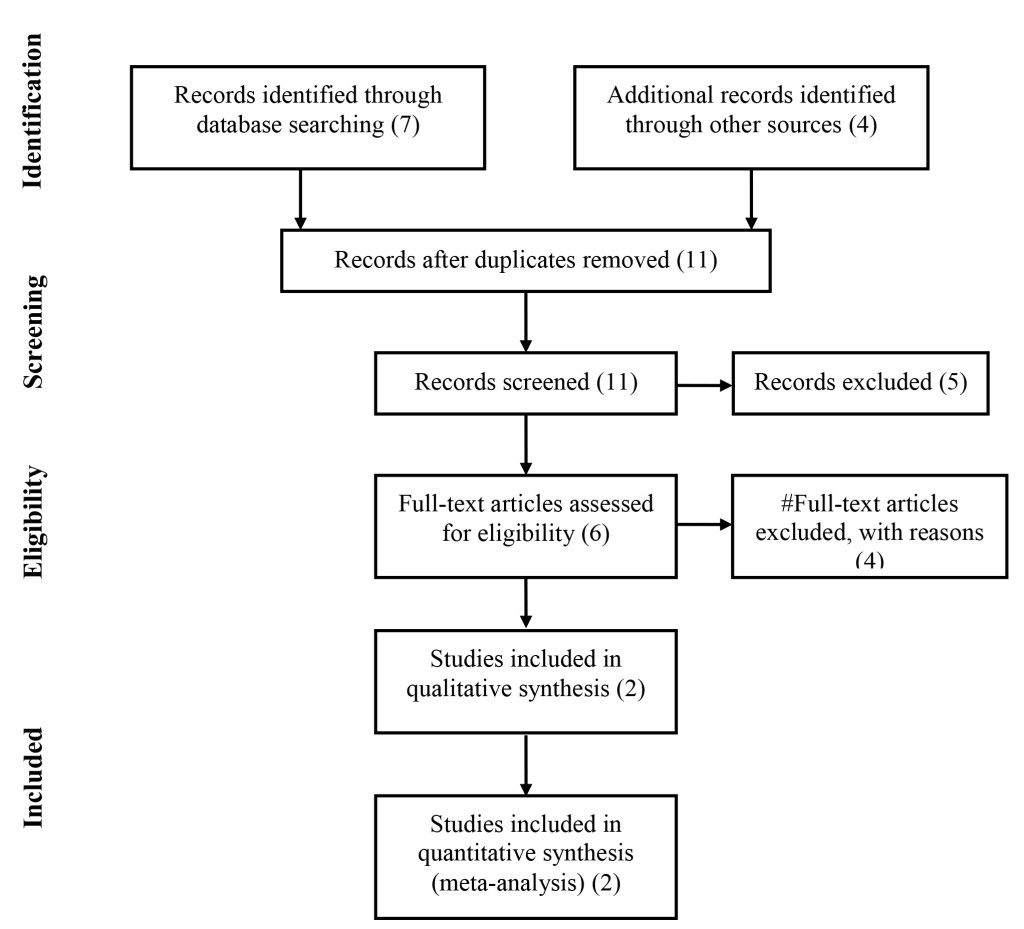
The flow diagram of the meta-analysis is presented in Figure 1 [7]. Based on the search 11 records were identified. After the screening 6 articles were assessed for eligibility. Following the screening 2 out of 4 papers were included in the analysis.

Notes on copy editing of PRISMA E&E paper (Liberati et al)

Figure 1.

A brief description of the manuscript matching the inclusion criteria is reported in Table 1.

Table 1.

Reference

Tumor Status

Chemotherapy

groups

outcomes

Bacić I et al., 2010 Ductal invasive BC 5 fluorouracilepirubicincyclophosphamide Experimental group IP6+MIControl group Vit C QLQ30 e QLQ-BR23[28, 29]
Proietti et al., 2017 Ductal BC Stage II-III cyclophosphamide methotrexato5 fluorouracil Experimental group IP6 in gelControl group hyaluronic acid in gel QLQ30 e QLQ-BR23[28, 29]

Studies were conducted in Croatia [9] or Italy [10] and were published between 2010 and 2017.Treatments administered were IP6 +MI per OS at the dosage of 1.4g twice a day[9] or 5g of a 4% IP6 gel twice a day [10]. Noteworthy both treatments result in the same pharmacokinetic profile [11, 12].The duration of the treatment was 6 months for both studies.

The overall methodological study quality is summarized in Table 2.

Table 2.

Study Randomization Allocation concealment Blinding Selection criteria described Comparable baseline Withdrawal dropout described
BACIC M Unclear N Y Y Y
PROIETTI M Unclear Y Double blind Y Y M

Evaluation according to the methods recommended by the Cochrane Handbook 5.0.2.

M, the method was mentioned, but there was not detailed description;

N, the method was not used in the study;

Unclear, no relevant information was found in the study;

Y, the method was reported with detailed description.

The meta-analysis

In the two selected studies, a total of 17 women received IP6 alone or in combination with MI, and 17 women received control treatments (i.e. Vit-C, Hyaluronic acid gel).

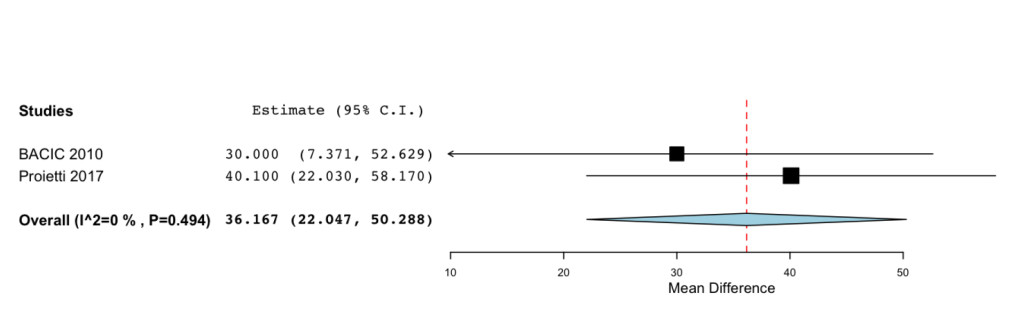
The overall MD estimated from two studies showed a significant improvement for the patients treated with IP6 (+MI) after chemotherapy of the QoL (MD=36.167; 95%CI: 22.047 to 50.288 P= < 0.001) (Figure 2).

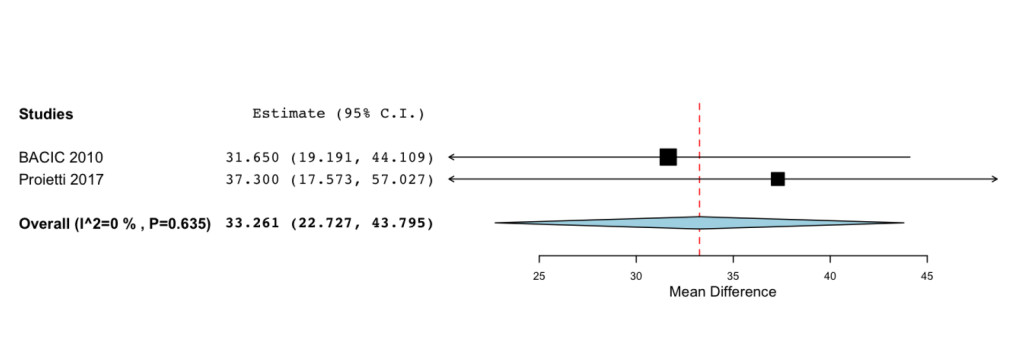
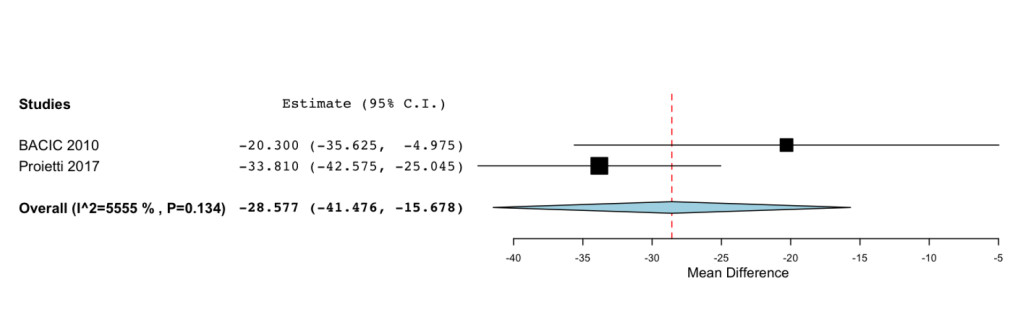
Additional improvements were highlighted for the Functional status (MD=33.261; 95%CI: 22.727 to 43.795 P= < 0.001) (Figure 3) and Symptoms Scale (MD= -28.577; -95%CI: 41.476 to -15.678; P= < 0.001) (Figure 4).

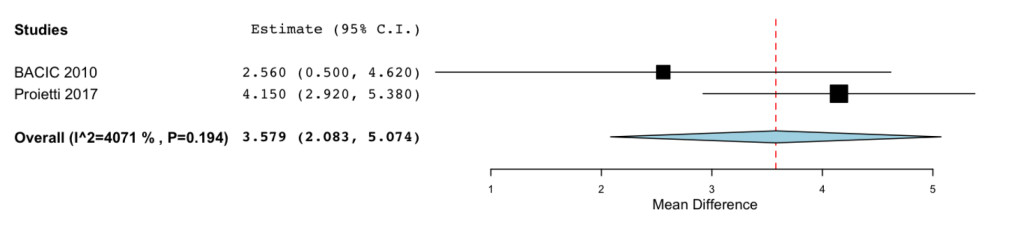
In addition to the data obtained from the EORTIC QLQ-C30 and QLQ-BR23 the blood counts results showed that IP6, eventually in association with MI, was able to reduce WBC drop after chemotherapy (MD= 3.579; -95%CI: 2.083 to 5.074 P= < 0.001) (Figure 5).

CST2017-243-GianfrancoCarlomagnoItaly_F2

Figure 2. Forest plot showing effect sizes (mean difference (MD), 95% confidence interval (CI)) for QoL in women undergoing chemotheraphy for breast cancer treated with IP6 (+MI).

CST2017-243-GianfrancoCarlomagnoItaly_F3

Figure 3. Forrest plot showing effect sizes (mean difference (MD), 95% confidence interval (CI)) for Functional Status in women undergoing chemotheraphy for breast cancer treated with IP6 (+MI).

CST2017-243-GianfrancoCarlomagnoItaly_F4

Figure 4. Forest plot showing effect sizes (mean difference (MD), 95% confidence interval (CI)) for Smptoms Scale in women undergoing chemotheraphy for breast cancer treated with IP6 (+MI).

CST2017-243-GianfrancoCarlomagnoItaly_F5

Figure 5. Forrest plot showing effect sizes (mean difference (MD), 95% confidence interval (CI)) for WBC in women undergoing chemotheraphy for breast cancer treated with IP6 (+MI).

Regarding platelet counts the analysis revealed considerable heterogeneity (Q(df=1)=7.870; Het. p-Value=0.005; I2=87.294). Nevertheless, it is worth to mention that in both studies, authors demonstrated that both treatments (either IP6 or IP6+MI) were able to prevent the drop of the platelet count.

Discussion

In the present review, we tried to highlight both new issues in the management of the oncological patient and new approaches in improving quality of life of patients undergoing chemotherapy.

In particular, literature data point at inositol(s), namely IP6 and MI, as an effective treatment able to improve patients QoL.

Indeed, literature data suggest that to improve cancer cure physicians have to improve cancer therapy effectives also by improving patients QoL, both during chemotherapy and afterwards.

MI as reaffirmed in a recent meta-analysis, is a well-known insulin sensitizer [13] nowadays hyperinsulinemia is considered a risk factor in cancer development. Indeed, in the majority of the tumors insulin regulated pathways are increased at both gene expression and activity of PI3K and Akt [14]. Evidence suggesting a positive role of Inositol (s) in cancer have been recently reviewed [4, 5, 15, 16]. Notably several authors have demonstrated that inositol phosphates and MI, in cancer cells, are able reduces PI3K expression (at both mRNA and protein level) [17] and Akt activation by inhibiting its phosphorylation [15, 18]. IP6 induce the impairment of the activity several signaling proteins such as: PI3K; PI3K-dependent activation of the tumor promoter induced AP-1; the phosphorylation-dependent activation of ERK [18]. Inhibition of PI3K activity, the protein kinase C (PKC) and the mitogen activated kinases (MAPK) have been documented by several studies both in vitro, [18-21] as well as in vivo, in particular, the in vivo studies were studies aiming to investigate inositol(s) chemo-preventive properties [22, 23].

In addition to the above described evidence that IP6 alone inhibits the growth of breast cancer cells, data by Tantivejkul et al., showed that IP6 synergistically acts with adriamycin or tamoxifen [24]. Noteworthy authors also manage to demonstrate that IP6 particularly effective when co-administerd with adriamycin or tamoxifen in ERα -negative cells and adriamycin resistant cell lines [24].

The clinical use of IP6+MI has been hampered by two main factors: bioavailability and palatability.

Human studies have demonstrated that dietary phytate is dephosphorylated during the digestion process by both plant phytases and phytases produced by human microbiota [25, 26].

Furthermore, several studies, aiming to investigate inositol phosphates solubility, have demonstrated that solubility in the stomach chyme negative correlates with the phosphorylation grade, i.e. the more phosphate group are attached to the inositol ring the less soluble and therefore bioavailable [27].

To solve this issue a transdermal gel has been used in the study by Proietti et al., indeed, instead of administering 1,4g of IP6 in powder, [9] researchers used a 5g of a 4% IP6 gel (200mg of IP6) [10].

In conclusion, literature data seams to demonstrate that IP6 and MI are effective in improving QoL of patients undergoing chemotherapy due to breast cancer.

References

  1. Siegel RL, Miller KD, Jemal A (2015) Cancer statistics. CA Cancer J Clin 65: 5–29.
  2. Ferlay J, Soerjomataram I, Dikshit R, Eser S, Mathers C, et al. (2015) Cancer incidence and mortality worldwide: sources, methods and major patterns in GLOBOCAN 2012. Int J Cancer 136: E359–386. [crossref]
  3. Bonadonna G, Valagussa P, Moliterni A, Zambetti M, et al. (1995) Adjuvant cyclophosphamide, methotrexate, and fluorouracil in node-positive breast cancer: the results of 20 years of follow-up. N Engl J Med 332: 901–6.
  4. Bizzarri M, Dinicola S, Bevilacqua A, Cucina A (2016) Broad Spectrum Anticancer Activity of Myo-Inositol and Inositol Hexakisphosphate. Int J Endocrinol 5616807.
  5. Bizzarri M, Dinicola S, Cucina A (2017) Modulation of both Insulin Resistance and Cancer Growth by Inositol. Curr Pharm Des.
  6. Dinicola S, Minini M, Unfer V, Verna R, et al. (2017) Nutritional and Acquired Deficiencies in Inositol Bioavailability. Correlations with Metabolic Disorders. Int J Mol Sci 18.
  7. Moher D, Liberati A, Tetzlaff J, Altman DG, et al. (2009) Preferred reporting items for systematic reviews and meta-analyses: the PRISMA Statement. Open Med 3: e123–30.
  8. Collaboration TC (2011) Cochrane Handbook for Systematic Reviews of Interventions Version 5.1.0 5.1.0 ed.
  9. Bacic I, Druzijanic N, Karlo R, Skific I, et al. (2010) Efficacy of IP6 + inositol in the treatment of breast cancer patients receiving chemotherapy: prospective, randomized, pilot clinical study. J Exp Clin Cancer Res 29: 12.
  10. Proietti S, Pasta V, Cucina A, Aragona C, et al. (2017) Inositol hexaphosphate (InsP6) as an effective topical treatment for patients receiving adjuvant chemotherapy after breast surgery. Eur Rev Med Pharmacol Sci 21: 43–50.
  11. Grases F, Simonet BM, Vucenik I, Prieto RM, et al. (2001) Absorption and excretion of orally administered inositol hexaphosphate (IP(6) or phytate) in humans. Biofactors 15(1): 53–61.
  12. Grases F, Isern B, Perelló J, Sanchis P, et al. (2006) Absorption of myo-inositol hexakisphosphate (InsP6) through the skin in humans. Pharmazie 61: 652.
  13. Unfer V, Facchinetti F2, Orrù B3, Giordani B3, Nestler J4 (2017) Myo-inositol effects in women with PCOS: a meta-analysis of randomized controlled trials. Endocr Connect 6: 647–658. [crossref]
  14. Pedrero JM, Carracedo DG, Pinto CM, Zapatero AH, Rodrigo JP, et al. (2005) Frequent genetic and biochemical alterations of the PI 3-K/AKT/PTEN pathway in head and neck squamous cell carcinoma. Int J Cancer 114: 242–248. [crossref]
  15. Dinicola S, Fabrizi G, Masiello MG, Proietti S, et al. (2011) Inositol induces mesenchymal-epithelial reversion in breast cancer cells through cytoskeleton rearrangement. Exp Cell Res 345: 37–50.
  16. Bizzarri M, Cucina A (2014) Tumor and the microenvironment: a chance to reframe the paradigm of carcinogenesis? Biomed Res Int 934038.
  17. Liu G, Song Y, Cui L, Wen Z, et al. (2015) Inositol hexaphosphate suppresses growth and induces apoptosis in HT-29 colorectal cancer cells in culture: PI3K/Akt pathway as a potential target. Int J Clin Exp Pathol 8: 1402–10.
  18. Huang C, Ma WY, Hecht SS, Dong Z (1997) Inositol hexaphosphate inhibits cell transformation and activator protein 1 activation by targeting phosphatidylinositol-3’ kinase. Cancer Res 57: 2873–8.
  19. Gu M, Roy S, Raina K, Agarwal C, et al. (2009) Inositol hexaphosphate suppresses growth and induces apoptosis in prostate carcinoma cells in culture and nude mouse xenograft: PI3K-Akt pathway as potential target. Cancer Res 69: 9465–72.
  20. Dong Z, Huang C, Ma WY (1999) PI-3 kinase in signal transduction, cell transformation, and as a target for chemoprevention of cancer. Anticancer Res 19: 3743–7.
  21. Bozsik A, Kökény S, Olah E (2007) Molecular mechanisms for the antitumor activity of inositol hexakisphosphate (IP6). Cancer Genomics Proteomics 4: 43–51.
  22. Gustafson AM, Soldi R, Anderlind C, Scholand MB, et al. (2010) Airway PI3K pathway activation is an early and reversible event in lung cancer development. Sci Transl Med 2: 26ra5.
  23. Han W, Gills JJ, Memmott RM, Lam S, et al. (2009) The chemopreventive agent myoinositol inhibits Akt and extracellular signal-regulated kinase in bronchial lesions from heavy smokers. Cancer Prev Res (Phila) 2: 370–6.
  24. Tantivejkul K, Vucenik I, Eiseman J, Shamsuddin AM (2003) Inositol hexaphosphate (IP6) enhances the anti-proliferative effects of adriamycin and tamoxifen in breast cancer. Breast Cancer Res Treat 79: 301–12.
  25. Sandberg AS, Andersson H (1988) Effect of dietary phytase on the digestion of phytate in the stomach and small intestine of humans. J Nutr 118: 469–473. [crossref]
  26. Schlemmer U, Jany KD, Berk A, Schulz E, et al. (2001) Degradation of phytate in the gut of pigs–pathway of gastro-intestinal inositol phosphate hydrolysis and enzymes involved. Arch Tierernahr 55: 255–80.
  27. Schlemmer U, Jany KD (2003) Proceedings of the Society of Nutritional Physiology; 57th conference. In: Breves G, editor: DLG-Verlag, Frankfurt (Main) 29.
  28. Aaronson NK, Ahmedzai S, Bergman B, Bullinger M, et al. (1999)The European Organization for Research and Treatment of Cancer QLQ-C30: a quality-of-life instrument for use in international clinical trials in oncology. J Natl Cancer Inst 85: 365–76.
  29. Fayers P, Aaronson NK, Bjordal K, Groenvold M, et al. (2001) EORTC QLQ-C30 Scoring Manual (3rd edition). 3rd ed. Brussels: European Organisation for Research and Treatment of Cancer.

Concentrated and Fixed-Dose Insulin Formulations can Improve Outcomes in Patients with Type 2 Diabetes

DOI: 10.31038/EDMJ.2018212

Introduction

The risk of developing long-term diabetes related complications (retinopathy, nephropathy, neuropathy, cardiovascular disease and stroke) increases as glycated hemoglobin (A1C) levels exceed 6.5% [1,2]. All patients with diabetes should be provided with an individualized target A1C based on factors such as age, duration of disease, risk of hypoglycemia, existing comorbidities, available resources, life expectancy and cardiovascular risk [3]. A delay of therapeutic intensification of just 2 years from the time of diagnosis, can expose a patient to “glycemic burden” and a 61% increased risk of cardiovascular complications [4]. Recent data from the 2011-2014 National Health and Nutrition Examination Survey (NHANES) indicate the just 51 % of American adults with diabetes are achieving A1C levels <7%. Despite the approval and marketing of multiple new agents for diabetes (GLP-1 receptor agonists, SGLT2 inhibitors, longer acting basal insulins, and disposable insulin pumps), improvement of A1C nationally has actually declined since NHANES 2007-2010 when 52 % of patients achieved their targeted A1C [5]. Randomized clinical trials which are conducted with FDA guidance in order for a study drug to gain regulatory approval consistently demonstrate success in achieving A1C levels <7% and even 6.5 %. However, real world studies suggest that patient adherence to prescribe medications may mitigate one’s ability to achieve glycemic targets [6]. Patients in the real world may be concerned about drug side effects, complexity of treatment regimens, potential weight gain, or risk of hypoglycemia. TV advertisements which mention thyroid cancer, amputation risk and hypoglycemia may hinder one’s desire to initiate a new drug.

Former US Surgeon General, C. Everett Koop once said, “Drugs don’t work if patients who don’t take them [7]. This article will address concentrated insulin and combination fixed dose insulin + GLP-1 receptor agonists which reduce risk of hypoglycemia, weight gain, and cardiovascular disease. The use of these agents within the primary care setting may improve adherence and allow patients to safely and efficiently achieve their prescribed glycemic targets.

Insulin Action, Variability and Recommended Glycemic Targets

Insulins are formulated to bind to and activate receptors located with target organs (liver, muscles, kidneys, adipose tissue). The resultant pharmacologic action ultimately lowers plasma glucose levels to the desired range. The fact that not all insulins are created equally allows practitioners to customize their treatment protocols for each patient.

The American Association of Clinical Endocrinologists recommends the use of insulin when the endogenous insulin-secreting capacity of pancreatic beta cells has been exceeded. Insulin should be initiated in any patient with an A1C > 8.5 % who has symptoms suggestive of chronic hyperglycemia (thirst, weight loss, blurry vision, distal sensory neuropathy, weight loss and frequent urination). Patients with A1C >9% should also be considered insulin candidates [8]. Basal insulin reduces hepatic glucose production in the fasting state whereas rapid acting insulin preparations are used to minimize post prandial glucose excursions. The American Diabetes Association recommends targeting fasting glucose levels to 70-130 mg/dL and 2-hour post meal glucose of <180 mg/dL [9].

Early initiation of insulin can prove beneficial for patients with T2DM. The anti-inflammatory and antioxidant effects (ie, reduction of oxidative stress) may offer protection against vascular endothelial dysfunction and subsequent vascular disease. Insulin induces endothelial nitric oxide synthase in endothelial cells resulting in increased production of nitric oxide and the promotion of vascular dilatation [10]. Insulin is thought to preserve β-cell mass and function in patients with T2DM. Glycemic burden destroys β-cells. Reducing hyperglycemia in patients with diabetes can facilitate β-cell rest allowing for more efficient and timely production and secretion of endogenous insulin [11].

Although elevated A1C is a surrogate marker for long-term diabetes-related complications, glycemic variability (dysglycemia) can induce oxidative stress favoring the induction of complications [12]. Patients who experience dysglycemia become frustrated with their inability to efficiently regulate blood glucose levels. These patients experience wide glycemic swings throughout the day resulting in hypoglycemia and sustained hyperglycemia. Efficient pharmacotherapy for patients with type 2 diabetes must address both the effects of prolonged exposure to hyperglycemia as well as acute daily excursions of glucose levels. Elevated glucose levels promote the appearance of acute glycated end products (AGEs) which can increase one’s likelihood of developing complications. Glycemic excursions exacerbate the process of oxidative stress, a metabolic state favoring the progression of microvascular and macrovascular complications [13].

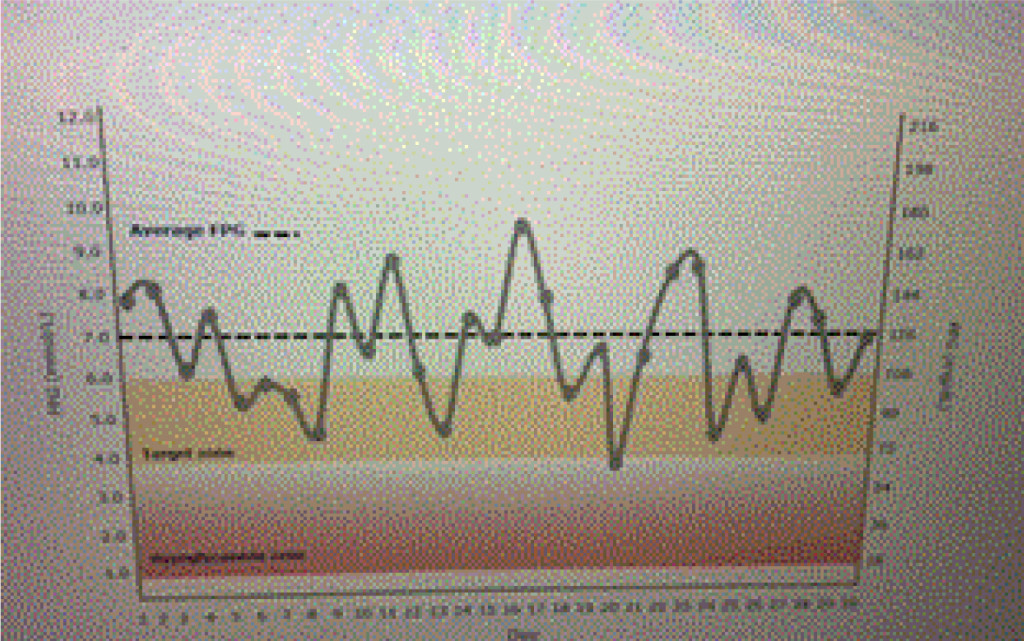
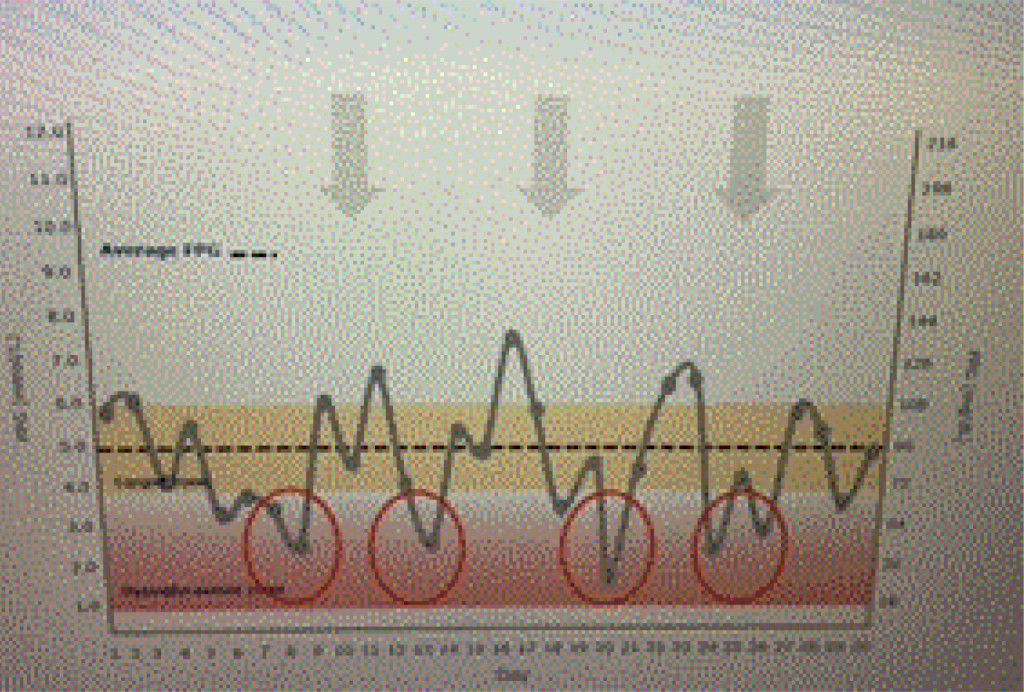
Ideal basal insulins should be simple to initiate and titrate, result in minimal glycemic variability, provide prolonged duration of action, while reducing one’s risk of hypoglycemia and weight gain. In addition, insulins should not increase one’s risk of cardiovascular disease, especially in patients who have already experienced a stroke or myocardial infarction. Table 1 lists the coefficients of variability of available basal insulins. The lower the variability, the less likelihood of developing treatment emergent hypoglycemia as noted in Figure 1 a and 1 b.

EDMJ2017-116-JeffUngerUSA_F1

Figure 1a. Emergent hypoglycemia.

EDMJ2017-116-JeffUngerUSA_F2

Figure 1b. Dysglycemia.

Table 1. Basal Insulin Coefficients of Variability.

Insulin

Within Subject Variablity*

NPH

68

Glargine U-100

48

Detemir

27

(Concentrated) Glargine U-300

34.8

Degludec

20

* Percentage within subject variability based upon glucose infusion rates and area under the curve. Patients receive 4 single subcutaneous doses of 0.4 U/kg under euglycemic glucose clamp conditions on 4 study days [14-16].

A patient is using an insulin with a high coefficient of variability. Glucose levels demonstrate “dysglycemia (Figure 1 a).” Increasing the basal insulin further is likely to increase the risk of hypoglycemia which will reduce adherence to the prescribed treatment regimen (Figure 1 b). The use of basal insulin formulations with low glycemic variability will allow patients to achieve their fasting blood glucose targets more efficiently with less fear of hypoglycemia.

New Insulin Formulations

Advances in basal insulin formulations have provided clinicians and patients with options that provide favorable pharmacokentic (insulin absorption) and pharmacodynamic (glucose lowering) properties. Newer insulins have flatter, peakless action profiles, demonstrate less variability and a longer duration of action allowing for flexible dosing. The risk of nocturnal and diurnal hypoglycemia is subsequently reduced. Insulin preparations do not appear to increase one’s cardiovascular risk [17,18]. Patients may also safely combine a GLP-1 receptor agonist as either a separate injection or as a component of a fixed-ratio drug. The use of fixed drug combinations may improve adherence and allow patients to achieve their metabolic targets [19].

Glargine U-300

Glargine U-300 (Toujeo) is a long-acting insulin containing 300 units/mL of insulin glargine. As a concentrated insulin, Glargine U-300 contains 3 times as much insulin per mL as glargine U-100 allowing for a lower volume of injected insulin. Glargine U300 was detectable at 32 hours post injection with 0.4 units/kg dosing compared with 28 hours with glargine U100 dosing [20]. At 0.4 u/kg, U300 has 14 % less variability than U100, allowing clinicians to titrate the insulin to target lower fasting glucose levels without risking hypoglycemia [21].

Degludec U100 and U300

Within the insulin pen, insulin degludec (Tresiba) is formulated as “insulin diheximers.” Once injected, the diheximers form multiheximer chains within the subcutaneous depot held together by zinc and phenol. As the zinc dissociates, the multiheximers form insulin monomers which pass into the capillaries and are carried via albumin to insulin receptors at target organ sites. Degludec U200 contains as much insulin as degludec U100 in just ½ the injection volume. The two insulins are bioequivalent and lower glucose levels at the same rate. Degludec appears to have the lowest coefficient of variability of all insulins allowing ambitious dosing to targeted fasting glucose levels with less likelihood of nocturnal and overall hypoglycemia when compared with insulin glargine [22]. Due to the prolonged duration of action (42 hours), degludec may be dosed at any time of the day, which may improve adherence for patients who are shift workers, travel frequently, or have difficulty remembering to dose their basal insulin [23].

U-500 Regular Insulin

Regular insulin U-500 (Humulin R U-500 insulin) is structurally identical to human insulin. Because the drug is formulated as 500 units/mL, this insulin is five times as potent as regular insulin U-100 [24]. U-500 is indicated for patients with type 1 or type 2 diabetes requiring more than 200 units of insulin daily. The concentrated insulin is delivered in a lower injection volume which improves the drug’s absorption from the subcutaneous depot. U-500 has a slower onset of action (60 min) when compared with rapid acting prandial insulins. The peak onset of action is 2-4 hours post injection and the duration of action is 4-6 hours [25]. U-500 can be dosed as prandial insulin using a pen injector 30-45 minutes prior to eating.

Lispro U-200 Insulin

Prandial insulin lispro U-200 (Humalog U-200) contains 200 units of rapid acting insulin per mL compared with insulin lispro U-100 which contains 100 units/mL. Thus, U-200 is twice as concentrated as U-100 allowing patients requiring > 20 units of insulin per meal to inject less volume [26]. The pharmacokinetic and pharmacodynamic effects of both Lispro U-200 and Lispro U-100 are equivalent [27].

Table 2 suggests which concentrated insulin or fixed insulin combination might be appropriate for patients with type 2 diabetes.

Table 2. Rationale Use of Concentrated Insulins.

Condition

Rationale

Product of Choice

Nocturnal hypoglycemia Needs peak-less (flat) basal insulin profle

Insulins with lower glycemic variability will allow safer titration to fasting glucose levels without risk of hypoglycemia

Glargine U300

Degludec U100 or U200

Severe insulin resistance requiring the use of > 200 units of insulin daily High potency concentrated insulin can result in a low volume subcutaneous insulin depot

U500 insulin is 5 times as potent as U100 insulin with 1/5 the injection volume

Insulin resistance requires high dose insulin

Regular U500 insulin )
Patient requires > 80 units of basal insulin per injection Concentrated insulin formulations have been developed to address the need for higher dose insulin delivery of a single daily injection Degludec U-200

Glargine U-300

Patient requires flexible daily dosing due to work schedule or frequent travel Degludec can be administered daily at any time of day, with injection timing varied without compromising glycemic control or safety Insulin degludec U100 or U200
Patient requires > 20 units of prandial insulin Lowers cost. Low volume insulin reduces the number of pen requirements monthly Lispro U-200
Post-prandial and fasting glucose coverage is needed Fixed-dose combination therapy with insulin +GLP-1 receptor agonist can reduce total daily dose of insulin, risk of weight gain associated with insulin use, and provide coverage for postprandial excursions Insulin degludec + liraglutide (IDegLIra- Xultophy 100.3.6)

Insulin glargine + lixisenatide (100/33) (Soliqua)

Fixed Dose-Combinations (Basal insulin and GLP-1 Receptor Agonists)

The combination of basal insulin analogues with a glucagon-like peptide receptor agonist (GLP-1 RA) is intriguing. Basal insulin essentially targets hepatic glucose production which is excessive in patients with type 2 diabetes However, the use of basal insulin may result in weight gain and/or hypoglycemia which affects adherence [28]. GLP-1 RAs, typically target post prandial glucose excursions by decreasing the excretion of endogenous glucagon, a counter regulatory hormone with induces hepatic glucose production [29]. Patients using GLP-1 RAs tend to lose weight. Because this class of drugs is “glucose dependent, “ the glucose lowering effect in patients with lower blood glucose levels is reduced. Thus, patients tend to experience less hypoglycemia. Liraglutide, a GLP-1 RA, has demonstrated a 22% reduction in cardiovascular mortality [30]. However, extrapolation of CV outcomes in fixed dose combinations cannot be inferred without having trials specific to the dual therapy option.

Table 3 lists the features of basal insulin plus GLP-1 RAs which makes their combination therapies attractive in patients with type 2 diabetes.

Table 3. Combination of Basal Insulin and GLP-1 Receptor Agonists.

Metabolic Target

Basal Insulin

GLP-1 RA

Combination Therapy

Beta Cell Function Rests beta-cells, relieves glucotoxicity Improves beta-cell function. May restore beta-cell mass Additive improvement in prandial and post prandial glucose levels with lower total daily dose of insulin required
Alpha cell function Reduces glucagon Reduces glucagon Additive improvement in glucagon secretion results in lower fasting and postprandial glucose levels. Diabetes is a bi-hormonal disorder…too much glucagon produced by the alpha cell and too little insulin secreted by the beta cell.
Glucose control Targets fasting blood glucose Targets primarily postprandial glucose Lower fasting and postprandial glucose levels. Improved A1C
Weight Tends to increase Tends to decrease Less weight gain noted with combination
Hypoglycemia risk Increase risk Lower risk Lower risk due to reduced insulin dose requirements when combined with a GLP-1 RA
Cardiovascular risk Insulin does NOT increase CV risk, nor is the risk reduced Liraglutide* and Semaglutide** reduce CV risk. Other GLP-1 RAs are neutral at reducing risk Studies have not been performed assessing the CV risk in fixed dose combination therapies, only as individual interventions

* = Marso et al. [31]; ** Marso et al., [32]

Summary

The treatment of type 2 diabetes is complicated by not only the chronic progressive nature of the disease, but the multiple “core” defects which much be addressed. Patients with diabetes experience beta cell failure, increased insulin resistance due to hepatic glucose production and a reduced glucose uptake in the muscle and fat cells. The kidneys absorb excessive amounts of glucose in the face of hyperglycemia, and even produce glucose in the form of gluconeogenesis. Due to the reduction in circulating insulin, fat cells produce excessive amounts of free fatty acid which further increases hepatic glucose production. Feelings of satiety are reduced in patients with type 2 diabetes resulting in over-consumption of nutrients and weight gain. Native GLP-1 (a gut hormone released in response to a carbohydrate load) is either reduced or its action compromised at the receptor site resulting in a reduction in prandial insulin production and excess glucagon production from the pancreatic alpha cells. The use of concentrated insulins as well as new insulins with more favorable pharmacokinetic and pharmacodynamic profiles may profoundly improve glycemic control in patients with diabetes. Fixed dose combinations which employ basal insulin plus a GLP-1 RA appears to be a rationale choice for patients who require better postprandial glucose coverage.

Patients who are non-adherent to a treatment regimen, may benefit from concentrated or combination therapies. Adherence is likely to improve fasting and postprandial glucose control allowing patients to successfully achieve their targeted A1C and reduce their “glycemic burden.” Using insulins with less variability and risk of hypoglycemia will also improve adherence. Because 90 % of all patients with diabetes are managed within the primary care setting, the treatment of diabetes must be intensified within our environment. Early and successful treatment of these complex individuals will likely improve long-term outcomes and the quality of life of our patients.

The author thanks the staff at Vindico Medical Education for their assistance in the preparation of this manuscript.

Acknowledgements:  Dr. Unger would like to thank Vindico CME for providing assistance with the editing of this manuscript.

References

  1. Selvin E, Ning Y, Steffes MW, Bash LD, Klein R, et al. (2011) Glycated hemoglobin and the risk of kidney disease and retinopathy in adults with and without diabetes. Diabetes 60: 298–305. [Crossref]
  2. Selvin E, Steffes MW, Zhu H, Matsushita K, Wagenknecht L, et al. (2010) Glycated hemoglobin, diabetes, and cardiovascular risk in nondiabetic adults. N Engl J Med 362: 800–811. [Crossref]
  3. Inzucchi SE, Bergenstal RM, Buse JB (2015) Management of hyperglycemia in type 2 diabetes, 2015: a patient-centered approach. Update to position statement of the American Diabetes Association and the European Association for the Study of Diabetes. Diabetes Care 38: 140–149. [Crossref]
  4. Paul SK, Klein K, Thorsted BL, et al. (2015) Delay in treatment intensification increases the risks of cardiovascular events in patients with type 2 diabetes. Cardiovascular Diabetology 14: 100.
  5. Edelman SV, Polonsky WH (2017) Type 2 Diabetes in the Real World: The Elusive Nature of Glycemic Control. Diabetes Care 40: 1425–1432. [Crossref]
  6. Rothwell PM (2005) External validity of randomised controlled trials: “to whom do the results of this trial apply?”. Lancet 365: 82–93. [Crossref]
  7. Lindenfeld J, Jessup M (2017) ‘Drugs don’t work in patients who don’t take them’ (C. Everett Koop, MD, US Surgeon General, 1985). Eur J Heart Fail 19: 1412–1413. [Crossref]
  8. Rodbard HW, Jellinger PS, Davidson JA (2009) AACE/ACE Consensus Statement. Statement by an American Association of Clinical Endocrinologists/American College of Endocrinology consensus panel on type 2 diabetes mellitus: an algorithm for glycemic control. Endocr Pract 15 (1): 540–559. [Crossref]
  9. American Diabetes Association (2016) 5. Glycemic Targets. Diabetes Care 39 Suppl 1: S39–46. [Crossref]
  10. Owens DR (2013) Clinical evidence for the earlier initiation of insulin therapy in type 2 diabetes. Diabetes Technol Ther 15: 776–785. [Crossref]
  11. Turner RC, McCarthy ST, Holman RR, Harris E (1976) Beta-cell function improved by supplementing basal insulin secretion in mild diabetes. Br Med J 1: 1252–1254. [Crossref]
  12. Unger J (2008) Reducing oxidative stress in patients with type 2 diabetes mellitus: A Primary Care call to action. Insulin 3: 176–184.
  13. Monnier L, Colette C, Owens DR (2008) Glycemic Variability: The Third Component of the Dysglycemia in Diabetes. Is It Important? How to Measure It? J. Diabetes Sci Technol (6): 1094–1100. [Crossref]
  14. Rosseti P, Ampudia-Blasco FJ, Ascaso JF (2014) Old and new basal insulin formulations: understanding pharmacodynamics is still relevant in clinical practice. Diabetes Obes Metab 16: 695–706. [Crossref]
  15. Becker RHA (2015) Low within- and between-day variability in exposure to new insulin glargine 300 U/ml. Diabetes Obes Metab 17: 261–267. [Crossref]
  16. Jeff Unger (2012) Insulin initiation and intensification for patients with T2DM. In: Unger Jeff (Ed.) Diabetes Management in Primary Care- Second Edition. Lippincott, Williams and Wilkins. 2012. Philadelphia, PA. 453–490. [Crossref]
  17. ORIGIN Trial Investigators, Gerstein HC, Bosch J, Dagenais GR, Díaz R, et al. (2012) Basal insulin and cardiovascular and other outcomes in dysglycemia. N Engl J Med 367: 319–328. [Crossref]
  18. Marso SP, McGuire DK, Zinman B, Poulter NR, Emerson SS, et al. (2017) Efficacy and Safety of Degludec versus Glargine in Type 2 Diabetes. N Engl J Med 377: 723–732. [Crossref]
  19. Ferdinand KC, Senatore FF, Clayton-Jeter H, et al. (2017) Improving medication adherence in cardiometabolic disease: practical and regulatory implications. J Am Coll Cardiiol 69 (4): 437–451. [Crossref]
  20. Becker RH, Dahmen R, Bergmann K, Lehmann A, Jax T, et al. (2015) New insulin glargine 300 Units. mL-1 provides a more even activity profile and prolonged glycemic control at steady state compared with insulin glargine 100 Units. mL-1. Diabetes Care 38(4): 637–643. [Crossref]
  21. Becker RH, Nowotny I, Teichert L, Bergmann K, Kapitza C (2015) Low within- and between-day variability in exposure to new insulin glargine 300 U/ml. Diabetes Obes Metab 17: 261–267. [Crossref]
  22. Wysham C, Bhargava A, Chaykin L, de la Rosa R, Handelsman Y, et al. (2017) Effect of Insulin Degludec vs Insulin Glargine U100 on Hypoglycemia in Patients With Type 2 Diabetes: The SWITCH 2 Randomized Clinical Trial. JAMA 318: 45–56. [Crossref]
  23. Meneghini L, Atkin SL, Gough SC, et al. (2013) The efficacy and safety of insulin degludec given in variable once-daily dosing intervals compared with insulin glargine and insulin degludec dosed at the same time daily; a 26-week, randomized, open-label, parallel-group, treat-to-target trial in individuals with type 2 diabetes. Diabetes Care 36 (4): 858–864. [Crossref]
  24. Humulin [package insert] Indianapolis, Ind., Eli Lilly and Co., 2016. Available from pi.lilly.com/us/humulin-r-u500-pi.pdf. Accessed 11/10/17.
  25. Insulin initiation and intensification for patients with T2DM (2012) In Unger Jeff. Diabetes Management in Primary Care- Second Edition. Lippincott, Williams and Wilkins. Philadelphia, PA. 453–490.
  26. Humalog [package insert] Indianapolis, Ind., Eli Lilly and Co., 2015. Available from pi.lilly.com/us/humalog-pen-pi.pdf. Accessed Nov. 10, 2017
  27. Humalog [package insert] Indianapolis, Ind., Eli Lilly and Co., 2015. Available from pi.lilly.com/us/humalog-pen-pi.pdf. Accessed Nov. 10, 2017
  28. Pi-Sunyer FX (2009) The Impact of Weight Gain on Motivation, Compliance, and Metabolic Control in Patients with Type 2 Diabetes Mellitus. Postgrad Med 121 (5): 94–107. [Crossref]
  29. Unger J, Parkin C (2011) Glucagon-Like Peptide-1 (GLP-1) Receptor Agonists: Differentiating the new medications. Diabetes Therapy. [Crossref]
  30. Marso SP, Daniels GH, Brown-Frandsen K, Kristensen P, Mann JF, et al. (2016) Liraglutide and Cardiovascular Outcomes in Type 2 Diabetes. N Engl J Med 375: 311–322. [Crossref]
  31. Marso SP, Daniesl GH, Brown-Frandsen K (2016) Liraglutide and cardiovascular outcomes in type 2 Diabetes. N Engl J Med 375: 311–322. [Crossref]
  32. Marso SP, Bain SC, Consoli A (2016) Semaglutide and cardiovascular outcomes in patients with type 2 diabetes. N Engl J Med 375: 1834–1844. [Crossref]

Response to Induction Therapy Confers a Significant Survival Benefit in Patients with Resected T4 Non-Small Cell Lung Cancer

DOI: 10.31038/CST.2017283

Abstract

Objective: Analyse outcome and detect prognostic factors in surgical candidates with T4 non-small cell lung cancer (NSCLC).

Methods: All T4 NSCLC patients operated between 2001 and 2014 were included. Charts were retrospectively reviewed and data analyzed. Survival was calculated from the date of surgery until last follow-up. The impact of the following variables on overall survival was assessed: type of induction/adjuvant therapy, use of cardiopulmonary bypass (CPB), R-resection type, T4 site, histology, radiologic response to induction and post-induction pathologic T and N stages.

Results: Eighty-three patients were included. In 58 patients (70%), T4 was defined by a single structure involvement including mediastinum (n = 18, 31%), left atrium/pulmonary vein (n = 13, 23%), superior vena cava/right atrium (n = 8, 14%), aorta (n = 6, 10%), pulmonary artery (n = 5, 9%), trachea/carina (n = 3, 5%), spine (n = 3, 5%) or recurrent laryngeal nerve (n = 2, 3%). Induction therapy was administered in 49 patients (59%) consisting in chemotherapy (n = 38, 78%), radiation (n = 1, 2%) or chemoradiation (n = 10, 20%). Lung resections were lobar (n = 15), sublobar (n = 2) or pneumonectomy (n = 52). One isolated carinal resection was performed. Thirteen patients (15%) had unresectable tumors. Cardiopulmonary bypass (CPB) was used in 13 patients (16%). Post-operative mortality was 7%. Overall survivals at 3 and 5 years were 35% and 31%, respectively. In the multivariate analysis, pathologic tumor downstaging (ypT) and CPB use were positive and negative prognostic factors, respectively.

Conclusions: T4 NSCLC can be safely resected in selected patients and within a multimodality therapy approach. Responders to induction therapy with T-downstaging carry a survival benefit compared to non-responders.

Key words

lung cancer, T4, surgery, induction therapy, cardio-pulmonary bypass

Introduction

Treatment for T4 non-small cell lung cancer (NSCLC) invading the mediastinum, heart, great vessels, trachea/carina and vertebral body tend not to be surgical. Indeed, in a cohort study from 1992 to 2002 from the Surveillance, Epidemiology, and End-Results (SEER) Medicare data, only 1177 among 13077 patients (9%) underwent resection [1]. However, selected T4 NSCLC can be treated surgically within a multidisciplinary approach with survivals overwhelming the non-surgical cohort [2-4].

Here, we report a single-center experience of patients who underwent T4 NSCLC resection, with the aim of identifying clinical factors influencing long-term survival. These factors will help better selecting patients who may benefit from this challenging type of surgery.

Material and methods

Patients with a cytology/histology-proven NSCLC and invading the mediastinum, heart, great vessels, trachea/carina, recurrent laryngeal nerve, esophagus or vertebral body on radiologic imaging and referred to our institution for surgery from 2001 to 2014 were included. Patients’ data were retrospectively retrieved from our institutional database and completed with data from patients’ electronic charts. Patient informed consent was obtained prior to surgery.

Staging was routinely performed with computed tomography (CT) of the chest and upper abdomen as well as whole-body positron emission tomography integrated in CT (PET/CT). FDG-avid mediastinal lymph nodes were assessed either by cervical mediastinoscopy or endobronchial ultrasound-guided fine-needle aspiration (EBUS-FNA). Brain CT and/or magnetic resonance imaging (MRI) was performed routinely both for staging and restaging purposes. Response to induction therapy was assessed radiologically by CT of the chest and upper abdomen, and/or PET/CT. Imaging was reviewed for the purpose of the study by one author (H.G.) and tumor response classified as complete response (CR), partial response (PR), stable disease (SD) or progressive disease (PD).

Patients who deemed technically completely resectable on imaging were planned for surgery and consisted in the patient cohort of the study. The appropriate surgical approach was planned according to imaging, mainly an anterolateral thoracotomy in the fifth intercostal space. If the tumor was deemed resectable after exploring the chest, the tumor and its surrounding invaded structures were removed en bloc. An anatomic lung resection was planned in all cases. Intraoperative lymph node staging was done according to the ESTS guidelines [5].

Indication and type of regimen for induction and adjuvant treatments were discussed on a case-by-case basis during our multidisciplinary tumorboard conference. Generally, three cycles of a platin-based doublet chemotherapy (with or without 45 Gy radiation) was administered preoperatively for cN2-disease or to decrease the local extension of the primary tumor. Adjuvant treatment was administered for persisting or unexpected N2-disease, or as part of a postoperative consolidation therapy.

NSCLC tumors were classified and staged according to the 7th edition of the TNM classification of malignant tumors [6].

Statistical analysis was performed using SPSS 20.0 for Windows software (SPSS Inc, Chicago, IL.). Overall survival was estimated from the date of surgery until death or last follow-up, using the Kaplan-Meier survival analysis method. The impact on survival of 9 discrete variables—type of induction/adjuvant therapy, use of cardiopulmonary bypass (CPB), R-resection type, site of T4, histology, radiologic response to induction and post-induction pathologic T and N stages —was assessed by log-rank test and quantified by univariate Cox regression analysis. Variables with statistical significance were further analyzed in a multiple Cox regression model (backward). A p-value less than 0.05 was considered significant.

Results

Eighty-three surgical candidates (23 females, 28%) with T4 NSCLC were included. Median age was 64 (from 41 to 87). Median preoperative FEV1 and DLCO were 75% (from 34 to 120) and 67% (from 20 to 120) of the predicted, respectively.

Tumors were classified as T4 due to involvement of multiple (n = 25, 30%) or a single structures (n = 58, 70%). The most common single structure involved was the mediastinum (n = 18, 31%), followed by left atrium/pulmonary vein (n = 13, 23%), superior vena cava/right atrium (n = 8, 14%), aorta (n = 6, 10%), pulmonary artery (n = 5, 9%), trachea/carina (n = 3, 5%), spine (n = 3, 5%) and recurrent laryngeal nerve (n = 2, 3%).

Surgery was performed upfront in 34 patients (41%). Induction therapy was administered in 49 patients (59%) and consisted in chemotherapy alone (n = 38, 78%), radiation alone (n = 1, 2%) or chemoradiation (n = 10, 20%). A median of 3 cycles (from 1 to 7) of platin-based chemotherapy doublets were administered. Median radiation dose was 44 Gy (from 31 to 72 Gy). No radiologic complete response was seen after induction therapy. Radiologic tumor responses were PR (n = 35, 71%), SD (n = 12, 25%) and PD (n = 2, 4%).

Tumors and invaded structures were resected en bloc. Cardio-pulmonary bypass (CPB) was used in 13 patients (16% – Table 1). Lung resection included pneumonectomy (n = 52, left-sided in 30), lobectomy (n = 15) or sublobar resection (n = 2). One isolated carinal resection was performed. Thirteen patients (15%) had unresectable tumors at explorative thoracotomy.

Table 1. Patients characteristics who underwent T4 resection under cardio-pulmonary bypass

age/sex approach resection cannulation site TN survival (months)
1 65/M left thoracotomy P, PA femoral v., aorta ypT4N1 R0 7
2 71/M right thoracotomy P, SVC-RA bicaval, aorta ypT4N1 R0 8
3 81/M left thoracotomy P, LA bicaval, aorta pT4N1 R0 72
4 45/M left hemiclamshell sleeve P, LA, PA, aorta RA, ascending aorta, descending aorta ypT4N1 R1 5
5 52/F right thoracotomy P, SVC-RA, LA bicaval, aorta ypT4N2 R0 22
6 64/M left thoracotomy P, LA femoral v., femoral a. T4N2 R1 11
7 87/M left thoracotomy lower lobe, LA PA, aorta T4N1 R2 1*
8 56/M left hemiclamshell P, aorta aorta, aorta T4N2 R0 4
9 69/F right thoracotomy sleeve P, SVC bicaval, aorta ypT4N2 R0 2
10 41/F right thoracotomy sleeve P, SVC bicaval, aorta ypT4N2 R0 4
11 55/F left thoracotomy P, LA, aorta PA, ascending aorta, descending aorta ypT4N2 R1 1**
12 65/F left thoracotomy P, LA femoral v., aorta ypT4N2 R0 9
13 58/F left hemiclamshell P, LA femoral v., aorta T4N0 R0 52+

M = male, F = female, P = pneumonectomy, PA = pulmonary artery, SVC = superior vena cava, RA = right atrium, LA = left atrium, v. = vein, a. = artery, + = alive, * from anoxic brain injury, ** from respiratory failure

NSCLC subtypes were squamous cell carcinoma (n = 48, 58%), adenocarcinoma (n = 25, 30%), large cell carcinoma (n = 6, 7%) and other (n = 4, 5%). Downstaging of pathologic tumor stage after induction therapy (ypT) occurred in 16 patients (33%), including ypT3 (n = 1, 6%), ypT2 (n = 7, 44%), ypT1 (n = 5, 31%) and ypT0 (n = 3, 19%). Thirty-three (67%) patients had persisting ypT4 on pathologic examination after induction therapy. Complete resection was achieved in 45 patients (55%). Twenty-two patients (27%) had microscopic incomplete resection (R1) while 16 (20%) presented with unresectable tumor or macroscopic incomplete resections (R2).

Thirty-day or in-hospital mortality was 7%. Cause of death was pneumonia/adult respiratory distress syndrome (n = 2), cerebral vascular insult (n = 2), pulmonary embolism (n = 1) and sepsis/multi-organ failure (n = 1).

Overall 3- and 5-year survivals for the whole cohort was 35% (Standard Error – SE = 6%) and 31% (SE = 5%), respectively (Figure 1). Median survival was 18 months (95% confidence interval – CI = 11-25). Median follow-up was 17 months (from 0 to 127). Although not significantly (p = 0.19), 3- and 5-year survivals increased to 37% (SE = 6%) and 34% (SE = 6%) when patients with exploratory thoracotomy were excluded.

Figure 1. Overall survival for surgical candidates with T4 non-small cell lung cancer.

Patients at risk:

Months 0 12 24 36 48 60
83 50 26 21 16 14

Univariate analysis showed that CPB use, type of radiologic response to induction therapy and pathologic T stage after induction (ypT) had a statistically significant impact on survival. In the multivariate analysis, only CPB use and ypT stage remained significant (Table 2). Corresponding survival curves are illustrated in Figures 2 and 3.

Figure 2. Survival depending on cardiopulmonary bypass (CPB) use. P-value from log rank test = 0.002.

Patients at risk:

Months 0 12 24 36 48 60
with CPB 13 3 2 2 2 1
no CPB 70 47 24 19 14 13

Figure 3. Survival depending on post-induction pathologic tumor stage (ypT). P-value from log rank test = 0.001.

Patients at risk:

Months

0

12

24

36

48

60

ypT0-3

15

13

10

9

9

8

ypT4

34

19

8

6

2

2

At the end of follow-up, 57 patients (69%) had a tumor recurrence. Median delay from surgery to first recurrence was 9 months (95%CI = 2-16). Recurrences were local intrathoracic (n = 28, 34%), distant (n = 17, 21%) or local and distant (n = 12, 14%). Disease-free survivals at 3 and 5 years was 29% (SE = 6%) and 23% (SE = 5%), respectively.

Table 2. Uni- and multivariate analysis of clinical variables with potential impact on survival. HR=hazard ratios, CI=confidence interval

co-variates p-value HR 95%CI
univariate analysis
type of inductionn=83 none (n=34) vs.chemo (n=38) vs.rad (n=1) vs.chemorad (n=10) 0.357
radiologic response to inductionn=49 stable/progressive disease (n=14) vs.partial response (n=35) 0.023+ 2.436 1.132-5.245
histologyn=83 adeno (n=25) vs.squamous (n=48) vs.large cell (n=6) vs.other (n=4) 0.681
ypTn=49 0-3 (n=15) vs.4 (n=34) 0.003+ 0.213 0.077-0.589
ypNn=49 0 (n=15) vs.1-2 (n=34) 0.150
R-resectionn=83 0 (n=45) vs.1-2 (n=38) 0.067
type of adjuvant treatmentn=83 none (n=46) vs.rad (n=25) vs.chemo (n=8) vs.chemorad (n=4) 0.231
use of CPBn=83 no (n=70) vs.yes (n=13) 0.003+ 0.371 0.194-0.711
site of T4n=83 single (n=58) vs.multiple (n=25) 0.390
multiple cox analysis
use of CPBn=83 no (n=70) vs.yes (n=13) 0.003+ 3.910 1.583-9.655
radiologic response to inductionn=49 stable/progressive disease (n=14) vs.partial response (n=35) 0.112+ 0.515 0.227-1.167
ypTn=49 0-3 (n=16) vs.4 (n=33) 0.012+ 3.884 1.349-11.185

+p-value derived from cox regression analysis

Discussion

Surgical treatment of T4 lung cancer is still debated. Analysis of the SEER Medicare database showed that only 9% of T4 NSCLC were offered surgery [1]. This is in part because of the potential for significant morbidity and mortality related to T4 surgery [7]. However, perioperative risk has diminished over time, with mortality ranging from 0% to 12.5% in more recent studies [7]. In our patient cohort, 30-day or in-hospital mortality was 7%.

Survival for patients with T4 NSCLC who cannot undergo complete resection is poor, ranging from 3% to 17% at five years [8-10]. In our cohort, 5-year survival reached 34% for resected T4 NSCLC. This is in line with results from the literature, where 5-year survival ranged from 19% to 38% [11-4].

Therefore, surgery for T4 NSCLC should be considered in relation to multidisciplinary care [7]. Patient selection plays a major role in decreasing perioperative mortality and increasing survival. From the literature, it has been demonstrated that completeness of resection as well as nodal status were factors significantly influencing survival [13,14]. In a large retrospective study including 271 patients with T4 NSCLC, five-year survivals for N0/N1 was 43% compared to 18% for N2/N3/M1, while 5-year survivals were 40% and 16% for R0 and R1 resections, respectively [13]. For both of these factors, only trends without significance were seen in our study.

We found in the multivariate analysis a significant impact on survival for histopathologic tumor response to induction therapy. Patients with pathologic downstaging to ypT0-3 had far better survivals compared to patients without downstaging (ypT4), namely 86% vs. 19% at five years. These results are in line with results of a previous study on T4 NSCLC invading the spine after induction treatment consisting in 2 cycles of cisplatin-etoposide combined to concurrent 45 Gy of radiation [15]. Patients with complete or near complete pathologic response, defined as ≥ 95% tumor necrosis on pathologic examination, behaved significantly better than patients with a partial response. Five-year survivals were 80% compared to 35%. Similar findings were also found in the context of stage IIIA-N2 NSCLC. A trend in better survivals was seen in patients with mediastinal downstaging, compared to patients with persistent N2 disease, with 5-year survivals of 49% and 27%, respectively [16].

Patients requiring CPB in our study had a 5-year survival of 15%. This is lower than the 37% reported in a systematic literature review including 20 articles and pooling 72 patients who required CPB for resection of NSCLC. The superiority survival reported in this review is mainly due to strong publication bias inherent to systematic literature reviews including a large number (12/20, 60%) of case reports or small case series including not more than three patients [17]. Nevertheless, CPB use was highlighted as a negative prognostic factor in the multivariate analysis from our cohort. The reason is unclear. First, it is demonstrated that CPB induced a pro-inflammatory response as well as a transient immunosuppression [18, 19]. Both of these effects may favor tumor progression. Second, it is postulated that tumors invading the heart or other vascular structures (and therefore requiring CPB) have a more aggressive biology. Indeed, in a study including thoracic inlet tumors, it was shown in a multivariate analysis, that subclavian artery invasion negatively impacted on survival [13]. These results are however in contradiction with results of a recent study on T4 surgical candidates, where survival was not different between patients operated on CPB (n = 20) vs. without CPB (n = 354) [10]. In this context, avoiding CPB whenever possible is probably an adequate strategy. Recently, in cases of aortic wall invasion by tumors, the placement of a thoracic aortic endograft allowed complete tumor resection without any aortic clamping or shunts [20].

Our study has some limitations, mostly due to its retrospective nature and limited sample size. However, it emphasized an additional criteria, namely pathologic response to induction treatment for better selecting patients who may benefit from surgery within a multimodal strategy in this heterogeneous T4 patient population.

Funding: None

Conflict of interest: None declared.

References

  1. Farjah F, Wood DE, Varghese TK Jr, Symons RG, Flum DR (2008) Trends in the operative management and outcomes of T4 lung cancer. Ann Thorac Surg 86: 368–374. [crossref]
  2. Bernard A, Bouchot O, Hagry O, Favre JP (2001) Risk analysis and long-term survival in patients undergoing resection of T4 lung cancer. European journal of cardio-thoracic surgery: official journal of the European Association for Cardio-thoracic Surgery 20: 344–9.
  3. Osaki T, Sugio K, Hanagiri T, Takenoyama M, Yamashita T, et al. (2003) Survival and prognostic factors of surgically resected T4 non-small cell lung cancer. Ann Thorac Surg 75: 1745–1751. [crossref]
  4. Spaggiari L, Magdeleinat P, Kondo H, Thomas P, Leon ME, et al. (2004) Results of superior vena cava resection for lung cancer. Analysis of prognostic factors. Lung Cancer 44: 339–346. [crossref]
  5. Lardinois D, De Leyn P, Van Schil P, et al. (2006) ESTS guidelines for intraoperative lymph node staging in non-small cell lung cancer. European journal of cardio-thoracic surgery : official journal of the European Association for Cardio-thoracic Surgery 30: 787–92.
  6. Vallieres E, Shepherd FA, Crowley J, et al. (2009) The IASLC Lung Cancer Staging Project: proposals regarding the relevance of TNM in the pathologic staging of small cell lung cancer in the forthcoming (seventh) edition of the TNM classification for lung cancer. Journal of thoracic oncology : official publication of the International Association for the Study of Lung Cancer 4: 1049–59.
  7. Reardon ES, Schrump DS (2014) Extended resections of non-small cell lung cancers invading the aorta, pulmonary artery, left atrium, or esophagus: can they be justified? Thoracic surgery clinics 24: 457–64.
  8. Jang RW, Le Maitre A, Ding K, et al. (2009) Quality-adjusted time without symptoms or toxicity analysis of adjuvant chemotherapy in non-small-cell lung cancer: an analysis of the National Cancer Institute of Canada Clinical Trials Group JBR.10 trial. Journal of clinical oncology : official journal of the American Society of Clinical Oncology 27: 4268–73.
  9. Fournel P, Robinet G, Thomas P, et al. (2005) Randomized phase III trial of sequential chemoradiotherapy compared with concurrent chemoradiotherapy in locally advanced non-small-cell lung cancer: Groupe Lyon-Saint-Etienne d’Oncologie Thoracique-Groupe Francais de Pneumo-Cancerologie NPC 95-01 Study. Journal of clinical oncology: official journal of the American Society of Clinical Oncology 23: 5910–7.
  10.  Langer NB, Mercier O, Fabre D, Lawton J, Mussot S, et al. (2016) Outcomes After Resection of T4 Non-Small Cell Lung Cancer Using Cardiopulmonary Bypass. Ann Thorac Surg 102: 902–910. [crossref]
  11. Yang HX, Hou X, Lin P, Rong TH, Yang H, Fu JH (2009) Survival and risk factors of surgically treated mediastinal invasion T4 non-small cell lung cancer. The Annals of thoracic surgery 88: 372–8.
  12. Pitz CC, Brutel de la Riviere A, van Swieten HA, Westermann CJ, Lammers JW, van den Bosch JM (2003) Results of surgical treatment of T4 non-small cell lung cancer. European journal of cardio-thoracic surgery: official journal of the European Association for Cardio-thoracic Surgery 24: 1013–8.
  13. Yildizeli B, Dartevelle PG, Fadel E, Mussot S, Chapelier A (2008) Results of primary surgery with T4 non-small cell lung cancer during a 25-year period in a single center: the benefit is worth the risk. The Annals of thoracic surgery 86: 1065–75
  14. Spaggiari L, Tessitore A, Casiraghi M, et al. (2013) Survival after extended resection for mediastinal advanced lung cancer: lessons learned on 167 consecutive cases. The Annals of thoracic surgery 95: 1717–25.
  15. Collaud S, Waddell TK, Yasufuku K, et al. (2013) Long-term outcome after en bloc resection of non-small-cell lung cancer invading the pulmonary sulcus and spine. Journal of thoracic oncology: official publication of the International Association for the Study of Lung Cancer 8: 1538–44.
  16. Decaluwe H, De Leyn P, Vansteenkiste J, et al. (2009) Surgical multimodality treatment for baseline resectable stage IIIA-N2 non-small cell lung cancer. Degree of mediastinal lymph node involvement and impact on survival. European journal of cardio-thoracic surgery: official journal of the European Association for Cardio-thoracic Surgery 36: 433–9.
  17. Muralidaran A, Detterbeck FC, Boffa DJ, Wang Z, Kim AW (2011) Long-term survival after lung resection for non-small cell lung cancer with circulatory bypass: a systematic review. The Journal of thoracic and cardiovascular surgery 142: 1137–42.
  18. Wilhelm W, Grundmann U, Rensing H, et al. (2002) Monocyte deactivation in severe human sepsis or following cardiopulmonary bypass. Shock 17: 354–60.
  19. Grundmann U, Rensing H, Adams HA, et al. (2000) Endotoxin desensitization of human mononuclear cells after cardiopulmonary bypass: role of humoral factors. Anesthesiology 93: 359–69.
  20. Collaud S, Waddell TK, Yasufuku K, et al. (2014) Thoracic aortic endografting facilitates the resection of tumors infiltrating the aorta. The Journal of thoracic and cardiovascular surgery 147: 1178–82

Development and Characterization of a Single Enzyme Linked Immunosorbent Assay for Detection of Antigen Specific IgG in Both Dogs and Cats

DOI: 10.31038/IJVB.2018211

Abstract

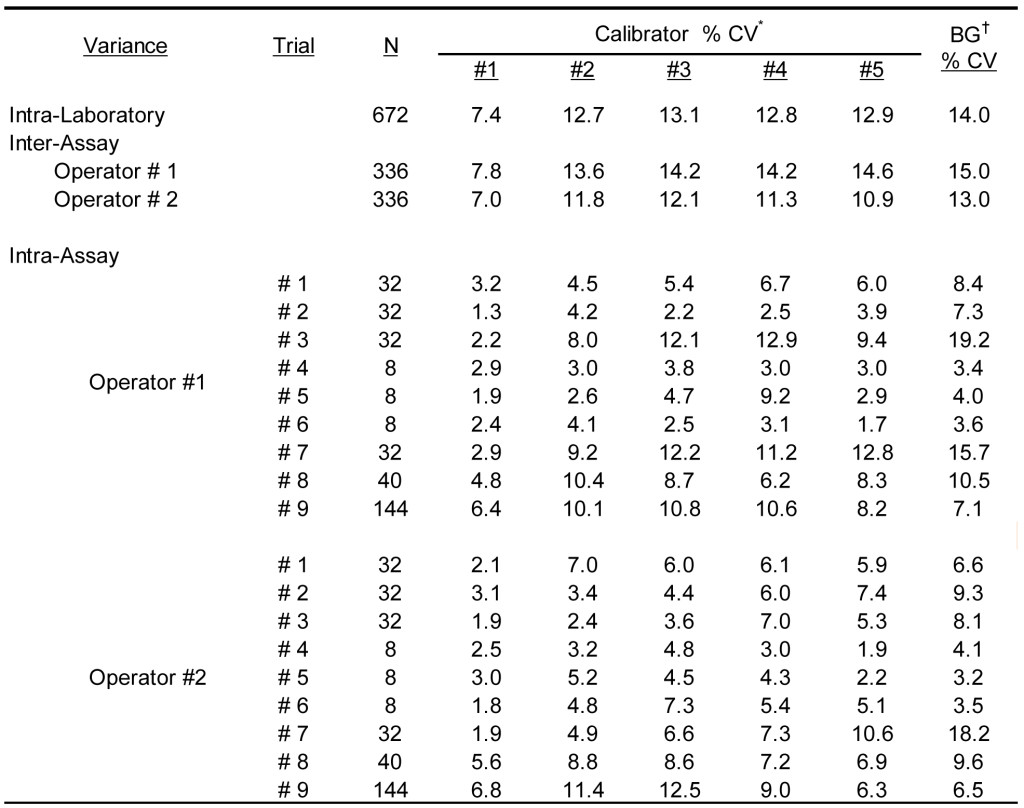
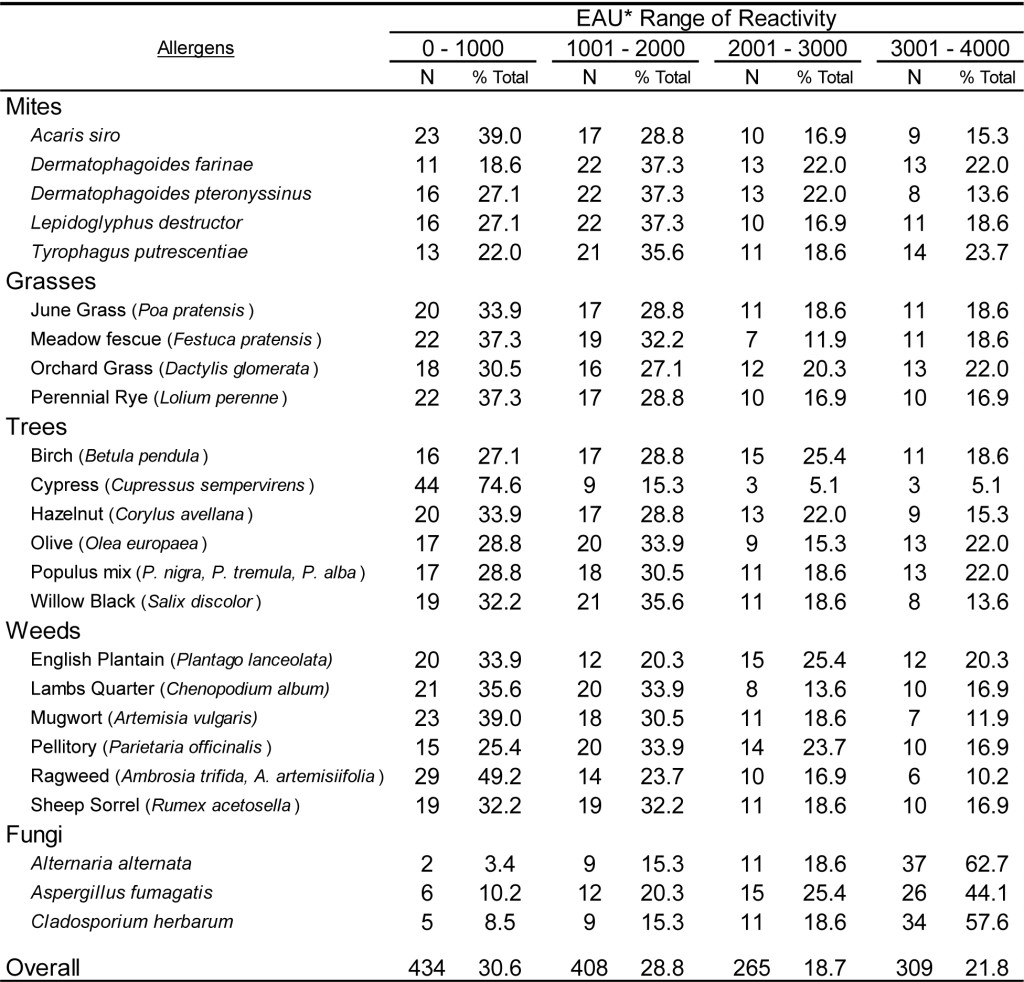
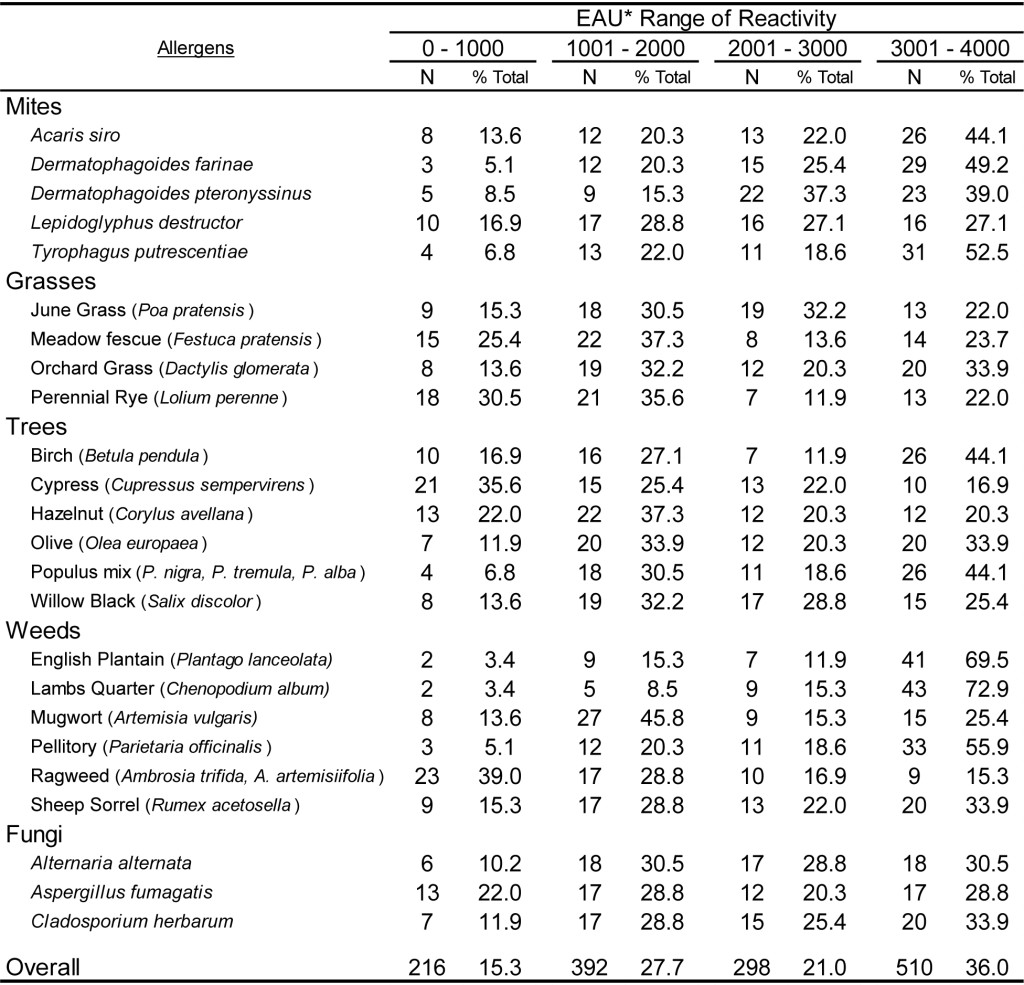
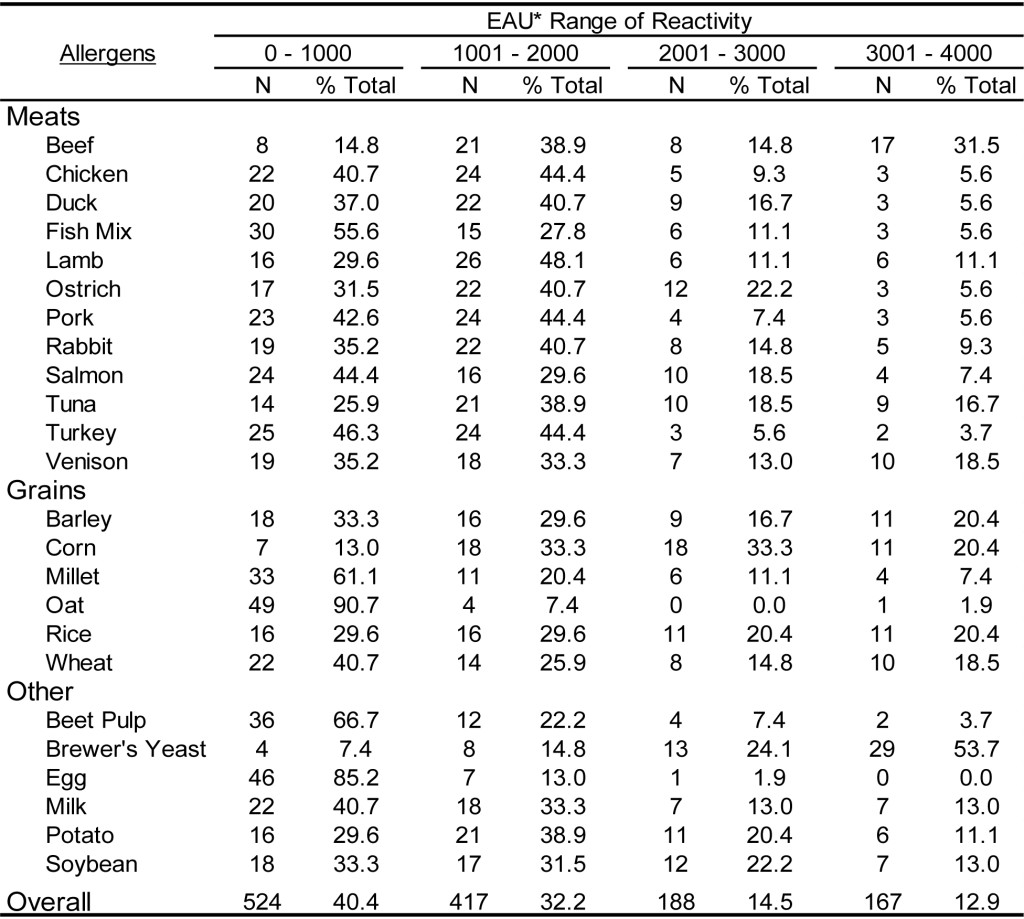
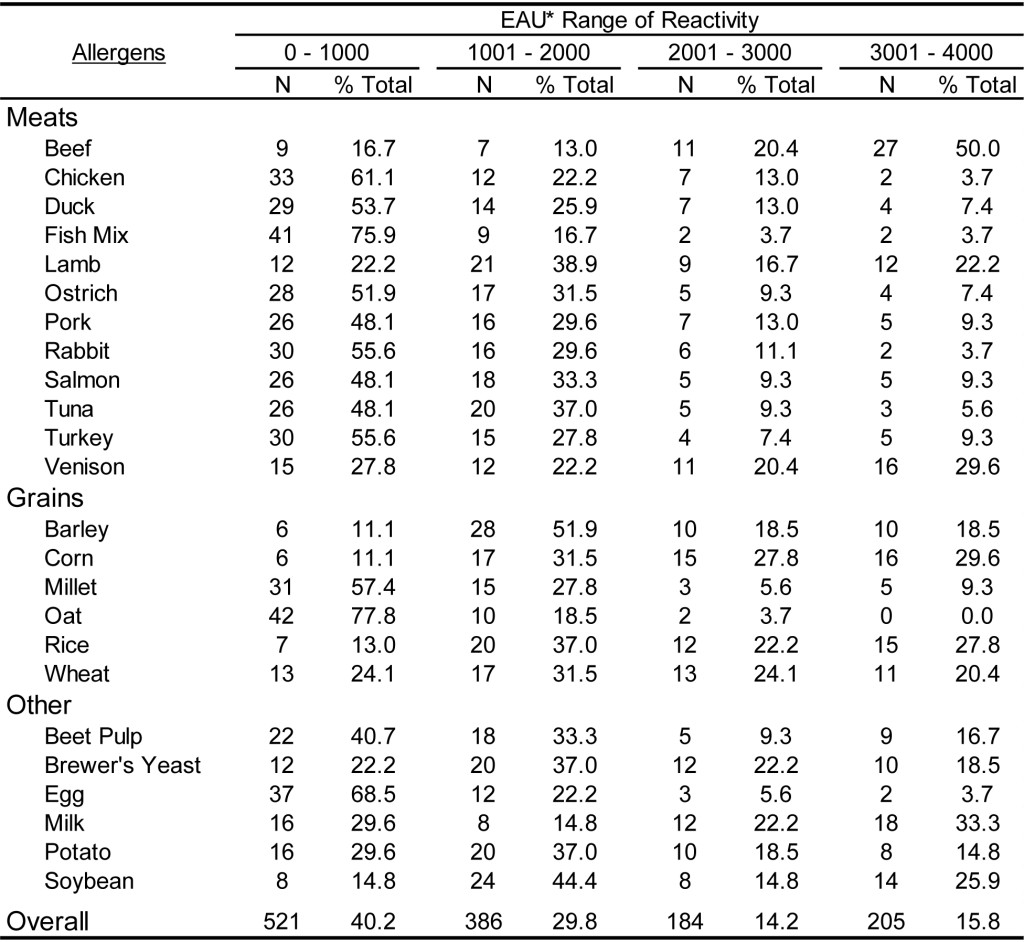
The purpose of this study was to develop and characterize an enzyme linked immunosorbent assay for detection of antigen specific IgG in dogs and cats that might be used to document the clinical validity of IgG testing in these animals. The reactivity of multiple lots of affinity purified anti-IgG specific to the fc component of dog IgG or cat IgG, and subsequently biotinylated, were evaluated against varying dilutions of both cat and dog sera. An admixture of these anti-IgG-biotin antibodies (25nG/mL each) was optimized to yield similar responses with reactive calibrators for the two species. No substantial difference in responses between operators were noted; the average intra-assay % CV for positive calibrators was calculated to be 5.7% (range 1.3% – 12.9%) and 8.3% (range 3.2% – 19.2%) for background responses. The average inter-assay variance for each of the operators was indistinguishable; the average % CV was calculated to be 10.6% (range 7.0% – 14.6 %). The intra-laboratory % CV among reactive calibrators remained relatively constant at 11.8% (range 7.4% – 13.1%), while the background variance was calculated to be only slightly higher at 14.0%. Evaluation of multiple samples from both cats and dogs, at a dilution of 1: 3000, against a panel of 24 environmental antigens (59 individual samples) and 24 food antigens (54 individual samples) demonstrate that IgG reactivity to all of these antigens is present in the majority of samples. Approximately 30% of the sample responses were within the lower range of detection (0 – 1000 EAU) and approximately 50% of all responses were in the mid-range (1001 – 3000 EAU) of detection, while the remaining 20% of sample response were in the upper range of detection (3001 – 4000 EAU) or beyond the limits of the assay. The results demonstrate the reproducibility and robustness of the assay and define its utility in detecting IgG specific for a number of different environmental and food antigens. Collectively, the results provide a foundation for future studies intended to address the issues associated with the validity of IgG testing (i.e. clinical sensitivity and specificity) for various antigens, especially those contained in food stuffs.

Key words

Dog IgG, Cat IgG, ELISA, Environmental Antigens, Food Antigens

Introduction

In recent years, information has been presented to document the advancements made in enzyme linked immunosorbent assays (ELISA) for detection of allergen specific IgE in companion animals [1-3]. Some of the commercially available assays have been well characterized and their functionality are continually monitored [2-7]. The utility of these IgE specific assays in confirming allergy diagnosis and providing a basis for selection of allergens to be included in immunotherapeutic regimes has been reasonably well established. In concert with these assays for detection of allergen specific IgE, ELISAs for detection antigen specific IgG have also been introduced [8-15] and substantial claims for the utility of these assays have been set forth in various promotional materials. A multitude of commercially available services are offered that range from monitoring allergen specific IgG following immunotherapy to those assays which purportedly define antigens that are involved with food hypersensitivity and/or intolerance. Unfortunately, very few studies have been published that characterize the assays used for these evaluations. Consequently, the clinical utility of these serum tests for detection of antigen specific IgG remains unclear. The results presented herein characterize a single ELISA that is designed to detect specific IgG to different environmental and food antigens in the sera of both dogs and cats that might provide a foundation for determining the validity of such testing.

Materials and Methods

Buffers

To maintain consistency of protocol and chemistry of assay components among assays for detection of allergen specific IgE, the IgG ELISA procedures used throughout this study mimics that of the previously characterized IgE macELISA for both dogs and cats. Thus, the buffers used were identical to those previously described [2-6] and include: a) well coating buffer: 0.05 M sodium carbonate bicarbonate buffer, pH 9.6; b) wash buffer: phosphate buffered saline (PBS), pH 7.4, containing 0.05% Tween 20, and 0.05% sodium azide; c) serum and reagent diluent buffer: PBS, pH 7.4, containing 1% fish gelatin, 0.05% Tween 20 and 0.05% sodium azide.

Sera

Dog sera and cat sera samples used in this study were originally received for evaluation of allergen specific IgE and were shown to be non-reactive or borderline reactive using the respective macELISA. For assay development and characterization, a single dog sera pool was prepared by combining 41 individual samples while a similar cat sera pool was prepared using 57 individual cat sera samples. A sufficient volume of glycerin was added to each sera pool to yield a 50% solution; the volume of dog sera/glycerin pool equaled 66 mL whereas the cat sera/glycerin pool yielded 80 mL. Sera pools and individual serum samples were stored at -20 °C.

Anti-IgG-Biotin Conjugate

The anti-IgG-biotin second antibody conjugate for both dogs and cats was purchased from Jackson ImmunoResearch Laboratories, Inc (West Grove, PA). Three separate lots of affinity purified rabbit anti-dog IgG-biotin, Fc fragment specific (code number 304-065-008), and three separate lots of affinity purified goat anti-cat IgG-biotin, Fc fragment specific (code number 102-065-008), were evaluated. Each lot of anti-IgG-biotin lyophilized material was reconstituted to a concentration of 1.0 mG/mL using an alkaline phosphatase stabilizing buffer (Sigma-Aldrich, St. Louis, MO) containing 50% glycerin; storage was at -20°C.

Preparation of Coated Wells

All allergen extracts used in this study were purchased from Stallergenes Greer (Lenoir, NC). Micro well flat bottom strip assemblies (Immulon 4HBH, Thermo Electron Corporation, Waltham, MA) were used throughout and served as the solid phase for all ELISA evaluations. The twelve well strips were individually coated with the specified allergen extracts following a previously defined procedure [2, 4-6]. Briefly, the individual extracts were diluted in bicarbonate buffer (pH 9.6) and 100 µL was added to each assigned well. Following overnight incubation at 4-8°C, the wells were washed with PBS, blocked with 1% monoethanolamine (pH 7.5) then air dried and stored at 4-8°C in Ziploc bags until used.

Allergen Panels

Two separate allergen panels were used for evaluation of individual sera samples. The first panel was a 24 allergen composite that is routinely used for the proficiency evaluations of the various laboratories that routinely run the Stallergenes Greer macELISA for detection of allergen specific IgE, and is derived from the array of allergens that are included in the specific panels routinely evaluated in the various laboratories [4-6]. The composite allergen panel consists of 4 grasses, 6 weeds, 6 trees, 5 mites, and 3 fungi. The second antigen panel encompassed an array of 24 food antigens that included 12 meats, 6 grains, and 6 other specific foodstuffs.

General ELISA Procedure for Sample Evaluations

The prototype Enzyme Linked Immunosorbent Assay (ELISA) protocol used for detection of antigen specific immunoglobulins of various isotypes in different species of companion animals has been previously described [2, 4-6]. Briefly, 100 µL of appropriately diluted sample is added to micro wells that had previously been coated with specifically defined allergens. Following an overnight incubation (14-18 hours) at 4-8 oC in a humidified chamber, the wells are washed (2 complete aspirate/wash cycles using PBS wash solution), then 100 µL of an appropriately diluted solution containing biotinylated anti-IgX (where X is equal to a species specific target isotype) second antibodies is added to each well. The wells are returned to the humidified chamber and incubation continued at room temperature (20-25°C) for another 2 hours, and then they are washed (3 complete aspirate/wash cycles). Appropriately diluted Streptavidin-Alkaline Phosphatase Enzyme conjugate (100 µL/well) is added and incubation at room temperature continued for 1 hour. Following a final wash step (4 complete aspirate/wash cycles) 100 μL of p-nitrophenylphosphate substrate (pNPP, Moss Substrates, Pasadena, Maryland) is added to each well and incubation continued for precisely 1 hour. Substrate development is then stopped by adding 50 μL of 20 mM cysteine to each well. Isotype specific antibody (IgX) reactivity to the antigens is estimated by determining the absorbance of each well measured at 405 nM using an automated plate reader. All results are expressed as ELISA Absorbance Units (EAU) which are background corrected observed responses expressed as milli-absorbance.

Statistics: A coefficient of variation (% CV) was calculated as the ratio of standard deviation and means of the responses observed for the solutions within different runs.

Results

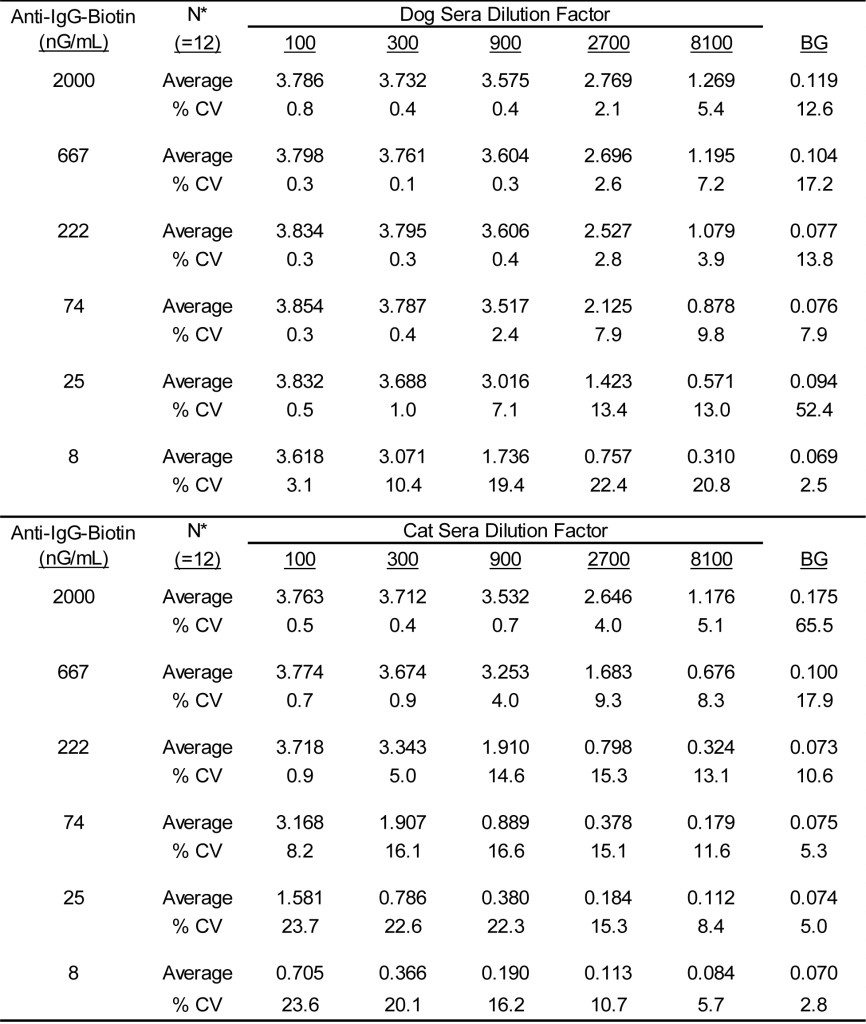
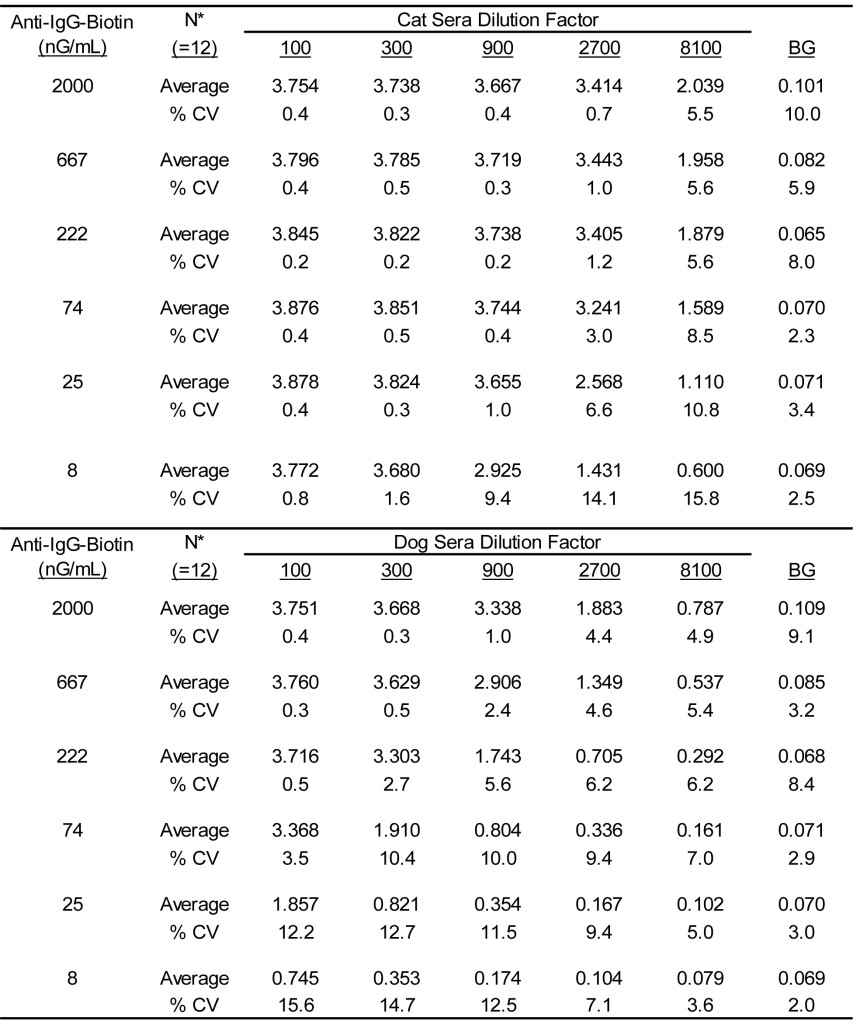
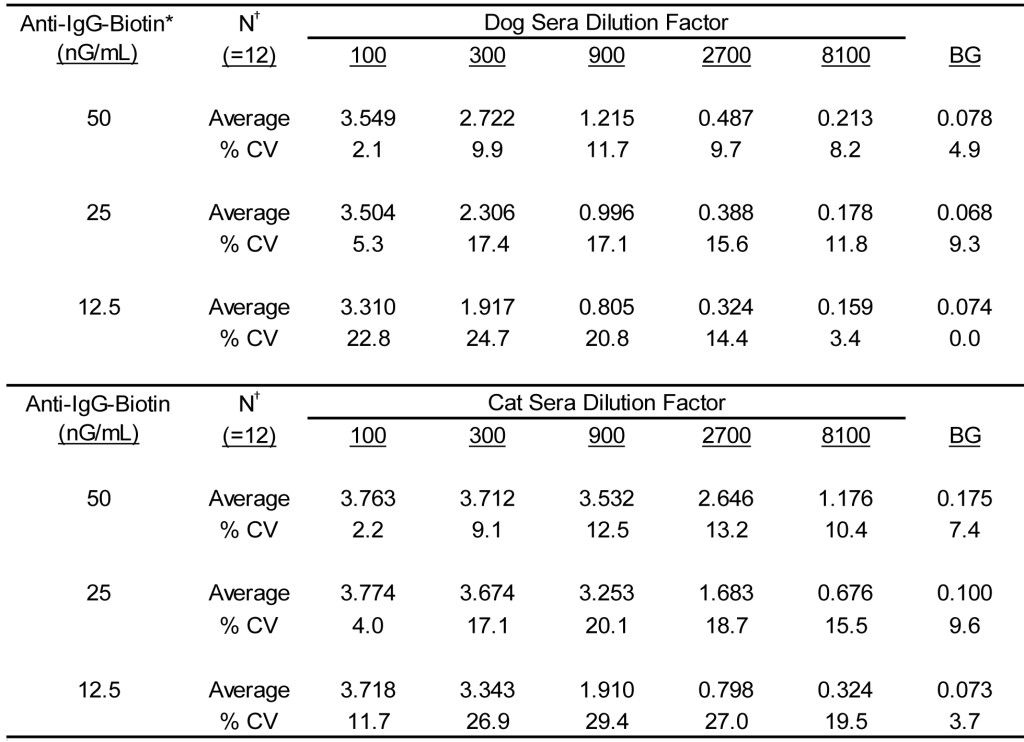
Using a checkboard titration scheme, the reactivity of varying dilutions of sera containing grass specific IgG antibodies was determined using varying concentrations of separate lots of anti-IgG-Biotin; evaluations of three separate lots of both anti-dog IgG-biotin and anti-cat IgG-biotin were completed by two separate operators. Because the results obtained by the two operators for all individual evaluations were indistinguishable, the data were treated as a single population. The results presented in Table 1 demonstrate that substantial grass reactivity is evident in the dog sera pool when evaluated with varying concentrations of anti-dog IgG-biotin antibodies. Although reduced in magnitude of response, the anti-dog IgG-biotin antibodies also yield substantial reactivity with varying dilutions of the cat sera pool. Similarly, substantial grass reactivity is evident in the cat sera pool when reacted with varying concentrations of anti-cat IgG-biotin antibodies (Table 2), and a reduced signal is also evident with this regent when evaluating varying dilutions of the dog sera pool. This dual reactivity demonstrated for the anti-dog IgG-biotin and the anti-cat IgG-biotin is likely a consequence of shared or cross reactive epitopes present on the IgG of the two species. To be expected, the magnitude of response reduces in direct proportion to the concentration of anti-IgG used as well as the dilution of sera evaluated. It is noteworthy that the signal evident without the presence of sera (i.e. background response) were indistinguishable between species and remains low regardless of the concentration of anti-IgG-biotin used. Among the various anti-IgG-biotin concentrations (10 – 50 nG/mL) that might be adopted for use in the assay the background responses remain indistinguishable.

Table 1. Reactivity of varying concentrations of anti-DOG IgG-biotin when evaluated with varying dilutions of dog and cat sera pools.

IJVB2017-108-KenLee_F1

* Three separate lots of anti-IgG dog-biotin were evaluated in duplicate by two separate technicians.

Table 2. Reactivity of varying concentrations of anti-CAT IgG-biotin when evaluated with varying dilutions of cat and dog sera pools.

IJVB2017-108-KenLee_F2

*Three separate lots of anti-Cat IgG-biotin were evaluated in duplicate by two separate technicians.

In light of the similarity of the reciprocal results for the anti-dog IgG-biotin and the anti-cat IgG-biotin combined with the consistency among manufactured lots of the reagents, it seems logical that a single assay might be developed for detection of antigen specific IgG in both dogs and cats. To this end, a single secondary anti-IgG antibody regent was prepared by mixing the previously evaluated lots of anti-dog IgG-biotin and anti-cat IgG-biotin. The concentration of each biotinylated anti-IgG was adjusted to 1 mG/mL, then equal volumes of the separate reagents were mixed to yield a 1 mG/mL stock of anti-IgG-biotin reagent comprised of anti-dog IgG-biotin and anti-cat IgG-biotin with each at 500 µG/mL.

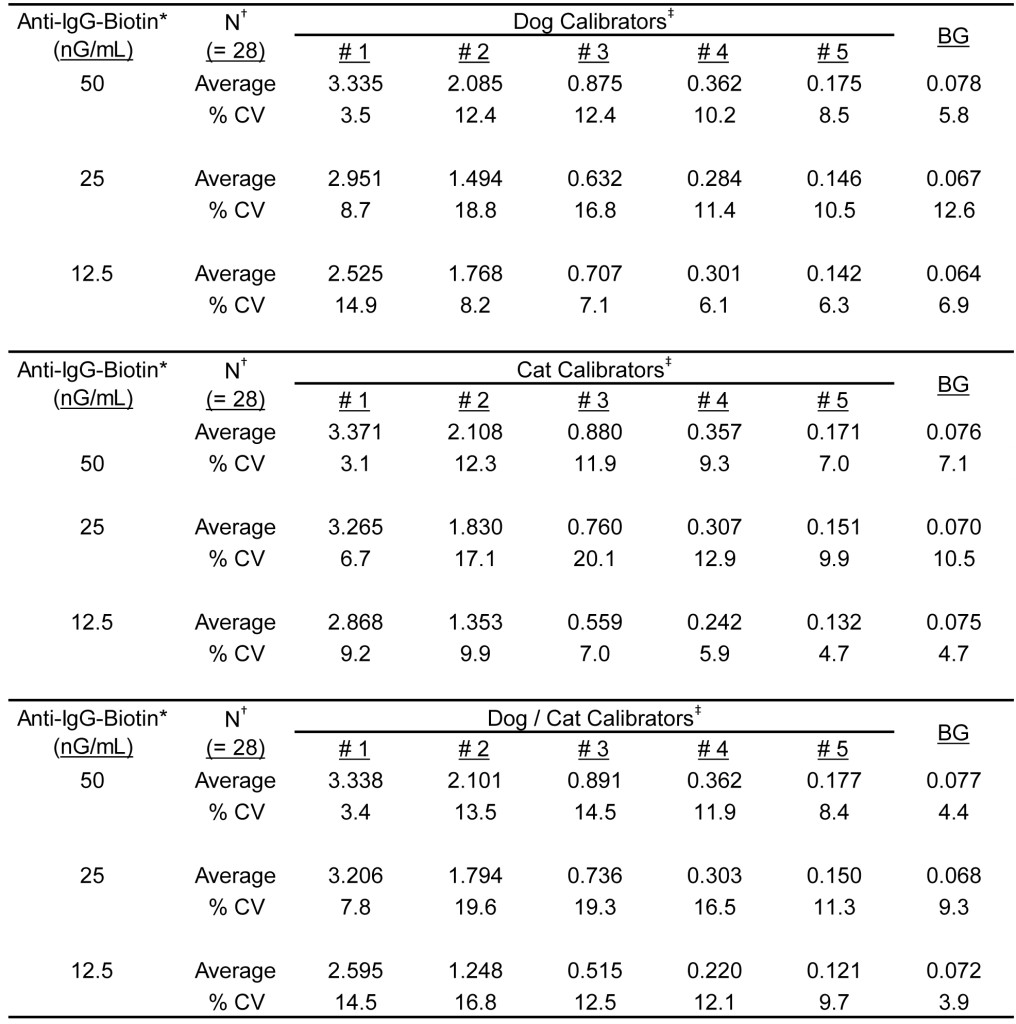
The results presented in Table 3 document the reactivity of varying concentrations of this dual reactive reagent with varying dilutions of dog and cat sera pools. Clearly, substantial antigen specific IgG reactivity is demonstrable with either dog or cat sera when evaluated in ELISA using this reagent as the secondary detection antibody. It is likely that the affinity purified anti-IgG-biotin specific for each species contains approximately the same number of reactive molecules. Consequently, the increased signal evident with the cat sera dilutions is likely a result of a greater content of antigen specific IgG present in the cat sera pool. Never the less, we demonstrate that the signals decrease in direct proportion to the dilution of sera evaluated as well as the concentration of anti-IgG-biotin used; the character is consistent with assays of this sort [16,17]. The variances evident between different operators and among different assay runs is also consistent with previous results defined for assays of this sort [2, 4-6]. The overall average % CV was calculated to be 13.0% (range, 2.1% – 24.7%) for dogs and 15.8% (range, 2.2% – 29.4%) for cats. The signals yielded with dog sera dilutions with an anti-dog IgG-biotin concentration of 25 nG/mL encompasses the potential range of reactivity and approximate the same order of magnitude of signals evident for the calibrators used in our assay for detection of allergen specific IgE in dog sera [2,4-6]. Consequently, the stock concentration of anti-IgG-biotin before dilution for use in an assay is adjusted to 25 µG/mL (1000 X use concentration). For consistency between assays, the calibrators that are intended for use in the antigen specific IgG ELISA need to be constructed to approximate the signals evident in the ELISA for detection of allergen specific IgE.

Table 3. Reactivity of varying concentrations of admixtures of anti-dog IgG-biotin anti-cat IgG-biotin when evaluated with varying dilutions of cat and dog sera pools.

IJVB2017-108-KenLee_F3

* Final concentration of anti-dog IgG-biotin and anti-cat IgG-biotin in equal concentration admixtures.

Three separate lots of anti IgG-biotin admixtures evaluated in duplicate by two separate technicians.

Because the ELISA for antigen specific IgG is designed to detect the respective antibodies in both dogs and cats, it is preferable that the calibrator system for this assay contain sera derived from both dogs and cats, and that the signal yielded with any dog sera are comparable to the signals observed with cat sera. To this end, we prepared a calibration system for the assay by preparing solutions containing appropriate mixtures of dog and cat sera. Before admixture, the appropriate dilution of each sera needed to yield comparable signals across a calibration range of 0 – 3500 EAU was empirically determined for each of the previously defined sera pools. For the current pools of cat and dogs sera that were defined in Tables 1-3, the mixture ratio has been defined to be 2.27. To attain the desired calibrator response for calibrator #1 (OD405 = 2.5 – 3.5) at this ratio using the current of dog and cat sera pools requires that the cat sera pool be at a 1: 1700 dilution, whereas the dog sera need be diluted 1: 750. To ensure equality of the signal magnitude for dogs and cats in the calibrator #1 mixture, the cat sera pool was first diluted 1: 850 and the dog sera pool 1: 375 and evaluated separately. Admixture of equal volumes of the separately diluted sera yielded calibrator # 1 to be used in the assay. Subsequent calibrator solutions (# 2-5) were then prepared as a three-fold serial dilution of the calibrator #1 solution.

The results presented in Table 4 document the reproducibility of manufacturing calibrator solutions. A total of seven sets of calibrator solutions were prepared separately by two different technicians and each component of each lot, along with the admixture of the components, was then evaluated in quadruplicate using varying concentrations of anti-IgG-biotin. The overall average % CV was calculated to be 10.4% (range, 3.5% – 18.8%) for the dog calibrator component and 9.8% (range, 3.1% – 20.1%) for the cat calibrator component; the admixture yielded an overall % CV of 12.8% (range, 3.4% – 19.6%). It is noteworthy that the signals generated at the projected assay concentration (25 nG/mL) are reduced in direct proportion to the calibrator dilution; a three-fold dilution in sera results in an approximate two-fold reduction in signal.

To define the overall reproducibility of the antigen specific IgG ELISA, the calibrator solutions were evaluated by two separate technicians on multiple occasions using grass pollen extract coated wells. The results presented in Table 5 document the overall % CV calculated from observed results within multiple assay runs performed by two separate operators. The overall average OD405 calculated for the five reactive calibrators and expressed as milli-absorbance units was 3099, 1591, 648, 254, and 139 for calibrator #1 – 5, respectively; the average background response was calculated to be 78 milli-absorbance units. The average intra-assay % CV among positive calibrators (#1-5) was calculated to be 5.7% (range 1.3% – 12.9%); substantial differences between operators and assay runs were not detected. To be expected, the greatest intra-assay variability was evident with the background ODs (average 8.3; range 3.2 – 19.2%); these responses are well within the expected limits for assays of this sort [2, 16, 17] The average inter-assay variance for each of the operators was indistinguishable and the average % CV was calculated to be 10.6% (range 7.0 – 14.6%). The intra-laboratory % CV among reactive calibrators (#1-5) remained relatively constant (average 11.8%; range 7.4 -13.1%), while the background variance was calculated to be only slightly higher at 14.0%.

To document the utility of the dual assay for detection of antigen specific IgG in the sera of dogs and cats, 59 samples from each species were evaluated on a panel of pollen and environmental antigens. In addition, 54 samples of each species were evaluated on a panel of food extracts. Preliminary evaluations (data not shown) indicate that antigen specific IgG is present at varying levels in the sera of essentially all dogs and cats, and dilution of each sera sample is necessary to estimate the relative quantities of antigen specific IgG. The results presented in Table 6 demonstrate that the magnitude of responses evident in dog sera spans the range of reactivity detectable using the antigen specific IgG ELISA following dilution of 1: 3000. Although the range of EAU detected with the sera samples varies among different antigens tested, the overall response indicates that approximately 30% of the sample responses are within the lower range of detection (0-1000 EAU) and approximately 20% of the sample response are in the upper range of detection (3001-4000 EAU), whereas nearly 50% of all responses are with the mid-range of detection (1001-3000 EAU). A similar response profile is also evident with cat sera samples (Table 7) following a dilution of 1: 3000, and approximately 50% of all sample responses fall within the mid-range of detectability. However, it appears that a greater percentage of samples (36 %) yield responses in the upper range of detection. Whether or not this observation is actually due to a greater quantity of antigen specific IgG in cat sera or merely a function of the population of samples selected for evaluation remains to be determined. However, in light of the quite similar responses evident for dogs (Table 8) and cats (Table 9) with the food antigen panel it is tempting to speculate that the differences observed with the pollen and environmental antigens is actually a function of the population selection.

Table 4. Reactivity of multiple manufacture lots of calibrator solutions detected with admixtures of anti-dog IgG-biotin and anti-cat IgG-biotin.

IJVB2017-108-KenLee_F4

*Final concentration of anti-dog IgG-biotin and anti-cat IgG-biotin in equal concentration admixtures.

Seven separate lots of each set of calibrators was prepared by two different operators and each calibrator solution was evaluated in quadruplicate in grass pollen allergen coated wells. Dog calibrators are prepared using dog sera only, cat calibrators are prepared using cat sera only, and Dog/Cat Calibrators contain both dog and cat sera.

Calibrator #1 is prepared as a dilution of a sera pool that is highly reactive to grass pollen allergens; calibrators #2 – #5 are prepared as a serial 3-fold dilution of calibrator #1.

¥Background responses observed with diluent in place of serum sample.

Table 5. Assay variance of IgG ELISA calibrator solutions observed with different laboratory runs by different operators.

IJVB2017-108-KenLee_F5

* Calibrator #1 is prepared as a dilution of a sera pool that is highly reactive to grass pollen allergens; calibrators #2 – #5 are prepared as a serial 3-fold dilution of calibrator #1.

Background responses observed with diluent in place of serum sample.

Table 6. Range of ELISA reactivity observed with randomly selected DOG sera samples when evaluated against a panel of pollen allergens using an ELISA specific for dog IgG and cat IgG.

IJVB2017-108-KenLee_F6

*EAU = ELISA Absorbance Units, which were calculated as the OD in milli-absorbance units corrected for background (Sample OD – Background OD x 1000) and normalized to a four-point calibration curve.

Table 7. Range of ELISA reactivity observed with randomly selected CAT sera samples when evaluated against a panel of pollen allergens using an ELISA specific for dog IgG and cat IgG.

IJVB2017-108-KenLee_F7

*EAU = ELISA Absorbance Units, which were calculated as the OD in milli-absorbance units corrected for background (Sample OD – Background OD x 1000) and normalized to a four-point calibration curve.

Table 8. Range of ELISA reactivity observed with randomly selected DOG sera samples when evaluated against a panel of food allergens using an ELISA specific for dog IgG and cat IgG.

IJVB2017-108-KenLee_F8

*EAU = ELISA Absorbance Units, which were calculated as the OD in milli-absorbance units corrected for background (Sample OD – Background OD x 1000) and normalized to a four-point calibration curve.

Table 9. Range of ELISA reactivity observed with randomly selected CAT sera samples when evaluated against a panel of food allergens using an ELISA specific for dog IgG and cat IgG.

IJVB2017-108-KenLee_F9

*EAU = ELISA Absorbance Units, which were calculated as the OD in milli-absorbance units corrected for background (Sample OD – Background OD x 1000) and normalized to a four-point calibration curve.

The results presented in Table 8 and Table 9 document the food antigen specific IgG reactivity detected in dogs and cats, respectively. Overall, approximately 40% of the samples in both dogs and cats tested for food specific IgG yielded responses in the lower range of detectability (0 – 1000 EAU); whereas, the percentage of results in the upper range of detection (>3001 EAU) was 12.9% for dogs samples and 15.8% for cat samples. Consistent with the results for the pollen specific IgG detection, approximately 50% of the samples tested yielded results within the mid-range of detection. In spite of the skewed response to food antigens, these results combined with the results for pollen and environmental antigen document the utility of the single ELISA for detection of antigen specific IgG in both dogs and cats.

Discussion

We have previously optimized and characterized an enzyme-linked immunosorbent assay (ELISA) for detection of allergen specific IgE in dogs [2]. This ELISA effectively serves as the prototype for developing similar assays for detection of antigen specific immunoglobulins of various isotypes in different species of companion animals. Logic dictates that when the ELISA protocol for detection of isotype specific immunoglobulins are maintained, the majority of assay components become interchangeable among assays. The only components that are unique to any immunoglobulin specific ELISA of this sort are the biotinylated secondary anti-IgX antibodies and the assay specific calibrators and control reagents. Thus, characterizing these species specific components should yield an optimized assay for that specific immunoglobulin isotype for any given animal companion. Furthermore, the results yielded will remain of the same sort and be easily accommodated by any reporting convention.

A critical component of any laboratory test is the validity of such a test (i.e. Does the test correlate with a disease state or condition?). However, before the validity of a test can be determined, it is necessary to ensure that the laboratory test is reliable. In determining reliability it is important to document reproducible manufacture of the assay components and of the reproducibility of the results generated among assay runs. In the current evaluation, we characterize a single ELISA for detection of antigen specific IgG not only in dogs but in cats as well. We have defined the procedure to reproducibly manufacture the critical components of the proposed assay and we document the reproducibility of the assay on multiple occasions. In addition, we have evaluated the relative levels of antigen specific IgG in dogs and cats to multiple environmental and food antigens using this assay.

In light of the observation that the majority of cats and dogs possess antigen specific IgG in their serum to essentially “all” antigens [8-11] and a serum dilution of 1: 3000 is required in the current assay to reach a response level that falls within the range of a calibration curve, the concept of “assay cutoff” loses meaning. For assays of this sort, the concept of lower limits of detection takes on more meaning. Considering the results presented in Table 4 which demonstrate that a three-fold dilution in sera results in an approximate two-fold reduction in signal and that the signal evident for calibrator # 5 (calculated to be 0.152.) is approximately twice the background response (calculated to be 0.072), it appears that a lower limit is defined by calibrator # 5 at 0.150 (i.e. 150 EAU). This lower limit of detection value is akin to the cutoff value defined for our macELISA for detection of allergen specific IgE in dogs and cats [2].

The IgG results might be reported in ELISA absorbance Units (EAU), which are merely background corrected responses normalized to the calibration curve and expressed in milli-absorbance. The daily results can then be normalized to historical observations of responses observed with the calibrator solutions, which will then allow direct comparison of results collected within different daily assay runs. This form of reporting will be in accord with the macELISA reporting for detection of allergen specific IgE [2].

Results might also be presented in a categorical representation of the relative quantity of antigen specific IgG [16, 17]. To determine the Relative IgG Units (RGU) will require interpolation from a regression curve (preferably a 4-parameter regression curve) created by plotting the background corrected optical density observed with each of the calibrators versus an arbitrarily assigned concentration value (perhaps 100,000 for calibrator #1) based upon the dilution schema used for preparing the calibrator solutions. The dose response curve evident with the calibrator solutions (Table 4) indicates that a three-fold dilution of serum results in an approximate two-fold reduction in signals generated. Thus, the relative amount of antigen specific IgG that might be detected at the lower limit of detection (150 EAU) will need to be increased three-fold to yield a response of 300 EAU and nine-fold to yield a response of 600 EAU; to generate a maximal signal (4000 EAU) will require nearly a 150-fold increase in antigen specific IgG. These finding then provide the bases for categorizing EAU responses into RGU as depicted in Table 10. Reporting of results in quantitative terms must await the characterization of known quantities of affinity purified antigen specific IgG (for each antigen of interest) that can be incorporated into a standard curve which can replace the calibration curve of the current assay.

Clinical improvement following immunotherapy is not simply due to increased production of IgG specific for the components in the treatment therapy, but it has been shown that the level of antigen specific IgG increases in the sera of dogs that have received an immunotherapeutic regime of allergen injections [18]. It is presumed that the IgG acts as a “blocking antibody” against antigens involved in IgE mediated allergy. Although improved responses due to allergen specific immunotherapy (ASIT) are likely a result of active modulation of the immune regulation mechanism, [9, 19-21 ] monitoring of the level of antigen specific IgG following immunotherapy might be included as an adjunct tool to insure the well-being of an allergic animal that has been placed on an immunotherapeutic allergen regime [18]. The assay characterized herein is readily adaptable to such a function.

Adverse food reactions in companion animals can be either food allergy or food intolerance. Allergy has an immunologic basis for its pathogenesis; but an immunologic basis for food intolerance has not be documented [9, 19-21]. The current methods for detection of food allergy includes elimination and challenge diets and serum testing might then be useful for selection of foods that might be included in an elimination-challenge diet. Commercial tests are available for detection of food-specific IgE or IgG in serum, and are promoted as diagnostic tools for food intolerance. Yet, the clinical sensitivity and specificity (validity) of these assays have not yet been adequately documented.

Table 10. Relative categories of IgG in relation to EAU and RGU and interpretation of results.

IJVB2017-108-KenLee_F10

*EAU = ELISA Absorbance Units, which were calculated as the OD in milli-absorbance units corrected for background (Sample OD – Background OD x 1000) and normalized to a four-point calibration curve.

RGU = Relative IgG Units interpolated from regression curve constructed from calibrator responses.

When considering IgG specific responses, high circulating levels of IgG are purported to correlate with clinical food allergy signs and detecting high levels or IgG to certain antigens is supposedly useful in pinpointing various antigens to avoid. Unfortunately, no well controlled prospective studies have been reported to support this contention. In light of the results presented herein (Tables 8-9), which document that the majority of cats and dogs contain IgG to most food stuffs, the mere detection of IgG specific for the food components cannot be the basis for allergy or intolerance. Thus, to conclude an involvement of IgG would require that a difference in the level of IgG to a specific antigen be finite or that a subclass of IgG is the causative agent. The authors are unaware of any study that defines the level of food specific IgG or subclass of IgG required to induce an allergic response. However, the development and characterization of the antigen specific IgG ELISA defined herein opens the possibilities for investigations in this arena. The results presented herein characterize a single ELISA that is capable of detecting antigen specific IgG in both dogs and cats. We have documented the reproducibility and robustness of the assay and defined its utility in detecting IgG specific for a number of different environmental and food antigens. Finally, we have documented the IgG reactivity to these antigen arrays in a subpopulation of dogs and cats. Collectively, these results provide a foundation for future studies intended to address the issues associated with the validity of IgG testing (i.e. clinical sensitivity and specificity) for various antigens, especially those contained in food stuffs.

Authors Contributions

Brennan McKinney and Karen Blankenship manufactured all components used throughout the evaluation and contributed to acquisition, analysis, and interpretation of data. Kenneth Lee contributed to the conception and design of the study; contributed to the acquisition, analysis, and interpretation of data; and drafted the manuscript. All authors gave final approval and agree to be accountable for all aspects of the work in ensuring that questions relating to the accuracy or integrity of any part of the work are appropriately investigated and resolved.

Declaration of conflicting interests: All authors are employees at Stallergenes Greer

Funding: Funding for this study was provided by Stallergenes Greer.

References

  1. DeBoer DJ, Hillier A (2001) The ACVD task force on canine atopic dermatitis (XVI): laboratory evaluation of dogs with atopic dermatitis with serum-based “allergy” tests. Vet Immunol Immunopathol 81: 277–87.
  2. Lee KW, Blankenship KD, McCurry ZM, Esch RE, DeBoer DJ, et al. (2009) Performance characteristics of a monoclonal antibody cocktail-based ELISA for detection of allergen-specific IgE in dogs and comparison with a high affinity IgE receptor-based ELISA. Vet Dermatol 20: 157–164. [crossref]
  3. Stedman K, Lee K, Hunter S, Rivoire B, McCall C, et al. (2001) Measurement of canine IgE using the alpha chain of the human high affinity IgE receptor. Vet Immunol Immunopathol 78: 349–355. [crossref]
  4. Lee KW, Blankenship KD, McCurry ZM, et al. (2012) Reproducibility of a Monoclonal Antibody Cocktail Based ELISA for Detection of Allergen Specific IgE in Dogs: Proficiency Monitoring of macELISA in Six US and European Laboratories. Vet Immunol Immunopathol 148: 267–275.
  5. Lee KW, Blankenship K, McKinney B, et al. (2015) Proficiency monitoring of monoclonal antibody cocktail–based enzyme-linked immunosorbent assay for detection of allergen-specific immunoglobulin E in dogs. Journal of Veterinary Diagnostic Investigation 27: 461–469.
  6. Lee KW, Blankenship K, McKinney B, et al. (2017) Continued Proficiency Monitoring Of Monoclonal Antibody Cocktail-Based Enzyme-Linked Immunosorbent Assay for Detection of Allergen Specific Immunoglobulin E in Dogs – 2016. Integr J Vet Biosci 1: 1–10
  7. Thom N, Favrot C, Failing K, et al. (2010) Intra- and interlaboratory variability of allergen-specific IgE levels in atopic dogs in three different laboratories using the Fc-??receptor testing. Vet Immunol Immunopathol 133: 183–189.
  8. Halliwell, R.E.W., Gordon, C.M., Horvath, C. (2005) IgE and IgG antibodies to food antigens in sera from normal dogs, dogs with atopic dermatitis and dogs with adverse food reactions. In: Hillier, A., Foster, A.P., Kwochka, K.W. (Eds.), Advances in Veterinary Dermatology. Blackwell Publishing, Oxford 28–35.
  9. Pucheu-Haston CM, Bizikova P, Eisenschenk MN, Santoro D, Nuttall T, et al. (2015) Review: The role of antibodies, autoantigens and food allergens in canine atopic dermatitis. Vet Dermatol 26: 115–115e30. [crossref]
  10. Bethlehem S, Bexley J, Mueller RS (2012) Patch testing and allergen-specific serum IgE and IgG antibodies in the diagnosis of canine adverse food reactions. Vet Immunol Immunopathol 145: 582–589.
  11. Zimmer A, Bexley J, Halliwell RE, et al. (2011) Food allergen-specific serum IgG and IgE before and after elimination diets in allergic dogs. Vet Immunol Immunopathol 144: 442–447
  12. Hofmaier S, Comberiati P, Matricardi PM (2014) Immunoglobulin G in IgE-mediated allergy and allergen-specific immunotherapy. Eur Ann Allergy Clin Immunol 46: 6–11. [crossref]
  13. Jeffers JG, Shanley KJ, Meyer EK (1991) Diagnostic testing of dogs for food hypersensitivity. J Am Vet Med Assoc 198: 245–250. [crossref]
  14. Hardy JI, Hendricks A, Loeffler A, et al. 2014. Food-specific serum IgE and IgG reactivity in dogs with and without skin disease: lack of correlation between laboratories. Vet Dermatol 25: 447–e70.
  15. Foster AP, Knowles TG, Moore AH, Cousins PD, Day MJ, et al. (2003) Serum IgE and IgG responses to food antigens in normal and atopic dogs, and dogs with gastrointestinal disease. Vet Immunol Immunopathol 92: 113–124. [crossref]
  16. Tijssen P (1993) Processing of data and reporting of results of enzyme immunoassays. In: Burdon, RH, van Knippenberg PH, editors. Practice and Theory of Enzyme Immunoassays 385–421. Elsevier, Amsterdam.
  17. World Organisation for Animal Health (OIE) (2014) Development and optimization of antibody detection assays. In: Manual of Diagnostic Tests and Vaccines for Terrestrial Animals, OIE, Paris, France.
  18. Hites MJ, Kleinbeck ML, Loker JL, Lee KW (1989) Effect of immunotherapy on the serum concentrations of allergen-specific IgG antibodies in dog sera. Vet Immunol Immunopathol 22: 39–51. [crossref]
  19. Kennis RA (2006) Food allergies: update of pathogenesis, diagnoses, and management. Vet. Clin. North Am. Small Anim Pract 36: 175–184.
  20. Akdis CA, Akdis M (2015) Mechanisms of allergen-specific immunotherapy and immune tolerance to allergens. World Allergy Organ J 2015; 8: 17
  21. Mandigers P, German AJ (2010) Dietary hypersensitivity in cats and dogs. Tijdschr Diergeneeskd 135: 706–710. [crossref]

Higher Serum Ferritin in Tibetan and Han Populations with Diabetes Living on the Tibetan Plateau

DOI: 10.31038/EDMJ.2018211

Abstract

Objective: Tissue iron has emerged as a significant risk factor for diabetes. Pathways that sense and regulate iron and oxygen interact, but few studies examined the interactions of hypoxia and iron in determining diabetes risk in human populations. Accordingly, metabolic phenotyping with analysis of iron homeostasis in both Tibetan and Han Chinese living at 2300-3900m altitudes were conducted.

Research design and methods: Data were collected on Tibetan and Han Chinese living at intermediate altitudes. Iron homeostatic and metabolic parameters including homeostasis model assessments (HOMA), hemoglobin A1c, serum ferritin and transferrin saturation were determined.

Results: Serum ferritin is higher in both Tibetan groups compared to the respective Han groups, and higher in each diabetic group compared to nondiabetics of the same ethnicity. Serum iron and transferrin saturation were also higher in the Tibetan diabetics than the Tibetan non-diabetics. Serum iron was significantly correlated with ferritin levels in the four combined groups (r2=0.07313, p<0.05) and even stronger in the Tibetan diabetic group (r2=0.2702, p<0.05). HOMA-β was negatively correlated with ferritin in the Tibetan combined groups (r2=0.020, p<0.05), and HOMA-IR tended to be positively correlated with ferritin (r2=0.018, p<0.05).

Conclusion: Iron parameters differ both between Han and Tibetans and between diabetics and nondiabetics of both populations. High ferritin, which in these cohorts reflects iron status, is a risk factor for diabetes in both groups, although how iron status relates to the diabetes phenotype differs between the two groups, possibly related to their differing histories of adaptation to high altitude.

Keywords

Iron; Ferritin; Diabetes; Tibetan Adaptation

Key Messages

  • The study presents evidence of the relationship between serum ferritin, a measure of tissue iron stores that has been linked to diabetes risk in other populations, and diabetes in Tibetan and Han populations living at altitudes of 2300 m-3900 m.
  • The study also presents associations of glucose metabolic phenotypes (homeostasis model assessments, HOMA) in those with diabetes.
  • Due to the relatively low prevalence of diabetes in Tibetan populations, the sample size was constrained
  • This study is cross-sectional and therefore, future prospective and follow-up studies to reveal the interactions analysis of iron metabolism and diabetes in Tibetans and Han populations are indicated.
  • The ethnic background of the subjects is by self-report

Introduction

Many factors contribute to the risk of diabetes, including genetics, ethnicity, altitude, and diet [1]. Tissue iron has emerged as an additional significant risk factor for diabetes and has been shown to play an important role in metabolic regulation [2,3]. The initial association between diabetes risk and iron emerged from studies of heritable diseases of iron overload such as hereditary hemochromatosis (HH) [4]. More recent studies demonstrate that the relation between iron and diabetes also exists in the general population and across the broad range of “normal“ iron, and an associations between iron and diabetes have been established in Caucasians [3,5], persons of African descent [6], and several Asian populations [7-11,12]. The mechanism by which iron confers diabetes risk, however, is not established in all of these populations, and the interactions of genetics, diet, and geography with the degree of risk are also unknown.

The interaction of iron and altitudes particularly interesting because residence at higher altitudes is inversely associated with diabetes, but hypoxia responsive pathways also increase iron absorption to allow increased erythropoiesis [13]. Tibetans have successfully adapted to reside at altitudes of up to 5000 m [14,15] and it has been reported that there is a reduced prevalence of diabetes and metabolic syndrome in Tibetans [16]. The genetic determinants of that adaptation include changes in the hypoxia sensing pathway [15]. One characterized genetic mechanism, for example, is a gain of function mutation that confers increased oxygen affinity to the proline hydroxylase that would normally be inactivated by hypoxia, thus facilitating stabilization of hypoxia inducible factors [17]. The adaptation was hypothesized to protect Tibetans from the induction of harmful levels of polycythemia. The mutation, which partially disables the hypoxia response, would also be expected to render Tibetans less sensitive to induction of the diabetes-protective hypoxia response to altitude. Because the hypoxia sensing pathway exerts major effects on multiple metabolic pathways and senses both tissue iron and oxygen levels [18], it is likely that altitude and iron interact to affect metabolism and diabetes risk, and that these interactions may differ in Tibetans. Interactions between iron and hypoxia have been studied in animal models and shown to affect hepatic glucose production [19], for example, a major factor in diabetes, but their interaction in human populations has not been examined.

In order to begin to address these issues, we have examined metabolic phenotypes and measures of iron homeostasis in Tibetan and Han Chinese with and without diabetes, living at altitudes of 2300-3900 m. The aim of this study was to identify how iron and high altitude hypoxia interact in a population of Tibetan highlanders genetically adapted to high altitude, compared to the non-adapted Han Chinese.

Participants and Methods

Participants

This cross-sectional study included one hundred Tibetan residents of an urban centre (Yushu, 3300-3900m altitude), with and without diabetes, randomly selected from a population receiving routine health screening, at Qinghai University Affiliated Hospital. One hundred Han Chinese individuals, with and without diabetes, matched for age and sex, were selected from a clinic-based population, at the Qinghai University Affiliated Hospital, in Xining (2300m). All the participants were chosen between September 2013 and September 2016.

Data collection and measurement

Clinical characteristics including sex, age, body mass index (BMI), and medical history were recorded. Height and weight were measured according to a standardized protocol and technique, with participants wearing no shoes. BMI was calculated as weight (kg)/height (m2). Blood pressure was measured by trained professionals, using an electronic sphygmomanometer (OMRON HEM-7200), and each participant rested for at least 20 min before measurements were taken.

Health screening included the measurement of fasting glucose and glycated haemoglobin (HbA1c) values. Blood samples were drawn from participants’ antecubital veins for measuring fasting blood glucose (FBG), triglycerides (TGs), total cholesterol (TC), low-density lipoprotein cholesterol (LDL-C) and high-density lipoprotein cholesterol (HDL-C) levels. From this information, de-identified participants of each ethnicity (Tibetan and Han Chinese), with no known history of diabetes and who had not taken any insulin or related drugs, were chosen. From among them, 100 individuals of each ethnicity who were newly diagnosed as having diabetes, based on fasting glucose (≥126 mg/dl) or HbA1c (≥6.5%) criteria, or who were nondiabetic, were randomly chosen. Individuals with known hematologic disorders, previously diagnosed diabetes, a history of recent (within 1 year) blood transfusion, and malignancy were excluded. In the case of those individuals, the blood samples drawn for health screening were used for the determination of levels of serum insulin and lipids, and iron parameters. The study was approved by the Ethnic Committee of Qinghai University, and the Institutional Review Board of Wake Forest University. Extra clinical samples were used for the additional testing of iron parameters.

Laboratory studies

Fasting blood glucose (FBG), fasting serum insulin, ferritin and serum iron, TG, LDL, HDL, total cholesterol (TH), and HbA1c levels were analysed by latex agglutination immunoassay (DCA 2000 HbA1c, Siemens Healthcare Co Ltd, Munich, Germany). These parameters were measured by standard techniques used in the clinical chemistry laboratories at the Qinghai University Affiliated Hospital. HOMA-IR and β-cell function (HOMA-β) (%) values were calculated as [FPG (mg/dl) ×IRI (μU/ml)]/405 and [IRI (μU/ml) × 360]/[FPG (mg/dl)-63], respectively.

Iron metabolic parameters were measured using an automated time-resolved immunofluorometric assay (Finland) and the reference values were: Serum iron, Male 11.6–31.7 μmol/L; Female 9.0–30.4 μmol/L, Total Iron Binding Capacity: 45-66 μmol/L, Transferring saturation, Male 20–50%; Female 15–50%, and Serum ferritin, Male 20–240 ng/mL; Female, 10–100 ng/mL)

Statistical analysis

Continuous variables that followed a skewed distribution were transformed to normal distribution by natural log or square root transformation. Using a Students’ t-test or Chi-square, the distribution of clinical and laboratory measurements was tested between individuals with and without diabetes, in the Han Chinese and Tibetan groups, respectively. Pearson and Spearman correlations were used to assess the correlations between ferritin levels, iron concentrations and other variables, in the two groups. Analyses were performed using SPSS 14.0 for Windows software package (SPSS, Chicago, IL). P values <0.05 were considered statistically significant.

Results

Characteristics of the Tibetan and Han Chinese study populations

Tibetan residents with diabetes(n=100) and Han Chinese with diabetes (n=100) were matched to 100 subjects of each group without diabetes, with respect to age, gender, body mass index, total hemoglobin and blood pressure (Table 1). As expected, each diabetic group had higher fasting glucose values than their respective non-diabetic group. HbA1c was not determined in those with FBG less than 126mg/dL. In the Tibetan diabetes group, surprisingly lower triglyceride levels, and lower HDL and higher LDL were noted compared to the non-diabetic group. LDL cholesterol concentrations were also higher the non-diabetic Han compared to the nondiabetic Tibetans (Table 1).

Iron parameters differ between Han Chinese and Tibetan populations, and between those with and without diabetes, and we identified a unique association between diabetes risk and the iron indices, in Tibetans. Because of our study population, which included Tibetans and Han Chinese individuals, both of whom reside in intermediate altitudes of 2300-3900 m, we examined the interrelations between serum iron-related parameters, ethnicity, and diabetes status, respectively. The ferritin level was higher in the diabetes group compared to the non-diabetes group, within the same ethnicity (p<0.01, Figure 1A). Our hypothesis is that, in the non-diabetes groups there should no difference in the ferritin level; however, it was observed that the ferritin level was higher in both Tibetan diabetes and non-diabetes groups, compared to the respective Han Chinese groups (p<0.01); this indicates that Tibetan populations showed specialized tissue iron storage.

Next, we assessed both β-cell function and insulin resistance, according to the homeostasis model assessment (HOMA-β and HOMA-IR). Insulin values were only available in the diabetes groups. The HOMA-IR values were greater than 2 in both the diabetes groups (Table 2); this was consistent with insulin resistance [19]. The HOMA-IR and HOMA-β values did not differ between the Han Chinese and Tibetan populations. The HOMA-β value was negatively correlated with ferritin, in both groups (r2=-0.02, p=0.04), and the HOMA-IR value tended to be positively correlated with ferritin (r2=0.02, p=0.05). Within each ethnicity, the same trends held, but did not reach significance in the smaller groups (Table 2).

Table 1. Distribution of variables in Tibetan and Han Chinese populations with and without diabetes. Results are presented as median (interquartile ranges).

Variable Tibetan Han Chinese
Diabetes groupn=100 Non-diabetes groupn=100 Diabetes groupn=100 Non-diabetes groupn=100
Age(years) 50(44~59.75) 50(45~58.75) 52(46~58) 54(48~58)
Gender (male%) 54% 52% 49% 55%
BMI(kg/m2) 24.08(22.53~26.23) 24.18(21.76~26.5) 24.22(22.2~26.2) 24.15(21.84~25.95)
Haemoglobin (g/L) 160(150~172) 163.02(146.97~172.09) 163(150~172) 160.34(144.49~173.58)
Diastolic Pressure (mmHg) 80(80~88) 80(80~84) 80(76~89) 80(78.25~85.75)
Systolic Pressure(mmHg) 124(120~140) 120(120~130) 120(120~130) 120(119.25~137.25)
Fasting Glucose(mmol/L) 9.36(8~10.94) 4.59(4.3~5) 8.15(6.8~11.39) 4.6(4.3~5.06)
Glycated Haemoglobin (%) 10.25(8.55~11.88) 8.8(7.05~10.2) *
Triglyceride(mmol/L) 1.68(1.32~2.33) 1.71(1.38~2.35)Δ 1.73(1.32~2.32)* 1.76(1.36~2)
Cholesterol(mmol/L) 4.58(4~4.93) 4.57(3.88~5.09) 4.52(3.96~5) 4.26(3.75~5)
HDL(mmol/L) 0.97(0.81~1.13) 1.03(0.85~1.19)Δ 1.03(0.88~1.19)* 1.08(0.88~1.26)
LDL(mmol/L) 3.01(2.25~3.63) 2.44(2.03~2.94)Δ 2.58(2.1~3.28)* 2.57(2~3)
Iron Metabolism
Iron(umol/L) 20(16.4~24.9) 15.6(12~20.58) Δ 16.9(12.85~22)* 15.75(12.9~18.83)
Ferritin (ng/ml) 613.89(457.07~812.75) 279.85(231.32~359.56) Δ 234.66(173.68~325.25)* 78(59.45~98.63)+
TIBC(umol/L) 29.3(23.1~35) 48.6(43.13~57.08) Δ 38(33.05~43.55)* 51.65(47.43~57.4)+
TSAT(%) 0.7(0.5~0.98) 0.33(0.25~0.39) Δ 0.46(0.31~0.64)* 0.30(0.25~0.35)+

 Notes: * for Tibetan diabetes group vs Han Chinese diabetes group with a significant difference of p<0.05; Δ for Tibetan diabetes group vs Tibetan non-diabetes group with a significant difference of p<0.05; + for Tibetan non-diabetes group vs Han Chinese diabetes group with a significant difference of p<0.05

Abbreviations: LDL, low-density lipoprotein; HDL,high-density-lipoprotein; TIBC, total iron binding capacity; TSAT, transferrin saturation

Table 2. Distribution of HOMA values in Tibetan and Han Chinese diabetes groups. Results are presented as median (interquartile ranges)

Variables Tibetans with diabetesN=100 Han Chinese with diabetesN=100 Z p
HOMA-IRHOMA-β 29.35(22.25~34)2.35(1.52~4.04) 25.64(17.02~46.79)2.44(1.49~3.59) -0.293-0.684 0.770.494

Abbreviations: HOMA, homeostasis model assessment; HOMA-IR, homeostasis model assessment insulin resistance

EDMJ2017-115-DonaldMcClain_F1

Figure 1. Iron metabolic values in Tibetan and Han Chinese groups with and without diabetes, in terms of A) Serum ferritin level comparisons; B) Serum iron level comparisons; C) Total iron binding capacity comparisons; and D) Transferrin saturation ratio comparisons.

*dot spot indicates the 5-95 percentile of the values.

Serum ferritin reflects the iron status in the study group, while other iron parameters are also associated with diabetes

After, we examined serum iron levels in the four groups. Like in the case of ferritin, the serum iron level was higher in Tibetans with diabetes than Tibetan without it; in addition, it was higher in Tibetan participants with diabetes than Han Chinese participants with diabetes (p<0.01 for both comparisons, Figure 1B), although the trend among Han Chinese participants with diabetes was only higher than those without diabetes in the same population (p<0.05). The same was true of transferrin saturation (p<0.01, Figure 1D). As further evidence that ferritin reflects iron status rather than inflammation, in our study, the serum iron and ferritin levels were significantly correlated in the four groups (r2=0.07, p<0.01, Figure 2). The correlation was even stronger in the Tibetan diabetes group (r2=0.27, p<0.01), but was not significant in the other groups, taken individually.

EDMJ2017-115-DonaldMcClain_F2

Figure 2. Correlation of serum iron and ferritin levels in Tibetan and Han Chinese populations, with and without diabetes. Scatter-plot diagram.

Higher ferritin levels identified as a new pattern of diabetes risk in Tibetans

Insulin resistance and decreased β-cell function can also result from as well as cause poor plasma glucose stability and hyperglycemia [20]. Therefore, we determined if glucose stability influenced the HOMA-βand HOMA-IR values. The associations of HbA1c levels with the HOMA-IR and HOMA-β values were assessed, respectively. However, HbA1c levels were not found to be correlated with HOMA-IR (p=0.95), HOMA-βor ferritin (p=0.63), in the Tibetan diabetes group. In the Han Chinese diabetes group, however, HbA1cwas significantly negatively correlated with ferritin (p=0.04) and the HOMA-β(p=0.04) value, and trended toward being negatively correlated with the HOMA-IR (p=0.11) value.

Discussion

Iron and diabetes risk in Tibetan and Han Chinese

The connection between iron and diabetes have been the subject of recent reviews [3,4,21-23] and a meta-analysis [24-26]. Originally identified in subjects with hereditary iron overload such as occurs in hereditary hemochromatosis [27,28], the correlation between markers of tissue iron and diabetes has since been noted in numerous populations in the U.S., Europe [3] and elsewhere, including Korean [7], Chinese Han [8-11], African Americans [6,29], and Persian populations [30]. Our findings generally support these studies insofar as Tibetans diabetics have higher ferritin than nondiabetics, and Han diabetics have higher ferritin than Han nondiabetics. However, serum ferritin can rise with systemic inflammation as well as tissue iron, and phlebotomy studies have shown ferritin to be related to tissue iron, but imperfectly so [31]. In general, however, tissue iron, in particular liver iron, is the predominant determinant of serum ferritin levels [32], and ferritin correlates very well with liver iron by imaging criteria [33]. Even in the inflammatory condition of non-alcoholic steatohepatitis, ferritin remains are liable reporter of tissue iron as assessed by liver biopsy [34]. Further evidence that ferritin is reporting on iron status is the correlation of ferritin with serum iron. Thus, although we do not have direct measures of tissue iron content, the results overall support the finding in multiple populations of a correlation of iron with diabetes prevalence. Further support for this conclusion is the large amount of data from animal and human models that support causal connections between iron and diabetes, mediated both by β-cell failure and insulin resistance with the underlying mechanisms including oxidant stress and modulation of adipokines that affect glycemia [29,31,35], and data from NHANES showing that ferritin reflects dietary iron intake rather than inflammation [5].

Our findings also indicate that ferritin remains associated with diabetes in residents of higher altitudes. This replicates a previously reported association of ferritin with diabetes in Han Chinese living at altitude [36]. Living at higher altitudes has been reported to be associated with lower diabetes risk [35] and likewise activation of hypoxia-sensing pathways has salutary effects on glucose homeostasis [37]. Thus, our study indicates that in both populations the association with iron is not erased by the beneficial effects of altitude, though we do not have diabetes incidence and prevalence data as a function of iron with which to examine their possible interaction.

We also show that Tibetans with and without diabetes have significantly higher ferritin levels and transferrin saturations than the Han population. The reasons for this are not clear. One possibility is diet, with the traditional Tibetan diet including substantial amounts of high-iron barley [1], and red yak meat; dietary surveys were not done in this study but would be useful in future studies aimed at explaining these parameters. Epidemiological investigations are needed to explain if the relative risk of diabetes for a given ferritin level is altered in Tibetans compared to Han. Interestingly, although the transferrin saturation is significantly higher in Tibetans with diabetes, which is accounted as much by low iron binding capacity as by higher serum iron, but the basis for this is not known. Finally, hypoxia also induces increased absorption of dietary iron to support polycythemia at altitude. Tibetans have genetically adapted to high altitude with unique haplotypes and mutations in genes of the hypoxia sensing pathways [13], and this may explain part of the differences between the Tibetans and Han in the current study, who are residing at similar altitudes.

Mechanisms of iron-associated diabetes in the Han and Tibetans

Further indication that the association of ferritin, iron and diabetes risk is complex is that if the relationship were simply one of high iron, and if the high ferritin values in Tibetans did simply reflect high iron, that might imply higher diabetes risk in that population, whereas epidemiologic studies suggest that Tibetans have a lower prevalence to diabetes [9]. A minority of the subjects in this study were overweight, with average BMI in all groups being ~24, consistent with the reported association of altitude with leanness [38], and that might be expected, like the altitude itself [1], to counter any degree of iron-associated risk that might also be present. The associations of ferritin with HOMA-β and HOMA-IR were weaker than observed in the other populations cited in the Introduction, yet similar between Han and Tibetan groups. This, too, may be related to the dilution out of these effects by the altitude. The results suggest that altitude adds a new dimension to reported diabetes risk associations, and that further studies of diabetes prevalence in different populations living at high and low altitudes, with more detailed physiologic phenotyping and genotyping, may shed light on the pathogenesis of this disease.

Conclusions, unanswered questions and implication

To our knowledge, this is the first study to suggest that a special relationship exists between tissue iron storage and diabetes risk, in Tibetan populations. Furthermore, it is suggested that residing in high altitudes may impact the associations between the glucose metabolic phenotypes, and lead to more stabilised glucose levels and higher dependency on glucose for energy. In addition, the new patterns of iron homeostasis in Tibetans with urban lifestyles living at high altitudes might contribute to the special adaptations. Notably, since this study had a cross-sectional study design that involved a review of health record data, it was also impossible to obtain other data that may have been of interest, such as dietary histories, or further laboratory measures of other iron-related measures. Therefore, a future perspective and follow-up study to analyse the interactions of iron metabolism and diabetes, in Tibetan populations, is required. Most importantly, the genetic background of the study’s participants was not identified. In addition, the major regulators of iron such as hepcidin and transferring were also not investigated, and both factors play emerged effects on iron homeostasis in human beings. The prevention and management of diabetes through dietary iron intake intervention should be a potential therapy target in the future.

Contributors

ZB and DM wrote the manuscript; CZ and JZ collected and supplied the data; SL with YZ, RF and DM analysed the data; SC with RG designed and coordinated the study. All authors reviewed and approved the final manuscript.

Acknowledgements: The authors thank all the participants, as well all those who provided support.

Funding

This research was supported in China, by the: 1. National Program on Key Basic Research Project of China (No.2012CB518200) 2. National Natural Science Foundation of China (No. 31571231) 3. Science and Technology Department, International Cooperation Program of Qinghai Province (2015-HZ-807), and in the USA by: 4. United States National Institutes of Health1R01 DK081842 (DAM) and 5UL1 TR001420-02 (DAM); 5. United States Department of Veterans Affairs 2I01 BX001140 (DAM).

Competing interests: None.

Ethics approval: The Institutional Ethnic Committee of Qinghai University and the Institutional Review Board of Wake Forest University approved the study.

Data sharing statement: The data that support the findings of this study can be obtained from the corresponding author upon reasonable request.

References

  1. Wang Z, Dang S, Yan H (2010) Nutrient intakes of rural Tibetan mothers: a cross-sectional survey. BMC Public Health 10: 801–801. [Crossref]
  2. Swaminathan S, Fonseca VA, Alam MG, Shah SV (2007) The role of iron in diabetes and its complications. Diabetes Care 30: 1926–1933. [Crossref]
  3. Simcox JA, McClain DA (2013) Iron and diabetes risk. Cell Metab 17: 329–341. [Crossref]
  4. Fernández-Real JM, McClain D, Manco M (2015) Mechanisms linking glucose homeostasis and iron metabolism toward the onset and progression of type 2 diabetes. Diabetes Care 38(11): 2169–2176. [Crossref]
  5. Ford ES, Cogswell ME (1999) Diabetes and serum ferritin concentration among U.S. adults. Diabetes Care 22(12): 1978. [Crossref]
  6. Wilson JG, Lindquist JH, Grambow SC, Crook ED, Maher JF (2003) Potential role of increased iron stores in diabetes. American Journal of the Medical Sciences 325(6): p. 332–339. [Crossref]
  7. Kim CH, Kim HK, Bae SJ, Park JY, Lee KU (2011) Association of elevated serum ferritin concentration with insulin resistance and impaired glucose metabolism in Korean men and women. Metabolism 60(3): 414–420. [Crossref]
  8. Liu BW, Xuan XM, Liu JR, Li FN, Fu-Zai Yin (2015) The Relationship between Serum Ferritin and Insulin Resistance in Different Glucose Metabolism in Nonobese Han Adults. Int J Endocrin 642194.
  9. Jiang R, Manson JE, Meigs JB, Ma J, Rifai N, et al. (2004) Body iron stores in relation to risk of type 2 diabetes in apparently healthy women. JAMA 291: 711–717. [Crossref]
  10. Shi Z, Hu X, Yuan B, Pan X, Meyer HE (2006) Association Between Serum Ferritin, Hemoglobin, Iron Intake, and Diabetes in Adults in Jiangsu, China. Diabetes Care 29(8): p. 1878. [Crossref]
  11. Luan de C, Li H, Li SJ, Zhao Z, Li X, Liu ZM (2008) Body Iron Stores and Dietary Iron Intake in Relation to Diabetes in Adults in North China. Diabetes Care 31(2): p. 285. [Crossref]
  12. Jung CH, Lee MJ, Hwang JY, Jang JE, Leem J, et al. (2013) Elevated Serum Ferritin Level Is Associated with the Incident Type 2 Diabetes in Healthy Korean Men: A 4 Year Longitudinal Study. PLoS One 8(9): p. e75250. [Crossref]
  13. Gassmann M, Muckenthaler MU (2015) Adaptation of iron requirement to hypoxic conditions at high altitude. J Appl Physiol (1985) 119: 1432–1440. [Crossref]
  14. West JB (2012) Concise Clinical Review: High Altitude Medicine. Am J Resp Crit Care Med 186(12): p. 1229–1237. [Crossref]
  15. Simonson TS, McClain DA, Jorde LB, Prchal JT (2012) Genetic determinants of Tibetan high-altitude adaptation. Hum Genet 131: 527–533. [Crossref]
  16. Okumiya K, Sakamoto R, Ishimoto Y, Kimura Y, Fukutomi E, et al. (2016) Glucose intolerance associated with hypoxia in people living at high altitudes in the Tibetan highland. BMJ Open 6(2): p. e009728. [Crossref]
  17. Lorenzo FR, Huff C, Myllymäki M, Olenchock B, Swierczek S, et al. (2014) A genetic mechanism for Tibetan high-altitude adaptation. Nat Genet 46: 951–956. [Crossref]
  18. Semenza GL (2004) Hydroxylation of HIF-1: Oxygen Sensing at the Molecular Level. Physiology (Bethesda) 19(4): p. 176. [Crossref]
  19. Rabasa-Lhoret R, Bastard JP, Jan V, Ducluzeau PH, Andreelli F, Guebre F, et al. (2003) Modified Quantitative Insulin Sensitivity Check Index Is Better Correlated to Hyperinsulinemic Glucose Clamp than Other Fasting-Based Index of Insulin Sensitivity in Different Insulin-Resistant States. J Clin Endocrinol Metab 88(10): p. 4917–4923. [Crossref]
  20. McClain DA, Lubas WA, Cooksey RC, Hazel M, Parker GJ et al. (2002) Altered glycan-dependent signaling induces insulin resistance and hyperleptinemia. Proc Natl Acad Sci U S A 99(16): p. 10695–10699. [Crossref]
  21. Ge RL, Simonson TS, Cooksey RC, Tanna U, Qin G, et al. (2012) Metabolic insight into mechanisms of high-altitude adaptation in Tibetans. Mol Genet Metab 106: 244–247. [Crossref]
  22. Nam H, Jones D, Cooksey RC, Gao Y, et al. (2016) Sink S Synergistic inhibitory effects of hypoxia and iron deficiency on hepatic glucose response in mouse liver. Diabetes [Crossref]
  23. Wang W, Knovich MA, Coffman LG, Torti FM, Torti SV (2010) Serum ferritin: Past, present and future. Biochim Biophys Acta 1800: 760-769. [Crossref]
  24. Kunutsor SK (2013) Ferritin levels and risk of type 2 diabetes mellitus: an updated systematic review and meta-analysis of prospective evidence. Diabetes Metab Res Rev 29(4): p. 308–318.
  25. Orban E (2014) Association of iron indices and type 2 diabetes: a meta-analysis of observational studies. Diabetes Metab Res Rev 30(5): p. 372–394.
  26. Fu S, Li F, Zhou J, Liu Z (2016) The Relationship Between Body Iron Status, Iron Intake And Gestational Diabetes: A Systematic Review and Meta-Analysis. Medicine 95(2): p. e2383. [Crossref]
  27. McClain DA, Abraham D, Rogers J, Brady R, Gault P, et al. (2006) High prevalence of abnormal glucose homeostasis secondary to decreased insulin secretion in individuals with hereditary haemochromatosis. Diabetologia 49(7): p. 1661–1669. [Crossref]
  28. Creighton Mitchell T, McClain DA (2014) Diabetes and hemochromatosis. Curr Diab Rep 14: 488. [Crossref]
  29. Gordeuk VR, McLaren CE, Looker AC, Hasselblad V, Brittenham GM (1998) Distribution of Transferrin Saturations in the African-American Population. Blood 91(6): p. 2175. [Crossref]
  30. Ashourpour M, Djalali M, Djazayery A, Eshraghian MR, Taghdir M, et al. (2010) Relationship between serum ferritin and inflammatory biomarkers with insulin resistance in a Persian population with type 2 diabetes and healthy people. Int J Food Sci Nutr 61(3): p. 316–323. [Crossref]
  31. Gordeuk VR, Reboussin DM, McLaren CE, Barton JC, Acton RT, et al. (2008) Serum ferritin concentrations and body iron stores in a multicenter, multiethnic primary-care population. Am J Hematol 83(8): p. 618–26. [Crossref]
  32. Ryan JD, Armitage AE, Cobbold JF, Banerjee R, Borsani O, et al. (2017) Hepatic iron is the major determinant of serum ferritin in NAFLD patients. Liver Int [Crossref]
  33. Valenti L, Fracanzani AL, Dongiovanni P, Bugianesi E, Marchesini G, et al. (2007) Iron depletion by phlebotomy improves insulin resistance in patients with nonalcoholic fatty liver disease and hyperferritinemia: evidence from a case-control study. Am J Gastroenterol 102(6): p. 1251–1258. [Crossref]
  34. Beaton MD, Chakrabarti S, Adams PC (2014) Inflammation is not the cause of an elevated serum ferritin in non-alcoholic fatty liver disease. Ann Hepatol 13(3): p. 353–356. [Crossref]
  35. Woolcott OO, Castillo OA, Gutierrez C, Elashoff RM, Stefanovski D, et al. (2014) Inverse Association between Diabetes and Altitude: A Cross Sectional Study in the Adult Population of the United States. Obesity (Silver Spring, Md.) 22(9): p. 2080–2090. [Crossref]
  36. American Diabetes Association (2009) Diagnosis and Classification of Diabetes Mellitus. Diabetes Care 32(Suppl 1): p. S62–S67.
  37. McClain DA, Abuelgasim KA, Nouraie M, Salomon-Andonie J, Niu X, et al. (2013) Decreased serum glucose and glycosylated hemoglobin levels in patients with Chuvash polycythemia: a role for HIF in glucose metabolism. J Mol Med (Berl) 91(1): p. 59–67. [Crossref]
  38. Weir MR, Klassen DK, Hoover N, Douglas FL (1989) Preliminary observations of the acute effects of selective serum thromboxane inhibition and angiotensin converting enzyme inhibition on blood pressure and renal hemodynamics in hypertensive humans. J Clin Pharmacol 29(12): p. 1108–1116. [Crossref]

Trends in Management of Premature Ovarian Failure: The Role of Anti-Mullerian Hormone (AMH) and Tibolone

DOI: 10.31038/IGOJ.2018111

Abstract

Introduction: Premature Ovarian Failure (POF) is cessation of ovarian functions before the age of 40 years with consequent cessation of menstruation.

Objective of study: This paper aims to resolve two important issues about Premature ovarian Failure (1) To adopt a holistic evaluation of the clinical features and aetiology of POF and (2) To evaluate the outcome of replacement therapy with Tibolone in women with POF.

Patients and methods: Forty-two women seen at the outpatient clinic of Maternity Hospital form the subjects of the study. At the first consultation, clinical evaluation with history, physical examination and investigations were carried out. Blood samples were taken for determination of, Follicle Stimulating Hormone (FSH), Luteinizing Hormone (LH), prolactin, testosterone and lipid profiles, vitamin D and autoimmune antibodies. Bone density was evaluated with QCT Scan. Ovarian reserve was estimated with serum levels for Anti-Mullerian Hormone.

Replacement therapy was with Tibolone 2.5 mg daily for at least 6 months

Results: Climacteric symptoms were common and patients had high serum levels of FSH, LH and low levels of estradiol and AMH. Aetiological factor included bilateral oophorectomy and Ovariectomy, autoimmunity including anti-thyroid and antiovarian antibodies, Chemo-radiotherapy and idiopathic. AMH was undetectable in patients with bilateral ablative ovarian surger and low in the remaining patients. Tibolone was well tolerated by patients with significant relief of vasomotor symptoms (P<0.001) but no effect on psychological reaction.

Conclusion: POF has multifactorial origin and needs a holistic management

Key words

Premature ovarian failure, Low ovarian reserve, Holistic management

Introduction

Premature ovarian Failure (POF) is sometimes referred to as Premature Ovarian Insufficiency (POI), Premature Ovarian Aging, Premature Menopause or Early Menopause. Menopause is considered to be premature when it occurs spontaneously in a woman before the age of 40 years. The prevalence of POF is 1/10,000 in women below the age of 20, 1/1,000 below 30 and 1% in women before the age of 40 years [1,2]. The European Society of Human Reproduction and Embryology (ESHRE) defined POF as “a clinical syndrome defined by depletion of follicular activity before the age of 40, characterized by menstrual disturbance (amenorrhea or olig0menorrhea), raised gonadotropins and low estradiol”. Its prevalence is said to be about 1% with long term health consequences [3]. It involves biochemical, physical and emotional perspectives. Physically, it is characterized by primary or secondary amenorrhea for at least four months, sex steroid deficiency and elevated serum gonadotropin concentrations. The diagnosis of premature ovarian failure is based on the finding of oligo/amenorrhea before age 40 associated with follicle-stimulating hormone levels in the menopausal level of > 40 mlU/L [1-3]. The diagnosis is confirmed by the detection of menopausal FSH levels on at least two occasions a few weeks apart in a woman before the age of 40 years. Screening for associated autoimmune disorders [4] and karyotyping, particularly in early onset disease, constitute part of the diagnostic work up. The classic etiologies are: Turner syndrome, pelvic surgery, radiotherapy and/or chemotherapy. Although new genetic etiologies have been found in the past 10 years, the cause of POF is unknown in more than 75% of cases [5]. There is no role for ovarian biopsy or ultrasound in making the diagnosis. Regardless of cause, women who experience oestrogen deficiency at an early age before the natural menopause are now recognized to be at increased risk for premature morbidity and mortality [6]. In addition to the loss of fertility, women with POF are at increased risk of developing early atherosclerotic cardiovascular disease in midlife as well as being at increased risk of osteoporotic fractures at an early age. Women with spontaneous premature ovarian failure perceive a need for more aggressive evaluation because the associated estrogen deficiency is a well-established risk factor for osteoporosis. The earlier the loss of normal levels of ovarian hormones, the greater the risk of bone loss.

The role of Anti-mullerian hormone (AMH) in the diagnosis of women with menopause especially Premature Ovarian Failure has recently attracted some attention [7,8]. In the female, AMH is solely produced by the granulosa cells of preantral and small antral follicles, and regulates ovarian activity and follicular steroidogenesis. Because of this exclusive source of production in the adult female, AMH is a potentially useful marker of ovarian function, and there have been increasing reports on its clinical utility.

Management essentially involves hormone replacement and infertility treatment, the most successful being assisted conception with donated oocytes. The chance to conceive spontaneously after premature ovarian failure is estimated at 5-10 percent [9,10]. Embryo cryopreservation, ovarian tissue or oocyte cryopreservation and in vitro maturation of oocytes hold promise in cases where ovarian failure is foreseeable as in women undergoing cancer treatments [11]. In the near future cryopreservation of ovarian tissue will offer some hope to women at risk to develop premature ovarian failure, e.g. women from families with familial premature ovarian failure and women scheduled to undergo chemotherapy or radiotherapy at a young age [11] (Figure 1).

IGOJ2017-101-OmuKuwait_F1

Figure 1. Bone Mineral Densitometry of 36 year old lady with Premature Ovarian Failure

Most women who experience POF require long term hormone therapy (HT) in order to maintain good overall health. Tibolone is a synthetic hormone and its actions are similar to oestrogen, progesterone and testosterone. It may help to improve mood, help the patient to sleep better, decrease hot flushes and improve general wellbeing. Tibolone may also help sex drive by improving vaginal secretions, increasing free testosterone and mood and it is not associated with an increased risk of breast cancer [5].

Objective of study: This paper aims to resolve two important issues about Premature ovarian Failure (1) To adopt a holistic view in the evaluation of the clinical features and aetiology of POF and the use of Anti-Mullerian Hormone for diagnosis (2) To evaluate the outcome of replacement therapy with Tibolone, in women with POF.

Subjects and Methods

Forty-two women seen at the outpatient clinic of Maternity Hospital fulfilled the study criteria and were recruited into the study.

Study design

This is a cross sectional study. Information on the background clinical features leading to premature menopause /ovarian failure were collated and serum levels of Anti-Mullerian Hormone evaluated according to the aetiological factors:

  1. Iatrogenic causes of POF –operation-bilateral oophorectomy or Ovariectomy
  2. Chemo/radio-Therapy
  3. Gradual progression to POF
  4. Auto immune antibodies

The second part of the study investigates the effects of Tibolone 2.5 mg and compared the symptoms of POF posttherapy effects 6 months after, using a scale of 1 to 5 ascendancy in the amelioration of symptoms.

At the first clinic consultation, clinical evaluation which included history pertaining to menstrual cycle characteristics, the occurrence of menopause, use of hormones or other medication, as well as reproductive history, physical examination and investigations, were carried out.

Ethical consideration

Verbal informed consent was received from all women and the study was approved by the Institutional Review Board of the Maternity Hospital, Kuwait. To obtain the participants’ informed consent, the objectives and general procedures of the research was explained to them as well as their right to drop out at any given moment with no ensuing change in the quality of the medical care they would continue to receive.

Investigations

The investigations included blood samples taken for determination of hormone profile –FSH, LH, prolactin, testosterone and thyroid function test by radioimmunoassay and lipid profile, autoimmune antibodies, Anti-mullerian Hormone and Vitamin D3. Bone density evaluation using QCT Scan was carried out in 17 of the patients.

Hormone profile: Estimation of serum concentration of FSH, LH, Prolactin, Testosterone, Estradiol, TSH and FT4 were carried out with radioimmunoassay.

Lipid profile The concentration of total and HDL-cholesterol as well as triglyceride were measured directly after 12-14 hours fast. LDL-cholesterol concentration were estimated using Friedwald equation thus: LDL-C=Total Cholesterol-HDL- [triglyceride/5].

Auto antibodies Both anti-thyroid and anti-ovarian were determined by use of indirect immunofluorescence assay.

Anti-mullerian hormone: In order to have an idea of ovarian reserve, serum levels of Anti-Mullerian Hormone were estimated using sandwich ELISA as previously described [12] with the immunosorbent assay from Immunotech Coulter (Marseille, France) with a detection limit of 0.05 ng/ml and intra and inter-assay coefficients of variation were <5 and 8%, respectively.

Vitamin D3: The 25-hydroxy Vitamin D test, in which the normal concentration of vitamin D was measured as nanogram per milliliter (ng/ml) with normal range 20-40 ng/ml.

Genetic testing: Chromosomal analysis of the 15 patients peripheral blood was used for mutational analysis, with the banding technique.

Mammography: Full field digital mammography (FFDM) was used because it uses computerized data recording, tele –reporting and automatic display on monitor of previous results.

Statistical Analysis

SPSS version 22 was used for the statistical analysis. We only analyze fully completed questionnaires. Comparisons with the Wilcoxon Rank Sum, proportions by Chi Square, and correlations with the Spearman Rank Order was done reported results as mean (SD) or median (range). We considered a p value of less than 0.05 as statistically significant.

Results

As shown in table 1, about 38% of the women with POF were below 30 years and about 60 % below 35 years, and the median age of the women was 28 years, 19% were single-and 8 of the women could not get married because of POF, while 21.4% got divorced since the problem of POF started probably as a result of infertility or cessation of menstruation. The women were well educated with 81% having secondary school education and 19.1% benefitted from university education. A third of the women had no children, although half of them were married and the mean parity was 1.2 ± 0.6; 14 (34.2%) were nulliparous and 22 (53.7%) had 1 to 2 children, thus highlighting a major problem of infertility.

Table 1. Characteristics of Patients with Premature Ovarian Failure

1. Age (years) No. Percent
< 20  2  4.8
21-29 14 33.3
30-34 11 26.2
35-<40 15 35.7
2. Marital Status
Single 8 19.1
Married 24 57.1
Divorced/ widowed 10 23.8 (21.4)
3. Educational Attainment
No formal education 3 7.1
Primary School 5 11.9
Secondary School  26 61.9
University 8 19.1
4. Parity 0 14 33.3
 1-3 25 59.5
 ≥ 4  3  7.2

The presenting symptoms are summarized table 2. Climacteric symptoms were common in women with POF with hot flushes 81%, night sweats 38%, vaginal dryness 21% and dyspareunia 16.7%. Others included itching 11.9 % and depression and anxiety in 38.1% and 29% respectively.

Table 2. Investigations Checklist

 Variable  Number of Patients Involved  Percentage
Hormone profile/ Lipid profile  42  100
Auto immune antibodies  28  66.7
Anti-Mullerian Hormone (AMH)  24  57.1
Mammography  24  57.1
Vitamin D3  19  45.2
Bone Mineral Density  17  42.0
Genetic Testing (Chromosomal Analysis)  15  35.7

Table 3, shows the holistic approach to the investigations. The hormone profile and lipid profile were mandatory in all 42 women. The confirmation of menopause is usually through high levels of FSH and LH. All patients had high FSH (52 ± 4 IU/L) and LH levels (28 ± 6) in the natural menopausal age and low serum levels of oestradiol. Similarly, baseline lipid profile is necessary for monitoring cardiovascular risks of the patient before commencing them on hormone replacement therapy. In the present study, 6 women (about 14%) had elevated total cholesterol and LDL-C.

Table 3. Hormone and Lipid Profiles

1. Hormone Profile Normal Range
LH (1U/L) 28 ± 6 10.9 -58.7
FSH(1U/L) 52 ± 4 16-114
Testosterone (nmol/L) 1.2 ± 0.6 0.22-2.9
Prolactin (mlu/L 31.5 ± 75 72-511
Estrogen (pmol/L) 10.5 ± 40 73-324
FT4 14 ± 3.2 12-22
2. Lipid
T. Cholesterol (mmol/L) 4.4 ± 1.2 3.1-5.2
HDL-C (g/dl) 2.8 ± 0.8 1.01-2.49
LDL-C (mmol/L) 3.2 ± 1.2 3.9-4.9
Triglyceride (mIU/L 2.1 ± 0.8 0.34-2.28
3.  Vitamin D3 ng/ml  10.6 ± 4.2 20-40

As shown in table 4, ablative operations with removal of the ovaries (Oophorectomy and ovariectomy) was the commonest single cause of POI. Two women had POF at the age of 18 and 19 years respectively as a result of bilateral torsion of the ovarian cyst and ischaemia and gangrene formation. Another 2 had ruptured inflammed appendix mass with resultant generalized morbid pelvic adhesions with amalgamation of both ovaries. At operation, the ovaries were inadvertently removed. A 21 year old women that had malignant thecoma involving both ovaries, had them removed with extensive metastasis. It is of paramount importance to distinguish between premature ovarian failure (POF) and premature menopause. This is why we evaluated the serum levels of AMH in the four groups as shown in table 4 which summarizes the causative factors of POF: (1) POF from ablative operation of bilateral oophorectomy or ovariectomy (2) POF from gonadotoxicity of chemotherapy / radiotherapy (3) POF from autoimmunity from anti-thyroid and anti-ovarian antibodies and (4) idiopathic POF which in 48% of the women. For comparison, an internal control group of ten women with regular periods was recruited and also had serum AMH assays as shown in figure 2. serum Anti-mullerian hormone was undetectable in group 1, detectable in group 2 at very low levels(p<0.05). There was significant difference between groups 3 and 4 (P<0.01). Although conditions like Turner’s Syndrome and Trisomy 21 were excluded from the present study, Genetic testing was carried out in 15 women with POF under 30 years of age. The only finding was “46, XX, 9(phqh, normal variant” which was normal for the female.

Table 4. Aetiological Factors of Premature Ovarian Failure

No. Percent
Operation with removal of ovaries 8  19.0
Chemotherapy and Radiotherapy 7  16.7
Autoantibodies

Thyroglobulin Antibodies

Thyroid Microsomal Antibodies

Antiovarian Antibodies

7

3

2

2

 16.7
Idiopathic 20 47.6

The use of Tibolone for replacement therapy, was well tolerated by majority of the women. The only side effect was break-through which was mainly due to inability of the woman to take the drug as advised. Concerns about deep vein thrombosis (DVT) and stroke made the team monitor Tibolone with lipid profile. No abnormality was detected.

In Table 5, the outcome of replacement therapy is evaluated using the scale of 1 (No change) to 5 (Total improvement). Hot flushes, night sweats, vaginal dryness, dyspareunia and vulva itching have significant improvement and total elimination of symptoms. Urinary frequency has some improvement but not significant. Tibolone has no effect on emotional reactions like depression and anxiety.

IGOJ2017-101-OmuKuwait_F2

Figure 2. Comparative serum levels of AMH.

Table 5. Effects of Replacement Therapy with Tibolone.

 Symptoms No of Patients Percent 1  2  3  4  5 CR P value
Hot flushes  34 81.0 0  0  5 11 18 0.824 0.001
Night Sweat  16 38.1 0  0  2  4 10 0.642 0.01
Vaginal dryness  9 21.4 0  1  1  2  5 0.482 0.02
Dyspareunia  7 16.7 0  1  2  1  3 0.412 0.05
Vulva itching  5 11.9 0  1  0  2  2 0.386 0.05
Urinary Frequency  5  11.9 2  1  2  0  0 0.122 0.08
Emotional R Depression Anxiety  16 12  38.1 28.6 66  4 4  6 1  0 1  0 0 0.0210.011 1.021.12

1= No Change, 2=Little improvement, 3= Moderate improvement, 4= great improvement, 5= Total improvement

Discussion

The present study has shown that patient with POI are normally developed individuals well prepared for exigencies of life with appropriate education and social marital setting. However, a diagnosis of POI, has both short and long term health problems. In the short term, many of them have hot flushes, insomnia and problems of oestrogen deficiency like dyspareunia and bladder problems [1]. Long term health concerns as a result of oestrogen deficiency may include cardiovascular disorders and osteoporosis [13].

Auto-immune diseases with autoantibodies have been associated with Premature ovarian Insufficiency in the present study. Many other autoimmune conditions have been similarly implicated. They include Endocrine diseases such as hypothyroidism,,addison’s disease,, hypophysitis, hypoparathyroidism, and Type 1 diabetes, all in association with their autoantibodies [14-17]. In addition there are also non-endocrine conditions like Pernicious anaemia, Myasthenia gravis, Chronic candidiasis (in type 1 autoimmune polyglandular failure syndrome), Idiopathic thrombocytopenic purpura, Vitiligo, Alopecia, Autoimmune haemolyticanaemia, Systemic lupus nephritis, Crohn’s disease, Sjögren’s syndrome, Rheumatoid arthritis, Primary biliary cirrhosis, Coeliac disease, Chronic active hepatitis [18,19].

Genetic basis of Premature ovarian Failure was not revealed in the present study, may be because of the small number of women with that had genetic testing. They may include 45X0 (Turners syndrome) that gives rise to gonadal dysgenesis and primary amenorrhoea. Blocking mutations of FSH receptors leads to primary Amenorrhoea. Fragile X Occurs when number of trinucleotide repeats is in excess of 200 and gene transcription fails and FMRI (Xq27.3) protein is not expressed with increased prevalence of POF [20]. Other candidate genes for POI Chromosome 3–long arm (syndrome of blepharophimosis, ptosis and POI). The absence of Connerin 37 between ovum and granulosa cells, leads to infertility in mice [21]. The present study has clearly demonstrated that Tibolone relieves vasomotor symptoms such as hot flushes, night sweats, vaginal dryness and dyspareunia. Tibolone is a synthetic hormone and its actions are similar to oestrogen, progesterone and testosterone [5]. It may help to improve mood, help you sleep better, decrease hot flushes and improve general wellbeing. Tibolone may also help sex drive by improving vaginal secretions, increasing free testosterone and mood. Tibolone is not associated with an increased risk of breast cancer, in women without breast cancer [5].

Conversely, Tibolone has little effect on urinary symptoms like frequency and urge incontinence and psychological reactions such as depression and anxiety, which are common in in patients diagnosed with premature ovarian failure.

Managing menopause in women with cancer involves a number of options (Shover et al). These include lifestyle changes, which can help reduce depression, anxiety, cardiovascular and osteoporosis risks, psychological support and medication

Counselling and education to diagnose impending POF presenting with irregular menstrual periods. And before chemotherapy and/or radiotherapy, you should investigate your options for trying to preserve eggs for conception. There are a number of options including, egg preservation, embryo freezing, ovarian preservation and ovarian biopsy and freezing [22].

Limitations of the study

Small sample. There is need for larger sample size with high cronbach factor.

 Not all 42 women benefitted from all the investigations.

Conclusion

This study has articulated a new paradigm in the management of POF with holistic attitude towards diagnosis and treatment with monitoring of treatment.

References

  1. Omu AE, Al-Qattan N. Premature menopause. Sing J. Obstet Gynaecol 1996; 27: 23–8
  2. Conway G.S. Premature Ovarian failure. Curr Opin Obstet Gynecol 1997; 9: 202 – 206
  3. ESHRE (2015) Management of women with Premature Ovarian Insufficiency: Guideline of the European Society of Human Reproduction and Embryology; 8–16.
  4. Christin-Maitre S, Braham R.General mechanisms of premature ovarian failure and clinical check-up. Gynecol Obstet Fertil. 2008; 36: 857–61.
  5. Vandborg M, Lauszus F. F., Premature ovarian failure and pregnancy Arch Gynecol Obstet. 2006; 273: 387–8.
  6. van Kasteren YM. Premature ovarian failure Ned Tijdschr Geneeskd.2000; 144: 2142– 6.
  7. Goswami D, Conway GS. Premature ovarian failure. Horm Res. 2007; 68(4): 196–202.
  8. Groff AA, Covington SN, Halverson LR, Fitzgerald OR, Vanderhoof V, Calis K, Nelson LM. Assessing the emotional needs of women with spontaneous premature ovarian failure. Fertil Steril. 2005; 83: 1734–41.
  9. Petras, K. (1999) The Premature Menopause Book: When the change of life comes too early. (1st edi) HarperCollins, New York. USA.
  10. DeAngelo D (2000) Sudden Menopause: Restoring Health and Emotional Well-Being.(1st edi) Hunter House, Salt Lake city, USA.
  11. Sterling E W & Best-Boss A (2010) Before your Time: The Early Menopause Survival Guide. (1st edi). Simon & Schuster, New York, USA.
  12. Sterling, E. W. & Nelson, L.M. (2011). From Victim to Survivor to Thriver: Helping Women with Primary Ovarian Insufficiency integrate Recovery, Self-Management, and Wellness. Semin Reprod Med. 29 (4): 353–361. Doi: 10.1055/s-0031–128092.
  13. Rafique, S., Sterling, E. W., Nelson, L. M. (2012).A New Approach to Primary Ovarian Insufficiency.Obstet GynaecolClin North America 39(4): 567–586.Doi: 10.1016/j.ogc.2012.09.007
  14. Monnier, P. (2013). Primary Ovarian Insufficiency: The Words to Say. Reproductive endocrinologist Winter 2013/14
  15. Judge, T. A., Locke, E. A. & Durham, C. C. (1997) The dispositional causes of job satisfaction: A core evaluations approach. Research in Organizational Behavior.19: 151–188
  16. Bandura, A. (1977). Self-efficacy: Towards a Unifying Theory of Behavioral Change. Psychological Review, Vol. 84, No. 2, 191–215.
  17. Klein, J. & Wasserstein-Warnet, M (1999).Predictive validity of the locus of control test in selection of school administrators.Journal of Educational Administrators, 38(1), 7–24. http: //dx.doi.org/10.1108/09578230010310957
  18. Burish, T. G., Carey, M. P., Wallston, K. A., Stein, M. J., Jamison, R. N. & Lyles, J. N. (1984). Health Locus of control and chronic disease: An external orientation may be advantageous. Journal of Social and Clinical Psychology.Vol 2, No 4, pp.326–332.
  19. Smith, E. R..& Mackie, D. M. (2007). Social Psychology (3rded) Hove: Psychology press
  20. Maslow, A. H. (1987). Motivation and Personality (3rded) New York: Harper & Row.
  21. Wickman, S. A. & Campbell, C. (2003). An Analysis of how Carl Rogers enacted client-centered conversation with Gloria. Journal of counseling & development 81: 178-184
  22. Schacter, D. L., Gilbert, D. T. & Wegner, D. M. (2009). Self Esteem. Psychology (2nded) Barnes & Noble.New York: Worth publishers.
  23. Baumeister R & Tierney J (2011). Willpower: Rediscovering the Greatest Human Strength. Penguin press.
  24. Bouchard G (2003) Cognitive Appraisals, neuroticism, and openness as correlates of coping strategies: An integrative model of adaptation to marital difficulties. Canadian Journal of Behavioural Science, Vol 35 (1) http://dx.doi.org/10.1037/h0087181.
  25. Costa , P T; & McCrae, R R., (1980) Influence of Extraversion and Neuroticism on Subjective Well-Being: Happy and Unhappy people. Journal of Personality and Social Psychology, Vol 38. 668–678.
  26. Ventura J L, Fitzgerald O R; Koziol D E, Deloris E , et al (2007) Functional well-being is positively correlated with spiritual well-being in women who have spontaneous premature ovarian failure. Fertility and Sterility, Vol.87 (3): 584–590, doi: 10.1016/j.fertnstert.2006.07.1523.
  27. Stanford Chronic Disease Self-Management Study. Psychometrics reported in: Lorig K, Stewart A, Ritter P, González V, Laurent D, & Lynch J, Outcome Measures for Health Education and other Health Care Interventions. Thousand Oaks CA: Sage Publications, 1996, pp.24–25,41–45.
  28. Shuster L T, Rhodes D J,. Gostout B S,Grossardt B R, RoccaW A. Premature menopause or early menopause: long-term health consequences. Maturitas. 2010; 65: 161–165.
  29. Persani L, Rossetti R, Cacciatore C, Bonomi M. Primary Ovarian Insufficiency: X chromosome defects and autoimmunity. J Autoimmun. 2009; 33: 35–41.
  30. Mlčochova H,. Hořejši Martinek J J. Vetešnikova-Koubova R.&Halaška M. Treatment of autoimunne ovarian damage in adolescent girls. Neuroendocrinology Letters 2005. No.2 Vol.26,
  31. Santoro N. Mechanisms of premature ovarian failure Ann Endocrinol 2003; 64: 87–92.
  32. Kauffman RP, Castracane VD. Premature ovarian failure associated with autoimmune polyglandular syndrome: patophysiological mechanism and future fertility. J Women’s Health (Lachmt) 2003; p. 513–20.
  33. Jacobs PA Fragile X-syndrome. J Med Genet 1991; 28: 809–810
  34. Conway G S.,.Payne1 N N, Webb J, Murray A and.Jacobs P A. Fragile X premutation screening in women with premature ovarian failure. Human Reproduction 1998; 13: 1184–1187.
  35. Carmody et al. Mindfulness training for coping with hot flashes: Results of a randomized trial. Menopause. 2011; 18(6): 611–620. doi: 10.1097/gme.0b013e318204a05c
  36. Ikeme ACC, Okeke TC, Akogu SPO, Chinwuba N. Knowledge and perception of menopause and climacteric symptoms among a population of women in Enugu, South East, Nigeria. Ann Med Health Sci Res. 2011; 1: 31–6.
  37. Dolleman et al. Anti-Müllerian hormone is a more accurate predictor of individual time to  menopause than mother’s age at menopause. Hum. Reprod. (2014; 29: 584-591. doi: 10.1093/humrep/det446 First published online: January 15, 2014
  38. Luborsky J. Ovarian Autoimmune Disease and Ovarian auto antibodies. J. Women Health and Gender Based Medicine 2002; 11: 585–599.
  39. Sayakhot et al. Potential adverse impact of ovariectomy on physical and psychological function of younger women with breast cancer. Menopause, 2011; 18: 786-793.
  40. Broer SL, Eijkemans MJ, Scheffer GJ, van Rooij IA, de Vet A, Themmen AP, Laven JS, de Jong FH et al Anti-mullerian hormone predicts menopause: a long-term follow-up study in normoovulatory women. J Clin Endocrinol Metab. 2011; 96: 2532–9.

Conflict of Clinical and Public Health Viewpoint in Colorectal Screening

DOI: 10.31038/CST.2017282

Summary

Mortality rates from colorectal cancer are dramatically high, therefore the reduction by population screening as a public health measure is considered as one of the priorities of national public health programmes worldwide. In Hungary, in the beginning a human-specific immunological test was applied in “model programmes” as a screening tool, to detect the occult blood in the stool; compliance was 32% on average. However, the objectives of the model programmes have not been achieved, because – among other reasons – debates on method of choice and the strategy to follow have divided the professional public opinion. In this paper, the debated issues are critically discussed, being convinced that – at present –population screening seems to be the most promising way to alleviate the burden of colorectal cancer.

Keywords: colorectal cancer, gFOBT, iFOBT, flexible sigmoidoscopy, colonoscopy

Colorectal cancer is a major health problem worldwide. It represents almost 10% of the global cancer incidence burden in 2012. It is the third most common cancer in men (an estimated 746 000 cases), the second most common in women (614 000 cases), and the fourth most common cause of death from cancer worldwide, with an estimated 694 000 deaths. Incidence varies 10-fold between countries worldwide.In the industrially developed countries, colorectal cancer is the second most common cancer and – behind lung cancer – the most common cause of cancer death in both sexes. More than 65% of new cases occurred in countries with high or very high levels of human development (HDI). Almost half of the estimated new cases occurred in Europe and the Americas [1]. The highest incidence rates are in men in central Europe: Slovakia, Hungary, and the Czech Republic [2]. The global burden of colorectal cancer is expected to increase by 60% to more than 2.2 million new cases and 1.1 million deaths by 2030 [3].

The majority of well operable tumours are discovered in an advanced, inoperable stage, the consequence of which is high disease specific mortality. Early detection and early treatment of this type of cancer would most likely alleviate the health burden caused by colorectal cancer. It is widely agreed that the reduction of mortality is indispensable and the most promising way for this is the organized screening of asymptomatic persons.

The Health Ministers of the European Union unanimously adopted a set of recommendations on cancer screening on 2 December 2003 [4]. The recommendation spelled out the fundamental principles of the best practices in cancer screening, and encouraged the Member States to take common action to implement cancer screening programmes, particularly, for colorectal cancerusing faecal occult blood test as screening tool. The importance of colorectal screening is emphasized by the “Brussels Declaration” that was signed by the representatives of a number of scientific societies, cancer leagues, patient organizations, foundations, health insurance companies, and several members of the European Parliament. The Declaration urged the European Council to prepare a plan of action to alleviate the burden of colorectal cancer on the societies (“Europe against Colorectal Cancer”), and to support by all means the governments of the Member Countries to establish call-and-recall based, organized screening programmes for colorectal cancer [5]. Similarly, the urgency of the implementation of colorectal screening was emphasized by the “Budapest Declaration” by the European Association of Gastroenterologists [6]. In 2011, the European Commission – in collaboration with the International Agency for Research on Cancer (WHO/IARC) – published a detailed guideline on quality assurance in colorectal screening [7].

In Hungary, the National Public Health Programme set up in 2002, like numerous other countries, proposed the reduction of mortality from colorectal cancer in up to 20% in 8-10 years’ time by the implementation of organized screening programmes for early detection of the disease and its premalignant lesions using human-specific faecal occult blood tests [8]. However, in 2008, an investigation by the National Audit Office on the utilization of public money spent for organized colorectal screening had stated that “the goals set were not met” [9]. One of the reasons for the failure was a sharp debate, and divided the professional public on the strategy and screening methods of colorectal screening. The debated issues were: whether the “two-step strategy” in which the faecaloccult blood test is the “first step”, and in case of non-negative blood test colonoscopy should follow, or, the “one step” strategy: colonoscopy alone is the method of choice.

This paper intends to explore this debate in depth, and to arrive at a clear recommendation: which of the two “strategies” is to be implemented in organized population screening.

Pathway to malignancy (natural history)

Due to its biological and pathological characteristics, colorectal cancer is particularly suitable for screening, as benign adenomatous polyps, or inflammatory bowel diseases regularly proceedthe development of colorectal cancer. The prevalence of colorectal polyps widely varies. Among asymptomatic, average-risk population, the prevalence of adenoma of colon and rectumis approximately 5-10%.In a study offering total colonoscopy screening to individuals without any lower gastrointestinal symptoms, the prevalence of colorectal polyps, including potentially premalignant lesions in asymptomatic persons aged 40-59 years, was somewhat higher (12-16%) [10]. A meta-analysis resulted in much higher prevalence for non-advanced and advanced adenoma (30% or above) [11]. In first-degree relatives of those having family occurrence of adenomas, the prevalence of adenoma is four-times higher as compared to the average-risk population [12].

The aetiology of colorectal cancer involves the complex interaction of environmental carcinogen exposure and genetic factors in the population. Indeed, most colorectal cancer cases are sporadic, occurring in individuals without any known familial predisposition. Approximately 10–30% of cases have a positive family history of this neoplasm [13].

Transformation of normal colorectal epithelium to an adenoma and ultimately to an invasive and metastatic tumour has been well known for a long time as “adenoma-carcinoma sequence” [14]. Today, the genetic alterations taking place during the malignant transformation are also described in detail [15]. The correlation is supported by the observation that following the colonoscopicremoval of adenomatous polyps the incidence of colorectal cancer decreases [16]. There is a correlation between the size of the polyp and the likelihood of malignant transformation. [17].

Screening methods

In 1968, the WHO drew up the criteria of a population screening; they are valid up to the present day.(18)The most important criteria are the following:

  • the target disease should be of public health importance;
  • the natural history of the target disease is known, and it has a rather long preclinical detectable phase (PCDP);
  • the detected target disease should have an established treatment, and the referral routs should be well determined;
  • The screening tool should be cost-effective.

The expectations from screening methods suitable for early detection of asymptomatic polyps and colorectal cancers are: that they should be inexpensive, simple to perform and reliable. Furthermore, the methods should be sensitive, specific, and have appropriate predictive values. Further expectations are that the screening method should be harmless, it should not cause any complication, and only acceptable burden and discomfort for the persons under investigation. The provider should do his/her best to optimise the social acceptance of the offered screening (“compliance”). It is an advantage if the method is not invasive. In order to ease the avoidable psychological side effects, the quick disclosure of test results is desirable.

Methods of colorectal screening

The primary aim of colorectal screening is the detection, removal and early treatment of adenomatous polyps of 10 mm in diameter which develops in average risk persons, and are considered as premalignant lesion of colorectal cancer (removal a premalignant polyps may be seen as primary prevention of colorectal cancer), and those of non-invasive colorectal cancers. A secondary aim is to detect and treat the sources of bleeding in bowels.

Although the methodological arsenal of colorectal seems to be plentiful, the fact is that to this very day we do not have such a screening method which would satisfy all the needs, because either its sensitivity and specificity are limited, or it is potentially harmful, or social acceptance is far from being optimal [19- 21]. Currently, many tools are used for colorectal screening and can be grouped into two categories: [a]. tests that primarily detect colorectal cancer, which include tests that look for blood, such as guaiac faecal occult blood test and faecal immunochemical test, and a couple of other markers in stools; and [b]. tests that can detect cancer and advanced lesions, which include endoscopic and radiological exams, i.e., colonoscopy, doublecontrast barium enema (DCBE), and computed tomography colonography (CTC) (or virtual colonoscopy) [6]. However, these tests all have certain limitations.

Detection of occult blood from the stool

The methods are based on the assumption that the premalignant adenomatous polyps of large bowels and the early colorectal cancer are intermittently bleeding, one or the other component of the blood, as a marker, are detectable in the occult, invisible to the naked eye [22]. As the bleeding is discontinuous, in order to improve the chances, samples should be taken from more than one consecutive bowel movement. Faecal occult blood testing is what is known as a qualitative test. It only detects the presence or absence of blood in the sample, but does not indicate the site and quantity of bleeding. The non-negative test (positive FOBT) could indicate  colorectal cancer, but not diagnose it. If blood is detected, additional  testing  by colonoscopy would be required. At present, guaiac-based chemical and immunochemical methods are used for colorectal screening.

A number of screening methods can be used including stool based tests every 3 years, sigmoidoscopy  every 5 years and  colonoscopy  every 10 years.

Guaiac Faecal Occult Blood Test (gFOBT)

In fact, this is a chemical reaction to detect the haemoglobin component of the blood in the stool: hem-component of haemoglobin has a peroxidase-like activity, therefore when the hydrogen peroxide is dripped onto the guaiac paper, in the presence of blood, yields a blue reaction product within seconds.

(These test are collectively known as “haemoccult test”.) The reaction is not specific for human haemoglobin; therefore, to avoid false positive reaction, dietary restrictions are necessarily (e.g. red meals, some vegetables, some pharmacuticals). Recent position is that because patient adherence can be an issue with FOBTs, and dietary restrictions can affect adherence in some populations, it is reasonable to abandon these recommendations without fear of substantially affecting specificity [23]. The American College of Gastroenterology has recommended abandoning gFOBT testing as a colorectal cancer screening tool, in favour of the faecal immunochemical test (FIT), [24].

ImmunochemicalFaecalOccultBlood Test (iFOBT, FIT)

This is a newer and more sensitive test that the guaiac-based FOBT. The immunochemical test detects the globin component of haemoglobin rather than the heme component: antigen-antibody reaction takes place against the globin component of human haemoglobin. The immunological reaction is specific for human haemoglobin, therefore, it does not require dietary restrictions before collecting the sample [25]. The test itself requires less effort because it involves simply brushing the surface of the stool in the toilet water and dabbing the brush on a test card. The test result can be read in an automated device; the investigator can chose the antibody concentration (“cut-off point”), over which the test is considered positive. In Japan, the iFOB test has been used for population screening since 1992 [26].

For average-risk adults older than 50 years of age, evidence from multiple well-conducted randomized trials supported the effectiveness of faecal occult blood testing in reducing colorectal cancer incidence and mortality rates compared with no screening. Data from well-conducted case–control studies supported the effectiveness of sigmoidoscopy and possibly colonoscopy in reducing colon cancer incidence and mortality rates. A non-randomized, controlled trial examining colorectal cancer mortality rates and randomized trials examining diagnostic yield supported the use of faecal occult blood testing plus sigmoidoscopy. Data is insufficient to support a definitive determination of the most effective screening strategy.

Screening by endoscopy

By the endoscopic methods, the lumen of entire colon and rectum can be rendered visible to the eye, so the target condition of screening can be scrutinised.

Flexible sigmoidoscopy is an exam used to evaluate the rectum and most of the sigmoid colon, i.e about 60 cm of the large intestine. It does not allow one to see the entire colon. As a result, any cancers or polyps farther into the colon cannot be detected with flexible sigmoidoscopy alone. If necessary, tissue samples (biopsies) can be taken through the scope during a flexible sigmoidoscopy exam. In the case of a positive test result, colonoscopy must be performed.

A longer version of a sigmoidoscopy is colonoscopy, by which the entire length of the colon and rectum can be broughtinto the field of view. It makes it possible to take samples for histology (biopsy) or to remove any suspicious-looking areas, if needed. It requires sedation. Several factors affect the outcome of a successful colonoscopy, including cecal intubation, careful mucosal inspection, and withdrawal time [27]. Colonoscopy is a time-consuming, technically challenging procedure, its effectiveness in diagnosing and removing polyps depends on the technical aspects of the procedure. The other requirements of “quality colonoscopy” are described by Hungarian authors [28]. However, colonoscopy has several limitations that relate to the mechanics of the procedure, such as perforation, bleeding, or adverse consequences of sedation. Perhaps this is why the patients’ perceptions regarding colonoscopy frequently drives patients non-adherence recommended testing, both screening and diagnostic.

Virtual colonoscopy or CT colonography is a  medical imaging  procedure which uses  x-rays  and  computers  to produce two- and  three-dimensional  images of the large intestine from the lowest part, the  rectum, all the way to the lower end of the  small intestine  and display them on a screen [29, 30].

Other screening approaches

There are few other tests that are not yet routinely used for screening purposes. It would seem reasonable to make immunological tests more sensitive by using a second marker, such as transfer rindipstick test [31], lactoferrin[32]. ,alfa-1-antitripsin [33]. At present, most evidence a tour disposal is for albumin as a second marker [34]. (In Hungary, this bi specific immunochemical method had been tested in model programmes. The compliance was 32%. The yield of the test were encouraging, however, because of the lack of automation and that of European marketing authorisation subject experts considered the test as being in the experimental stage, and suggested omission of its use is population screening) [35]. The detection of cancer-associated biomarkers is not yet applied in population screening programmes.

There are a few molecular-biological methods, most of them in experimental phase, that can be seen as the methods of future, for example faecal DNA testing [36, 37, 38]. However, the detection of cancer-associated biomarkers is not yet applied in population screening programmes.

Effectiveness, sensitivity, specificity

Colorectal cancer screening reduces death from colorectal cancer and can decrease the incidence of disease through the removal of adenomatous polyps. Several available screening options seem to be effective, but the single best screening approach cannot be determined because of insufficient data [39].

The sensitivity of faecal occult-blood testing for colorectal cancer and especially for colorectal adenomas is low because neoplasms may bleed intermittently, and thus cannot be detected in this way. Comparison between guaiac and immunochemical FOBT in screening for colorectal cancer provides evidence that iFOBT is superior to gFOBT [40]. The high quality evidences for non-invasive screening exist for guaiac-based faecal occult blood tests (gFOBTs), for which the disease-specific incidence and mortality reductions are modest.

The guaiac-based chemical detection of faecal occult blood is the only non-invasive screening method with proven effectiveness: annual or biannual screening reduces mortality by 15-33%through randomised controlled trials [41- 44]. On the other hand, in the only randomised controlled test, Chinese authors found that immunological haemagglutination test (iFOB) was effective in reducing mortality from rectal cancer but not in reducing mortality from colon cancer or the incidence of colorectal cancer [45]. . In case-control studies, 21-81% mortality reduction was published [46, 47]. Faecal immunochemical tests (FITs) offer better sensitivity and comparable specificity [48]. In addition, the participation and detection rates for advanced adenomas and cancer were significantly higher for immunological, as compared to guaiac-based FOBT, which significantly underestimates the prevalence of advanced adenomas and cancer in the screening population compared with iFOBT [49].

Flexible sigmoidoscopy is a valid screening tool for the early detection of colorectal cancer. Recently published long-term data from UK Flexible Sigmoidoscopy Screening randomised controlled trial (UKFSST) demonstrate a 33% reduction in colorectal cancer incidence and a 43% decrease in colorectal cancer mortality with once-in-a-lifetime screening, and reported long term effects of only-once sigmoidoscopy screening after 17 years of follow-ups [50]. It is a resource-conserving strategy. Long-term follow-up of participants in the trial will be required [51]. Faecal occult blood test and flexible sigmoidoscopy have been proven to reduce colorectal cancer mortality by approximately 30%. [52]. Patients with a positive screen will be referred for colonoscopy with once-in-a-lifetime screening. [53].

Although colonoscopy screening is used in some countries, no randomized trials have been conducted to estimate its benefit. The standard (optical) Colonoscopy has the potential to be superior to FOBT and flexible sigmoidoscopy, but needs to be evaluated in randomized trials before any recommendation can be provided; such investigations are under way in several countries. The available data is of limited value. In observational studies, the incidence colorectal cancer was reduced by 76-90% in those screened, as compared to the reference population [54]. Colonoscopy may find more cancers in the proximal part of the colon but is associated with greater cost and more complications. The availability of a simple, non-invasive test that detects tumour-specific products with reasonable sensitivity and specificity might overcome barriers to screening among patients who are not willing to undergo more sensitive but more invasive tests, such as colonoscopy.

Despite technical advances in computed tomographic (“virtual”) colonoscopy, there is a lack of consensus about its role in screening. The low sensitivity of the faecal DNA panel for detecting clinically significant neoplasia might limit its value as a one-time test for cancer, since it misses most lesions identified on colonoscopy. However, the use of a less sensitive test at frequent intervals (e.g. biannually) may be as effective for the detection of colorectal anomalies as a more sensitive test that is used infrequently, such as colonoscopy.

Compliance with the screening programmes

The public acceptance of the offered screening is perhaps the most important prerequisite of the effectiveness and cost-effectiveness of colorectal screening. The tolerance of the target population should be kept in mind: the average-risk, asymptomatic, healthy or apparently healthy men and women between 50 and 70 years of age is much lower as compared to those who turn to a doctor because of their complaints. In the case of occult blood tests, the compliance of those participating in clinical trials is relatively higher (54-67%) as in case of population screening (30-50%) [41- 44]. In observational studies the great majority of subjects (97%) refused total colonoscopy but accepted a non-invasive blood test (83%), because it was a more convenient and less time-consuming procedure. [55]. Asymptomatic persons are reluctant to accept an invasive method, such as sigmoidoscopy and colonoscopy; colonoscopy is considered particularly unpleasant [55, 56]. Because of fear of pain and anesthesia, fewer people undergo colonoscopy even where they are strongly recommended (3-10%) [57]. It is fair to say that it is the compliance of the offered screening modality strategy that decides the applicability of a screening tool as a public health measure in favour of the “two-step” strategy.

Discussion

Current guidelines in the European Union include recommendations for stool-based tests – faecal occult blood test (FOBT) and faecal immunochemical test (FIT) – and flexible sigmoidoscopy, whereas most US guidelines include those tests as well as colonoscopy [58].

In the United States, clinically-oriented scientific societies, such as the American College of Gastroenterology, the American Cancer Society, the American College of Radiology, the US Multi-Society Task Force on Colorectal Cancer, all take a stand on the screening practice, and the US Preventive Services Task Force develop consensus guidelines and recommend the strategy to follow, which is basically a “one step” strategy. Although colonoscopy is superior to other tests in some respects, the US Preventive Services Task Force has determined that no single test or strategy for colorectal-cancer screening can be endorsed on the basis of currently available data. Several approaches (faecal occult-blood testing, sigmoidoscopy, colonoscopy, and barium enema examination) are included as options in the screening guidelines. [59]. Therefore, all recommended tests are acceptable options and may be chosen based on individual risk, personal preferences, and access. The prevention of colorectal cancer should be the primary goal of screening, which is opportunistic in nature.

The “two step” strategy is characteristic to the European practice of colorectal screening, where the screening strategy is of public health orientation. The guidelines are set by authoritative professional organizations, such as the International Agency for Research of World Health Organisation (IARC/WHO), and International Union against Cancer (UICC), and, the provider initiated, personal invitation-based “mass” or population screening is the recommended practice. The guidelines issued by the European Commission argue for the “two steps” strategy: as a first step, the detection of the occult blood in the stool with a suitable screening method (gFOBT, FIT) should take place and, as a second step, patients with a positive screen would be referred for colonoscopy in order to clarify whether the likely target disease can be justified or not [60].

In 2017, all the countries of the European Union – with a few exceptions – have a colorectal cancer screening policy mandated by a law, or at least, a governmental recommendation. The programme is public funded, a test provided free of charge in all but a few countries [61]. Out of the 28 member states, 20 members have piloting, or rollout complete for population-based colorectal screening programmes; in addition, three member states were planning to start population-based programmes in 2016. In most of the countries, the screening activity covers the entire country; in a few, they are being limited to one or more regions. The widest recommended target age, of 50 to 74 years, has been adopted by most countries.In most of the countries g/FOBT/FIT is used as a screening test.

Colposcopy is offered once in a lifetime in one county (Poland), as is the case for flexible sigmoidoscopy in two countries (Italy and United Kingdom).

The practicability of screening strategies are being scrutinised by other international organisations such as the International Colorectal Research Screening Network (ICRSN); [62]. they confirm that for colorectal screening as a public health measure, the generally accepted screening strategy is the “two-step” strategy, based on the detection of occult blood in the stool (gFOBT/iFIT).The “one step” strategy of colorectal screening for country-wide population screening has not been used.(The only exception is Poland, where those who opportunistically turn up in one of the approximately 40 endoscopy centres would undergo colonoscopy) [63].

In Hungary, according to the current protocol, the pilot programmes for colorectal screening are conducted under “two-step” strategy.The Public Health Authority has decided to use the detection of occult blood as screening tool because – although it is oflimited sensitivity and specificity as compared to the endoscopic methods – and relatively frequent repetition is needed – it is a non-invasivemethod, therefore the public acceptance of the offered screening (“compliance) is much better, rendering it more suitable for organised population screening.

In the meantime, the Society of Surgery and that of Gastroenterology has taken a firm stand in favour of the one-step strategy of colorectal screening, and suggested that a national screening program using sole colonoscopy as the method of screening be introduced (64). They argued with the heavy burden of colorectal cancer on the Society, the expected benefit of a screening programme. They stressed that the primary aim of colorectal screening is the detection and removal of the adenomatous polyps, by which colorectal cancer is preventable, and the mortality from the disease can be reduced by 20-30 %. Furthermore, “colonoscopy as the sole screening method is more promising than anything else”, because at the same time the polyps can be removed so the colonoscopy is also a therapeutic intervention. They argue for the “one-step” strategy, saying that the “once in a lifetime” colonoscopy seems to be a suitable method for a nation-wide colorectal screening programme. In conclusion, they think that “the reconsideration of strategy is fully justified.”

Beyond any doubt, total colonoscopy is the “golden standard” of colorectal screening:  even when using the “two-step” strategy, each case of non-negative test result needs to undergo colonoscopy in order to verify the positive result of occult blood test. Total colonoscopy is the only detection method that can verify or rule-out the suspect or malignant target disease and, in this way, it can significantly contribute to the mortality reduction from colorectal cancer. Accordingly, the validation of the “two-step” strategy is also attributable to colonoscopy.

Nevertheless, colonoscopy, as such, is a complex diagnostic method and by no means a screening method to be used for public health purposes, i.e. population screening.

Colonoscopy makes compulsory the intensive examination of the physical status of the “patient” to be “screened”, and the determination of laboratory and blood coagulation parameters. It makes necessary the clean-up of the large bowel, sedation, sometimes anaesthesia. Colonoscopy requires proficiency, therefore between 1000-2000 examinations need to be performed each year; in some countries, it is subject to proficiency examination or accreditation. The examination itself is time-consuming; just the withdrawal time itself must not be shorter than 6 minutes. According to estimates, complications (bleeding, perforation) might occur in 1: 1000 cases, therefore post-intervention observation and sometimes hospitalisation is necessary. [65].

In Hungary, the clash of the two kinds of strategy has intensified over time: there is an obvious conflict between the clinical and public health positions. The clinical viewpoint supported by the clinical community seems to discredit the public health viewpoint. In order to find a new focus on the topic, a consensus conference had been convened with broad participation of all those concerned. The Conference has discussed all the contested issues, and made the following recommendations:

  • The burden and the public health importance of colorectal cancer, and the suitability of screening for it, is urgent for the continuation of colorectal screening. The cost of delay or discontinuation of the programme would mean a great deal of salvable life years.
  • According to the evidence-based health policy and evidence-based public health, the recommended methods of population screening, i.e. that of average-risk men and women between 50-70 years of age: the immunochemical detection of faecal occult blood (iFOBT or FIT), the effectiveness of which is scientifically justified. In the case of non-negative (positive) test results, the total colonoscopy needs to be performed at the source of bleeding in the bowel.
  • In the personal invitation letter the attention of the invitee might be drawn to total colonoscopy as possible method of choice, stressing all the advantages and as well as the discomfort of it.

Furthermore, the Conference voiced the importance of the stimulation and motivation of the target population in the acceptance of the offered screening, while pointing out that the high compliance rate is the prerequisite of both effectiveness and cost-effectiveness in screening. Finally, the incorporation of endoscopy into the system of population screening, technical preconditions, and the required proficiency of providing total colonoscopy were stressed. Scarcity of colonoscopy capacity is a frequent problem. [66].

In conclusion, the implementation of colorectal screening as a public health measure had been delayed by a heated debatebetween proponents of the “one-step” vs ” two-step” strategy. Clinical experts argued in favour of colonoscopy only to be used as the sole screening method of asymptomatic persons, saying that it is more sensitive and specific, as compared to the occult blood tests, and able to remove adenomatous polyps, if necessary and as such, it is a primary preventive measure at the same time. On the other hand, those who represented the viewpoints of public health, argued that for population screening, the detection of faecal occult blood is the method of choice, as it is more simple, cheaper, and more accepted by the public at large; furthermore, if necessary, in the second step, as a verification test, it can be followed by colonoscopy.

Beyond any doubt, total colonoscopy is the “golden standard” of colorectal screening. However, it is a resource-demanding, time consuming intervention that requires special proficiency from the provider. Possible complications might occur; therefore it may not go beyond the medical practice. In addition, because of the discomfort it causes to the screened persons, the public acceptance of it is far from optimal; unacceptably low compliance is the main reason why colonoscopy does not get a place on the public health agenda.

According to the “state-of-the-art”, detection of faecal occult blood is the sovereign method of any organised colorectal screening programme on a public health scale, as being recommended by the European Council, in full agreement with the authentic professional organizations, such as the International Agency for Research on Cancer [4, 7].

References

  1. Stuart BW (2014) Wild ChP (eds). World Cancer Report.
  2. Ferlay J, Steliarova-Foucher E, Lortet-Tieulent J, Rosso S, Coebergh JW, et al. (2013) Cancer incidence and mortality patterns in Europe: estimates for 40 countries in 2012. Eur J Cancer 49: 1374–1403. [crossref]
  3. Arnold M, Sierra MS, Laversanne M, Soerjomataram I, Jemal A2, et al. (2017) Global patterns and trends in colorectal cancer incidence and mortality. Gut 66: 683-691. [crossref]
  4. Council recommendation of 2 December on cancer screening. Official J Eur Union 34–38.
  5. Europe Against Colorectal Cancer: Declaration of Brussels 9 May 2007. Z Gastroenterol 46 (Supl 1): S2–S3.
  6. Wittmann T, Stockbrugger R, Herszényi L, Jonkers D, et al. (2012) New European initiatives in colorectal cancer screening: Budapest Declaration. Official appeal during the Hungarian Presidency of the Council of the European Union under the Auspices of the United European Gastroenterology Federation, the European Association for Gastroenterology and Endoscopy and the Hungarian Society of Gastroenterology. Dig Dis 30: 320–322.
  7. Segnan N, Patnick J, von Karsa L. (eds) European Guidelines for quality assurance in colorectal guidance and diagnosis.1st ed. European Commission. WHO/IARC.2011.
  8. “For Healthy Nation” Public Health Programme 2001-2010” Eü. Közlöny 2001/16.200, augusztus. 21[in Hungarian].
  9. National Audit Office. Report on utilisation of financial resources spent for oncology programmes. 2008. május 8. [In Hungarian].
  10. Hemmasi G, Sohrabi M, Zamani F, Ajdarkosh H, Rakhshani N, et al. (2015) Prevalence of colorectal adenoma in an average-risk population aged 40-50 versus 50-60 years. Eur J Cancer Prev 24: 386–390. [crossref]
  11. Heitman SJ, Ronksley PE, Hildsen RJ, Manns BJ, et al. (2009) Prevalence of adenomas and colorectal cancer in average risk individuals: a systematic review and meta-analysis. Clin Gastroenterol Hepatol 7: 1272–1278.
  12.  Aitken JF, Bain CJ, Ward M, Siskind V, MacLennan R (1996) Risk of colorectal adenomas in patients with a family history of colorectal cancer: some implications for screening programmes. Gut 39: 105–108. [crossref]
  13. Castells A, Castellví-Bel S, Balaguer F (2009) Concepts in familial colorectal cancer: where do we stand and what is the future? Gastroenterology. 137: 404–409.
  14. Hill MJ, Morson BC, Bussey HJ (1978) Aetiology of adenoma–carcinoma sequence in large bowel. Lancet 1: 245–247. [crossref]
  15. Armaghany T, Wilson JD, Chu Q, Mills G (2012) Genetic alterations in colorectal cancer. Gastrointest Cancer Res 5: 19–27. [crossref]
  16. Løberg M, Kalager M, Holme Ø, Hoff G, Adami HO, et al. (2014) Long-term colorectal-cancer mortality after adenoma removal. N Engl J Med 371: 799–807. [crossref]
  17. Bujanda L, Cosme A, Gil I, Arenas-Mirave JI (2010) Malignant colorectal polyps. World J Gastroenterol 16: 3103–3111. [crossref]
  18. Wilson JMG, Junger G (1968) Principles and practice of screening for disease. Report no. 34. WHO, Geneva.
  19. U.S. Preventive Services Task Force. Grossman DC, Curry SJ, Owens DK, Barry MJ, et al. (2016) Screening for colorectal cancer: U.S. Preventive Services Task Force recommendation statement. J Amer Med Assoc 315: 2564–2575.
  20. Whitelock EP, Lin J, Liles E, Beil TL, et al. (2008) Screening for colorectal screening: targeted, updated systematic review for the US Preventive Services Task Force. Ann Intern Med 149: 638–658.
  21. Song L. Li Y-M (2016) Current non-invasive tests for colorectal cancer screening: An overview of colorectal cancer screening tests. World J Gastrointest Oncol 8: 793–800.
  22. Benton SC, Seaman HE, Halloran SP (2015) Faecal occultblood testing for colorectal cancer screening: the past or the future. Curr Gastroenterol Rep 17: 428.
  23. Fletcher RH (2001) Diet for fecal occult blood test screening: help or harm? Eff Clin Pract 4: 180–182. [crossref]
  24. Rex, DK, Johnson, DA, Anderson, JC, Schonenfeld PS et al. (2009) American College of Gastroenterology guidelines for colorectal cancer screening [corrected].American College of, Gastroenterology (Mar 2009). Amer J Gastroenterol 104: 739–50.
  25. Park DI, Ryu S, Kim YH, Lee SH et al. (2010) Comparison of guaiac-based and quantitative immunochemical faecal occult blood testing in a population at average risk undergoing colorectal cancer screening. Am J Gastroenterol 1052017–2025.
  26. Saito H, Soma Y, Koeda J. Wada T. et al. (995) Reduction in the risk of mortality from colorectal cancer in adults by faecal occult blood screening with immunochemical haemagglutination test. A case-control study. Int J Cancer 61: 465–469.
  27. Young PE, Womeldorph CM (2013) Colonoscopy for colorectal cancer screening. J Cancer 4: 217–226. [crossref]
  28. Herszényi L, Lakatos G, Tulassay Z (2010) [Quality colonoscopy: assumptions and expectations]. Orv Hetil 151: 1331–1339. [crossref]
  29. Pickhardt PJ, Choi JR, Hwang I. Butler JA, et al. (2003) Computed tomography, virtual colonoscopy to screen for colorectal neoplasia in asymptomatic adults. N Engl J Med 349: 2191–2200.
  30. Summers RM, Yao J, Pickhardt PJ, Franaszek M, et al. (2005) Computed tomographic, virtual colonoscopy computer-aided poly pdetection in a screening population. Gastroenterol 29: 1832–1844.
  31. Takashima Y, Shimada T and Yokozawa T (2015) Clinical benefit of measuring both haemoglobin and transferrin concentrations in faeces: demonstration during a large-scale colorectal cancer screening trial in Japan. Diagnosis 53–59. 2015.
  32. Hirata I, Hoshimoto M, Saito O, Kayazawa M, Nishikawa T, et al. (2007) Usefulness of fecal lactoferrin and hemoglobin in diagnosis of colorectal diseases. World J Gastroenterol 13: 1569–1574. [crossref]
  33.  Hogarth DK, Rachelefsky G (2008) Screening and familial testing of patients for alpha 1-antitrypsin deficiency. Chest 133: 981–988. [crossref]
  34.  Otto S, Nemeth M (1993) Double immunochemical screening test (hemoglobin and albumin) for the detection of occult intestinal bleeding. J Clin Lab Anal 7: 301–306. [crossref]
  35. Ottó S, Döbrössy L (2004) Screening for colorectal cancer with immunological FOBT. Br J Cancer 90: 1871–1872. [crossref]
  36. Imperiale TF, Ransohoff DR, Itzkowitz SH, Turnbull BA et al. (2004) for the Colorectal Cancer Study Group. Fecal DNA versus Fecal Occult Blood for colorectal-cancer screening in an average-risk population. N Engl J Med 351: 2704–2714.
  37. Dhaliwal A, Vlachostergios PJ, Oikonomou KG, Moshenyat Y (2015) Fecal DNA testing for colorectal cancer screening: Molecular targets and perspectives. World J Gastrointest Oncol 7: 178–183.
  38. Battaglia P, Baritono E, Remo A, Vendraminelli R (2014) KRAS mutations and M2PK regulation in stool samples from individuals with positive faecal occult blood tests screened for colorectal cancer. Tumori 100: 122–127.
  39. Pignone M, Rich M, Teutsch SM, Berg AO (2002) Screening for colorectal cancer in adults at average risk: a summary of the evidence for the U.S. Preventive Services Task Force. Ann Intern Med 137: 132–141.
  40. Faivre J, Dancourt V, Denis B, Piette C, et al. (2012) Comparison between a guaiac and three immunochemical faecal occult blood test in screening for colorectal cancer. Eur J Cancer 48: 2969–2976.
  41. Mandel JS, Bond JH, Church TR, Snover DC (1993) Reducing mortality from colorectal cancer by screening fecal occult blood. N Engl J Med 328: 1365–1371.
  42. Kronborg O, Fenger C, Olsen J. Jørgensen OD, et al. (1996) Randomised study of screening for colorectal cancer with faecal occult blood test. Lancet 348: 1467–1471.
  43. Hardcastle JD, Chamberlain JO, Robinson MHE, Moss SM, et al. (1996) Randomised controlled trial of faecal-occult-blood screening for colorectal cancer. Lancet 348: 1472–1477.
  44. Mandel JS, Church TR, Ederer F, Bond JH.et al. (1999) Colorectal cancer mortality: effectiveness of biennial screening for fecal occult blood. J Natl Cancer Inst 91: 434–437.
  45. Zheng S, Chen K, Liu X, Ma X. et al. (2003) Cluster randomization trial of sequence mass screening for colorectal cancer. Dis Colon Rectum 46: 51–58.2003.
  46. Elmunzer BJ, SingalAG,Sussman JB, Deshpande AR (2015) Comparing the effectiveness of competing tests for reducing colorectal cancer mortality: a network meta-analysis. 81: 700–709.
  47. Nakajima M, Saito H, Soma Y, Sobue T, et al. (2003) Prevention of advanced colorectal cancer by screening using the immunochemical faecal occult blood test: a case-control study. Brit J Cancer 89: 23–28.
  48. Imperiale TF (2012) Non-invasive screening tests for colorectal cancer. Dig Dis 30 Suppl 2: 16–26.
  49. van Rossum LG, van Rijn AF, Laheij RJ, Ojen MG. et al. (2008) Random comparison of guaiac and immunochemical fecal occult blood tests for colorectal cancer in a screening population. Gastroenterol. 135: 82–90.
  50. Atkin WS, Wooldrage K, Parkin DM, Kralj-Hans I. et al. (2017) Long term effects of once-only flexible sigmoidoscopy screening after 17 years of follow-up. Lancet.
  51. Atkin WS, Edwards R, Kralj-Hans I. Wooldrage K. et al. (2002) Only-once flexible sigmoidoscopy screening in prevention of colorectal cancer: a multicentre randomised controlled trial. Lancet 359: 1291–300.
  52. Stracci F, Zorzi M, Grazzini G (2014) Colorectal Cancer Screening: Tests, Strategies, and Perspectives. Front Public Health 2: 210.
  53. Boltin D, Niv Y (2012) Is there a place for screening flexible sigmoidoscopy? Curr Colorectal Cancer Rep 8: 16–21.
  54. Ransohoff DF (2009) How much does colonoscopy reduce colon cancer mortality? Ann Intern Med 150: 50–52.
  55. Adler A, Geiger S, Keil A, Bias H. et al. (2014) Improving compliance to colorectal cancer screening using blood and stool based tests in patients refusing screening colonoscopy in Germany. BMC Gastroenterol 14: 183–194.
  56. Frederici A, Miarinacci C, Mangia M. Borgia P. et al. (2006) Is the type if test used for mass screening an determinant of compliance? A cluster-random controlled trial comparing faecal occult blood testing with flexible sygmoidoscopy. Cancer Detect. Prev. 30: 347–353.
  57. McGegor SE, Hildsen RJ, Li Fx. Bryant HE et al. (2007) Low uptake of colorectal cancer screening 3 yr after release national recommendation for screening. Am J Gastroenterol 102: 1712–1735.
  58. Pinsky PF (2017) Flexible sigmoidoscopy screening: is once enough? Lancet 389: 1275–1277.
  59. US Preventive Services Task Force (2016) Bibbins-Domingo K, Grossman DC, Curry SJet al. Screening for Colorectal Cancer US Preventive Services Task Force. Recommendation Statement. J Amer Med Assoc 315: 2564–2575.
  60. European Colorectal Cancer Screening Guidelines Working Group, von Karsa L, Patnick J, Segnan N, et al. (2010) European guidelines for quality assurance in colorectal cancer screening and diagnosis: overview and introduction to the full supplement publication. Endoscopy 45: 51–59.
  61. International Agency for Research on Cancer (2017) Cancer screening in the European Union: second report of the implementation on the Council Recommendation on cancer screening. Lyon. France.
  62. Benson VS, Patnick J, Davies AK, Nadel MR, et al. (2008) Colorectal cancer screening: A comparison of 35 initiatives in 17 countries. J Int Cancer 122: 1367–1367.
  63. Regula J, Rupinski M, Kraszewska E.Polkowski M, et al. (2008) Colonoscopy in colorectal cancer screening for detection of advanced neoplasia. N Eng J Med 355: 1863–1872.
  64. Board of Surgery and Gastroenterology. Statement on colorectal screening (2009) Eur J Gastroenterol (Hungarian edition) 13: 30.
  65. ASGE Standards of Practice Committee. Fisher DA, Maple JT, Ben-Menachem T, Cash BD, et al. Complications of colonoscopy 74: 745–752.
  66. Wilschutja AJDF, Habbema JDF, van Leerda et al. (2011) Fecal occult blood testing when colonoscopy capacity is limited. J Natl Cancer Inst 103: 1741–1751.

Let’s Repair Peripheral Arterial Disease PAD-affected Blood Vessels by Distal Vein Arterialization

DOI: 10.31038/JCCP.2018111

Short communication

One human foot is surgically cut off each 30 seconds in the world because of the artery destruction by peripheral artery disease (PAD) in the world [1]. To rescue PAD-affected ischemic feet, arterial blood should be retrogradely introduced into venous blood vessels in the foot. But it may be difficult for readers to accept such a strange statement, since oxygen is normally supplied only by the arterial blood flowing through arterial micro-vessels.

However, since in PAD patients their arterial system is destroyed by the disease, blood cannot flow into the arterial micro-vessel system in the foot and fails to supply oxygen to foot muscles. On the other hand, veins remain still open in PAD-affected patients. It can repeat cell recruitment and branching, anastomosing to reform the oxygen supply route fine venular networks and effective in reforming as oxygen supply route for surrounding muscle tissues. The venous system has the capacity to rearrange the oxygen supply route.

1.  Blood flow and Oxygen can be transported to the living tissues via venous route as suggested by a thermal camera

CSRJ2017-101-Japan_F1

Figure 1. Examples of thermo-camera recordings obtained in the control A and DVA feet B.

A:  The right femoral artery and vein remained untouched, 30.6°C, while the left femoral artery was ligated in the left foot, 28.7°C for control. The left femoral artery was ligated but the left untouched.

B:  Venous valves in the left femoral vein were destroyed. The skin temperature on the right foot was 24.6 °C. The femoral artery blood was forced to flow retrograde through the left femoral vein. The white colouring of the left foot indicated the rise in the skin temperature to 32.5°C i.e. the increase in the local blood flow. More oxygen is brought to the left foot tissue by the retrograde blood flow.

2.  How to anastomose the femoral artery and vein in rats

CSRJ2017-101-Japan_F2

Figure 2. After destruction of the venous valves the incision in the femoral vein and artery were opposed in a side-to-side manner and the vessels stitched together under microscopic control, using 11-0 monofilament nylon in a continuous running suture. The vein was closed in the proximal position. This procedure formed an opening from artery to vein. The removal of the clamps caused an immediate flow of arterial blood into the femoral vein and its dilation (quick warming of the skin). The surrounding skin became pink

3.  A cine angiographic confirmation of the no inflow of the arterial blood to the vein with intact femoro/popliteal valves and the inflow to the periphery with destructed valves in the left hind limb. The arterio-venous anastomosis formation and valve destruction were made.

CSRJ2017-101-Japan_F3

Figure 3. A cine angiographic confirmation of the no inflow of the arterial blood to the vein with intact femoro/popliteal valves and the inflow to the periphery with destructed valves in the left hind limb. The arterio-venous anastomosis formation and valve destruction were made.

4.  What is the final result? Recovery of the foot!

An example of a rescued foot and re-established micro vascular networks in a human PAD patient. (Cited from Sasajima et al. [2-5]

CSRJ2017-101-Japan_F4

Figure 4. An example of a rescued foot and re-established micro vascular networks in the foot of a human PAD patient and the angiographic confirmation of the blood flow into the re-established vascular network (Sasajima et al.). A branch of the tibial artery was grafted to a branch of saphenous vein. The re-established arterial net could be confirmed.

The wound was covered with the healthy skin flap prepared on the patient’s healthy abdominal skin. New blood vessels grew up from the vascular endothelial cells. Probably endothelial growth factor released from the fresh skin flap stimulated the growth of new micro-vessels and vascular growth factor for foot skin and muscle.

Calculation of the diffusion front in the venular network [6, 7] suggested that the oxygen diffusion front covered the tissue cylinder.

References

  1. Boulton AJ, Vileikyte L, Ragnarson-Tennvall G, Apelqvist J (2005) The global burden of diabetic foot disease. Lancet 366: 1719–1724. [crossref]
  2. Sasajima T, Azuma N, Uchida H, et al. (2010) Combined distal venous arterialization and free flap for patients with extensive tissue loss. Annals of Vascular Surgery 24: 373–81
  3. Koyama T, Sasajima T, Kikuchi S (2016) Oxygen transport to diseased hind limb: A comparison of medical treatments. Medical Research Archives 4: 2–16.
  4. Sasajima T, Koyama T2 (2013) Biological maintenance of distal vein arterialization. Adv Exp Med Biol 765: 245–250. [crossref]
  5. Koyama T, Sasajima T (2012) Retrograde perfusion of the hind leg in diabetic patients suffering from arteriosclerotic obliterance: theoretical considerations of oxygen. Adv Exp Med Biol 737: 259–262.
  6. Engelson ET, Schmid-Schönbein GW, Zweifach BW (1985) The microvasculature in skeletal muscle. III. Venous network anatomy in normotensive and spontaneously hypertensive rats. Int J Microcirc Clin Exp 4: 229–248. [crossref]
  7. Koyama T, Sugihara-Seki M, Sasajima T, Kikuchi S (2014) Venular valves and retrograde perfusion. Adv Exp Med Biol 812: 317–323. [crossref]

The Role of mTOR and Ubiquitin in Plaque and Tangle Formation in Alzheimer’s Disease Pathogenesis: A Report of Co-Localization in Two Alzheimer’s Autopsy Cases

DOI: 10.31038/ASMHS.2018211

Abstract

The brains from two patients that died with Alzheimer’s disease were examined to determine the role of mTOR and ubiquitin in the pathogenesis of beta-amyloid plaque and Tau-tangle formation. The brain cortex was examined H&E sections, Sevier-Munger silver staining, and IHC stains for B-amyloid, tau, and ubiquitin. Beta-amyloid plaques and Tau-tangles were then double stained for mTOR and ubiquitin to identify their association of Alzheimer’s disease in clinical specimens. In beta-amyloid plaques and Tau-tangles, and in neurons associated with beta-amyloid plaque and Tau-tangles, we observed aggregation of both mTor and ubiquitin. The presence of ubiquitin in aggresomes has been observed in neurodegenerative diseases previously and correlates with proteasome dysfunction. Likewise, increased mTOR signaling has been associated with decreased autophagy and has been observed in Alzheimer’s models. Both of these important molecules were found to co-localize in the aggresomes in lesional areas in the Alzheimer’s brains in our study.

Keywords

Alzheimer’s disease, mTOR, proteasome, aggresome, beta-amyloid

Introduction

Protein synthesis and protein degradation are under tight control in most cells of the body. Under normal homeostatic conditions, misfolded proteins and damaged cellular organelles are cleared by either the unfolded protein response (UPR) or autophagy [1]. The unfolded protein response can down-regulate overall protein synthesis while up-regulating molecular chaperons and stress response genes. Soluble unfolded proteins are targeted to the juxta-nuclear quality control (JUNQ) where folding chaperones can promote refolding or the proteins are degraded by the proteasome [2]. On the other hand, insoluble proteins are targeted to the lysosome via autophagy, and if this fails aggresomes form [2].

The liver has one of the highest protein production and turnover rates of any organ in the body given that it must produce all of the albumin formed as well as the clotting factors found in plasma [1]. It is well known in liver pathology that impairment of metabolism can lead to failure of the protein quality control mechanism, misfolding of proteins, and accumulation of intra-cellular protein aggregates termed Mallory-Denk bodies (MDBs) such as are seen in non-alcoholic steatohepatitis (NASH), Hepatitis C infection, hepatocellular carcinoma, primary biliary cirrhosis, Wilson’s disease, a beta-lipoproteinemia, and alcoholic liver disease (ALD) [2]. Conditions of ongoing stress can lead to a failure of normal homeostatic mechanisms, mTOR signaling dysregulation, and accumulation of protein aggregates including cytokeratins covalently bound to multimers of ubiquitin [2, 3]. Ubiquitin is a signal protein used to target proteins to the proteasome, however these Cytokeratin-ubiquitin aggregates lead to ubiquitin-proteasome dysfunction and accumulation of protein aggregates [2, 3].

By contrast, neurons do not have the same synthetic demands as liver cells, however they are highly metabolically active cells which must, in some cases, transport signals over long distances [1, 4]. Neurons also do not undergo mitosis and are rarely replaced [1]. These limitations make the process of autophagy similarly important for neurons survival [1, 5]. Failure of protein clearance, likely through autophagy, can lead to protein aggregation as seen in neurodegenerative conditions such as Alzheimer’s disease and Parkinson’s disease [5, 6]. The early pathogenesis of Alzheimer’s disease correlates with ubiquitin-proteasome failure [6-8]. Later in the pathogenesis of Alzheimer’s disease, ubiquitin bound to proteins accumulates in aggregates [6-8]. Finally, ubiquitin is known to accumulate in beta-amyloid plaques and Tau-tangles co-localize with ubiquitin which is covalently bound to proteins in the insoluble complexes [9].

There is abundant support in the literature that indicates that mTOR plays a role in beta-amyloid plaque and Tau-tangle formation in Alzheimer’s disease as well [10]. The mTOR signaling complexes mTorc1 and mTorc2 respond to cellular changes in homeostasis including nutritional status and growth factor signaling [4, 10, 11]. Increased mTOR signaling leads to a decrease in the autophagosome mediated degradation of proteins [10-13]. Early in the pathogenesis of Alzheimer’s disease soluble misfolded proteins are targeted to the UPR for refolding, but as protein accumulates, the proteins are bound with ubiquitin and targeted for autophagy [12-14]. Increased levels of mTOR signaling block the autophagy process and this leads to further accumulation of proteins, including mTOR, and these proteins form the large aggregates characteristic of Alzheimer’s disease [14-17].

Methods

Formalin-fixed, Paraffin-embeded tissue blocks and slides were obtained from autopsies obtained at the Harbor-UCLA hospital. The neuropathologic evaluation at autopsy evaluated midbrain, medulla, pons, cerebellum and denate nucleus, thalamus, basal ganglia, cingulate gyrus, frontal cortex, temporal cortex, and occipital lobe with H&E staining. Sections were also evaluated with modified Bielschowsky silver staining. Standard H&E, Sevier-Munger, and IHC stained slides of the hippocampus, temporal, and frontal lobes were reviewed along with the original neuropathology reports. Standard HRP-IHC was performed for antibodies to ubiquitin, amyloid, and tau. Additionally, IHC immunofluorescence for mTOR and ubiquitin was performed. The slides were double stained with commercially obtained antibodies to mTOR and ubiquitin, and visualized on a fluorescent microscope.

Observations

For our study we utilized autopsy brain tissue from two clinically and pathologically confirmed cases of Alzheimer’s disease. Review of records showed a neuropathologic reports identified cases which are ranked per NIA-AA along three parameters amyloid plaque, neurofibrillary tangle, and neuritic plaque. Although both cases had clinical records indicating cognitive impairment without other explanation, neuropathologic assessment was scored as A3, B3, C3 or “High” level of neuropathologic change, which is considered sufficient for an explanation of dementia [18]. Alzheimer’s patients showed co-localization of mTOR and ubiquitin within cells associate with both beta-amyloid plaques and Tau-tangles. To our knowledge, this is the first time in which mTor and has been shown to co-localize with ubiquitin in beta-amyloid plaques and neurofibrillary Tau-tangles.

We identified beta-amyloid plaques and Tau-tangles in two patients in the hippocampus consistent with previous neuropathologic diagnoses of Alzheimer’s dementia. These patients for example, in patient 1 (Figure 1, A) shows a beta-amyloid plaque with IHC stain for B-amyloid. In Figure 1 (C), Sevier-Munger silver stain highlights Tau-tangles, including several Tau-tangles which are noted to run along a prominent axon. In figure 1 (B), immunofluorescence highlights mTOR (green) in a perinuclear distribution and and ubiquitin (red) in extra cellular clusters. In Figure 1 (D), several neurons associated with Tau-tangles were noted to show colocalization of mTOR and ubiquiting within cells. These cells showed co-localization of mTOR and cytoplasmic-ubiquitin and extensive cytoplasmic perinuclear ubiquitin with co-localized mTOR.

Similarly, in patient two (Figure 2) we observed beta-amyloid plaques stained with IHC to B-amyloid (A) and aggregates of protein within beta-amyloid plaques contain mTOR and ubiquitin (B). Part C shows neurofibrillary Tau-tangles with Sevier-Munger stain. Part D shows two cells which have colocalization of mTOR and ubiquitin. In these cells the ubiquitin stains red and was found within the cytoplasm, while the mTOR (green) is polarized to one side of the cell, and is seen primarily as yellow due to co-localization of mTOR and ubiquitin. These proteins accumulated within in the diseased neurons associated with beta-amyloid plaques and Tau-tangles, and can be found in the beta-amyloid plaques and Tau-tangles of later stages.

ASMHS2017-110-Joshua_f1

Figure 1. Patient 1 (A) Beta-amyloid plaque with IHC staining of B-amyloid. (B) A beta-amyloid plaque in Patient 1 specimen triple-stained for DAPI (blue) , Ubiquitin (red), and mTOR (green). 959x (C) Neurofibrillary Tau-tangles with IHC staining for Tau. 436x (D) Nerve cells (Patient 1) showing aggregation of ubiquitin (red) and mTOR (green). 950x

ASMHS2017-110-Joshua_f2

Figure 2. Patient 2 (A) Beta-amyloid plaque with IHC stain for Beta-amyloid. 436x (B) A Beta-amyloid plaque in Patient 2 double stained for Ubiquitin (red), and mTOR (green). 959x (C) Patient 2 Sevier-Munger stain highlighting Tau-tangles. 436x (D) Nerve cells with colocalization of mTOR (green) and ubiquitin (red) in neurons with Tau-tangle formation. 959x

Conclusions

For the first time, we have demonstrated that mTOR and ubiquitin co-localize to beta-amyloid plaques and Tau-tangles found in Alzheimer’s disease. These findings further supports the already existing evidence that the mTOR/autophagy system is likely involved in the pathogenesis of Alzheimer’s disease, and perhaps is involved in other neurodegenerative diseases as well. Protein homeostasis including synthesis, folding, and degradation are essential to their cellular function and must be maintained under tight control. Dysfunction at any of the steps in these pathways can lead to a backup of the cyclic cellular assembly line and the development of additional dysfunction that is not easily resolved. It will be interesting to determine the way each of these pathways fit together in vivo for a wide range of neurologic conditions and how these processes are similar and dissimilar between organ systems. Our future efforts will be directed at further characterization of the molecular pathogenesis of protein misfolding and mTor signaling in patients with Alzheimer’s disease.

References

  1. Kumar V, Abbas AK, Aster JC (2015) Robbins and Cotran pathologic basis of disease (9th edn). Philadelphia, Elsevier/Saunders, USA.
  2. Afifiyan N, Tillman B, French BA, Masouminia M, Samadzadeh S, et al. (2017) Over expression of proteins that alter the intracellular signaling pathways in the cytoplasm of the liver cells forming Mallory-Denk bodies. Exp Mol Pathol 102: 106–114. [crossref]
  3. Hay N, Sonenberg N (2004) Upstream and downstream of mTOR. Genes Dev 18: 1926–1945. [crossref]
  4. French SW, Mendoza AS, Peng Y(2016) The mechanisms of Mallory-Denk body formation are similar to the formation of aggresomes in Alzheimer’s disease and other neurodegenerative disorders. Exp Mol Pathol 100: 426–433. [crossref]
  5. Ghavami S, Shojaei S, Yeganeh B, Ande SR, Jangamreddy JR5, et al. (2014) Autophagy and apoptosis dysfunction in neurodegenerative disorders. Prog Neurobiol112: 24–49. [crossref]
  6. Perluigi M, Domenico DF, Butterfield DA (2015) mTOR signaling in aging and neurodegeneration: At the crossroad between metabolism dysfunction and impairment of autophagy. Neurobiol Dis 84: 39–49. [crossref]
  7. Li Q, Liu Y, Sun M (2017) Autophagy and Alzheimer’s Disease. Cell Mol Neurobiol 37: 377–388. [crossref]
  8. Zare-Shahabadi A, Masliah E, Johnson GV, Rezaei N (2015) Autophagy in Alzheimer’s disease. Rev Neurosci 26: 385–395. [crossref]
  9. Love S (2015) Greenfields neuropathology. Boca Raton: CRC Press, USA.
  10. Cai Z, Chen G, He W, Xiao M, Yan LJ (2015) Activation of mTOR: a culprit of Alzheimer’s disease? Neuropsychiatr Dis Treat 11: 1015–1030. [crossref]
  11. Chong ZZ, Shang YC, Wang S, Maiese K (2012) A Critical Kinase Cascade in Neurological Disorders: PI 3-K, Akt, and mTOR. Future Neurol 7: 733–748. [crossref]
  12. Pei JJ, Hugon J (2008) mTOR-dependent signalling in Alzheimer’s disease. J Cell Mol Med 12: 2525–2532. [crossref]
  13. O’ Neill C (2013) PI3-kinase/Akt/mTOR signaling: impaired on/off switches in aging, cognitive decline and Alzheimer’s disease. Exp Gerontol 48: 647–653. [crossref]
  14. Hoozemans JJ, van Haastert ES, Nijholt DA, Rozemuller AJ, Eikelenboom P, et al. (2009) The unfolded protein response is activated in pretangle neurons in Alzheimer’s disease hippocampus. Am J Pathol 174, 1241–1251. [crossref]
  15. Switon K, Kotulska K, Janusz-Kaminska A, Zmorzynska J, Jaworski J (2017) Molecular neurobiology of mTOR. Neuroscience 341: 112–153. [crossref]
  16. Talboom JS, Velazquez R, Oddo S (2015) The mammalian target of rapamycin at the crossroad between cognitive aging and Alzheimer’s disease. NPJ Aging Mech Dis 1: 15008. [crossref]
  17. Yates SC, Zafar A, Hubbard P, Nagy S, Durant S, et al. (2013) Dysfunction of the mTOR pathway is a risk factor for Alzheimer’s disease. Acta Neuropathol Commun 1: 3. [crossref]
  18. Hyman BT, Phelps CH, Beach TG, Bigio EH, Cairns NJ, et al. (2012) National Institute on Aging-Alzheimer’s Association guidelines for the neuropathologic assessment of Alzheimer’s disease. Alzheimers Dement 8: 1–13. [crossref]

Useful Anti-Cancer Agents of Natural Product Origin

DOI: 10.31038/CST.2017274

Abstract

For over 40 years, natural products have served us well in combating cancer. The main sources of these successful compounds are microbes and plants from the terrestrial and marine environments. The microbes serve as a major source of natural products with anti-tumor activity. A number of these products were first discovered as antibiotics. Another major contribution comes from plant alkaloids, taxoids and podophyllotoxins. A vast array of biological metabolites can be obtained from the marine world, which can be used for effective cancer treatment. The search for novel drugs is still a priority goal for cancer therapy, due to the rapid development of resistance to chemotherapeutic agents. In addition, the high toxicity usually associated with some cancer chemotherapy drugs and their undesirable side-effects increase the demand for novel anti-tumor drugs active against untreatable tumors, with a favorable safety profile and/or with greater therapeutic efficacy. This review points out those technologies needed to produce the anti-tumor compounds of the future.

Keywords

Natural products, anti-cancer, plant, marine, angiogenesis, tumor

Introduction

Natural products have offered tremendous benefits to our society as a whole. Not only have these compounds helped reduce pain and suffering but also enabled the transplantation of vital organs. The use of plant and microbial secondary metabolites has aided in doubling of our life span in the 20th century. Since their chemical diversity is based on biological and geographical diversity, the entire globe is explored for bioprospecting by researchers. Researchers have had easy access to terrestrial life from which most of the pharmaceutically successful natural products originate. However, the ocean hosts a vast repertoire of life forms brimming with natural products of potential pharmaceutical importance. New methods are being developed to grow the so-called ‘unculturable’ microbes from both the soil and the sea. Most biologically active natural products are secondary metabolites with complex structures. In some cases, the natural product itself can be used, but in others, derivatives made chemically or biologically are the molecules used in medicine. Biosynthetic pathways are often genetically manipulated to yield the desired product. With the advent of combinatorial biosynthesis, thousands of new derivatives can now be made by this biological technique, which is complementary to combinatorial chemistry.

The production of specialized compounds via secondary metabolism emerged as a result of the pressures (needs and challenges) from the natural environment. Nature has been continually carrying out its own version of combinatorial chemistry [1] for over the three billion years in which bacteria have inhabited the earth [2]. During that time, there has been an evolutionary process going on in which producers of secondary metabolites evolved according to their local environments. If the metabolites were useful to the producing species, the biosynthetic genes were retained and genetic modifications further improved the process. Combinatorial chemistry practiced by nature is much more sophisticated than combinatorial chemistry in the laboratory, yielding exotic structures rich in stereochemistry, concatenated rings and reactive functional groups [1]. As a result, an amazing variety and number of products have been found in nature. This natural wealth is tapped for drug discovery using high-throughput screening and fermentation, mining genomes for cryptic pathways, and combinatorial biosynthesis to generate new secondary metabolites related to existing pharmacophores. The success of the pharmaceutical industry depends on the combination of complementary technologies such as natural product discovery, high-throughput screening, genomics, proteomics, metabolomics and combinatorial biosynthesis.

Of the nearly one million natural products currently known, it is estimated that about half (500,000 – 600,000) are produced by plants [3-4]. The structures of 160,000 natural products were already elucidated by the late 1990s, a value growing by 10,000 per year [5]. There are more than 20,000 microbial secondary metabolites [6]. With regard to biological activity, there are about 200,000 to 250,000 biologically active products (active and/or toxic). About 100,000 secondary metabolites of molecular weight less than 2500 Daltons have been characterized. About half are produced by microbes and the other half by plants [3, 7-9].

Many natural products from terrestrial sources have been successful in clinical trials and have greatly benefited the medical field, some for nearly half a century. Over 60% of approved and pre-NDA (New Drug Applications) candidates are either natural products or related to them, not including biologicals such as vaccines and monoclonal antibodies [10-11]. 6% are natural products, 27% are derivatives of natural products, 5% are synthetic with natural product pharmacophores, and 23% are synthetic mimics of natural products. Almost half of the best-selling pharmaceuticals are natural or are related to natural products. In 2008, there were 225 natural product-based drugs in various testing procedures such as preclinical, clinical phases I to III, and preregistration. [12] Of these, 108 were from plants, 61 were semi-synthetic, 25 were from bacteria, 24 were from animals and 7 were fungal in origin. Of the 18,000 known marine natural products, 22 of these or their chemical derivatives have been in clinical trials.

The approximate number of known isoprenoids (including terpenoids and carotenoids) is 50,000 [13]. Terpenes number 30,500 and as pharmaceuticals, they had a market of $12 billion in 2002 [14-15]. Other major categories include polyketides, including macrolides, non-ribosomal peptides, etc. About 4,000 of the known natural products are halogenated.

Cancer is a complex group of diseases which is one of the leading causes of morbidity and mortality. In 2016, 1,685,210 new cases of cancer were diagnosed in the USA, of which 595,690 will result in death [16]. Natural products are the most important anti-cancer agents. Three quarters of anti-tumor compounds used in medicine are natural products or related to them. Of the 140 anti-cancer agents approved since 1940 and available for use, over 60% can be traced to a natural product. Of the 126 small molecules among them, 67% are natural in origin [17]. In 2000, 57% of all drugs in clinical trials for cancer were either natural products or their derivatives [18]. From 1981 to 2002, natural products were the basis of 74% of all new chemical entities for cancer. Of the 225 natural product-based drugs in various stages of clinical testing in 2008 mentioned above, [12] the therapeutic categories targeted included 86 for cancer.

A list of compounds which possess anti-neoplastic activity belong to several different structural classes, which include anthracyclines, enediynes, indolocarbazoles, isoprenoids, polyketide macrolides, non-ribosomal peptides (such as glycopeptides), and others. Most of the polyketides are produced by bacteria and fungi [19-20]. They include a number of anti-tumor drugs such as taxol, which is made by both plants and fungi. Halogenated anti-tumor candidates include salinosporamide A and rebeccamycin [21].

The anti-cancer compounds exert their activity through a diverse array of mechanisms. These include inducing apoptosis through DNA cleavage mediated by topoisomerase I or II inhibition, inhibition of critical enzymes involved in signal transduction or cellular metabolism, mitochondrial permeabilization, and inhibition of tumor-induced angiogenesis.

Anti-cancer compounds from microbes

A significant number of compounds with anti-neoplastic activity are natural products, having been produced by microorganisms. In particular, actinomycetes are the producers of a large number of natural products with anti-tumor properties, many of which also have anti-microbial activity. A broad screening of antibiotically-active molecules for antagonistic activity against organisms other than microorganisms was proposed in the 1980s in order to yield new and useful lives for ‘failed antibiotics’. This resulted in the development of a large number of simple in vitro laboratory tests, e.g. enzyme inhibition screens [22-23] to detect, isolate and purify useful compounds. As a result, we entered into a new era in which microbial metabolites were applied to diseases heretofore only treated with synthetic compounds, and much success was achieved. One such area was that of anti-tumor agents.

Newman and Shapiro made the point that microorganisms have been quite useful in the identification of products with therapeutic efficacy against cancer, based on their ability to prescreen anti-tumor compounds [24]. Most of the important compounds used for chemotherapy of tumors are microbially-produced antibiotics or their derivatives. One of the earliest applications of a microbial product was actinomycin D for Wilm’s tumor in children. Use of this compound against stage I or stage II Wilm’s tumor resulted in a 90% survival rate [25]. Also used for anti-tumor therapy is the enzyme L-asparaginase.

Bleomycin, which is used for the treatment of squamous cell carcinomas, Hodgkin’s lymphomas, and testes tumors, is a glycopeptide produced by Streptoalloteichus hindustanus. A derivative of the bleomycin family, pingyangmycin, has been used in cancer therapy in China since 1978 [26]. Another bleomycin derivative, Blenoxane, is used clinically with other compounds against lymphomas, skin carcinomas and tumors of the head, neck and testicles [27].

Derivatives (analogs) can be made chemically or through the alteration of fermentation conditions. For example, addition of KBr to the rebeccamycin producer, Saccharothrix aerocolonigenes, yielded a brominated rebeccamycin.[28] Addition of DL-fluorotryptopan yielded two new fluorinated rebeccamycins and addition of DL-fluorotryptophan led to a third.[29] Of interest are the rebeccamycin derivative edotecarin and the geldanomycin derivative 17-allylaminogeldanomycin. Interestingly, a fourth-generation tetracycline known as SF 2575, produced by Streptomyces sp., has low antibiotic activity but a high level of activity against P388 leukemia cells in vitro, and many other types of cancer cells [30] . It appears to act against DNA topoisomerases I and II, the target of camptothecins and doxorubicin, respectively.

Metastatic testicular cancer represents a compelling example of how natural products can be used to effectively cure this disease. Although this type of cancer was responsible for only 1% of male malignancies in the USA, it did cause 80 000 cases in the year 2000. Indeed, it is the most common carcinoma in men aged 15–35. The cure rate for disseminated testicular cancer was 5% in 1974; later it was 90%, mainly due to the use of a triple combination of the microbial product bleomycin, the plant compound etoposide, and the synthetic agent cisplatin [31].

Anthracyclines

The anthracyclines are perhaps the most widely-recognized anti-cancer agents, notably daunorubicin (daunomycin), doxorubicin (14-hydroxydaunorubicin), adriamycin, carminemycin, and aclarubicin [32]. By cloning the doxorubicin resistance gene and the aklavinone 11-hydroxylase gene dnrF from Streptomyces peucetius spp. caesius (doxorubicin producer) into the aclacinomycin A producer, a novel anthracycline, 11-hydroxyaclacinomycin A, was made [33]. The hybrid molecule showed greater activity against leukemia and melanoma than aclacinomycin A. Another hybrid molecule produced was 2’-amino-11-hydroxyaclacinomycin Y, which is highly active against tumors [34]. Additional anthracyclines have been made by introducing DNA from Streptomyces purpurascens into Streptomyces galilaeus, both of which normally produce known anthracyclines [35]. Other novel anthracyclines were produced by cloning DNA from the nogalomycin producer, Streptomyces nogalater, into Streptomyces lividans and into an aclacinomycin-negative mutant of S. galilaeus [36]. Cloning of the actI, actIV and actVII genes from Streptomyces coelicolor into the 2-hydroxyaklavinone producer, S. galilaeus 31671, yielded the novel hybrid metabolites, desoxyerythrolaccin and 1-O-methyl-desoxyerythrolaccin [37]. Similar studies yielded the novel metabolite aloesaponarin II [38]. Epirubicin (4¢-epidoxorubicin) is a semi-synthetic anthracycline with less cardiotoxicity than doxorubicin [39]. Genetic engineering of a blocked S. peucetius strain provided a new method to produce it [40]. The gene introduced was avrE of the avermectin-producing Streptomyces avermitilis or the eryBIV genes of the erythromycin producer, Saccharopolyspora erythrea. These genes and the blocked gene in the recipient are involved in deoxysugar biosynthesis.

Enediynes

Enediynes are one of the most potent anti-neoplastic compounds produced naturally, but are quite toxic due to their induction of apoptosis in both normal and cancerous cells. They include calicheamicin, dynemicin A, esparamicin, kerdarcidin and neocarzinostatin. Scientists have tried to design non-toxic enediyne-based anti-tumor drugs [41]. Progress towards this goal has proceeded by merging amidines with the natural enediyne, dynemicin A [42].

Epothilones

Myxobacteria, which are somewhat large Gram-negative rods whose primary means of locomotion is by gliding or creeping, provide an unexpected source of secondary metabolites. They form fruiting bodies and have a very diverse morphology. Over 400 compounds had been isolated from these organisms by 2005, but the first in clinical trials were the epothilones, potential anti-tumor agents, which act like taxol (see Plant anti-tumor agents below) but are active against taxol-resistant tumors [43]. Epothilones are 16-member ring polyketide macrolide lactones produced by the myxobacterium Sorangium cellulosum, which were originally developed as anti-fungal agents against rust fungi [44-45] but have found their use as anti-tumor compounds. They contain a methylthiazole group attached by an olefinic bond. They are active against breast cancer and other forms of cancer [46]. They bind to and stabilize microtubules essential for DNA replication and cell division, even more so than taxol. One epothilone, ixebepilone (Ixempra), produced chemically from epothilone B and which targets microtubules, was approved by FDA. By preventing the disassembly of microtubules, epothilones cause arrest of the tumor cell cycle at the GM2/M phase and induce apoptosis. The mechanism is similar to that of taxol but epothilones bind to tubulin at different binding sites and induce microtubule polymerization. Production of epothilone B by S. cellulosum is accompanied by the undesirable epothilone A. Production of epothilone B over A is favored by adding sodium propionate to the medium. Epothilone polyketides are more water-soluble than taxol. The epothilone gene cluster was cloned, sequenced, characterized and expressed in the faster growing Streptomyces coelicolor, resulting in the production of epothilones A and B [47-48].

Agents which target angiogenesis

Tumors rely heavily on angiogenesis, which is the production of new blood vessels, in order to get their oxygen and nutrients. Tumors actively secrete growth factors, which trigger angiogenesis. The concept of angiogenesis was established by Professor Judah Folkman [49]. He proposed that tumor growth depends on angiogenesis and proposed the use of angiogenesis inhibitors as anti-tumor agents, i.e. to target activated endothelial cells. He further proposed that the vascular endothelial growth factor (VEGF) is involved in angiogenesis and that it could be a target for anti-angiogenic drugs. Fumagillin, produced by Aspergillus fumigatis, was one of the first agents found to act as an anti-angiogenesis compound. Next to come along were its oxidation product ovalacin and the fumagillin analog TNP470 (= AGM-1470).[50-51] TNP470 binds to and inhibits type 2 methionine aminopeptidase (MetAP2) [52-53]. This interferes with amino-terminal processing of methionine, which may lead to inactivation of enzymes essential for growth and migration of endothelial cells [54-55]. In animal models, TNP470 effectively treated many types of tumors and metastases [56-58].

Avastin (bevacizumab), which is a monoclonal antibody and angiogenesis inhibitor, is a first-line treatment for metastatic colorectal cancer. Anti-angiogenic agents Pegaptanib (Macugen) and ranibizumab (Lucentis) were approved by FDA. Macugen is an aptomer of the VEGF and Lucentis is an anti-VEGF antibody. By the end of 2007, 23 anti-angiogenic drugs were in Phase III clinical trials and more than 30 were in Phase II. By 2008, ten anti-angiogenesis drugs had been approved. Eight are used against cancer and two are employed for treatment of age-related macular degeneration. Anti-angiogenesis therapy is now known as one of the four major types of cancer treatment.

Derivatives of Rapamycin (sirolimus)

Rapamycin is a polyketide anti-fungal agent with a limited spectrum of activity which first gained recognition as an immuno-suppressive agent commonly used for organ transplantation. Rapamycin’s mode of action is that of inhibiting the mTOR (mammalian target of rapamycin) phosphatidylinositol lipid kinase. Interestingly, it was also found to have anti-tumor activity [59] by interfering with angiogenesis [60-61] and inducing apoptosis. Rapamycin was the basis of chemical modification and these efforts yielded important products such as temsirolimus (CCI-779; (Torisel), everolimus and deforolimus (A23573) [62] Temsirolimus, an mTOR protein kinase inhibitor, was approved by the FDA for renal cell carcinoma [63].

Statins

The statins are essential for the reduction of cholesterol levels in humans specifically by targeting and inhibiting blood cholesterol, which is produced in the liver. They are microbially-produced enzyme inhibitors, inhibiting 3-hydroxy-3-methyl-coenzyme A reductase, the regulatory and rate-limiting enzyme of cholesterol biosynthesis in the liver. As a result, they are a leading group of pharmaceuticals. One of the most useful statins is lovastatin (monocolin K, mevinolin) produced by Monascus ruber [64] and Aspergillus terreus [65] Statins also have anti-cancer activity, i.e., they inhibit in vitro and in vivo growth of pancreatic tumors. They also sensitize tumors to cytostatic drugs such as gemcitabrine, which is used for pancreatic cancer [66] It has been shown that there is over a 50% reduction in risk of metastatic or fatal prostate cancer among people taking statins and an 80% reduction in pancreatic cancer among people using statins for 4 years. It has been found that lovastatin has anti-tumor activity against Lewis Lung Carcinoma cells [67].

The hunt for new and promising agents

Salinomycin was determined to be the most effective agent identified from high-throughput screening of 16,000 compounds for selective inhibition of cancer stem cells [68] In fact, it was 100 times more active than taxol. Salinomycin is used as a coccidiostat in poultry and in other livestock, and as an agent increasing feed efficiency in ruminant animals. Also active were etoposide, abamectin and nigericin. Both salinomycin and nigericin are structurally- related polyether potassium ionophores.

Modification of an organism’s genome offers a promising method to generate unique anti-tumor agents. This is carried out by expressing biosynthetic gene clusters from anti-tumor pathways in other organisms. This has resulted in the formation of some novel hydroxylated and glycosylated anti-tumor agents [69].

Following the discovery of the S. coelicolor genome, which contained 22 gene clusters encoding the production of secondary metabolites, the notion of genome mining was established. The technique is useful for identifying genetic units with potential for synthesizing new drugs and has yielded many new antibiotics and anti-tumor agents [70-72]. One anti-cancer compound developed by Thallion Pharmaceuticals is ECO-4601. It inhibits the Ras-mitogen-activated phosphokinase (MAPK) pathway and binds selectively to the PBR (peripheral benzodiazapine receptor), which is over-expressed in many types of tumors. As a result of genome mining with Micromonospora sp., a new anti-tumor drug was discovered [73]. The compound, ECO-04601, is a farnesylated dibenzodiazapene, which induces apoptosis.

Within the drainage of an abandoned mine, a co-culture yielded a compound with anti-neoplastic activity. The specific nutrient conditions in the mine likely contributed to an extreme environment [74]. Such an environment results in defensive and offensive microbial interactions for survival of microbes. The two members of the co-culture were the bacterium Sphingomonas sp. strain KMK-001, and the fungus A. fumigatus strain KMC-901. A diketopiperazine disulfide, glionitrin A, was isolated from the co-culture but was not detected in monoculture broths of KMK-001 or KMC- 901. Glionitrin A is a (3S, 10aS) diketopiperazine disulfide containing a nitro aromatic ring. It displayed significant antibiotic activity against a series of microbes including methicillin-resistant S. aureus. An in vitro MTT cytotoxicity assay revealed that it has potent sub-micromolar cytotoxic activity against four human cancer cell lines: HCT-116, A549, AGS and DU145.

Plant anti-tumor agents

Many promising anti-tumor compounds that have been approved are actually plant-derived [75]. Various groups are described below.

Alkaloids

The Madagascar periwinkle plant (Catharanthus roseus) is the source of vinca monoterpene indole alkaloids, such as vinblastine and vincristine. Vinblastine is commonly used to treat cancers such as Hodgkin’s lymphoma. Vinblastine and vincristine have important pharmacological activities but are synthetically challenging. Metabolic engineering of alkaloid biosynthesis can provide an efficient and environmentally friendly route to analogs of these pharmaceutically valuable natural products. The enzyme at the entry point of the pathway, strictosidine synthase, has a narrow substrate range and thus limits a pathway engineering approach. However, it was demonstrated by Bernhardt and colleagues [76] that with a different expression system and screening method, it is possible to rapidly identify strictosidine synthase variants that accept tryptamine analogs not utilized by the wild-type enzyme. The variants are used in a stereoselective synthesis of beta-carboline analogs and are assessed for biosynthetic competence within the terpene indole alkaloid pathway. These results presented an opportunity to explore metabolic engineering of ‘unnatural’ product production in the plant periwinkle.

Serpentines, which are also made by the Madagascar periwinkle plant, have demonstrated encouraging anti-cancer activity. Other plant-produced compounds have shown pharmacological activities including anti-cancer activity, but are too toxic for use in humans. However, researchers have been able to produce a range of halogenated alkaloids [77]. This strategy could help expand the range of available drug candidates for cancer.

Certain seed-producing plants (angiosperms) make camptothecin, a cytotoxic quinoline alkaloid [78] It also is produced by the endophytic fungus, Entrophospora infrequens, from the plant Nathapodytes foetida. In view of the low concentration of camptothecin in tree roots and poor yield from chemical synthesis, the fungal fermentation is very promising for industrial production. Camptothecin is used for recurrent colon cancer and has unusual activity against lung, ovarian, and uterine cancers [79]. Colon cancer is the second leading cause of cancer fatalities in the USA and the third most common cancer among US citizens. Camptothecin is known commercially as Camptosar and Campto and achieved sales of $1 billion in 2003 [80]. Camptothecin’s water-soluble derivatives irinotecan and topotecan are also used clinically.

Camptothecin exhibits its anti-cancer activity by inhibiting type 1 DNA topoisomerase. When patients become resistant to irinotecan, its use can be prolonged by combining it with the monoclonal antibody Erbitux (Cetuximab). Erbitux blocks a protein that stimulates tumor growth and the combination helps metastatic colorectal cancer patients expressing epidermal growth factor receptor (EGFR). This protein is expressed in 80% of advanced metastatic colorectal cancers. The drug combination reduces invasion of normal tissues by tumor cells and the spread of tumors to new areas.

The diterpene alkaloid, Taxol (paclitaxel), has shown great promise as an anti-cancer drug [81]. It was originally discovered in plants but was also found to be a fungal metabolite [82]. Fungi, such as Taxomyces adreanae, Pestalotiopsis microspora, Tubercularia sp. and Phyllosticta citricarpa, produce taxol [82-84]. Production by P. citricarpa is rather low, i.e. 265 µg l-1.[85] However, it is claimed that another fungus, Alternaria alternata var monosporus from the bark of Taxus yunanensis, after ultraviolet and nitrosoguanidine mutagenesis, produces taxol at the high level of 227 mg l-1 [86]. Originally isolated from the bark of the Pacific yew tree (Taxus brevifolia), taxol showed anti-tumor activity but it took six trees of 100 years of age to treat one cancer patient [87]. Later, it was produced by plant cell culture or by semi-synthesis from taxoids made by Taxus species. These species make more than 350 known taxoid compounds [88].

Taxadiene (the taxol precursor) was not able to be produced through the genetic engineering of Saccharomyces cerevisiae due to the fact that only a small amount of the intermediate, geranylgeranyl diphosphate, was formed. When the Taxus canadensis geranylgeranyl diphosphate synthase gene was introduced into S. cerevisiae,1 mg l-1 of taxadiene was obtained [81]. Later, metabolic engineering yielded a S. cerevisiae strain producing over 8 mg l-1 taxadiene and 33 mg l-1 of geranyl geraniol.

The technical means by which Taxol is made is dependent on the use of plant cells from Taxus chinensis. The addition of methyl jasmonate, a plant signal transducer, increased production from 28 to 110 mg l-1[89]. The optimum temperature for growth of T. chinensis is 24°C and that for taxol synthesis is 29°C. Shifting from 24°C to 29°C at 14 days gave 137 mg l-1 at 21 days [90]. Later, a 6-week process yielding 153 mg l-1 with T. chinensis, was developed [91]. Mixed cultures of Taxus plant cells and taxol-producing endophytic fungi were also examined [92].

Taxol, which inhibits depolymerization of microtubules and is approved for the treatment of breast and ovarian cancer, had sales of $1.6 billion in 2005. In addition, taxol promotes tubulin polymerization and inhibits rapidly dividing mammalian cancer cells [93]. Taxanes and camptothecins alone accounted for approximately one-third of the global anti-cancer market in 2002, with a market value of over $2.75 billion. An analog of taxol, docetaxel (Taxotere), had sales of $3 billion in 2009 [94].

Taxol also possesses anti-fungal activity against oomycetes via the same process of blocking the depolymerization of microtubules [95-96]. Oomycetes are water molds exemplified by plant pathogens, such as Phytophthora, Pythium and Aphanomyces.

Etoposide and teniposide

Two semi-synthetic derivatives of podophyllotoxin are etoposide and teniposide. Podophyllotoxin is actually an anti-mitotic metabolite of the plant, Podophyllum peltatam [97-98]. The mayapple plant is an old herbal remedy. Etoposide is a topoisomerase II inhibitor. This essential enzyme is involved in eukaryotic cell growth by regulating levels of DNA super-coiling [99]. Etoposide was approved for lung cancer, choriocarcinoma, ovarian and testicular cancer, lymphoma, and acute myeloid leukemia. Teniposide was approved for tumors of the central nervous system, malignant lymphoma and bladder cancer.

Other compounds

Cell culture of the plant Lithospermum erythrorhizon yields the naphthoquinone pigment, shikonin. Shikonin is a herbal medicine used mainly for cosmetic purposes. Unexpectedly, shikonin and two derivatives were found to inhibit tumor growth in mice bearing Lewis Lung Carcinoma [100]. Other plant natural products such as the isoflavone genistine, indole-3-carbinol (I3C), 3,3’-diindolemethane, curcumin (-)-epigallocatechin-3-gallate, resveratrol and lycopene are known to inhibit the growth of cancer cells [101]. These natural compounds appear to act by interference in multiple cellular signaling pathways, activating cell death signals, and inducing apoptosis of cancer cells without negatively affecting normal cells.

Anti-cancer products from the marine environment

The biological diversity of the ocean represents 34 of 37 phyla of life compared to 17 phyla on land. Because of this, searching marine environments and resources for the purpose of drug discovery is an endeavor of interest. Marine microorganisms encompass a complex and diverse assemblage of microscopic life forms, of which it is estimated that only 1% have been cultured or identified. Coral reefs and other highly diverse ecosystems, such as mangroves and sea grass, have been targeted for bioprospecting, because they host a high level of biodiversity and are often characterized by intense competition for space, leading to chemical warfare among sessile organisms. Marine sponges produce numerous bioactive compounds with promising pharmaceutical properties. Cytarabine (Cytostar), used for non-Hodgkin’s lymphoma, was originally derived from a sponge.[102] Sponges have been frequently hypothesized to contain compounds of bacterial origin and the bacterial symbionts have long been suspected to be the true producers of many drug candidates. A number of marine products have anti-tumor activity.

Paederus fuscipes beetles are host to an uncultured Pseudomonas sp. symbiont, which appears to be the most likely source of the defensive anti-cancer polyketide, pederin. Scientists were able to determine this based on cloning of the presumed biosynthetic genes. Closely related genes have also been isolated from the highly complex metagenome of the marine sponge Theonella swinhoei, which is the source of the onnamides and theopederins, a group of polyketides that structurally resemble pederin. Sequence features of the isolated genes clearly indicate that they may belong to a prokaryotic genome and are responsible for the biosynthesis of almost the entire portion of the polyketide structure that is correlated with anti-tumor activity. Besides providing further proof for the role of the related beetle symbiont-derived genes, these findings raise intriguing ecological and evolutionary questions and have important general implications for the sustainable production of otherwise inaccessible marine drugs by using biotechnological strategies [103].

Approximately 32% of the effective marine natural products are used for inflammation, pain, asthma, and Alzheimer’s disease, while the remaining 68% are used for cancer treatment. Global sales of marine biotechnology products including anti-cancer compounds exceeded $3.2 billion in 2007. The marine alkaloid trabectedin (Yondelis) was approved by the FDA [62]. A major problem in this field is that less than 1% of the commensal microbiotic consorta of marine invertebrates are culturable.

Curacin A was isolated from a marine cyanobacterium, Lyngbya majuscula in Curacao, and has demonstrated strong anti-cancer activity [104]. Other anti-tumor agents derived from marine sources include eleutherobin, discodermolide, bryostatins, dolastatins and cephalostatins.

Marine invertebrate animals are host to many different symbionts which are the source of compelling natural products [105]. Variants of the toxic dolastin from the sea hare Dolabella auricalaria seem promising against cancer. These include soblidofin (T2F 1027), against soft tissue sarcoma, and synthadotin (tasidotin, 1LX 651), against melanoma, prostate and non-small cell lung cancers. These are thought to be produced by cyanobacteria sequestered by the marine invertebrates in their diet.

In order to identify new and useful products with anti-cancer activity, there is a need to continue to explore the rich biological diversity of the marine environment [106]. The actinomycete genus Salinispora and its two species, Salinospora tropica and Salinospora arenicola, have been isolated around the world. These require seawater for growth. S. tropica makes a novel bicyclic gamma-lactone beta-lactam called salinosporamide A, which is a proteasome inhibitor [107] and has activity against multiple myeloma and mantle cell lymphoma. Also, the genus Marinophilus contains species that produce novel polyenes, which have no anti-fungal activity but display potent anti-tumor activity.

Concluding remarks

To meet the growing demand for new anti-cancer compounds in the future, what is the best and most productive way to go about doing this? Although it was thought that high-throughput screening and combinatorial chemistry would generate a significant number of high-quality leads, unfortunately this has not been the case. Combinatorial chemistry mainly yields minor modifications of present day drugs and absolutely requires new scaffolds, such as natural products, on which to build. Although comparative genomics is capable of disclosing new targets for drugs, the number of targets is so large that it requires tremendous investments of time and money to set up all the screens necessary to exploit this resource. This can only be handled by high-throughput screening methodology which demands libraries of millions of chemical entities. It is clear that future success depends not only on high-throughput screening and combinatorial chemistry, but also on the combining of complementary technologies, such as natural product discovery, genomics, proteomics, metabolomics, metagenomics, structure-function drug design, semi-synthesis, recombinant DNA methodology, genome mining and combinatorial biosynthesis. In addition, ‘intelligent screening’ methods, such as robotic separation with structural analysis, metabolic engineering and synthetic biology offer exciting technologies for new natural product drug discovery and the future development of anti-tumor compounds.

Competing Interests: The authors declare that they have no competing interests.

Funding Information: The authors declare that they have no specific funding for this manuscript.

References

  1. Verdine GL (1996) The combinatorial chemistry of nature. Nature 384: 11–13.
  2. Holland HD (1998) Evidence for life on earth more than 3850 million years ago. Science 275: 38–39.
  3. Berdy J (1995) Are actinomycetes exhausted as a source of secondary metabolites? Biotechnologia 7–8: 13–34.
  4. Mendelson R, Balick MJ (1995) The value of undiscovered pharmaceuticals in tropical forests. Econ Bot 49: 223–227.
  5. Henkel T, Brunne RM, Mueeller H, Reichel F (1999) Statistical investigation into structural complementarity of natural products and synthetic compounds. Angew Chem Int Ed Engl 38: 643–647.
  6. Knight V, Sanglier JJ, DiTullio D, Braccili S, et al. (2003) Diversifying microbial natural products for drug discovery. Appl Microbiol Biotechnol 62: 446–458.
  7. Fenical W, Jensen PR (1993) Marine microorganisms: a new biomedical resource. New York, USA: Plenum Press 419–457.
  8. Roessner CA, Scott AI (1996) Achieving natural product synthesis and diversity via catalytic networking ex vivo. Chem Biol 3: 325–330.
  9. Roessner CA, Scott AI (1996) Genetically engineered synthesis of natural products: from alkaloids to corrins. Annu Rev Microbiol 50: 467–490.
  10. Cragg GM, Newman DJ, Snader KM (1997) Natural products in drug discovery and development. J Nat Prod 60: 52–60.
  11. Newman DJ, Cragg GM, Snader KM (2003) Natural products as sources of new drugs over the period 1981–2002. J Nat Prod 66: 1022–1037.
  12. Harvey AL (2008) Natural products in drug discovery. Drug Discov Today 13: 894–901.
  13. McCaskill D, Croteau R (1997) Prospects for the bioengineering of isoprenoid biosynthesis. Adv Biochem Eng Biotechnol 55: 107–146.
  14. Verpoorte R (2000) Pharmacognosy in the new millennium: leadfinding and biotechnology. J Pharm Pharmacol 52: 253–262.
  15. Raskin I, Ribnicky DM, Komarnytsky S, Nebojsa I, et al. (2002) Plants and human health in the twenty-first century. Trends Biotechnol 20: 522–531.
  16. National Cancer Institute (2017) Statistics at a glance: the burden of cancer in the United States.
  17. Cragg GM, Newman DJ (2005) Plants as a source of anti-cancer agents. J Ethnopharmacol 100: 72–79.
  18. Cragg GM, Newman DJ (2000) Antineoplastic agents from natural sources: achievements and future directions. Expert Opin Investig Drugs 9: 2783–2797.
  19. Rawls RL. Modular enzymes (1998) Chem Eng News 76: 29–32.
  20. Xue J, Duda LC, Smith KE, Fedorov AV, et al. (1999) Electronic structure near the Fermi surface in the quasi-one-dimensional conductor Li0.9Mo6O17. Phys Rev Lett 83: 1235–1238.
  21. Neumann CS, Fujimori DG, Walsh CT (2008) Halogenation strategies in natural product biosynthesis. Chem Biol 15: 99–109.
  22. Umezawa H (1972) Enzyme Inhibitors of Microbial Origin. London, UK: University Park Press.
  23. Umezawa H (1982) Low-molecular-weight enzyme inhibitors of microbial origin. Annu Rev Microbiol 36: 75–99.
  24. Newman DJ, Shapiro S (2008) Microbial prescreens for anticancer activity. SIM News 58: 132–150.
  25. Chung KT. H. Boyd Woodruff (2009) antibiotics hunter and distinguished soil microbiologist. SIM News 59: 178–185.
  26. Zhen YS, Li DD (2009) Antitumor antibiotic pingyangmycin: research and clinical use for 40 years. Chin J Antibiot 34: 577–580.
  27. Tao M, Wang L, Wendt-Pienkowski E, Zhang N, et al. (2010) Functional characterization of tlmH in Streptoalloteichus hindustanus E465-94 ATCC 31158 unveiling new insight into tallysomycin biosynthesis and affording a novel bleomycin analog. Mol Biosyst 6: 349–356.
  28. Lam KS, Schroeder DR, Veitch JK, Matson JA, et al. (1991) Isolation of a bromo analog of rebeccamycin from Saccharothrix aerocolonigenes. J Antibiot 44: 934–939.
  29. Lam KS, Schroeder DR, Veitch JM, Colson KL, et al. (2001) Production, isolation and structure determination of novel fluoroindolocarbazoles from Saccharothrix aerocolonigenes ATCC 39243. J Antibiot 54: 1–9.
  30. Pickens LB, Kim W, Wang P, Zhou H, et al. (2009) Biochemical analysis of the biosynthetic pathway of an anticancer tetracycline SF2575. J Am Chem Soc 131: 17677–17689.
  31. Einhorn L, Donohue J (2002) Cis-diamminedichloroplatinum, vinblastine, and bleomycin combination chemotherapy in disseminated testicular cancer. J Urol 167: 928–932.
  32. Strohl WR, Dickens ML, Rajgarhia VB, Walczak R, et al. (1998) Biochemistry, molecular biology and protein-protein interactions in daunorubicin/ doxorubicin biosynthesis. Dev Ind Microbiol – BMP’ 97 97: 15–22.
  33. Hwang CK, Kim HS, Hong YS, Kim YH, et al. (1995) Expression of Streptomyces peucetius genes for doxorubicin resistance and aklavinone 11-hydroxylase in Streptomyces galilaeus ATCC 31133 and production of a hybrid aclacinomycin. Antimicrob Agents Chemother 39: 1616–1620.
  34. Kim HS, Hong YS, Kim YH, Yoo OJ, et al. (1996)New anthracycline metabolites produced by the aklavinone 11-hydroxylase gene in Streptomyces galilaeus ATCC 3113. J Antibiot 49: 355–360.
  35. Niemi J, Mäntsälä P (1995) Nucleotide sequences and expression of genes from Streptomyces purpurascens that cause the production of new anthracyclines in Streptomyces galilaeus. J Bacteriol 177: 2942–2945.
  36. Ylihonko K, Hakala J, Kunnari T, Mäntsälä P (1996) Production of hybrid anthracycline antibiotics by heterologous expression of Streptomyces nogalater nogalamycin biosynthesis genes. Microbiology 142: 1965–1972.
  37. Strohl WR, Bartel PL, Li Y, Connors NC, et al. (199) Expression of polyketide biosynthesis and regulatory genes in heterologous streptomycetes. J Ind Microbiol 7: 163–174.
  38. Bartel PL, Zhu CB, Lampel JS, Dosch DC, et al. (1990) Biosynthesis of anthraquinones by interspecies cloning of actinorhodin genes in streptomycetes: clarification of actinorhodin gene functions. J Bacteriol 172: 4816–4826.
  39. Arcamone F, Penco S, Vigevani A, Redaelli S, et al. (1975) Synthesis and antitumor properties of new glycosides of daunomycinone and adriamycinone. J Med Chem 18: 703–707.
  40. Madduri K, Kennedy J, Rivola G, Inventi-Solari A, et al. (1998) Production of the antitumor drug epirubicin (4?-epidoxorubicin) and its precursor by a genetically engineered strain of Streptomyces peucetius. Nat Biotechnol 16: 69–74.
  41. Kraka E, Cremer D (2000) Computer design of anti- cancer drugs. A new enediyne warhead. J Am Chem Soc 122: 8245–8264.
  42. Kraka E, Tuttle T, Cremer D (2008) Design of a new warhead for the natural enediyne dynemicin A. An increase of biological activity. J Phys Chem B 112: 2661–2670.
  43. Kowalski RJ, Giannakakou P, Gunasekera SP, Longley RE, et al. (1997) The microtubule-stabilizing agent discodermolide competitively inhibits the binding of paclitaxel (Taxol) to tubulin polymers, enhances tubulin nucleation reactions more potently than paclitaxel, and inhibits the growth of paclitaxel-resistant cells. Mol Pharmacol 52: 4613–4622.
  44. Gerth K, Bedorf N, Hoefle G, Irschik H, et al. (1996) Epothilones A and B: antifungal and cytotoxic compounds from Sorangium cellulosum (myxobacteria); production, physico-chemical and biological properties. J Antibiot 49: 560–563.
  45. Gerth K, Steinmetz H, Hoefle G, Reichenbach H (2000) Studies on biosynthesis of epothilones: the biosynthetic origin of the carbon skeleton. J Antibiot 53: 1373– 1377.
  46. Chou TC, Zhang XG, Harris CR, Kuduk SD, et al. (1998) Desoxyepothilone B is curative against human tumor xenografts that are refractive to paclitaxel. Proc Natl Acad Sci USA 95: 9642–9647.
  47. Julien B, Shah S, Ziermann R, Goldman R, et al. (2000) Isolation and characterization of the epothilone biosynthetic gene cluster from Sorangium cellulosum. Gene 16: 153–160.
  48. Tang L, Shah S, Chung L, Carney J, et al. (2000) Cloning and heterologous expression of the epothilone gene cluster. Science 287: 640–642.
  49. Cao Y, Langer R (2008) A review of Judah Folkman’s remarkable achievements in biomedicine. Proc Natl Acad Sci USA 105: 13203–13205.
  50. Ingber D, Fujita T, Kishimoto S, Sudo K, et al. (1990) Synthetic analogues of fumagillin that inhibit angiogenesis and suppress tumour growth. Nature 348: 555–557.
  51. Corey EJ, Guzman-Perez A, Noe MC (1994) Short enantioselective synthesis of (-)-ovalicin, a potent inhibitor of angiogenesis, using substrate-enhanced catalytic asymmetric dihydroxylation. J Am Chem Soc 116: 12109–12110.
  52. Griffith EC, Su Z, Turk BE, Chen S, et al. (1997) Methionine aminopeptidase (type 2) is the common target for angiogenesis inhibitors AGM-1470 and ovalicin. Chem Biol 4: 461–471.
  53. Sin N, Meng L, Wang MQW, Wen JJ, et al. (1997) The anti-angiogenic agent fumagillin covalently binds and inhibits the methionine aminopeptidase, MetAP-2. Proc Natl Acad Sci USA 94: 6099–6103.
  54. Antoine N, Greimers R, De Roanne C, Kusaka M, et al. (1994) AGM-1470, a potent angiogenesis inhibitor, prevents the entry of normal but not transformed endothelial cells into the G1 phase of the cell cycle. Cancer Res 54: 2073–2076.
  55. Turk BE, Griffith EC, Wolf S, Biemann K, et al. (1999) Selective inhibition of amino-terminal methionine processing by TNP-470 and ovalicin in endothelial cells. Chem Biol 6: 823–833.
  56. Yanase T, Tamura M, Fujita K, Kodama S, et al. (1993) Inhibitory effect of angiogenesis inhibitor TNP-470 on tumor growth and metastasis of human cell lines in vitro and in vivo. Cancer Res 53: 2566–2670.
  57. Tanaka T, Konno H, Matsuda I, Nakamura S, et al. (1995) Prevention of hepatic metastasis of human colon cancer by angiogenesis inhibitor TNP-470. Cancer Res 55: 836–839.
  58. Sasaki A, Alcalde RE, Nishiyama A, Lim DD, et al. (1998) Angiogenesis inhibitor TNP-470 inhibits human breast cancer osteolytic bone metastasis in nude mice through the reduction of bone resorption. Cancer Res 58: 462–467.
  59. Brown VI, Fang J, Alcorn K, Barr R, et al. (2003) Rapamycin is active against B-precursor leukemia in vitro and in vivo, an effect that is modulated by IL-7-mediated signaling. Proc Natl Acad Sci USA 100: 15113–15118.
  60. Guba M, von Breitenbuch P, Steinbauer M, Koehl G, et al. (2002) Rapamycin inhibits primary and metastatic tumor growth by anti-angiogenesis: involvement of vascular endothelial growth factor. Nat Med 8: 128–135.
  61. Pray L (2002) Strange bedfellows in transplant drug therapy. Scientist 16: 36.
  62. Bailly C (2009) Ready for a comeback of natural products in oncology. Biochem Pharmacol 77: 1447–1457.
  63. Rini B, Kar S, Kirkpatrick P (2007) Temsirolimus. Nat Rev Drug Discov 6: 599–600.
  64. Endo A (1979) Monacolin K, a new hypocholesterolemic agent produced by a Monascus species. J Antibiot 32: 852–854.
  65. Alberts AW, Chen J, Kuron G, Hunt V, et al. (1980) Mevinolin. A highly potent competitive inhibitor of hydroxymethylglutaryl-coenzyme A reductase and a cholesterol-lowering agent. Proc Natl Acad Sci USA 77: 3957–3961.
  66. Mistafa O, Stenius U (2009) Statins inhibit Akt/PKB signaling via P2X7 receptor in pancreatic cancer cells. Biochem Pharmacol 78: 1115–1126.
  67. Ho BY, Pan TM (2009) The Monascus metabolite monacolin K reduces tumor progression and metastasis of Lewis lung carcinoma cells. J Agric Food Chem 57: 8258–8265.
  68. Gupta P, Onder T, Jiang G, Tao K, et al. (2009) Identification of selective inhibitors of cancer stem cells by high-throughput screening. Cell 138: 645–659.
  69. Salas JA, Mendez C (1998) Genetic manipulation of antitumor-agent biosynthesis to produce novel drugs. Trends Biotechnol 16: 475–482.
  70. Wilkinson B, Micklefield J (2007) Mining and engineering natural-product biosynthetic pathways. Nat Chem Biol 3: 379–386.
  71. Gross H (2009) Genomic mining – a concept for the discovery of new bioactive natural products. Curr Opin Drug Discov Devel 12: 207–219.
  72. Zerikly M, Challis GL (2009) Strategies for the discovery of new natural products by genome mining. Chembiochem 10: 625–633.
  73. Zazopoulos E, Huang K, Staffa A, Liu W, et al. (2003) genomics-guided approach for discovering and expressing cryptic metabolic pathways. Nat Biotechnol 21: 187–190.
  74. Park HB, Kwon HC, Lee CH, Yang HO (2009) Glionitrin A, an antibiotic-antitumor metabolite derived from competitive interaction between abandoned mine microbes. J Nat Prod 72: 248–252.
  75. Dholwani KK, Saluja AK, Gupta AR, Shah DR (2008) A review on plant-derived natural products and their analogs with anti-tumor activity. Indian J Pharmacol 40: 49–58.
  76. Bernhardt P, McCoy E, O’Connor SE (2007) Rapid identification of enzyme variants for reengineered alkaloid biosynthesis in periwinkle. Chem Biol 14: 888–897.
  77. Duflos A, Fahy J, Thillaye du Boullay V, Barret JM, et al. (2000) Vinca alkaloid antimitotic halogenated derivatives US Patent 6127377.
  78. Wall ME, Wani MC (1996) Camptothecin and taxol: from discovery to clinic. J Ethnopharmacol 51: 239–254.
  79. Amna T, Puri SC, Verma V, Sharma JP, et al. (2006) Bioreactor studies on the endophytic fungus Entrophospora for the production of an anticancer alkaloid camptothecin. Can J Microbiol 52: 189–196.
  80. Lorence A, Nessler CL (2004) Camptothecin, over four decades of surprising findings. Phytochemistry 65: 2735–2749.
  81. Dejong JM, Liu Y, Bollon AP, Long RM, et al. (2005) Genetic engineering of taxol biosynthetic genes in Saccharomyces cerevisiae. Biotechnol Bioeng 93: 212–224.
  82. Stierle A, Strobel G, Stierle D (1993) Taxol and taxane production by Taxomyces andreanae, an endophytic fungus of Pacific yew. Science 260: 214–216.
  83. Li JY, Strobel G, Sidhu R, Hess WM, et al. (1996) Endophytic taxol-producing fungi from bald cypress, Taxodium distichum. Microbiology 142: 2223–2226.
  84. Wang JF, Li GL, Lu HY, Zhang ZH, et al. (2000) Taxol from Tubercularia sp. Strain TF5, an endophytic fungus of Taxus mairei. FEMS Microbiol Lett 193: 249–253.
  85. Kumaran RS, Muthumary JP, Hur BK (2008) Taxol from Phyllosticta citricarpa, a leaf spot fungus of the angiosperm Citrus medica. J Biosci Bioeng 106: 103–106.
  86. Duan LL, Chen HR, Chen JP, Li WP, et al. (2008) Screening the high-yield paclitaxel producing strain Alternaria alternate var monosporus. Chin J Antibiot 33: 650–652.
  87. Horwitz SB. Taxol (paclitaxel): mechanisms of action. Ann Oncol 5(Suppl. 6): S3–S6.
  88. Baloglu E, Kingston DGI (1999) The taxane diterpenoids. J Nat Prod 62: 1448–1472.
  89. Yukimune Y, Tabata H, Higashi Y, Hara Y (1996) Methyl jasmonate-induced overproduction of paclitaxel and baccatin III in Taxus cell suspension cultures. Nat Biotechnol 14: 1129–1132.
  90. Choi HK, Kim SI, Son JS, Hong SS, et al. Intermittent maltose feeding enhances paclitaxel production in suspension culture of Taxus chinensis cells. Biotechnol Lett 22: 1793–1796.
  91. Bringi V, Kadkade PG (1993) Enhanced production of taxol and taxanes by cell cultures of Taxus species.
  92. Li YC, Tao WY, Cheng L (2009) Paclitaxel production using co-culture of Taxus suspension cells and paclitaxel-producing endophytic fungi in a co-bioreactor. Appl Microbiol Biotechnol 83: 233–239.
  93. Manfredi J, Horowitz S (1984) Taxol: an antimitotic agent with a new mechanism of action. Pharmacol Ther 25: 83–125.
  94. Thayer A (2010) More than a supplier. Chem Eng News 88: 25–27.
  95. Strobel GA, Long DM (1998) Endophytic microbes embody pharmaceutical potential. ASM News 64: 263–268.
  96. Strobel GA (2002) Rainforest endophytes and bioactive products. Crit Rev Biotechnol 22: 315–333.
  97. Deorukhkar A (2007) Back to basics: how natural products can provide the basis for new therapeutics. Expert Opin Investig Drugs 16: 1753–1773.
  98. Nobili S, Lippi D, Witort E, Donnini M, et al. (2009) Natural compounds for cancer treatment and prevention. Pharmacol Res 59: 365–378.
  99. Bender RP, Jablonksy MJ, Shadid M, Romaine I, et al. (2008) Substituents on etoposide that interact with human topoisomerase IIa in the binary enzyme-drug complex: contributions to etoposide binding and activity. Biochemistry 46: 4501–4509.
  100. Lee HJ, Lee HJ, Magesh V, Nam D, et al. (2008) Shikonin, acetylshikonin, and isobutyroylshikonin inhibit VEGF-induced angiogenesis and suppress tumor growth in Lewis lung carcinoma-bearing mice. Yakugaku Zasshi 128: 1681–1688.
  101. Sarkar FH, Li Y, Wang Z, Kong D (2009) Cellular signaling perturbation by natural products. Cell Signal 21: 1541–1547.
  102. Rayl AJS (1999) Oceans: medicine chests of the future? Scientist 13: 1.
  103. Piel J, Hui D, Wen G, Butzke D, et al. (2004) Antitumor polyketide biosynthesis by an uncultivated bacterial symbiont of the marine sponge Theonella swinhoei. Proc Natl Acad Sci USA 101: 16222–16227.
  104. Blokhin AV, Yoo HD, Geralds RS, Nagle DG, et al. (1995)Characterization of the interaction of the marine cyanobacterial natural product curacin A with the colchicine site of tubulin and initial structure-activity studies with analogues. Mol Pharmacol 48: 523–531.
  105. Dunlap WC, Battershill CN, Liptrot CH, Cobb RE, et al. (2007) Biomedicinals from the phytosymbionts of marine invertebrates: a molecular approach. Methods 42: 358–376.
  106. Jensen PR, Mincer TJ, Williams PG, Fenical W (2005) Marine actinomycete diversity and natural product discovery. Antonie Van Leeuwenhoek 87: 43–48.
  107. Macherla VR, Mitchell SS, Manam RR, Reed KA, et al. (2005) Structure-activity relationship studies of salinosporamide A (NPI-0052), a novel marine derived proteasome inhibitor. J Med Chem 48: 3684–3687.