Archives

A predicted (Propeptide-Fc)/MGF peptide mimicking interactive chemo-polypharmacophoric agent comprising Feynman’s clock new variational principles, and parallel-in-time quantum dynamics of high free binding energy properties towards Wnt7a/Fzd7 signalling Akt/mTOR anabolic growth IGF-I/PI3K/Akt -I/MAPK/ERK pathways

Abstract

We introduce a discrete-time variational principle inspired by the quantum clock originally proposed by Feynman and use it to write down quantum evolution as a ground-state eigenvalue problem. The construction allows one to apply ground-state quantum many-body theory to quantum dynamics, extending the reach of many highly developed tools from this fertile research area. Moreover, this formalism naturally leads to an algorithm to parallelize quantum simulation over time. We draw an explicit connection between previously known time-dependent variational principles and the time-embedded variational principle presented. Sample calculations are presented, applying the idea to a hydrogen molecule and the spin degrees of freedom of a model inorganic compound, demonstrating the parallel speedup of our method as well as its flexibility in applying ground-state methodologies. Finally, we take advantage of the unique perspective of this variational principle to examine the error of basis approximations in quantum dynamics. The insulin-like growth factor-I (IGF-I) is a key regulator of skeletal muscle growth in vertebrates, promoting mitogenic and anabolic effects through the activation of the MAPK/ERK and the PI3K/Akt signaling pathways. Also, these results show that there is a time-dependent regulation of IGF-I plasma levels and its signaling pathways in muscle. The insulin-like growth factor-I (IGF-I) is a key regulatory hormone that controls growth in vertebrates. Particularly, skeletal muscle growth is strongly stimulated by this hormone. IGFI stimulates both proliferation and differentiation of myoblasts, as well as promoting myotube hypertrophy in vitro and in vivo. The mitogenic and anabolic effects of IGF-I on muscle cells are mediated through specific binding with the IGF-I receptor (IGF-IR). This ligand-receptor interaction promotes the activation of two major intracellular signaling pathways, the mitogen-activated protein kinases (MAPKs), specifically the extracellular signal-regulated kinase (ERK), and the phosphatidylinositol 3 kinase (PI3K)/Akt. The MAPK (RAF/MEK/ERK) is a key signaling pathway in skeletal muscle, where its activation is absolutely indispensable for muscle cell proliferation. Biologically active polypeptides derived from the E domain that forms the C-terminus of the insulin-like growth factor I (IGF-I) splice variant known as mechano growth factor which have been demonstrated neuroprotective and cardioprotective properties, as well as the ability to increase the strength of normal and dystrophic skeletal muscle. Ligands selected from phage-displayed random peptide libraries tend to be directed to biologically relevant sites on the surface of the target protein. Protein-peptide interactions form the basis of many cellular processes. Consequently, peptides derived from library screenings often modulate the target protein’s activity in vitro and in vivo and can be used as lead compounds in drug design and as alternatives to antibodies for target validation in both genomics and drug discovery of predicted (Propeptide-Fc)/MGF peptide mimicking interactive chemo-polypharmacophoric agent comprising Feynman’s clock new variational principles, and parallel-in-time quantum dynamics of high free binding energy properties towards Wnt7a/Fzd7 signalling Akt/mTOR anabolic growth IGF-I/PI3K/Akt -I/MAPK/ERK pathways.

Keywords

Feynman’s clock, variational principle, parallel-in-time quantum dynamics; predicted chemo-polypharmacophoric; (Propeptide-Fc)/MGF peptide mimickin interactive of high free binding energ properties towards Wnt7a/Fzd signalling Akt/mTO anabolic growt IGF-I/PI3K/Akt -I/MAPK/ERK pathways.

An in silico chemoproteomic prediction-scan for the generation of a variational eigenvalue solver on a photonic quantum processor on tyrosinase 95-104FMGFNCGNCK antigenic patterns LFA-3/IgG of a fusion polypeptide IleAlaArgArgPheLeuOH (Kinetensin) mimetic pharmacophore on conserved Vitiligo post-trancripts domains

Abstract

Quantum computers promise to efficiently solve important problems that are intractable on a conventional computer. For quantum systems, where the physical dimension grows exponentially, finding the eigenvalues of certain operators is one such intractable problem and remains a fundamental challenge. The quantum phase estimation algorithm efficiently finds the eigenvalue of a given eigenvector but requires fully coherent evolution. Vitiligo is a skin disorder characterized by selective melanocyte destruction and concomitant appearance of depigmented macules that over time enlarge, coalesce, and form patches. It has been suggested that vitiligo is, at least in part, caused by autoimmune responses mediated by cytotoxic T cells against melanocytes, causing depigmentation Immune responses contribute to the pathogenesis of vitiligo and target melanoma sometimes associated with vitiligo-like depigmentation in some melanoma patients. It has been perviously reported that the tyrosinase autoantigen was immunorecognized with the same molecular pattern by sera from vitiligo and melanoma patients. Five autoantigen peptides was found to compose the immunodominant antityrosinase response: aa95-104FMGFNCGNCK; aa175-182 LFVWMHYY; aa176-190FVWMHYYVSMDALLG; aa222-236IQKLTGDENFTIPYW, and aa233-247IPYWDWRDAEKCDIC. Synergistic therapies for the treatment of vitiligo are provided. The major therapies for the treatment of vitiligo a pigmentary disorder characterized by patchy depigmentation of skin are Psoralens plus UV-A, steroids, basic fibroblast growth factor (bFGF) peptide location or surgical procedures. Psoralens plus UV-A is effective in about 50% of cases, steroids are limitedly effective only in fast spreading cases of vitiligo and often reoccurs on stoppage of treatment. Surgical treatment is the last resort for vitiligo therapy, when all other therapies failed. It is limitedly effective. Basic fibroblast growth factor peptide(s) location was developed as a new mode therapy for the treatment of vitiligo. Therefore, SEQ ID NO: 01 VPHIPPN, SEQ ID NO: 02 MPPTQVS, SEQ ID NO: 03 QMHPWPP, SEQ ID NO: 1 1 LPLTPLP, SEQ ID NO: 12 QLNVNHQARADQ, SEQ ID NO: 13 TSASTRPELHYP, SEQ ID NO: 14 TFLPHQMHPWPP peptides, modified peptides and antibody or antibody fragments inhibiting the activity of MIA and can be used for treating vitiligo by inducing re-pigmentation. Fragment-based lead discovery is a method used for finding lead compounds as part of the drug discovery process. In this science project we perfomed in silico chemoproteomic predictions for the generation of a variational eigenvalue solver on a photonic quantum processor on tyrosinase 95-104FMGFNCGNCK, aa95-104FMGFNCGNCK; aa175-182 LFVWMHYY; aa176-190FVWMHYYVSMDALLG; aa222-236IQKLTGDENFTIPYW, and aa233-247IPYWDWRDAEKCDIC antigenic patterns LFA-3/IgG of a fusion polypeptide IleAlaArgArgPheLeuOH (Kinetensin) mimetic pharmacophore on conserved Vitiligo post-trancripts domains.

Keywords

variational eigenvalue solver; photonic quantum processor; in silico; chemoproteomic prediction-scan; generation; tyrosinase aa95-104FMGFNCGNCK; antigenic pattern;LFA-3/IgG fusion polypeptide; IleAlaArgArgPheLeuOH; (Kinetensin) mimetic; pharmacophore; conserved Vitiligo post-trancripts domains.

In silico rationally designed of a Peptide-mimic pharmacologic low mass predicted chemorecored poly-druggable-structure for the possible potentiating of the efficient delivery of gene constructs through for the internalization successes in experimental therapy of muscular dystrophies

Abstract

Poor cellular delivery and low bioavailability of novel potent therapeutic molecules continue to remain the bottleneck of modern cancer and gene therapy. Cell-penetrating peptides have provided immense opportunities for the intracellular delivery of bioactive cargos and have led to the first exciting successes in experimental therapy of muscular dystrophies. The arsenal of tools for oligonucleotide delivery has dramatically expanded in the last decade enabling harnessing of cell-surface receptors for targeted delivery.A benchmark dataset, consisting of 3028 drugs assigned within nine categories, was constructed by collecting data from KEGG. These prediction rates are much higher than the 11.11% achieved by random guessResearch and Scientific Project. These promising results suggest that the proposed method can become a useful tool in identifying drug target groups. Here, in Biogenea Pharmaceuticals Ltd we discovered for the first time the GENEA-Delivernarex-3308. In silico rationally designed of a Peptide-mimic pharmacologic low mass predicted chemorecored poly-druggable-structure for the possible potentiating of the efficient delivery of gene constructs through for the internalization successes in experimental therapy of muscular dystrophies through a novel Prediction Methodology of drug target groups based on chemical-chemical similarities and chemical-chemical/protein connections.

Keywords

In silico rationally designed; Peptide-mimic; pharmacologic; low mass; predicted chemorecored; poly-druggable-structure; possible potentiating; efficient delivery; gene constructs; internalization successes; experimental therapy; muscular dystrophies.

Revealing Atomic-Level Computer designed Mechanisms of Protein Allostery with Molecular Dynamics Simulations on a Ligand-Based Virtual Screening approach through a Support Vector and Information Fusion Bayesian Machine of a Safe and immunogenic pharmacophoric activator mimicking MART-1 (26-35,27L), gp100 (209-217, 210M), and tyrosinase (368-376, 370D) with physicochemical PF-3512676 and GM-CSF adjuvant promising clinical properties in metastatic melanoma

Abstract

Molecular dynamics (MD) simulations have become a powerful and popular method for the study of protein allostery, the widespread phenomenon in which a stimulus at one site on a protein influences the properties of another site on the protein. By capturing the motions of a protein’s constituent atoms, simulations can enable the discovery of allosteric binding sites and the determination of the mechanistic basis for allostery. These results can provide a foundation for applications including rational drug design and protein engineering. Here, we provide an introduction to the investigation of protein allostery using molecular dynamics simulation. We emphasize the importance of designing simulations that include appropriate perturbations to the molecular system, such as the addition or removal of ligands or the application of mechanical force. We also demonstrate how the bidirectional nature of allostery—the fact that the two sites involved influence one another in a symmetrical manner—can facilitate such investigations. Through a series of case studies, we illustrate how these concepts have been used to reveal the structural basis for allostery in several proteins and protein complexes of biological and pharmaceutical interest.Revealing Atomic-Level Mechanisms of Protein Allostery with Molecular Dynamics SimulationsRevealing Atomic-Level Mechanisms of Protein Allostery with Molecular Dynamics Simulations Computer designed of a Safe and immunogenic pharmacophoric activator mimicking physicochemical properties of the MART-1 (26-35,27L), gp100 (209-217, 210M), and tyrosinase (368-376, 370D) inadjuvantwith PF-3512676 and GM-CSF with promising clinical outcome in metastatic melanoma using a new cluster of algorithms and a Ligand-Based Virtual Screening approach through a Support Vector and Information Fusion Bayesian Machine. The effectivenes of cancer vaccines in inducing CD8+Tcell responses remains a challenge, resulting in a need for testing more potent adjuvants. In previous clinical trials it has been determined the safetyand immunogenicity of vaccination against melanoma-related antigens employing MART-1,gp100, and tysosinase paptides combined with the TLR-9 agonist PF-3512676 and local GM-CSFin-oil emulsion.Using continuous monitoring of safety and a two-stage design for immunological efficacy, More than 20 immune-response evaluable patients were targetted. Vaccinations were given subcutaneously ondays 1 and 15 per cycle (1 cycle=28 days) for up to 13 cycles. Structure-based virtual screening of molecular compound libraries is a potentially powerful and inexpensive method for the discovery of novel lead compounds for drug development. That said, virtual screening is heavily dependent on detailed understanding of the tertiary or quaternary structure of the protein target of interest, including knowledge of the relevant binding pocket. Here, in Biogenea we have for the first time revealed Atomic-Level Computer designed Mechanisms of Protein Allostery with Molecular Dynamics Simulations on a Ligand-Based Virtual Screening approach through a Support Vector and Information Fusion Bayesian Machine of a Safe and immunogenic pharmacophoric activator mimicking MART-1 (26-35,27L), gp100 (209-217, 210M), and tyrosinase (368-376, 370D) with physicochemical PF-3512676 and GM-CSF adjuvant promising clinical properties in metastatic melanoma.

Keywords

Revealing Atomic-Level; Mechanisms of Protein; Allostery with Molecular Dynamics; Simulations Computer designed; Safe and immunogenic pharmacophoric activator; mimicking physicochemical properties; MART-1 (26-35,27L), gp100 (209-217, 210M), tyrosinase (368-376, 370D), PF-3512676; GM-CSF; metastatic melanoma; cluster of algorithms; Ligand-Based Virtual Screening approach; Support Vector; Information Fusion Bayesian Machine.

Continued Proficiency Monitoring Of Monoclonal Antibody Cocktail-Based Enzyme-Linked Immunosorbent Assay for Detection of Allergen Specific Immunoglobulin E in Dogs – 2016

DOI: 10.31038/IJVB.2017115

Abstract

The purpose of this study was to document the continued reproducibility of results yielded in different laboratories that perform a monoclonal antibody cocktail-based enzyme-linked immunosorbent assay (macELISA) for detection of allergen specific immunoglobulin IgE in companion animals. Replicate samples of 21 different sera pools were independently evaluated in a single blinded fashion by each of 10 different technicians functioning in 8 different laboratories. For evaluations completed by multiple operators, the average inter-operator variance was calculated to be 7.1% (range = 3.4-10.7%). The average intra-assay variance among reactive assay calibrators in all laboratories was 4.6% (range = 1.6-11.5%). The overall inter-assay inter-laboratory variance evident with reactive calibrators was consistent among laboratories and averaged 12.1% (range 11.2-13.4%). All laboratories yielded similar profiles and magnitudes of responses for replicate unknown samples; dose response profiles observed in each of the laboratories were indistinguishable. Correlation of optical density values observed for individual allergens between and among all laboratories was strong (r > 0.90, p < 0.001) and concordance of results across the entire spectrum of responses exceeded 95%. Collectively, the results demonstrate that the macELISA for measuring allergen specific canine IgE is robust and continues to yield reproducible and consistent results among different operators and between laboratories using the assay.

Keywords

IgE, ELISA, Proficiency, Atopy, Allergy, Immunotherapy

Introduction

The preferred method often selected for intervention in allergic diseases in companion animals encompasses allergen-specific immunotherapy [1-9]. Many clinicians rely on demonstration of IgE-mediated hypersensitivity by allergen-specific IgE serology as the basis for selection of allergens to include in the allergen specific therapeutic regimen [1-11]. One of the most well characterized in vitro assays for detection of allergen specific IgE in dogs for which the development and performance characteristics of the assay have been documented is a monoclonal antibody cocktail-based ELISA (macELISA) manufactured by Stallergenes Greer [11-13]. To ensure validity of the assay results, Stallergenes Greer maintains a proficiency monitoring program for laboratories that routinely run macELISA for evaluation of allergen-specific IgE in serum samples. The foundation for this program is based in the desire for inter-laboratory standardization and quality control measures that ensure the uniformity, consistency, and reproducibility of results among laboratories that perform the assay. This program is designed to evaluate the proficiency of laboratories and ensures that individual operators yield consistent and reproducible results; communication of these results to the veterinary community is an integral component of this program. The inaugural proficiency evaluations, initiated in 2009 and repeated in 2010, in six different laboratories documents that inter-laboratory standardization and quality control measures in the veterinary arena documents that reliability of results between and among laboratories is achievable [12]. Similarly, reproducibility of results among ten different laboratories was documented in the subsequent proficiency evaluations completed in 2013 [13]. The results presented herein summarize the comparative results observed in the affiliate laboratories using macELISA for the proficiency evaluations that were completed in 2016.

Materials and Methods

Eight independent Veterinary Reference Laboratories participated in the 2016 proficiency evaluation. Participating laboratories included three separate IDEXX laboratories located in Memphis, Tennessee, Ludwigsburg, Germany, and Markham, Ontario Canada. Other affiliated European laboratories that participated in this evaluation included Agrolabo (Scarmagno, Italy), ARTU Biologicals (Lelystad, The Netherlands), Univet Diagnostic Services (Barcelona, Spain), and Biovac (Beaucouzé, France). Stallergenes Greer Laboratories (Lenoir, NC) served as the prototype for evaluation of macELISA; the 2016 evaluations in this laboratory included results reported by three separate and independent operators. All serum samples, buffers, antigen-coated wells, calibrator solutions, and other assay components were aliquants of the respective lots of materials manufactured at Stallergenes Greer’s production facilities (Lenoir, North Carolina) and supplied as complete kits to the participating laboratories along with the exact instructions for completing the evaluations. Separate proficiency evaluations were completed in each laboratory from June 2016 through January 2017. Because the performance characteristics of macELISA in Stallergenes Greer’s laboratory have been well documented for use over an extended period, [11-13] all results observed in the other participating laboratories were compared directly with the results observed in Stallergenes Greer’s reference laboratory.

Calibrators

Grass pollen reactive calibrator solutions of predetermined reactivity in the macELISA were prepared as three-fold serial dilutions of a sera pool highly reactive to most pollen allergens. Replicates of each were evaluated in each assay run and served as a standard response curve for normalizing results observed with the various samples. All results were expressed as ELISA Absorbance Units (EAU) which are background-corrected observed responses expressed as milliabsorbance.

Buffers

The buffers used throughout have been previously described, [11-13] and included: a) well coating buffer: 0.05 M sodium carbonate bicarbonate buffer, pH 9.6; b) wash buffer: phosphate buffered saline (PBS), pH 7.4, containing 0.05% Tween 20, and 0.05% sodium azide; c) serum and reagent diluent buffer: PBS, pH 7.4, containing 1% fish gelatin, 0.05% Tween 20 and 0.05% sodium azide.

Allergen Panel

The allergen panel was a 24 allergen composite derived from the array of allergens that are included in the specific panels routinely evaluated in the various laboratories; the composite allergen panel consisted of 4 grasses, 6 weeds, 6 trees, 5 mites, and 3 fungi.

Preparation of Coated Wells

Micro well flat bottom strip assemblies (Immulon 4HBH, Thermo Electron Corporation, Waltham, MA) were used throughout and served as the solid phase for all ELISA evaluations. The twelve well strips were individually coated with the specified allergen extracts following a previously defined procedure [11-13]. Briefly, the individual extracts were diluted in bicarbonate buffer (pH 9.6) and 100 μL was added to each assigned well. Following overnight incubation at 4-8 oC, the wells were washed with PBS, blocked with 1% monoethanolamine (pH 7.5) then air dried and stored at 4-8 oC in Ziploc bags until used.

Serum Samples

Separate pollen and mite reactive serum pools or non-reactive sera pools were prepared from serum samples that had been previously evaluated for allergen specific IgE. The allergen specific reactivity of each sera pool ranged from nonreactive to multiple pollen or mite reactivity’s. These sera pools and admixtures of the pools were used to construct a specific group of samples that exhibited varying reactivity to the allergens included in the evaluation panel. Eighteen samples were included in the blinded evaluation conducted by each laboratory. In addition, two known pollen reactive control samples and one non-reactive control sample were also included; replicates of these identical samples were included as unknown blinded samples. Also included in the array of samples was a five tube three-fold serial dilution of a highly pollen reactive pool, diluted into non-reactive sera, which served to document the dose response evident within the assay.

A like, but different, set of sera samples that were included in the 2013 proficiency evaluation [13] were also evaluated in four of the participating laboratories using wells that had been coated in 2013 and appropriately stored at Stallergenes Greer. In addition to evaluating these samples using the current lot of anti-IgE-biotin, one technician in Stallergenes Greer reference laboratory also evaluated the same samples using an lot of anti-IgE biotin identical to the one used in the 2013 proficiency testing.

Sample Evaluations – macELISA

The specific IgE reactivity to the various allergens included in the proficiency panel evident in each of the serum pools was determined using the previously described direct bind macELISA protocol [11-13]. Briefly, 100 μL of appropriately diluted sample (1: 6) was added to duplicate wells that had previously been coated with the various specific panel defined allergens. Following an overnight incubation (14-18 hours) at 4-8 oC in a humidified chamber, the wells were washed (2 complete aspirate/wash cycles using PBS wash solution), then 100 μL of an appropriately diluted cocktail containing three biotinylated monoclonal anti-dog IgE second antibodies was added to each well. The wells were returned to the humidified chamber and incubation continued at room temperature (20-25 oC) for another 2 hours, and then they were washed (3 complete aspirate/wash cycles). Streptavidin-Alkaline Phosphatase Enzyme conjugate was added and incubation at room temperature continued for 1 hour. Following a final wash step (4 complete aspirate/wash cycles) 100 μL of p-nitrophenylphosphate substrate (pNPP, Moss Substrates, Pasadena, Maryland) was added to each well and incubation continued for precisely 1 hour. Substrate development was then stopped by adding 50 μL of 20 mM cysteine to each well. Specific IgE reactivity to the allergens was estimated by determining the absorbance of each well measured at 405 nM using an automated plate reader. All results were expressed as ELISA Absorbance Units (EAU) which are background corrected observed responses expressed as milli absorbance.

Statistics

A coefficient of variation was calculated as the ratio of standard deviation and means of the responses observed for the calibrator solutions within different runs in multiple laboratories. Pearson’s correlation statistic was used for inter-laboratory comparison among individual allergens.

Results

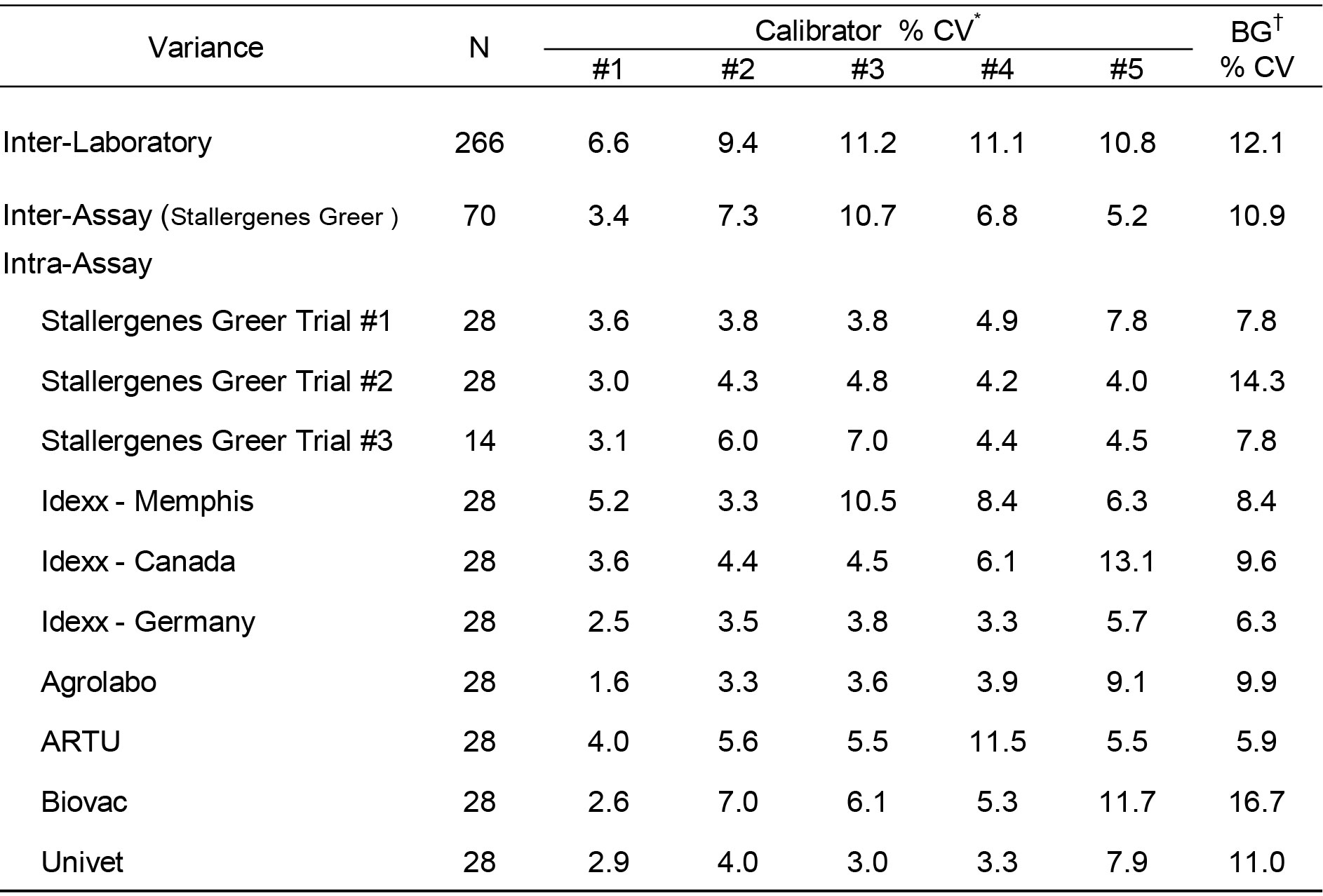
The assay variance (% CV) observed with the calibrator solutions in the different laboratories are presented in Table 1 and are representative of the assay reproducibility in the various laboratories. The average intra-assay % CV among positive calibrators (#1-4) was 4.6% (range = 1.6–11.5%); differences among laboratories or between assays and within assay runs were not detected. No substantial difference in results among various operators were revealed. The average inter-operator variance documented for Stallergenes Greer technicians was calculated to be 7.1% (range = 3.4-10.7%). The average inter-assay variance (% CV) observed in Stallergenes Greer’s laboratory with the positive calibrators from multiple runs over a one year period has been documented at 8.9% (range 7.1% -9.7%), and the inter-laboratory % CV among reactive calibrators also remained relatively constant (average 12.1%; range 11.2 – 13.4%).11-13 The results of the current evaluation are consistent with these published findings; the inter-assay variance among positive calibrators for all laboratories included in this evaluation was calculated to be 9.6 % (range = 6.6-11.2%). Similar to these previously published studies, the intra-assay variability was higher with negative calibrator #5 (average 7.1%; range 2.9 – 13.1%), and a similar increased intra-assay variability was evident with the background ODs (average 9.5%; range 5.9– 16.7%).

Table 1. Assay variance of macELISA calibrator solutions observed with different laboratory runs by multiple operators.
IJVB2017-105-KenLeeUSA_f1

* Calibrator #1 is prepared as a dilution of a sera pool which is highly reactive to grass pollen allergens; calibrator #5 is a dilution of a negative sera pool. Calibrators #2 – #4 are prepared as a serial 3-fold dilution of calibrator #1.

† Background responses observed with diluent in place of serum sample.

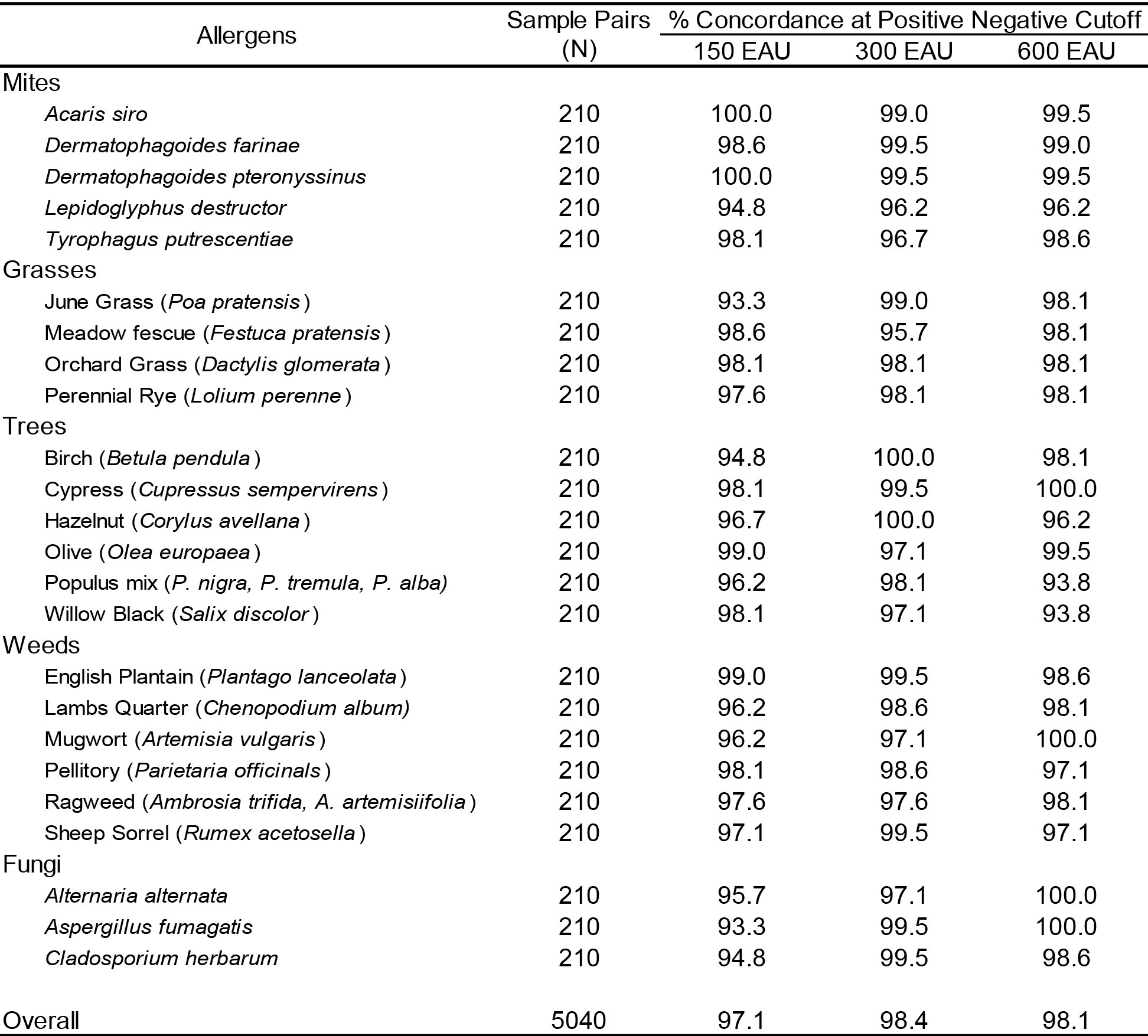
The concordance of positive and negative results observed within and among laboratories for the individual allergens contained within the proficiency panel is presented in Table 2. Using predefined cut-off points of 150 EAU, 300 EAU, and 600 EAU results were classified as positive or negative. The average inter-assay inter-laboratory concordance of results for the mite allergens at the 150 EAU cutoff was 97.1% (range 93.3% – 100%). Similar concordance of results was evident among all laboratories for the pollen allergens. The average concordance for grasses, trees, and weeds was demonstrated to be 96.9% (range 93.3 – 98.6), 97.1% (range 94.8% – 99.0%), 97.4% (range 96.2% – 99.0%), respectively. The overall average inter-assay inter-laboratory concordance of results for individual allergen evaluations, including fungi, using the 150 EAU cutoffs was 97.1% (range 93.6% – 100%).

Table 2. Interassay / Interlaboratory Concordance Results in relation to EAU Cutoff all samples evaluated.
IJVB2017-105-KenLeeUSA_f2

Increasing the positive-negative cutoff level to 300 EAU or 600 EAU only slightly increased the concordance of observed results. The overall average inter-assay inter-laboratory concordance of results at a cutoff of 300 EAU was 98.4% (range 96.2% – 100%) while the observed concordance at a cutoff of 600 EAU was 98.1% (range 93.8% – 100%).

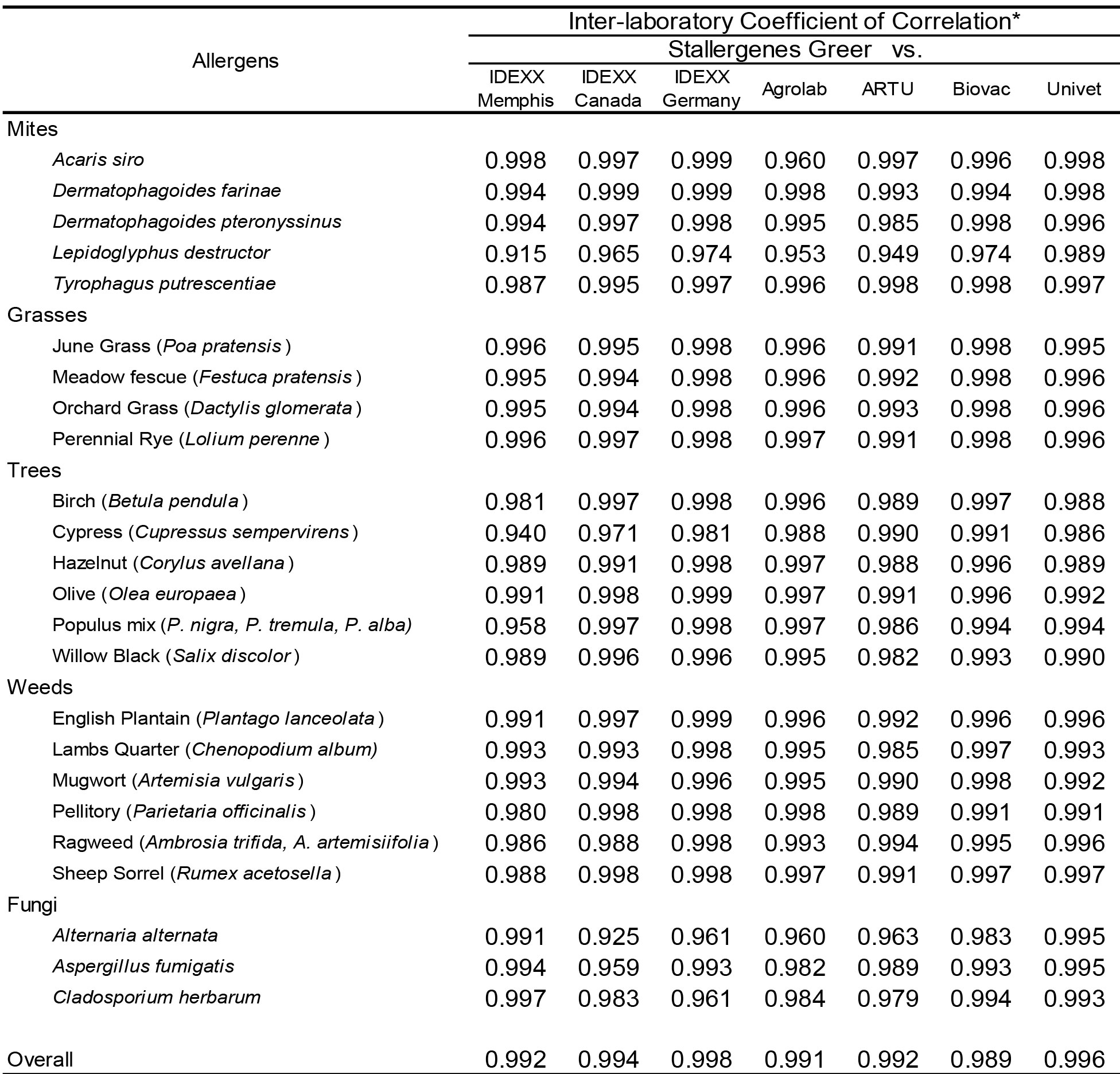
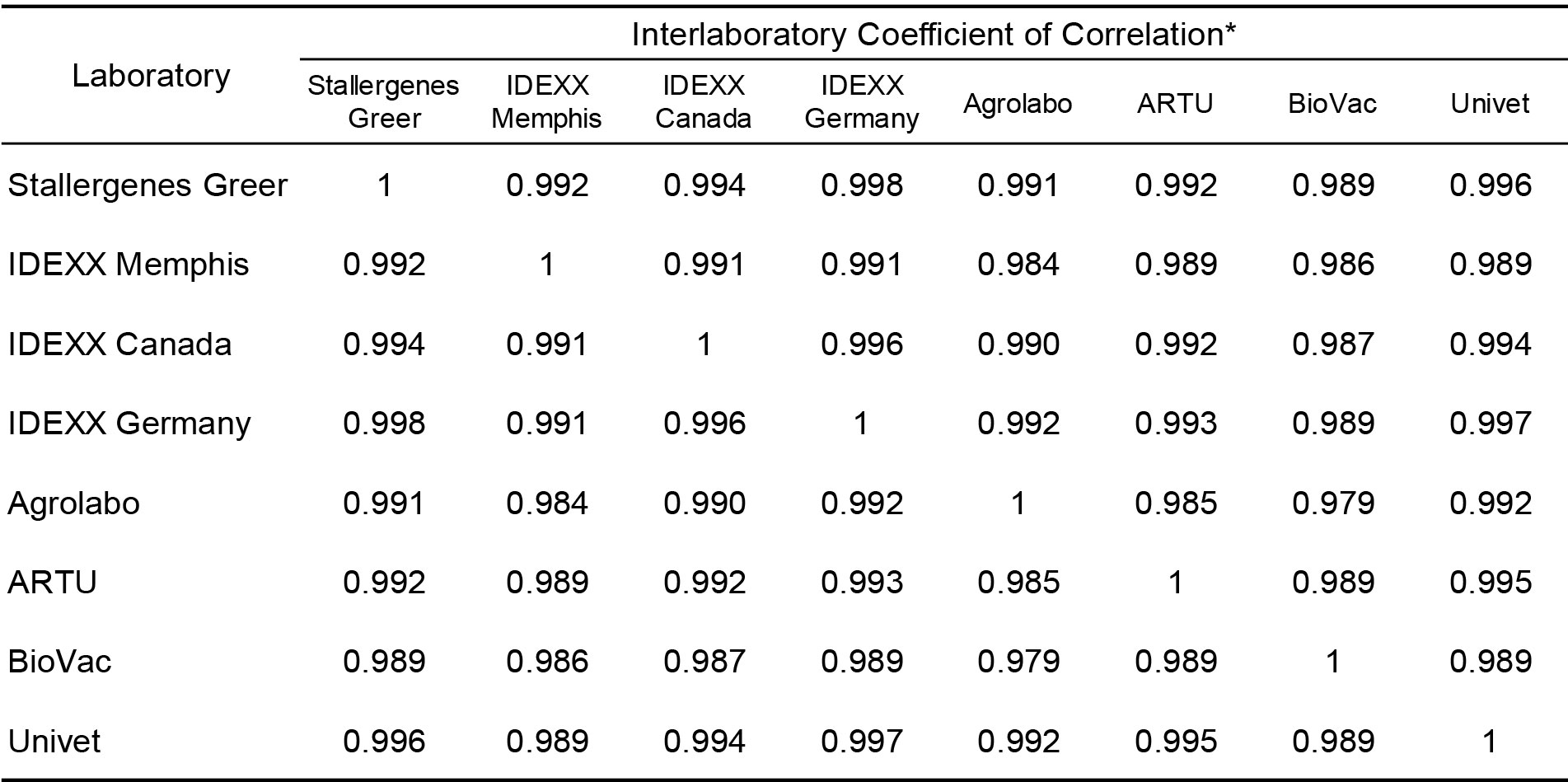
To evaluate the strength of association with the magnitude of EAU results observed for each allergen among the different laboratories a Pearson’s correlation coefficient was determined for each laboratory pair. The results presented in Table 3 demonstrate that very high inter-laboratory correlation (r > 0.80; p < 0.001) is evident between the results observed in Stallergenes Greer’s laboratory and those observed in seven affiliate laboratories for all mites and pollen allergens. Similarly, there was high inter-laboratory correlation (r > 0.90; p < 0.001) between and among the various IDEXX and European laboratories (Table 4) for all allergens tested.

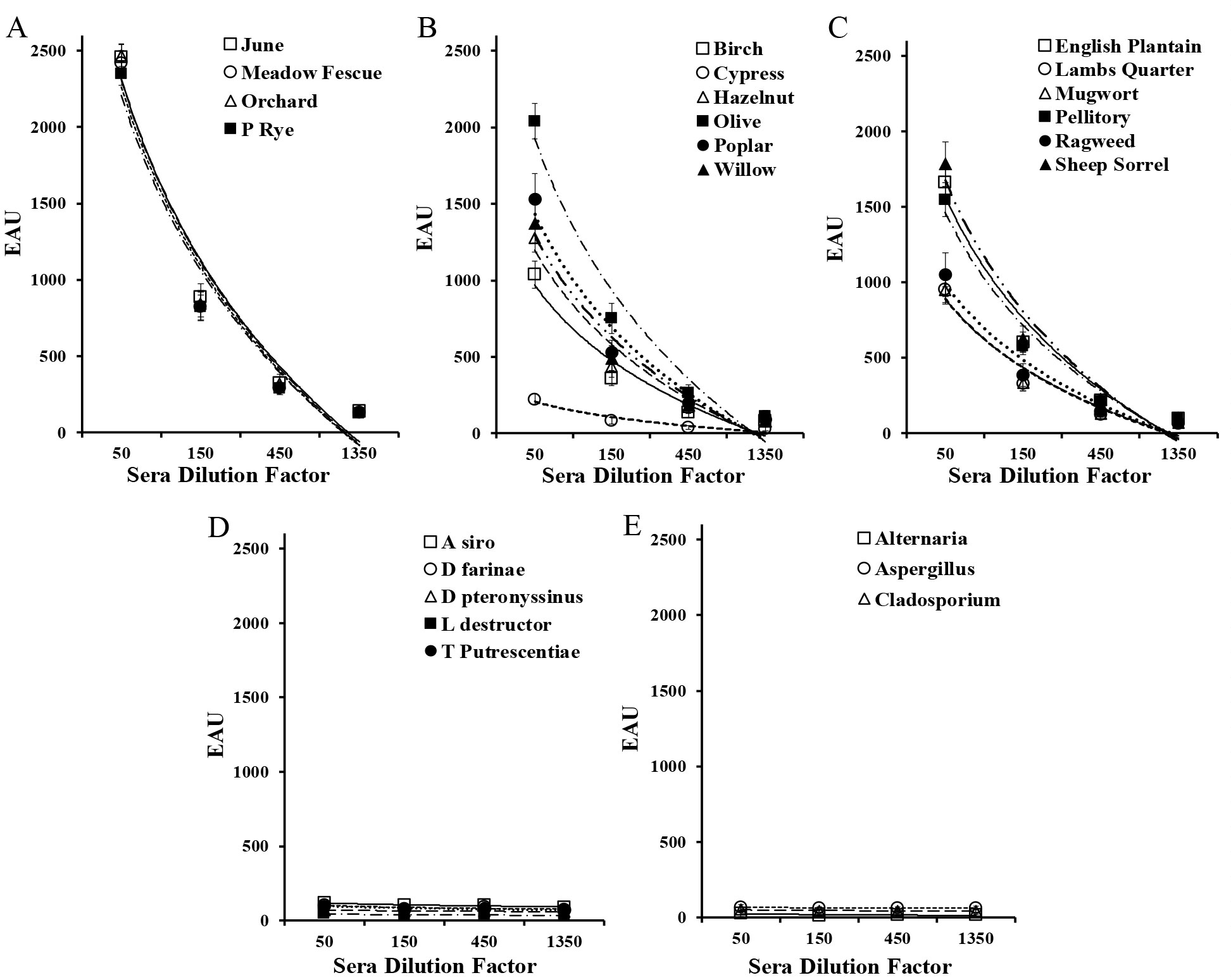
There is no compelling evidence that the level of allergen specific IgE correlates with severity of clinical disease [3-5]. However, an evaluation that purports to measure allergen specific IgE should have a reduction in signal that is directly proportional to the dilution factor of the test ligand [14]. For an evaluation of the dose response in this ELISA, a four tube three-fold serial dilution a reactive dog sera pool was prepared using a negative sera pool as diluent. Each of the dilutions was then evaluated by all of the participating laboratories as unknown independent samples. The sera pool was previously shown to be highly reactive to grass, weed, and tree pollen allergens, but it was not reactive to mites and fungi. Similar responses were yielded by all of the laboratories and the results observed within the various laboratories are encompassed by the acceptable variance limits [11-13] (± 20%) established for macELISA. Further, the magnitude of responses observed in each laboratory was reduced in direct proportion to dilution. Consequently, the dose responses for the individual allergens are presented as aggregate responses. The comparative dose response of macELISA results observed with differing dilutions is presented in Figure 1. The reaction profiles for grass allergens (A) appear to be parallel and quite similar in magnitude of response. Although the responses evident to differing tree (B) and weed (C) allergens are more variable in magnitude of response, the observed response in each laboratory was reduced in direct proportion to dilution. The positive response profiles evident with these allergens also appear to be parallel and, it becomes evident that the detectability of allergen specific IgE within this assay spans at least a 150-fold dilution range. Responses to mite (D) and fungal (E) allergens were lacking in the original sample. The responses of greatest magnitude with were evident with the grass pollen allergens, and these responses were reduced in direct proportion to dilution; the magnitude of responses ranged from near maximum to those that were indistinguishable from background responses. The response profiles for the grasses are not only parallel, but they also appear to be nearly identical. Whether or not these like responses result because of a similar level of co-sensitization or allergen epitope similarity combined with cross-reaction remains to be determined. Although the responses evident to tree and weed allergens are more variable in magnitude of response, the observed response in each laboratory was reduced in direct proportion to dilution. The positive response profiles evident with these allergens also appear to be consistent with responses that might be expected for ELISA, and, with appropriate dilution, the magnitude of response will reach extinction.

Table 3. Inter-laboratory correlation of macELISA results observed with individual allergens in Stallergenes Greer Laboratory and the results observed in the individual affiliate laboratories.
IJVB2017-105-KenLeeUSA_f3

* Pearson Correlation Coefficient (r); Good Correlation (r > 0.8, p < 0.001)
IJVB2017-105-KenLeeUSA_f4

Figure 1. Dose response evident in macELISA with a serum pool reactive grass pollens (A), tree pollens (B), weed pollens (C), and negative to mites (D) and fungi (E).

Table 4. Inter-laboratory correlation of macELISA results observed among individual affiliate laboratories.
IJVB2017-105-KenLeeUSA_f5

* Pearson Correlation Coefficient (r); Good Correlation (r > 0.8, p < 0.001)

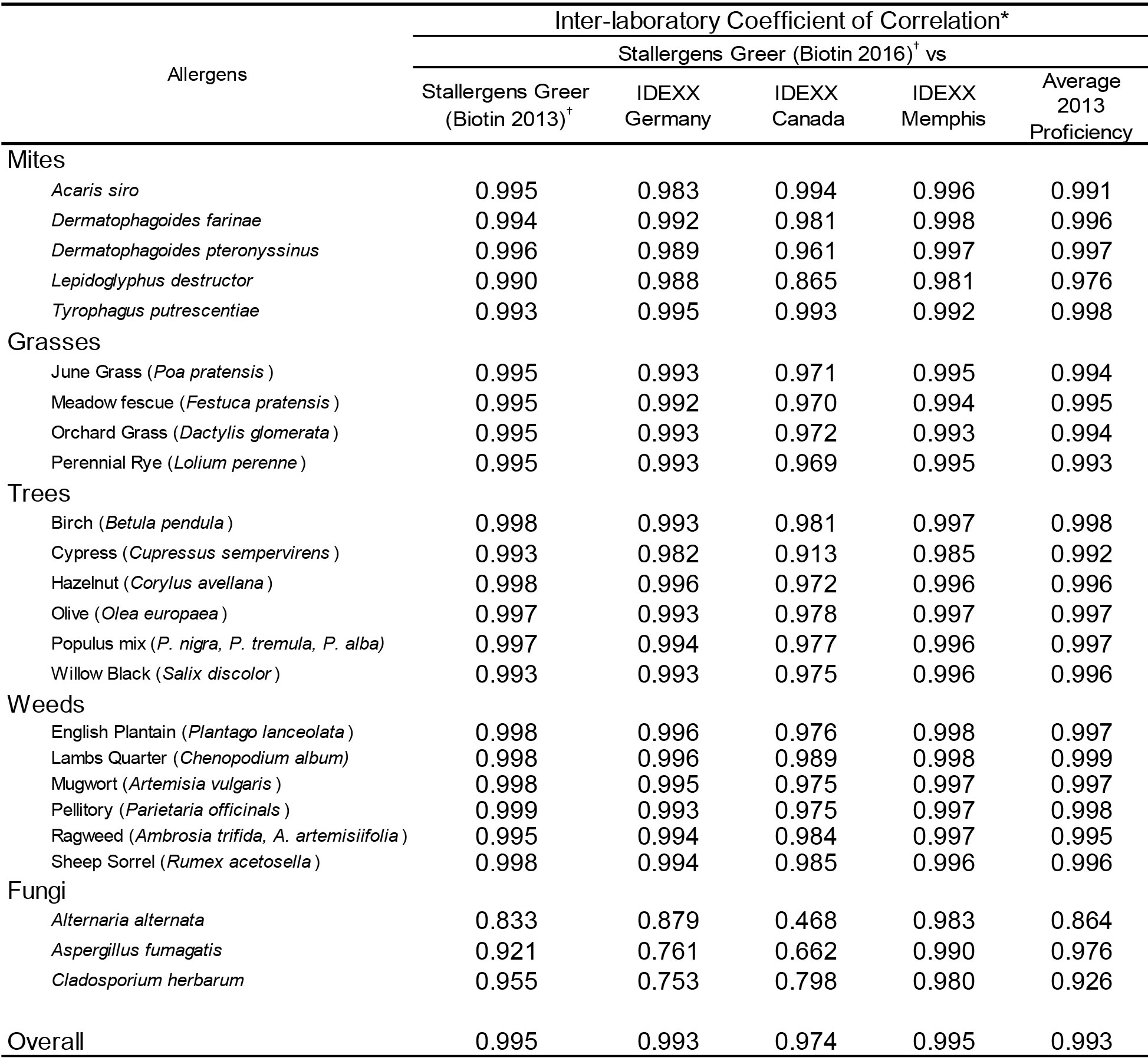
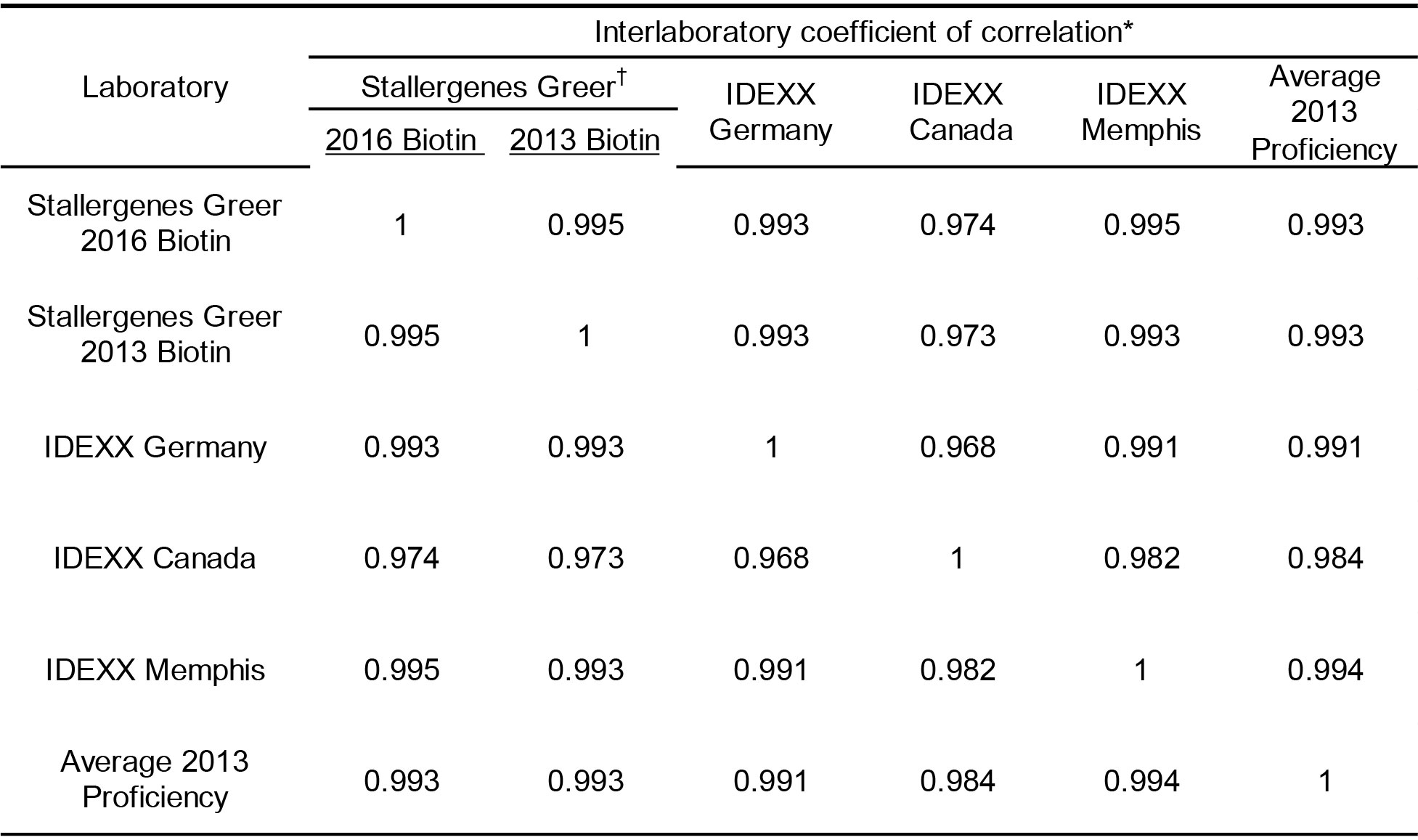
The final evaluations encompassed a reproducibility evaluation of sera samples in four selected laboratories that currently provide commercial services for detection of allergen specific IgE. The design of the evaluation was akin to the proficiency evaluation of laboratories completed in 2013 and included dog sera samples and coated wells that were from the same lots as those used in that proficiency evaluation [15]; other components used in the assay were derived from the most recent lot of reagents. It is noted that one Stallergenes Greer technician ran the samples not only with the current lot of anti-IgE-biotin, but with a lot of anti-IgE-biotin identical to that used in the original 2013 proficiency evaluations as well.

The results presented in Table 5 demonstrate that very high inter-laboratory correlation (r > 0.90; p < 0.001) is evident between the results observed in Stallergenes Greer’s laboratory and those observed in all IDEXX laboratories for all mites and pollen allergens. Similarly there was strong inter-laboratory correlation (r > 0.90; p < 0.001) between and among the various participating affiliate laboratories for all tested allergens (Table 6). However, the correlation (Pearson’s) of results observed with the fungal allergens within or between any of the testing laboratories was somewhat less profound. This difference in correlation of results is likely a consequence of the majority of results for the fungal allergens with this set of sera samples falling within the lower range of reactivity or within the negative range of the response curve (< 150 EAU). Because of the extensive variability known to exist in this range of reactions, the lack of extremely high correlation with the fungal allergens among laboratories is not surprising. Important to note is the observation that the all laboratories yielded results that are consistent with the results observed with the current use anti-IgE-biotin. Equally important, the results of the current evaluation yielded results in all laboratories that are indistinguishable from the overall results yielded in the proficiency evaluation of 10 different laboratories conducted in 2013 using the same sera samples and lot of allergen coated wells. These results not only demonstrate excellent reproducibility among laboratories, they also document/confirm long range stability of coated wells and anti-IgE-biotin reagent that have been shipped to various locations.

Table 5. Inter-laboratory correlation of macELISA results observed with individual allergens between Stallergenes Greer and the results observed in the individual affiliate laboratories.
IJVB2017-105-KenLeeUSA_f6

* Pearson Correlation Coefficient (r); Good Correlation (r > 0.9, p < 0.001)

† 2016 Biotin is current use lot of anti-IgE-biotin; 2013 Biotin is the same lot of anti-IgE-biotin that was used in the 2013 proficiency evaluation and stored at -20 °C.

Table 6. Inter-laboratory correlation of macELISA results observed among individual laboratories and between the 2016 proficiency evaluation and the proficiency evaluation completed in 2013.
IJVB2017-105-KenLeeUSA_f7

* Pearson Correlation Coefficient (r); Good Correlation (r > 0.9, p < 0.001)

† 2016 Biotin is current use lot of anti-IgE-biotin; 2013 Biotin is the same lot of anti-IgE-biotin that was used in the 2013 proficiency evaluation and stored at -20 °C.

Discussion

The results of the present study demonstrate that the variability between and among the affiliate laboratories and technicians are indistinguishable from the results evident within and between runs completed in the laboratory of Stallergenes Greer. Although Stallergenes Greer developed and manufactures the assay components used in all laboratories, the results presented herein demonstrate that all laboratories and technicians are equally proficient in providing consistent results for all allergens tested. The intra-assay variance observed with the positive calibrators evident among the various runs within each of the laboratories remains relatively low and indistinguishable among the various laboratories. Likewise, the inter-assay variance within each laboratory remained relatively constant and the results from all laboratories were demonstrably similar and the CV of the positive responses was relatively constant across the entire range of reactivity tested. Consequently, the observed inter-laboratory CV was well within the acceptable variance limits (± 20%) established for this assay [11]. The variability of background and negative sera responses, in contrast, was substantially greater but indistinguishable among laboratories. The increased variability with the negative responses emphasizes the need to establish an appropriate and robust cutoff for each assay. For the macELISA, a cutoff of 150 EAU establishes 99% confidence for positive responses and has been recently confirmed [3].

The correlation of results observed with the fungal allergens within or between any of the testing laboratories was also substantial. These observations are in direct contrast to the correlation of results observed with fungal allergens during previous proficiency evaluations [11-13]. It has been suggested that the lack of correlation among fungi during the previous evaluations was likely a consequence of the majority of results for the fungal allergens falling within the lower range of reactivity or within the negative range of the response curve (< 150 EAU). The results of the current proficiency evaluation are supportive of this suggestion. Several of the samples included in the current evaluation were reactive (albeit low level) to the fungi included in the allergen panel. Consequently, the correlation of results among laboratories for the fungal allergens was substantially increased.

Consistent with previously observed dose response curves evident in macELISA, it becomes apparent that a three-fold dilution of serum results in an approximate two-fold reduction in signals generated. Thus, the relative amount of allergen specific IgE that might be detected at the cutoff level (150 EAU) will need to be increased three-fold to yield a response of 300 EAU and nine-fold to yield a response of 600 EAU; to generate a maximal signal (4000 EAU) will require nearly a 150-fold increase in allergen specific IgE. This being the case, it is unlikely that a highly reactive serum sample will be detected as non-reactive at a 1: 5 dilution. The variance evident in the low level range of responses dictates that true borderline positive samples might be identified as false negative responses and this tendency might compound the likelihood of false negative responses. However, a serum sample at a 1: 5 dilution makes detection of false positive results seem rather remote.

Although proficiency testing has a well-established role as both a laboratory improvement and an educational tool, there remains no regulatory required or industry-wide voluntary quality assurance program for serum allergen-specific IgE testing in companion animals that independently monitors performance of all laboratories and assay formats. Until such external and independent quality assurance programs for testing of serum allergen-specific IgE is undertaken, each manufacturer of such assays must accept the responsibility for continued evaluation of laboratories that routinely use their assays and reporting those results to the veterinary community. Information presented herein documents the continued commitment of Stallergenes Greer and its affiliate laboratories to this important endeavor.

Authors Contributions: Kenneth Lee contributed to the conception and design of the study; contributed to the acquisition, analysis, and interpretation of data; and drafted the manuscript. Karen Blankenship and Brennan McKinney manufactured all components used throughout the evaluation and contributed to acquisition of the data. Gerhard Kern, Elizabeth Roth, Janice Greenwood, Pilar Brazis, Laurent Drouet, Cecilia Tambone, and Dirk Teilenburg contributed to acquisition of the data. All authors gave final approval and agree to be accountable for all aspects of the work in ensuring that questions relating to the accuracy or integrity of any part of the work are appropriately investigated and resolved.

Declaration of conflicting interests: All authors from Stallergenes Greer are employees at Stallergenes Greer; other authors are employees of the affiliate laboratories.

Funding: Funding for this study was provided by Stallergenes Greer.

References

  1. DeBoer DJ, Hillier A (2001) The ACVD task force on canine atopic dermatitis (XV): fundamental concepts in clinical diagnosis. Vet Immunol Immunopathol 81: 271–76.
  2. DeBoer DJ, Hillier A (2001) The ACVD task force on canine atopic dermatitis (XVI): laboratory evaluation of dogs with atopic dermatitis with serum-based “allergy” tests. Vet Immunol Immunopathol 81: 277–87.
  3. Gorman NT, Halliwell, REW (1989) Atopic Diseases. In: Halliwell REW, Gorman NT. ed. Veterinary Clinical Immunology 232–52. WB Saunders, Philadelphia.
  4. Griffin CE, DeBoer DJ (2001) The ACVD task force on canine atopic dermatitis (XIV): clinical manifestation of canine atopic dermatitis. Vet Immunol Immunopathology 81: 255–69.
  5. Griffin CE, Hillier A (2001) The ACVD task force on canine atopic dermatitis (XXIV): allergen-specific immunotherapy. Vet Immunol Immunopathol 81: 363–383. [crossref
  6. Hillier A, DeBoer DJ (2001) The ACVD task force on canine atopic dermatitis (XVII): intradermal testing. Vet Immunol Immunopathol 81: 289–304. [crossref]
  7. Olivry T, Sousa CA (2001) The ACVD task force on canine atopic dermatitis (XIX): general principles of therapy. Vet Immunol Immunopathol 81: 311–316. [crossref]
  8. Reedy LM, Miller WH, Willemse T (1999) Introduction to Allergy. In: Allergic Skin Diseases of Dogs and Cats. 2nd edition 1-24. W.B. Saunders, London.
  9. Reedy LM, Miller WH, and Willemse T (1999) Urticaria, Angiodema, and Atopy. In: Allergic Skin Diseases of Dogs and Cats. 2nd edition 25-49.WB Saunders, London.
  10. Thom N, Favrot C, Failing K, et al. (2010) Intra- and interlaboratory variability of allergen-specific IgE levels in atopic dogs in three different laboratories using the Fc-?? receptor testing. Vet Immunol Immunopathol 133: 183–189.
  11. Lee KW, Blankenship KD, McCurry ZM, Esch RE, DeBoer DJ, et al. (2009) Performance characteristics of a monoclonal antibody cocktail-based ELISA for detection of allergen-specific IgE in dogs and comparison with a high affinity IgE receptor-based ELISA. Vet Dermatol 20: 157–164. [crossref]
  12. Lee KW, Blankenship KD, McCurry ZM, et al. (2012) Reproducibility of a Monoclonal Antibody Cocktail Based ELISA for Detection of Allergen Specific IgE in Dogs: Proficiency Monitoring of macELISA in Six US and European Laboratories. Vet Immunol Immunopathol 148: 267–275.
  13. Lee KW, Blankenship K, McKinney B, Kern G, Buch J, et al. (2015) Proficiency monitoring of monoclonal antibody cocktail–based enzyme-linked immunosorbent assay for detection of allergen-specific immunoglobulin E in dogs. Journal of Veterinary Diagnostic Investigation 27: 461–469.
  14. Tijssen P (1993) Processing of data and reporting of results of enzyme immunoassays. In: Burdon, RH, van Knippenberg PH, editors. Practice and Theory of Enzyme Immunoassays 385–421 Elsevier, Amsterdam.
Fibrosarcoma of the Lower Eyelid in a Dog

DOI: 10.31038/IJVB.2017114

Abstract

A ten-year-old neutered male golden retriever weighing 39.2 kg was presented with a lump and considerable discharge around the right eye. Clinical examination revealed a firm, smooth, touch-sensitive mass on the right lower eyelid. Laboratory examination, including clinical haematology and chemistry revealed no significant abnormalities. After the mass was removed through surgery, gross findings showed that the mass was pink, cauliflower-like, and hairless. Histopathological studies revealed a characteristic pattern of well-demarcated and nonencapsulated lesions. The neoplastic cells in the mass were markedly spindle-shaped and infiltrated basophilic intermediate cells in interwoven or herringbone patterns. On the basis of these findings, the dog was diagnosed with fibrosarcoma. On the basis of the American Joint Committee on Cancer staging system, the fibrosarcoma was classified as histologic grade I-II (T1aN0M0). It should be frequently monitored for local recurrence, and recurrence of the tumour should be properly treated.

Keywords

fibrosarcoma, lower eyelid, dog

Introduction

Soft tissue sarcomas (STSs) such as fibrosarcoma, liposarcoma, lymphoma, hemangiosarcoma, and peripheral nerve sheath tumours are occasionally seen in dogs and cats [1-6]. They are mesenchymal neoplasms derived from soft connective tissues, which can occur in at any anatomical site of the body, most commonly involving cutaneous and subcutaneous tissues [5]. STSs have been reported to comprise 15% of all canine skin tumours [6-19], and most of them are solitary tumours in middle-aged to older dogs. No specific breed or sex has a predilection for STSs [12].

Fibrosarcomas of the skin, subcutaneous tissue, or oral cavity are general malignant [2]. Histologically, they can be well circumscribed but unencapsulated. They can be comprised of mature fibrocyte, which produce abundant collagen. Well‐differentiated spindle‐shaped tumour cells are arranged in interwoven or herringbone patterns. Cytoplasm is scant, and nuclei are fairly uniform, with inconspicuous, elongated to oval-shaped nucleoli. Malignant characteristics include packed spindle-shaped fibroblasts exhibiting active mitotic figures and marked cellular pleomorphism with increasing cellular density [16]. These characteristics must be distinguished from peripheral nerve sheath tumours (PNSTs) and leiomyosarcomas. PNSTs are composed of interwoven or herringbone Schwann cells, which pronounce collagenous stroma [5, 10]. Leiomyosarcoma is also composed of spindle cells, but it contains abundant deeply eosinophilic cytoplasm and exhibits some vacuole [17].

Case history

A ten-year-old neutered male golden retriever weighing 39.2 kg was presented. Three weeks previously, the owner had noticed a mass on the dog’s right lower eyelid, which produced considerable discharge in the eye. The mass rapidly doubled in size. The dog was in good general condition. Physical examination, panting respiratory rate, and other items revealed no serious abnormalities. The results of laboratory examination, including clinical haematology (Table 1) and chemistry (Table 2), faecal floatation, and thoracic radiography revealed no serious clinical abnormalities.

Table 1. Complete blood count

Test a Unit Result Reference Interval b
RBC 106/µL 6.77 5.65-8.87
HCT % 44.3 37.3-61.7
HGB g/dL 15.1 13.1-20.5
MCV fL 65.4 61.6-73.5
MCH Pg 22.3 21.2-25.9
MCHC g /dL 34.1 32.0-37.9
WBC 103/µL 27.19 ↑ 5.05-16.75
 Neu. (%)103/µL 16.96 ↑ 2.95-11.64
 Eosino. (%)103/µL 1.37 ↑ 0.06-1.23
 Baso. (%)103/µL 0.08 0.00-0.10
 Lymph. (%)103/µL 7.06 ↑ 1.05-5.10
 Mono. (%)103/µL 1.72 ↑ 0.16-1.12
PLT 103/µL 202 148-484

a: Full name of test subjects: RBC, red blood cell; HCT, haematocrit; HGB, haemoglobin; MCV, mean corpuscular volume; MCH, mean corpuscular haemoglobin; MCHC, mean corpuscular haemoglobin concentration; WBC, white blood cell; Neu., neutrophil; Lymph., lymphocyte; Mono., monocyte; Eosino., eosinophil; Baso., basophil; PLT, platelet

b: Reference range from: IDEXX ProCyte Dx® Hematology Analyzer (IDEXX Laboratories, Inc., Westbrook, ME USA).

Table 2. Serum biochemical examination

Test a Unit Result Reference Interval
GLU mg/dL 115 70-143 b
BUN mg/dL 12 7-27 b
CREA mg/dL 0.8 0.5-1.8 b
PHOS mg/dL 3.6 2.5-6.8 b
CA mg/dL 10.5 7.9-12.0 b
TP g/dL 8.9 ↑ 5.2-8.2 b
ALB g/dL 3.0 2.2-3.9 b
GLOB g/dL 5.9 ↑ 2.5-4.5 b
ALT U/L 51 10-125 b
ALKP U/L 71 23-212 b
GGT U/L 0 0-11 b
TBIL mg/dL 0.7 0.0-0.9 b
CHOL mg/dL 151 110-320 b
Na+ mmol/L 157 144-160 c
K+ mmol/L 4.5 3.5-5.8 c
Cl mmol/L 117 109-122 c

a: Full name of test subjects: GLU, glucose; BUN, blood urea nitrogen; CREA, creatinine; PHOS, phosphate; CA, Calcium ion; TP, total protein; ALB, albumin; GLOB, globumin; ALT, alanine aminotransferase; ALKP, alkaline phosphatase; GGT, Gamma-glutamyl transferase; TBIL, total bilirubin; CHOL, cholesterol; Na+, Sodium ion; K+, Potassium ion; Cl, Chloride ion.

b: Reference range from SPOTCHEMTM SP-4430 dry biochemical analyzer (Arkray, Kyoto, Japan).

c: Reference range from SPOTCHEMTM EL SE-1520 electrolyte analyzer (Arkray, Kyoto, Japan) .

On the advice of veterinarians, the owner agreed to remove the mass through surgery. The mass was surgically removed through a full-thickness V-excision. A figure-of-eight suture was applied to the edge of the eyelid to separate the knot from the edge of the eyelid. A simple interrupted suture was used to close the remaining wound away from the edge of the eyelid. The mass was pink, cauliflower-like, and hairless.

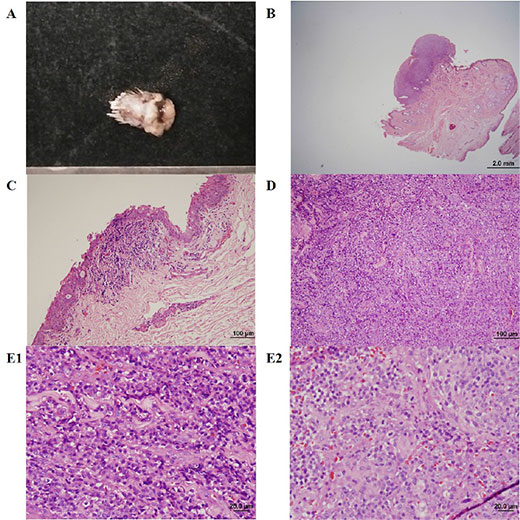
For histopathological examinations, the mass was fixed in 10% neutral buffered formalin for 24 hours. After tissue dehydration, paraffin embedding, and slicing to make sections, tissue sections were stained with haematoxylin and eosin (Figure 1).

Discussion

This particular fibrosarcomas was well-demarcated and nonencapsulated. The visible tumour cells have scant cytoplasm and oval to spindle-shaped nuclei with inconspicuous nucleoli. Cells are spindle shaped and arranged in interwoven patterns [4]. In other field, numerous mitotic figures are observed, and cells have marked cellular and nuclear pleomorphisms [13]. Bright pink collagenous stroma, which are produced by fibroblasts, can be observed between the neoplastic cells.

IJVB2017-104-Geng-RueiChangTaiwan_f1

Figure 1.

Within the field of veterinary medicine, the treatment of STSs includes surgery, chemotherapy, radiation therapy (RT), and combination therapies [9]. The main treatment for sarcomas is surgical resection [18]. For surgical resection, the recommended excision width for STSs is 30 mm lateral to the tumour and one fascial plane [6, 12]. For marginal surgical resection, the excision is made just outside the tumour or at the pseudocapsule [18]. In the current case, the resection was made with a margin of only 1 cm from the tumour. In this situation, marginal resection should be combined with other therapies. RT is used with marginal resection to obtain local control equivalent to radical resection alone [14]. RT should begin 10 to 14 days postoperatively to minimize the risk of the dehiscence or infection of the surgical wound [15]. The efficacy of chemotherapy for controlling soft tissue sarcoma among dogs remains unknown, and it is only recommended for tumours with high histologic grades [3, 9, 14].

The predictors of outcome related to STSs include size, location, grade, histologic type, previous treatment, and surgical margins. Tumour size and location may be prognostic only through their effect on the completeness of the margins [6]. Histological grade is regarded as a more reliable predictor of outcome [1]. Criteria regarding histological grade are detailed by Lipta & Forrest [12]; the American Joint Committee on Cancer staging system was modified from the human STSs staging system. The current case was classified as histologic grade I-II (T1aN0M0; Suppl. 1). Management of low-grade (grade I, grade II) STSs with marginal resection includes frequent monitoring for local recurrence and the appropriate treatment for tumour recurrence [12].

The metastatic rate for soft tissue sarcoma is less than 20%. However, for high-grade tumours, the metastatic rate is estimated as 50% [7]. During the late course of the disease local metastasis often occurs, with a median time of approximately 384 days [8]. Overall, the mean survival time (MST) for dogs with STSs was reported as 1416 days for those treated with surgery alone [11]. By contrast, the MST for fibrosarcomas and hemangiopericytomas was 1851 days, and dogs treated with postoperative RT had an MST of 2270 days [9].

Supplementary material

Suppl. Table 1. Modified Staging System for Canine Soft Tissue Sarcomas (Lipta & Forrest 2013).

Parameters    
Primary Tumor (T) T1 Tumor ≤5 cm in diameter at greatest dimension
T1a Superficial tumor  
T1b Deep tumor  
T2 Tumor >5 cm in diameter at greatest dimension
T2a Superficial tumor  
T2b Deep tumor  
Regional Lymph Nodes (N)
N1
N0 No regional lymph node metastasis
Regional lymph node metastasis  
Distant Metastasis (M)
M1
M0 No distant metastasis
Distant metastasis  
Stage Grouping Tumor (T) Node (N) Metastasis (M) Grade
I Any T N0 M0 I-II
II T1a-T1b, T2a N0 M0 III
III T2b N0 M0 III
IV Any T N1 Any M I-III
Any T Any N M1 I-III

Acknowledgements: The authors thank Jing-Rong Hu of the Department of Veterinary Medicine, National Chiayi University for conducting the histopathological examination.

Conflict of interest: None of the authors of this article has a financial or personal relationship with other people or organisations that could inappropriately influence or bias the content of the paper.

References

  1. Baker-Gabb M, Hunt GB, France MP (2003) Soft tissue sarcomas and mast cell tumours in dogs; clinical behaviour and response to surgery. Aust Vet J 81: 732–738. [crossref]
  2. Bedrossian CW, Verani R, Unger KM, Salman J (1979) Pulmonary malignant fibrous histiocytoma. Light and electron microscopic studies of one case. Chest 75: 186–189.
  3. Casper ES, Gaynor JJ, Harrison LB, Panicek DM, Hajdu SI, Brennan MF (1994) Preoperative and postoperative adjuvant combination chemotherapy for adults with high grade soft tissue sarcoma. Cancer 73: 1644–165.
  4. Crago AM, Brennan MF2 (2015) Principles in Management of Soft Tissue Sarcoma. Adv Surg 49: 107–122. [crossref]
  5. Dennis MM, McSporran KD, Bacon NJ, Schulman FY, Foster RA, et al. (2011) Prognostic factors for cutaneous and subcutaneous soft tissue sarcomas in dogs. Vet Pathol 48: 73–84. [crossref
  6. Dernell WS, Withrow SJ, Kuntz CA, Powers BE (1998) Principles of treatment for soft tissue sarcoma. Clin Tech Small Anim Pract 13: 59–64. [crossref
  7. Ehrhart N (2005) Soft-tissue sarcomas in dogs: a review. J Am Anim Hosp Assoc 41: 241–246. [crossref]
  8. Fong Y, Coit DG, Woodruff JM, Brennan MF (1993) Lymph node metastasis from soft tissue sarcoma in adults. Analysis of data from a prospective database of 1772 sarcoma patients. Ann Surg 217: 72–77.
  9. Forrest LJ, Chun R, Adams WM, Cooley AJ, Vail DM (2000) Postoperative radiotherapy for canine soft tissue sarcoma. J Vet Intern Med 14: 578–582. [crossref
  10. Krohel GB, Rosenberg PN, Wright JE, Smith RS (1985) Localized orbital neurofibromas. Am J Ophthalmol 100: 458–464. [crossref
  11. Kuntz CA, Dernell WS, Powers BE, Devitt C, Straw RC, Withrow SJ (1997) Prognostic factors for surgical treatment of soft-tissue sarcomas in dogs: 75 cases (1986–1996). J Am Vet Med Assoc 211: 1147–115.
  12. Lipta JM, Forrest LJ (2012) Soft tissue sarcomas. In: Withrow, SJ and Vail, DM (Eds.), Small animal clinical oncology, 5th ed. Elsevier Medicine Press, Philadelphia, 356–380.
  13. Madarame H, Sato K, Ogihara K, Ishibashi T, Fujii Y, et al. (2004) Primary cardiac fibrosarcoma in a dog. J Vet Med Sci 66: 979–982. [crossref
  14. McKnight JA, Mauldin GN, McEntee MC, Meleo KA, Patnaik AK (2000) Radiation treatment for incompletely resected soft-tissue sarcomas in dogs. J Am Vet Med Assoc 217: 205–210. [crossref]
  15. McLeod DA, Thrall DE (1989) The combination of surgery and radiation in the treatment of cancer. A review. Vet Surg 18: 1–6. [crossref
  16. Nakajima T, Watanabe S, Sato Y, Kameya T, Hirota T, Shimosato Y (1982) An immunoperoxidase study of S-100 protein distribution in normal and neoplastic tissues. Am J Surg Pathol 6: 715–727.
  17. Roncaroli F, Eusebi V (1996) Rhabdomyoblastic differentiation in a leiomyosarcoma of the retroperitoneum. Hum Pathol 27: 310–313. [crossref
  18. Stefanello D, Morello E, Roccabianca P, Iussich S, Nassuato C, et al. (2008) Marginal excision of low-grade spindle cell sarcoma of canine extremities: 35 dogs (1996–2006). Vet Surg 37: 461–465.
  19. Theilen GH, Madwell BR (1979) Tumours of the skin and subcutaneous tissues. In: Veterinary cancer medicine, 2nd ed. Lea and Febiger, Philadelphia, 123–19.

The Expression of Autophagy-Related Genes Atg9a and Atg9b in Normally Developing and Arresting Porcine Conceptuses on Gestational Days 20 and 50

DOI: 10.31038/IJVB.2017113

Abstract

Livestock productivity can be severely compromised by low fertility due to conceptus loss. Prenatal mortality is of particular concern in swine reproduction. Conceptus loss in pigs occurs mainly in early pregnancy (a primary loss of ~30%) but also during the mid-gestation period (a second loss of ~20%). Autophagy is a degradation system that controls the clearance and reuse of intracellular constituents as well as balancing the sources of energy in times of development and stress. There is compelling evidence to suggest that autophagy plays a role in embryogenesis and pregnancy-allied complications in mammalian species. Hence, the objective of the present experiment was to determine the expression of autophagy-related genes Atg9a and Atg9b in the endometrial and trophoblast tissues of healthy and arresting porcine conceptuses on gestational days 20 (gd20) and 50 (gd50). Relative mRNA expression was assessed by real-time polymerase chain reaction, and protein levels were quantified by Western blot and densitometric analyses. Atg9a mRNA expression was greater (P < 0.05) in the trophoblast from arresting (AT) compared with healthy embryos (HT) on gd20, while Atg9b mRNA expression was greater (P < 0.05) in AT than in HT on gd50. No protein expression was detected with the Western blots of both Atg9 proteins in trophoblast tissue samples on either of the two gestational days except for low levels of Atg9a protein expression in AT samples on gd20; there were no significant differences in Atg9 protein content between tissues and gestational days in the sows of the present study. On the basis of variations in Atg9 mRNA levels in the trophoblast, in can be proposed that the autophagy system is mainly involved in the autoregulation of porcine embryonic/fetal development. Further studies are needed to elucidate the specific roles of intrauterine Atg9 genes and their products throughout porcine pregnancy.

Keywords

Pig; Pregnancy; Conceptus; Endometrium; Trophoblast; Autophagy

Introduction

Prenatal mortality is an important adverse factor that influences reproductive efficiency of livestock [1]. Two waves of spontaneous conceptus loss may occur in porcine pregnancy: a primary embryo loss of ~30% is usually observed around gestational day 20 and a second loss of ~20% of remaining fetuses during mid-gestation (~day 50; [2]). “Crowding” in the uterus due to limited space for developing embryos and fetuses (“uterine capacity”; [2]) or asynchronous development of the uterus and the embryo [1] may both result in the arrest and demise of porcine conceptuses.

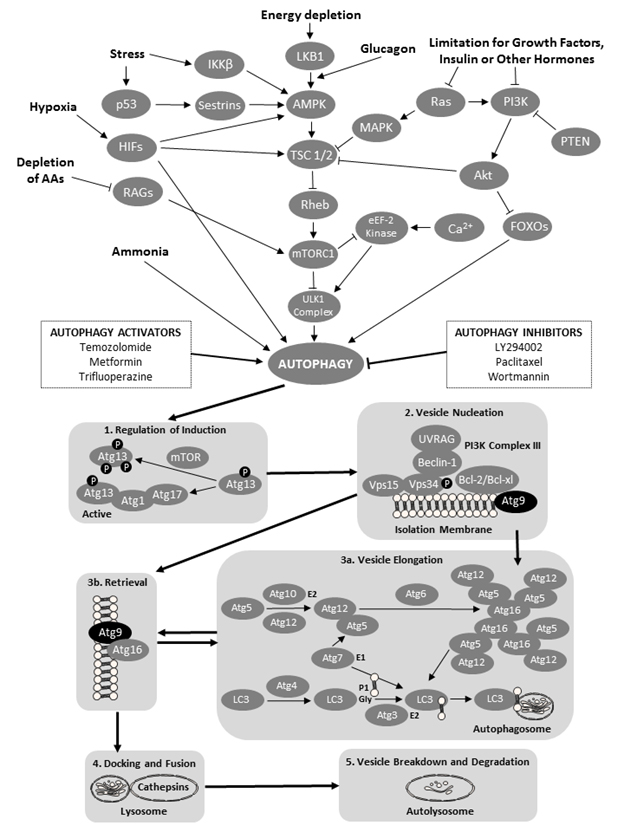
Autophagy is a degradation mechanism that controls the clearance or recycling of intracellular constituents as well as balancing the sources of energy during development and stress ([3] Figure 1). The autophagy system is also responsible for removing damaged organelles, clearing non-functional proteins, eliminating pathogens, and recycling misfolded proteins [3]. There is increasing evidence that autophagy plays an important role in mammalian differentiation and development [4]. Autophagy begins with the formation and elongation of phagophores. The phagophores engulf organelles and sequester them in a double-membrane autophagosome [3]. The autophagosome then fuses with the lysosome and matures into autolysosome. The content of the autolysosome is degraded by proteases and the products of degradation are exported into the cytoplasm in order to be reused for various metabolic processes including the biosynthesis of ATP, nucleic acids, carbohydrates, amino acids and lipids. The autophagy processes provide the cell with sufficient nutrients until conditions improve and the cell can survive on its own.

The role of autophagy in pregnancy was studied at the fetal-maternal interface in normal and aberrant human pregnancies [5]. Increased intensity of autophagy processes was observed in the specimens obtained after spontaneous miscarriages; this increase was due mainly to an elevated concentration of autophagy vacuoles. These results can be interpreted to suggest that the conditions inside the uterus of the spontaneous miscarriage enhanced the activity of the autophagy system. Genetic screening has identified a number of autophagy-related genes (Atg genes; [3]). The Atg9 genes and proteins are responsible for the formation of the double-membrane autophagosome; in situations of starvation, the Atg9 vesicles fuse with the outer membrane of the autophagosome [6]. Two isoforms of the Atg9 proteins, Atg9a and Atg9b, are typically required for autophagosome formation [6, 7]. A previous study using the fetal Atg9a knockout mouse model has shown considerable growth restriction and increased mortality of Atg9a-/- fetal mice, suggesting that the non-functional autophagy system can impede or prematurely terminate fetal development [8]. In addition, the intrauterine growth retardation of the Atg9a-/- fetal mice was associated with the presence of maternal hypertension. The aforementioned observations in pregnant women and small laboratory rodents prompted us to examine the pattern of changes in Atg9 gene expression in healthy and arresting porcine conceptuses collected on gestational days 20 and 50.

IJVB2017-103-Pawel-Canada_f1

Figure 1. A schematic of the cellular macroautophagy processes (based on a flowchart by the Selleck Co. (Houston, TX, USA) shown here: http://www.selleckchem.com/pharmacological_autophagy.html). Abbreviations used (in alphabetical order and in bold font face for easier identification within the legend): AAs – amino acids; Akt – protein kinase B; AMPK – AMP-activated protein kinase; Atg − autopha-gy-related gene proteins; Bcl – B-cell lymphoma proteins; HIFs – hypoxia-inducible factors; eEF-2 kinase − eukaryotic elongation factor 2 kinase; FOXO − forkhead box protein O; iKK-β − inhibitor of nuclear factor kappa-B kinase subunit beta; LC3 − microtubule-associated protein 1A/1B-light chain 3; LKB1 − liver kinase B1 a.k.a. serine/threonine kinase 11 (STK11) or renal carcinoma antigen NY-REN-19; LY294002 − a morpholine-containing chemical compound that is a potent inhibitor of numerous proteins, and a strong inhibitor of phosphoinositide 3-kinases; MAPK – mitogen-activated protein kinase; mTOR − mechanistic target of rapamycin, formerly mammalian target of rapamycin; mTORC1 − mammalian target of rapamycin complex 1 or mechanistic target of rapamycin complex 1; p53 − tumor protein p53, a.k.a. cellular tumor antigen p53, phosphoprotein p53, tumor suppressor p53, antigen NY-CO-13, or transformation-related protein 53; PI3K − phosphoinositide 3-kinase; PTEN − phosphatase and tensin homolog; RAGs − recombination-activating genes; RAS − small GTPase proteins; RHEB − Ras homolog enriched in brain (GTP-binding protein); ULK1 Complex − serine/threonine-protein kinase complex; UVRAG – UV radiation resistance-associated gene protein; and VPS − vacuolar protein sorting-associated protein. Atg 9 proteins have been denoted by black oval shapes.

Methods and Materials

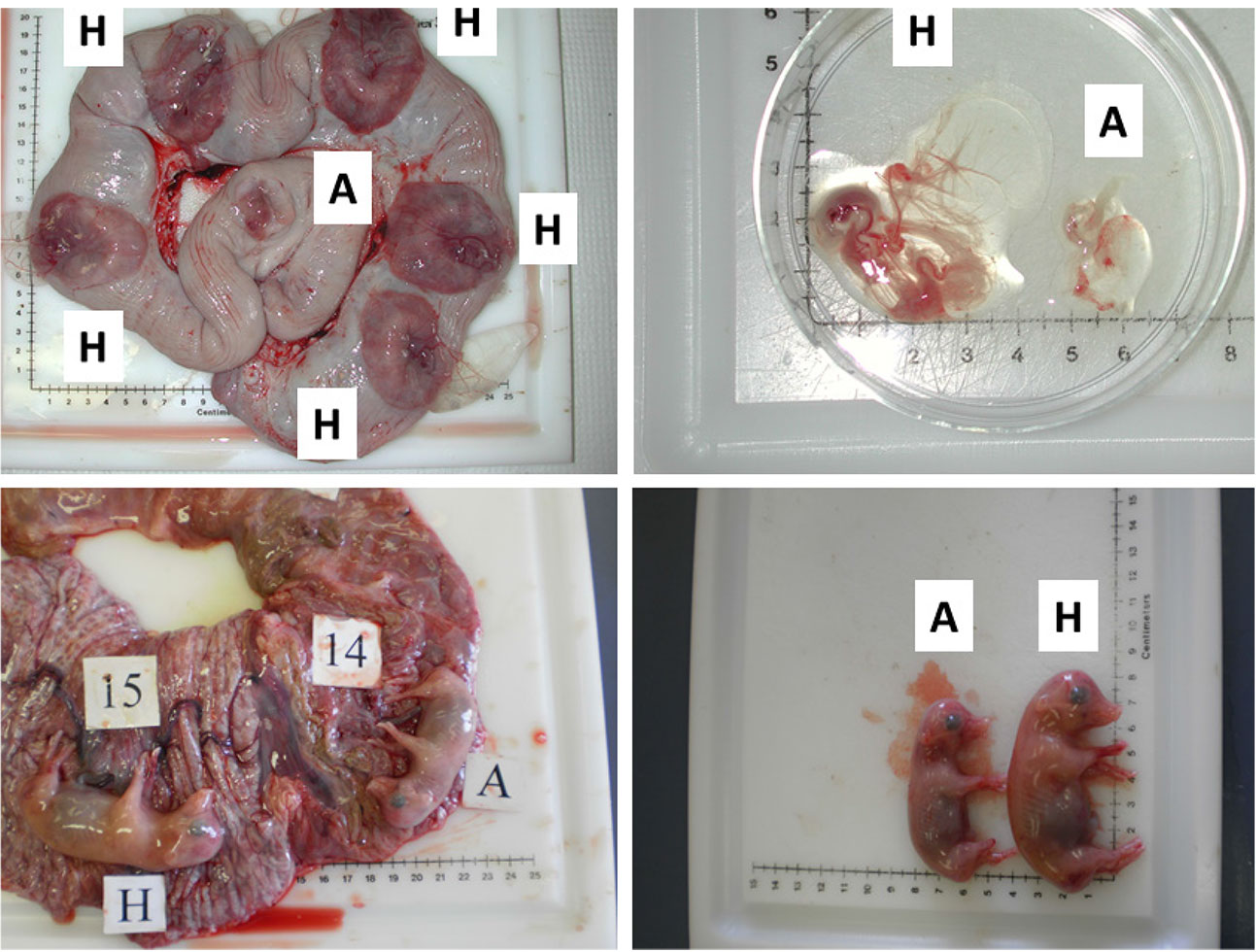
Second parity Yorkshire sows housed in the Arkell Swine Research Station near Guelph, ON, Canada, were used in this study. All sows were artificially inseminated within 7 days post-weaning (at first estrous detection and 24 h later) using pooled Duroc semen (Ontario Swine Improvement; Innerkip, ON, Canada). Tissue samples were collected from eight pregnant animals on gestational day 20 (gd20) and from eight pregnant sows on gestational day 50 (gd50). The University of Guelph Animal Care Committee had approved animal handling and euthanasia protocols (Animal Utilization Protocol no. 10R061). All experimental procedures were in compliance with the guidelines of the Canadian Council on Animal Care and Use of Experimental Animals. The reproductive tracts were collected immediately after slaughter and within 30 min transported on ice to the laboratory. To remove the embryos from the attachment sites, the uterine horns were opened longitudinally along the anti-mesometrial side. Conceptuses from each sow were categorized as either healthy or arresting based on embryonic/fetal size, weight and visual assessment of vascularization of the attachment sites as previously described [9-11], Figure 2; the conceptuses were removed from the study if they possessed debatable health status or were classified as reabsorbing. Endometrial tissue on the maternal side was collected separately from the trophoblast. All samples were rinsed with PBS and then frozen immediately and stored at −80°C until RNA isolation. The RNeasy mini kits (Qiagen; Mississauga, ON, Canada) were used to perform total RNA extraction from all collected tissues. Total RNA concentrations were determined using the A260/A280 (the ratio of absorbance at 260 and 280 nm) and the Gene Quant pro RNA/DNA calculator (Biochrom Ltd.; Cambridge, UK). Extracted RNA samples were frozen immediately at −80°C. Subsequently, the First-Strand cDNA Synthesis Kit (GE Healthcare Bio-Science Inc.; Baie d’Urfe, QC, Canada) was used for cDNA synthesis. In short, 20 μl of diluted RNA at concentrations ranging from 224 to 890 ng/μl were heated for 10 min at 65°C in the GeneAMP polymerase chain reaction (PCR) System 2700 (Applied Biosystems; Foster, CA, USA). Once the heating was finished, 11 μl of the bulk first-strand cDNA reaction mix, 1 μl of poly (dT) primer and 1 μl of DTT solution was added; the reagents were then incubated at 37°C for 1 h. Using the Gene Quant Pro RNA/DNA calculator, the cDNA concentration was measured. The cDNA products were then stored at −20°C for quantitative real-time PCR.

Primers targeting the genes of interest (porcine Atg9a and Atg9b) were designed using the Primer 3 software from the electronic nucleotide database, GenBank. Aliquots of cDNA were pooled and used as a template to test the primers and to optimize their efficiency. Table 1 lists the primers for β-actin (ACTB), Atg9a and Atg9b. The LightCycler 480 SYBR Green I Master (Roche Diagnostics; Mannheim, Germany) was used to optimize primer efficiency in real-time PCR system (ViiATM 7 Real Time PCR System, Applied Biosystems by Life Technologies; Foster, CA, USA). Genes quantified in the samples were run in duplicates using the MicroAmp Fast 96-well reaction plate (Biosystems by Life Technologies; Foster, CA, USA). Data were analyzed using the ViiATM 7 software for the ViiA 7 Real-Time PCR System (Biosystems by Life Technologies; Foster, CA, USA). All results from the PCR reactions were expressed as a ratio of Atg9a or Atg9b mRNA relative to β-actin (ACTB) mRNA.

For Western blot analyses of Atg9a and Atg9b proteins, the tissues were thawed on ice and divided into 30-mg samples placed in Eppendorf tubes. A protease inhibitor and 200 μl of phosphate buffered saline (PBS) were added to each sample followed by homogenization on ice for 1 min. Homogenates were centrifuged at 4°C for 15 min and the supernatants were separated. The Bradford method was used to determine protein concentrations. The samples were then diluted to a final concentration of 2 μg/μl and stored at −80°C. Protein samples (30 μg) were denatured at 100°C for 5 min using the Applied Biosystems GeneAmp PCR System 2700. Samples were loaded in the wells using the 4-20% Mini-PROTEAN TGX Pre-cast gels (12 well comb/20 μl/well; Bio-Rad Laboratories; Mississauga, ON, Canada). Protein fractions were separated by electrophoresis for 1 h at 140 V. The proteins were transferred onto nitrocellulose membrane by assembling a “gel sandwich” that was immersed in the transfer buffer and exposed to 90 V for 90 min. The membrane was blocked with 2.5 g of skimmed powder milk and 50 ml of Tris-buffered saline with Tween 20 (TBS-T) at room temperature for 1 h and then incubated overnight at 4°C with the primary antibody: Atg9a Goat Polyclonal IgG (sc-70141, Santa Cruz Biotechnologies Inc.; Dallas, TX, USA) or Atg9b Goat Polyclonal IgG (sc-163710, Santa Cruz Biotechnology) diluted 1: 200 in skimmed milk with TBS-T (40 μl of primary antibody with 8 ml of skimmed milk blocking solution). After washing with TBS-T, the membrane was incubated with the secondary antibody: HRP-conjugated rabbit anti-goat IgG (ref-61120; Invitrogen-Thermo Scientific; Frederick, MD, USA) diluted 1: 10,000 in skimmed milk with TBS-T (0.8 μl of secondary antibody with 8 ml of blocking solution) for 1 h at room temperature. Subsequently, the membrane was washed again and imaged using the electroluminescence kit and ChemiDocTM MP Imaging System (Bio-Rad Laboratories; Mississauga, ON, Canada). The membrane was then stripped using the Restore Western Blot Stripping Buffer (Thermo Scientific; Rockford, IL, USA) for re-probing for β-actin; the same protocol as for Atg9a and Atg9b proteins was used except that a primary antibody pre-conjugated with horseradish peroxidase (HPA) was anti-β actin antibody (mAbcam 8226; Abcam PLC; Cambridge, UK). The membranes were imaged and analyzed using the Image Lab analytical software (Version 5.1 Bio-Rad Laboratories Inc.; Hercules, CA, USA) to obtain relative expression values (ratios to β-actin) from each corresponding blot.

IJVB2017-103-Pawel-Canada_f2

Figure 2. Images illustrating the early (gestational day (gd) 20) and mid-gestational (gestational day (gd) 50) conceptus status in porcine pregnancy. Two upper panels depict healthy (H) and arresting (A) conceptuses on gd20, classified on the basis of disparity in size and vascularization of fetal membranes (Kridli et al., 2016), and two lower panels show healthy (H) and arresting (A) conceptuses from a uterine horn, which were classified on the basis of weight and length on gd50 (Kridli et al., 2016).

Table 1. Specific primers used for Atg9a and Atg9b and β-actin (ACTB) quantification by rtPCR.

Gene Primers (5`to 3`) Product size (bp)
Atg9a Forward: ATCCTCGCTCACATCCACTAC
Reverse: GTGAAATTGCGAAGAAGTCTA
206
Atg9b Forward: GCATCTGCCGAGATCAGTC
Reverse: TCCTTCTGGGTGTCCGTAGT
266
ACTB Forward: ACGTGGACATCAGGAAGGAC
Reverse: ACATCTGCTGGAAGGTGGAC
210

Statistical analyses were conducted using the SigmaPlot® software (Systat Software Inc., Richmond, CA, USA). To attain normality before statistical testing, all of the data were transformed logarithmically. For real-time PCR and Western blot, the results for endometrial and trophoblast tissue samples across both gestational days were compared by two-way analysis of variance (ANOVA). Comparisons were also made between the tissues obtained from healthy and arresting conceptuses. A P-value < 0.05 was considered significant. All results are given as mean ± standard error of the mean (SEM).

Results and Discussion

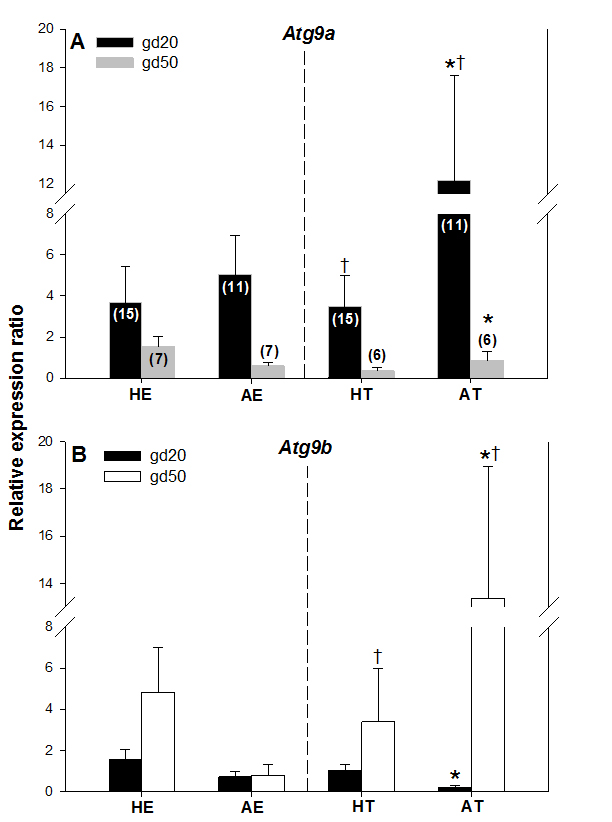
Atg9a mRNA expression was significantly greater in arresting than in healthy trophoblast tissue on gestation day 20 (gd20), and it was greater (P < 0.05) in AT on gd20 compared with AT on gestation day 50 (Figure. 3A). There were no other differences in Atg9a mRNA expression between healthy and arresting trophoblast tissue nor between the two gestation days studied. Atg9b mRNA expression was greater (P < 0.05) in AT than HT on gd50 (Figure 3B). As with Atg9a gene, no other differences in Atg9b expression levels were recorded in this study. These results suggest that both Atg9 genes may be involved in maintaining healthy pregnancy in swine. The elevated Atg9 gene expression levels in arresting tissue samples, as compared to the healthy trophoblast tissue, also suggest that these genes are mainly activated by unfavorable uterine conditions during pregnancy in sows; this is in agreement with observations obtained after miscarriages in women [5]. The specific reason for the differences in Atg9a mRNA and Atg9b mRNA expression between gd20 and gd50 are difficult to explain, but since alterations in only one of those genes can lead to reproductive disturbances [8], they can still be implicated in embryonic and fetal arrest in pregnant pigs. One of the reasons for this disparity could be the fact that Atg9a gene is ubiquitously expressed whereas Atg9b gene is only expressed in the placenta and the pituitary gland [12]. As of yet, no experimental studies have been conducted on the role of Atg9b gene in mammalian pregnancy.

IJVB2017-103-Pawel-Canada_f3

Figure 3. Comparisons of Atg9a mRNA (A) and Atg9b mRNA (B) expression levels in healthy and arresting porcine conceptuses and attachment sites on gestational days 20 (gd20) and 50 (gd50). Healthy endometrium (HE), arresting endometrium (AE), healthy trophoblast (HT), arresting trophoblast (AT). Numbers of samples used for rtPCR are given in parentheses (upper panel). Values denoted by the same symbols (*) differ significantly.

IJVB2017-103-Pawel-Canada_f4

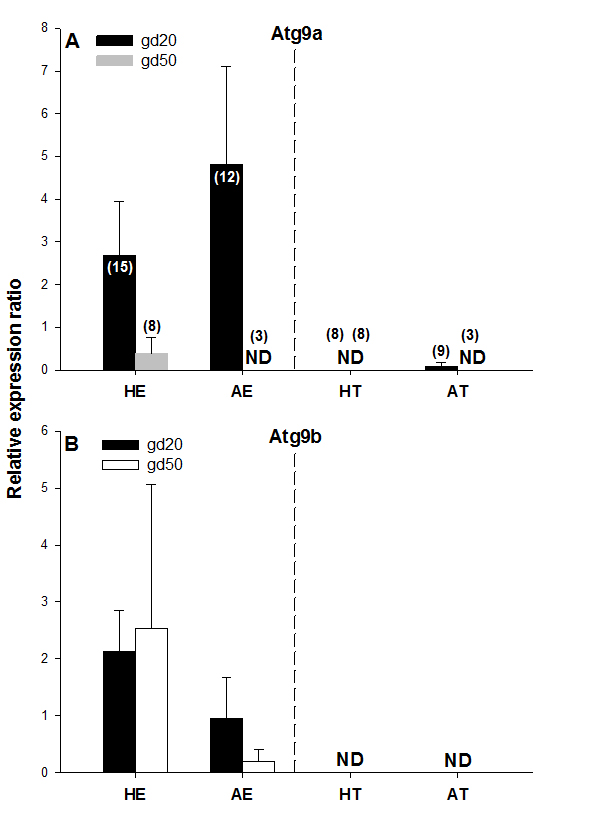
Figure 4. Atg9a and Atg9b protein expression on gestational days 20 (gd20) and 50 (gd50) in healthy and arresting conceptuses and their attachment sites. Protein expression levels were calculated as the ratios to β-actin from each corresponding blot; the bands detected in the 87-kDa range were quantified. Numbers of samples used for Western blot are given in parentheses (upper panel). Healthy endometrium (HE), arresting endometrium (AE), healthy trophoblast (HT), arresting trophoblast (AT), and non-detectable (ND).

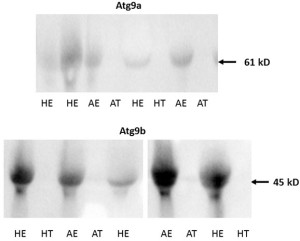
No protein expression was detected with the Western blot of both Atg9 proteins in trophoblast tissue samples on either of the two gestational days studied except for low levels of Atg9a protein in AT samples on gd20 (Figure 4A and 4B, Figure 5). In addition, no Atg9a protein was detected in AE obtained on gd50 (Figure. 4A). On either gestational day, no variation in Atg9 protein levels between healthy or arresting conceptus attachment sites was detected. This is in contrast with previous observations in humans [13]. Autophagy was predominantly localized to the syncytiotrophoblast layer and autophagosomes were more abundant in the fetal growth restricted (FGR) placentae [13]. Moreover, the autophagy regulators including LC3B, Beclin-1, Atg5, Atg9 and Atg16L1 were all detected in villous trophoblast [14]. Our results, however, appear to be in partial agreement with a previous rodent study, wherein the absence of Atg9a gene expression resulted in fetal developmental abnormalities and demise. A lack of protein detection could be due to a number of factors including mRNA stability, protein degradation or protein relocation. Protein production depends on the abundance and stability of mRNA; rapid decays of mRNA can prevent the accumulation of transcripts and protein biosynthesis [15]. Alternatively, intrauterine proteins may have been degraded in response to various hormonal stimuli [16]. In the present Western blotting experiments, the real weight of proteins was somewhat less than the theoretical weight (positive control), which can be indicative of ongoing post-translational modifications [17]. Protein relocation could also have influenced protein detection in the present study [18, 19]. Further research is needed to provide information about synthetic/secretory pathways and specific roles of the Atg9 proteins in porcine pregnancy. It is attractive to speculate that inadequate expression of Atg proteins was associated with the altered development of conceptus in the sows of the present study. It would now be interesting to test the effect of various autophagy inhibitors (e.g., LY294002, Paclitaxel or Wortmannin) and activators (e.g., Temozolomide, Metformin or Trifluoperazine; Figure 1), administered just prior to the periods of expected embryonic or fetal arrest, on the piglet productivity.

IJVB2017-103-Pawel-Canada_f5

Figure 5. Examples of Western blot images containing Atg9a (upper panel) and Atg9b (lower panel) protein bands from porcine tissue specimens collected on gestational day 20. The intensity of bands for both Atg9a and Atg9b proteins were subsequently quantified relative to the expression of the beta actin bands. Healthy endometrium (HE), arresting endometrium (AE), healthy trophoblast (HT), arresting trophoblast (AT), and (+) manufacturer’s positive control.

In conclusion, there may be possible involvement of embryonic and fetal autophagy-related genes in the placentation and development of porcine conceptuses. Due mainly to the discrepancies in the results from rtPCR and Western blotting, more research is needed on the transcriptional regulation of Atg9 genes as well as the sites and mode of action of their products during porcine pregnancy.

Competing Interests: The authors declare that they have no competing interests.

Acknowledgements: Thanks are extended to: staff members at the Arkell Swine Research Station (OMAFRA) in Guelph, ON, Canada, for care and management of experimental animals; the Meat Wing of the Department of Animal and Poultry Science, U of G, for help with euthanasia; Dr. Jocelyn Wessels for technical assistance with specimen collection and the preparation of samples; Dr. Tami Martino (Department of Biomedical Sciences, U of G) for access to the rtPCR and Western blot facilities, and the Jordan University of Science and Technology (sabbatical funding for RTK). The present results were presented, in the preliminary form, during the 4th World Congress of Reproductive Biology (Okinawa, Japan; 27-29 September 2017).

Funding Information: Primary funding in the form of an operating research grant to CT was provided by the Ontario Pork. Additional funding was provided by the Department of Biomedical Sciences, U of G (PMB).

References

  1. Wilson ME (2002) Role of placental function in mediating conceptus growth and survival. J Anim Sci 80(E. Suppl.2) E195–E201.
  2. Pope WF (1994) Embryonic Mortality in Swine. In: Embryonic Mortality in Domestic Species. CRC Press 53–78.
  3. Glick D, Barth S, Macleod KF (2010) Autophagy: cellular and molecular mechanisms. J Pathol 221: 3–12. [crossref]
  4. Mizushima N, Levine B (2010) Autophagy in mammalian development and differentiation. Nat Cell Biol 12: 823–830. [crossref]
  5. Avagliano L, Terraneo L, Virgili E, Martinelli C, Doi P2, et al. (2015) Autophagy in Normal and Abnormal Early Human Pregnancies. Reprod Sci 22: 838–844. [crossref]
  6. Yamamoto H, Kakuta S, Watanabe TM, Kitamura A, et al. (2012) Atg9 vesicles are an important membrane source during early steps of autophagosome formation. J Cell Biol 198–219: 33.
  7. Bestebroer J, V’kovski P, Mauthe M, Reggiori F (2013) Hidden behind autophagy: the unconventional roles of ATG proteins. Traffic 14: 1029–41.
  8. Kojima T, Yamada T, Akaishi R, Furuta I, Saitoh T, et al. (2015) Role of the Atg9a gene in intrauterine growth and survival of fetal mice. Reprod Biol 15: 131–138. [crossref
  9. Croy BA, Wessels J, Linton N, Tayade C (2009) Comparison of immune cell recruitment and function in endometrium during development of epitheliochorial (pig) and hemochorial (mouse and human) placentas. Placenta 30(Suppl A) 2009:  S26–S31.
  10. Bidarimath M, Khalaj K, Kridli RT, Wessels J, et al. (2017) Altered expression of chemokines and their receptors at porcine maternal-fetal interface during early and mid-gestational fetal loss. Cell Tissue Res.
  11. Kridli RT, Khalaj K, Bidarimath M, Tayade C (2015) Placentation, maternal-fetal interface, and conceptus loss in swine. Theriogenology 85,135–44.
  12. Xie Y, Kang R, Sun X, Zhong M, et al. (2015) Posttranslational modification of autophagy-related proteins in macroautophagy. Autophagy 28–45.
  13. Bagola K, Menhert M, Jarosch E, Sommer T. Protein dislocation from the ER. Biochim Biophys Acta 2011: 1808: 25–36.
  14. Curtis S, Jones CJP, Garrod A, Hulme CH, et al. (2013) Identification of autophagic vacuoles and regulators of autophagy in villous trophoblast from normal term pregnancies and in fetal growth restriction. J Matern Fetal Neo M 26,339–46.
  15. Yamada T, Carson A, Caniggia I, Umebayashi K, et al. (2005) Endothelial nitric-oxide synthase antisense (NOS3AS) gene encodes an Autophagy-related Protein (APG9-like2) highly expressed in trophoblast. J Biol Chem 18283–90.
  16. Wu X, Brewer G (2012) The regulation of mRNA stability in mammalian cells: 2.0. Gene 500: 10–21. [crossref]
  17. Cooper GM (2000) Protein Degradation. The Cell: A Molecular Approach, 2nd Edition. Sunderland: Sinauer Associates.
  18. Mahmood T, Yang PC (2012) Western blot: technique, theory, and trouble shooting. N Am J Med Sci 4: 429–434. [crossref
  19. Bagola K, Mehnert M, Jarosch E, Sommer T (2011) Protein dislocation from the ER. Biochim Biophys Acta 1808: 925–936. [crossref]

Asymmetric bagging and feature selection for activities prediction of drug molecules of an in silico developed unique fragment poly-pharmacologic modulator of CXCR4 tumor-derived heat-shock GGHFGPFDY peptide mimotopic complex-96 (HSPPC-96) by highthroughput identifying hits in the hydrophobic autotaxin/lysophospholipase D pocket

Abstract

Background

Activities of drug molecules can be predicted by QSAR (quantitative structure activity relationship) models, which overcomes the disadvantages of high cost and long cycle by employing the traditional experimental method. With the fact that the number of drug molecules with positive activity is rather fewer than that of negatives, it is important to predict molecular activities considering such an unbalanced situation. Glycoprotein-96, a non-polymorphic heat-shock protein, associates with intracellular peptides. Autologous tumor-derived heat shock protein-peptide complex 96 (HSPPC-96) can elicit potent tumor-specific T cell responses and protective immunity in animal models. Chemokines were described originally in the context of providing migrational cues for leukocytes. They are now known to have broader activities, including those that favor tumor growth. Treatment with autologous tumor-derived HSPPC-96 was feasible and safe at all doses tested. Observed immunological effects and antitumor activity were modest, precluding selection of a biologically active dose. Coevolution between proteins is crucial for understanding protein-protein interaction. Simultaneous changes allow a protein complex to maintain its overall structural-functional integrity. In this Research Scientific Project, we combined statistical coupling analysis (SCA) and molecular dynamics simulations on thecomplex-96 (HSPPC-96) protein complex to evaluate coevolution between conserved binding protein domain regions. We reconstructed an inter-protein residue coevolution network, consisting of 37 residues and 37complex-96 (HSPPC-96) binding domains conserved peptide derived residues and its fitness scoring reverse ligand docking interactions. It shows that most of the coevolved residue pairs are spatially proximal. When the mutations happened, the stable local structures were broken up and thus the protein interaction was decreased or inhibited, with a following increased risk of melanoma. The identification of inter-protein coevolved residues in thecomplex-96 (HSPPC-96) complex can be helpful for designing protein drug target and in silico discovery of engineering novel nanomolecule experiments.

Results

Here, asymmetric bagging and feature selection are introduced into the problem and asymmetric bagging of support vector machines (asBagging) is proposed on predicting drug activities to treat the unbalanced problem. At the same time, the features extracted from the structures of drug molecules affect prediction accuracy of QSAR models. Therefore, a novel algorithm named PRIFEAB is proposed, which applies an embedded feature selection method to remove redundant and irrelevant features for asBagging. Numerical experimental results on a data set of molecular activities show that asBagging improve the AUC and sensitivity values of molecular activities and PRIFEAB with feature selection further helps to improve the prediction ability.

Conclusion

Asymmetric bagging can help to improve prediction accuracy of activities of drug molecules, which can be furthermore improved by performing feature selection to select relevant features from the drug molecules data sets. In this scientific study we have in silico discovered a Unique Small Molecule Modulator of CXCR4 tumor-derived heat-shock protein peptide complex-96 (HSPPC-96) by identifying Hits of a High-Throughput Screen Identify the Hydrophobic Pocket of Autotaxin/Lysophospholipase D as an Inhibitory Surface Molecular dynamic simulation and statistical coupling analysis via a Asymmetric bagging and feature selection for activities prediction of drug molecules of an in silico developed unique fragment poly-pharmacologic modulator of CXCR4 tumor-derived heat-shock GGHFGPFDY peptide mimotopic complex-96 (HSPPC-96) by highthroughput identifying hits in the hydrophobic autotaxin/lysophospholipase D pocket.

Keywords

In silico development; unique fragment; poly-pharmacologic modulator; CXCR4 tumor-derived; heat-shock; GGHFGPFDY peptide; mimotopic complex-96; (HSPPC-96); highthroughput identifying hits; hydrophobic autotaxin/lysophospholipase D pocket.

CHARMM additive and polarizable force fields for biophysics and computer-aided drug design as an in silico chemoproteomic prediction-scan for the generation of a tyrosinase aa95-104FMGFNCGNCK antigenic pattern LFA-3/IgG fusion polypeptide IleAlaArgArgPheLeuOH (Kinetensin) mimetic pharmacophore on conserved Vitiligo post-trancripts domains.

Abstract

Background

Molecular Mechanics (MM) is the method of choice for computational studies of biomolecular systems owing to its modest computational cost, which makes it possible to routinely perform molecular dynamics (MD) simulations on chemical systems of biophysical and biomedical relevance. Vitiligo is a skin disorder characterized by selective melanocyte destruction and concomitant appearance of depigmented macules that over time enlarge, coalesce, and form patches. It has been suggested that vitiligo is, at least in part, caused by autoimmune responses mediated by cytotoxic T cells against melanocytes, causing depigmentation Immune responses contribute to the pathogenesis of vitiligo and target melanoma sometimes associated with vitiligo-like depigmentation in some melanoma patients. It has been perviously reported that the tyrosinase autoantigen was immunorecognized with the same molecular pattern by sera from vitiligo and melanoma patients. Five autoantigen peptides was found to compose the immunodominant antityrosinase response: aa95-104FMGFNCGNCK; aa175-182 LFVWMHYY; aa176-190FVWMHYYVSMDALLG; aa222-236IQKLTGDENFTIPYW, and aa233-247IPYWDWRDAEKCDIC. Synergistic therapies for the treatment of vitiligo are provided. The major therapies for the treatment of vitiligo a pigmentary disorder characterized by patchy depigmentation of skin are Psoralens plus UV-A, steroids, basic fibroblast growth factor (bFGF) peptide location or surgical procedures. Psoralens plus UV-A is effective in about 50% of cases, steroids are limitedly effective only in fast spreading cases of vitiligo and often reoccurs on stoppage of treatment. Surgical treatment is the last resort for vitiligo therapy, when all other therapies failed. It is limitedly effective. Basic fibroblast growth factor peptide(s) location was developed as a new mode therapy for the treatment of vitiligo. Therefore, SEQ ID NO: 01 VPHIPPN, SEQ ID NO: 02 MPPTQVS, SEQ ID NO: 03 QMHPWPP, SEQ ID NO: 1 1 LPLTPLP, SEQ ID NO: 12 QLNVNHQARADQ, SEQ ID NO: 13 TSASTRPELHYP, SEQ ID NO: 14 TFLPHQMHPWPP peptides, modified peptides and antibody or antibody fragments inhibiting the activity of MIA and can be used for treating vitiligo by inducing re-pigmentation. Fragment-based lead discovery is a method used for finding lead compounds as part of the drug discovery process.

Scope of Review

As one of the main factors limiting the accuracy of MD results is the empirical force field used, the present paper offers a review of recent developments in the CHARMM additive force field, one of the most popular bimolecular force fields. Additionally, we present a detailed discussion of the CHARMM Drude polarizable force field, anticipating a growth in the importance and utilization of polarizable force fields in the near future. Throughout the discussion emphasis is placed on the force fields’ parametrization philosophy and methodology. In this science project we perfomed an in silico ChemoProteomic Prediction-Scan for the generation of Antigenic PatternLFA-3/IgG fusion polypeptide aa95-104FMGFNCGNCK; aa175-182 LFVWMHYY; aa176-190FVWMHYYVSMDALLG; aa222-236IQKLTGDENFTIPYW, and aa233-247IPYWDWRDAEKCDICmimetic pharmacophore on conserved Vitiligo post-trancripts domains.

Major Conclusions

Recent improvements in the CHARMM additive force field are mostly related to newly found weaknesses in the previous generation of additive force fields. Beyond the additive approximation is the newly available CHARMM Drude polarizable force field, which allows for MD simulations of up to 1 microsecond on CHARMM additive and polarizable force fields for biophysics and computer-aided drug design analysis as an in silico chemoproteomic prediction-scan for the generation of a tyrosinase aa95-104FMGFNCGNCK antigenic pattern LFA-3/IgG fusion polypeptide IleAlaArgArgPheLeuOH (Kinetensin) mimetic pharmacophore on conserved Vitiligo post-trancripts domains.

General Significance

Addressing the limitations ensures the reliability of the new CHARMM36 additive force field for the types of calculations that are presently coming into routine computational reach while the availability of the Drude polarizable force fields offers a model that is an inherently more accurate model of the underlying physical forces driving macromolecular structures and dynamics.

Keywords

CHARMM additives; polarizable force fields; biophysics; computer-aided drug design; in silico; chemoproteomic; prediction-scan; tyrosinase; aa95-104FMGFNCGNCK antigenic pattern; LFA-3/IgG fusion polypeptide; IleAlaArgArgPheLeuOH (Kinetensin); mimetic; pharmacophore; conserved Vitiligo post-trancripts domains; CHARMM additive and polarizable force fields for biophysics and computer-aided drug design; molecular dynamics, empirical force field, potential energy function, molecular mechanics, computer-aided drug design, biophysics.

An Emerging Computational Methods for the shannon entropy descriptor (SHED) Rational Discovery of Allosteric Drugs for the in silico prediction of an annotated suitable lead chemo-recored compound as a potent computer predicted inhibitor comprising potential hyper-mimicking activities to 5 conserved anti-plasmodium peptides.

Abstract

Drug discovery programs launched by the Medicines for Malaria Venture and other product-development partnerships have culminated in the development of promising new antimalarial compounds such as the synthetic peroxide OZ439 (Charman et al., 2011) and the spiroindolone NITD 609 (Rottmann et al., 2010), which are currently undergoing clinical trials. In spite of these recent successes, it is pivotal to maintain early phase drug discovery to prevent the antimalarial drug development pipeline from draining. Due to the propensity of the parasite to become drug-resistant (Muller and Hyde, 2010; Sa et al., 2011), the need for new antimalarial chemotypes will persist until the human-pathogenic Plasmodium spp. are eventually eradicated. Rational post-genomic drug discovery is based on the screening of large chemical libraries – either virtually or in high-throughput format – against a given target enzyme of the parasite. Experimental tools to validate candidate drug targets are limited for the malaria parasites. Gene silencing by RNAi does not seem to be feasible (Baum et al., 2009). Gene replacement with selectable markers is (Triglia et al., 1998), but it is inherently problematic to call a gene essential from failing to knock it out. However, none of the reverse genetic methods is practicable at the genome-wide scale. On the other hand Mestres et al. (Cases et al., 2005; Mestres et al., 2006) have annotated a library of molecules targeting NHRs. Using a hierarchical classification for 200.000 ligands and 5 receptors, chemogenomic links bridging ligand to target space can be easily recovered to distinguish selective from promiscuous scaffolds. Using Shannon Entropy descriptors (SHED) based on the distribution of atom-centred feature pairs, any compound collection can be screened to identify hits presenting SHED distances to a reference NHR ligand beyond a defined threshold and therefore likely to share the same NHR profile. Here, we successfully applied a machine-learning algorithm using Bayesian statistics (Xia et al., 2004) to predict target profiles from extended connectivity conserved motif like binding site active pharmacophore fingerprints of selected compounds from the biologically annotated free and non commercial databases (Nidhi et al., 2006) in resulting finally to a potent computer predicted inhibitor comprising potential hyper-mimicking activities to 5 conserved anti-plasmodium peptides.

Keywords

Emerging Computational Methods; Rational Discovery; Allosteric Drugs; shannon entropy descriptor (SHED); in silico prediction; annotated suitable; lead chemo-recored compound; potent computer; predicted inhibitor; comprising potential hyper-mimicking activities; conserved anti-plasmodium peptides.