Archives

Analysis of Copy Number Variations and Knockdown in Zebrafish Pronephros Identifies Novel Candidate CAKUT Genes

DOI: 10.31038/JMG.2020313

Abstract

Congenital anomalies of the kidney and urinary tract (CAKUT) are serious birth defects that occur in ~1:1000 pregnancies. Mutations in ~40 different genes are likely to account for these disorders. However, because mutations in unique genes affect a small number of patients with variable penetrance and expressivity, identification of causative genes has been challenging. We identified six novel candidate CAKUT genes in regions of genomic imbalance and showed pronephric phenotypes when gene expression was reduced in zebrafish.

Introduction

Congenital anomalies of the kidney and urinary tract (CAKUT) are the most common cause of chronic kidney disease in children. They account for ~48-59% of childhood chronic kidney disease (CKD) and 34-43% of childhood end stage kidney failure requiring dialysis and transplantation [1]. CKD in infants and children is associated with serious sequelae, including reduced life expectancy, cardiovascular disease, impaired growth and neurocognitive delay. Genetic variants contribute significantly to the pathogenesis of CAKUT [2]. Syndromic forms of CAKUT, often with extra-renal manifestations are typically monogenic disorders with high penetrance that are readily diagnosable. More challenging is identifying the genetic basis for the more common sporadic forms of CAKUT because of the high degree of locus and allelic heterogeneity, reduced penetrance and variable severity. To date, ~40 genes have been implicated in sporadic, non-syndromic CAKUT. However, this only accounts for~25% of CAKUT cases, indicating that many more genes are expected to contribute to this developmental disorder [3, 4]. Moreover, in many of these reports there are no functional data to support the pathogenicity of the candidate gene variants. It has recently been appreciated that 10-17% of CAKUT cases are attributed to copy number variations (CNVs) [5, 6]. Genes contained in these regions of chromosomal imbalance represent novel genetic causes of CAKUT. Chromosomal microarray analyses were used to identify genomic imbalances (deletions or duplications) in two cohorts of children with CAKUT [7]. Here we report results of functional analysis of 12 novel candidate CAKUT genes within regions affected by these structural variants.

Results and Discussion

We analyzed a dataset that identified CNVs in a cohort of 457 CAKUT patients, but were extremely rare or absent in several control cohorts totaling 11,787 individuals. CNVs can identify dosage-sensitive genes that are linked to phenotypes. We used the following criteria to prioritize genes to test in functional assays: expression in the mouse urogenital tract in public databases (GUDMAP, Geo) or our own studies in the mouse embryonic kidney; functional data implicating the gene in kidney formation in a model organism; a biological pathway with a strong link to kidney development. We also considered whether mutations in the gene were associated with a human congenital anomaly syndrome, with or without known urogenital tract anomalies.

We tested whether knockdown of genes disrupted by these rare CNVs in the CAKUT cohort affected formation of the pronephros in zebrafish. We queried the Zebrafish Model Organism Database (ZFIN) to identify orthologs of candidate human CAKUT genes contained within regions of genomic imbalance. We used morpholinos to test if gene knockdown affected pronephric development in transgenic fish that expressed GFP in the glomerulus [Tg(wt1b:egfp)li2] and the pronephric duct [Tg(cdh17:egfp)pt305]. Single cell embryos were injected with morpholino oligonucleotide at 0.0125-0.25 mM and were visualized by epifluorescent microscopy at 48 hours post-fertilization.

Out of twelve genes tested, knockdown of six genes showed a pronephric phenotype (table 1). PCDH15 encodes for a member of the Protocadherin protein family. The gene is mutated in Usher syndrome type 1D/F, which is associated with sensorineural hearing loss and retinitis pigmentosa (OMIM #601067). Studies of the Usher syndrome protein network has revealed important molecular links to ciliopathies, many of which are associated with nephronophthisis, a common cause of childhood chronic kidney disease [8]. HACE1 is a HECT-domain and ankyrin repeat-containing E3 ubiquitin ligase. Homozygous loss of function mutations lead to spastic paraplegia and neuro developmental delay (OMIM #616756). The gene is highly expressed in fetal kidney and its loss of expression may play a role in the pathogenesis of sporadic Wilms tumor [9, 10]. Slc8a1a encodes for a sodium calcium exchanger. Knockdown of the gene in renal epithelial cells destabilized E-cadherin and disrupted canonical Wnt signaling, thereby affecting the mesenchymal to epithelial transition, an essential step in formation of the kidney [11]. Lrp1b encodes for the low-density lipoprotein receptor related-protein 1b. Variants of this this gene are associated with insulin resistance and childhood BMI [12-14]. It has been suggested that maternal hyperglycemia in gestational diabetes results alters DNA methylation at this locus and thereby contributes to fetal metabolic reprogramming [15]. Therefore, LRPB1 may be a candidate gene involved in gene-environment interactions in conditions such as diabetes, which are associated with a higher risk of birth defects. In addition, deletion of LRP1B has been observed in adult Wilms tumor [16].

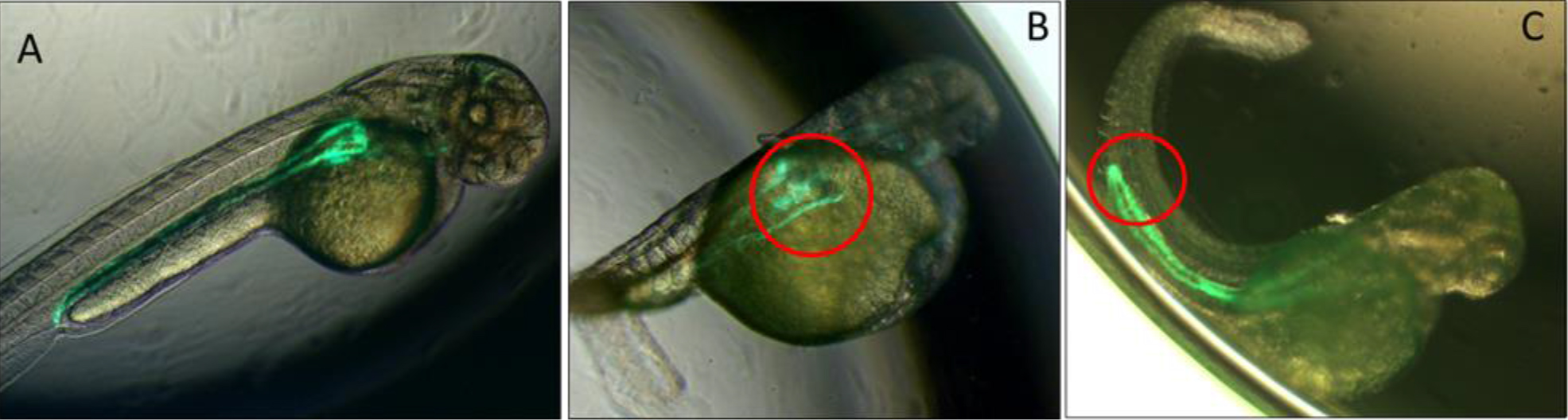
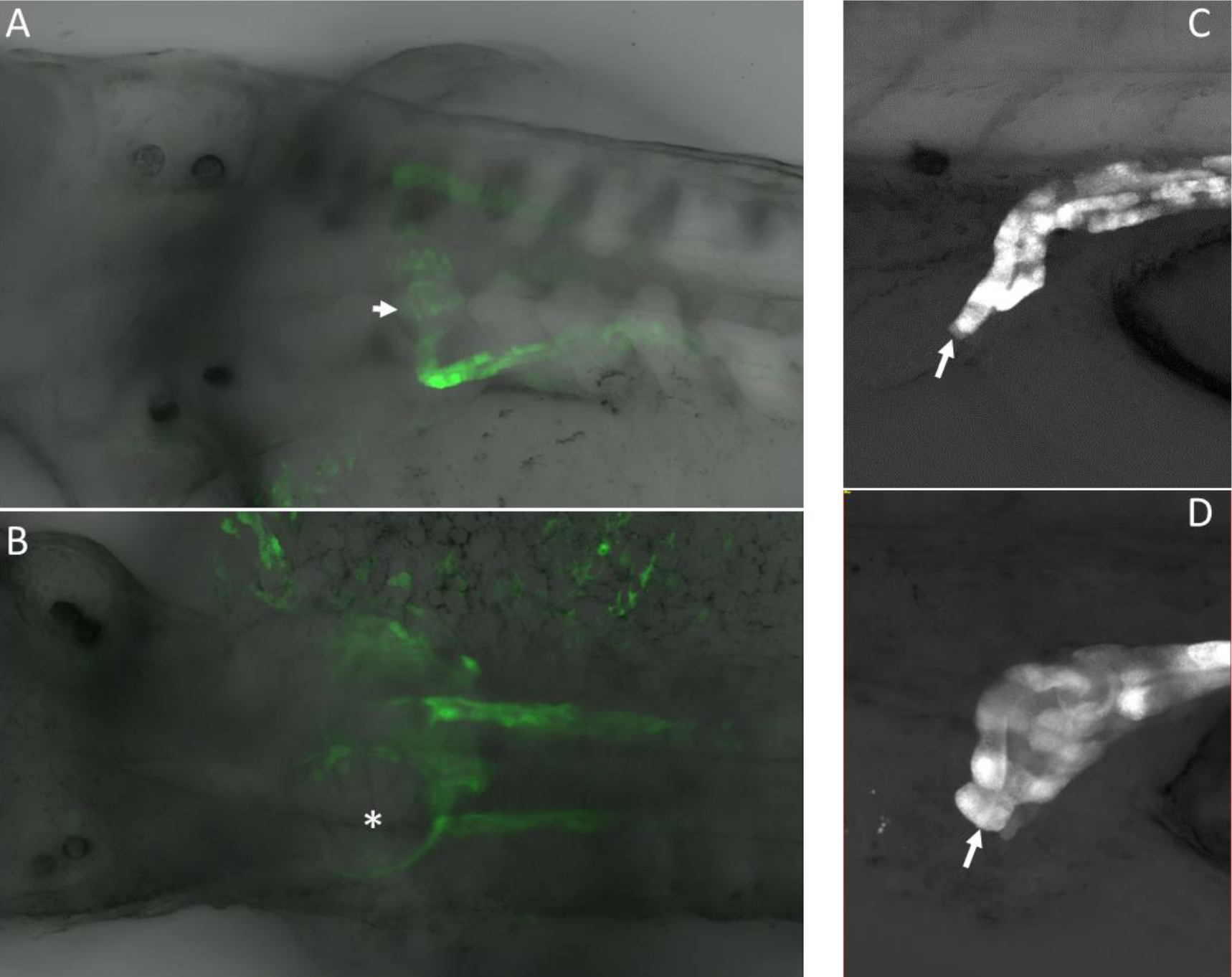
Two of the genes were studied in more detail because they are both inhibitors of receptor tyrosine kinase signaling, a pathway that is critical for kidney development in mice and humans [17]. Knockdown of Spred1 and Sprouty2 (Spry2) produced similar, dosage-sensitive phenotypes with two independent morpholinos. The observed phenotype included glomerular cysts and lack of extension of the pronephric duct leading to the absence of a patent opening at the cloaca (Figures 1, 2). Defective growth and branching of the nephric duct and ureteric bud are characteristic of mutations in the c-Ret receptor tyrosine kinase, which is essential for normal development of the mammalian kidney and lower urinary tract [17]. Spry2 plays a critical role in regulating c-Ret in developing kidney [18, 19]. Spred1 encoding for the Sprouty1-related gene product is a negative regulator of Ras-Mitogen Activated Protein Kinase (MAPK) activity. Point mutations in c-RET that disrupt MAPK signaling lead to congenital anomalies affecting the kidney and lower urinary tract [20]. Mutations in SPRED1 causes Neurofibromatosis type I (Legius syndrome) which is associated with childhood renal cancer (OMIM#611431).

Table 1:

Morpholino

Injection [ ]

fish tg line

n injected

n affected

96 phenotype

phenotype description

Spry2 #1

0.25mM

Cdh17

61

30

49.2

CD, TR

Spry2 #1

0.125mM

Cdh17 and Wt1b

180

26

14.4

CD, GC

Spry2 #2

0.25mM

Cdh17 and Wt1b

182

30

16.5

CD, GC, GM

Spred1 #1

0.125mM

Cdh17 and Wt1b

44

11

25.0

CD, GC, GM

Spred1 #2

0.125mM

Cdh17 and Wt1b

12

2

16.7

CD

Spred1 #2

0.0625mM

Wt1b

47

7

14.9

GC, SD

Spred1 #2

0.0125mM

Cdh17 and Wt1b

33

17

51.5

GC, GM

Pcdh15

0.25mM

Cdh17 and Wt1b

182

39

21.4

GC, TR, OT, SD

Hace1

0.25mM

Cdh17 and Wt1b

79

9

11.4

GC, GM

Lrp1b

0.25mM

Cdh17 and Wt1b

23

17

73.9

CD, GC, SD

Lrp1b

0.125mM

Cdh17 and Wt1b

3A

13

38.2

CD, SD

SIc8a1a

0.25mM

Cdh17 and Wt1b

44

2

4.5

GC

CD (tubules don’t exit fish at cloacal duct), GC (glomerular cyst), GM(glomerular malformation), SD(severe developmental defect), TR(truncated tubule), OT(obstructed/enlarged tubule)
JMG 2020-302_Michael Rauchman_F1

Figure 1.A. Low power images of pronephric phenotypes. Bi-transgenic fish expressing GFP under the control of the Wt1 promoter in the glomerulus and in the pronephric duct under control of the Cdh17 promoter. Uninjected fish displayed normal formation of the glomerulus and pronephric duct. B. Morpholino knockdown of Spred1 (Spred1 MO) resulted in glomerular cyst seen in Wt1 transgenic mice. C. Morpholino knockdown of Sprouty2 (Spry2 MO) resulted in a shortened pronephric duct in Cdh17 transgenic fish.
JMG 2020-302_Michael Rauchman_F2

Figure 2. A. High power confocal images of pronephric phenotypes. Normal glomerulus in a control (uninjected) embryo that expressed GFP from the Wt1 promoter. B. Spred1 morpholino knockdown caused glomerular cyst formation (asterisk). C. Pronephric duct shown exiting at the cloaca (arrow). D. Blunted pronephric duct that fails to exit at the cloaca due to morpholino knockdown of Spry2 (arrow). Note the dilatation at the distal end of the pronephric duct that occurred because the duct is not patent.

In conclusion, we have identified six novel candidate CAKUT genes by combining CNV data and functional analysis in zebrafish. Validation of these genes as causative of human CAKUT awaits discovery of additional affected individuals with mutations in these genes using whole exome sequencing.

Acknowledgement

We would like to thank Ms Denise Smith for technical support. . We also would like to thank Drs. Tomoko Obara (Univ. Oklahoma), Christoph Englert (Fritz Lipmann Inst.) and Neil Hukriede (Univ. Pittsburgh) for sharing their wt1b and cdh17 transgenic fish lines. This work was supported by grants to M.R. from the March of Dimes (#6-FY-13–127) and NIDDK (DK098563), and President’s Research Award from Saint Louis University to M.R. and M.V.

References

  1. Ingelfinger JR, Kalantar Zadeh K, Schaefer F, World Kidney Day Steering Committee (2016) Averting the legacy of kidney disease:focus on childhood. Future Sci. OA.; 2(2)FSO112.
  2. Vivante A, Hildebrandt F (2016) Exome Sequencing Frequently Reveals the Cause of Early-Onset Chronic Kidney Disease. Nat Re Nephrol 12: 133–146. (Crossref)
  3. Vivante A, Hwang D-Y, Kohl S, Chen J, Shril S, et al. (2017) Exome Sequencing Discerns Syndromes in Patients from Consanguineous Families with Congenital Anomalies of the Kidneys and Urinary Tract. J Am Soc Nephro 28: 69–75. (Crossref)
  4. Nicolaou N, Pulit SL, Nijman IJ, Monroe GR, Feitz WF, et al. (2016) Prioritization and burden analysis of rare variants in 208 candidate genes suggest they do not play a major role in CAKUT. Kid Int 89: 476–486. (Crossref)
  5. Caruana G, Wong MN, Walker A, Yves Heloury Y, Webb N, et al. (2015) Copy-number variation associated with congenital anomalies of the kidney and urinary tract. Pediatr Nephol 30: 487–495. (Crossref)
  6. Verbitsky M, Sanna Cherchi S, Fasel DA, Levy B, Kiryluk K, et al. (2015) Genomic imbalances in pediatric patients with chronic kidney disease. J Clin Invest 125: 2171–2178. (Crossref)
  7. Sanna-Cherchi S, Kiryluk K, Burgess KE, Bodria MSampson MG, et al. (2012) Copy-number disorders are a common cause of congenital kidney malformations. Am J Hum Genet 91: 987–997. (Crossref)
  8. Sorusch N,Wunderlich K, Bauss K, Nagel-Wolfrum K, Wolfrum U (2014) Usher syndrome protein network functions in the retina and their relation to other retinal ciliopathies. Adv Exp Med Biol 801: 527–533. (Crossref)
  9. Anglesio MS, Evdokimova V, Melnyk N, Zhang L, Fernandez CV, et al. (2004) Differential expression of a novel ankyrin containing E3 ubiquitin-protein ligase, Hace1, in sporadic Wilms’ tumor versus normal kidney. Hum Mol Genet 13: 2061–2074. (Crossref)
  10. Jia W, Deng Z, Zhu J, Fu W, Zhu S, et al. (2017) Association between HACE1 Gene Polymorphisms and Wilms’ Tumor Risk in a Chinese Population. Cancer Invest 35: 633–638. (Crossref)
  11. Balasubramaniam SL, Gopalakrishnapillai A, Petrelli NJ, Barwe SP (2017) Knockdown of sodium- calcium exchanger 1 induces epithelial-to-mesenchymal transition in kidney epithelial cells. J Biol Chem 292:11388–11399. (Crossref)
  12. Burgdorf KS, Gjesing AP, Grarup N, Justesen JMSandholt CH et al. (2012) Association studies of novel obesity-relatedgene variants with quantitative metabolic phenotypes in a population-based sample of 6,039 Danish individuals. Diabetologia 55: 105–113. (Crossref)
  13. Cornelis MC, Rimm EB, Curhan GC, Kraft PHunter DJ, et al. (2014) Obesity susceptibility loci and uncontrolled eating, emotional eating and cognitive restraint behaviors in men and women. Obesity (Silver Spring) 22: E135–E141. (Crossref)
  14. Namjou B, Keddache M, Marsolo K, Wagner MLingren T et al. (2013) EMR-linked GWAS study: Investigation of variation landscape of loci for body mass index in children. Front Genet 4. (Crossref)
  15. Houde AA ,Ruchat SM, Allard C, Baillargeon JP, St-Pierre J, et al. (2015) LRP1B, BRD2 and CACNA1D: new candidate genes in fetal metabolic programming of newborns exposed to maternal hyperglycemia. Epigenomics 7:1111–1122. (Crossref)
  16. Karlsson J, Holmquist Mengelbier L, Elfving P, Gisselsson Nord D (2011) High-resolution genomic profiling of an adult Wilms’ tumor: evidence for a pathogenesis distinct from corresponding pediatric tumors. Virchows Arch 459: 547–553. (Crossref)
  17. Costantini F (2010) GDNF/Ret signaling and renal branching morphogenesis: From mesenchymal signals to epithelial cell behaviors. Organogenesis  6: 252–262. (Crossref)
  18. Miyamoto R, Jijiwa M, Asai M, Kawai K, Ishida-Takagishi M, et al. (2011) Takahashi M. Loss of Sprouty2 partially rescues renal hypoplasia and stomach hypoganglionosis but not intestinal aganglionosis in Ret Y1062F mutant mice. Dev Biol 349: 160–168. (Crossref)
  19. Chi L, Zhang S, Lin Y, Prunskaite-Hyyryläinen R, Vuolteenaho R, et al. (2004) Sprouty proteins regulate ureteric branching by coordinating reciprocal epithelial Wnt11, mesenchymal Gdnf and stromal Fgf7 signalling during kidney development. Development 131: 3345–3356.(Crossref)
  20. Chatterjee R, Ramos E, Hoffman M, VanWinkle J, Martin DR, et al. (2012) Traditional and targeted exome sequencing reveals common, rare and novel functional deleterious variants in RET-signaling complex in a cohort of living US patients with urinary tract malformations. Hum Genet 131: 1725–1738. (Crossref)
Avoid Using Sample with More Than 70% Blasts for HLA Typing to Reduce Erroneous Homozygous HLA Typing Results by Microbead Assay

DOI: 10.31038/JMG.2020312

Abstract

Background: Loss of heterozygosity (LOH) at the human leukocyte antigen (HLA) region could lead to erroneous homozygous HLA typing results.

Materials and methods: We investigated HLA typing on peripheral blood samples derived from a patient with acute myeloid leukemia (AML) at diagnosis and remission by Luminex microbead assay. LOH was analyzed by short tandem repeat (STR) analysis at markers of long arm and short arm of chromosome 6 and single-nucleotide polymorphism (SNP) array analysis. For DNA mixing test to define the detection threshold for heterozygous HLA genotypes, we selected 6 samples of homozygous HLA typing and 6 samples of heterozygous HLA typing.

Results: At diagnosis (blasts 77% in peripheral blood), HLA typing revealed A*11, B*15:02/88(B75), C*08:01/08, DRB1*08, DQB1*06. Short tandem repeat (STR) analysis of peripheral blood revealed segmental uniparental disomy (UPD) of chromosome 6 (LOH of marker at 6p22, but no LOH at other markers of short arm and long arm of chromosome 6). Analysis of LOH by single-nucleotide polymorphism (SNP) array analysis demonstrated no copy number variations, but LOH on chromosome 6 [34.6Mb] and on chromosome 13 [92.8Mb]. At remission, HLA typing was A*11, A*24, B*15:02/112(B75), B*40:01/22N (B60), C*07:02/32N, C*08:01/08, DRB1*08, DRB1*14, DQB1*05, DQB1*06. DNA mixing experiments revealed that the minimum threshold for detecting HLA heterozygosity using Luminex technology is < 70% homozygous sample.

Conclusion: We describe an erroneous homozygoug HLA typing due to LOH resulting from segmental UPD. We should avoid sampling of blood with more than 70% blasts for HLA typing to reduce erroneous homozygous HLA typing results.

Keywords

human leukocyte antigen typing; loss of heterozygosity; uniparental disomy; microbead assay

Introduction

The human leukocyte antigen (HLA) gene complex resides on chromosome 6p21. HLA typing is used for HLA matching of donor–recipient pairs in hematopoietic stem cell transplantation (HSCT), searching HLA matched platelet components, identification of humoral responses to donor antigens in solid organ transplantation, and personalized risk assessment of HLA-associated autoimmune diseases and adverse drug reactions. Multiple mechanisms are responsible for HLA phenotypes alterations: alteration in steps in the biosynthetic pathway of HLA membrane expression, mutations in or loss of beta 2-microglobulin gene or HLA genes, and loss of heterozygosity (LOH) at the HLA region [1–3]. LOH at the HLA region could lead to loss of one HLA haplotype and erroneous homozygous HLA typing results [4]. LOH is defined as the loss of one parent’s contribution to the cell and can be caused by deletion, gene conversion, mitotic recombination, or loss of chromosome or uniparental disomy (UPD).

Copy-neutral LOH, also referred as to UPD [5], is thus called because no net change in the copy number occurs in the affected individual. UPD cannot be detected by conventional cytogenetics. UPD results when both copies of a chromosome pair originate from one parent. This might result in homozygosity [6]. In UPD, a person receives two copies of a chromosome (complex UPD), or part of a chromosome (segmental UPD), from one parent and no copies from the other parent due to errors in meiosis I or meiosis II [7].

Microsatellite analysis of STR and SNP array technology allows the identification and mapping of LOH in AML patients with normal karyotype. LOH can be identified in cancers by noting the presence of heterozygosity at a genetic locus in an organism’s germline DNA, and the absence of heterozygosity at that locus in the cancer cells. This is often done using polymorphic markers, such as analysis of short tandem repeats (STRs) and single-nucleotide polymorphism (SNP) array analysis. With genome-wide SNP-based array analysis providing both copy number and allele-specific information, it is possible to search the genome for subtle copy number alterations and regions with loss of heterozygosity [8].

Higher density SNP array can be used effectively to detect small regions of chromosomal changes and provide more information regarding the boundaries of loss regions. The Affymetrix 750K SNP array, an array of 750,000 markers for copy number analysis which consist of 550,000 unique non-polymorphic probes and approximately 200,000 SNPs, provides high-density SNP coverage for LOH detection, with greater than 99 percent accuracy.

Materials and methods

Samples and Institutional review board clearances

Venous blood samples were collected from a patient with acute myeloid leukemia (AML) at diagnosis and at complete remission, and healthy blood donors who signed informed consent. Three mL of blood was collected in sterile tubes containing EDTA. Buccal swab cells were obtained from the AML patient at complete remission. Karyotype analysis of the bone marrow of the AML patient did not show any chromosomal abnormality. The Institutional Review Board of Taipei Veterans General Hospital approved this study.

DNA extraction and analysis of PCR- STR

Genomic DNA was extracted from blood samples or buccal cell swabs with Puregene DNA isolation kit (Gentra System, Minneapolis, MN, USA) according to the method recommended by the manufacturer. In this study, six representative STR markers (D6S289, D6S276, D6S257, D6S434, D6S292, D6S281) covering the 6p/6q arms of chromosome 6 including the HLA region were selected for LOH study.

The polymerase chain reaction (PCR) amplification has been performed according to the method previous described by Ramal et al. [9]  : 1.20 ml of DNA; 1.00 ml of Primer Mix (5 mM each primer); 1.50 ml of 10 × PCR reaction buffer including MgCl2 15 mM (Boehringer Mannheim, Mannheim, Germany); 1.50 ml of dNTPs mix (250 mM each dNTP); 0.12 ml of Taq DNA polymerase (5 U/ml) (Boehringer Mannheim) and distilled, deionized water to 15 ml of final volume.

The polymerase chain reaction (PCR) schedule was adjusted to GeneAmp® 9700 cycler (Applied Biosystems, Singapore) as follows: The initial denaturation at 95°C for 2 minutes (hot start); ten PCR cycles including 94ºC for 0.5 minutes, 55ºC for 0.5 minutes, 72ºC for 0.5 minutes; twenty PCR cycles including 89ºC for 0.5 minutes, 55ºC for 0.5 minutes, 72ºC for 0.5 minutes; and a final extension at 72°C for 10 min. Short tandem repeat (STR) data were analyzed using ABI PRISM® 310 Genetic Analyzer (Applied Biosystems Inc., Foster City, CA, USA).

LOH analysis by STR markers of chromosome 6

STR markers (D6S289, D6S276, D6S257) of short arm and STR markers (D6S434, D6S292, D6S281) of long arm were analyzed. Positions of STR markers are summarized in Table 1.

Table 1. Results of loss of heterozygosity detected by markers of short tandem repeats at chromosome 6

STR marker

Chromosome location

LOH calculation
(<0.75=LOH)

Results

D6S289

6p22.3

0.91

NO LOH

D6S276

6p22

0.67

LOH

D6S257

6p12.1

Non-informative

Homozygous

D6S434

6q16.3

1.02

NO LOH

D6S292

6q23.3

0.91

NO LOH

D6S281

6q27

0.93

NO LOH

In capillary electrophoresis, the ratio of the amount of PCR product for the two alleles is derived from the relative peak heights. It was assigned LOH when more than 25% of signal reduction of one allele was observed in the analyzed samples as compared to the control sample [9].

Ratio of allele height (RH) = peak height of the smaller allele/ peak height of the larger allele

Reduction of signal = 1 – (RH of analyzed sample/RH of control sample)

LOH analysis by SNP array analysis

We used SNP array analysis to evaluate LOH in a specific chromosomal region. Detection of LOH requires SNPs to be heterozygous (i.e., informative). SNP analysis was performed using Affymetrix CytoScan® Assay (CytoScan® 750K Array, Affymetrix Inc. Taiwan) was performed following the manufacturer’s protocols [10]. After performing a SNP array hybridization experiment, each slide is scanned, and the array probe signal intensities and SNP calls are subsequently analyzed. The signal intensities are analyzed to determine copy number estimate with the updated version 2.0 of the CNAG (Copy Number Analyzer for Affymetrix GeneChip mapping) software package [11]. Copy number variants were analyzed by array comparative genomic hybridization.

Luminex technology for HLA typing by PCR-SSO

The LABType SSO (One Lambda, Inc., Canoga Park, CA, USA) assays for HLA typing was performed according to the method previous described by Trajanoski et al. [12]. Target DNA is polymerase chain reaction (PCR) amplified using group-specific primers and then biotinylated which allows it to be detected using R-Phycoerythrin-conjugated Streptavidin. The PCR product is then denatured and allowed to hybridise to complementary DNA probes conjugated to fluorescently code microsperes. The Luminex Flow Analyser was used to detect the fluorescent intensity on each microsphere. The assignment of HLA alleles is based on the reaction pattern of the various beads compared to patterns with known HLA alleles.

DNA mixing experiments

Six sample (sample A) of homozygous HLA typing at a locus (HLA-A*02; B*38; C*07) and six sample (sample B) of heterozygous HLA typing at the same locus (A*02, A*11;B*15, B*38; C*07,C*08) were selected. The concentrations of these samples were adjusted to 20 ng/microliter. Sample A and sample B were serial mixed as the following ratio: 1:9, 2:8, 3:7 and 4:6, respectively. HLA typing was performed for these mixture samples individually. The assay threshold is the minimum allowable concentration of the sample B at which the heterozygous HLA typing can be determined.

Results

HLA typing results at diagnosis of AML and remission

At diagnosis of AML (blasts 77% in peripheral blood), HLA typing by PCR-SSOP revealed A*11, B*15:02(B75), C*08:01/08, DRB1*08, DQB1*06. At remission, HLA typing results were A*11, A*24, B*15:02 (B75), B*40:01/22N (B60), C*07:02/32N, C*08:01/08, DRB1*08, DRB1*14, DQB1*05,DQB1*06. HLA typing on cells obtained by a buccal swab at remission revealed the same HLA typing results.

Assignment of LOH by STR

Results of loss of heterozygosity detected by markers of short tandem repeats at chromosome 6 were shown in Table 1. A clear LOH is observed in alleles of marker D6S276 which located at 6p22.3–21.3 near HLA gene complex resides within chromosome 6p21. But no LOH was observed in other alleles of markers: 6S289 (6p22.3), D6S434 (6q16.3),D6S292(6q23.3), D6S281(6q27). So segmental UPD of chromosome 6 is suggested.

Assignment of LOH by SNP Array

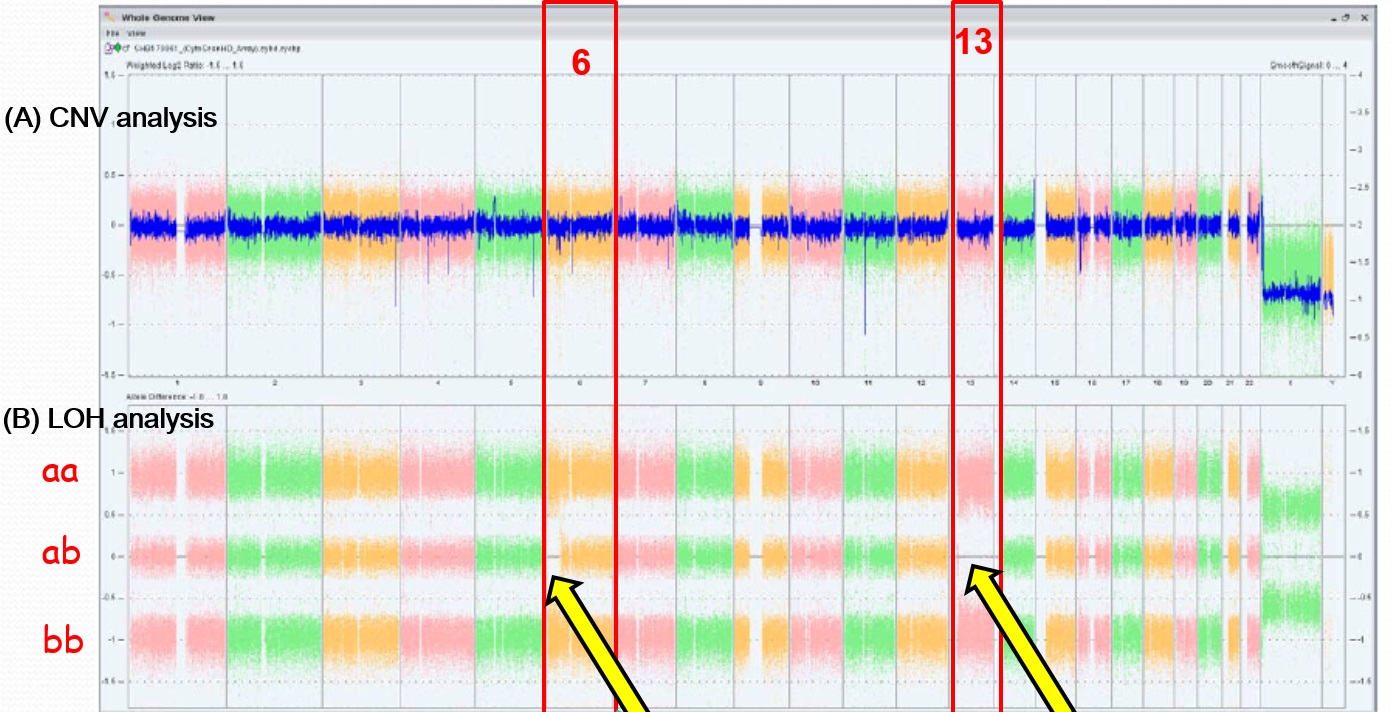
Results of genome-wide SNP analysis were shown in Figurer 1. LOH were observed on chromosome 6 [34.6Mb] and on chromosome 13 [92.8Mb], but no copy number variation in all chromosomes was demonstrated (Fig. 1).

JMG 2020-301_Jeong-Shi Lin_F1

Figure 1. Results of single nucleotide polymorphism array analysis

X-axis represents number of chromosomes. (A) No copy number variation was observed in all chromosomes. (B) Loss of heterozygosity (LOH) was observed at short arm of chromosome 6 [34.6Mb] and chromosome 13 [92.8Mb]. CNV = copy number variation.

Detection threshold of HLA typing by Luminex

Using LABType SSO assays, the detection rate of heterozygous HLA typing for the mixture of a sample of homozygous HLA typing and a sample of heterozygous HLA typing at the same locus were summarized in Table 2. The threshold of LABType SSO assays for detecting heterozygosity was more than 30% of the samples with heterozygous HLA typing.

Table 2. Detection rate of heterozygous HLA genotype by DNA mixing experiments (n=6)

Heterozygous

HLA type

Ratio of sample B to sample A

1:9

2:8

3:7

4:6

HLA-A*11

0

83.3

100

100

HLA-B*15

16.7

83.3

100

100

HLA-C*08

0

50

100

100

Sample A: homozygous HLA typing of HLA-A*02; B*38; C*07;

Sample B: heterozygous HLA typing of HLA-A*02, A*11; B*15, B*38; C*07, C*08.

Discussion

We report false homozygous HLA genotyping in a patient with AML at diagnosis when the blast cell was 77% in blood sample. Microsatellite markers have shown segmental UPD. Copy number variant analysis by array comparative genomic hybridization did not reveal copy number variations in chromosome 6 and thus confirmed that the HLA homozygosity was due to partial UPD (Fig. 1). We repeated HLA genotyping at complete remission, and correct heterozygous HLA typing was obtained. In this case LOH was present at diagnosis, suggesting that clones with acquired UPD could occur spontaneously in the developing leukemia.

Systematic application of whole genome scanning technologies with SNP arrays has demonstrated that LOH without changes in copy number frequently occur in many types of cancer [13]. Bullinger et al. performed high-resolution SNP analyses in 157 adult cases of CN-AML, and regions of acquired UPDs were identified in 12% of cases and in the most frequently affected chromosomes, 6p, 11p and 13q [14]. Genome-wide analysis of SNPs in AMLs has revealed that 18.8 % of AML patients exhibited large regions of homozygosity due to partial UPD, and the homozygosity was found to be restricted to the leukemic clone [15]. The role of UPD may be underestimated. Raghavan et al. found an increased frequency of UPD (41%) at relapsed AML [16]. After transplantation of haploidentical hematopoietic stem cells the CNN-LOH in 6p provides a common mechanism of leukemic relapse after HLA haploidentical stem cell transplantations, in which leukemic cells can escape the immunologic surveillance of the engrafted donor T cells through the loss of the mismatched HLA haplotype [17, 18].

By DNA mixing test, we found a low proportion (< 30%) of homozygous cells cannot be detected with Luminex technology. LOH can involve the entire HLA region, but in some cases it may be partial with the involvement of only one or a few HLA loc. Dubois et al. studied 6 AML patients with HLA mistyping, and found that complete HLA-A, B, C homozygosity happened in patients with more than 80% blast cells except in one case of acute myeloid leukemia in which LOH was observed only at locus A with 27% of blast cells but pronounced monocytosis [4]. It is unusual to observe LOH in patients without blast cells. Partial remission may be associated with peripheral blood leucocytes affected by chromosomal abnormalities without morphological malignancy [19].

Conclusions

In conclusion, we reported erroneous HLA typing resulted from segmental UPD of chromosome 6 in an AML patient at diagnosis with blasts 77% in peripheral blood sample. Blood sample with more than 70% blast cells should not be used for HLA typing to reduce erroneous HLA typing results by Luminex microbead assay.

Funding

This study was supported by Taipei Veterans General Hospital and Taiwan Clinical Oncology Research Foundation.

Authorship contributions

J.S. Lin and L.H. Lee wrote the manuscript. J.S. Lin, L.H. Lee, H.M. Liu, and T.J. Chiou designed the study. Y.J. Chen coordinated the study. L.H. Lee and H.M. Liu enrolled the subjects and performed the experiment. J.S. Lin and L.H. Lee analyzed the data and performed the statistics. All authors reviewed and approved the final version of the manuscript.

References

  1. Garrido F, Ruiz-Cabello F, Cabrera T, Perez-Villar JJ, Lopez-Botet M et al. (1997) Implications for immunosurveillance of altered HLA class I phenotypes in human tumours. Immunol Today 18: 89–95. [crossref]
  2. Koopman LA, Mulder A, Corver WE, Anholts JD, Giphart MJ, et al. (1998) HLA class I phenotype and genotype alterations in cervical carcinomas and derivative cell lines. Tissue Antigens 51: 623–636. [crossref]
  3. Browning M, Dunnion D (1997) HLA and cancer: implications for cancer immunotherapy and vaccination. Eur J Immunogenet 24: 293–312. [crossref]
  4. Dubois V, Sloan-Bena F, Cesbron A, Hepkema BG, Gagne K, Gimelli S (2012) Pretransplant HLA mistyping in diagnostic samples of acute myeloid leukemia patients due to acquired uniparental disomy. Leukemia 26: 2079–2085. [crossref]
  5. Thomas LaFramboise T (2009) Single nucleotide polymorphism arrays: a decade of biological, computational and technological advances. Nucleic Acids Res 37: 4181–4193. [crossref]
  6. Tuna M, Knuutila S, Mills GB (2009) Uniparental disomy in cancer. Trends Mol Med 15: 120–128. [crossref]
  7. Kotzot D (2001) Complex and segmental uniparental disomy (UPD): review and lessons from rare chromosomal complements. J Med Genet 38: 497–507. [crossref]
  8. Komura D, Shen F, Ishikawa S, Fitch KR, Chen W et al. (2006) Genome-wide detection of human copy number variations using high-density DNA oligonucleotide arrays. Genome Res 16: 157515–84. [crossref]
  9. Ramal LM, Feenstra M, van der Zwan AW, Collado A, Lopez-Nevot MA et al. (2000) Criteria to define HLA haplotype loss in human solid tumors. Tissue Antigens 55: 443–448 [crossref]
  10. McMullan DJ, Bonin M, Hehir-Kwa JY, de Vries BB, Dufke A et al. (2009) Molecular karyotyping of patients with unexplained mental retardation by SNP arrays: a multicenter study. Hum Mutat 30: 1082–1092. [crossref]
  11. Nannya Y, Sanada M, Nakazaki K, Hosoya N, Wang L (2005) A robust algorithm for copy number detection using high-density oligonucleotide single nucleotide polymorphism genotyping arrays. Cancer Res 65: 6071–6079. [crossref]
  12. Trajanoski D, Fidler SJ (2012) HLA typing using bead-based methods. Methods Mol Biol 882: 47–65. [crossref]
  13. Makishima H, Maciejewski JP (2011) Pathogenesis and consequences of uniparental disomy in cancer. Clin Cancer Res 17: 3913–23. [crossref]
  14. Bullinger L, Kronke J, Schon C, Radtke I, Urlbauer K et al. (2010) Identification of acquired copy number alterations and uniparental disomies in cytogenetically normal acute myeloid leukemia using high-resolution single-nucleotide polymorphism analysis. Leukemia 24: 438–449. [crossref]
  15. Raghavan M, Lillington DM, Skoulakis S, Debernardi S, Chaplin T (2005) Genome-wide single nucleotide polymorphism analysis reveals frequent partial uniparental disomy due to somatic recombination in acute myeloid leukemias. Cancer Res 65: 375–378. [crossref]
  16. Raghavan M, Smith LL, Lillington DM, Chaplin T, Kakkas I (2008) Segmental uniparental disomy is a commonly acquired genetic event in relapsed acute myeloid leukemia. Blood 112: 814–821. [crossref]
  17. Vago L, Perna SK, Zanussi M, Mazzi B, Barlassina C (2009) Loss of mismatched HLA in leukemia after stem-cell transplantation. N Engl J Med 361: 478–488. [crossref]
  18. Villalobos IB, Takahashi Y, Akatsuka Y, Muramatsu H, Nishio N et al. (2010) Relapse of leukemia with loss of mismatched HLA resulting from uniparental disomy after haploidentical hematopoietic stem cell transplantation. Blood 115: 3158–3161. [crossref]
  19. Bontadini A, Iannelli S, Fruet F, Capelli S, Masetti R, Dubois V, et al. (2015) Erroneous HLA typing as a result of acquired uniparental disomy in a patient with acute lymphoblastic leukaemia in peripheral blood complete remission. Blood Transfus 13:678–681. [crossref]

Influenza, HIV, Coronavirus: Limited/Incomplete Sustained Response to Therapy?

DOI: 10.31038/MIP.2020115


The three viruses addressed in this opinion/review have in common that their genetic material is RNA and is single stranded.  Viral taxonomists do not consider HIV an RNA virus, as it has a DNA intermediate in its replication cycle and it is therefore referred to as a retrovirus.  Generally, RNA viruses have exceedingly high mutation rates compared to DNA viruses because the enzyme required for polymerization — RNA polymerase —does not possess the proofreading capability of DNA polymerase.  Because of this fallibility it is difficult to make effective vaccines for diseases caused by RNA viruses.  Retroviruses, in specific HIV, possess a high mutation rate even though their DNA intermediate is subject to host DNA proofreading as errors during reverse transcription are associated with both strands of DNA before integration.

For each of these viral entities, transmission through an intermediate animal host has been required to develop human disease.  In the case of influenza — bird or pig; for HIV — monkey; and for the newest COVID agent (SARS-CoV-2) a civet.  For influenza, annual vaccines (sometimes biannual) are available based upon the previous year’s activity.  Their effectiveness varies from year to year and recipient age, ranging between 40-60%. Typically, inactivated influenza vaccines rely on antibody response to achieve protection, while DNA vaccines can effectively interact with humoral and cell-mediated responses.  DNA vaccines for influenza have been in design since the 1990’s but have been slow in development. An advantage of DNA vaccines is that they forego the necessity of live virus reproduction and can be rapidly designed and upscaled to meet ever-changing seasonal variations.  More contemporary seasonal vaccines provide little to no protection against novel pandemic viruses of animal origin.

In the case of individuals who have not been vaccinated against influenza there are four FDA-approved anti-viral drugs recommended by the Centers for Disease Control (CDC).  These antivirals work best when taken within 48 hours of onset of illness to reduce the duration of infection and potentially prevent severe flu complications.

For HIV there are several FDA-cleared anti-retroviral agents (ARTs) and these have the capability to markedly reduce the viral load of infected individuals and extend the life of AIDS patients but they do not eliminate the virus.  HIV can persist at undetectable levels in blood and cryptic tissue sites of infected patients.  Although ARTs were developed early in the investigation of the disease, vaccines were considered the path to follow for eliminating AIDS.  Yet, after more than 30+ years, no vaccine has been developed and trialed with acceptable performance to warrant marketing. In fact, the HIV vaccine study known as ”HVTN 702” which began in October 2016 and was expected to show hints of working was stopped early for absence of efficacy.

For the recently diagnosed severe acute respiratory syndrome labelled COVID-19 caused by coronavirus-2 (SARS-CoV-2) it is too early to reference any effective anti-infective agent or vaccine.  In fact the problem has been complicated by diagnosis and diagnostics – that is a limited supply of viral test kits which are based on the polymerase chain reaction (PCR) to identify individuals with the disease.  Synthetic antibody tests are also in development.  These will do little to diagnose individuals with the disease, i.e. acute cases, but will help clarify questions about the spread of the infection and become an inventory for reagents in vaccine development.

Although the genetic sequence of the virus is known, it will take at least one year to design and trial an effective vaccine and several pharmaceutical companies are working to develop and deliver a vaccine to NIH for early testing.  Currently there is no approved antiviral agent for SARS – CoV-2, although the nucleotide analog, remdesivir has shown antiviral activity against other coronaviruses, namely MERS and SARS.

Clearly, the near universal and lifelong protection that vaccines have achieved with bacterial infections is absent with the three viral agents discussed here. It will require additional research initiatives and monetary investment to reach that goal.

Coronavirus Pandemic: Could Nature’s Bounty Combat the Disease and Other Similar Infections

DOI: 10.31038/MIP.2020114


As the coronavirus epidemic in China continues to spread to other parts of the world, so far infecting at least 98,000 and killing over 3,000 people (6 March 2020; source: www.cbsnews.com), scientists and clinicians all over the world are racing against time to find a treatment. People infected with the novel coronavirus, named COVID-19, have not received a treatment specific to this virus since none yet exists. In-fact, so far no treatment has been approved for any of the coronaviruses known to infect humans. Rather, infected subjects are treated symptomatically with respiratory support, fever reduction, and rehydration; as well as, managing associated complications [1].

Coronavirus infection symptoms range from fever, cough and struggling to breath, to the much more serious cases of acute respiratory distress syndrome, pneumonia, kidney failure and death [2]. People with an already compromised immunity and elderly are considerably at more risk of getting infected with coronavirus and developing severe disease according to the USA Center for Disease Control and Prevention (CDC). A human-to-human transmission occurs through personal contact with an infected person, sneezing, coughing, touching contaminated surfaces and secretions of the mouth, nose or eyes. In very rare cases, transmission via fecal spread may take place. CDC recommends basic hygiene techniques for respiratory viruses such as washing hands regularly, sanitizing surfaces constantly, coughing into one’s arm or a tissue, keeping yourself hydrated and avoiding contact with one’s face or anyone who is sick. Moreover, wearing proper masks, gloves and gowns when dealing with a suspected or infected person.

Viral infections are usually difficult to treat. This is because viruses are very diverse, with unique characteristics, allowing for constant genetic mutations that can impart resistance to available antiviral drugs. Targeting the viruses while not harming human cells can be challenging, since viruses use human cellular mechanisms to form proteins that help it to reproduce [3, 4]. Although some pharmaceutical companies are already working on various possible anti-viral therapies to treat the new coronavirus, it is going to take some time for such drugs to be tested and approved.

Herbal remedies have been documented to cure infectious diseases for almost 2,000 years (5), with more than 10,000 herbal medicines and 100,000 recipes recorded in ancient literatures [6], giving us a very rich source to screen for pharmacological activities. Herbal products have especially been used to treat and inhibit viral respiratory infections (VRI) [5]. Rhinovirus, coronavirus, meta- pneumovirus, para-influenza, adenovirus, enterovirus, respiratory syncytial virus (RSV) and influenza viruses are the major causes of VRI [5]. Herbs tend to exhibit less side-effects and mild cured process as compared to other anti- infection drugs [7]. The benefits of herbs having integral immune-stimulating and inflammation-modulating influence means that they can help inhibit immune over-reaction (cytokine storm) to VRI while still helping the immune system manage better with the infections [8].

Generally, no single herb’s constituent is a solution to VRI, but instead a range of components with diverse actions are needed. Perhaps most important among those are herbs working against the invading viruses directly and improving human immune-system against infections. As such, it seems the circulation and expression of cytokines and their receptors are monitored by various immune connected cells under the stimuli of herbs [9]. For centuries, roots of Pelargonium sidoides have been used for treating diverse illnesses including infections of the airways in the southern Africa region [10–12]. In Germany and some Middle East countries, Pelargonium sidoides extract products such as EPs® 7630 and Plerus®, have been approved and marketed as a therapy for the treatment of acute bronchitis. It prevents the replication of multiple respiratory viruses including respiratory syncytial virus (RSV), seasonal influenza-A virus strains, parainfluenza virus, human coronavirus and coxsackie virus. The underlying beneficial effects of the Pelargonium sidoides extract in bronchitis patients are postulated to include immune-modulatory and cyto- protective effects, prevention of interaction between the infectious agent and host cells and increase of ciliary beat frequency on respiratory cells [10, 12].

Other herbal products have been used as adjuvants for medicinal enhancement. Polygala tenuifolia root extract has been reported to exhibit a robust mucosal adjuvant activity [13]. The active adjuvant substances were isolated and identified as onjisaponins A, E, F and G. Onjisaponins have been shown to enhance the levels of serum antibody and nasal anti-influenza virus IgA and IgG when co-immunized with vaccines for influenza virus compared to inoculation of vaccines alone. In addition, intra-nasal vaccination with onjisaponin F has been shown to reduce the activity of mouse-adapted influenza virus A/PR/8/34 (H1N1) in broncho-alveolar lavages of mice [13]. Another adjuvant remedy, 9S, 12S, 13S-trihydroxy-10E-octadecenoic acid (pinellic acid), which is isolated from the tuber of Pinellia ternate Breitenbach, has been shown as an effective oral adjuvant for the nasal influenza vaccine [14]. As a traditional herb against influenza, the compounds of Astragalus membranaceus have been well researched and the saponins extracted from Astragalus membranaceus significantly enhanced the proliferation of ovalbumin induced splenocyte and antibody titers of ovalbumin specific IgG, IgG1 and IgG2b in serum, demonstrating the effective adjuvant function of saponins [15].

In summary, more translational and clinical studies are required to explore the promising effects of herbal products in the treatment and prevention of viral infections particularly those affecting the respiratory system.

References

  1. McKimm-Breschkin JL, Jiang S, Hui DS, Beigel JH, Govorkova EA, Lee N (2018) Prevention and treatment of respiratory viral infections: Presentations on antivirals, traditional therapies and host-directed interventions at the 5th ISIRV Antiviral Group conference. Antiviral Res 149: 118–142. [crossref]
  2. Chafekar A, Burtram C Fielding (2018) MERS-CoV: Understanding the Latest Human Coronavirus Threat. Viruses 10: 93.
  3. Fredric S Cohen (2016) How Viruses Invade Cells. Biophys J 110: 1028–1032. [crossref]
  4. White JM, Delos SE, Schornberg K (2008) Structures and mechanisms of viral membrane fusion proteins: multiple variations on a common theme. Crit Rev Biochem Mol Biol 43: 189–219. [crossref]
  5. Eric Yarnell (2018) Herbs for Viral Respiratory Infections. Alternative and complementary therapies. 24: 1.
  6. T Li, T Peng (2013) Traditional Chinese herbal medicine as a source of molecules with antiviral activity. Antiviral Research 97: 1–9.
  7. Shen B (2015) A new golden age of natural products drug discovery. Cell 163: 1297–1300. [crossref]
  8. Donkor PO, Chen Y, Ding LQ, Qiu F (2016) Locally and traditionally used Ligusticum species—A review of their phytochemistry, pharmacology and pharmacokinetics. J Ethnopharmacol 194: 530–548.
  9. Wang H, Actor JK, Indrigo J, Olsen M, Dasgupta A (2003) Asian and Siberian ginseng as a potential modulator of immune function: an in vitro cytokine study using mouse macrophages. Clin Chim Acta 327: 123–128.
  10. Brendler T, van Wyk BE (2008) A historical, scientific and commercial perspective on the medicinal use of Pelargonium sidoides (Geraniaceae). J Ethnopharmacol 119: 420–433.
  11. Kolodziej H (2008) Aqueous ethanolic extract of the roots of Pelargonium sidoides – new scientific evidence for an old anti-infective phytopharmaceutical. Planta Med 74: 661–666.
  12. Wang Xiaoguang and Liu Zejing (2014) Prevention and treatment of viral respiratory infections by traditional Chinese herbs. Chinese Medical Journal 127:1344–1350.
  13. Nagai T, Kiyohara H, Munakata K, Shirahata T, Sunazuka T, et al. (2002) Pinellic acid from the tuber of Pinellia ternate Breitenbach as an effective oral adjuvant for nasal influenza vaccine. Int Immunopharmacol 2: 1183–1193.
  14. Yang ZG, Sun HX, Fang WH (2005) Haemolytic activities and adjuvant effect of Astragalus membranaceus saponins (AMS) of the immune responses to ovalbumin in mice. Vaccine 23: 5196–5203.
  15. Shimizu T, Tomioka H, Sato K, Sano C, Akaki T, et al. (1999) Effects of the Chinese traditional medicine mao-bushi-saishinto on therapeutic efficacy of a new benzoxazinorifamycin, KRM-1648, against Mycobacterium avium infection in mice. Antimicrob Agents Chemother 43: 514–519.

Between Evolution, Science and Humanity

DOI: 10.31038/MIP.2020113


The relations of living beings with each other and with nature are dynamic and volatile so that adaptations are an indispensable constant for the maintenance of life. Biological and biochemical beings and structures succumb while others are perfected in an ecological engineering model of highly competitive or collaborative performance according to the survival interests of each one. In this environment, it is more common that the pathogens persist and accumulate itself than be extinguished, demanding from us an increasing capacity to cope or live with these agents.

Since millennial Hansen bacillus to the new Coronavirus, through bubonic plague, Spanish flu and HIV, pathogens are constantly changing and adapting to new ways of life, environmental changes and new prophylactic and therapeutic resources. Thus, the more living beings and nature interact for survival, the more complex these interactions become and the more surprising their effects.

Therefore, even whit the scientific and social progress, we will always need to invest in applied research in microbiology, immunology and pathology. This investment will increasingly require the incorporation of technological progress. The path traveled from the descriptive epidemiology used by John Snow to control the cholera in the city of London in 1854 to the molecular epidemiology for the control of Coronavirus in 2020 proves this statement.

This path was inspired on the relationship model between living beings each other and with nature. It developed from the interaction between traditional epidemiology and molecular biology [1]. It resulted, therefore, in the molecular epidemiology of today, capable of deciphering, in short-term, pathogens involved in diseases outbreaks or in individual diseases, as well as the relationships between these pathogens and the immune system of their victims, and with the therapeutic resources applied against them. Thus, it allows the rapid development of strategies to face the changes and adaptations of the infectious agents that are harmful to humans and other animals.

By deciphering the origin, the phylogeny, the phylogeographic circulation and the potential of interaction of the infectious diseases causative agents among themselves and with the organisms that they infect, molecular epidemiology puts us again in a position to confront the novelties that the new microbiological world presents us. However, for making the technological and scientific advances to have maximum effectiveness and efficiency, it is important that ethnic, social, cultural, political and geographical boundaries are not applied to science and its products. More and more joint international efforts are needed to face the diverse microbiological problems that affect us with a novelty every day. These boundaries are human constructions that are not recognized by nature or by other living beings and can put us at a disadvantage.

This means that it is important to guarantee the access of all people and animals to the applied resource of scientific production through equity principles. Otherwise, we will waste technological advance, subtract efficiency from scientific investment and place ourselves again at a disadvantage in the environment of complex ecological engineering for survival.

References

  1. Honardoost M, Rajabpour A, Vakil L (2018) Molecular epidemiology; New but impressive. Med J Islam Repub Iran. 28: 32–53. [Crossref]

Internal Loop Recording of Prolonged (39 Second) Sinus Pause Causing Syncope

DOI: 10.31038/JCCP.2020312

Abstract

Presentation: A 53 year old woman presented with a syncopal episode which occurred whilst sitting in bed reading, witnessed by her husband. She was unrousable for maybe half a minute. She had no other medical history, clinical examination was unremarkable, as were multiple investigations.

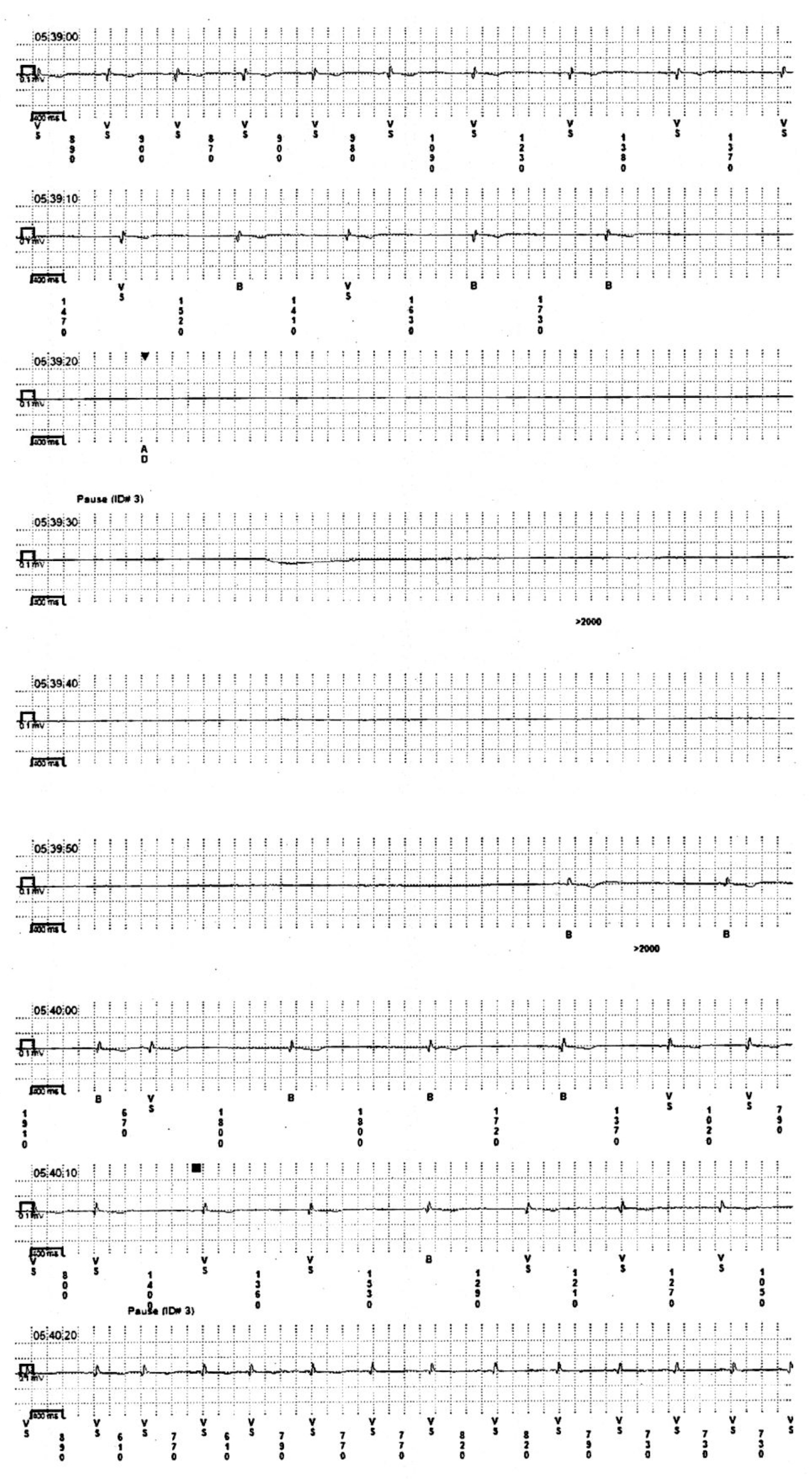
Diagnosis: A loop recorder was inserted without difficulty. A few weeks later she again blacked out. Her loop recorder showed asystole for 39 seconds, followed by a return to sinus bradycardia and then sinus rhythm, accompanied by recovery of consciousness.

Treatment: She went on to have a dual chamber pacemaker inserted. At review after six weeks, six months and one year she had had no further syncopal episodes.

Conclusion: This case reports one of the longest documented episodes of asystole with spontaneous recovery and serves as a reminder of the utility of internal loop recorders in the investigation of syncope.

Introduction

This case reports a patient with syncope in whom an internal loop recorder revealed one of the longest documented episodes of asystole with spontaneous recovery.

Case Report

A 53 year old woman presented with a syncopal episode which occurred whilst sitting in bed reading, witnessed by her husband. She was unrousable for maybe half a minute. She was a non-smoker, on no medications. Her father had a pacemaker inserted in his 70s, for slow atrial fibrillation; there was no family history of sudden adult death. She had no other clinical history; specifically, nothing to suggest sarcoidosis, haemochromatosis or other deposition disorders. Clinical examination was unremarkable. Multiple investigations, including echocardiography, electroencephalography and Holter monitoring, were essentially normal, as was brain magnetic resonance imaging. A Medtronic Reveal LINQ™ loop recorder was inserted without difficulty. A few weeks later she awoke as usual, went to the toilet, micturated and returned to bed feeling fine. Whilst lying in bed, she again blacked out. She recovered consciousness a while later, and felt nauseated with a slight headache.  That morning she was contacted by the hospital and advised to come in directly. Her loop recorder showed prolonged asystole!  Figure 1. She had gradually developed sinus bradycardia and then sinus arrest. After 39.4 seconds she returned to sinus bradycardia and then sinus rhythm without any compensatory tachycardia. There was no ventricular escape rhythm, simply a sinus pause with no rescue. The next day she was brought to the operating room for pacemaker insertion under local anaesthetic. Just after left subclavian vein cannulation, she had another 20 second pause, though she recovered before external pacing could be initiated. She regained consciousness and went on to have a dual chamber pacemaker inserted, with good thresholds in the right ventricular apex and right atrial appendage. At review after six weeks, six months and one year she had had no further syncopal episodes.

JCCP-2020-303_G. Pate_F1

Figure 1. Internal loop recorder tracing of 39.4 second asystolic pause.

Discussion

Loop recorders have proved very useful in documenting previously unrecognized arrhythmias, particularly intermittent pauses [1]. Current guidelines recommend loop recorder insertion for any unexplained syncope [2]. In the event of documentation of any symptomatic pauses greater than 3 seconds, or nocturnal pauses greater than 6 seconds, pacemaker insertion is recommended [3]. Anything more than 10 seconds is described as a very long pause. Multiple papers have documented pauses of 10 seconds or more [4–7], including one of 44 seconds [8]. During a tilt table test one paper described asystole for 72 seconds [9], but this was a provoked pause and cardiopulmonary resuscitation was commenced so this cannot truly be described as spontaneous recovery of rhythm. Another consideration here was of artefact, a recognized issue with loop recorders [10]. However, the patient’s clinical picture was consistent with the observed pause, she had not been undertaking any activity that might have produced an artefactual pause, and the fact she had another witnessed pause of 20 seconds in the hospital confirm that the observed pause was real.

No cause was identified for her pauses. However, she did not have tilt-table testing, electrophysiological studies or cardiac MRI scanning prior to pacemaker insertion; regardless, management would still have involved pacemaker insertion. This case reports one of the longest documented episodes of asystole with spontaneous recovery and provides a very graphic reminder of the utility of internal loop recorders in the investigation of syncope.

References

  1. Maggi R, Rafanelli M, Ceccofiglio A, Solari D, Brignole M, et al. (2014) Additional diagnostic value of implantable loop recorder in patients with initial diagnosis of real or apparent transient loss of consciousness of uncertain origin. Europace 16: 1226–1230. [Crossref]
  2. Varosy PD, Chen LY, Miller AL, Noseworthy PA, Slotwiner DJ, et al. (2017) Pacing as a Treatment for Reflex-Mediated (Vasovagal, Situational, or Carotid Sinus Hypersensitivity) Syncope: A Systematic Review for the 2017 ACC/AHA/HRS Guideline for the Evaluation and Management of Patients With Syncope: A Report of the American College of Cardiology/American Heart Association Task Force on Clinical Practice Guidelines and the Heart Rhythm Society. J Am Coll Cardiol 70: 664–679. [Crossref]
  3. European Society of C, European Heart Rhythm A, Brignole M, Auricchio A, Baron-Esquivias G, et al. (2013) 2013 ESC guidelines on cardiac pacing and cardiac resynchronization therapy: the task force on cardiac pacing and resynchronization therapy of the European Society of Cardiology (ESC). Developed in collaboration with the European Heart Rhythm Association (EHRA). Europace 15: 1070–1118. [Crossref]
  4. Mairesse GH, Marchand B (2003) Prolonged asymptomatic sinus pause indicated by implantable loop recording. Heart 89: 244. [Crossref]
  5. Zaidi A, Clough P, Mawer G, Fitzpatrick A (1999) Accurate diagnosis of convulsive syncope: role of an implantable subcutaneous ECG monitor. Seizure 8: 184–186. [Crossref]
  6. Deharo JC, Jego C, Lanteaume A, Djiane P (2006) An implantable loop recorder study of highly symptomatic vasovagal patients: the heart rhythm observed during a spontaneous syncope is identical to the recurrent syncope but not correlated with the head-up tilt test or adenosine triphosphate test. J Am Coll Cardiol 47: 587–593. [Crossref]
  7. Menozzi C, Brignole M, Garcia-Civera R, Moya A, Botto G, et al. (2002) Mechanism of syncope in patients with heart disease and negative electrophysiologic test. Circulation 105: 2741–2745.
  8. Kanjwal K, Karabin B, Kanjwal Y, Grubb BP (2010) A case of mistaken identity: asystole causing convulsions identified using implantable loop recorder. Int J Med Sci 7: 209–212.
  9. Leftheriotis DI, Theodorakis GN, Kremastinos DT (2003) Prolonged asystole during head-up tilt testing with clomipramine infusion. Europace 5: 313–315. [Crossref]
  10. Ali H, Sorgente A, Daleffe E, Cappato R (2014) Asystole detected by implantable loop recorders: true or false? Ann Noninvasive Electrocardiol 19: 595–597. [Crossref]

Bladder Necrosis Due to Septic Shock

DOI: 10.31038/SRR.2020311

Abstract

Background: Chronic constipation leading to fecal impaction and stercoral perforation is an important cause of morbidity and mortality in the aging population. Gangrenous cystitis, an even more rare entity, previously reported primarily in obstetric cases, has not been reported in association with stercoral perforation until this report.

Summary: This case report details the clinical presentation and treatment of a 61-year-old female with history of end-stage renal disease and history of kidney transplantation who presented in septic shock with a positive urinalysis. She underwent an emergent computed topography scan of the abdomen and pelvis which demonstrated a perforation originating from the sigmoid colon. Damage control surgery was performed, the sigmoid colon was resected, and the intestine was left in discontinuity. The abdomen was left open with a temporary abdominal dressing and a catheter for direct peritoneal resuscitation. She returned for a “second look” laparotomy where ischemic bladder tissue was noted. A partial cystectomy was performed, and the bladder was reconstructed over a Foley catheter and her abdomen remained open for continued direct peritoneal resuscitation. Ultimately, the
family determined that this level of care was not consistent with the patient’s wishes and she was made comfort measures.

Conclusion: This is the first report of stercoral perforation of the sigmoid colon in association with gangrenous cystitis in the literature. This case report highlights the importance of a thorough evaluation of the pelvis during surgical management of stercoral perforation so as not to miss concurrent gangrenous cystitis.

Keywords

sepsis, sterocoral perforation, gangrenous cystitis

Introduction

Gangrenous cystitis is a rare condition that has only been reported in the literature a total of 240 times worldwide since 1934. It was once seen in obstetric cases, associated with labor and delivery, but is now most commonly secondary to pelvic radiation/surgery, chemotherapeutic agents, urinary retention, urosepsis, pelvic thrombophlebitis, and colovesical fistulae. The pathogenesis is unknown but is thought to be initiated by bladder ischemia that is then subject to microbial superinfection [1] . Fecal impaction secondary to chronic constipation can lead to Stercoral Perforation (SP) through pressure necrosis of the large bowel [2]. SP is a well-defined entity in the literature that is associated with significant morbidity and mortality and has also been associated with a prior history of renal transplantation [3]. This case report is the first to identify SP of sigmoid colon as a cause of gangrenous cystitis.

Case History/Examination

The patient is a 61-year-old female with a history of End Stage Renal Disease (ESRD) and remote kidney transplantation, with recent admission to the hospital for intertrochanteric fracture after fall. She was subsequently discharged to a rehab facility after a surgical repair of the fracture. The patient presented to our hospital two weeks later in septic shock. On physical examination she had an altered mental status, she was in respiratory distress, and profoundly hypotensive. The abdominal examination was remarkable for a soft but distended abdomen and a palpable transplant kidney in the right lower quadrant with no peritoneal signs.

Investigations and Treatment

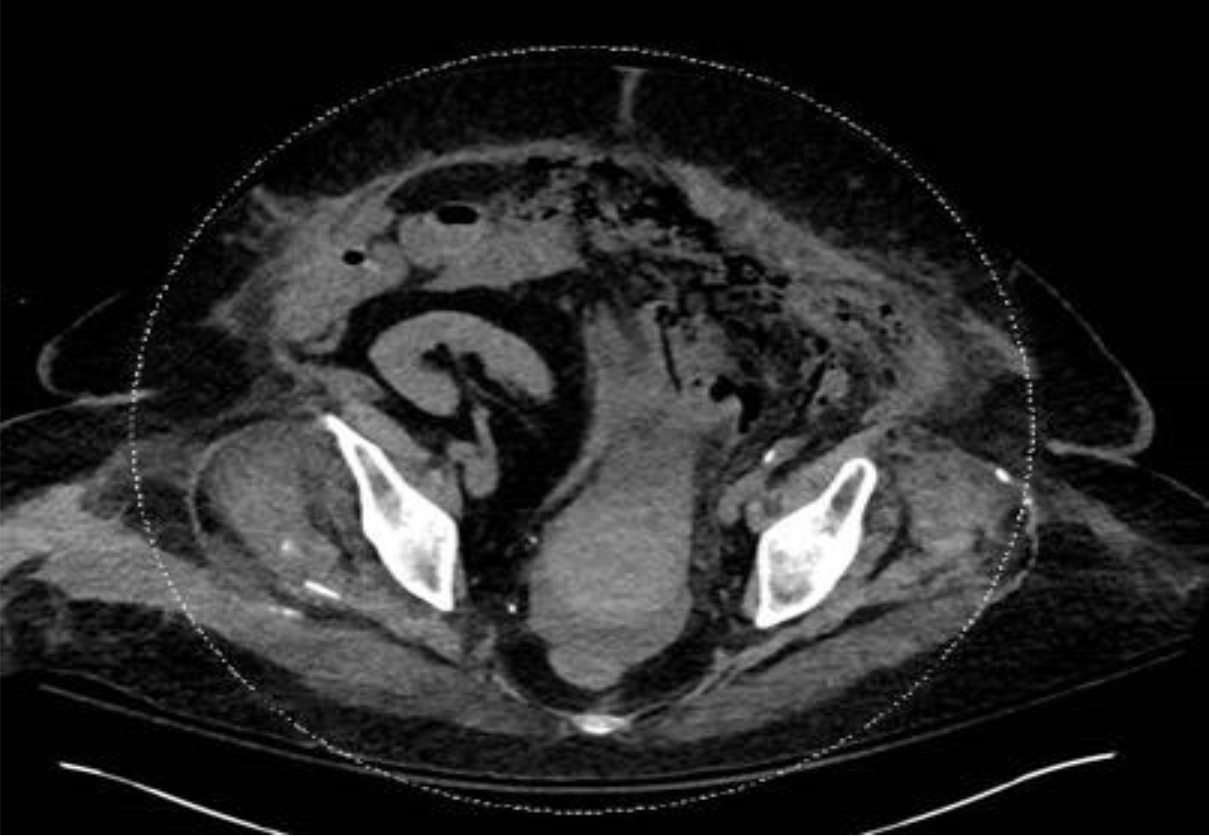
White blood cell count was 11,000 with 94% neutrophils and serum lactate was found to be 6.1 cells per cubic millimeter of blood. A Urinalysis (UA) was grossly positive Urinary Tract Infection (UTI) so the patient was transferred to the Medical Intensive Care Unit (ICU) for suspected urosepsis. The patient was intubated and fluid resuscitation along with empiric broad spectrum antibiotics were initiated. An emergent Computed Tomography (CT) scan of the abdomen and pelvis was obtained and showed radiological evidence of perforated viscous, most likely from the sigmoid colon (Figure 1).

SRR 20 - 101_Joshua A Bloom_F1

Figure 1. CT scan of the abdomen and pelvis showing significant stranding and multiple locules of air outside the bowel lumen in the left lower quadrant adjacent to the sigmoid colon and along the left paracolic gutter.

An emergent surgical consult was obtained and the patient was taken immediately to the operating room for exploratory laparotomy. Upon entry to the abdomen, there was foul smelling, turbid fluid and an ischemic, dilated proximal sigmoid colon was encountered. A stercoral perforation of the sigmoid colon on the mesenteric border into the retroperitoneum was noted. The left side of the retroperitoneum had a large amount of necrotic tissue extending into the pelvis.

A damage control surgery was performed. The sigmoid colon was resected, and the intestine was left in discontinuity. The left side of the retroperitoneum and pelvis were opened, and debridement of the necrotic retroperitoneal tissue was performed. A 19 Fr blake drain was placed intra peritoneally for direct peritoneal resuscitation [4, 5]. At the end of the case, the patient was transferred to the Surgical ICU for further resuscitation and correction of metabolic abnormalities.

Postoperatively, the patient’s hemodynamics improved transiently, and vasopressor requirement did decrease somewhat but her serum lactate level continued to rise. With a new elevation of serum lactate the patient was taken to the operating room for a “second look” laparotomy approximately 24 hours later. No further bowel ischemia or necrosis was noted. There was still a significant amount of retroperitoneal necrotic tissue, especially in the pelvis. Further dissection into the pelvis did reveal a 7 cm cystostomy with ischemic bladder tissue mostly on the left side with clear demarcation of ischemic changes. There was some ischemia of the right side of the bladder as well. A Urology and Transplant Surgery consultation were obtained due her history of kidney transplant.

Outcome and Follow-Up

A multidisciplinary discussion resulted in the decision to perform a partial cystectomy and not explant the donor kidney. All of the obvious necrotic tissue was then resected, and the bladder was reconstructed over a Foley catheter. Afterwards, since the patient still was in a profound state of shock, the patient’s bowel was left in discontinuity, the abdomen was temporarily closed, and the patient was transferred back to the Surgical ICU for further management.

The next day the patient underwent a planned relaparotomy with abdominal wash out and temporary abdominal closure. No further areas of bowel or bladder necrosis were noted. Due to the patient’s extensive comorbidities and lack of improvement over the following 48 hours as well as the extent of the care she would continue to require, the family felt this was not consistent with her wishes and elected to make her comfort measures. The patient passed away shortly thereafter.

Discussion

This is the first case report of bladder necrosis due to stercoral perforation of the sigmoid colon. With no literature to guide us, it is difficult to make absolute conclusions, but we believe that the stercoral perforation into the retroperitoneum led to an inflammatory reaction and local infection around the bladder leading to ischemia and gangrenous cystitis.

In the literature, there are numerous causes of bladder necrosis published, mostly in the pre-antibiotic era. These causes include prolonged labor, pelvic radiation, chemotherapy, urinary retention, urosepsis, and pelvic thrombophlebitis to name a few. In these published cases, the mainstay of treatment has been early antibiotic therapy and surgical treatment with extensive debridement of necrotic bladder and wide drainage [6, 7].

In this case report, we differed from the traditional management in that we performed a damage control laparotomy with temporary abdominal closure and direct peritoneal resuscitation. This strategy allowed for source control in the OR and rapid transfer to the ICU for further resuscitation and correction of metabolic abnormalities. This provided our patient with the best chance of survival. Ultimately, it was her wishes that she would not want to live if she were not guaranteed to return to her former quality of life, and she was made comfort measures. However, we believe that she most likely would have survived this hospitalization had this been in line with her wishes.

Conclusion

Whether this patient’s bladder necrosis was due to her stercoral ulcer or her septic shock remains unclear as the literature is equally vague regarding both topics. However, surgeons should be aware of this phenomenon and while operating on the bowel emergently for perforation, should take the time to assess the pelvis, especially in patients with a grossly positive urinalysis.

Lessons Learned

Stercoral perforation of the sigmoid colon leading to septic shock can be associated with gangrenous cystitis and necessitates a thorough evaluation of the pelvis while operating on this entity.

References

  1. De Rosa A, Amer T, Waraich B, Bello A, Parkinson R (2011) Gangrenous cystitis in a 42-year-old male. BMJ Case Reports  2011: 1–4. [Crossref]
  2. Chakravartty S, Chang A, Nunoo-Mensah V (2013) A systematic review of stercoral perforation. Colorectal Disease 15: 930–935. [Crossref]
  3. Dubinsky I (1996) Stercoral Perforation of the Colon: Case Report and Review of the Literature. Journal of Emergency Medicine 14: 323–325. [Crossref]
  4. Rai R, Sikka P, Aggarwal N, Shankaregowda SA (2015) Gangrenous Cystitis in a Woman Following Vaginal Delievery: An Uncommon Occurrence -A Case Report. Journal of Clinical and Diagnostic Reasearch 9: 13–14.
  5. Smith JW, Neal Garrison R, Matheson PJ, Harbrecht BG, Benns MV, et al. (2014) Adjunctive treatment of abdominal catastrophes and sepsis with direct peritoneal resuscitation: indications for use in acute care surgery. J Trauma Acute Care Surg 77: 393–398 [Crossref]
  6. Hinev A, Anakievski D, Krasnaliev I (2010) Gangrenous Cystitis: Report of a Case and Review of the Literature. Urologia Internationalis 85: 479–481. [Crossref]
  7. Piraprez M, Ben Chehida M, Fillet M (2017) Case Report: Emphysematous cystitis. Red Med Liege 384–387.

Bronchoscopy: A not-so-innocent invasive examination

DOI: 10.31038/NAMS.2020311

Abstract

Bronchoscopy has for many years been the only invasive examination used to screen for bronchus in real time, remove objects that have entered the airway, healing properties, and finally a sample including missing tissue for biopsy for the right follow up medical evaluation and treatment. The usual examination is performed by a flexible bronchoscope which does not cause much discomfort to the patient and causes few complications, complications such as bleeding, cardiac arrhythmias, fever, pneumonia, death, introduction and exacerbation of infection, etc.

This short research is about to overturn this nice and enjoyable environment that has been created regarding the safety of this invasive examination that will eventually and happily very soon be replaced. The present short research is here to overthrow the benefits of bronchoscopy and present the reality as this has not been presented to patients before undergoing an invasive examination that may not eventually need to be done.

Dedication: This short research is dedicated to my Father Panagiotis, who recently died.

Keywords

bronchoscopy, hemoptysis, death, complications, pneumonia

Introduction

Very easily, mainly after a CT scan, a PET/CT has appeared in our lives to improve the quality of imaging data, also including the case but not always the lack of knowledge, recommend that patients undergo an invasive bronchoscopy. that the diagnostic process in short time will end, and the patient is transferred to the next stage of treatment, but if the patient never reaches the treatment stage and is instead hospitalized with complications? according to the literature, it is reported that bronchoscopy is performed by an experienced physician, how can the patient know if the physician is experienced or not?

How can the patient know if during the examination they will not contribute to the examination and trainees which is prohibitive in certain coexisting lung diseases where particular experience is required, such as a patient with bronchectasis, COPD, tec, who they need bronchoscopy from a very experienced physician. Is the procedure is followed of informing the patient prior to bronchoscopy about the pros and cons of the examination as well as their complications? Finally, is it worth doing a bronchoscopy which, depending on the clinical picture of the patient, may eventually have the opposite effect? bronchoscopy is not for everyone.

Analysis

Bronchoscopy is an invasive examination performed in public and private hospitals as well as in private diagnostic centers and clinics. Before conducting the examination blood tests are performed, including blood and cardiology tests, so, how many tests for a diagnostic examination that is considered safe? The complications that it presents contradict the advantages, advantages that in cases depending on the severity of the patient are disadvantages.

Advantages that become disadvantages when one of the following reasons are met.

  1. Inexperienced Invasive physician
  2. Bronchoscopy by trainees (depends on case).
  3. Inexperienced staff.
  4. Hygiene conditions.
  5. Disinfection, cleaning, and sterilization of a bronchoscope.
  6. The clinical picture of the patient.
  7. Consideration of medical examinations to avoid bronchoscopy.
  8. Inform the patient about the complications of bronchoscopy.

When one or more of the above is not observed, then the patient is at high risk, as the complications of the bronchoscopy examination can cause the patient even more serious damage than the disease itself led the patient to bronchoscopy. What safe examination are they talking about?

Is there a mortality rate of about 0.5% these patients were aware of the complications? Should they have done bronchoscopy? have the hygiene rules been adhered to or fallen into a category of the above 8 listed? Although international literature indicates guidelines for safe bronchoscopy examinations, does the patient know whether the guidelines are being followed?

One of the major complications of bronchoscopy is bleeding, ranges for example from low 10ml to 150ml which is very high. It is a serious complication that needs to be addressed immediately since its origin is complex, it can come from many areas such as pulmonary capillaries, pulmonary arteries, pulmonary veins, and finally large thoracic vessels. Bleeding is directly related to the biopsy, in most cases bronchoscopy is performed to obtain a biopsy, an experienced physician in a burdensome patient with a history who knows before, noted here the bronchoscopy requires the patient to hold already a CT, which will require a CT scan. is the one who will judge it must be done, if it is to be done, to pay attention, what requires observation, coexisted, possible complications, time of examination in relation to the severity of the patient, the participation of trainees or not, and how to get a sample.

There are two types of sample deficiencies: endobronchial and transobronchial biopsy, transobronchial biopsy causes the patient and most bleeding, here is a big question, in patients with bronchiectasis, or similar medical cases that usually occur in these medical cases colonies and bacteria such as pseudomonas aeruginosa that are usually resistant to antibiotics, a transobronchial biopsy is responsible for burdening the patient’s clinical picture? Thus, correlated the bleeding with the number of biopsies and how they were obtained. Considering the fact that patients with congenital diseases, medicines that are taken for various important reasons, a bleeding can reach or exceed 40% depending on the case of patients undergoing bronchoscopy. So why should they do a bronchoscopy? The treating physician should be able to judge the overall picture of the patient in order to be able to make a correct diagnosis, taking into account patients with a poor medical history considering the negative aspects of a bronchoscopy, however, bronchoscopy is an invasive risk examination depending on the patient’s physical condition and medical history. Bronchoscopy examination is not for everyone.

It is concluded that the bleeding of the patient after bronchoscopy implies with further clinical progress, although the incidence of sudden death is small as has been mentioned above. Small bleeding can be easily treated large bleeding to stop may require laser and even surgery, the patient must consider all options and exhaust all parameters. It is worth considering whether it is worth the effort, pain and risk to perform a bronchoscopy examination that no one can guarantee his or her physical situation after the examination is completed.

Most complications that have occurred during the examination or thereafter have to do with how to obtain and receive biopsy material. Such cases are brushes that have broken down or have not worked properly. Continuous aspiration during the examination may lead to hypoxemia and atelectasis. Pseudomonas aeruginosa is the most frequently transmitted organism from an inappropriate bronchoscope (see above 8 reasons) which has not been properly disinfected and cannot be used. Using such a bronchoscope is a criminal act against the patient. During bronchoscopy, patients have been observed to have increased blood pressure and increased heart rate, this is due to increased oxygen demand from the myocardium which may then lead the patient to arrhythmias and ischemia. Cardiac arrhythmias that occur after bronchoscopy confess hypoxemia. Particularly in COPD patients with hypercapnia hypoxia is contraindicated for flexible bronchoscopy. It is worth noting at this point that complications of bronchoscopy often occur when there are concomitant diseases such as pneumonia or tumor, as well as the type of forceps to be used, that is toothed or non-serrated forceps. In patients with chronic bronchiectasis, the physician should consider all indications for the overall picture of the patient and whether or not to perform the bronchoscopy. It is the physician that will analyze the patient’s respiratory function and the degree of criticality. It should also be borne in mind that some patients with infections will need antibiotics after bronchoscopy, these patients likely to need antibiotics that will be able to deal with germs and bacteria that are resistant. These patients are more likely to develop febrile episodes as well as critical respiratory function.

The physician is solely responsible for analyzing the pros and cons, it is the one who weighs the benefit of the risk. Patients with bronchiectasis should not be bronchoscopied by trainees or by physicians who rarely perform bronchoscopy. When these patients show haemoptysis, the detection of bleeding is crucial. Finally, bronchoscopy in COPD patients is particularly burdensome compared to non-COPD patients, COPD patients should be evaluated on the findings of their clinical trials together with medical evacuation before performing the bronchoscopy. Assessment of potential advantages over advantages must be evaluated.

Conclusion

Bronchoscopy is a conditional safe examination when all safety rules are met, medical evaluation is performed separately for each patient, each patient is different. Bronchoscopy is not for all patients, generally described as a safe invasive examination but with so many complications that there are people who have had a bronchoscopy and have not returned home, is this safe medical examination they say? it is not a safe medical examination, it is a safe conditional examination, evaluating the clinical picture of the patient in combination with the degree of experience of the physician and the clinical picture of the patient judging its effectiveness.

Patients with co-existing health problems should be assessed for the advantages of screening in conjunction with screening complications. Physicians should not be dragged into the altar of the rapid effect of detecting the problem by undergoing bronchoscopy in patients who are not allowed to do a bronchoscopy based on physical or medical pre-existing health conditions. It is a medical examination with uncertain complications sometimes simple, sometimes heavy and sometimes deadly.

Classical bronchoscopy has begun to come to a second myrrh as soon as virtual bronchoscopy is implemented and thus the complications of classical bronchoscopy will be eliminated. Bronchoscopy should be chosen as a medical examination after all other medical examinations and methods have been utilized and under conditions based on the clinical picture of the patient, in strict compliance with the hygiene guidelines.

References

  1. Kovaleva J, Peters FT, van der Mei HC, Degener JE (2013) Transmission of infection by flexible gastrointestinal endoscopy and bronchoscopy. Clin Microbiol Rev 26: 231–254. [Crossref]
  2. Pereira W Jr, Kovnat DM, Snider GL (1978) A prospective cooperative study of complications following flexible fiberoptic bronchoscopy. Chest 73: 813–816. [Crossref]
  3. Kreider ME, Lipson DA (2003) Bronchoscopy for atelectasis in the ICU: a case report and review of the literature. Chest 124: 344–350. [Crossref]
  4. Trouillet JL, Guiguet M, Gibert C, Fagon JY, Dreyfuss D, et al. (1990) Fiberoptic bronchoscopy in ventilated patients. Evaluation of cardiopulmonary risk under midazolam sedation. Chest 97: 927–933. [Crossref]
  5. Hanson RR, Zavala DC, Rhodes ML, Keim LW, Smith JD (1976) Transbronchial biopsy via flexible fiberoptic bronchoscope; results in 164 patients. Am Rev Respir Dis 114: 67–72. [Crossref]
  6. Da Conceiçao M, Genco G, Favier JC, Bidallier I, Pitti R (2000) Fiberoptic bronchoscopy during noninvasive positive-pressure ventilation in patients with chronic obstructive lung disease with hypoxemia and hypercapnia. Ann Fr Anesth Reanim 19: 231–236. [Crossref]

Relationship between polycystic ovarian syndrome (PCOS) and fatty liver disease

DOI: 10.31038/EDMJ.2020413

Abstract

Background – Polycystic ovarian syndrome (PCOS) and fatty liver disease are considered to be off-shoots of insulin resistance. However, the link between the two disorders have recently been found to be variable.

Objective – To explore the association of fatty liver disease with PCOS and to model the association of hyperandrogenism, obesity and insulin resistance indices among subjects with or without PCOS and fatty liver disease.

Methodology – This study was carried out between Jan-2018 to Aug-2019 at PNS HAFEEZ hospital. Odds ratio (OR) for having PCOS with fatty liver disease were calculated. We utilized general linear model (GLM) by keeping hyperandrogenism, abdominal volume index (AVI) and insulin resistance as dependent variables against PCOS and fatty liver disease as independent factors.

Results – OR for having PCOS in subjects with fatty liver disease was 1.34(95%CI: 1.34(0.868-2.065). Using Free Androgen Index(FAI) as dependent variable and fatty liver and PCOS as fixed factors in a GLM analysis, the group wise differences are depicted as: Group-1: No Fatty liver+No PCOS=2.37(+1.30),n=97), Group-2: No PCOS+Fatty Liver=3.35(+2.23),n=66), Group-3: PCOS+No Fatty Liver=6.08(+5.05),n=88), and Group-4: PCOS+Fatty Liver=6.83(+4.70),n=80).(p<0.001). Abdominal obesity was not associated with PCOS (p=0.980), but was significantly associated with fatty liver disease (p<0.001).

Conclusion – Presence of fatty liver disease in females can lead to slightly higher frequency of PCOS. Biochemical and clinical hyperandrogenism were associated with presence of PCOS, while abdominal obesity and insulin resistance were linked with fatty liver disease.

Keywords

Polycystic ovarian syndrome (PCOS), free androgen index (FAI), modified Ferriman-Gallwey score (mFG score), fatty liver and Rotterdam PCOS criteria.

Background

Lipids are considered as the mainstream culprits in pathogenesis of development of polycystic ovarian syndrome (PCOS) and fatty liver disease. [1, 2] Therefore the probability based upon the famous “Common Soil Hypothesis” dealing in directly with metabolic syndrome suggest a common linkage between the two pathogenic disorders. [3] Both PCOS and Fatty liver disease amounts to multiple complications. PCOS has been shown to result in hirsutism and reproductive issues. [4], while fatty liver disease is associated with acceleration liver damage leading to cirrhosis and hepatocellular carcinoma (HCC). [5]

While the mechanism seems more understandable in terms of extra fat accumulation within liver but some evidence indicates PCOS phenotype variability does allow differential association with fatty liver disease. Macut et al have shown that subjects having higher serum testosterone, a hallmark of PCOS are associated with a two-fold increased risk of fatty liver. [6] Rocha et al in their systematic review from 2007 to 2017 highlighted that prevalence of PCOS with NAFLD remains variable, but the combined presence of PCOS and NAFLD results in higher degree of clinical and biochemical hyperandrogenism than the female subjects only demonstrating PCOS with former category more associated with metabolic derangements. [7] Contrary to that there is evidence where both fatty liver disease and PCOS are associated and attributed to common pathogenesis. The research work by Vassilatou et al have demonstrated that lipid based abnormalities are central to the development of PCOS and NAFLD; however, he categorized data from PCOS patients as either being obese or otherwise. [8] Similarly, Kauffman et al have demonstrated that PCOS and NAFLD can occur due to common pathogenic mechanisms including androgen excess and insulin resistance. [9, 2]

So, the obvious question arises as to how fat accumulation or associated metabolic defects differentially affect the two organs? While PubMed data search indicates both fatty liver disease /NASH/NAFLD and PCOS both being the off-shoots of insulin resistance, [10] still there are both genetic and epigenetic  mechanism at work which can probably change the overall phenotype of metabolic syndrome and related diseases. In this regard a study from Poland had identified GG genotype variation to result in higher frequency of NAFLD in PCOS than PCOS subjects without Cannabinoid Receptor-1 gene polymorphism thus highlighting genetic predilections towards PCOS-fatty liver occurrence. [11] Similarly, Jones et al have identified higher risk of fatty liver disease with hyperandrogenism associated PCOS in comparison to female subjects having reduced hyperandrogenism independent of insulin resistance. [12] Bruce et al by highlighting the concept of “Metabolic Circadian Clock System” have attempted to highlight epigenetic factor from environmental triggers which change the phenotypic presentation of metabolic syndrome, and thus can be interpreted indirectly as the effect of regional effects or ethnic triggers. [13] Another aspect of this is the adipocyte size which has been shown to result in variability in hepatic steatosis [14], which have been smaller but with increase adipocyte area in Asian population than Caucasians and so the affect could be due to specific racial reasons [15]. So racial differences due to variability adipocyte area, genetic factors and epigenetic influences need to be considered and may probably be different in whatever has been observed elsewhere. Based upon these newly emerging evidence a compelling need was therefore felt to learn the association between the PCOS, fatty liver disease and androgenicity which were supposedly to be associated due to common trigger i.e., insulin resistance.

A study is therefore planned to explore the association of fatty liver disease, PCOS and hyperandrogenism by estimating the hirsutism, anthropometric, biochemical and endocrine differences (Free androgen index) between subjects with fatty liver associated PCOS and non-fatty liver PCOS.

Methods

We planned a cross-sectional analysis among reproductive-age female subjects after formal approval of hospital’s ethical review committee of PNS HAFEEZ Hospital. The study involved department of radiology, pathology, obstetrics and gynecology. The duration of study was 18 months from Jan-2018 to Aug-2019. Females in reproductive age post 2 years of menarche were initially included as target population. Patient selection was based non-probability convenience mode of sampling. Females who some acute or chronic conditions including pelvic inflammatory disease, metabolic diseases like hypertension, diabetes and ischemic heart disease, autoimmune disorder, on any medication, fertility treatment, or other unknown drugs were excluded from the study. Subjects who could not complete all testing formalities for any reason were excluded from the study. Finally selected females were formally requested to visit pathology department on 2nd day of menstrual cycle Subjects who finally followed up for study in medical fasting were formally

explained about study design, requirements and were asked to sign a consent form. Further clinical evaluation included history, evaluation of hirsutism as per modified Ferriman-Gallwey scores [16], anthropometric measurements, vital signs measurements and a generalized clinical examination for any signs of chronic disease. They were questioned about duration of menstrual cycle for presence or absence of oligo/anovulation as per criteria utilized by Kollmann et al. [17]

Radiological and laboratory analysis: 10 ml (approx.) of blood was collected for fasting plasma glucose, ALT, HbA1c, total testosterone, Sex Hormone Binding Globulin (SHBG) and serum insulin and lipid profile. Following sample collection, females were requested to go for radiological examination for evaluation of reproductive tract examination for presence or absence of polycystic ovarian syndrome as per Rotterdam criteria [18]

Lab analysis and measurements: Fasting plasma glucose, total cholesterol and triglycerides were measured on Selctra-ProM (Clinical chemistry analyzer) by GPO-PAP, CHOD-PAP and GPO-PAP method. LDL-cholesterol and HDL-cholesterol were measured by direct enzymatic methods using accelerator selective detergent on Selectra-proM. ALT was measured by IFCC method at 370C. Total testosterone, SHBG, glycated hemoglobin were analyzed by using chemiluminescent microparticle Immunoassay (CMIA) on ARCHITECT (iSystem) developed by Abbot Diagnostics. Serum insulin was measured on Chemiluminescence method on Immulite® 1000 analyzer. Internal and National External Quality Assurance Program are in place to monitor inter and intra lab imprecision along with internal QC management for precision and accuracy by documented trouble shooting on instrument generated charts as per Westgards’s standard protocols.

Calculated parameters – Free Androgen Index (FAI) was measured as: FAI = (Total testosterone/SHBG) x 100. FAI > 5%was greater than 5% was termed as biochemical hyperandrogenism as per Al Kindi et al. [19] Homeostasis Model Assessment of Insulin resistance (HOMAIR) was measured using Mathew’s et al mathematical model. [20]

Data analysis – We used SPSS-version 24 for statistical analysis. Age was calculated as per mean and SD by descriptive statistics. Descriptive statistics for frequency of PCOS, hirsutism and fatty liver disease % were calculated for subjects with or without fatty liver disease. Inferential statistics involved calculation of Odds Ratio for presence of PCOS as per Rotterdam criteria in subjects with or without fatty liver disease. We utilized General linear models (GLM) where we evaluated sequentially FAI, mFG scores for hirsutism, abdominal volume index (AVI) and insulin resistance (HOMAIR) as dependent variables against presence or absence of PCOS and fatty liver disease as fixed factors.

Results

Mean age among subjects with Rotterdam defined PCOS was (26.71+ 6.99, n=168) and without PCOS was (29.07+ 8.11, n=163). Similarly subjects who had fatty liver had a mean age of (30.95+7.10, n=146) in comparison to females without fatty liver [25.45+7.17, n=185). 236 females in our data set were married, while 95 were non-married. Hirsutism was diagnosed in 157 females while 174 were having a modified FG score of less than 8. 88/185 (47.57%) of the cases without fatty liver disease were diagnosed with PCOS, while 80/146 (54.79%) of cases diagnosed to have fatty liver disease had PCOS indicating no statistically significant association between presence of PCOS and fatty liver disease in our regional data set. Odds ratio (OR) for having PCOS in subjects with fatty liver disease is 1.34 but not statistically significant. (Table-1)

Table 1. Odds ratio for presence of PCOS as per Rotterdam criteria in subjects with fatty liver disease (p=NS).

PCOS

Odds Ratio

(Rotterdam criteria)

(95 % CI)

NO

YES

Fatty liver diagnosed

Fatty liver not

97

88

185

on ultrasonography

diagnosed

1.34

Fatty liver

66

80

146

(0.868-2.065)

diagnosed

Total

163

168

331

Keeping free androgen index (FAI) as dependent variable with PCOS and fatty liver disease as fixed variables indicates a definite increase in FAI due to presence of PCOS which get slightly worsened with the presence of fatty liver depicted as: Group-1: No Fatty liver + No PCOS= 2.37 (+ 1.30), n=97), Group-2: No PCOS + Fatty Liver = 3.35(+

2.23), n=66), Group-3: PCOS + No Fatty Liver = 6.08 (+ 5.05), n=88), and Group-4: PCOS + Fatty Liver = 6.83 (+ 4.70), n=80). Figure-1 shows a General Linear Model (GLM) with FAI being a dependent variable is evaluated against independent variables i.e., presence or absence of PCOS (p<0.001) and fatty liver disease (p=0.035) demonstrating that PCOS presence is more associated with increase in biochemical hyperandrogenism than fatty liver disease. (Overall Model significance<0.001). Similarly, hirsutism as measured by mFG scores was not significantly related to fatty liver disease but was associated with presence of PCOS. [Figure-2] Abdominal Volume Index (AVI) as a measure of abdominal obesity was not associated with PCOS, but was significantly associated with fatty liver disease. [Figure-3] Furthermore, insulin resistance as a dependent variable was seen to rise more with the presence of fatty liver in comparison to PCOS. [Figure-4]

Sikandar EDMJ_f2

Figure 1. General Linear Model (GLM) where FAI being a dependent variable is evaluated against independent variables i.e., presence or absence of PCOS (p<0.001) and fatty liver disease (p=0.035). (Overall Model significance<0.001).

Sikandar EDMJ_f3

Figure 2. General Linear Model (GLM) where mFG score as surrogate markers for hirsutism being a dependent variable is evaluated against independent variables i.e., presence or absence of PCOS(p <0.001) and fatty liver disease(p=0.820). (Overall Model significance<0.001).

Sikandar EDMJ_f4

Figure 3. General Linear Model (GLM) where Abdominal Volume Index (AVI) as a marker for abdominal obesity being a dependent variable is evaluated against independent variables i.e., presence or absence of PCOS (p=0.980) and fatty liver disease (p<0.001). (Overall Model significance<0.001).

Sikandar EDMJ_f5

Figure 4. General Linear Model (GLM) with insulin resistance as dependent variable and presence or absence of PCOS (p=0.157) and fatty liver disease (p<0.001) as independent variables (Overall Model significance<0.001).

Discussion

Polycystic ovarian syndrome (PCOS) and fatty co-occurrence in study subjects was slightly higher than subjects with having one of the pathology, implying a very weak association between the two entities. Though the OR for presence of PCOS in subjects with fatty liver disease was above i.e., 1.34 but it was not statistically significant. Our data identified free androgen index and hirsutism to be more associated than fat deposition within liver as factors in contributing polycystic ovarian pathology. Furthermore we identified increase in AVI i.e., as a surrogate for abdominal fat deposition and insulin resistance to be more associated with presence of fatty liver disease than with PCOS. The trend, hence identified a strong link for insulin resistance in causation of fatty liver disease and hyperandrogenism for PCOS. Contrary to our findings the data from some studies have highlighted a stronger link between obesity an insulin resistance markers with as common culprits in associating fatty liver and PCOS. [7, 8, 10, 11].

Macut et al have also identified a much higher combination diagnosis of PCOS and fatty liver disease than presence of a single pathology in Serbian population. [21] Coming to our data in terms of finding a weaker link it is important to understand that lean PCOS types are well-recognized in sub-continental population. [22] More so as Pande et al evaluated obesity and insulin resistance indices in these lean category of PCOS and observe them to be dissimilar than obese PCOS subjects, where the latter group were found to have more metabolic derangements.

[23] Similar to that Chinese have results quite similar to ours, where BMI and NAFLD were minimally associated with PCOS females. [24] Even some European studies have found a higher percentage of up to 40% lean-PCOS in their studies. [25] However, if we study the western population a contrast appear where insulin resistance and higher trunk fat mass clearly supersedes the Asian PCOS phenotype. [26] Therefore regional differences and possible epigenetic triggers can be attributed to the differential or minimal relationship between fatty liver disease and insulin resistance in subjects with PCOS.

Possible understanding of authors on this minimally existent relationship between PCOS and fatty liver disease in our data subjects is being explained below: Firstly, we described in the introduction that adipocyte size variation between Asian and Caucasian population, so possibly smaller adipocyte among Asians with capacity to accumulate more fat led to lesser abdominal volume indices and fatty liver disease in our data of female subjects. [15, 24] The argument therefore can be made that these most often obese-PCOS phenotypes females had higher insulin resistance due to increase fat mass and least contributed by hyperandrogenism. [26] However, we as author feel more interventional trials can clarify the real causation of PCOS and in specific its relation with abdominal and hepatic steatosis. Secondly, what impact the weather, environment and lifestyle could lead to aforementioned variation of PCOS patterns? We highlighted earlier the findings of

Bruce et al who described the role of environment in causing variable PCOS phenotypes. [13] A Spanish study by Concha et al evaluated the epigenetic marks by analyzing miRNAs and histone methylation in various body fluids and tissues to conclude a very strong impact of environmental triggers in association

with development of PCOS. [27] Pursuant and related directly to epigenetic mechanisms Monniaux et al was able to demonstrate in ovine fetuses that over exposure of follicular and uterine tissues may lay the foundation stone for a possible PCOS phenotype. [28] Finally, dietary patterns may be a significant contributor to PCOS as studies on gut microbiome had a different phylogenetic type along with lower density than control female subjects. [29] Thus shifting diet patterns from traditional and more natural food consumption to refined and high caloric diets could be an add on, if not causative factor in leading to PCOS development. We, therefore believe with globalization and mixing of people and in specific adopting western style diets and life styles the disease pattern may change overtime tilting more in favor of obese-phenotype. [30]

Certain limitations regarding our cross-sectional analysis needs to be taken into account: Firstly, we did this study in hospital-setting and our findings must be extrapolated to an epidemiological level to understand PCOS and its phenotype prevalence within our community. Secondly, we feel certain cultural barriers persist in our community due to lack of basic medical education and history. Provided our questionnaire format was structured and no language barrier was there still we interpret and this aspect to cause some degree of bias.

This study has important clinical implication especially in backdrop of wide regional and racial variation PCOS phenotypes. Taken the study setting and cross-sectional design the study can be further replicated to validate phenotypes of PCOS prevailing at broader level. Thus more data should follow this study project. However, this article does provide a broader guideline in terms of interpreting and segregating PCOS phenotypes within our population, which can help treating physicians to specify their treatment options in a more personalized manner. On a national scale the data also highlights the need for local guidelines for our community using this data and evidence from surrounding regions.

Conclusion

Presence of fatty liver disease in females can lead to slightly higher frequency of PCOS. Biochemical and clinical hyperandrogenism were more associated with presence of PCOS than with fatty liver disease, while abdominal obesity and insulin resistance were more often than not associated with fatty liver disease in comparison to PCOS.

Declarations

  • The data sets and SPSS outputs used and/or analyzed during the current study are available from the corresponding author on formal request.
  • Ethical approval – The study “Relationship between polycystic ovarian syndrome (PCOS) and fatty liver disease” was approved by ethical committee of the hospital. All participants were volunteer and provided “written consent” for the study.
  • Author’s contributions – SHK: (Author for all Correspondence) Study plan, Involved in study plan, involved in sampling, methodology, lab analysis, data analysis, manuscript writing. SA: History collection, data analysis, and contributed towards discussion. RS: Radiological diagnosis of PCOS, Defining PCOS as per criteria, manuscript writing. RM: Initial patient history collection and examination, defining oligo/anovulation, data analysis, manuscript writing. RA: Patient examination, history writing, anthropometric measurements, manuscript writing. TC: Study plan, methodology, manuscript writing. Final manuscript was approved by all authors.
  • Consent for publication: Signed consent was sorted from all study participants.
  • Competing interests – There are no competing interests to declare.
  • Data funding – The study had no funding source to disclose.
  • Acknowledgements – The authors acknowledge the work of Miss Huma, and Lab technician Ibrahim and Iftikhar for the support.

Abbreviations

Fatty liver disease, Polycystic ovarian syndrome (PCOS), Free Androgen Index (FAI), Homeostasis Model Assessment for Insulin Resistance (HOMAIR), Modified Ferrimen Gellwey (mFG) score, Abdominal Volume Index (AVI).

References

  1. Tsouma I, Kouskouni E, Demeridou S, Boutsikou M, Hassiakos D and Chasiakou A. Lipid lipoprotein profile alterations in Greek infertile women with polycystic ovaries: influence of adipocytokines levels. In Vivo. 2014 Sep-Oct; 28(5): 935-9.
  2. Zhang X, Wang Y and Liu P. Omic studies reveal the pathogenic lipid droplet proteins in non-alcoholic fatty liver disease. Protein Cell. 2017 Jan; 8(1): 4-13. DOI: 10.1007/s13238-016-0327-9.
  3. Donati MB. The “common soil hypothesis”: evidence from population studies? Thromb Res. 2010 Apr; 125 Suppl 2: S92-5. DOI: 10.1016/S0049-3848(10)70023-2.
  4. Spritzer PM, Barone CR and Oliveira FB. Hirsutism in Polycystic Ovary Syndrome: Pathophysiology and Management. Curr Pharm Des. 2016; 22(36): 5603-5613.
  5. Margini C and Dufour JF. The story of HCC in NAFLD: from epidemiology, across pathogenesis, to prevention and treatment. Liver Int. 2016 Mar; 36(3): 317-24. DOI: 10.1111/liv.13031.
  6. Macut D, Bjekić-Macut J, Livadas S, Stanojlović O, Hrnčić D and Rašić-Marković A, Nonalcoholic Fatty Liver Disease in Patients with Polycystic Ovary Syndrome. Curr Pharm Des. 2018; 24(38): 4593-4597. DOI: 10.2174/1381612825666190117100751.
  7. Rocha ALL, Faria LC, Guimarães TCM, Moreira GV, Cândido AL, Couto CA and Reis FM. Non-alcoholic fatty liver disease in women with polycystic ovary syndrome: systematic review and meta-analysis. J Endocrinol Invest. 2017 Dec; 40(12): 1279-1288. DOI: 10.1007/s40618-017-0708-9.
  8. Vassilatou E. Nonalcoholic fatty liver disease and polycystic ovary syndrome. World J Gastroenterol. 2014 Jul 14; 20(26): 8351-63. DOI: 10.3748/wjg.v20.i26.8351.
  9. Kauffman RP, Baker TE, Baker V, Kauffman MM and Castracane VD. Endocrine factors associated with non-alcoholic fatty liver disease in women with polycystic ovary syndrome: do androgens play a role? Gynecol Endocrinol. 2010 Jan; 26(1): 39-46. DOI: 10.3109/09513590903184084.
  10. Baranova A, Tran TP, Birerdinc A and Younossi ZM. Systematic review: association of polycystic ovary syndrome with metabolic syndrome and non-alcoholic fatty liver disease. Aliment Pharmacol Ther. 2011 Apr; 33(7): 801-14. DOI: 10.1111/j.1365-2036.2011.04579.x.
  11. Kuliczkowska Plaksej J, Laczmanski L, Milewicz A, Lenarcik-Kabza A, Trzmiel-Bira A and Zaleska-Dorobisz U. Cannabinoid receptor 1 gene polymorphisms and nonalcoholic Fatty liver disease in women with polycystic ovary syndrome and in healthy controls. Int J Endocrinol. 2014; 2014: 232975. DOI: 10.1155/2014/232975.
  12. Jones H, Sprung VS, Pugh CJ, Daousi C, Irwin A and Aziz N. Polycystic ovary syndrome with hyperandrogenism is characterized by an increased risk of hepatic steatosis compared to nonhyperandrogenic PCOS phenotypes and healthy controls, independent of obesity and insulin resistance. J Clin Endocrinol Metab. 2012 Oct; 97(10): 3709-16. DOI: 10.1210/jc.2012-1382.
  13. Bruce KD and Cagampang FR. Epigenetic priming of the metabolic syndrome. Toxicol Mech Methods. 2011 May; 21(4): 353-61. DOI: 10.3109/15376516.2011.559370.
  14. Petäjä EM, Sevastianova K, Hakkarainen A, Orho-Melander M, Lundbom N and Yki-Järvinen H. Adipocyte size is associated with NAFLD independent of obesity, fat distribution, and PNPLA3 genotype. Obesity (Silver Spring). 2013 Jun; 21(6): 1174-9. DOI: 10.1002/oby.20114.
  15. Anand SS, Tarnopolsky MA, Rashid S, Schulze KM, Desai D and Mente A. Adipocyte hypertrophy, fatty liver and metabolic risk factors in South Asians: the Molecular Study of Health and Risk in Ethnic Groups (mol-SHARE). PLoS One. 2011; 6(7): e22112. DOI: 10.1371/journal.pone.0022112.
  16. Goodman N, Bledsoe M, Cobin R, Futterweit W, Goldzieher J, Petak S, Smith K and Steinberger E: “American Association of Clinical Endocrinologists Hyperandrogenism Guidelines”. Endocrine Practice 2001; 7(2): 120–13.
  17. Kollmann M, Klaritsch P, Martins WP, Guenther F, Schneider V and Herzog SA. Maternal and neonatal outcomes in pregnant women with PCOS: comparison of different diagnostic definitions. Hum Reprod. 2015 Oct; 30(10): 2396-403. DOI: 10.1093/humrep/dev187.
  18. Rotterdam ESHRE/ASRM-Sponsored PCOS Consensus Workshop Group 2004 Revised 2003 consensus on diagnostic criteria and long-term health risks related to polycystic ovary syndrome. Fertil Steril 81: 19–25.
  19. Al Kindi MK, Al Essry FS, Al Essry FS and Mula-Abed WA. Validity of serum testosterone, free androgen index, and calculated free testosterone in women with suspected hyperandrogenism. Oman Med J. 2012 Nov; 27(6): 471-4. DOI: 10.5001/omj.2012.112.
  20. Matthews DR, Hosker  JP,  Rudenski  AS,  Naylor  BA,  Treacher  DF and Turner  RC. Homeostasis model assessment: insulin resistance and beta-cell function from fasting plasma glucose and insulin concentrations in man. Diabetologia. 1985 Jul; 28(7): 412-9.
  21. Macut D, Tziomalos K, Božić-Antić I, Bjekić-Macut J, Katsikis I and Papadakis E. Non-alcoholic fatty liver disease is associated with insulin resistance and lipid accumulation product in women with polycystic ovary syndrome. Hum Reprod. 2016 Jun; 31(6): 1347-53. DOI: 10.1093/humrep/dew076.
  22. Goyal M and Dawood AS. Debates Regarding Lean Patients with Polycystic Ovary Syndrome: A Narrative Review. J Hum Reprod Sci. 2017 Jul-Sep; 10(3): 154-161. DOI: 10.4103/jhrs.JHRS_77_17.
  23. Pande AR, Guleria AK, Singh SD, Shukla M and Dabadghao P. β cell function and insulin resistance in lean cases with polycystic ovary syndrome. Gynecol Endocrinol. 2017 Nov; 33(11): 877-881. DOI: 10.1080/09513590.2017.1342165.
  24. Qu Z, Zhu Y, Jiang J, Shi Y and Chen Z. The clinical characteristics and etiological study of nonalcoholic fatty liver disease in Chinese women with PCOS. Iran J Reprod Med. 2013 Sep; 11(9): 725-32.
  25. Ciotta L, Pagano I, Stracquadanio M and Formuso C. Polycystic ovarian syndrome incidence in young women with non-alcoholic fatty liver disease. Minerva Ginecol. 2011 Oct; 63(5): 429-37.
  26. Glintborg D, Petersen MH, Ravn P, Hermann AP and Andersen M. Comparison of regional fat mass measurement by whole body DXA scans and anthropometric measures to predict insulin resistance in women with polycystic ovary syndrome and controls. Acta Obstet Gynecol Scand. 2016 Nov; 95(11): 1235-1243. DOI: 10.1111/aogs.12964.
  27. Concha C F, Sir P T, Recabarren SE and Pérez B F. Epigenetics of polycystic ovary syndrome. Rev Med Chil. 2017 Jul; 145(7): 907-915. DOI: 10.4067/s0034-98872017000700907.
  28. Monniaux D, Genêt C, Maillard V, Jarrier P, Adriaensen H and Hennequet-Antier C. Prenatal programming by testosterone of follicular theca cell functions in ovary. Cell Mol Life Sci. 2019 Jul 20. DOI: 10.1007/s00018-019-03230-1.
  29. Lindheim L, Bashir M, Münzker J, Trummer C, Zachhuber V and Leber B. Alterations in Gut Microbiome Composition and Barrier Function Are Associated with Reproductive and Metabolic Defects in Women with Polycystic Ovary Syndrome (PCOS): A Pilot Study. PLoS One. 2017 Jan 3; 12(1): e0168390. DOI: 10.1371/journal.pone.0168390. ECollection 2017.
  30. Rodgers RJ, Suturina L, Lizneva D, Davies MJ, Hummitzsch K, Irving-Rodgers HF and Robertson SA. Is polycystic ovary syndrome a 20th Century phenomenon? Med Hypotheses. 2019 Mar; 124: 31-34. DOI: 10.1016/j.mehy.2019.01.019.

Effect of Glucose Oxidase on the Cytokine Profile and Cholesterol of Monocytes in Liver Cancer

DOI: 10.31038/MIP.2020112

Abstract

Introduction: Cancer has an extremely important human and socio-economic impact. It is due to several cellular disturbances causing uncontrollable proliferation, which stimulate immune system elements including monocytes that can play a dual role either in the elimination or progression of cancer cells [1], these disturbances affect a variety of functions such as glucose metabolism [2].

Keywords

Liver cancer, Monocyte, GOx, Cytokines. Cholesterol

Objectives

This work hopes to investigate the effect of glucose oxidase at the level of the monocyte on the tumor growth thus determining its impact on the glycolysis activity and on the mitochondrial metabolism.

Aim: The aim of this study is to show the role of GOx in the polarization of monocytes in contact with tumor cells.

Materials and methods

Monocytes isolated from the blood of the cancer patient were co- cultured with the tumor epithelial cells isolated from a biopsy of the liver cancer, in a culture medium supplemented or not with GOx.

Results

GOx induced an increase in the INF-γ and decrease of IL-10 as well as in NO and Arginase in the presence of Glucose oxidase compared to thus without GOx, the Cholesterol in microenvironment was decreased in presence of GOx.

Conclusion

In conclusion, our results showed an pro-inflammatory effect was reported in monocytes in contact with liver tumor epithelial cells.

References

  1. Elliott LA, Doherty GA, Sheahan K, Ryan EJ (2017) Human Tumor-Infiltrating Myeloid Cells: Phenotypic and Functional Diversity. Front Immunol 8. [Crossref]
  2. Annibaldi A, Widmann C (2010) Glucose metabolism in cancer cells. Curr Opin Clin Nutr Metab Care 13: 466-470. [Crossref]