Archives

Surgical Rib Fixation: Five-Year Experience from an Australian Trauma Centre

DOI: 10.31038/IJOT.2019251

Abstract

Background

Literature suggests surgical rib fixation in the acute phase of injury leads to positive outcomes. We have implemented this practice since 2014 and detail the outcomes of rib fixation from our institution.

Methods

We implement a multidisciplinary team management for chest injury. Failure to progress despite maximum intervention by the pain specialist is identified early leading to operative intervention. Retrospective 5-year review was performed on patients undergoing surgical rib fixation looking into the effect on pain scores, length of in hospital stay, post-operative complications and follow up.

Results

Thirty-seven cases (81% males) with a mean age of 56 met the inclusion criteria. All patients underwent rib fixation within 96 hours of admission. Of all included patients, 57% (n=21) required intensive care unit admission for ventilatory support. Of this subset of patients, 66% (n=14) were discharged to ward management within 48 hours, the remaining seven patients required ongoing support secondary to co-existing injuries requiring ongoing management in the unit. Postoperatively, pain scores reduced at median of 2 days with a standard deviation of 2.5 days.  The in-hospital stay also reduced by 155 hours (6 days) over the period of 5 years.  There were two early complications in the series, but no mortality. At 12 months post operatively, both clinical and radiological follow up suggested no hardware or residual pulmonary complications.

Conclusion

This single institution study presents the early results of surgical rib fixation with satisfactory outcomes and minimal complications. Ongoing follow-up will provide a more detailed analysis of long-term outcomes

Background

Rib fractures are present in about 21% of blunt chest trauma patients presenting to Australian hospitals [1]. The number of ribs fractured and the complexity of fracture pattern are associated with an increase in morbidity and mortality [2,3]. Traditionally rib fractures are managed with focus on adequate pain control, oxygen supplementation and early chest physiotherapy [4]. The management of complex rib fractures by traditional means can be challenging as these patients might require respiratory support in the intensive care unit with prolonged hospital stays during the recovery phase [5].

Open Surgical Rib Fixation (SRF) is being used to manage complex rib fractures and follows the same principle of orthopaedic reduction and fixation of fractured bones to reduce pain by return of structural stability of the chest wall which also improves ventilatory efforts leading to reduced pulmonary complications and prevent delayed union [6–8]. Interventions can be performed in conjunction with SRF such as placement of analgesic catheters, evacuation of retained haemothorax and exploration of other thoracic pathologies such as lung lacerations and integrity of the diaphragm2. The benefits of SRF for complex rib fractures has been recognised in reducing pain and improving physical function [6,7].

The Gold Coast University Hospital (GCUH) is a verified Level I Trauma Centre by our Royal Australasian College of Surgeons (RACS).  Over the last 5 years, 10,545 patients were managed by the service out of which 2070(20%) presented with blunt chest wall injury.  Or institution promotes multidisciplinary team approach in the management of these patients. Pain specialist team would monitor subjective pain scores for the duration of stay recorded utilising numeric/verbal rating scale [10]. The days required for the patient to have subjective pain improvement by a drop in the pain brackets of severe (10–7), moderate (6–4), mild (1–3) or none (0). Following exhaustion of all modalities of pain relief within the first 96 hours of admission to hospital, patients would be recruited to the surgical pathway.

Surgical Technique

In our institution, a standardized SRF technique had been developed by surgeon experience and with adaption to literature. Patients for consideration of SRF have three-dimensional computed tomography reconstruction of the chest wall for operative planning [9].  Anaesthesia is administered via single lumen tube with the patient in lateral position on bean mattress. A minimal muscle splitting surgical approach is performed using a wound protector (ALEXIS – Applied Medical, CA, USA) with minimal rib dissection and preservation of the periosteum [6], followed by reduction and plating (MatrixRib® Fixation System, West Chester, PA, USA or Rib Loc® Rib Fracture Plating System, Acute Innovations, Hillsboro, OR, USA) of the fractures depending on site of fractures. The pleural cavity is then lavaged with saline and a curved intercostal catheter inserted. Post-operative chest X-ray determines the need for suction on the drainage system. Paravertebral blocks are either left in situ or replaced at the end of the procedure.

The aim of this study is to describe the outcomes of surgical rib fixations looking at in hospital length of stay, pain scores and duration of intensive care stay over a period of five years at our institution.

Methods

Design and Setting

Following local ethics committee approval (LNR/2018/QGC/49835), a retrospective chart review was conducted on all SRF cases performed from July 2014 to December 2018 at Gold Coast University Hospital.

Participants

We included all patients who underwent surgical rib fixations irrespective of their other injury status. Penetrating chest wall Injuries leading to rib fractures and blunt injury induced fractures managed without surgical intervention were not included in this study.

Outcomes

Primary outcome was to evaluate length of stay in hospital and secondary outcome being improvement in pain scores, reduction in ventilatory days and complications.

Data Collection

Data was retrieved via the prospectively collected trauma registry managed by the trauma service at GCUH.

Data Analysis

Statistical analysis was performed using IBM SPSS statistics for windows. Statistical analysis was performed using t-test (two-sample assuming unequal variances), specifically to evaluate the difference in outcomes in pain, length of stay in hospital and ventilatory days. Descriptive analysis was performed on non-comparative values.

Results

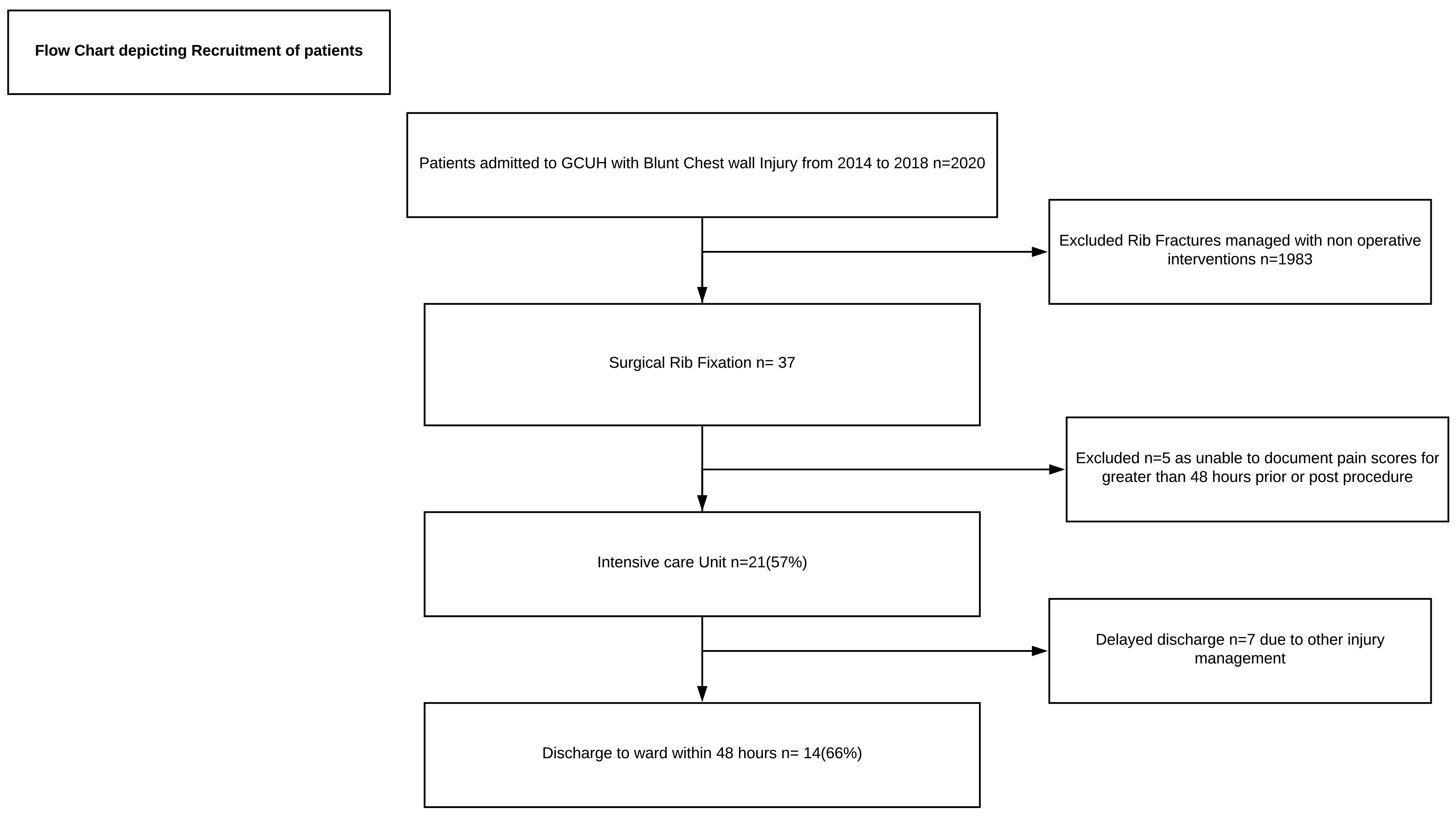
Thirty-seven cases (81% males) with a mean age of 56 met the inclusion criteria. Flow Chart 1 displays details of recruitment.

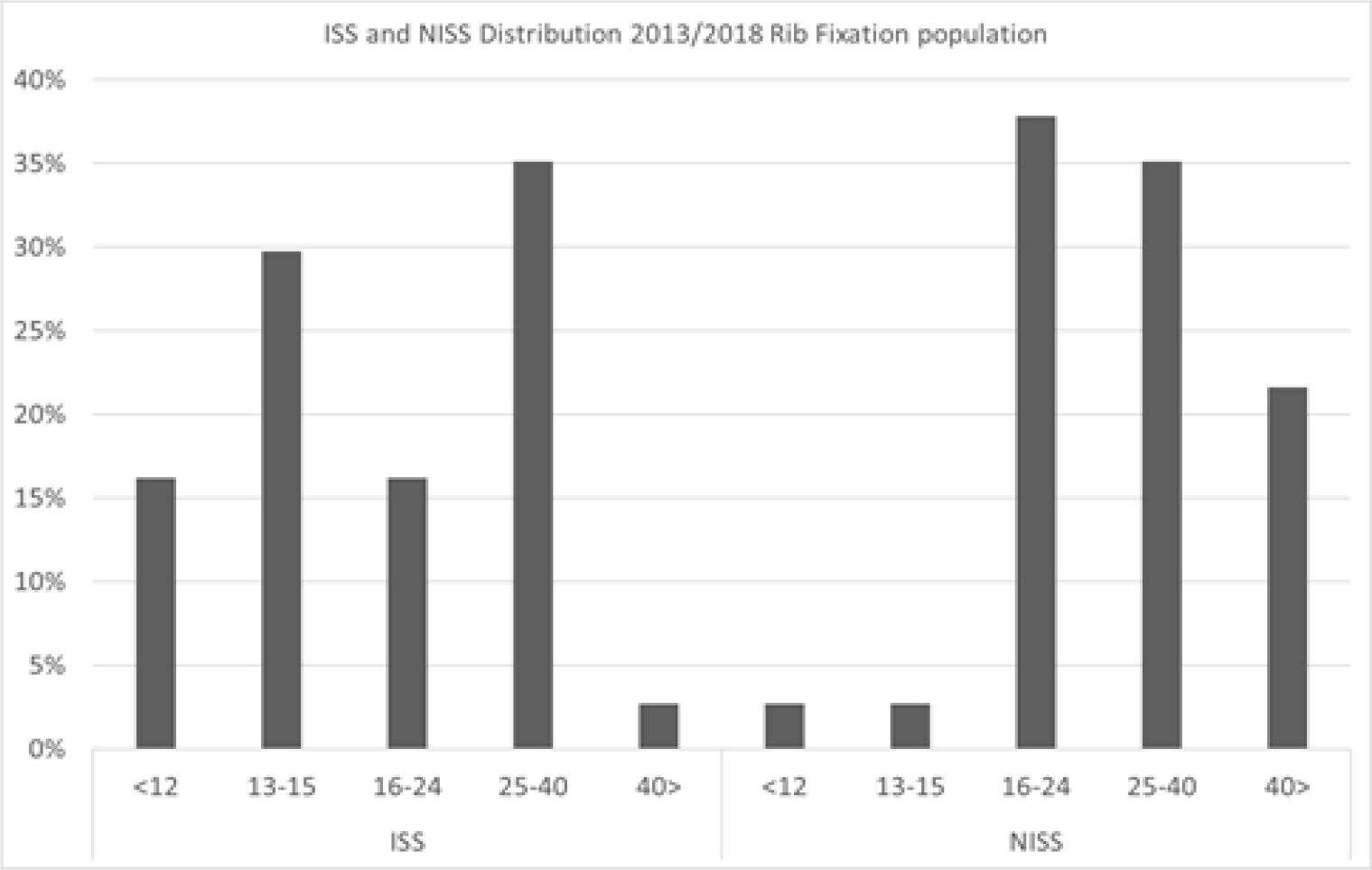
The chest Abbreviated Injury Scale (AIS) scores were ≥ 3 for all cases. The mean Injury Severity Score (ISS) was 21. Figure 1 displays distribution of ISS/New Injury Severity Score (NISS) over the period of 5 years.

IJOT 19 - 126_Bavik Patel_F1

IJOT 19 - 126_Bavik Patel_F2

Figure 1. Distribution of ISS and NISS over a 5- Year period

IJOT 19 - 126_Bavik Patel_F3

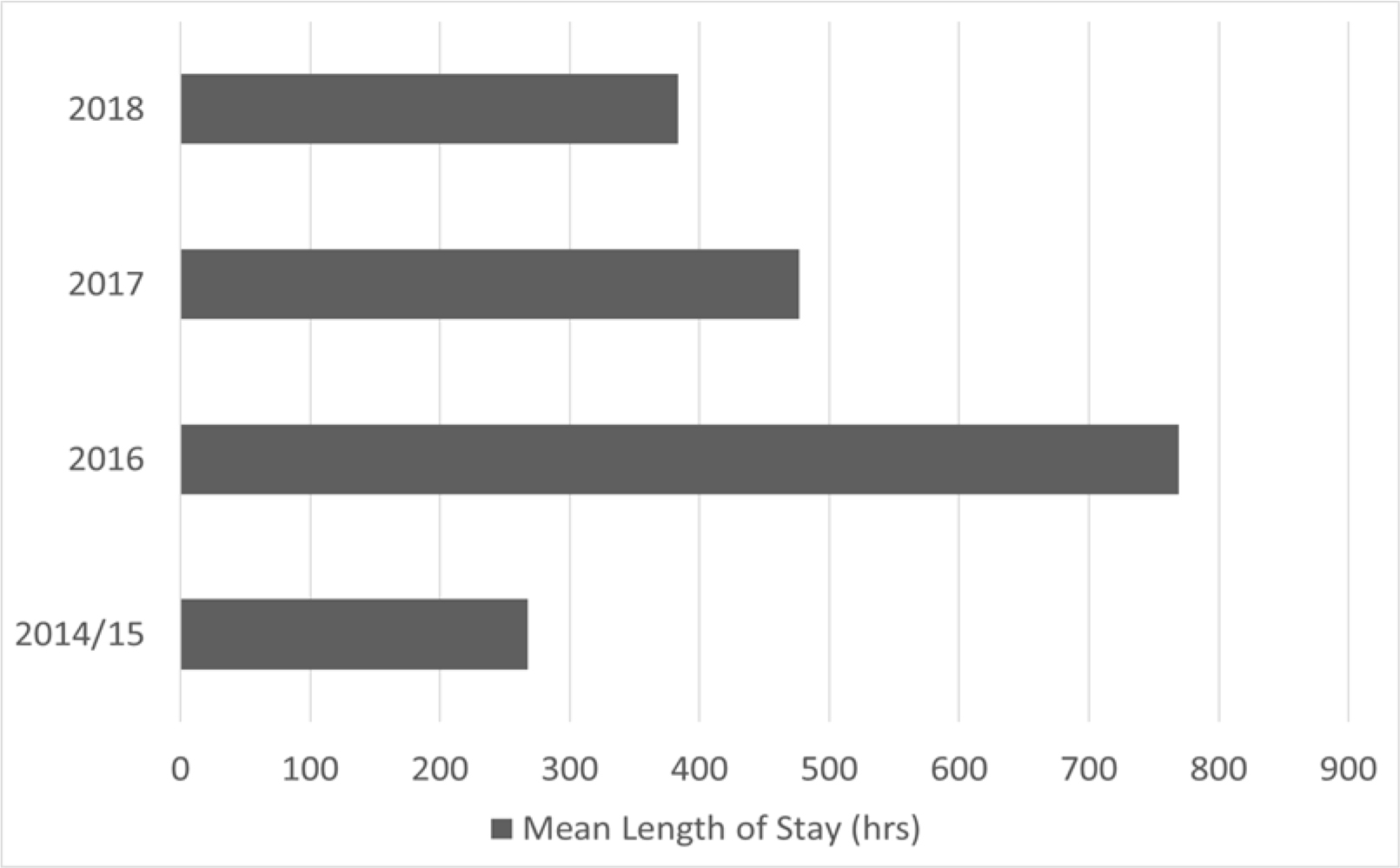
Figure 2. Demonstrates the length of in-hospital stay.

All patients underwent surgical rib fixation within 96 hours of admission. The number of operative cases progressed from three annually in 2014/2015 to twenty in 2018. In 2014, at the beginning of the study, pain not controlled following maximum intervention from the pain specialist was the predominant indication for intervention however as the duration of the study progressed surgical interventions were also performed for chest wall instability. Five patients were excluded from the study as for more than 48 hours either pre- or post-procedure secondary to their injuries it would not be possible to document their pain scores.

Of all included patients, 57% (n=21) were admitted pre-as well as post-operative to intensive care unit admission for respiratory support. Of this subset of patients, 66% (n=14) were discharged to ward within 48 hours. The remaining seven patients required ongoing support in the unit for management of their co-existing injuries. The median days after SRF where patients described pain score improvement were 2 with a standard deviation of 2.5 days.

The length of in hospital stay over a period of 5 years reduced from 546 to 391 hours, a difference of 155 hours (6 days). The overall median length of in hospital stay was 292 hours with a Standard deviation of 313 hours. Patients sustaining concurrent severe head injury if excluded, the length of stay reduced from 401 to 261 hours difference of 140 hours (5 days).

As time progressed, we undertook surgical fixation of the more anatomically challenging posterior (10%) and bilateral (8%) rib fractures.

Over the course of 5 years, follow‐up rate at 12 months progressively increased from 75% to 85% with no hardware or pulmonary complications reported on plain chest x-rays.

Complications in this case series consisted of a postoperative bleed in a posterior rib fixation patient requiring operative intervention with second intercostal catheter placement and a superficial wound infection managed non‐operatively with intravenous antibiotics. Non-procedure complications included pneumonia (2), pulmonary embolism (1) and mortality due to traumatic brain injury (1). Thus, overall complication rate was 16.2% with an overall procedure related complication rate of 5.4%.

Discussion

Since the introduction of surgical rib fixation at our institution, there has been a steady increase in the number of cases performed annually. This could not only be attributed to the increasing confidence of the surgeon performing the procedure but also to patient outcomes in terms of reduction in pain scores, reduced ventilatory days and decreased length of in hospital stay.

Pain is the main complaint of rib fracture patients and management of this is a challenge often with complex fracture patterns. Once all supportive pain management options are exhausted, surgical rib fixation is considered.

The average cost of patients acutely admitted to public hospitals in Queensland, Australia is about $8561 for 4 days [11]. The post-operative time to improvement in subjective pain scores was 2 days, which might have a direct link in reduction of the length of in hospital stay by 155 hours (6 days).  This study suggests direct link to subjective pain relief following surgery and reduction in length of hospital stay leading to reduction in costs of hospital stay [14].

The post-operative time to improvement in subjective pain experienced has decreased over the period of this study. This may be due to refinement in surgical technique by reducing the size of surgical incision and minimum muscle dissection as more cases were performed. Another confounding factor for subjective pain score improvement could be the increased experience of the pain specialist and allied health professionals in managing these subsets of patients.

Literature review suggests acute recovery from complex rib fractures can be measured by length of hospital stay [13]. In the identified patients who underwent SRF, the mean HLOS has shown a steady decrease by 155 hours (6 days). When patients with concurrent severe head injury is excluded from the groups, the mean difference still favours the surgical group by 140 hours (5 days) suggesting similarity in local as well as international results [13,14].

It is recommended for novice surgeons to perform the technique on antero-lateral rib fractures [5]. As the experience in surgical technique was gained, confidence in performing the more challenging posterior and bilateral rib fractures also increased.

Some clinical studies are substantially smaller and often lack sufficient statistical power to detect clinically meaningful differences in operative mortality rates. Moreover, there is little evidence from these clinical studies to suggest there are important volume-related differences in the case mix (i.e. those low-volume providers. Although we cannot rule out confounders by unmeasured characteristics of the patients in our study, there is no reason to believe that such confounders would affect our analyses of hospital and surgeon volume [12].

Limitations

There are certain limitations of this study with the most distinct being the retrospective nature of this study which includes small cohort of patients at a single institution. Major chest trauma is usually associated with other injuries and the severity of this may be a confounder to the true in hospital length of stay. A multi institutional prospective study might provide us with suggestions into the outcomes of this surgical procedure.

Conclusion

Preliminary data analysis from our institution suggests, we have increased our incidence for this procedure with reduced in hospital length of stay and minimal impact to complications. We hope to see consistent results as case numbers increase in the following years and for fellow institutions to support these outcomes.

Declaration

Ethical statement: Study was carried out only after approval from Local Ethics Committee (LNR/2018/QGC/49835)

Consent for publication: Retrospective de identified chart analysis only so no consent from patients

Availability of data and material: On request de identified data can be accessed

Competing interests: Bhavik Patel, Gary Hung, Andrie Stroebel and Martin Wullschleger have no competing interest

This study has been presented as a poster at The Annual Summit of Chest Wall Injury Society, Santa Fe, New Mexico, USA- 2019.

Authors’ Contributions

Bhavik Patel- Devise Idea, Draft Manuscript, Analysis of data, Submission and Corresponding Author

Gary Hung- Collect data, Analysis of data, Draft Manuscript

Andrie Stroebel- Initial Phase Cardiothoracic Surgeon for Second Opinion on operative cases

Martin Wullschleger – Initial Phase Surgeon and Correction of Manuscript

References

  1. Cameron P, Dziukas L, Hadj A, Clark P, Hooper S (1996) Rib fractures in major trauma. Aust N Z J Surg 66: 530–534.
  2. Witt CE, Bulger EM (2017) Comprehensive approach to the management of the patient with multiple rib fractures: a review and introduction of a bundled rib fracture management protocol. Trauma Surgery & Acute Care Open 2: 1–7.
  3. Chien CY, Chen YH, Han ST, et al. The number of displaced rib fractures is more predictive for complications in chest trauma patients. Scand J Trauma Resusc Emerg Med 25: 19.
  4. Kane ED, Jeremitsky E, Pieracci FM, Majercik S, Doben AR (2017) Quantifying and exploring the recent national increase in surgical stabilization of rib fractures. J Trauma Acute Care Surg. 83: 1047–52.
  5. de Campos JRM, White T (2018) Chest wall stablization in trauma patients: when, when, and how? J Thorac Dis 10: S951-S962
  6. Pieracci FM, Majercik S, Ali-Osman F, et al. (2017) Consensus statement: Surgical stabilization of rib fractures rib fracture colloquium clinical practice guidelines. Injury 48: 307–21
  7. Fagevik Olsén M, Slobo M, Klarin L, et al. (2016) Physical function and pain after surgical or conservative management of multiple rib fractures – a follow-up study. Scand J Trauma Resusc Emerg Med 24: 128.
  8. Kaplan DJ, Begly J, Tejwani N. Multipe (2017) Rib Nonunion: Open Reduction and Internal Fixation and Iliac Crest Bone Graft Aspirate. J Orthop Trauma 3: S34–5.
  9. Benjamin R. Pulley, Benjamin C. Taylor, Terry Ty Fowler, Neysa Dominguez, Thai Q (2017) Trinh. Utility of three-dimensional computed tomography for the surgical management of rib fractures. J Trauma Acute Care Surg 78: 530–533.
  10. Breivik et al (2008) Assessment of Pain. Br J Anaesth 101: 17–24.
  11. Independent Hospital Pricing Authority. National Hospital Cost Data Collection. Australian Public Hospitals Cost Report 2013–2014.
  12. Birkmeyer JD, Stukel TA, Siewers AE, Goodney PP, Wennberg DE, Lucas FL (2003) Surgeon Volume and Operative Mortality in the United States. N Engl J Med 349: 2117–27
  13. Silvana F. Marasco, Andrew R. Davies, Jamie Cooper et al. (2013) Prospective Randomized Controlled Trial of Operative Rib Fixation in Traumatic Flail Chest. Journal of the American College of Surgeons 216: 924–932.
  14. Sarah Majercik, Emily Wilson, Scott Gardner, Steven Granger, Don H. VanBoerum, et al. (2015) In-hospital outcomes and costs of surgical stabilization versus nonoperative management of severe rib fractures. J Trauma Acute Care Surg 79: 537–539.

3-Dimensional Multiple Object Tracking Training Can Enhance Selective Attention, Psychomotor Speed, and Cognitive Flexibility in Healthy Older Adults

DOI: 10.31038/ASMHS.2019341

Abstract

Objectives: The objective of this pilot study was to determine if a 3-dimensional multiple object tracking training (3D-MOT) intervention could improve performance on measures of attention, psychomotor speed, and cognitive flexibility in healthy older adults.

Methods: Forty-six individuals aged 63–87 years old participated in the study. Twenty-five participants in the intervention group completed the Stroop task before and after intervention that consisted of seven training sessions with the Neurotracker, a 3D-MOT software program. Stroop test scores were examined for changes in selective attention, cognitive flexibility (CF), as well as psychomotor speed pre- and post-intervention. The 21 individuals in the control group completed the Stroop test at the pre-post interval, without completing the Neurotracker intervention.

Results: The Neurotracker training intervention group showed significant improvements in both cognitive flexibility (M = 5.01, SE = 1.44, p = 0.002), and psychomotor speed and selective attention (M = 4.90, SE = 1.44, p = 0.002). Significant changes were also detected in a condition that measured psychomotor speed and cognitive flexibility together (M = 9.39, SE = 1.74, p < 0.001). No significant changes were detected in the control group.

Conclusion: The current results suggest that the Neurotracker may be an effective tool for improving selective attention, cognitive flexibility, and psychomotor speed in healthy older individuals.

Introduction

Changes in cognitive performance with normal aging have been well documented [1,2]. In particular, older adults are known to have reduced information processing speed and declines in executive functions (EF) [3,4]. Although EF captures many cognitive processes (e.g. complex attention, cognitive inhibition, working memory, and cognitive flexibility), changes in complex attention and cognitive flexibility are most frequently reported [3–5]. Specifically, complex attention includes divided attention, or the ability to attend to multiple stimuli simultaneously [6], while cognitive flexibility captures the mental ability to switch attention between multiple concepts. Therefore, such changes in EF may reduce an individuals’ capacity to behaviorally adapt to changing environment, and may help explain some of the difficulties experienced by older adults from tasks such as driving [1,2,7–10 ].

Age-related impairments in EF have been linked to structural alterations in the prefrontal cortex (PFC) in normal aging [4,11–13]. Additional changes, linked more specifically to declines in attention, include cortical thinning in the PFC [14], and decreased functional magnetic resonance imaging activation across the dorsolateral prefrontal and parietal cortices [15–17] and the anterior cingulate cortex [16,18]. Despite these structural and functional changes, the continued plasticity of the aging brain has been well-documented [19–21]. As a result, interventions for older adults have been a focus of emerging age-related research. However, current pharmacological and behavioral interventions to reduce age-related cognitive declines are limited in their efficacy. Therefore, increasing attention has been paid to the use of cognitive interventions as tools to improve cognition in older adults because they are readily available and easy to administer.

Three-dimensional multiple object tracking (3D-MOT) is a video game technology has been previously used to study attentional enhancement [22,23]. Specifically, 3D-MOT is thought to stimulate brain networks essential to executive functions, such as attention, cognitive flexibility and working memory [24]. As a result, 3D-MOT has been investigated as an emerging tool used to enhance perceptual cognitive abilities in both elite athletes [24–26] and the general population [27–30]. The video game requires subjects to follow a discrete number of moving sub-targets from an array of identical targets [31]. One of the major cognitive skills used in 3D-MOT is attention, including sustained, selective, and divided attention, as well as inhibition and reaction time [30]. Flexibility is conditioned by training the participant to allocate the correct attentional resource while tracking multiple objects [32,33]. Generally, individuals are able to track three to five targets efficiently; however, with age and associated cognitive decline, the ability to track multiple objects decreases [28]. Trick, Perl, and Sethi [34] assessed MOT performance in groups of young (M = 19 years old)and older adults (M = 73 years old), finding that young adults were able to efficiently track four items simultaneously, while older adults could effectively track three items. These results may be attributed to a general decline in attentional capacity: specifically, a decreased activation of the dorsal attentional network [35] that accompanies normal aging.

Given the documented cognitive differences in older adults and evidence that the 3D-MOT can improve cognitive performance in other groups, recent research has focused on whether interventions such as 3D-MOT can improve EF performance in older adults. One particularly relevant study by Legault et al. [28] examined differences in performance between ten young (M = 27 years old) and ten older adults (M = 66 years old) following 5 weeks of training on a 3D-MOT task. Older adults were poorer at tracking pre-intervention; however, they improved on the 3D-MOT task at the same rate as the younger group and continued to improve even when the young adults plateaued. These findings were attributed to the automaticity of tracking following multiple 3D-MOT training sessions, which reduced the attentional load necessary for tracking and thus improved performance. The importance of these findings is the notion that, while some degree of cognitive decline is unavoidable, cognitive decline may be delayed, or even improved, with sufficient training. However, there is debate whether the benefits of these training tools demonstrate far-transfer effects to more generalized cognitive domains, or whether the gains are limited to performance on the training tool itself. It remains unknown how such intervention-based changes may relate to standard measures of cognitive function. The objective of this pilot study was to examine the influence of 3D-MOT training on selective attention, psychomotor speed, and cognitive flexibility in healthy older adults. It was hypothesized that following 7 training sessions on the Neurotracker, a 3D-MOT software program, participants would show improvement in selective attention, cognitive flexibility, and psychomotor speed, as measured by scores on the Stroop test.

Methods

Participants

Older adults aged at least 60 years were recruited from various senior activity centers in Victoria, British Columbia. Participants at these sites were recruited following a brief presentation summarizing he research project. Additionally, a small subset of the sample responded to flyers posted at various seniors’ centres and health facilities. Approval for this project was obtained from the University of Victoria’s human research ethics board.

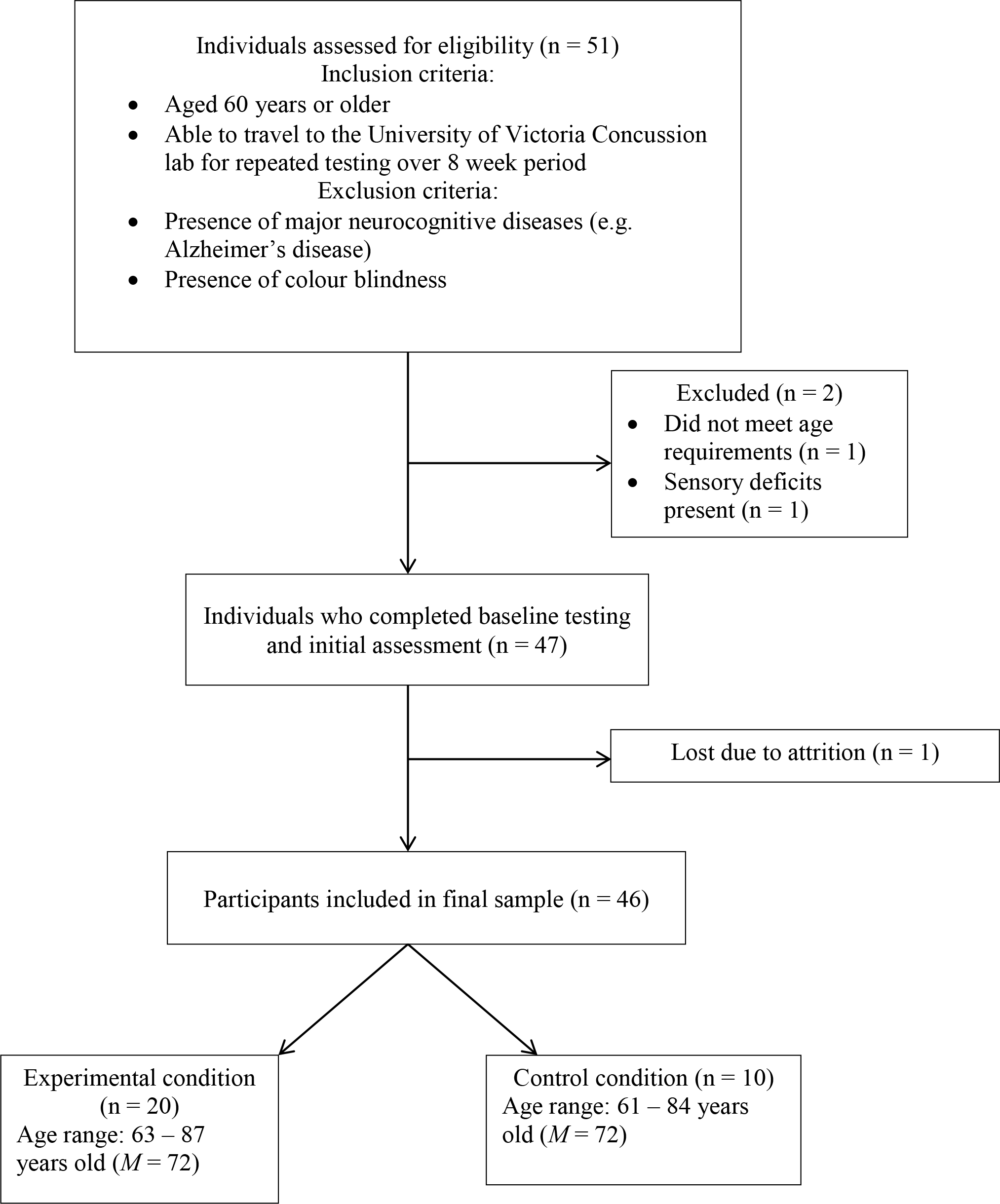
Eligibility criteria for inclusion included being aged 60 years or older, and able to fully complete an eight-week testing/training period. Age criteria were based on previous research demonstrating that age-related declines in cognition begin around aged 60 years and older [4,36,37]. Exclusion criteria included major neurocognitive diseases, such as Alzheimer’s disease or vascular dementia, or pronounced colour blindness, as the current study required participants to differentiate between colours on both the Stroop test and Neurotracker (Figure 1 for enrolment process).
ASMHS-2019-Brian R. Christie_Canada_F7

Figure 1. Flow diagram outlining participant inclusion process

Initially, 30 healthy participants were recruited for the intervention group, and 25 adults between the ages of 63–87 years old (M = 71.44, SD = 6.04) completed the study. Participants included twelve females (48%) and thirteen males (52%). Twenty-one healthy participants were recruited for the control group, which consisted of 5 males (24%) and 16 females (76%), aged 61–84 years (M = 71.76, SD = 7.47)
(Table 1 for participant education levels).

Table 1. Education obtainment frequencies and percentages of participants in the control and 3D-multiple object tracking training groups.

Education level

Control group (n = 21)

3D-MOT training group (n = 25)

Frequency

Percentage (%)

Frequency

Percentage (%)

High school

1

5

1

4

College

4

19

4

16

Bachelors

6

29

13

52

Masters/PhD

10

47

7

28

Apparatus and instruments

Neurotracker

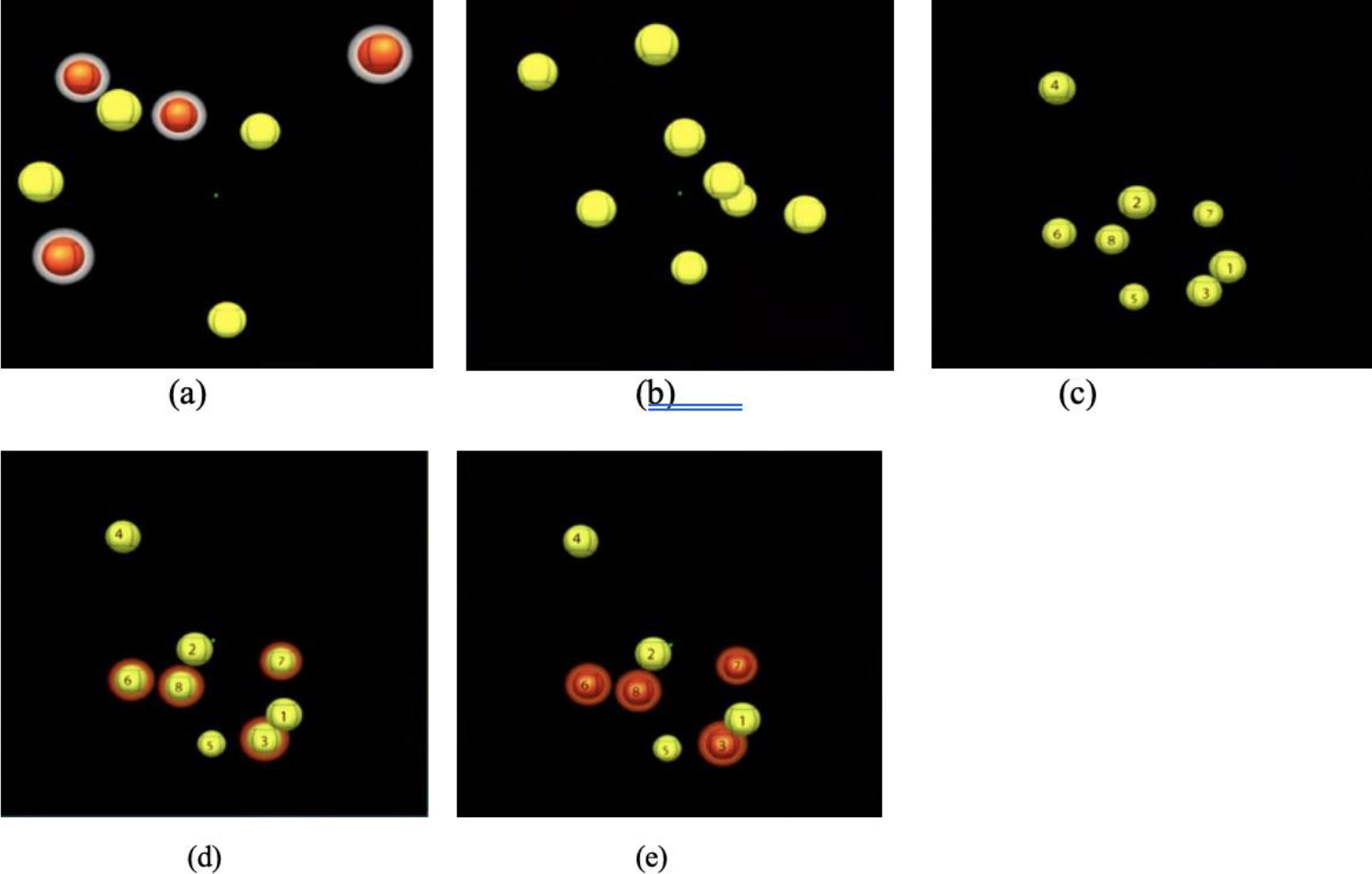
The Neurotracker is a computerized 3D-MOT perceptual-cognitive training system (CogniSens Athletic Inc., Montreal, Canada) that has been used for training cognitive abilities, including selective attention and cognitive flexibility [38]. Only participants in the intervention group completed the Neurotracker. In total, members of the intervention group completed 21 sessions with the Neurotracker. Specifically, each participant completed one appointment per week, and each appointment included three Neurotracker sessions. During each session, eight yellow projected spheres appeared as targets in a 3D volumetric cube in the screen. Four of the eight spheres briefly changed to red, and then reverted to yellow. The four target spheres were to be tracked as they moved in a linear trajectory. Prior to the first session at intake, participants were given verbal instructions on how to complete the Neurotracker task. The sessions were based on a staircase procedure [39], in which an algorithm shifts the speed of the target spheres in response to the participants’ performance. If all targets were correctly identified, the speed of the movement of the spheres increased by 0.05log; with each incorrect response, the speed decreased by 0.05log (see Figure 2 for Neurotracker procedure).
ASMHS-2019-Brian R. Christie_Canada_F1

Figure 2. Procedure for completing Neurotracker sessions: (a) balls highlighted in white indicate the four targets to track; (b) targets will revert back to yellow and move randomly in 3D space amongst the distractors for eight seconds; (c) balls will stop moving after eight seconds and numbers will appear on all stimuli; participant uses a keyboard to select the original four targets; (d) the targets will be highlighted once selected (e) once the participant has made their selection, the correct targets will be shown by an orange highlight; the balls will then resume moving and the participant will continue tracking the original targets for the remainder of the session.

The Stroop test

The Stroop test was delivered using the EncephalApp, a smartphone program developed originally to assess cognitive decline associated with hepatic encephalopathy [40]. The Stroop test has been supported as a valid and reliable measure of selective attention and cognitive flexibility [41,42]. In the pencil and paper version, the Stroop task presents an array of different colour words in two tasks. During the first task, the words are presented in a congruent colour (e.g. RED written in red ink). In the second task, they are presented in an incongruent colour (e.g. RED written in blue ink). During the incongruent task, there is a marked increase in response time due to the additional demands on selective attention and inhibition, and increased cognitive interference, a phenomenon referred to as the Stroop effect [43]. The Encephal App adheres to the same mechanism as the classic version, but presents the words one at a time, rather than all at once. Additionally, the order and spatial arrangements of the target words on the screen, and response options at the bottom of the screen, are randomized upon each administration, which has been identified as a potential protective measure against learning effects [44,45].

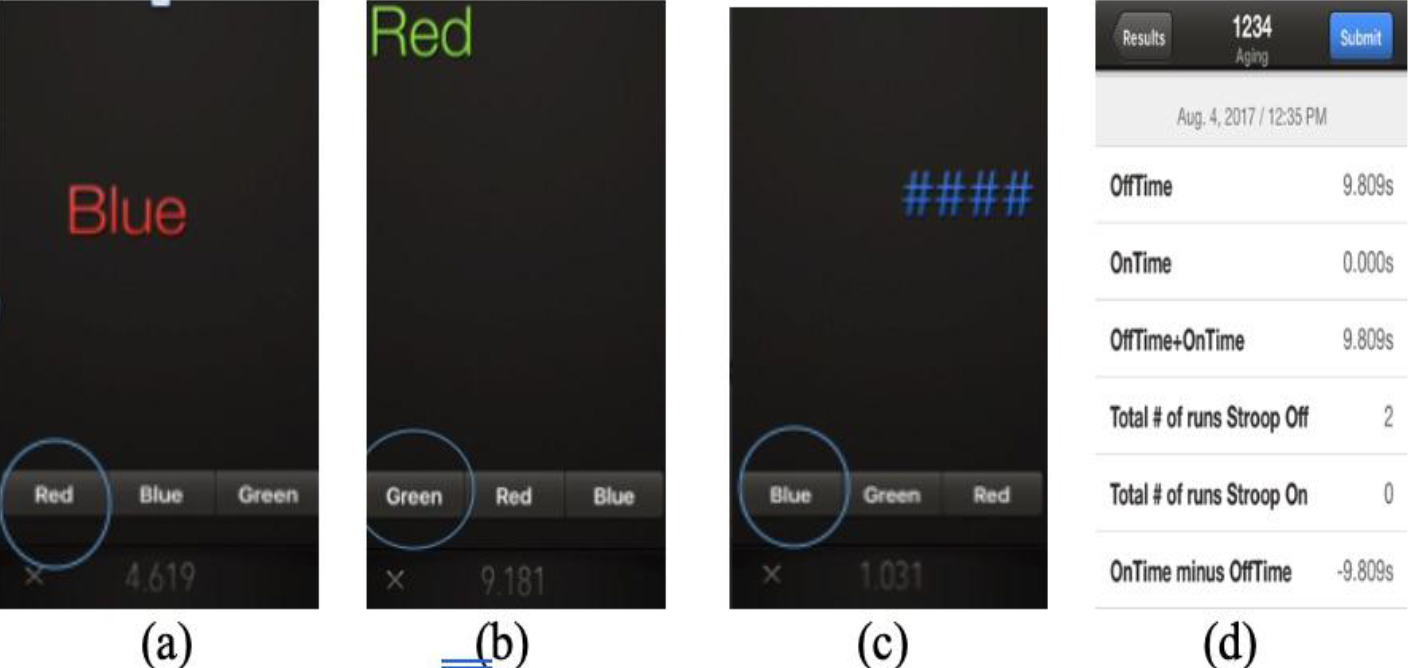
There are two main tasks in the EncephalApp: the Off task, requiring participants to identify the colours of number symbols (#), and the On task, requiring participants to identity the ink colours of words written in an incongruent colour. There were two practice trials that were unscored prior to each timed task. Ten words/symbols were presented during each timed task. Scores were measured based on the time taken to complete a full task without making any errors. If errors were made, the task would restart (Figure 3).
ASMHS-2019-Brian R. Christie_Canada_F2

Figure 3. EncephalApp task. (a) and (b) Stroop effect turned on, where participants select the colour of the ink of the presented word, and not the word itself; (c) Stroop effect turned off, where participants select the colour of the ink of the presented symbols. Each session presents ten different symbols/words; sessions will restart when incorrect responses are given; (d) example of data upon completion of Stroop task.

Three scores were recorded. Off-time scores measured psychomotor speed and selective attention; On-Time scores measured psychomotor speed, divided attention, and cognitive flexibility; and On-Time minus Off-Time scores measured cognitive flexibility isolated from psychomotor speed [44] (see appendix B for raw data).

Procedure

The study took place at the University of Victoria Concussion Lab, Victoria, BC. Participants signed up for appointments using the online scheduling software, Web-Appointments. Members of the intervention group came in once a week for eight weeks.

During the first appointment, goals and aims of the study were explained, and participants were asked to read and sign a consent form. Participants completed a brief intake questionnaire that generated participant histories regarding neurological diseases, concussion experiences, and sensory deficits. Demographic measures were also recorded on the questionnaire, and included age, sex, and years of completed education. At intake, a baseline Stroop test, and three sessions with the Neurotracker were completed. The Stroop test was completed pre- and post-training (i.e. at the first appointment, and one week after the seventh session). The Neurotracker was performed at appointments one through seven. Seven appointments with the Neurotracker were chosen due to time constraints of the study and to ensure participant adherence.

At the eighth appointment, participants completed the Stroop test without the Neurotracker. This was required to get a measurement on the Stroop test that was representative of the conditions under which it was done at the intake (i.e. without having done the Neurotracker immediately before, to reduce the effects of mental fatigue from 3D-MOT training).

Members of the control group came in twice, with the appointments separated by seven weeks. At both appointments, participants completed the Stroop test only.

All participants were compensated for any travel costs accrued, including parking and/or bus fare.

Statistical Analyses

The design was a single factor within-group research design. Data was collected and analyzed using the IBM Statistical Package for the Social Sciences 23 (SPSS) and Excel. Means and standard deviations were computed for demographics (sex and age), and the mode was computed for level of education (i.e. high school/college, Bachelor’s degree, or Master’s/PhD). A two-tailed paired t-tests were carried out using SPSS for On-Time minus Off-Time scores (cognitive flexibility) from the first and eighth appointments. As the sample consisted of a large number of active bridge players, Spearman’s rho correlations were computed for bridge players and non-bridge players and Stroop scores, to examine whether there was a correlation between active engagement in mentally stimulating activities and performance on the Stroop test, based on existing research demonstrating increased cognition in older adults who participate in these activities [46, 47]. Statistical correlations were thus calculated to assess whether this was an extenuating variable. Spearman’s rho correlations were also computed for sex and Stroop scores, and education level and Stroop scores. Pearson’s correlations were calculated for age groups (62–69 years old, 70–73 years old, and 74 and older) and Stroop scores, to assess the relationship between advanced ages and the degree of cognitive improvement following the Neurotracker intervention.

A second t-test was performed to test the hypothesis that psychomotor speed was significantly different following the intervention, as measured by the Off-Time conditions. Three paired t-tests were also performed on Stroop scores recorded for the control group. A paired t-test also demonstrated that there was no significant difference on Stroop test performance pre-intervention comparing the experimental group with the control group.

To verify whether Stroop test scores improved after seven sessions of 3D-MOT training, a two-tailed paired sample t-test was performed using SPSS. Scores obtained from the Stroop effect Off-Time condition (i.e. identifying the colour of number signs) represented psychomotor speed and were analyzed pre- and post-intervention. Scores obtained from the Stroop effect On-Time condition (i.e. identifying the ink colour of discordant-coloured stimuli) represented cognitive flexibility and psychomotor speed, and were analyzed pre- and post-intervention. Scores obtained from the On-Time minus Off-Time condition represented cognitive flexibility isolated from psychomotor speed, and were analyzed pre- and post-intervention.

Results

A Shapiro-Wilk test [48] and a visual inspection of their box plots showed that the Stroop scores for the On-Time minus Off-Time condition were normally distributed (p = .181). The skewness value of -.321 (SE = .464) and kurtosis of -.803 (SE = .902) were conducted to assess the assumption of normality pre- and post-training. These values met the criteria outlined by West, Finch, and Curran [49] of skewness and kurtosis values within ± 2 to demonstrated normality.

Pre-Intervention

Prior to 3D-MOT training, the mean Stroop test score for the intervention group participants was 77.23 (SD = 13.33) for Off-Time, and 92.05 (SD = 17.35) for On-Time. The mean score for On-Time minus Off-Time was 14.83 (SD = 9.30).

At baseline, the mean Stroop test scores for the control group was 80.88 (SD = 11.75) for Off-Time, 90.32 (SD = 24.96) for On-Time, and 16.36 (SD = 17.90) for On-Time minus Off-Time. There was no significant difference in Stroop test performance between the experimental and control group pre-intervention.

Post-Intervention

To test the hypothesis that cognitive flexibility was statistically different following the intervention, as measured by the On-Time minus Off-Time conditions, a dependent samples t-test was performed for both the experimental and control group (Table 2).

Table 2. Average Stroop test scores in seconds at baseline and 8 weeks post-intervention. The Neurotracker group post-intervention scores were measured following 21 training sessions using 3D-multiple object tracking over 7 weeks. The control group received no 3D-MOT training.

Control (n = 21)

Neurotracker group (n = 25)

EncephalApp results, baseline (mean ± SD)

Total Off-Time, sec.

80.88 ± 11.75

77.23 ± 13.33

Total On-Time, sec.

90.32 ± 24.96

92.5 ± 17.35

Total On-Time minus Off-Time, sec.

16.36 ± 17.90

14.86 ± 9.30

EncephalApp results, post-intervention (mean ± SD)

Total Off-Time, sec.

79.89 ± 11.19

72.33 ± 12.18*

Total On-Time, sec.

82.59 ± 35.99

82.66 ± 12.75**

Total On-Time minus Off-Time, sec.

25.75 ± 25.73

9.80 ± 6.84+

Notes: * = p = .002; ** = p < .001; + = p = .006

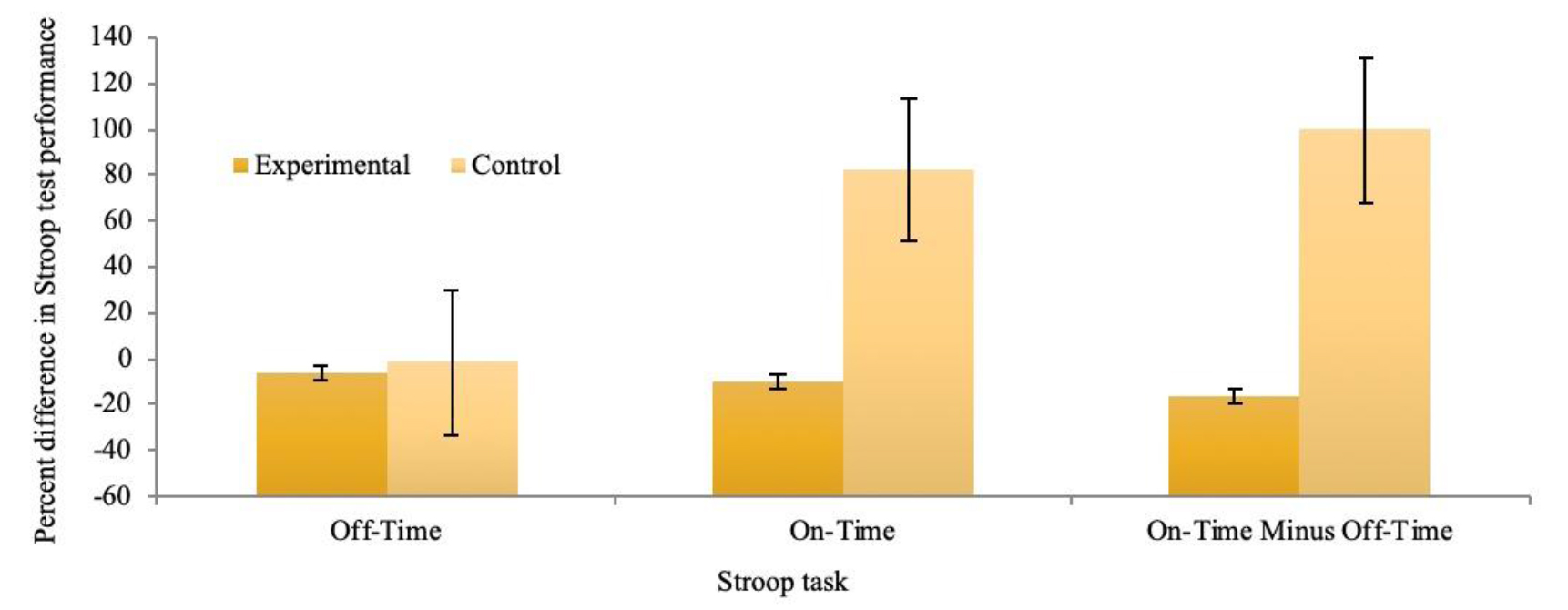
On average, the time taken to complete the Stroop test for the On-Time minus Off-Time condition significantly decreased between the initial appointment and final appointment for the experimental group (M = 5.01, SD = 7.19, SE = 1.44, CI [2.04, 7.97]), t(24) = 3.48, p = .002). Participants who completed 3D-MOT training demonstrated a 33.76% improvement in On-Time minus Off-Time scores, which was significantly greater than the control group (see figure 4).
ASMHS-2019-Brian R. Christie_Canada_F3

Figure 4. Percent difference in 3 Stroop test tasks between initial appointment and 8 weeks later. The experimental group completed 21 sessions of 3D-multiple object tracking training over a 7-week period. The control group received no intervention.

A Cohen’s d value of 3.06 indicated a large effect size [50]. A second t-test was performed to test the hypothesis that psychomotor speed and selective attention were significantly different following the intervention, as measured by the Off-Time conditions. On average, the time taken to complete the Stroop test in the Off-Time condition significantly decreased from the initial appointment (M = 4.90, SD = 7.12, SE = 1.44, CI [1.94, 7.86]), t(24) = 5.41, p = .002. Participants who completed 3D-MOT training demonstrated a 6.24% improvement Off-Time scores, which was significantly greater than the control group (see figure 4).

A third t-test was performed to test the hypothesis that psychomotor speed and cognitive flexibility were statistically different following the intervention, as measured by the On-Time conditions. On average, the time taken to complete the Stroop test decreased significantly following the intervention (M = 9.39, SD = 8.68, SE = 1.74, CI [5.81, 12.98]), t(24) = 5.41, p > .001. Participants who completed 3D-MOT training demonstrated a 10.20% improvement in On-Time, which was significantly greater than the control group (see figure 4).

Three paired t-tests were performed on Stroop scores recorded for the control group. No significant changes were found in the On-Time, Off-Time, or On-Time minus Off-Time scores at week 8.

Post–hoc demographic comparisons

Sex

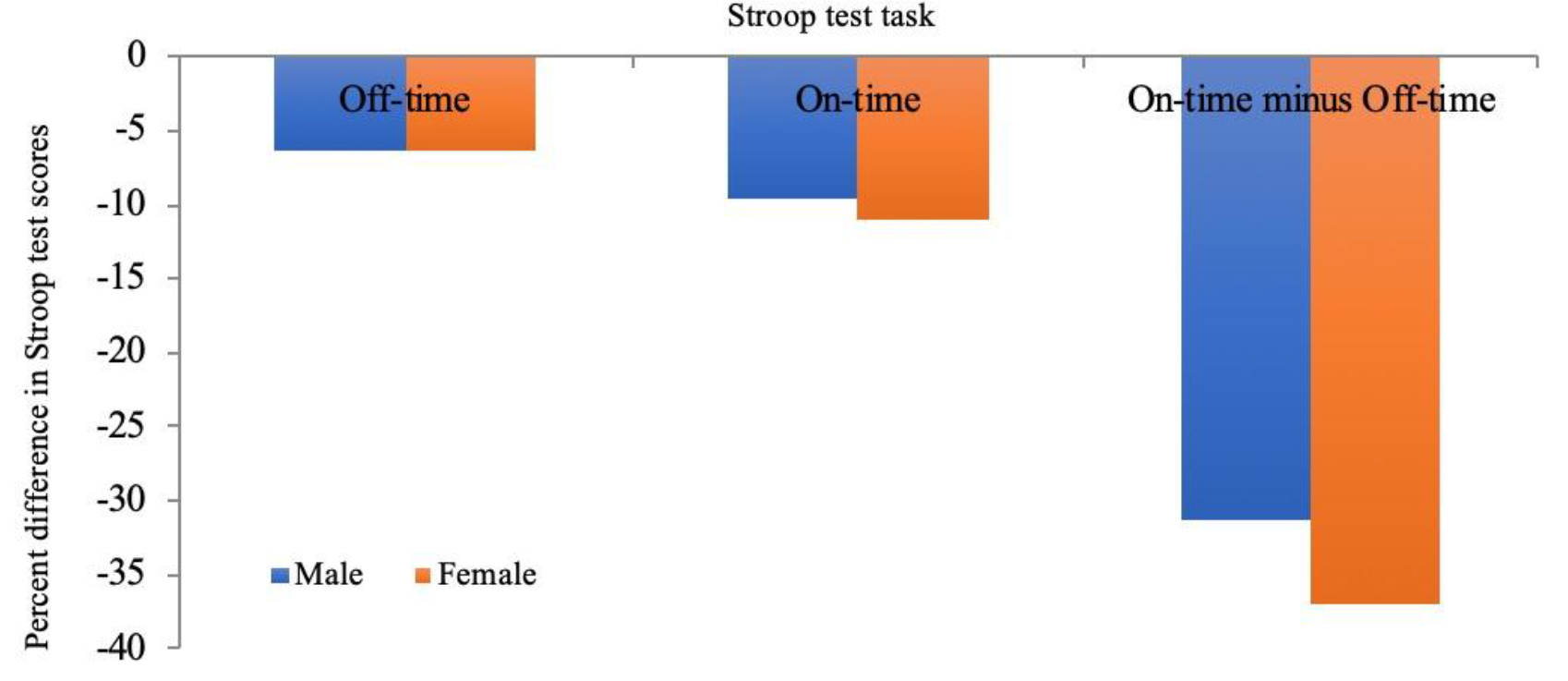
Scores were further analyzed to assess the influence of sex on Stroop test On-Time minus Off-Time scores. Prior to 3D-MOT training, there were significant sex differences in Stroop scores for the On-Time and Off-Time conditions, while there were no significant differences for the On-Time minus Off-Time condition. Following 3D-MOT training, these sex differences were maintained, with significant sex differences found in the On-Time (p < .001) and Off-Time (p = .004) conditions but not in the On-Time minus Off-Time conditions (see Figure 5 for percent differences in Stroop test scores as a factor of sex).
ASMHS-2019-Brian R. Christie_Canada_F4

Figure 5. Percent differences in Stroop test task completion following 21 sessions of 3D-multiple object tracking completed over a 7-week period as a factor of sex.

Age

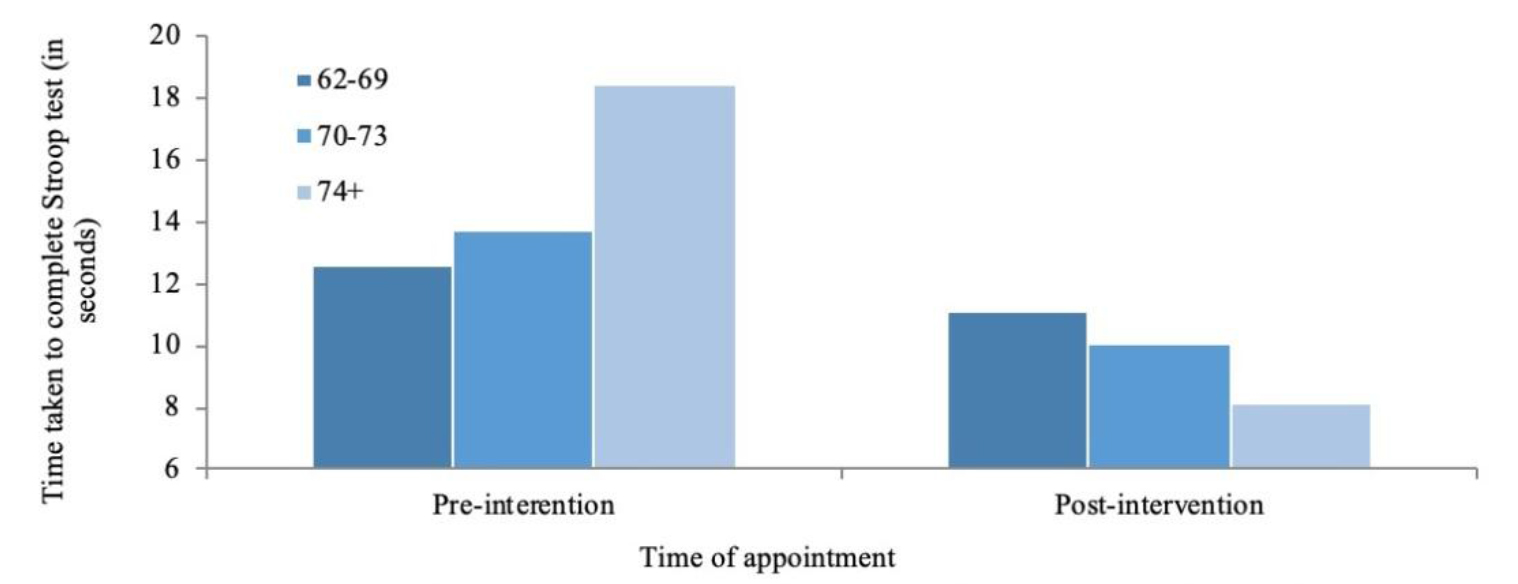
Scores were further analyzed to assess the influence of age on Stroop test On-Time minus Off-Time scores. Participants were divided into 3 age groups: 62–69 (n = 9), 70–73 (n = 8), and 74 years and older (n = 8). Participants were categorized into these age groups as these groupings allowed within-group variation to be minimized.Prior to 3D-MOT training, participants in the 74 and older group took the longest to complete the Off-Time (M = 83.85, SD = 14.18), On-Time (M = 102.33, SD = 14.80), and On-Time minus Off-Time conditions (M = 18.47, SD = 10.89) (Table 3).

Table 3. Average changes and percent differences in Stroop test scores as a factor of age at baseline and post-intervention for 3D-multiple object tracking training group and control group.

Baseline (mean ± SD)

Post-intervention (mean ± SD)

Difference (%)

Stroop test tasks

Control

3D-MOT training

Control

3D-MOT training

Control

3D-MOT training

Off-Time

Age

62–69

76.86 ± 9.57

71.66 ± 6.14

73.48 ± 9.90

66 ± 4.96

-4.39

-7.82

70–73

76.41 ± 11.80

76.93 ± 16.55

76.66 ± 7.54

70.08 ± 11.24

0.33

-8.90

74+

86.49 ± 12.04

83.85 ± 14.18

85.03 ± 11.85

81.69 ± 14.03

-1.69

-3.90

On-Time

Age

62–69

75.8 ± 35.30

84.18 ± 11.87

86.4 ± 10.82

78.54 ± 9.78

13.98

-6.70

70–73

90.4 ± 11.46

90.63 ± 21.20

92.55 ± 17.36

80.12 ± 11.99

2.38

-11.60

74+

101.56 ± 15.21

102.33 ± 14.80

99.82 ± 18.36

89.83 ± 14.71

-1.71

-12.22

On-Time minus Off-Time

Age

62–69

19.83 ± 23.40

12.58 ± 7.36

12.92 ± 7.54

11.1 ± 8.35

-34.85

-11.76

70–73

13.99 ± 6.01

13.70 ± 9.66

15.95 ± 12.88

10.05 ± 4.51

14.01

-26.64

74+

14.97 ± 18.87

18.47 ± 10.89

15.44 ± 12.94

8.15 ± 7.42

3.14

-55.87

Following 3D-MOT training, the 74 and older group had the highest scores in the Off-Time (M = 81.69, SD = 14.03) and On-Time (M = 89.83, SD = 14.71) conditions, while participants in the 62–69 year old group had the highest scores in the On-Time minus Off-Time condition (M = 11.1, SD = 8.35) (Figure 6).
ASMHS-2019-Brian R. Christie_Canada_F5

Figure 6. Changes in time take to complete the Stroop test On-Time minus Off-Time condition as a factor of age. Scores were taken once at baseline and again 8 weeks later following 21 sessions of 3D-multiple object tracking over a 7 week period.

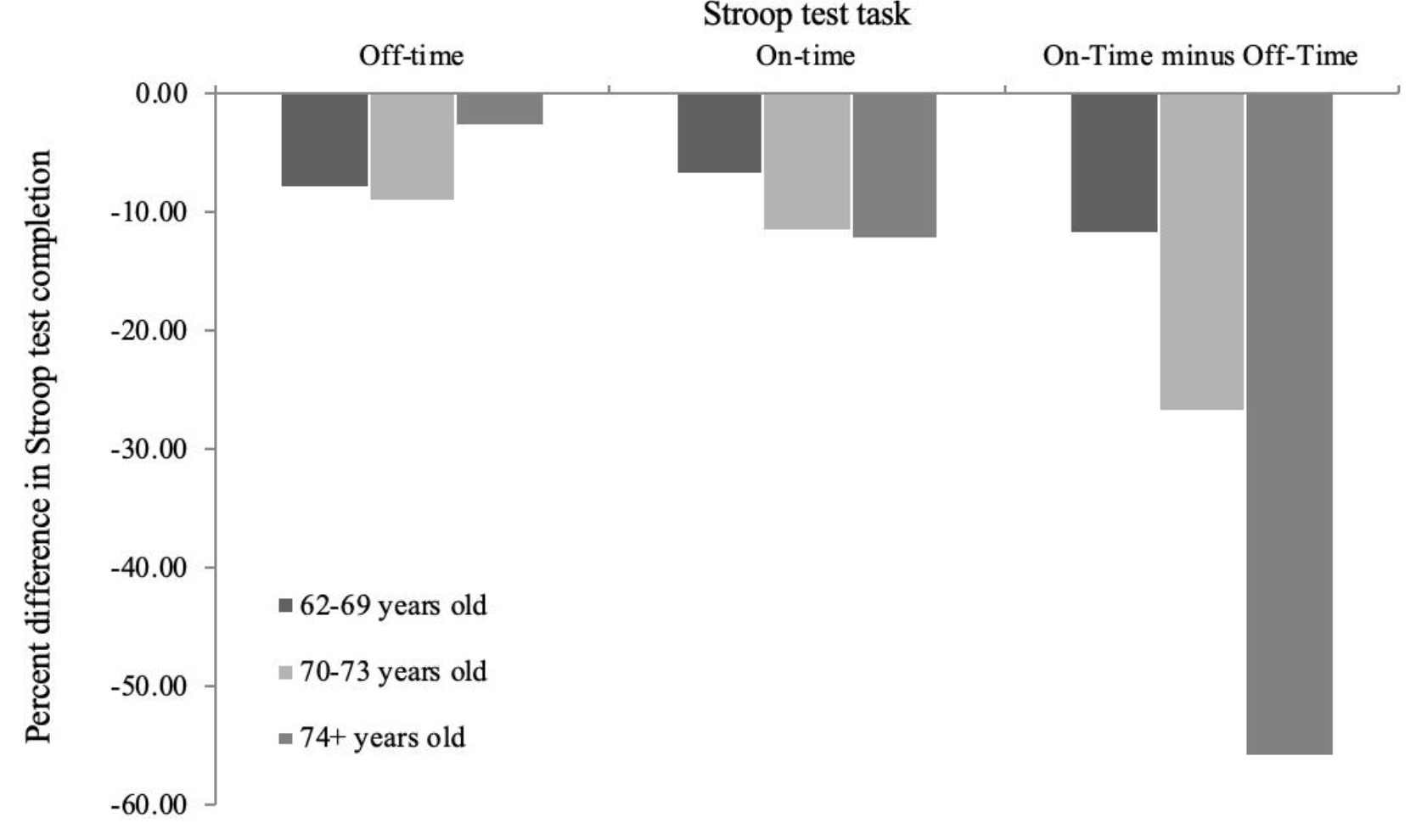
Percent differences were calculated for the different age groups to measure improvement in Stroop test completion post-intervention following 21 training sessions on the Neurotracker. The 70–73 year old group had the largest percent decrease in time taken to complete the Stroop test Off-Time conditions (-8.90%), while the 74+ year old group had the largest percent decrease in time taken to complete the On-Time (-12.21%) and On-Time minus Off-Time (-55.90%) conditions (Figure 7).
ASMHS-2019-Brian R. Christie_Canada_F6

Figure 7. Percent differences in Stroop test completion between baseline and following 21 sessions of 3D-multiple object tracking training over 7 weeks, as a factor of age.

Education

Scores were further analyzed to assess the influence of education level on Stroop test On-Time minus Off-Time scores. A Pearson’s correlation measurement showed that there was no significant correlation between education level and Stroop test performance pre- or post-intervention.

Discussion

The purpose of this pilot study was to evaluate the effect of 3D-multiple object tracking (MOT) training on selective attention and cognitive flexibility in the healthy aging population. Baseline Stroop test scores were assessed at the initial appointment, and again at the eighth week following 21 sessions of 3D-MOT training on the Neurotracker. Stroop scores were broken down to consider specific cognitive functions including selective attention, cognitive flexibility, and psychomotor speed. A control group was also assessed by measuring baseline Stroop test scores at the first appointment, and again at the eighth week without participating in the Neurotracker intervention. By measuring the effects of the Neurotracker pre- and post-intervention, it was hypothesized that Stroop test On-Time minus Off-Time scores would change, indicating an alteration in cognitive flexibility [42,44]. The hypothesis was supported; there was significant improvement in On-Time minus Off-Time scores following 3D-MOT training. Furthermore, scores for On-Time, measuring psychomotor speed plus cognitive flexibility, significantly improved, as did scores for the Off-Time condition, measuring psychomotor speed and selective attention. Additionally, there were no significant changes in Stroop scores measured in the control group, supporting the influence of 3D-MOT training on Stroop performance. These results suggest that weekly training sessions with the Neurotracker may improve selective attention and cognitive flexibility in older persons. There was no significant correlation between education levels and Stroop scores, consistent with previous research [44].

The improvement in cognitive performance in this study, as indicated by changes in Stroop test scores, is consistent with previous research demonstrating that customized video games serve as powerful tools to enhance cognitive control [51], processing speed [52], task switching, and working memory [53]. The current study expands on these findings by demonstrating additional benefits of computer training on selective attention, cognitive flexibility, and psychomotor speed. Two mechanisms may underlie the effect of 3D-MOT training to improve cognitive performance: isolation and overload [24,54]. Isolation refers to a limited and consistent number of cognitive abilities employed during 3D-MOT training. Overload refers to an adaptive increase in training difficulty, thereby continually challenging the participant beyond their current ability. Neurophysiological adaptation may explain the benefits of overload for cognitive-perceptual enhancement across the lifespan, and has been well documented [13,51,55].

The improvement in attention specifically, as indicated by significant decreases in On-Time minus Off-Time Stroop scores, may be due to increased activation of the neural structures and circuits employed during multiple object tracking. Increased activation in the dorsal frontoparietal attention network, and the intraparietal sulcus in particular, has been recorded by fMRI during 3D-MOT training. These neural areas are heavily involved during tasks of attending to multiple stimuli. Furthermore, a causal link has been established between increased activation of the intraparietal sulcus and improvement on MOT tasks. It is possible, then, that increased isolation and overload of these neural areas during Neurotracker completion may be responsible for improvements in attention, as measured by changes in On-Time minus Off-Time scores in the 3D-MOT training group.

A change in psychomotor speed and selective attention, as measured by Off-Time scores, was significant. This is consistent with previous research that has reported improvements in psychomotor speed following computerized cognitive interventions [19,56,57]. There is limited research, however, on changes in psychomotor speed following 3D-MOT in particular. Fragala and colleagues [58] found no significant changes in psychomotor speed, as measured by reaction time, following training with the Neurotracker. However, due to the small sample sized used in the current study, further replication is necessary to accurately assess psychomotor speed changes.

Participants in the 74 and older group had overall slower Stroop test scores compared to participants aged 62–73 years old. These results are consistent with previous research reporting decreased cognitive flexibility, attentional networks, and psychomotor speed in the oldest adults [59–61]. However, an interesting finding was the amount of improvement observed in the oldest participants; participants aged 74 and older demonstrated a significantly greater magnitude of improvement across all measurements of the Stroop test compared to younger participants, despite having overall slower scores. These results indicate that, even with a decrease in overall performance on cognitive tasks with age, learning capacity may be well preserved [62].

The age-related differences in Stroop test improvement reported in this study, however, are inconsistent with previous research [63–65], which reported plasticity and learning capacity in the oldest age groups, but at reduced levels compared to younger old adults. It is like that the sample size employed in this study was not large enough to statistically analyze distinct age groups; future research could benefit from measuring cognitive performance and learning capacity in the oldest of old following 3D-MOT training. Moreover, all members over the age of 74 years old self-reported high levels of exercise and involvement in mentally stimulating activities, such as the card game, Bridge. It is well documented that enhanced neuroplasticity is correlated with physical and mental exercise [66–68] and it is possible that, due to this, the oldest participants simply had a higher capacity for improvement, resulting in an increased learning curve. As this was a pilot study, these results should be interpreted with caution and future replication is needed to ensure reliability and validation.

Limitations

The findings may be limited by the use of the Stroop test twice throughout the course of the current study. Carryover effects may have influenced the results [69, 70]. However, Rosenbaum and colleagues [39] argue that the Stroop test is resistance to practice effects, reasoning that the randomized order of colour, spatial location, and words throughout each version of the test reduce practice effects. Furthermore, Bajaj et al. [44] demonstrated that healthy controls completing the EncephalApp showed no changes in scores across administration of the test when separated by a one-month period. This was seen as well in scores of the control group of the current study, who received no intervention. Taken together, these findings support the resistance of the Stroop test to practice effects and increase confidence that the changes in Stroop test performance observed in the current study are related to 3D-MOT training.

Additionally, the sample size employed for both the control and experimental group may limit the generalizations that can be made from these findings to the greater population of older adults. Further research would benefit from employing larger number of participants to increase confidence in the reliability and validity of the findings.

Another limitation of this study was the limited time allocated to Neurotracker training sessions. Twenty-one sessions of 3D-MOT training administered over the course of 7 weeks was selected due to time constraints. However, previous research has demonstrated that a plateau in 3D-MOT scores occurs around week ten in healthy young adults, and may take longer to reach in the older population. It may be that further 3D-MOT training could result in greater improvements on the Stroop test, indicating greater gains in attentional ability.

Notably, the use of only one cognitive task limited the findings.   Though the Stroop test has been supported as an accurate measure of attention and cognitive flexibility, the results should be replicated by further research to ensure reliability. As this was a pilot study, and there is, to our knowledge, limited research on the use of the Neurotracker as an enhancement tool for selective attention and cognitive flexibility in the older population, future research would benefit from assessing transfer effects of daily activities that are affected by age-related declines in these cognitive areas. An additional limitation relates to the use of self-reporting on neurodegenerative disease history. In the early stages of dementia, the individual may lack insight into the cognitive changes that are occurring [71]. Therefore, the use of self-reporting may not have been a true measure of cognitive status. In the future, research would benefit from using a screening test, such as the Mini Mental State Examination, a valid questionnaire to measure cognitive impairment [72, 73].

A final limitation in this study is the lack of an active control. Current research demonstrates that older adults who spend regular and meaningful time on the computer have a lower risk of developing mild cognitive impairment (MCI) and dementia [74]. Though the mechanism behind this is currently unknown, researchers Krell-Roesch and colleagues [47] attribute computer use with an increased demand for specific technical and manual skills which may have a protective effect against cognitive decline. Therefore, it is difficult to decipher whether it is the Neurotracker itself, or the use of a computer-based intervention, that is responsible for the gains in cognition measured in this study. Future research would benefit from employing an active control that consists of a Neurotracker experimental group, and a computer-based active control group.

Future Directions

The benefits of enhancement in selective attention, psychomotor speed, and cognitive flexibility as a result of training sessions with the Neurotracker have important implications for future research. Specifically, future research should examine, neurological and physiological changes can may accompany this cognitive enhancement intervention. Mozolic and colleagues [13] provided quantitative evidence that cognitive training is correlated with increased cerebral blood blow to the PFC in older persons following an attentional enhancement intervention. Similar physiology may also be seen following training sessions with the Neurotracker, would could provide a quantitative explanation for the Stroop test improvement demonstrated in this study. The use of neurological imaging and diagnostic tools, to quantitatively assess any changes occurring following 3D-MOT training, would be beneficial.

Future research could also benefit from measuring the effects of 3D-MOT on daily activities requiring attention. In this study, we have demonstrated near-transfer effects from the Neurotracker to the Stroop test, two measurements that are similar in their demands for selective attention and cognitive flexibility. Future research would benefit from demonstrating transfer effects from the Neurotracker to daily tasks that influence independence and quality of life in older adults, such as driving and balance. Legault and Faubert [27] reported transfer effects from perceptual-cognitive training, demonstrating that 3D-MOT training correlated with increased biological motion perception in the healthy older population, indicating that the benefits of the Neurotracker may not be restricted solely to similar assessment test such as the Stroop test. Future research should examine the effects of 3D-MOT training on tasks that tend to decline due to an age-related loss of attention. For example, the Useful Field of View (UFV) test is a valid measurement of driving ability, and a predictor of crash risks [75]. Future research might examine transfer effects from the Neurotracker to the UFV, assessment whether 3D-MOT influences driving ability and safety. Future research would also benefit from measuring whether the gains in attention, cognitive flexibility, and psychomotor speed are sustained in the long term. The current study has demonstrated gains in these areas one week following the end of the Neurotracker intervention. Future research would benefit from assessing whether these gains are maintained in the long term without active engagement in Neurotracker training, or whether sustained 3D-MOT training is necessary to maintain these cognitive benefits.

Conclusions

The current study demonstrated improved performance in older adults on a measure of cognitive flexibility, selective attention, and psychomotor speed as a result of 3D-MOT intervention.Further research is essential to examine structural neuroplasticity and transfer effects from the Neurotracker to daily tasks. Taken together, the results of this study suggest that the Neurotracker may be an effective tool for cognitive-perceptual enhancement in the population of older adults.

References

  1. Harada CN, Natelson Love MC, Triebel KL (2013) Normal cognitive aging. Clinics in Geriatric Medicine 29: 737–752.
  2. Murman DL1 (2015) The Impact of Age on Cognition. Semin Hear 36: 111–121. [crossref]
  3. Kirova A, Bays RB, Lagalwar S (2015) Working memory and executive function decline across normal aging, mild cognitive impairment, and Alzheimer’s disease. BioMed Research International 2015: 748212.
  4. Salthouse TA (2009) When does age-related cognitive decline begin? Neurobiology of Aging 30: 507–514.
  5. Turner GR, Spreng RN (2012) Executive functions and neurocognitive aging: Dissociable patterns of brain activity. Neurobiology of Aging 33: 826.
  6. Eidels A, Townsend JT, Algom D (2009) Comparing perception of Stroop stimuli in focused versus divided attention paradigms: Evidence for dramatic processing differences. Cognition 114: 129–150.
  7. Karthaus M, Falkenstein M (2016) Functional changes and driving performance in older drivers: Assessment and interventions. Geriatrics 1: 12.
  8. Richardson ED, Marottoli RA (2003) Visual attention and driving behaviors among community-living older persons. The Journals of Gerontology. Series A, Biological Sciences and Medical Sciences 58: 832–836.
  9. Svetina M (2016) The reaction times of drivers aged 20 to 80 during a divided attention driving. Traffic Injury Prevention 17: 810–814.
  10. Coubard OA, Duretz S, Lefebvre V, Lapalus P, Ferrufino L (2011) Practice of contemporary dance improves cognitive flexibility in aging. Frontiers in Aging Neuroscience 3: 1–12.
  11. Aron AR, Monsell S, Sahakian BJ, Robbins TW (2004) A compenential analysis of task-switching deficits associated with lesions of left and right frontal cortex. Brain 127: 1561–1573.
  12. Johnson MK, Mitchell  KJ, Raye CL, Greene EJ (2004) An age-related deficit in prefrontal cortical function associated with refreshing information. Psychological Science 15: 127–132.
  13. Mozolic JL, Hayasaka S, Laurienti PJ (2010) A cognitive training intervention increases resting cerebral blood flow in healthy older adults. Front Hum Neurosci 4: 16.
  14. Zamroziewicz MK, Zwilling CE, Barbey AK (2016) Inferior prefrontal cortex mediates the relationship between phosphatidylcholine and executive functions in healthy, older adults. Frontiers in Aging Neuroscience 8: 226.
  15. Cabeza R, Nyberg L (2000) Imaging cognition II: An empirical review of 275 PET and fMRI studies. J Cogn Neurosci 12: 1–47.
  16. Milham MP, Erickson KI, Banich MT, Kramer AF, Webb A et al. (2002)Attentional control in the aging brain: insights from an fMRI study of the stroop task. Brain Cogn 49: 277–296.
  17. Raz N (2000) Aging of the brain and its impact on cognitive performance: Integration of structural and functional findings. In: Craik, F.I.M. and Salthouse, T.A., Eds., The Handbook of Aging and Cognition, Lawrence Erlbaum Associates, Mahwah Pg No: 1–90.
  18. Solbakk, A., Fuhrmann, A., Furst, A., Hale, L., Oga, T., Chetty, S., Pickard, N, & Knight, R. (2008). Altered prefrontal function with aging: Insights into age-associated performance decline. Brain Res, 1232, 30–47.
  19. Bherer L, Kramer AF, Peterson MS, Colcombe S, Erickson K (2006) Testing the limits of cognitive plasticity in older adults: Application to attentional control. Acta Psychologica 123: 261–278.
  20. Kheirbek, M., & Hen, R. (2013). (Radio)active neurogenesis in the human hippocampus. Cell, 153, 1183–1184.
  21. Valkanova, V., Eguia, Rodriguez R., Ebmeier, K. (2014). Mind over matter – what do we know about neuroplasticity in adults? Int Psychogeriatr 26, 891–909.
  22. Pylyshyn, Z.W., & Storm, R.W. (1988). Tracking multiple independent targets: Evidence for a parallel tracking mechanism. Spatial Vision, 3: 179–197.
  23. Scholl  BJ (2009) What have we learned about attention from multiple-object tracking (and vice-versa)? In Computation and Pylyshyn (pp. 49–77). Cambridge, MA: MIT Press.
  24. Romeas T, Guldner A, Faubert J (2016) 3D-multiple object tracking training task improves passing decision-making accuracy in soccer players. Psychology of Sport and Exercise 22: 1–9.
  25. Faubert J, Sidebottom L (2012) Perceptual-cognitive training of athletes. Journal of Clinical Sport Psychology 6: 85–102.
  26. Faubert J (2013) Professional athletes have extraordinary skills for rapidly learning complex and neutral dynamic visual scenes. Scientific Reports 3: 1154.
  27. Legault I, Faubert J (2012) Perceptual-cognitive training improves biological motion perception: evidence for transferability of training in healthy aging. Neuroreport 23: 469–473.
  28. Legault I, Allard R, Faubert J (2013) Healthy older observers show equivalent perceptual-cognitive training benefits to young adults for multiple object tracking. Frontiers of Psychology 4: 323.
  29. Oshin V (2016) 3D multiple object tracking boosts working memory span: Implications for cognitive training in military populations. Military Psychology 28: 353–360.
  30. Parsons, B., Magill, T., Boucher, A., Zhang, M., Zogbo, K., Bérubé, S., . . . Faubert, J. (2014). Enhancing cognitive function using perceptual-cognitive training. Clinical EEG and Neuroscience, 47, 37–47.
  31. Drew T, McCollough  AW (2009) Attentional enhancement during multiple-object tracking. Psychonomic Bulletin & Review 16: 411–417.
  32. Colzato LS, van Leeuwen PJA, van den Wildenberg WPM, Hommel B (2010) DOOM’d to switch: Superior cognitive flexibility in players of first person shoot games. Frontiers of Psychology 1: 8.
  33. Vul E, Frank M, Alvarez G, Tenenbaum J (2009) Explaining human multiple object tracking as resource constrained approximate inference in a dynamic probabilistic model. Advances in neural information processing systems 22: 1955–1963.
  34. Trick LM, Perl T, Sethi N (2005) Age-related differences in multiple-object tracking. J Gerontol B Psychol Sci Soc Sci 60: 102–105. [crossref]
  35. Tomasi D, Volkow ND (2012) Aging and functional brain networks. Molecular psychiatry 17: 471–558.
  36. Andrade C, Radhakrishnan R (2009) The prevention and treatment of cognitive decline and dementia: An overview of recent research on experimental treatments. Indian Journal of Psychiatry 51: 12–25.
  37. Konar A, Singh P, Thakur MK (2016) Age-associated cognitive decline: Insights into molecular switches and recovery avenues. Aging Disorders 7: 121–129.
  38. Faubert J (2001) Motion parallax, stereoscopy, and the perception of depth: Practical and theoretical issues. In B. Javidi,  F. Okano (Eds.), Three-dimensional video and display: Devices and systems (CR76, pp. 168–191), Proceedings of SPIE.
  39. Hairston WD, Maldjian JA (2009) An adaptive staircase procedure for the E-prime programming environment. Computer Methods and Programs in Biomedicine 93: 104–108.
  40. Allampati S, Duarte-Rojo A, Tacker LR, Patidar KR, White MB, et al. (2016) Diagnosis of minimal hepatic encephalopathy using Stroop EncephalApp: A multicenter US-based norm-based study. American Journal of Gastroenterology 111: 78–86.
  41. Barbarotto R, Laiacona M, Frosio R, Vecchio M, Farinato A, et al. (1998) A normative study on visual reaction times and two Stroop colour-word tests. Ital J Neurol Sci 19: 161–170.
  42. Bench CJ, Frith CD, Grasby PM, Friston KJ, Paulesu E, et al. (1993) Investigations of the functional anatomy of attention using the Stroop test. Neuropsychologia 31: 907–922. [crossref]
  43. Macleod, C. (1991). Half a century of research on the Stroop effect: An integrative review. Psychological Bulletin, 109(2), 163–203.
  44. Bajaj JS, Heuman DM, Sterling RK, Sanyal AJ, Siddiqui M, et al. (2016) Validation of EncephalApp, smartphone-based Stroop test, for the diagnosis of covert hepatic encephalopathy. Clinical Gastroenterolgy Hepatology 13: 1828–1835.
  45. Rosenbaum AM, Arnett PA, Bailey CM, Echemendia RJ (2006) Neuropsychological assessment of sports-related concussion: Measuring clinically significant change. (pp. 137–169). Boston, MA: Springer US.
  46. Ball K, Berch DB, Helmers KF, Jobe JB, Leveck MD, et al. (2002) Advanced Cognitive Training for Independent and Vital Elderly Study Group.  Effects of cognitive training interventions with older adults: A randomized controlled trial. Jama 288: 2271–2281.
  47. Krell-Roesch J, Vemuri P, Pink A, Roberts RO, Stokin GB, et al. (2017). Association between mentally stimulating activities in late life and the outcome of incident mild cognitive impairment, with an analysis of the APOE e4 genotype. JAMA Neurology 74: 332–338.
  48. Royston, P. (1992). Approximating the Shapiro-Wilk W-test for non-normality. Statistics and Computing, 2, 117–119.
  49. West SG, Finch JF, Curran PJ (1995) Structural equation models with nonnormal variables: Problems and remedies. In: R.H. Hoyle (Ed.), Structural equation modeling: Concepts, issues and applications Newbery Park, CA: Sage. Pg No: 56–75.
  50. Cohen  J (1988) Statistical power analysis for the behavioural sciences (2nd edn). Hillsdale, N.J: L. Erlbaum Associates.
  51. Anguera JA, Boccanfuso J, Rintoul JL, Al-Hashimi RO, Faraji F, et al. (2013) Video game training enhances cognitive control in older adults. Nature 501: 97–101.
  52. Ball K, Edwards JD, Ross LA (2007) The impact of speed of processing training on cognitive and everyday functions. J Gerontol B Psychol Sci Soc Sci 62: 19–31.
  53. Basak C, Boot WR, Voss MW, Kramer AF (2008) Can training in a real-time strategy video game attenuate cognitive decline in older adults? Psychology and Aging 23: 765–777.
  54. Parsons B, Magill T, Boucher A, Zhang M, Zogbo K, et al. (2016) Enhancing cognitive function using perceptual-cognitive training. Clinical EEG and Neuroscience 47: 37–47.
  55. Envig A, Fjell AM, Westlye LT, Moberget T, Sundseth O, et al. (2010) Effects of memory training on cortical thickness in the elderly. Neuroimage 52: 1667–1676.
  56. Bherer L, Kramer AF, Peterson MS, Colcombe S, Erickson K, et al. (2008) Transfer effects in task-set cost and dual-task cost after dual-task training in older and younger adults: Further evidence for cognitive plasticity in attentional control in late adulthood. Experimental Aging Research 34: 188–219.
  57. Bisson E, Contant B, Sveistrup H, Lajoie Y (2007) Functional balance and dual-task reaction times in older adults are improved by virtual reality and biofeedback training. CyberPsychology & Behavior 10: 16–23.
  58. Fragala MS, Beyer KS, Jajtner AR, Townsend JR, Pruna GJ, et al. (2014). Resistance exercise may improve spatial awareness and visual reaction in older adults. Journal of Strength and Conditioning Research, 28, 2079–2087.
  59. Gesta-Martino E, Ott BR, Heindel WC (2004) Interactions between phasic alerting and spatial orienting: Effects of normal aging and Alzheimer’s disease. Neuropsychology 18: 258–268.
  60. Gunstad J, Paul RH, Brickman AM, Cohen RA, Arns M, et al. (2006) Patterns of cognitive performance in middle-aged and older adults: A cluster analytic examination. Journal of Geriatric Psychiatry and Neurology 19: 59–64.
  61. Zhou S, Fan J, Lee TMC, Wang C, Wang K (2011) Age-related differences in attentional networks of alerting and executive control in young, middle-aged, and older Chinese adults. Brain and Cognition 75: 205–210.
  62. Clark R, Freedberg M, Hazeltine E, Voss MW (2015) Are there age-related differences in the ability to learn configural responses? PLoS One 10.
  63. Kliegl R, Smith J, Baltes PB (1990) On the locus and process of magnification of age differences during mnemonic training. Developmental Psychology 26: 894–904.
  64. Yang L, Krampe RT, Baltes PB (2006) Basic forms of cognitive plasticity extended into the oldest-old: Retest learning, age, and cognitive functioning. Psychology and Aging 21: 372–378.
  65. Singer T, Lindenberger U, Baltes PB (2003) Plasticity of memory for new learning in very old age: a story of major loss? Psychol Aging 18: 306–317. [crossref]
  66. Clarkson-Smith L, Hartley AA (1990) The game of bridge as an exercise in working memory and reasoning. J Gerontol 45: 233–238. [crossref]
  67. Gajewski PD, Falkenstein M (2016) Physical activity and neurocognitive functioning in aging – a condensed updated review. European Review of Aging and Physical Activity: Official Journal of the European Group for Research into Elderly and Physical Activity 13: 1.
  68. Williams K, Kemper S (2010) Exploring interventions to reduce cognitive decline in aging. J Psychosoc Nurs Ment Health Serv 48: 42–51.
  69. Collie A, Maruff P, Darby DG, McStephen M (2003) The effects of practice on the cognitive test performance of neurologically normal individuals assessed at brief test-retest intervals. Journal of the International Neuropsychological Society 9: 419–428.
  70. Goldberg TE, Harvey PD, Wesnes KA, Snyder PJ, Schneider LS (2015) Practice effects due to serial cognitive assessment: Implications for preclinical alzheimer’s disease randomized controlled trials. Alzheimer’s & Dementia (Amsterdam, Netherlands) 1: 103–111.
  71. Rajan KB, Wilson RS, Weuve J, Barnes LL, Evans DA (2015) Cognitive impairment 18 years before clinical diagnosis of alzheimer disease dementia. Neurology 85: 898.
  72. O’Bryant SE, Humphreys JD, Smith GE, Ivnik RJ, Graff-Radford NR, et al. (2008) Detecting dementia with the mini-mental state examination in highly educated individuals. Archives of Neurology 65: 963–967.
  73. Santacruz  KS, Swagerty D (2001) Early diagnosis of dementia. American Family Physician 63: 703.
  74. Liapis J, Harding KE (2017) Meaningful use of computers has a potential therapeutic and preventative role in dementia care: A systematic review. Australasian Journal on Aging 36: 299–307.
  75. Wood JM, Owsley C (2014) Useful field of view test. Gerontology 60: 315–318. [crossref]
Microemulsions and Nanoparticles as Carriers for Dermal and Transdermal Drug Delivery

DOI: 10.31038/JPPR.2019241

Abstract

The major obstacle of dermal and transdermal therapeutics is the low penetration rate of xenobiotics through the skin due to the diffusional barrier of its upper layer, the stratum corneum. A wide array of techniques has been proposed thus far, however, recent developments in the application of nanosystems for topical drug administration have gained much interest and optimism. In this review, we provide a comprehensive overview of the main types of nanocarriers that have been studied and developed up-to-date. We conclude that the nanosystems may become a useful dosage form for a variety of dermally active principals by modulating drug transfer and serving as nontoxic penetration enhancers.

Keywords

Microemulsion, Nanoparticles, Skin Permeation, Transdermal Drug Delivery, Nanotechnology.

Introduction

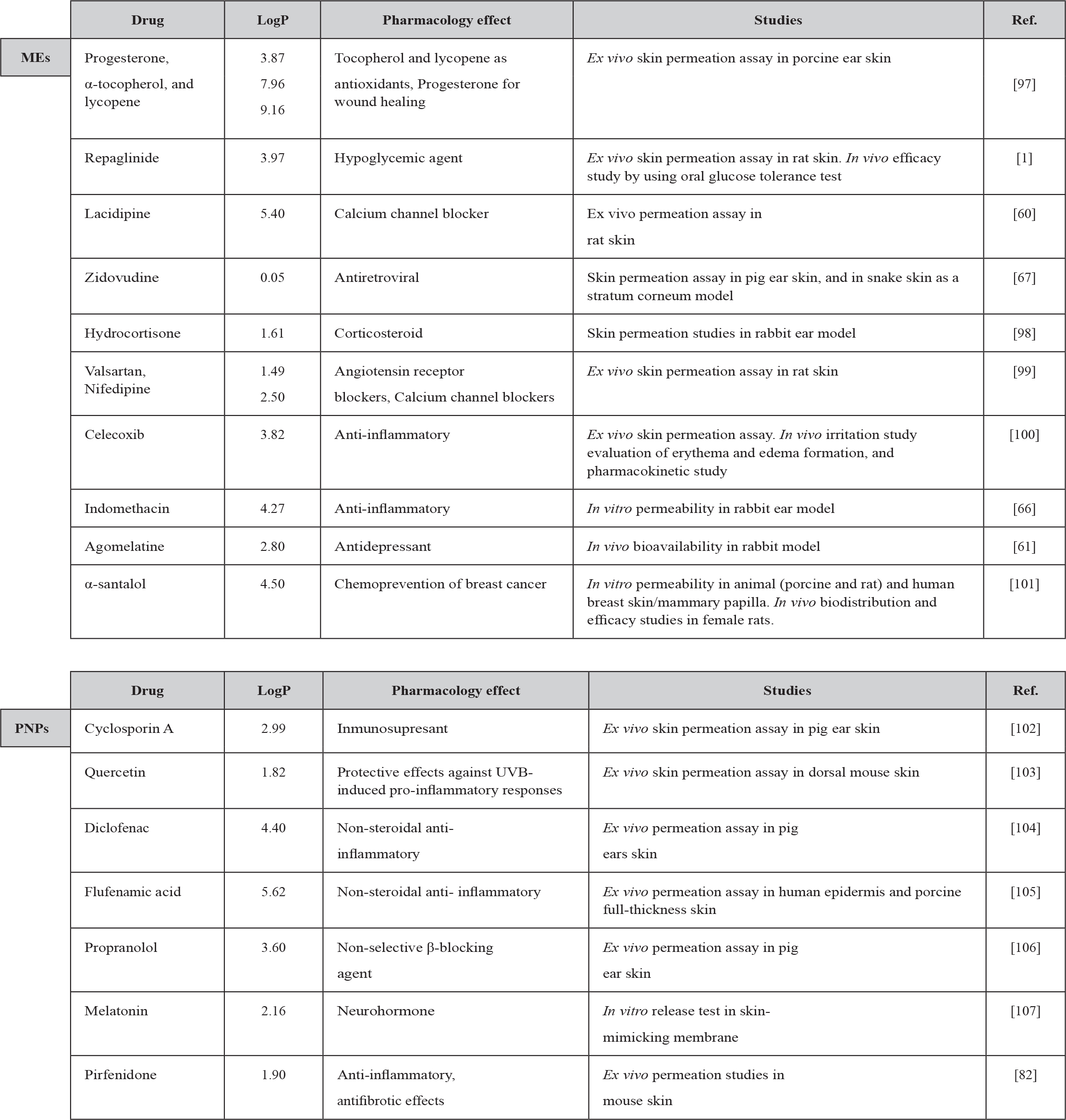
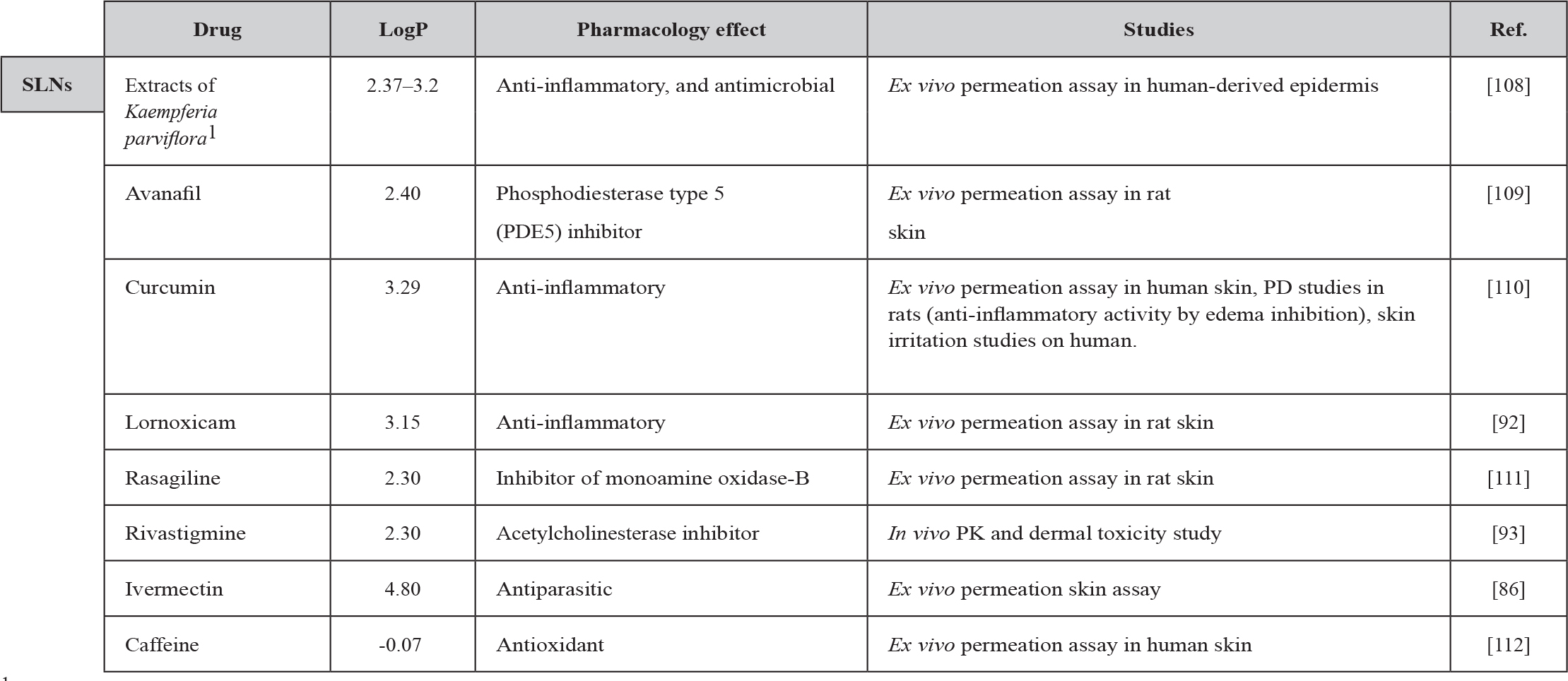
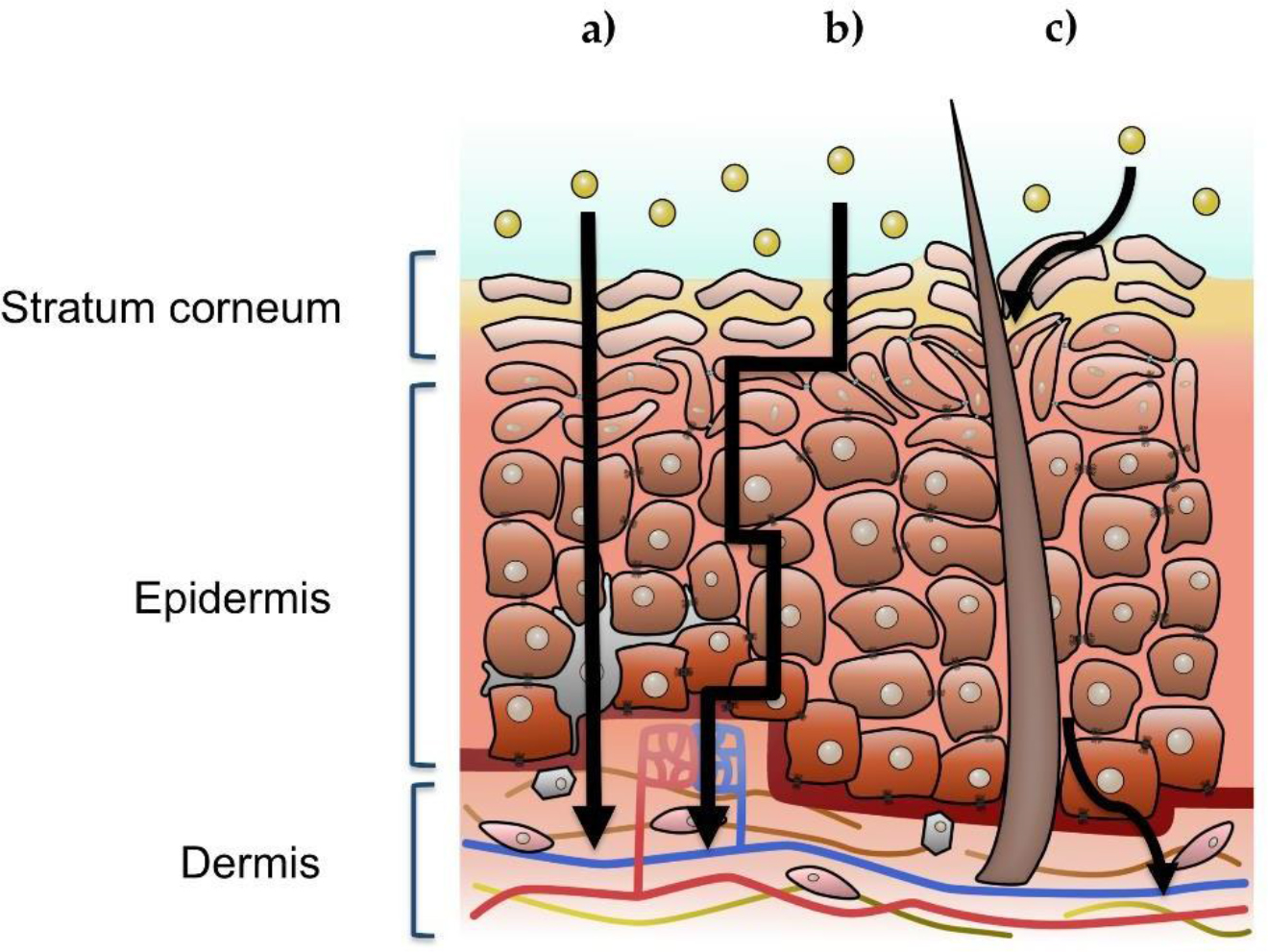
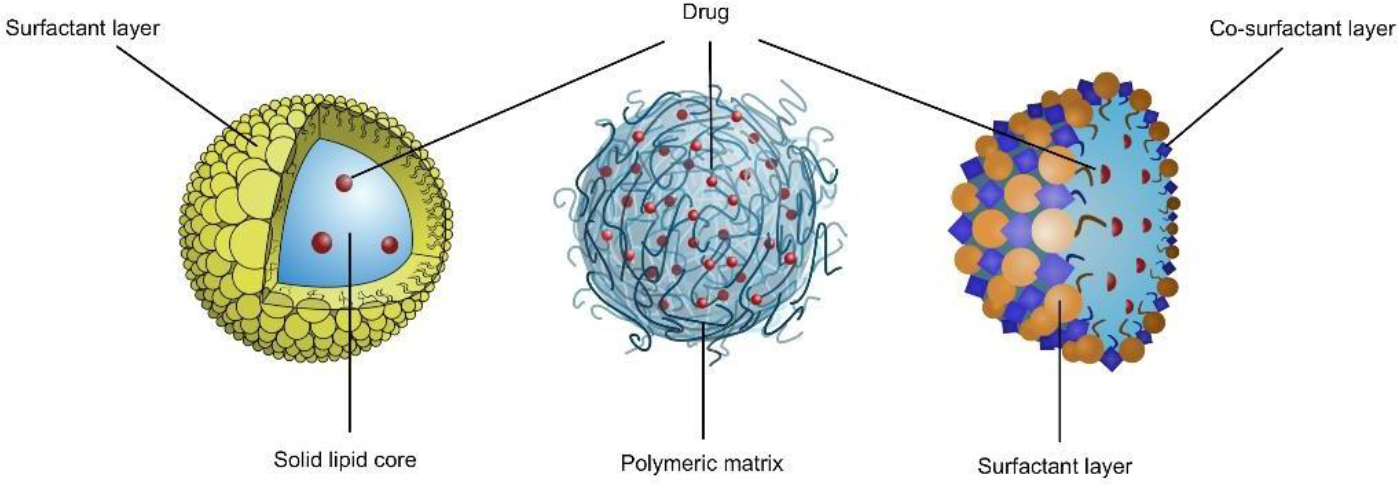
An optimal pharmaceutical dosage form aims at delivering an active compound to a target organ at therapeutic concentrations, while avoiding or reducing side effects and simplifying the dosing regimen of the patients. Percutaneous drug delivery is one of the promising pharmaceutical approaches since it can provide a continuous delivery for hours or days creating constant drug levels. The transdermal delivery can be advantageous in particular for drugs with a high renal or hepatic clearance, i.e., those that undergo oral first-pass metabolism and drugs with short half-lives that would otherwise need a frequent dosing regimen. The quick and short-acting BCS class II drugs with a very short half-life like the antidiabetic repaglinide, are ideal candidates for transdermal drug delivery [1]. In addition to the potential improvement in the medication regimen, the transdermal route can cause a considerable impact in medical practice, clinically and economically, by improving the treatment compliance and reducing the need for medical services. In an observational study of a population with Alzheimer’s disease [2], a high proportion of patients have switched from oral to transdermal rivastigmine, which has eventually resulted in increased patient satisfaction and stress relief for caregivers through the use of the patch under daily practice conditions. The ultimate goal, though not easy to fulfill, for all new forms of transdermal formulations is to achieve a quantitative drug permeation through the skin, taking into account that the skin is an excellent barrier and basically difficult to penetrate. This constraint is evidenced by the fact that after more than 30 years since launching the first transdermal drug product, there have been only 30 transdermal products on the US market for just 20 drug molecules [3,4]. Nevertheless, due to the advantages of transdermal drug delivery and the potential benefit for millions of patients every year, tremendous research efforts have been made to challenge the skin penetration problem. Many techniques have been developed to enhancing transdermal drug permeation using physical or chemical methods. The latter include prodrugs, salt formation, ion pairing, chemical enhancers, as well as nano-formulation approaches such as microemulsions, nanoemulsions, solid lipid nanoparticles, polymeric nanoparticles, nanostructured lipid, liposomes and others [5–10]. Microemulsions (MEs), and nanoparticles which includes lipid nanoparticles (SLNs and NLCs) and solid polymeric nanoparticles (PNPs), three nanotechnology-based dosage forms (see Table 1 and Fugure 2), have been drawn much attention during the last decade. Owing to their physicochemical properties, these systems are proposed as vectors to deliver active compounds through the stratum corneum, epidermis, and dermis, in order to obtain dermal, regional, and systemic effects. It should be noted that dermal and transdermal drug delivery systems are both being designed to overcome the main barrier of the skin, the stratum corneum, and the terminological difference between them relates to the extent of the molecular flux through the skin. Unfortunately, due to the selective nature of the stratum corneum, only a small group of drugs loaded in these novel formulations can be delivered at a therapeutically relevant dosage [11]. In this review, we summarize the immense work done so far aiming to challenge the skin barrier by the three types of nano-sized drug delivery systems.

Table 1. MEs, PNPs and SLNs for drug delivery to and through the skin.

JPPR 19 - 122_Amnon Sintov_F3
JPPR 19 - 122_Amnon Sintov_F4

Topical Pharmaceutical Forms and Challenges in Transporting Drugs via the Transdermal Route

Since the US Food and Drug Administration have approved the first scopolamine transdermal patch for motion sickness in 1979, the pharmaceutical industry has centered their efforts on transdermal formulation research for other drugs. Between 1970 to 1980, the first generation of the transdermal system included patches that designed as a drug reservoir with a semi-permeable membrane placed over the skin that controls drug release. Later, in the next decade (1980–1990), patches made of polymeric matrices entrapping the drug within pores and channels were introduced into the market. Today, almost 20 drugs have been successfully incorporated into transdermal drug delivery systems to reach systemic circulation or to treat local disorders. Commercial transdermal systems contain drugs such as clonidine, fentanyl, estradiol, nicotine, rotigotine, estradiol, oxybutynin, testosterone, nitroglycerin, and others [3]. The transdermal dosage forms have become attractive for patients due to their simplicity, immediate application, and prompt termination whenever desired [12–15].

Advantages of Transdermal Drug Delivery

Transdermal drug delivery has a significant advantage of bypassing the hepatic first-pass metabolism, thereby improving drug bioavailability. In addition, the transdermal route can avoid possible gastrointestinal degradation and instability of some orally- administered drugs and/or unwanted mucosal irritation caused by drugs like non-steroidal anti- inflammatory drugs (NSAIDs). The transdermal benefits were exemplified in a research performed with flurbiprofen, one of the most potent members of the phenylalkanoic acid series of NSAIDs [16]. After its oral administration, the most frequently reported side effects of flurbiprofen are abdominal discomfort, diarrhea, constipation, emesis and abdominal distention [17]. Furthermore, it has a short half-life of 3.9 h, which requires frequent dosing that obviously increases these symptoms. These drawbacks make flurbiprofen a perfect candidate for the transdermal route, especially for the prolonged therapy of rheumatoid arthritis and its related disorders. Charoo et al. [18] have shown that the bioavailability of flurbiprofen in albino rats increased up to 5.56 times with transdermal patch formulation compared to its oral administration. The results were confirmed by pharmacodynamic studies in a rat edema inflammation model [18]. Another attractive advantage of the transdermal drug delivery systems is the reduction of toxic side effects by keeping a steady state plasma drug level with less peak-to-trough variations. The necessity of the transdermal route is also exemplified by the scopolamine patch that was designed to prevent motion sickness for an extended duration of time. Its dermal application accompanies with none or minimal adverse effects, which are usually associated with the oral or parenteral bolus therapy of antimuscarinic drugs (mainly dry mouth, drowsiness and some more reactions including hallucinations) [19, 20]. Finally, the improved patient compliance due to non-invasive, easy drug administration, and the natural capability of controlled and sustained drug release make this dosage form attractive. It may also effectively serve the elderly population, especially people suffering from dysphagia and neurological disorders that lead to non- compliance [21]. Similarly, it may serve infants and children who also require compliant medications [22]. As it has already been recognized that drug compliance is quite substantial, the transdermal drug delivery can resolve the compliance problems, reducing the need for injections and oral administration of medications to vulnerable pediatric and geriatric patients [23, 24]. In developing countries, children, unfortunately, die from easily treatable diseases (e.g., malaria) due to poor compliance, e.g., difficulties to properly swallow medications or inconsistent multiple dosing. Poor patient compliance can also result in antibiotic resistance, which is one of the biggest threats to global health.

Limitations of Transdermal Drug Delivery

Despite the considerable advantages some major drawbacks limit the transdermal patch from being a generally-used drug delivery system. A substantial limitation of the transdermal route is a poor permeation of many active molecules through the skin, wherein the stratum corneum plays the primary barrier. A relatively high skin penetration usually takes place with low molecular weight drug molecules (< 500 kDa), light lipophilicity, and high potency (daily dose < 10 mg) [25–27]. Due to these limitations, it is therefore difficult to frequently employ the transdermal route. Thus, it is a great challenge and almost an impossible mission to deliver large hydrophilic molecules (i.e., high molecular weight/poor lipophilicity) such as antibodies, peptides, proteins, and hormones. Besides, possible skin irritation and sensitization caused by the formulation and/or the adhesive band may be detrimental during the treatment. It should be taken into consideration that a drug that accumulates in the skin may be irritant if it stays for a relatively long time inside the skin layers. Therefore, it is essential to investigate the skin pharmacokinetics not only during the patch application but also after the application is over (patch removal). An excellent example of skin toxicity by accumulation is captopril, which its irritation activity could be diminished only by including penetration enhancer, antioxidant, anti-irritant and chelating agent in the transdermal formulation [28]. Inter- and intra-subject variability of skin permeability due to patient skin conditions may also be a problem. Fentanyl, a potent synthetic opioid that has been used in transdermal drug delivery systems, has caused an extensive interindividual variation in dermal penetration with maximal fluxes ranging between 21 to 105 ng/cm2/h in in vitro studies [29].

Finally, it is well known that the most common drug-metabolizing enzymes are expressed in the skin, which is the largest organ of the human body. Among them are cytochromes P450, flavin monooxygenases, glutathione-S-transferases, N-acetyltransferases, and sulfotransferases [30, 31]. Their activity in the skin may cause either drug biotransformation that leads to inactivation [32], or prodrug biotransformation that leads to pharmacological activation [33, 34]. Any pre-systemic metabolism that may occur in the skin should be taken into account when transdermal patch is designed and developed.

The Skin Barrier

Skin is the largest and accessible organ of the body, covering a surface area of approximately 2m2 depending on the individual weight and height. It is also one of the most multifunctional organs, forming a protective barrier against many different factors including ultraviolet radiation, pathogens, and xenobiotics. It allows, however, an exchange of gases and toxins with the external environment. Additionally, it prevents water loss but regulates body temperature in humans through sweat secretion. The thickness of the skin is a few millimeters, possessing two primary structures:

  1. The epidermis, an avascular layer, measures 50 to 100 µm in thickness. This layer can be further divided into four distinct strata according to the corresponding cell differentiation: stratum basale, stratum spinosum, stratum granulosum, and the outer stratum corneum (SC). The latter is the outermost layer, which is 10 to 20 µm thick and is generally accepted as the primary membranal barrier for topically applied xenobiotics. This barrier is constructed as a ‘brick and mortar’ structure, where the bricks represent dead corneocyte cells composed primarily of cross-linked keratin and the intercellular mortar is a mixture of lipids organized in bilayers. The extracellular medium consists principally of neutral lipids such as cholesterol, ceramides and fatty acids, including linoleic acid that is deemed to play a significant role in the barrier function [35]. The SC is commonly recognized as the most predominant barrier for drug delivery, therefore, it has become the target for variously designed nanocarriers. By transporting the SC, the drug could be released from its carrier and retained in the skin, known as topical drug, or could be dragged through the skin into the blood, an action known as transdermal drug. Whatever is the mechanism of drug release, the act of transporatation through the SC barrier by the nanocarrier is of great importance for transdermal researchers.
  2. The dermis, covered by the epidermis, possesses 1–2 mm thickness and contains a highly capillary area just below the dermal-epidermal junction. Drug molecules that reach the dermis are available for systemic drug absorption via the capillary area. The dermis represents another active layer of the skin that holds the hair muscles, blood supply, sebaceous glands, and nerve receptors.

Although the skin consists of various membranal layers and cell types, it is acceptable that the stratum corneum layer is the one that controls the entrance of xenobiotics, and despite its incredible thin thickness it provides an effective barrier for maintaining homeostasis [36]. The passage of a xenobiotic through the skin can follow three diffusive pathways (Figure 1): transcellular (intracellular), paracellular (intercellular), and appendageal (through eccrine sweat glands or hair follicles). The transepidermal pathway (intracellular and intercellular) requires crossing through the stratum corneum, i.e., corneocytes and lipid-dominant extracellular lamellar membrane structures. Polar drugs following the intracellular route can cross through corneocytes, while apolar drug molecules undergo intercellular transport through the continuous lipid matrix. The transappendageal route comprises a passage of molecules through the hair follicles or sweat glands; however, it is considered as a less significant route for most drugs [37].

JPPR 19 - 122_Amnon Sintov_F1

Figure 1. Illustration of a cross-section view of human skin, where the three possible xenobiotic penetration pathways are signaled: a) intracellular, b) intercellular, c) follicular or appendageal. The upper left inset indicates the stratum corneum, viable epidermis, and dermis.

Commonly, to obtain quantitative transdermal drug absorption to the dermis and blood circulation, a temporary disruption of the skin barrier function is required [38]. This process can proceed in three different steps. Initially, the molecule enters into the outer skin stratum, the SC (i.e., skin penetration). In the next step, it passes through one stratum to another, which is defined and known as permeation, and finally reaches the dermis and the vascular system (i.e., absorption). The physicochemical characteristics of the molecules determine the route of drug penetration through the stratum corneum [39]. It has been reported that hydrophilic molecules usually prefer the intracellular (transcellular) route, due to the low affinity of these molecules to lipids existing on the surface and between the corneocytes [40]. However, this pathway is considered to be most difficult due to the complexed lipid bilayers crossing. Moreover, if a drug is very hydrophilic, it would be unable to partition from the topical aqueous delivery system into the SC. In contrast, a highly lipophilic drug is unable to transfer into the epidermis and will retain in the SC. Like the intracellular route, the appendages are also considered as a less significant route, because they occupy a limited surface area (~0.1%) [41]. Altogether, the relative importance of the skin appendages depends on the intrinsic physical properties of the test molecules or delivery systems as well as the time of application [42]. Nevertheless, the appendages represent important reservoir structures and are considered as shunt penetration pathways [43]. In fact, the pilosebaceous units are key anatomic compartments for particle-based drug delivery systems. Nanoparticles in particular can be accumulated in the follicular openings and penetrate along the follicular duct [44, 45]. However, the hair follicle types and dimensions significantly vary among the different body regions, which make the delivery rate and extent via this route inconsistent in nature. It has been noted that while terminal hair follicles of the scalp and the dilated acne pores can conveniently be reached with particles in the submicron size range, penetration in hair follicles of the body vellum is limited to smaller particles sizes [46]. Despite its high tortuosity, the intercellular (paracellular) pathway of xenobiotics along the lamellar lipids between the corneocytes is widely considered as the main route for a few drugs but a significant barrier to permeation for most drugs. Therefore, it is commonly accepted that an optimal drug candidate for transdermal delivery should be lightly lipophilic (log octanol-water partition coefficient or logP = 1–3), possessing a low molecular weight (MW <500 Da), and a low melting point (m.p. <200 °C) [25, 47]. Basically, the intercellular and follicular route, at least in healthy skin, may be the most relevant for penetration of drug-loaded nanoparticles into the skin, but not for penetration of most drug molecules in their free and soluble form. Impenetrable large particles, rather than nanoparticles, deposited in furrows atop the stratum corneum may continuously release their payload, which may become effective only if the active molecules show suitable features for skin penetration such as described above.

Currently New Transdermal Drug Delivery Nano-Systems

There has been always of great importance for the pharmaceutical and cosmetic researchers to develop more “cost-effective/ delivery-efficient” vehicles. In particular, major efforts have been made for development of vehicles possessing an appropriate ability to carry hydrophilic and high molecular weight active molecules through the stratum corneum, molecules that are naturally impenetrable into the skin. These vehicles should be designed to bring about efficient penetration and maximization of drug bioavailability thus providing therapeutic drug concentrations. During the last decades, extensive research has been done to overcome the skin barrier and novel formulations and techniques have been developed to achieve this goal. They can be roughly classified into physical and chemical methods. The physical or the active methods include iontophoresis [48], electroporation [49], sonophoresis [50], fractional ablation [51], and micro-needles [52], and are used as a driving force to obtain drug skin permeation from a topical formulation. The iontophoretic method applies an electrical field to drive ionized drug molecules across the skin membrane, electroporation treats the skin with a high electrical voltage for a short period of time, and sonophoresis uses ultrasonic waves to improve drug diffusion. On another hand, there are chemical strategies that include chemical permeation enhancers that perturb the skin structure [53], prodrugs, and nanoformulations (or nanostructured systems) such as polymeric nanoparticles, solid lipid nanoparticles, and microemulsions (see Figure 2). Nanostructure systems represent an alternative to the traditional formulations due to their ability to facilitate drug delivery to structural features of the skin like hair follicles or interact with skin lipids to mediate transportation. Diverse parameters affect the penetration of nanostructures including size, shape as well as their deformability. The relevance of the size for nanoparticle permeation has not yet been conclusive, and that is because several other physicochemical properties of the nanoparticles may also affect, such as ζ potential and surface modification.

JPPR 19 - 122_Amnon Sintov_F2

Figure 1.Figure 2. Schematic illustration of (from left to right): Solid lipid nanoparticles, Polymeric nanoparticles, and Microemulsion.

Microemulsion

Microemulsions (MEs) have gained an important role since it has widely demonstrated to significantly enhance transdermal permeation of drugs compared to the conventional dosage forms such as simple gels, ointments or creams (macroemulsions) [54]. A microemulsion is a mixture of two immiscible liquids, surfactant, and a cosurfactant, forming an optically isotropic structured liquid. Even though it macroscopically appears as a single-phase system, it is a multiphasic system on a nanoscale, being considered as a dispersion of nanodroplets. MEs are thermodynamically stable (interfacial tension is nearly zero) and are spontaneously formed while not requiring an input of energy. The ME formulation is beneficial for transdermal and dermal delivery of drugs, primarily since the diffusivity and the partitioning into the skin is significantly increased due to its high capacity, namely, a high quantity of drug that can be incorporated in the formulation. Furthermore, the microemulsion ingredients that create its unique composition may reduce the diffusional barrier of the stratum corneum and enhance skin permeation [55–58]. For instance, the hydration effect of the microemulsion on the stratum corneum has been reported to affect skin permeation [7,59]. In addition, ME formulations are capable of solubilizing and delivering both hydrophilic (in W/O MEs) and lipophilic drugs (in O/W MEs). Consequently, many studies have demonstrated an improvement in drug bioavailability and stability by using MEs. Gannu et al. [60] developed a microemulsion-based transdermal therapeutic system for lacidipine, which is a poorly water-soluble (logP=4.5) and poorly bioavailable drug. The results demonstrated a 3.5 times improvement in the bioavailability of lacidipine after transdermal administration of microemulsion gel compared to oral suspension. Other promising results have been reported by Said et al. [61] who studied the delivery of agomelatine by the transdermal route using microemulsions. An approximate value of 40-fold enhancement in drug permeation through rat skin was demonstrated when compared to the same drug in a hydrogel formulation.

Despite their benefits, MEs are not exempt from disadvantages. In order to produce stable nanodroplets with an ultra-low interfacial tension, high concentrations of surfactants (30–60%) are usually required. These excessive concentrations of surfactants may lead to skin irritation and toxicity. Additionally, due to the use of high concentrations of surfactants and co-surfactants, microemulsions can be affected by environmental parameters such as temperature, ionic strength, dilution, and pH. The effectiveness of MEs for transdermal drug delivery depends on several interconnected factors such as the microstructure, type, size, and shape of the nanodroplets. The transport efficacy through the skin layers also depends on how a drug or an active compound is incorporated in the MEs droplets, either dissolved in their core or attached at the interface. It has also been reported that MEs components can play an essential role as penetration enhancers, by disrupting the lipid structure of the stratum corneum or increasing the partition coefficient between the vehicle and the skin [62]. However, the penetration mechanism is additionally dependent on the stratum corneum properties and the physicochemical properties of the active compound [63]. Hathout et al. [64] have designed a study to evaluate how a microemulsion component induces changes in the stratum corneum. It has been shown that there was a proportional relationship between the perturbation degree of the stratum corneum and the concentration of the components that had topically applied on the skin [65]. They have shown that the use of unsaturated fatty acids, such as oleic acid, can decrease the conformational order of the stratum corneum lipids and induce some phase separation. Other studies have confirmed that the stratum corneum uptake of oleic acid, Tween 20 and Transcutol®, which are commonly used as MEs components, is increased after application of MEs compared to application  of the pure chemicals [64]. Another interesting research evaluated the transdermal delivery of indomethacin in eugenol microemulsion by the rabbit ear model [66], showing a greater flux compared with that obtained from a saturated aqueous solution. This penetration enhancement can  be explained by the the activity of eugenol and the synergistic effect obtained with PEG. Also, the microemulsions that contained a high eugenol concentration and Polyethylene Glycol (PEG) were able to increase the loading capacity of indomethacin as evidenced by a significant improvement in the solubility of the drug in these formulations compared to its water solubility (logP of indomethacin=4.46). In another study, ME was prepared with cineole as a chemical enhancer, a combination that promoted a higher skin permeation of zidovudine [67]. Zidovudine, a poorly bioavailable drug with a short half-life of 0.53h, significantly permeated through pig ear skin and snake skin from the cineole containing ME (by three-fold) compared with the control. It is well known that permeation enhancers may act on the skin through diverse mechanisms, such as by disruption of the lipid bilayer of the SC, or by interaction with skin proteins (e.g., denaturation, conformational modification). Specifically, cineole disorganizes the lipid bilayers and decreases SC property as a barrier.

Microemulsions can also act as skin permeation promoters by their nanostructural virtue. In a series of studies performed at Ben-Gurion University in Israel, the advantage of a microemulsion system has been established with no need of penetration enhancers or alcohols [8, 68–70]. The skin bioavailability of lidocaine was improved by a microemulsion system composed of glyceryl oleate and polyoxyl 40 fatty acids (as the surfactants), isopropyl palmitate as the oil, and tetraglycol as the co-surfactant [68]. The in vitro transdermal permeation of lidocaine was significantly increased from the microemulsion compared to lidocaine permeation from a macroemulsion, oil-free micellar system, and a surfactant mixture only (water-free). Similarly, the transdermal administration of diclofenac-containing microemulsion to rats resulted in 8-fold higher plasma levels of the drug than those obtained after application of Voltaren Emulgel® [8]. The diclofenac microemulsion contained the same ingredients as in lidocaine formulation [68], i.e., glyceryl oleate and polyoxyl 40 fatty acid, isopropyl palmitate tetraglycol. Caffeine permeation across fresh skin excised from rat, rabbit, and pig was highly enhanced when formulated in microemulsion composed of Labrasol®, glyceryl oleate, isopropyl palmitate, propylene carbonate and water [69]. The transdermal permeation rate of caffeine was higher via microemulsion than the rates measured after caffeine in Labrasol® solution, caffeine in an oil-free micellar system, and caffeine in a surfactant-oil mixture. These findings indicate once more that the mechanism of drug permeation through the skin is based on the microemulsion’s vesicular nature rather than on chemical enhancement driven by its surfactant excipients. In another study which was carried out by our group to evaluate transdermal curcumin permeation [70], it has also been established that microemulsion vehicle was advantageous over a micellar system and a surfactant-oil mixture, composed of the same proportions of ingredients.

Polymeric Nanoparticles

The use of polymeric materials for entrapping drugs and active substances in a solid envelope is an apparent approach selected to mask the intrinsic physicochemical properties of active compounds that are inapplicable for skin permeation. Polymeric nanoparticles, which are defined as nanosystems with particle sizes of tens and hundreds of nanometers in diameters, have frequently been given more descriptive names, such as nanocapsules or nanospheres, depending on their morphology. The presence of an inner core (aqueous or oily solution) in nanocapsules leads to a vesicular structure while its absence in nanospheres provides a matrix structure of the polymeric matter. The drug can be entrapped in the core (nanocapsules) or the channels and cavities of the matrix (nanospheres) as a dispersion (in a saturated solution), as a solution, or as a complex with the polymer. Due to their inherent complexity, nanoparticles made of polymers have shown to be an excellent carrier for controlled and sustained delivery of drugs [71, 72]. Their surface may also be modified in order to carry out an active or passive drug delivery [73, 74].

The pharmaceutical properties of polymeric nanoparticles (PNPs) (e.g., drug stability, release mechanism) depend essentially on the type of the polymer. For example, instability has been encountered in calcium alginate nanoparticles that led to fast and uncontrolled drug release profiles after oral administration [75]. Similar results have been shown in gliadin nanoparticles [76]. The proteinaceous nature of gliadin makes its nanoparticles highly sensitive to pH changes or ionic strength alterations, so they may dissolve or aggregate depending on the environmental conditions in the alimentary canal [76]. To improve PNPs’ stability, two approaches or strategies have been adopted. One of the strategies takes advantage of the functional groups present on the polymeric chains, which can be covalently cross-linked with a compatible crosslinker. In many cases, crosslinking is an essential step that affects the functionality of nanoparticles, such as biodegradability and/or drug release [77, 78]. The second strategy uses coating of PNP surface area (e.g., with polysaccharides, polyethylene glycols) to avoid agreggation and precipitation [79, 80]. PNPs are among the most studied nanocarriers for drug delivery due to their relatively high entrapment yield and their ability to effectively deliver therapeutic doses while minimizing side effects. Masella et al. [81] have developed an innovative polymeric patch for transdermal delivery of melatonin, which was incorporated into polycaprolactone (PCL) nanoparticles. Melatonin release from this patch was assessed by a Franz diffusion cell system, shown a controlled behavior of melatonin diffusion from the PCL nanoparticles. This drug has been indicated as a good candidate for transdermal drug delivery due to first-pass metabolism resulting in low oral bioavailability and a weak sleep-promoting effect. Another drug loaded in PNPs that has also been studied for transdermal delivery was pirfenidone, the first antifibrotic agent approved by the FDA to treat idiopathic pulmonary fibrosis. Pirfenidone has a short half-life in the (2.4 h), and clinical studies have shown that it undergoes hepatic first-pass metabolism. Moreover, following oral administration, it may cause side effects such as stomach pain, vomiting, diarrhea, burning or pain in esophagus and throat. Transdermal delivery has been attested as an effective pathway to overcome the undesired side effects, and to provide patient compliance. The transdermal drug delivery system was based on chitosan-sodium alginate nanogel, which presented a sustained release pattern during 24 h and a significant enhancement of skin penetration [82].

Lipid Nanoparticles (LN)

Solid lipid nanoparticles (SLNs) were introduced in 1990 as an alternative carrier system for liposomes, O/W microemulsions, and lipophilic polymeric nanoparticles. They are composed of a solid hydrophobic core and a monolayer of surfactant coating and are suspended in the aqueous environment. The solid core contains the active compound dissolved or dispersed in a solid high melting fat matrix. Due to their properties, SLNs have the potential to carry lipophilic or hydrophilic molecules, depending on the method of their preparation. Usually, SLNs are composed of approximately 0.1 – 30% (w/w) solid fat, have an average size of 50–1000 nm in diameter and a spherical morphology. Apart from decreasing SLNs’ particle size, which increases their stability, tensoactives are also being used at concentrations of about 0.5 to 5% to enhance stability. These include phospholipids, steroids, poloxamers, and polysorbates. The type of surfactants, lipid compounds, and their proportions can modulate the particle size and drug loading. SLNs’ lipid components include glyceryl esters, waxes, and fatty acids, which are required to be in a solid, state at ambient and body temperature (36.5–37.5°C). SLNs have several advantages: the manufacturing is cost-effective, easy to scale-up the production, they are biodegradable, relatively stable and nontoxic [83–851]. Other important characteristics include good protection offered for the entrapped drugs and sustained drug release from the lipidic matrix. For the purpose of transdermal application and to avoid a potential systematical toxicity, Guo et al. [86] prepared ivermectin-containing SLNs. The release study displayed a slow and sustained release patterns for the drug-SLNs. Nevertheless, variability was noted in the shape and particle size of the SLNs, as well as drug expulsion from the lipid matrix [87]. However, one of the most relevant limitations is the possible degradation of active components during the production process [88, 89]. Labile molecules such as peptides, proteins or nucleotides, may undergo degradation as a consequence of stress and strain caused by the homogenization process, or by the heat formation during melting. It should be aware, therefore, that an appropriate selection of the production method is indispensable. Gallarate et al. [90] prepared peptide-loaded SLNs through coacervation technique, a solvent-free method, in which leuprolide and insulin had been chosen as model polypeptides. The researchers have demonstrated that the coacervation technique, which included some mild heating steps, did not affect the chemical stability of these peptides.

SLNs appear to be an attractive colloidal carrier system for the delivery of drugs into the skin, mainly because of their soothing effects on the skin. They have a moisturizing effect on the skin through occlusion providing an incremental skin hydration [91]. SLN formulations were loaded with lornoxicam, an NSAID, and were tested for drug permeation through full-thickness rat skin [88]. As already mentioned, topical application of NSAIDs may represent drug administration that avoids some gastrointestinal side effects such as dyspepsia, ulceration, and bleeding, usually appearing after oral lornoxicam. It was shown that lornoxicam SLNs increased skin permeation rate compared with a lornoxicam gel control, implying that the spontaneous occlusivity and skin hydration increase the penetration into the skin [92]. Transdermal drug delivery using SLNs has also been studied for rivastigmine, a drug used for the treatment of mild to moderate Alzheimer’s and Parkinson’s diseases [93]. The results showed improvement of daily activities like cognition, behavior, and global function, thus, transdermal drug delivery have given an optimal advantage to such patients, by providing a controlled drug release that maintains steady plasma levels. That makes the treatment a user-friendly and convenient alternative to the traditional dosage forms. The researchers also reported that SLNs were prepared by the emulsification-diffusion method, and subsequently, the SLNs were incorporated into transdermal films. Then, pharmacokinetics studies were performed on rabbits, showing significant improvement of Cmax and bioavailability of the drug compared to a control patch [93].

SLNs can be modified by incorporation of liquid lipid into the solid structure. This new form of SLNs, named nanostructured lipid carriers (NLCs), encounters the limitations of SLNs such as limited drug loading capacity and lipid crystallization [95]. The introduction of liquid lipids causes a melting point depression in comparison with a pure solid lipid, and impairs the crystal structure of the lipid thus offering more space to drug inclusion. However, Teeranachaideekul et al [96] have shown that lipid NPs display a deeper penetration up to upper dermal layer when the content of liquid lipid is lower, indicating that liquid lipid limits skin penetration. This phenomenon has been explained by reduction in the occlusive effect (hydrophobic film formation) of the lipid nanoparticles with the increase on liquid content, which in turn caused more water evaporation and lesser skin hydration [96].

MEs, PNP and LN as Nanocarriers for Transdermal Drug Delivery of Various Therapeutic Agents

During the last decades, researchers have shown an increasing interest in nanocarriers for transdermal application. Table 1 summarizes the latest studies related to transdermal nanocarriers. The selection of the most appropriate carrier has been primarily dependent on the physicochemical characteristics of the drug that has to be loaded (e.g., pKa, hydrophilicity, lipophilicity), and factors related to the carrier and its manufacturing process, such as the ability to entrap the drug and to keep its stability. The nanocarriers could be prepared from a diversity of materials such as lipids, proteins, polysaccharides, natural or synthetic polymers. The lipophilic/hydrophilic nature of the drug mainly dictates the development of most compatible transdermal dosage forms. It is commonly accepted that drugs with a relatively high logP are more appropriate to be delivered through the skin, while drugs with low logP are more difficult to penetrate and need lipophilic carriers. Therefore, it is essential for a nanocarrier not only to be able to adsorb and entrap a low logP drug but also to penetrate and deliver it through the lipid bilayers of the stratum corneum [97].

Microemulsions have gained much interest due to their thermodynamic stability and ease of preparation. In vitro [113] and in vivo [114] studies have demonstrated their potential in enhancing drug delivery through dermal and transdermal routes of administration. The main advantages of MEs for transdermal delivery of drugs include (a) the high capacity and ability to solubilize quantitative amounts of hydrophilic drugs, and (b) the permeation enhancing effect due to individual components in the microemulsions or due to the vesicular nature of the delivery system. El Maghraby et al. [98] studied hydrocortisone as a model lipophilic drug and investigated the effects of cosurfactants on the transdermal delivery. Ethyl alcohol, isopropanol, and 1,2-propanediol (propylene glycol) were used as cosurfactants in the microemulsion. The results showed a significantly increased transdermal flux of hydrocortisone from MEs containing these cosurfactants compared to a cosurfactant-free formulation. Thus, the incorporation of cosurfactants not only modifies the physical characteristics of the microemulsion but it also increases the permeation efficacy, supporting the conception of the nanovesicle-driven mechanism of skin penetration [8, 68–70]. Carvalho et al. [97] compared a non-aqueous microemulsion (containing propylene glycol) with an aqueous microemulsion (containing water), and evaluated their ability to improve drug delivery into the skin. The researchers studied the delivery of progesterone (MW=314.5 g/mol, logP=3.87), α- tocopherol (MW=430.7 g/mol, logP=7.96), and lycopene (MW=537, logP=9.16). The results of the skin penetration studies have demonstrated that the penetration enhancement promoted by the aqueous formulation was significant for progesterone and tocopherol, but not for lycopene. These data suggest that skin penetration of highly lipophilic drug is limited by aqueous MEs, and its use by this system may be redundant. Other promising results have been shown for repaglinide. This drug is a quick and short-acting BCS class II drug, and due to its poor water solubility (logP=5.4), and its short half- life (~1 h) (rapid first-pass metabolism), it represents a good candidate for microemulsion systems. Ex vivo permeability study across rat skin showed a 12.3-fold increase in flux with a microemulsion formulation compared to repaglinide suspension in water [1].

SLNs, on the other hand, are entirely different nanocarriers. Their main advantages include the protection of labile substances from chemical degradation, controlled drug release due to the solid state of the lipid matrix, and film formation on the skin that produces an occlusion effect. The occlusion effect leads to a reduced water loss and increased skin hydration, and produces a significant reduction in the total Transepidermal Water Loss (TEWL) [109]. The occlusion effect ability of SLNs (composed of glyceryl dibehenate) was studied using porcine skin. Occlusion Factor (F) was calculated according to Teeranachaideekul et al. [96], where F=0 means no occlusive effect while an F=100 means maximum occlusion. In this study, an occlusion factor of 36% for SLNs was shown. Furthermore, TEWL (recorded with a Tewameter®) showed a 34.3% reduction in TEWL. The studies have confirmed that SLNs, by their affinity to the stratum corneum, form an invisible and occlusive film over the skin that reduces transepidermal water loss and improves skin hydration [96, 115–117]. One more characteristic of SLNs is its lipophilic nature that combined with the high surface area allows longer contact duration of the drug with the skin and results in an efficient drug delivery. However, only thermostable drugs should be chosen for the SLN system due to the high temperatures required to be applied during production [89]. SLNs’ components are also relevant for transdermal absorption as their properties are critical for getting optimal transdermal permeation. Some interesting results have been published by Gaur et al. [110], who studied SLNs loaded with curcumin and obtained high drug permeation through human skin after 24h by including ceramide- 2 in the formulation. The amounts and the proportions of components may also influence the SLN properties as shown by Wake et al. [111], who designed SLNs for transdermal rasagiline mesylate to alleviate the symptoms of Parkinson’s disease. This research has shown that increasing the concentration of stearic acid in the SLNs led to a higher entrapment while increasing the concentration of tween 80 led to a smaller particle size. Unlike liquid oils and microemulsions, SLNs are able to release drugs by a controlled manner, while the slow mobility of the drug molecules is dictated by the diffusion out of the solid lipid. SLNs are usually made of physiological lipids such as fatty acids, steroids, monoglycerides, diglycerides and triglycerides [118], therefore they are considered safe and the danger of acute and chronic toxicity is much lower. However, its cytotoxicity will depend on the compounds that form the lipid matrix. Weyenberg et al. [119] tested a series of positively and negatively surface charged SLNs, demonstrating a cytotoxicity caused by the influence of surfactant excipients. Moreover, significant cytotoxicity was measured when SLNs were coated with the cationic surfactant cetylpyridinium chloride, while formulations containing Lipoid S75 reduced cell viability just slightly.

PNPs are different from MEs and SLNs by their rigidity, which might be critical for transdermal drug delivery. Although polymeric nanoparticles have a potential as transdermal drug carriers, the penetration of nanoparticles into the skin may be significantly lower due to this rigidity when comparing with soft nanoparticles (e.g., liposomes) [120]. It is, therefore, advisable to evaluate the specific PNPs’ properties and to consider a surface modification in order to obtain a significant skin penetration. Marimuthu et al. [121] prepared poly (lactide-co-glycolide) (PLGA) nanoparticles containing glucosamine and modified their outer surface, resulting in a more flexible permeability through the skin lipid membranes compared with uncoated glucosamine nanoparticles. Polymeric nanoparticles are generally prepared by one of three techniques – emulsion/solvent evaporation, nanoprecipitation, and salting out – all of them need a volatile organic solvent in which a hydrophobic drug is dissolved. Thus, PNPs are a useful reservoir for hydrophobic drugs designed for delivering them through the stratum corneum and for releasing these drugs by a controlled manner into the viable skin. Luengo et al. [100] used flufenamic acid as a lipophilic drug model and reported accumulation of the drug in deeper layers of excised human skin after more than 12 h. Transdermal hydrophilic drugs have also been studied using PLGA nanoparticles. Procaine hydrochloride-loaded PLGA nanoparticles, having an average diameter of 150–210 nm, were reported to increase skin accumulation, following by elevated muscle concentrations when using isopropyl myristate as a transdermal enhancer [122].

Perspectives for Transdermal Dosage Forms

The advantages of the dermal and transdermal drug route of administration are the best incentive to keep investing efforts and spending time in its research. The benefits of this route are, just to mention a few, the large surface area of the skin that provides a vast accessible area for drugs, the patient-friendly application that helps to improve the treatment adherence, the avoidance of the gastrointestinal tract environment, the decrease of side effects, as well as reducing multiple dosing frequencies. Due to the low number of drug molecules that are capable of passively crossing the skin barrier, development and application of nanocarriers such as MEs, SLNs, and PNPs are needed to expand the scope of drug compounds that would be quantitatively transported through the skin. More innovative formulation work, pre-clinical experiments, and clinical studies need to be done to establish the safety and efficacy of these nanosystems before introducing into the market. The current reports have demonstrated the advantages of nanometric transdermal formulations; however, solvent-free, safe and non-irritant excipients, time-consuming and inexpensive manufacturing process should be taken into consideration during product development. The number of next- generation therapeutics is expected to increase with new types of drug molecules, like proteins, peptides, and antibodies, even though the future challenge of the pharmaceutical scientists would be tougher and more difficult. The toughest obstacle of all might be the need to hold an active macromolecule into a nanoparticle or a nanodroplet while preserving its activity once it releases into the skin or in the systemic circulation. Altogether, the nanosystems have become successful dosage forms for a variety of dermally and transdermally active principals by modulating drug transfer and serving as nontoxic penetration enhancers.

References

  1. Shinde, Ujwala A, Sheela H Modani, Kavita H Singh (2018) Design and Development of Repaglinide Microemulsion Gel for Transdermal Delivery. AAPS PharmSciTech 19: 315–25.
  2. Darreh-Shori, T, V Jelic (2010) Safety and Tolerability of Transdermal and Oral Rivastigmine in Alzheimer’s Disease and Parkinson’s Disease Dementia. Expert Opinion on Drug Safety 9: 167–76.
  3. Pastore, Michael N, Yogeshvar N Kalia, Michael Horstmann, Michael S Roberts (2015) Transdermal Patches: History, Development and Pharmacology. British journal of pharmacology 172: 2179–209.
  4. Huang  Da,  Mi  Sun,  Yazhong  Bu,  Fang   Luo,  Cuiying   Lin, et al (2017) Microcapsule-embedded hydrogel patches for ultrasound responsive and enhanced transdermal delivery of diclofenac sodium.  J Mater Chem B 5: 8653–8675.
  5. Tosato MG, JV Maya Giron, AA Martin, V Krishna Tippavajhala, M Fernandez Lorenzo de Mele et al (2018) Comparative Study of Transdermal Drug Delivery Systems of Resveratrol: High Efficiency of Deformable Liposomes. Mater Sci Eng C Mater Biol Appl 90: 356–64.
  6. Wu, Xiao-mei, Christopher J. Branford-White, Li-min Zhu, Nichoals P. Chatterton, and Deng-guang Yu (2010) Ester Prodrug-Loaded Electrospun Cellulose Acetate Fiber Mats as Transdermal Drug Delivery Systems.” Journal of Materials Science: Materials in Medicine 21: 2403–11.
  7. Williams, Adrian C, and Brian W Barry (2012) Penetration Enhancers. Advanced Drug Delivery Reviews 64: 128–37.
  8. Sintov, Amnon C, Shafir Botner (2006) Transdermal Drug Delivery Using Microemulsion and Aqueous Systems: Influence of Skin Storage Conditions on the in Vitro Permeability of Diclofenac from Aqueous Vehicle Systems.” International journal of pharmaceutics 311: 55–62.
  9. Jain SK, MK Chourasia, R Masuriha, V Soni, A Jain, Nitin K Jain, and Y Gupta. “Solid Lipid Nanoparticles Bearing Flurbiprofen for Transdermal Delivery. Drug delivery 12: 207–15.
  10. Hatanaka, Tomomi, Toshihiko Kamon, Setsuko Morigaki, Kazunori Katayama, et al (2000) Ion Pair Skin Transport of a Zwitterionic Drug, Cephalexin. Journal of Controlled Release 66: 63–71.
  11. Paudel, Kalpana S, Mikolaj Milewski, Courtney L Swadley, Nicole K Brogden et al (2010) Challenges and Opportunities in Dermal/Transdermal Delivery. Therapeutic delivery : 109–31.
  12. Bodkin, J Alexander, and Jay D Amsterdam. “Transdermal Selegiline in Major Depression: A Double- Blind, Placebo-Controlled, Parallel-Group Study in Outpatients. American Journal of Psychiatry 11: 1869–75.
  13. –Winblad, Bengt, Jeffrey Cummings, Niels Andreasen, George Grossberg, et al (2007) A  Six–Month  Double–Blind, Randomized,   Placebo–Controlled   Study   of   a   Transdermal   Patch   in   Alzheimer’s   Disease––Rivastigmine Patch Versus Capsule. International Journal of Geriatric Psychiatry: A journal of the psychiatry of late life allied sciences 22: 456–67.
  14. Chelly, Jacques E, Jeffrey Grass, Timothy W Houseman, Harold Minkowitz, et al (2004) The Safety and Efficacy of a Fentanyl Patient-Controlled Transdermal System for Acute Postoperative Analgesia: A Multicenter, Placebo-Controlled Trial. Anesthesia Analgesia 98: 427–33.
  15.  Xu, Peng-Gang, Xi-Feng Lei, Bao-Di Ren, Shui-Ying Lv, et al (2017) Diclofenac Transdermal Patch Versus the Sustained Release Tablet: A Randomized Clinical Trial in Rheumatoid Arthritic Patients. Tropical Journal of Pharmaceutical Research 16: 477–82.
  16. Bhaskar, Kesavan, Jayaraman Anbu, Velayutham Ravichandiran, Vobalaboina Venkateswarlu, et al (2009) Lipid Nanoparticles for Transdermal Delivery of Flurbiprofen: Formulation, in Vitro, Ex Vivo and in Vivo Studies. Lipids in health disease 8: 6.
  17. Harirforoosh, Sam, Waheed Asghar, Fakhreddin Jamali (2014) Adverse Effects of Nonsteroidal Antiinflammatory Drugs: An Update of Gastrointestinal, Cardiovascular and Renal Complications. Journal of Pharmacy Pharmaceutical Sciences 16: 821–47.
  18. Charoo, Naseem Ahmad, Areeg Anwer Ali Shamsher, Kanchan Kohli, et al (2008) Improvement in Bioavailability of Transdermally Applied Flurbiprofen Using Tulsi (Ocimum Sanctum) and Turpentine Oil. Colloids surfaces B: Biointerfaces 65: 300–07.
  19. Apfel, Christian C, Kun Zhang, Elizabeth George, Serena Shi, et al (2010) Transdermal Scopolamine for the Prevention of Postoperative Nausea and Vomiting: A Systematic Review and Meta-Analysis. Clinical therapeutics 32: 1987–2002.
  20. Pergolizzi Jr, Joseph V, Beverly K Philip, John B Leslie, Robert Taylor Jr et al (2012) Perspectives on Transdermal Scopolamine for the Treatment of Postoperative Nausea and Vomiting. Journal of clinical anesthesia 24: 334–45.
  21. Kaestli, Laure-Zoé, Anne-Florence Wasilewski-Rasca, Pascal Bonnabry, Nicole Vogt-Ferrier (2008) Use of Transdermal Drug Formulations in the Elderly. Drugs aging 25: 269–80.
  22. Delgado-Charro, M Begona, and Richard H Guy (2014) Effective Use of Transdermal Drug Delivery in Children. Advanced Drug Delivery Reviews 73: 63–82.
  23. Boateng, Joshua (2017) Drug Delivery Innovations to Address Global Health Challenges for Pediatric and Geriatric Populations (through Improvements in Patient Compliance). Journal of pharmaceutical sciences 106: 3188–98.
  24. Gnjidic, Danijela, Andy Husband, Adam Todd (2009) Challenges and Innovations of Delivering Medicines to Older Adults. Advanced Drug Delivery Reviews.
  25. Bos, Jan D, Marcus MHM Meinardi (2000) The 500 Dalton Rule for the Skin Penetration of Chemical Compounds and Drugs. Experimental Dermatology: Viewpoint 9: 165–69.
  26. Delgado-Charro, M Begona, Richard H Guy (2003) Iontophoresis: Applications in Drug Delivery and Noninvasive Monitoring.” Transdermal Drug Delivery Systems 2: 199–225.
  27. Prausnitz, Mark R, Samir Mitragotri, Robert Langer (2004) Current Status and Future Potential of Transdermal Drug Delivery. Nature reviews Drug discovery 3: 115.
  28. Huang, Yaw-Bin, Yi-Hung Tsai, Jui-Sheng Chang, Jian Chen Liu, et al (2002) Effect of Antioxidants and Anti-Irritants on the Stability, Skin Irritation and Penetration Capacity of Captopril Gel. International Journal of Pharmaceutics 241: 345–51.
  29. Larsen, Rikke H, Flemming Nielsen, Jens A Sørensen, Jesper B Nielsen (2003) Dermal Penetration of Fentanyl: Inter-and Intraindividual Variations. Pharmacology toxicology 93: 244–48.
  30. Manevski, Nenad, Piet Swart, Kamal Kumar Balavenkatraman, Barbara Bertschi, et al (2015) Phase Ii Metabolism in Human Skin: Skin Explants Show Full Coverage for Glucuronidation, Sulfation, N-Acetylation, Catechol Methylation, and Glutathione Conjugation. Drug Metabolism Disposition 43: 126–39.
  31. Wilkinson, Simon C, Faith M Williams (2007) Cutaneous Metabolism. Dermal absorption toxicity assessment : 89–115.
  32. Jacques C, E Perdu, EL Jamin, JP Cravedi, A Mavon, et al (2014) Effect of Skin Metabolism on Dermal Delivery of Testosterone: Qualitative Assessment Using a New Short-Term Skin Model. Skin pharmacology physiology 27 : 188–88.
  33. Fang, Jia-You, Yann-Lii Leu (2006) Prodrug Strategy for Enhancing Drug Delivery via Skin. Current drug discovery technologies 3: 211–24.
  34. Doh, Hea-Jeong, Won-Jea Cho, Chul-Soon Yong, Han-Gon Choi, et al (2003) Synthesis and Evaluation of Ketorolac Ester Prodrugs for Transdermal Delivery. Journal of pharmaceutical sciences 92: 1008–17.
  35. Walters, Kenneth A, Michael S Roberts (2002) The structure and function of skin. In Dermatological and Transdermal Formulations, 1st ed.: Walters, KA, Eds.; Marcel Dekker, Inc., New York, USA, Pg No: 1–39.
  36. Tobin, Desmond J (2006) Biochemistry of Human Skin—Our Brain on the Outside. Chemical Society Reviews 35: 52–67.
  37. Illel, Brigitte, Hans Schaefer, Jacques Wepierre, Olivier Doucet (1991) Follicles Play an Important Role in Percutaneous Absorption. Journal of pharmaceutical sciences 80: 424–27.
  38. Pohlmann, Adriana R, Silvia S Guterres, Tatiele Katzer, Renata Vidor Contri (2016) Drug Transport across Skin. In Drug Delivery across Physiological Barriers 143–66.
  39. Ghafourian, Taravat, Parinaz Zandasrar, Hamed Hamishekar, Ali Nokhodchi (2004) The Effect of Penetration Enhancers on Drug Delivery through Skin: A Qsar Study. Journal of Controlled Release 99: 113–25.
  40. Chen, Longjian, Guoping Lian, Lujia Han (2010) Modeling Transdermal Permeation. Part I. Predicting Skin Permeability of both Hydrophobic and Hydrophilic Solutes. AIChE journal 56: 1136–46.
  41. Ng, Keng Wooi, Wing Man Lau (2015) Skin Deep: The Basics of Human Skin Structure and Drug Penetration. In Percutaneous Penetration Enhancers Chemical Methods in Penetration Enhancement: Drug Manipulation Strategies and Vehicle Effects, edited by Nina Dragicevic and Howard I. Maibach, 3–11. Berlin, Heidelberg: Springer Berlin Heidelberg 2015.
  42. Hueber, Frédérique, Jacques Wepierre, Hans Schaefer (1992) Role of Transepidermal and Transfollicular Routes in Percutaneous Absorption of Hydrocortisone and Testosterone: In Vivo Study in the Hairless Rat. Skin pharmacology physiology 5: 99–107.
  43. Tampucci S, Burgalassi S, Chetoni P, Lenzi C, Pirone A, et al (2014) Topical formulations containing finasteride. Part II: determination of finasteride penetration into hair follicles using the differential stripping technique. J Pharm Sci 103: 2323–9.
  44. Alvarez-Román, Rocio, Aarti Naik, YN Kalia, Richard H Guy, H Fessi (2004) Skin Penetration and Distribution of Polymeric Nanoparticles. Journal of Controlled Release 99: 53–62.
  45. Raber AS, Mittal A, Schaefer J, Bakowsky U, Reichrath J, et al (2014) Quantification of nanoparticle uptake into hair follicles in pig ear and human forearm. J Control Release 179: 25–32.
  46. Patzelt, Alexa, Heike Richter, Lars Dähne, Peter Walden, et al (2011) Influence of the Vehicle on the Penetration of Particles into Hair Follicles. Pharmaceutics 3: 307–14.
  47. Grice, Jeffrey E, Hamid R Moghimi, Elizabeth Ryan, Qian Zhang,et al (2017) Non-Formulation Parameters That Affect Penetrant-Skin-Vehicle Interactions and Percutaneous Absorption. In Percutaneous Penetration Enhancers Drug Penetration into/through the Skin 45–75.
  48. Wang, Yiping, Rashmi Thakur, Qiuxi Fan, Bozena Michniak (2005) Transdermal Iontophoresis: Combination Strategies to Improve Transdermal Iontophoretic Drug Delivery. European Journal of Pharmaceutics Biopharmaceutics 60: 179–91.
  49. Prausnitz, Mark R, Vanu G Bose, Robert Langer, James C Weaver (1993) Electroporation of Mammalian Skin: A Mechanism to Enhance Transdermal Drug Delivery.” Proceedings of the National Academy of Sciences 90: 10504–08.
  50. Mitragotri, Samir, Daniel Blankschtein, Robert Langer (1996) Transdermal Drug Delivery Using Low- Frequency Sonophoresis. Pharm Res 13: 411–20.
  51. Yu, Jing, Dhaval R Kalaria, and Yogeshvar N Kalia (2011) Erbium: Yag Fractional Laser Ablation for the Percutaneous Delivery of Intact Functional Therapeutic Antibodies. Journal of controlled release 156: 53–59.
  52. Martanto, Wijaya, Shawn P Davis, Nicholas R Holiday, Jenny Wang, et al (2004) Transdermal Delivery of Insulin Using Microneedles in Vivo. Pharm Res 21: 947–52.
  53. Funke, Adrian P, Roman Schiller, Hans W Motzkus, Clemens Günther, (2002) Transdermal Delivery of Highly Lipophilic Drugs: In Vitro Fluxes of Antiestrogens, Permeation Enhancers, and Solvents from Liquid Formulations. Pharm Res 19: 661–68.
  54. Lu, Guang Wei, Ping Gao (2010) Chapter 3 – Emulsions and Microemulsions for Topical and Transdermal Drug Delivery. In Handbook of Non-Invasive Drug Delivery Systems, edited by Vitthal S. Kulkarni, 59–94. Boston: William Andrew Publishing 10003–4.
  55. Baroli, Bianca, M Arturo López-Quintela, M Begoña Delgado-Charro, Anna M Fadda, et al (2000) Microemulsions for Topical Delivery of 8-Methoxsalen. Journal of Controlled Release 69: 209–18.
  56. Chen, Huabing, Xueling Chang, Ting Weng, Xiaozhi Zhao (2004) A Study of Microemulsion Systems for Transdermal Delivery of Triptolide. Journal of Controlled Release 98: 427–36.
  57. Biruss, Babette, Hanspeter Kählig, Claudia Valenta (2007) Evaluation of an Eucalyptus Oil Containing Topical Drug Delivery System for Selected Steroid Hormones. International Journal of Pharmaceutics 328: 142–51.
  58. Lopes, Luciana B, Hillary VanDeWall, Hsin T Li, Vijay Venugopal, Hsin K Li, et al (2010) Topical Delivery of Lycopene Using Microemulsions: Enhanced Skin Penetration and Tissue Antioxidant Activity. Journal of pharmaceutical sciences 99: 1346–57.
  59. Lopes, Luciana (2014) Overcoming the Cutaneous Barrier with Microemulsions. Pharmaceutics 6: 52–77.
  60. Gannu, Ramesh, Chinna Reddy Palem, Vamshi Vishnu Yamsani, Shravan Kumar Yamsani, Madhusudan Rao Yamsani (2010) Enhanced Bioavailability of Lacidipine via Microemulsion Based Transdermal Gels: Formulation Optimization, Ex Vivo and in Vivo Characterization. International Journal of Pharmaceutics 388: 231–41.
  61. Said, Mayada, Ibrahim Elsayed, Ahmed A Aboelwafa, Ahmed H Elshafeey (2017) Transdermal Agomelatine Microemulsion Gel: Pyramidal Screening, Statistical Optimization and in Vivo Bioavailability. Drug delivery 24: 1159–69.
  62. Shukla, Tripti, Neeraj Upmanyu, Mukta Agrawal, Swarnlata Saraf,et al (2018) Biomedical Applications of Microemulsion through Dermal and Transdermal Route. Biomedicine Pharmacotherapy 108: 1477–94.
  63. Ghosh, Bijaya, L Harivardhan Reddy (2001) Effect of Physicochemical Parameters on Skin Permeability of Antihypertensive. Indian Journal of Experimental Biology 39: 710 – 14.
  64. Hathout, Rania M, Samar Mansour, Nahed D Mortada, Ahmed S Geneidi, Richard H Guy (2010) Uptake of Microemulsion Components into the Stratum Corneum and Their Molecular Effects on Skin Barrier Function. Mol Pharm 7: 1266–73.
  65. Naik, Aarti, Louk ARM Pechtold, Russell O Potts, Richard H Guy (1995) Mechanism of Oleic Acid- Induced Skin Penetration Enhancement in Vivo in Humans. Journal of Controlled Release 37: 299–306.
  66. El Khayat, Noha W, Ahmed A Donia, Omer Y Mady, Gamal M El Maghraby (2018) Optimization of Eugenol Microemulsion for Transdermal Delivery of Indomethacin. Journal of Drug Delivery Science Technology 48: 311–18.
  67. Carvalho, André Luis Menezes, José Alexsandro Silva, Ana Amélia Moreira Lira, Ellen Denise Prado Almeida, (2018) Third-Generation Transdermal Delivery Systems Containing Zidovudine: Effect of the Combination of Different Chemical Enhancers and a Microemulsion System. AAPS PharmSciTech 19:  3219–27.
  68. Sintov AC, L Shapiro (2004) New Microemulsion Vehicle Facilitates Percutaneous Penetration in Vitro and Cutaneous Drug Bioavailability in Vivo. Journal of Controlled Release 95: 173–83.
  69. Sintov AC, I Greenberg (2014) Comparative Percutaneous Permeation Study Using Caffeine-Loaded Microemulsion Showing Low Reliability of the Frozen/Thawed Skin Models. International Journal of Pharmaceutics 471: 516–24.
  70. Sintov AC (2015) Transdermal Delivery of Curcumin Via Microemulsion. International Journal of Pharmaceutics 481: 97–103.
  71. Budhian, Avinash, Steven J Siegel, Karen I Winey (2005) Production of Haloperidol-Loaded Plga Nanoparticles for Extended Controlled Drug Release of Haloperidol. Journal of microencapsulation 22: 773–785.
  72. Mu, Liang, SSFeng (2003). A Novel Controlled Release Formulation for the Anti cancer Drug Paclitaxel (Taxol®): Plga Nanoparticles Containing Vitamin E Tpgs. Journal of Controlled Release 86: 33–48.
  73. Lale, Shantanu V, AthulyaAravind, D Sakthi Kumar, VeenaKoul (2014) As1411 Aptamer and Folic Acid Functionalized Ph-Responsive Atrp Fabricated Ppegma–Pcl–Ppegma Polymeric Nanoparticles for Targeted Drug Delivery in Cancer Therapy. Biomacromolecules 15: 1737–1752.
  74. Das, Pradip, NikhilRJana (2015). Dopamine Functionalized Polymeric Nanoparticle for Targeted Drug Delivery. RSC Advances 5: 33586–33594.
  75. Al-Otoum, R, SRA bulateefeh, and MOTaha (2014). Preparation of Novel Ionotropically Crosslinked Beads Based on Alginate-Terephthalic Acid Composites as Potential Controlled Release Matrices. Die Pharmazie-An International Journal of Pharmaceutical Sciences 69: 10–18.
  76. Ezpeleta, Isabel, Juan M Irache, Serge Stainmesse, Christiane Chabenat,et al (1996) Gliadin Nanoparticles for the Controlled Release of All- Trans-Retinoic Acid. International Journal of Pharmaceutics 131: 191–200.
  77. Montero, Nuria, Elena Pérez, Marta Benito, César Teijón, et al (2019) Biocompatibility Studies of Intravenously Administered Ionic-Crosslinked Chitosan-Bsa Nanoparticles as Vehicles for Antitumour Drugs. International Journal of Pharmaceutics 554: 337–351.
  78. Jiang, Xiaoyu, Hongting Pu, Peng Wang (2011) Polymer Nanoparticles Via Intramolecular Crosslinking of Sulfonyl Azide Functionalized Polymers. Polymer 52: 3597–602.
  79. Sheng, Yan, Changsheng Liu, Yuan Yuan, Xinyi Tao, (2009) Long-Circulating Polymeric Nanoparticles Bearing a Combinatorial Coating of Peg and Water-Soluble Chitosan. Biomaterials 30: 2340–48.
  80. Chauvierre, Cédric, Denis Labarre, Patrick Couvreur, and Christine Vauthier (2003) Novel Polysaccharide- Decorated Poly (Isobutyl Cyanoacrylate) Nanoparticles. Pharm Res 20: 1786–93.
  81. Massella, Daniele, Federica Leone, Roberta Peila, Antonello Barresi, and Ada Ferri (2018) Functionalization of Cotton Fabrics with Polycaprolactone Nanoparticles for Transdermal Release of Melatonin. Journal of functional biomaterials 9: 1.
  82. Abnoos, Marzieh, Mojdeh Mohseni, Seyed Ali Javad Mousavi, Khadijeh Ashtari, et al (2018) Chitosan-Alginate Nano-Carrier for Transdermal Delivery of Pirfenidone in Idiopathic Pulmonary Fibrosis. International journal of biological macromolecules.
  83. Garces, A, MH Amaral, JM Sousa Lobo, AC Silva (2018) Formulations Based on Solid Lipid Nanoparticles (Sln) and Nanostructured Lipid Carriers (Nlc) for Cutaneous Use: A Review. European Journal of Pharmaceutical Sciences 112: 159–67.
  84. Müller, Rainer H, Dörte Rühl, Stephan Runge, Kai Schulze-Forster, Wolfgang Mehnert (1997) Cytotoxicity of Solid Lipid Nanoparticles as a Function of the Lipid Matrix and the Surfactant. Pharm Res 14: 458–62.
  85. Shegokar R, KK Singh, RH Müller (2011) Production & Stability of Stavudine Solid Lipid Nanoparticles—from Lab to Industrial Scale. International Journal of Pharmaceutics 416: 461–70.
  86. Guo, Dawei, Dandan Dou, Xinyu Li, Qian Zhang (2018) Ivermection-Loaded Solid Lipid Nanoparticles: Preparation, Characterisation, Stability and Transdermal Behaviour. Artificial cells, nanomedicine, biotechnology 46: 255–62.
  87. Mehnert, Wolfgang, Karsten Mäder (2012) Solid Lipid Nanoparticles: Production, Characterization and Applications. Advanced Drug Delivery Reviews 64: 83–101.
  88. Bhalekar, Mangesh, Prashant Upadhaya, and Ashwini Madgulkar (2017) Formulation and Characterization of Solid Lipid Nanoparticles for an Anti-Retroviral Drug Darunavir. Applied Nanoscience 7: 47–57.
  89. Ramteke, KH, SA Joshi, SN Dhole (2012) Solid Lipid Nanoparticle: A Review. IOSR journal of pharmacy 2 : 34–44.
  90. Gallarate, Marina, Luigi Battaglia, Elena Peira, Michele Trotta (2011) Peptide-Loaded Solid Lipid Nanoparticles Prepared through Coacervation Technique. International Journal of Chemical Engineering.
  91. Hamishehkar, Hamed, Saeideh Same, Khosro Adibkia, Kamyar Zarza, et al (2015) A Comparative Histological Study on the Skin Occlusion Performance of a Cream Made of Solid Lipid Nanoparticles and Vaseline. Research in pharmaceutical sciences 10: 378.
  92. Gönüllü, Ümit, Melike Üner, Gülgün Yener, Ecem Fatma Karaman, Zeynep Aydoğmuş (2015) Formulation and Characterization of Solid Lipid Nanoparticles, Nanostructured Lipid Carriers and Nanoemulsion of Lornoxicam for Transdermal Delivery. Acta Pharmaceutica 65: 1–13.
  93. Ravi, G, Gupta, VN and Balamuralidhara,V (2018) Rivastigmine Tartrate Solid Lipid Nanoparticles Loaded Transdermal Film: An in Vivo Study. Research Journal of Pharmacy Technology 11: 227–227.
  94. Mueller, RH, Radtke M, Wissing (2002) Nanostructured lipid matrices for improved microencapsulation of drugs. International Journal of Pharmacetics 242: 121–128.
  95. Chandrashekar, NS, and RH Shobha Rani (2008) Physicochemical and Pharmacokinetic Parameters in Drug Selection and Loading for Transdermal Drug Delivery. Indian journal of pharmaceutical sciences 70: 94.
  96. Teeranachaideekul V, Boonme, P, Souto, EB, Mueller, RH, Junyaprasert, VB (2008) Influence of oil content on physiochemical properties and skin distribution of Nile red-loaded NLC. Journal of Controlled Release 128: 134–141.
  97. Carvalho, Vanessa F, Debora P de Lemos, Camila S Vieira, Amanda Migotto, Luciana B Lopes (2017) Potential of Non-Aqueous Microemulsions to Improve the Delivery of Lipophilic Drugs to the Skin. AAPS PharmSciTech 18 : 1739–49.
  98. El Maghraby, Gamal M (2008) Transdermal Delivery of Hydrocortisone from Eucalyptus Oil Microemulsion: Effects of Cosurfactants. International Journal of Pharmaceutics 355: 285–92.
  99. Sood, Jatin, Bharti Sapra, Ashok K Tiwary (2017) Microemulsion Transdermal Formulation for Simultaneous Delivery of Valsartan and Nifedipine: Formulation by Design. AAPS PharmSciTech 18: 1901–16.
  100. Soliman, Sara M, NS Abdel Malak, Omaima N El-Gazayerly, AA Abdel Rehim (2010) Formulation of Microemulsion Gel Systems for Transdermal Delivery of Celecoxib: In Vitro Permeation, Anti- Inflammatory Activity and Skin Irritation Tests. Drug Discov Ther 4:  459–71.
  101. Dave, Kaushalkumar, Fahd M Alsharif, Saiful Islam, Chandradhar Dwivedi, et al (2017) Chemoprevention of Breast Cancer by Transdermal Delivery of Α-Santalol through Breast Skin and Mammary Papilla (Nipple). Pharm Res 34: 1897–907.
  102. Jain, Sanyog, Ankit Mittal, Amit K Jain (2011) Enhanced Topical Delivery of Cyclosporin-a Using Plga Nanoparticles as Carrier. Current Nanoscience 7: 524–30.
  103. El-Gogary, Riham I, Noelia Rubio, Julie Tzu-Wen Wang, Wafa’T Al-Jamal, et al (2014) Polyethylene Glycol Conjugated Polymeric Nanocapsules for Targeted Delivery of Quercetin to Folate-Expressing Cancer Cells in Vitro and in Vivo. Acs Nano 8: 1384–401.
  104. Dias, Sávia Francisca Lopes, Silvania Siqueira Nogueira, Flaviane de França Dourado, Maria Adelaide Guimarães, et al (2016) Acetylated Cashew Gum-Based Nanoparticles for Transdermal Delivery of Diclofenac Diethyl Amine. Carbohydrate polymers 143: 254–261,
  105. Luengo J, B Weiss, M Schneider, A Ehlers, F Stracke, et al (2006) Influence of Nanoencapsulation on Human Skin Transport of Flufenamic Acid. Skin pharmacology physiology 19: 190–97.
  106. Al-Kassas, Raida, Jingyuan Wen, Angel En-Miao Cheng, Amy Moon-Jung Kim, et al (2016) Transdermal Delivery of Propranolol Hydrochloride through Chitosan Nanoparticles Dispersed in Mucoadhesive Gel. Carbohydrate polymers 153: 176–86.
  107. Hafner, Anita, Jasmina Lovrić, Ivan Pepić, Jelena Filipović-Grčić (2011) Lecithin/Chitosan Nanoparticles for Transdermal Delivery of Melatonin. Journal of microencapsulation 28: 807–15.
  108. Sutthanut, Khaetthareeya, Xiuling Lu, Michael Jay, Bungorn Sripanidkulchai (2009) Solid Lipid Nanoparticles for Topical Administration of Kaempferia Parviflora Extracts. Journal of biomedical nanotechnology 5: 224–32.
  109. Kurakula, Mallesh, Osama AA Ahmed, Usama A Fahmy, Tarek A Ahmed (2016) Solid Lipid Nanoparticles for Transdermal Delivery of Avanafil: Optimization, Formulation, in-Vitro and Ex-Vivo Studies.” Journal of liposome research 26: 288–96.
  110. Gaur, Praveen Kumar, Shikha Mishra, Anurag Verma, Navneet Verma (2016) Ceramide–Palmitic Acid Complex Based Curcumin Solid Lipid Nanoparticles for Transdermal Delivery: Pharmacokinetic and Pharmacodynamic Study. Journal of Experimental Nanoscience 11: 38–53.
  111. Wake, Prashant S, and MD Kshirsagar (2017) Compatibility Study in-Vitro Drug Release Study of Solid Lipid Nanoparticle Based Transdermal Drug Delivery System for Rasagiline Mesylate. Asian Journal of Research in Pharmaceutical Science 7: 92–96.
  112. Puglia, Carmelo, Alessia Offerta, Giorgia Giusy Tirendi, Maria Stella Tarico, et al (2016) Design of Solid Lipid Nanoparticles for Caffeine Topical Administration. Drug delivery 23: 36–40.
  113. Boltri, L, S Morel, M Trotta, and MR Gasco (1994) In Vitro Transdermal Permeation of Nifedipine from Thickened Microemulsions. Journal de pharmacie de Belgique 49:  315–20.
  114. Changez, Mohammad, Jagdish Chander, Amit Kumar Dinda (2006) Transdermal Permeation of Tetracaine Hydrochloride by Lecithin Microemulsion: In Vivo.” Colloids surfaces B: Biointerfaces 48: 58–66.
  115. Wissing, S, A Lippacher, and R Müller (2001) Investigations on the Occlusive Properties of Solid Lipid Nanoparticles (SLN). Journal of cosmetic science 52: 313–24,
  116. Müller, Rainer H, Magdalene Radtke, Sylvia A Wissing (2002) Solid Lipid Nanoparticles (SLN) and Nanostructured Lipid Carriers (NLC) in Cosmetic and Dermatological Preparations. Advanced Drug Delivery Reviews 54: S131-S55.
  117.  Müller, RH, RD Petersen, A Hommoss, J Pardeike (2007) Nanostructured Lipid Carriers (NLC) in Cosmetic Dermal Products. Advanced Drug Delivery Reviews 59: 522–30.
  118. Shidhaye, SS, Reshma Vaidya, Sagar Sutar, Arati Patwardhan, VJ Kadam (2008) Solid Lipid Nanoparticles and Nanostructured Lipid Carriers-Innovative Generations of Solid Lipid Carriers. Current drug delivery 5: 324–31.
  119. Weyenberg, Wim, Plamen Filev, Dave Van den Plas, Jo Vandervoort et al (2007) Cytotoxicity of Submicron Emulsions and Solid Lipid Nanoparticles for Dermal Application. International Journal of Pharmaceutics 337: 291–98.
  120. Lopez, Renata FV, Jennifer E Seto, Daniel Blankschtein, Robert Langer (2011) Enhancing the Transdermal Delivery of Rigid Nanoparticles Using the Simultaneous Application of Ultrasound and Sodium Lauryl Sulfate. Biomaterials 32: 933–41.
  121. Marimuthu, Mohana, Devasier Bennet, Sanghyo Kim (2013) Self-Assembled Nanoparticles of Plga- Conjugated Glucosamine as a Sustained Transdermal Drug Delivery Vehicle. Polymer journal 45: 202.
  122. Takeuchi, Issei, Keishiro Tomoda, Megumi Koji, Kimiko Makino (2017) Hydrophilic Drug-Loaded PLGA Nanoparticles for Transdermal Delivery. Colloid Polymer Science 295: 977–83.

The Application of a CO2 Laser in Implant Site Development: A Case Report

DOI: 10.31038/JDMR.2019235

Abstract

Introduction: Ridge preservation procedures have been utilized to minimize the alveolar ridge dimensional changes following tooth extraction. This case report describes a novel approach to ridge preservation with an application of a carbon dioxide laser (CO2 laser) to stabilize blood clot formation and stimulate wound healing.

Case presentation: A 76-year-old Caucasian male with history of type 2 diabetes was referred for extraction of #8 and placement of a dental implant to reconstruct the area. Extraction was performed in a minimal traumatic manner and a mineralized freeze-dried bone allograft was placed in the socket. A 10,600 nm wavelength CO2 laser was used in setting of 1.0 watts focused continuous wave energy to stabilize the blood clot over the extraction site. The laser was used until a char layer was formed. This char layer was a non-bleeding stable blood clot, and the end-point of laser application was set as “no blood flow from the clot are within 10 seconds.” No membranes or sutures were used. Eleven weeks after the extraction and ridge preservation, a 4.1x10mm dental implant was placed with >35N/cm of primary stability and Implant stability quotient (ISQ) value of 83. A provisional crown was delivered at the time of implant placement. Three months following implant placement, the final restoration was delivered. The soft and hard tissue healing were uneventful to achieve esthetic and functional outcomes.

Conclusion: Within limits of this case report, the application of CO2 laser for “Laser-Assisted Blood Clot Formation” may enhance the soft and hard tissue healing following extraction for ridge preservations.

Keywords

Carbon Dioxide Laser, Ridge Preservation, Implant, Immediate Provisional

Introduction

Ridge preservation procedures have been utilized to minimize the loss of alveolar ridge dimension following extractions [1,2]. One of the most commonly used methods is application of bone substitutes graft materials into the extraction sockets as a scaffold for space maintenance and new bone formation since bundle bone will be resorbed following extractions [3–5]. Several studies have shown the positive effect on extraction site healing with laser irradiation [6,7]. Fukuoka reported that carbon dioxide laser irradiation in rat extraction sites resulted in less concavity and lower vertical alveolar ridge reduction compared to non-irradiated sites [8]. Moreover, histo-immunostaining revealed that less myofibroblastic activity was noted in irradiated areas. In other words, less wound contraction was noted due to the blood clot stability and possible low-level laser therapy (LLLT) effects [8]. A carbon dioxide laser (CO2 laser: wave length:10,600µm) has been utilized in dentistry primarily for soft tissue and hemostasis procedures [9]. Application of CO2 laser is considered relatively safer because the energy is absorbed on the surface of water and causes less scatter. The CO2 laser is used in a non-contact manner which is beneficial to stimulate the blood clot compared to other types of lasers which need direct contact on the tissues [10]. The aim of this case report is to demonstrate the novel application of CO2 laser for alveolar ridge preservation procedures.

Clinical Presentation

A 76-year-old white male presented to Indiana University School of Dentistry Graduate Periodontics Clinic for consultation for an implant of #8 in November 2017. The patient’s chief complaint was “This crown keeps falling out and needs to be fixed”. The patient’s medical history revealed well-controlled Type 2 diabetes (HbA1c:6.2%), hypertension, and history of myocardial infarction (stent and bypass surgery). His medications included clopiogrel 75mg and aspirin 81mg. The patient also reported that he took levothyroxine for hypothyroidism medication and used a CPAP machine for sleep apnea. #8 was deemed to be non-restorable due to recurrent caries. Treatment options were discussed with patient and #8 extraction and subsequent implant placement was chosen (Figure 1, 2).

JDMR-19-127-Yusuke Hamada_USA_F1

Figure 1. Pre-operative Clinical Appearance.

JDMR-19-127-Yusuke Hamada_USA_F2

Figure 2. Pre-operative Periapical Radiograph.

Case Management

Following the local anesthesia administration, the crown and post were removed. A sulcular incision was made around the root to sever the supracrestal attached tissue. No flap reflection was performed. The remained root was sectioned, elevated and extracted with periotome elevators. After granulation tissue removal, a 2–3 mm fenestration was noted on the facial mid to apical third of the extraction site. Mineralized freeze-dried bone allograft (FDBA) was hydrated with saline and placed in the extraction site to the level of the crestal bone. A 10,600 nm wavelength CO2 laser was used at a setting of 1.0 watts focused continuous wave energy to stabilize the blood clot over the extraction site. A gold tip was attached to the laser hand-piece. Target distance was set approximate 10mm from the edge of the gold tip. The divergence of beam was 6.2 degree and the spot size at the target was Ø0.48mm. Since we utilized 1W focused continuous wave mode of this device, the power density was 555.6W/cm2. A CO2 laser is absorbed by water, and it does not penetrate into the deep layer of the soft and hard tissue. However the careful attention was taken to keep moving the laser tip to reduce the heat generation and avoid the direct application onto the hard tissue structure including teeth and alveolar bone surfaces. The laser tip was moved continuously with circle motion approximately 3–5 turns/sec over the extraction site. Extraction site is approximately 10mm diameter, so beam movement is 9.4–15.7cm/sec of speed. This movement can reduce the concentration of energy on the one spot which increase the temperature. The laser was used until a char layer was formed. This char layer was a non-bleeding stable blood clot, and the end-point of laser application was set as “no blood flow from the clot are within 10 seconds” (Figure 3–5).

JDMR-19-127-Yusuke Hamada_USA_F3

Figure 3. Immediately after the extraction: Buccal bone was present.

JDMR-19-127-Yusuke Hamada_USA_F4

Figure 4. Description of laser tip and object.

JDMR-19-127-Yusuke Hamada_USA_F5

Figure 5. Laser Assisted Blood Clot Formation and Stabilization were achieved.

Results

The wound healing was uneventful and no complications were noted. The patient returned for 1, 3 and 7 week post-operative visits (Figure 6–8). At 11 weeks following the extraction, the site was re-entered for implant placement. Following crestal and slight vertical incision on mesial on #8, a full thickness flap was elevated. Crestal bone revealed solid and flat alveolar bone upon flap reflection in the former extraction site although slight soft tissue concavity was noted. The buccal-palatal dimension ofalveolar bone was sufficient for the planned dental implant. Implant osteotomy was performed per manufacturer recommendation and a 4.1 x 10 mm implant§ was placed with an insertion torque of 35 N/cm. Implant Stability Quotient (ISQ) value showed 83 from both buccal and lingual directions. Due to the high implant stability, an immediate provisional was fabricated chairside and delivered (Figure 9–13). The use of an immediate provisional allowed better soft tissue emergence profile as well as patient comfort and convenience. Three months following implant placement, a definitive restoration was delivered. Final restoration showed good soft tissue esthetics and papillary fill, and the outcome has been stable up to one year (Figure 14,15).

JDMR-19-127-Yusuke Hamada_USA_F6

Figure 6. 1 week post-operative clinical view.

JDMR-19-127-Yusuke Hamada_USA_F7

Figure 7. 3 weeks post-operative clinical view.

JDMR-19-127-Yusuke Hamada_USA_F8

Figure 8. 7 weeks post-operative clinical view.

JDMR-19-127-Yusuke Hamada_USA_F9

Figure 9. 11 weeks post-operative clinical view.

JDMR-19-127-Yusuke Hamada_USA_F10

Figure 10. 11 weeks post-operative periapical radiograph.

JDMR-19-127-Yusuke Hamada_USA_F11

Figure 11. Bone regeneration was noted 11 weeks after the extraction.

JDMR-19-127-Yusuke Hamada_USA_F12

Figure 12. 1 week after the implant placement and provisional crown delivery. (Clinical)

JDMR-19-127-Yusuke Hamada_USA_F13

Figure 13. 1 week after the implant placement and provisional crown delivery. (Periapical radiograph)

JDMR-19-127-Yusuke Hamada_USA_F14

Figure 14. 1 year after the implant placement with the final crown: Acceptable papillae fill and gingival health was obtained

JDMR-19-127-Yusuke Hamada_USA_F15

Figure 15. 1 year after the implant placement with the final crown: No marginal bone loss was noted.

Discussion

Extraction sites usually heal by secondary intention, and slight concavity over the crestal area is very common [11]. Amler described the healing process of human extraction wounds [12]. For the undisturbed healing sites, initial blood clot formation fills the entire socket and followed by immature connective tissue formation and epithelization over the wound. Disruption of the blood clot during healing can result in disturbance of the normal healing pattern and is suspected to be the cause of ofalveolar osteitis. The exposed alveolar bone surface causes not only pain also significant wound healing delayed. According to this description, blood clot stability will directly affect the wound stability which can maximize the regenerative capacity. Cortellini and Tonetti compared application of modified minimal invasive surgery with or without graft materials or growth factors [13]. Then the study showed that there were no statistical differences between groups. The key to achieve the maximum potential of regenerative outcome is to create a stable environment for soft and hard tissue healing. In this case report, we tested the application of CO2 laser to stabilize the blood clot formation over the extraction site. Due to the blood clot stability, relatively faster epithelization over the extraction site was observed during the initial healing process. Meloni et al. utilized a porcine collagen matrix and connective tissue graft to cover the extraction site following placement of a bone graft substitute. Both methods did not show any significant differences for healing outcomes. The concept of those procedures was also to achieve wound stability by placing graft materials. Disadvantages of those soft tissue grafts and those substitutes are required to place sutures to obtain stabilization. In addition to those sutures, harvesting of connective tissue requires a secondary surgical site, and those substitutes are not cost friendly [14]. On the contrary, utilization of CO2 laser does not require any sutures nor additional soft grafts since this technique is simply stimulating blood coagulation and stabilizing the blood clot. The authors would like to propose that this procedure can be named as a “laser assisted blood clot formation”. However, there is currently no evidence to show how soft tissue healing process with CO2 laser can induce the bone maturation and preservation of ridge dimension. Due to the nature of case report, the other limitation of this study was that ridge dimension change was not measured prospectively. Although the existing buccal bone thickness was thin at the time of extraction, this case cannot prove which factor (bone substitute grafting or blood clot stability with CO2 laser) contributed to the outcome of this case report. Further studies are needed to substantiate these results.

Conclusion

Within limits of this case report, the application of CO2 laser for “Laser-Assisted Blood Clot Formation” may enhance the soft and hard tissue healing following extraction for ridge preservations.

Acknowledgement

The authors would like to acknowledge Dr. Eiji Funakosi, Private practitioner, founder of Funakoshi Research Institute of Clinical Periodontology, Fukuoka, Japan for the assistance to develop this laser protocol.

The authors also would like to acknowledge Mr. Tatsuya Kashima and Mr. Wataru Kikuchi (THE YOSHIDA DENTAL MFG. CO., LTD) for the calculation of the total energy of this laser application.

References

  1. Hämmerle CH, Araújo MG, Simion M; Osteology Consensus Group 2011 (2012) Evidence-based knowledge on the biology and treatment of extraction sockets. Clin Oral Implants Res 5: 80–82. [crossref]
  2. Schropp L, Wenzel A, Kostopoulos L, Karring T (2003) Bone healing and soft tissue contour changes following single-tooth extraction: a clinical and radiographic 12-month prospective study. Int J Periodontics Restorative Dent 23: 313–323.
  3. Araujo MG, Lindhe J (2005) Dimensional ridge alterations following tooth extraction. An experimental study in the dog. J Clin Periodontol 32: 212–218.
  4. Frost NA, Banjar AA, Galloway PB, Huynh-Ba G, Mealey BL (2014) The decision-making process for ridge preservation procedures after tooth extraction. Clinical Advances in Periodontics 4: 56–63.
  5. De Risi V, Clementini M, Vittorini G, Mannocci A, De Sanctis M (2015) Alveolar ridge preservation techniques: a systematic review and meta-analysis of histological and histomorphometrical data. Clin Oral Implants Res 26: 50–68.
  6. Brawn PR, Kwong-Hing A (2007) Histologic comparison of light emitting diode phototherapy-treated hydroxyapatite-grafted extraction sockets: a same-mouth case study. Implant Dent 16: 204–211.
  7. Cranska J (2008) Post-extraction laser hemostasis with immediate insertion of a bonded bridge. Dent Today 27: 108–110.
  8. Fukuoka H, Daigo Y, Enoki N, Taniguchi K, Sato H (2011) Influence of carbon dioxide laser irradiation on the healing process of extraction sockets. Acta Odontol Scand 69: 33–40. [crossref]
  9. Cobb CM (2006) Lasers in periodontics: a review of the literature. J Periodontol 77: 545–564. [crossref]
  10. Aoki A, Mizutani K, Schwarz F (2015) Periodontal and peri-implant wound healing following laser therapy. Periodontol 2000 68: 217–269.
  11. Lin Z, Rios HF, Volk SL, Sugai JV, Jin Q, et al. (2011) Gene expression dynamics during bone healing and osseointegration. J Periodontol 82: 1007–1017. [crossref]
  12. Amler MH (1969) The time sequence of tissue regeneration in human extraction wounds. Oral Surg Oral Med Oral Pathol 27: 309–318. [crossref]
  13. Cortellini P, Tonetti MS (2011) Clinical and radiographic outcomes of the modified minimally invasive surgical technique with and without regenerative materials: a randomized-controlled trial in intra-bony defects. J Clin Periodontol 38: 365–373.
  14. Meloni SM, Tallarico M, Lolli FM, Deledda A, Pisano M, et al. (2015) Postextraction socket preservation using epithelial connective tissue graft vs porcine collagen matrix. 1-year results of a randomised controlled trial. Eur J Oral Implantol 8: 39–48.

A view of brief CBT for insomnia in Japan

DOI: 10.31038/ASMHS.2019335


Insomnia is common among older people that one out of five person complain insomnia in Japan [1]. The treatment of sleep-related illness in older patients must be undertaken with an appreciation of the physiologic changes associated with aging [2].

However one out of twenty person is using a sleeping drug in Japan [3]. The Guideline of Ministry of Health, Labor and Welfare (2013) points out to problem that multiple and massive dose drug and long—term administration. It is important issue that improvement of life style in aged person with insomnia. Furthermore epidemiologic survey showed that deficiency of sleeping time increased risk of obesity [4] and concerned with prevalence and crisis rate of hypertension [5, 6]. Insomnia is important factor of lifestyle disease and influence to aging.

Insomnia is the most frequency of sleep-related illness that is caused by chronic psychological stress and anxiety in daily life [7]. Insomnia should be treat independently (International Classification of Sleep Disorders, Third edition) and Cognitive Behavioral Therapy for Insomnia (CBT-I) is recommended as the most high evidence in non-drug treatment in US [8]. CBT-I was reported to meta-analysis of randomized controlled trial that is effectively at the end of point and the follow-up point in Japan [9]. However, it is not only CBT-I but also CBT for mental illness are not diffused in clinical fields in Japan because practitioners and time for the treatment are very few. Accordingly, Japanese nurses are expected to the practical person of CBT and the educational training system have been continued by Ministry of Health, Labor and Welfare. We consider that Japanese nurses should engage to CBT-I and a simple model of CBT-I is required.

Recently, brief CBT-I has been developed in UK [10] and the effectiveness was report [11]. We try to develop of brief CBT-I Japanese-version and try to the pilot study. Standard CBT-I is five or six session and take about fifty minutes, but brief CBT-I is four or three session and take about ten minutes. Our brief CBT-I focus to individual problems, and it is very specific content. If the brief CBT-I by Japanese nurses is effectively, multiple and massive dose drug among older people will improve. At the present moment, the pilot study is producing to very good results. I will engage to randomized controlled trial in the future.

References

  1. Kim K, Uchiyama M, Okawa M (2000) An epidemiological study of insomnia among the Japanese general population. Sleep 23: 41–47.
  2. Norman W, Osama Elkholy, Marc Baltzan, Mark Palayew (2007) Sleep and aging: 2. Management of sleep disorders in older people. CMAJ 176: 1449–1454.
  3. Kaneita Y, Ohida T, Osaki Y, Tanihata T, Minowa M, et al. (2007) Association between mental health status and sleep status among adolescents in Japan: a nationwide cross-sectional survey. J Clin Psychiatry 68: 1426–1435.
  4. Cappuccio FP, Taggart FM Kandala NB (2008) Gender-Specific Associations of Short Sleep Duration With Prevalent and Incident Hypertension The Whitehall II Study. Sleep 30: 619–626.
  5. Gangwisch JE, Heymsfield SB, Boden-Albala B (2006) Short Sleep Duration as a Risk Factor for Hypertension Analyses of the First National Health and Nutrition Examination Survey. Hypertension 47: 833–839.
  6. Gottlieb DJ, Redline S, Nieto FJ (2006) Association of Usual Sleep Duration With Hypertension: The Sleep Heart Health Sleep. Sleep 29: 1009–1014.
  7. http://ghdx.healthdata.org/organizations/ministry-health-labour-and-welfare-japan.
  8. Practice Parameters for the Psychological and Behavioral Treatment of Insomnia: An Update. An American Academy of Sleep Medicine Report 2006.
  9. Okajima I, Komada Y, Inoue YA (2011) meta-analysis on the treatment effectiveness of cognitive behavioral therapy for primary insomnia. Sleep and Biol Rhythms 9: 24–34.
  10. David L (2013) Using CBT in General Practice (2nd Edn) The 10 Minute CBT Handbook, Scion Publishing Ltd. United Kingdom.
  11. Tonya M P, Sarah B E, Maggie B, et al. (2017) A single arm pilot trial of brief cognitive behavioral therapy for insomnia in adolescents with physical and psychiatric comorbidities, Jounal of Clinical Sleep Medicine 13: 401–410.

Use of the Occlusal Device for Prosthetic Rehabilitation in a Patient with the Absence of the Right Mandible Branch

DOI: 10.31038/JDMR.2019234

Introduction

The use of intra-radicular restraint systems for complete dentures, has been indicated as a viable option for decades ago, and have been called “overdentures” [1–6]. The overdentures concept is not new in dentistry and has been used since the 70’s years. Actually, considering its potential benefits, there has been a reduction in the indication over natural supports [2,4,5].

Flaws in the control of dental caries and periodontal disease, possibility of root fractures and the difficulty in understand and reproduce the bilaterally balanced occlusion, takes many professionals to be reluctant to indicates this technique, preferring to remove remaining teeth and install implants [3,4,6]. However, the use of natural tooth roots to support overdentures brings benefits to the patient, assisting the proprioception, eliminating the osseointegration period and reducing the final cost of the prosthesis, because it eliminates the need for the acquisition of prosthetic components, and clinical and laboratory procedures related to installation of implants. Maintaining compliance with oral hygiene and specific care with the natural supports and prosthesis, the time life justifies the indication of this technique. In addition, an appropriate treatment plan for the making of overdentures on natural roots is a mandatory choice for patients who have underwent radiotherapy as a complementary treatment of cancerous lesions. Several authors are unanimous in stating that the radiation is a factor associated with the loss of implants and the decrease in its survival rate [7–16]. The effects of the radiotherapy appear to be more severe in the jaw due the less blood supply in the newly formed bone. So the benefit of the indication of the overdenture on natural roots in these cases, when compared to the overdenture on implant must overcome risk [7].

Patients with changes in the occlusal plane due to absence or inadequate dental position tend naturally to have changes in mandibular positioning, in both vertical (vertical dimension of occlusion) and horizontal plane (distal displacement, midline deviations). Clinical researches have been indicated the use of occlusal devices, occlusal appliance, as a valid resource for the normalization of mandibular position. These devices can be adapted in the superior dental arch on the remaining teeth or alveolar ridge and must be flat and smooth occlusal surface [17–19]. These occlusal devices act as facilitators of the mandibular repositioning, by blocking all or part of the proprioceptive stimuli responsible for the control of masticatory activity, in establishing an ideal position for prosthetic rehabilitation [19,20].

Clinical Case

A male patient, 58 years old, in need of prosthetic rehabilitation, attended the Centre for the Study and Treatment of the Functional Changes of the Stomatognathic System – CETASE, of the School of the Dentistry of Piracicaba – UNICAMP/Brazil, in August 2015, three years after had been submitted to surgical treatment for the removal of a moderately differentiated ulcerating spin cell carcinoma (grade II) in the larynx. The medical history revealed that, in 2004, after the differential diagnosis had been performed, was submitted to supraglottic laryngectomy and cervical bilateral radical deflation followed by postoperative radiotherapy. The treatment was finished in November of the same year. The following year the patient underwent gastrectomy due to a primary tumor of stomach. Three years after they were found metastases in the regions of the base of the tongue and mandible jaw, being subjected to glossopelvemandibulectomy, removing part of the base of the tongue, right inferior part of the mandibular ramus (Figure 1) and the superficial and deep masseter muscles, tendon of the temporal, lateral and medial pterygoid muscles and ligament stylomandibular of the same side. He was not subjected to facial reconstruction and to supplementary feed, used an intestinal bowel probe.

JDMR-19-121-Frederico Anade e Silva_Brazil_F1

Figure 1. Panoramic radiograph showing the complete absence of the mandible branch of the right side due to the removal of the cancerous lesion.

Dental history began to be recorded in 2016, through the use of the Clinical Chart of CETASE, with the goal of identify signs and symptoms of TMJ disorders, according of the severe mandibular misalignment in horizontal and vertical plane. Facial asymmetry with severe jaw offset to the right side (Figure 2), limitation of mouth opening, occlusion vertical dimension decrease, difficulty in pronunciation of words and to swallow, were detected during the clinical examination. It was also observed that the premolars, inferiors central and lateral incisors on both sides had great destruction. The treatment planning initially aimed to give jaw alignment in relation to the median sagittal plan and the restoration of vertical dimension of occlusion in the light of the absence of the muscles masticatory on the right side. Initially, the patient was underwented to the use of a flat and plan occlusal appliance, manufactured with colorless acrylic resin adapted to the mandibular dental arch, for reconstitute the vertical dimension [17–21].

JDMR-19-121-Frederico Anade e Silva_Brazil_F2

Figure 2. Mandibular deviation to the right side, due to the removal of lateral and medial pterygoid superficial and deep masseter muscles on the same side.

The patient used the appliance for a period of thirty days, every day, removing it only for the meals. At the end of the period it was observed that the jaw was not completely aligned to the median sagittal plan, because of the removal of muscles on the right side. So a ramp was added on the appliance occlusal surface in the right side (Figure 3) direct the jaw to median sagittal plan. The alignment was got at the 60’s days of use (Figure 4).

JDMR-19-121-Frederico Anade e Silva_Brazil_F3

Figure 3. Ramp built on the right side of the unit, to the alignment of the mandible in the sagittal plane.

JDMR-19-121-Frederico Anade e Silva_Brazil_F4

Figure 4. Recovery of facial aesthetics after the alignment of the mandible in relation to the sagittal plane and normalization on the vertical dimension of occlusion.

The use of the appliance allowed not only the jaw alignment to the median sagittal plan, but the occlusal vertical dimension was normalized. Then the patient underwent to a preventive duodenum and stomach endoscopy and the medical report showed that the oral cavity, the oropharynx and the hypopharynx were aligned with the upper structures of the digestive system. Due to the surgical therapy for the oncological treatment, the patient had a supplementary feeding through intestinal probe.

All the mandibular teeth were underwented to an endodontic treatment to receive o’rings systems and copings (Figure 5). The roots of the mandibular canines and premolars of both sides received the o’rings systems. After the cementing of the restraint systems and copings (Figure 6) the over denture was made as usual and the technique determines the capsules with the rubber rings held routinely [1–3]. The patient was instructed to make use of pasty foods in the first 15 days and your new prostheses were submitted to weekly setting. After this period, he began to use solid foods more resilient and more fibrous gradually. The patient expressed sense of satisfaction and comfort with the use of the prosthesis (Figure 7 and 8) and reported an increase in body weight of ten kilograms and plans to the removal of the intestinal probe.

JDMR-19-121-Frederico Anade e Silva_Brazil_F5

Figure 5. Mandibular teeth received short copings or ball attachment systems for overdenture o’ring type. The illustration shows the restraint systems and the copings being proven in the roots of the teeth.

JDMR-19-121-Frederico Anade e Silva_Brazil_F6

Figure 6. After casting and machining procedures ball attachment systems and the copings were installed in the mouth.

JDMR-19-121-Frederico Anade e Silva_Brazil_F7

Figure 7. Prosthesis adapted on restraint systems and in teeth occlusion antagonists.

JDMR-19-121-Frederico Anade e Silva_Brazil_F8

Figure 8. Facial aesthetics re-established masticatory function, within the limitations of clinical case.

Summary

Male patient undergo laryngectomy and supraglottic glossopelvemandibulectomy cervical bilateral radical emptying due to an ulcerated moderately differentiated spin cell carcinoma and invasive (degree II). Underwent successful before treatment of prosthetic rehabilitation treatment with occlusal appliance smooth and flat and later device with lateral ramp to align the mandible in relation to the median sagittal plan. The prosthetic rehabilitation occurred through mandibular overdenture with o’ring retention system. After a period of adaptation, the patient reported satisfaction and comfort and an increase in body weight of 10 kilograms.

Discussion

Surgical treatment of carcinogenic head and neck injuries often results in often severe intraoral and extraoral defects that lead to changes in chewing, swallowing, phonation and aesthetics, influencing the patient’s quality of life. As a means of restoring function and partially or totally aesthetics, prosthetic rehabilitation becomes the main recommendation for this purpose. Overdenture has been described as a technique indicated for prosthetic rehabilitation, where removal of part of the maxilla or mandible is necessary as a preventive approach to recurrence of invasive carcinomas. The o’ring system is indicated as a form of retention of overdentures whether installed on natural or artificial abutments.

The indication of implant overdenture in irradiated patients who underwent chemotherapy presents a risk of osseointegration loss and, as a consequence, impairment of the prosthesis. In these cases the use of natural teeth as o’ring system receptors are more indicated, having the advantage of maintaining dental proprioception. The concept of a physiological mandibular position, from which the vertical occlusion dimension and the maximum intercuspal position for the construction of prosthetic rehabilitation can be established, is unanimous in the dental environment. Although there are discussions regarding the procedures for obtaining such positions, the tendency of the researchers is to adopt technical procedures to first seek neuromuscular balance and then the vertical dimension of occlusion and maximum intercuspal position. It is noticed that the initial or pre-rehabilitative objective is proprioceptive block, so that the masticatory muscles and associated muscles can equalize their functions, bilaterally.

The use of a rigid, smooth and flat intraoral device that blocks proprioception and as a consequence allows the electromyographic equalization of the masticatory muscles, as a consequence brings the mandible in harmony with the position of the condyles in the mandibular fossae and the muscular electrical activity. Thus, the jaw responding to bilateral functional activity of the muscles in balance, reaches a therapeutic position, ready to receive prosthetic rehabilitation. The case described in this article was planned and executed using initially a rigid, smooth and flat intraoral device, seated on the lower teeth to initially promote muscle equalization. As it was necessary the total removal of the right mandibular ramus and all the muscles inserted in it, later, the intraoral device was transformed, receiving an inclined plane, in its right side to dislocate the mandible, towards the midline of the median sagittal plane and thus centralizing it. After stabilization of the mandible in this position, an o’ring overdenture was performed on the remaining lower teeth, in addition to functional and aesthetic rehabilitation, seeking to improve the patient’s quality of life.

References

  1. Burns DR (2004) The mandibular complete overdenture. Dent Clin North Am 48: 603–623. [crossref]
  2. Mericske-Stern R (1994) Overdentures with roots or implants for elderly patients: a comparison. J Prosthet Dent 72: 543–550. [crossref]
  3. Ledger E (1856) On preparing the mouth for the reception of a full set of artificial teeth. Br J Dent Sci 1: 90.
  4. PRINCE IB (1965) CONSERVATION OF THE SUPPORTIVE MECHANISM. J Prosthet Dent 15: 327–338. [crossref]
  5. Fenton AH1 (1998) The decade of overdentures: 1970–1980. J Prosthet Dent 79: 31–36. [crossref]
  6. Morrow RM, Powell JM, Jameson WS, Jewson CG, Rudd KD (1969) Tooth supported complete dentures: an approach to preventive prosthodontics. J Prosthet Dent 21: 513–522.
  7. Chrcanovic BR, Albrektsson T, Wennerberg A (2016) Dental implants in irradiated versus nonirradiated patients: A meta-analysis. Head Neck 38: 448–481. [crossref]
  8. Garg A, Guez G (2011) Head and neck cancer, dental implants, and dental oncology. Dent Implantol Update 22: 1–8. [crossref]
  9. De la Plata M, Gías LN, Díez PM, Muñoz-Guerra M, González-García R, et al. (2012) Osseointegrated implant rehabilitation of irradiated oral cancer patients. J Oral Maxillofac Surg 70: 1052–1063.
  10. Yerit KC, Posch M, Seemann M, Hainich S, Dörtbudak O, et al. (2006) Implant survival in mandibles of irradiated oral cancer patients. Clin Oral Implants Res 17: 337–344. [crossref]
  11. Marx RE, Johnson RP (1987) Studies in the radiobiology of osteoradionecrosis and their clinical significance. Oral Surg Oral Med Oral Pathol 64: 379–390. [crossref]
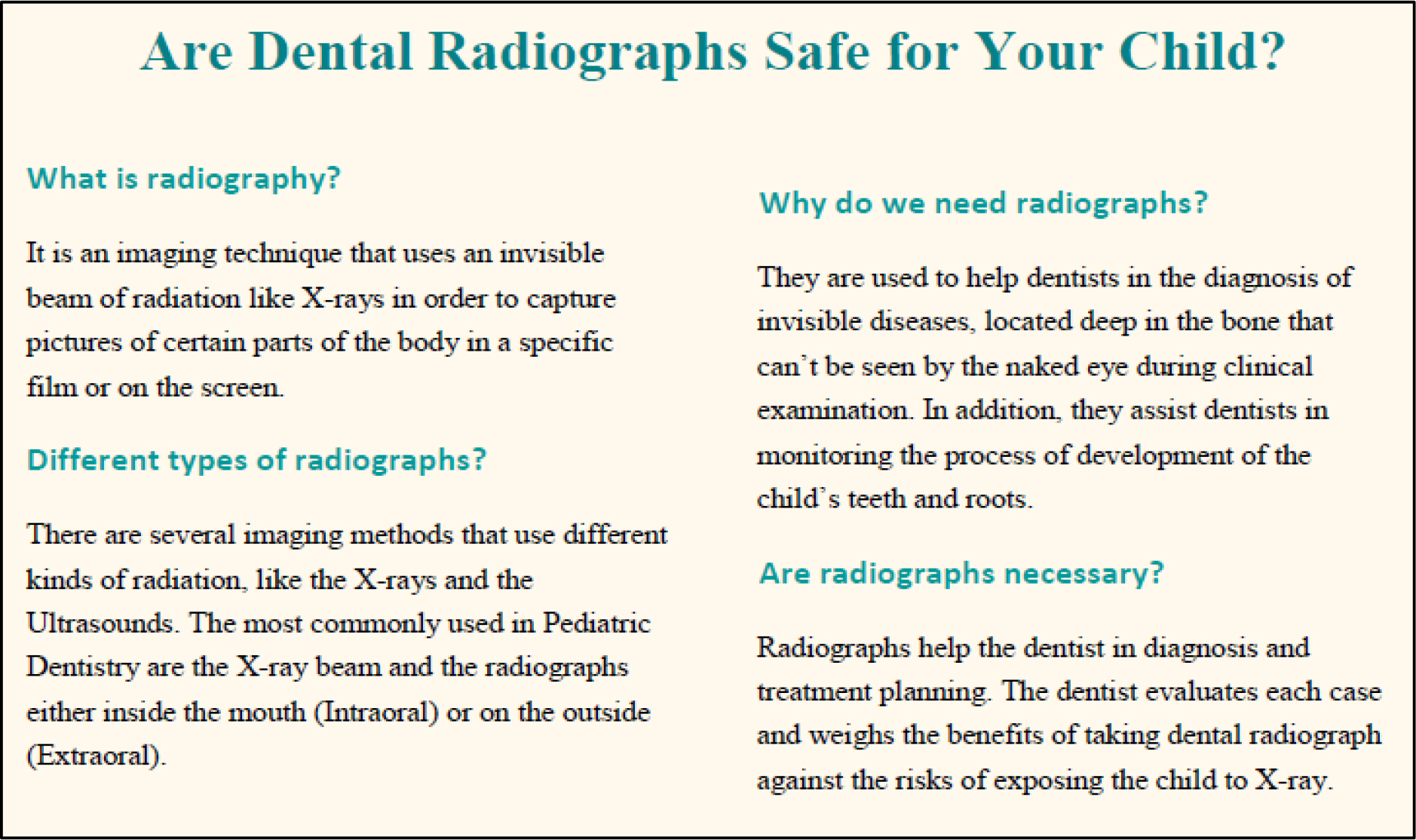
  12. Jacobsson M, Tjellström A, Thomsen P, Albrektsson T, Turesson I (1988) Integration of titanium implants in irradiated bone. Histologic and clinical study. Ann Otol Rhinol Laryngol 97: 337–340. [crossref]
  13. Sammartino G, Marenzi G, Cioffi I, Teté S, Mortellaro C (2011) Implant therapy in irradiated patients. J Craniofac Surg 22: 443–445. [crossref]
  14. Schiegnitz E, Al-Nawas B, Kämmerer PW, Grötz KA (2014) Oral rehabilitation with dental implants in irradiated patients: a meta-analysis on implant survival. Clin Oral Investig 18: 687–698.
  15. Zheng M, Li L, Tang Y, Liang XH (2014) How to improve the survival rate of implants after radiotherapy for head and neck cancer? J Periodontal Implant Sci 44: 2–7.
  16. Ihde S, Kopp S, Gundlach K, Konstantinović VS (2009) Effects of radiation therapy on craniofacial and dental implants: a review of the literature. Oral Surg Oral Med Oral Pathol Oral Radiol Endod 107: 56–65. [crossref]
  17. Casselli H, Landulpho AB, Silva WA, Silva FA (2007) Electrognatographic evaluation of rehabilitated edentulous patients. Braz Oral Res 21: 355–361.
  18. Landulpho AB, Silva WA, Silva FA, Vitti M (2002) The effect of the oclusal splints on the treatment of temporomandibular disorders – a computerized electromyographic study of masseter and anterior temporalis muscles. Electromyogr Clin Neurophysiol 42: 187–191.
  19. Landulpho AB, Silva WA, Silva FA, Vitti M (2004) Electromyographic evaliation of masseter and anterior temporalis muscles in patients with temporomandibular disorders following interocclusal appliance treatment. J Oral Rehabil 31: 95–98.
  20. Landulpho AP, Silva WAB, Silva FA, Casselli H, Silva LLB (2004) Electrosonographic evaluation in patients with temporomandibular disorders, treated by interoclusal appliance. Braz J Oral Sci 11: 624–627.
  21. Silva WAB, Silva FA (2000) Epidemiologic study of the temporomandibular disorders. J Dent Res 79: 584–588.

Current Status of Local Drug Delivery Systems in the Treatment of Periodontal Diseases

DOI: 10.31038/JDMR.2019233

Abstract

Periodontal disease includes many pathological conditions affecting the periodontium, but gingivitis and periodontitis are the more common types. Gingivitis is a progressive condition, although it is reversible, when left untreated it can lead to periodontitis. Microbial species have a major role in the aetiology of periodontitis.

Method:Information was derived from research papers using PubMed, Science Direct, and Google Scholar using the keywords local drug delivery system, treatment, and periodontal disease. The search included articles up to 2018 with majorly in vivo studies in patients with periodontitis. The usage of local drug delivery systems with controlled or sustained release mechanisms may provide slightly better therapeutic effect in comparison with patients who undergo scaling and root planning only.

Conclusion: The present review of the literature of the currently available local drug delivery systems in the treatment of periodontal diseases.

Keywords

Gingivitis, Periodontal Diseases, Periodontium, Scaling

Introduction

Periodontal disease is a term which comprises several pathological conditions involving the periodontium, which includes the gum, alveolar bone, dental cementum, and periodontal ligament [1]. The more common conditions of periodontal diseases are gingivitis and periodontitis. Periodontal disease is the most prevalent oral condition of the worldwide population, with gingivitis affecting 50% to 90% of adults [2,3]. Gingivitis is the mildest type of periodontal disease. It is a localised inflammation of the gum tissue (gingiva) caused by bacteria in the dental plaque, which is a microbial biofilm that forms on the teeth and the gingiva. Cultural studies have shown that there are more than 700 distinct microbial species that can be found in the dental plaque, although only a small group has been confirmed to contribute to the cause and progression of periodontal disease [3,4]

Gingivitis, when left untreated, can progress to periodontitis [3,5]. Unlike gingivitis, which is confined to the gingiva, periodontitis leads to the loss of connective tissues supporting or surrounding the teeth. This loss of gingiva, alveolar bone, and periodontal ligament creates deep “pockets”. When these deep periodontal pockets have formed and is filled with microbes, the condition becomes highly irreversible, and eventually may lead to loss of teeth [5].

Literature Research

Search strategy

A literature search with several restrictions was done electronically through the following databases: PubMed, Google Scholar, and Science Direct, using search terms that have been summarised in (Table 1).

Table 1. Number of results yielded by searching using keywords through three different databases.

Database

Search term(s)

Number of results

PubMed

(local drug delivery system) AND periodontal disease

149

(local drug delivery system) AND “periodontal disease”

38

(local drug delivery system [Title/Abstract]) AND periodontal disease [Title/Abstract]

6

Science Direct

local drug delivery system in treatment of periodontal disease

2,458

“local drug delivery system” AND “periodontal disease”

46

“local drug delivery system” AND “treatment of periodontal disease”

20

Google Scholar

local drug delivery system in treatment of periodontal disease

58,600

“local drug delivery system” AND “periodontal disease”

807

“local drug delivery system” AND “treatment of periodontal disease”

321

Inclusion and exclusion criteria

The search was restricted to research articles written in English, and the search included studies from 1979 up to 2018, since 1979 was the year that local drug delivery systems were first considered. Apart from articles that do not meet the criteria mentioned, animal studies were also not included.

History of Treatment

As mentioned previously, it has been proven that the bacteria-filled film is one of the main causes of periodontal diseases. The traditional methods of non-surgical treatment of periodontal disease, including mechanical scaling and root planing, did not guarantee improvements of the disease. Treatment of periodontitis focuses mainly on reducing the total microbial count, hence scaling and root planing needs to have an adjunct therapy, in other words, the antimicrobial agents. It was Dr. Max Goodson who pioneered and developed the concept of local drug delivery systems in 1979 [6]. This discovery has led to the increase of studies regarding local drug delivery systems pertaining to periodontal disease in the last decade.

Advantages of local antimicrobial drug delivery directly into periodontal pocket

The advantages of delivering antimicrobial agents directly to the target instead of taking systemic agents [7,8]. These are included and not limited to direct access to the targeted diseases, first-pass metabolism is bypassed, avoids problems regarding the gastrointestinal system, which is a common occurrence with drugs that are orally administered, able to provide more rapid absorption because of the rich blood supply’ reduction in cost of treatment, less chances of antimicrobial resistance and suitable for patients who cannot swallow. However, there are still some limitations, which include inability to administer local irritants, limited dose because of the small area and cost to manufacture delivery devices may get expensive.

Local drug delivery systems

Drugs that need to be delivered locally are done so by inserting them into a vehicle in the form of fibres, gels, strips, among others, which will be discussed in Table 2 below. The ideal characteristics for that are desired for a local anti-microbial agent are able to deliver the drug to the target, in other words, the base of the pocket, has a therapeutic concentration in the pocket, able to maintain the concentration of drug for a period of time where the drug gives therapeutic effect and exhibits little side effects.

Table 2. Summary of some local drug delivery systems [9].

Local drug delivery system

Polymer matrix

Incorporated drug

Reference

Fibres

Cellulose acetate

1. Tetracycline HCl

2. Chlorhexidine

[6]

[10]

Ethylene vinyl acetate

Tetracycline HCl

[11]

Poly-(Ɛ-caprolactone) (PCL)

Tetracycline HCl

[11]

Films

Ethyl cellulose

1. Metronidazole

2. Tetracycline HCl

3. Minocycline

[12]

[13]

[14]

Cross-linked atelocollagen

Tetracycline

[15]

Gelatin (Byco® protein)

Chlorhexidine diacetate

[16]

Collagen

Chlorhexidine gluconate

[17]

Chitosan

Taurine

[18]

Chitosan + Polylactide-co-glycolic acid (PLGA)

Iproflavone

[19]

Chitosan + PCL

Metronidazole

[20]

Polyvinyl alcohol + carboxymethyl chitosan

Ornidazole

[21]

PLGA

1. Tetracycline

2. Amoxycillin + metronidazole

[22]

[23]

Eudragit L® and Eudragit S®

Clindamycin

[24]

PCL

Minocycline

[25]

Gels

Chitosan

Metronidazole

[26]

Hydroxyethyl cellulose + polyvinylpyrrolidone

Tetracycline

[27]

Poloxamer 407 + Carbopol 934P

Propolis

[28]

Poly(α-lactide) + N-methyl 2-pyrrolidone

1. Sanguinarium

2. Doxycycline hyclate

[29]

[30]

Glycerol monooleate + sesame oil

Metronidazole

[31]

PLGA

Tetracycline

[32]

Strips

Polyethylmetha acrylate (acrylic)

1. Tetracycline HCl

2. Metronidazole

[33]

[34]

Hydroxypropyl cellulose

1. Chlorhexidine, tetracycline

2. Doxycycline

[35]

[36]

Hydroxypropyl cellulose + methacrylic acid

Ofloxacin

[37, 38]

Polyhydroxybutyric acid

Tetracycline HCl

[39]

PLGA

Tetracycline HCl

[40]

Xanthan

Chlorhexidine

[41]

Ethyl cellulose

Chlorhexidine

[42]

Vesicular liposomal systems

Phosphatidylinositol

Triclosan

[43]

Immunoliposomes

Anti-oralis

[44]

Microparticle systems

PLGA

Tetracycline

[45]

Nanoparticle systems

PLGA

Triclosan

[46]

Cellulose acetate phthalate

Triclosan

[46]

Chitosan

Antisense oligonucleotide

[47]

Fibres

Fibres are thread-like devices with a reservoir-based sustained release system. They are circumferentially placed inside the periodontal pockets using an applicator, and to ensure the controlled release of drug, the fibres are secured by applying cyanoacrylate as an adhesive [9].

Actisite®

Actisite was introduced in 1994 and was the first controlled-release antimicrobial product to be commercialised. It is 23 cm long and 0.55 mm wide, delivering 12.7 mg of tetracycline hydrochloride. The fibre is non-biodegradable and has to be removed after 10 days, which is the end of the therapy. In comparison with 250 mg of tetracycline delivered orally which results in 1 μg/ml in the gingival crevicular fluid, the locally delivered Actisite achieves an initial concentration of 1590 μg/ml in the periodontal pocket. The concentration level remained at a mean of 1300 μg/ml for 7 days [7]

Films

Film is a form of matrix delivery system where the drug is distributed throughout the polymer, and it is released by either drug diffusion, or erosion or dissolution of matrix. This system is more commonly used as it has several advantageous characteristics. The size and shape of the films is flexible it can be easily changed to fit the dimensions of pocket needed to be treated. Larger-sized films can be applied onto the cheek mucosa, or they can also be divided into smaller sizes to be placed into the pocket [9].

Injectable systems

Injectable systems have an added advantage of easy and rapid application. Antimicrobial agents can be delivered using a syringe directly into the periodontal pocket, without the patient experiencing pain. The cost and time taken for the therapy is also considerably lower when compared to delivery systems that need to be applied securely. Furthermore, the injectable system should be able to fill the pocket, hence reaching more pathogens [48].

Gels

Gels are semisolid mucoadhesive systems that have also received attention for the targeted delivery of antimicrobial agents, offering some advantages [8]creation of periodontal pocket and resorption of alveolar bone, resulting in the disruption of the support structure of teeth. According to WHO, 10–15% of the global population suffers from severe periodontitis. The disease results from the growth of a diverse microflora (especially anaerobes. For instance, in terms of preparation and administration, they are easier to prepare. A downside is that gels have faster drug releasing rates. Gels are applied sublingually using a blunt cannula and a syringe [48].

Strips and compacts

Strips are thin and elongated matrix bands where the drug will be distributed throughout the system. Acrylic strips filled with different antimicrobial agents have been developed, and those containing tetracycline or metronidazole were found to have best improved the parameters of periodontitis [49].

Vesicular liposomal systems

Vesicular liposomal systems are investigated intently in order to be used in periodontal diseases. This is because they are designed to mimic the bio-membranes in terms of structure and their behaviour [9].

Microparticle systems

Microspheres are solid structures that are spherical in shape, with sizes ranging from 1 to 1000 μm. The drug is dispersed throughout the matrix. To prepare microspheres, non-biodegradable and biodegradable materials are both being investigated. These materials include natural polymers, modified natural substances, and synthetics. They can be formulated into chips, dental paste, or even directly injected into the targeted area [8,49]creation of periodontal pocket and resorption of alveolar bone, resulting in the disruption of the support structure of teeth. According to WHO, 10–15% of the global population suffers from severe periodontitis. The disease results from the growth of a diverse microflora (especially anaerobes.

Nanoparticle systems

Nanoparticles have sizes ranging from 10 to 1000 nm, which enables them to penetrate through regions that may not be reached by other delivery systems. This is a major advantage above the other systems like microparticles, since the ability to reach these otherwise neglected areas result in a decreased frequency of administration and it also provides a more uniform distribution of the drug [9]. For most of the local drug delivery systems, there is only a limited number of studies that have been published. Even though there are studies available, it is difficult to compare between different trials as the therapy given to the participating patients vary greatly.

Conclusion

Local delivery drug systems are seemingly a good alternative to deliver antimicrobial agents compared to systemic delivery. They produce fewer side effects, which could improve patient compliance. Since there are no studies proving the effective use of locally delivered drugs as a monotherapy, local drug delivery system remains to be a good adjunct therapy.

Acknowledgement

This literature review promoted by the Universiti Brunei Darussalam through the Pharmacy and dentistry team for their bachelor student’s studentship.

References

  1. Kaplish V, Walia MK, Kumar SLH (2013) Local drug delivery systems in the treatment of periodontitis: A review. Pharmacophore 4: 39–49.
  2. Nazir MA (2017) Prevalence of periodontal disease, its association with systemic diseases and prevention. International journal of health sciences 11: 72–80.
  3. Pihlstrom BL, Michalowicz BS, Johnson NW (2005) Periodontal diseases. Lancet 366: 1809–1820.
  4. Herrera D, Matesanz P, Bascones-Martínez A, Sanz M (2012) Local and systemic antimicrobial therapy in periodontics. Journal of Evidence-Based Dental Practice 12: 50–60.
  5. Kinane DF, Stathopoulou PG, Papapanou PN (2017) Periodontal diseases. Nature Reviews Disease Primers 3: 1–14.
  6. Goodson JM, Haffajee A, Socransky SS (1979) Periodontal therapy by local delivery of tetracycline. Journal of Clinical Periodontology 6: 83–92.
  7. Nair SC, Anoop KR (2012) Intraperiodontal pocket: An ideal route for local antimicrobial drug delivery. Journal of advanced pharmaceutical technology & research 3: 9–15.
  8. Joshi D, Garg T, Goyal AK, Rath G (2016) Advanced drug delivery approaches against periodontitis. Drug Delivery 23: 363–377.
  9. Jain N, Jain GK, Javed S, Iqbal Z, Talegaonkar S, Ahmad FJ, Khar RK (2008) Recent approaches for the treatment of periodontitis. Drug discovery today 13: 932–943.
  10. Coventry J, Newman HN (1982) Experimental use of a slow release device employing chlorhexidine gluconate in areas of acute periodontal inflammation. Journal of Clinical Periodontology 9: 129–133.
  11. Tonetti M, Cugini MA, Goodson JM (1990) Zero-order delivery with periodontal placement of tetracycline-loaded ethylene vinyl acetate fibers. Journal of Periodontal Research 25: 243–249.
  12. Golomb G, Friedman M, Soskolne A, Stabholz A, Sela MN (1984) Sustained Release Device Containing Metronidazole for Periodontal Use. Journal of Dental Research 63: 1149–1153.
  13. Azoury R, Elkayam R, Friedman M (1988) Nuclear Magnetic Resonance Study of an Ethyl Cellulose Sustained-Release Delivery System II: Release Rate Behavior of Tetracycline. Journal of Pharmaceutical Sciences 77: 428–431.
  14. Elkayam R, Friedman M, Stabholz A, Soskolne AW, Sela MN, Golub L (1988) Sustained release device containing minocycline for local treatment of periodontal disease. Journal of Controlled Release 7: 231–236.
  15. Minabe M, Uematsu A, Nishijima K, Tomomatsu E, Tamura T, Hori T, Hino T (1989) Application of a Local Drug Delivery System to Periodontal Therapy: Journal of Periodontology 60: 113–117.
  16. Steinberg D, Friedman M, Soskolne A, Sela MN (1990) A New Degradable Controlled Release Device for Treatment of Periodontal Disease: In Vitro Release Study. Journal of Periodontology 61: 393–398.
  17. Kondreddy K, Ambalavanan N, Ramakrishna T, Kumar RS (2012) Effectiveness of a controlled release chlorhexidine chip (PerioColTM-CG) as an adjunctive to scaling and root planing when compared to scaling and root planing alone in the treatment of chronic periodontitis: A comparative study. Journal of Indian Society of Periodontology 16: 553–557.
  18. Ozmeriç N, Ozcan G, Haytaç CM, Alaaddinoğlu EE, Sargon MF, Senel S (2000) Chitosan film enriched with an antioxidant agent, taurine, in fenestration defects. Journal of biomedical materials research 51: 500–503.
  19. Perugini P, Genta I, Conti B, Modena T, Pavanetto F (2003) Periodontal delivery of ipriflavone: new chitosan/PLGA film delivery system for a lipophilic drug. International journal of pharmaceutics 252: 1–9.
  20. El-Kamel AH, Ashri LY, Alsarra IA (2007) Micromatricial metronidazole benzoate film as a local mucoadhesive delivery system for treatment of periodontal diseases. AAPS PharmSciTech 8: 184–194.
  21. Wang LC, Chen XG, Zhong DY, Xu QC (2007) Study on poly(vinyl alcohol)/carboxymethyl-chitosan blend film as local drug delivery system. Journal of Materials Science: Materials in Medicine 18: 1125–1133.
  22. Agarwal RK, Robinson DH, Maze GI, Reinhardt RA (1993). Development and characterization of tetracycline-poly(lactide/glycolide) films for the treatment of periodontitis. Journal of Controlled Release, 23: 137–146.
  23. Ahuja A, Ali J, Rahman S (2006) Biodegradable periodontal intrapocket device containing metronidazole and amoxycillin: formulation and characterisation. Die Pharmazie 61: 25–29.
  24. Higashi K, Matsushita M, Morisaki K, Hayashi S, Mayumi T (1991) Local drug delivery systems for the treatment of periodontal disease. Journal of pharmacobio-dynamics 14: 72–81.
  25. Kyun KD, Yun KS, Young JS, Pyoung CC, Heui SS (1990) Development of minocycline containing polycaprolactone film as a local drug delivery. Taehan Ch’ikkwa Uisa Hyophoe chi 28: 279–290.
  26. Akıncıbay H, Şenel S, Yetkin Ay Z (2007) Application of chitosan gel in the treatment of chronic periodontitis. Journal of Biomedical Materials Research Part B: Applied Biomaterials 80: 290–296.
  27. Jones DS, Woolfson AD, Djokic J, Coulter WA (1996) Development and mechanical characterization of bioadhesive semi-solid, polymeric systems containing tetracycline for the treatment of periodontal diseases. Pharmaceutical research 13: 1734–1738.
  28. Bruschi ML, Jones DS, Panzeri H, Gremião MPD, de Freitas O, Lara EHG (2007) Semisolid Systems Containing Propolis for the Treatment of Periodontal Disease: In Vitro Release Kinetics, Syringeability, Rheological, Textural, and Mucoadhesive Properties. Journal of Pharmaceutical Sciences 96: 2074–2089.
  29. Poison AM, Stoller NH, Hanes PJ, Bandt CL, Garrett S, Southard G (1996). 2 multi-center trials assessing the clinical efficacy of 5% sanguinarine in a biodegradable drug delivery system. Journal of Clinical Periodontology 23: 782–788.
  30. Polson AM, Garrett S, Stoller NH, Bandt CL, Hanes PJ, Killoy WJ, Friesen LR (1997) Multi-Center Comparative Evaluation of Subgingivally Delivered Sanguinarine and Doxycycline in the Treatment of Periodontitis. II. Clinical Results. Journal of Periodontology 68: 119–126.
  31. Noyan U, Yilmaz S, Kuru B, Kadir T, Acar O, Büget E (1997) A clinical and microbiological evaluation of systemic and local metronidazole delivery in adult periodontitis patients. Journal of clinical periodontology 24: 158–165.
  32. Maze GI, Reinhardt RA, Payne JB, Maze C, Baker RA, Bouwsma OJ, Gerlach RW (1996) Gingival fluid tetracycline release from bioerodible gels. Journal of Clinical Periodontology, 23: 1133–1136.
  33. Addy M, Langeroudi M (1984) Comparison of the immediate effects on the sub-gingival microflora of acrylic strips containing 40% chlorhexidine, metronidazole or tetracycline. Journal of Clinical Periodontology 11: 379–386.
  34. Addy M, Hassan H, Moran J, Wade W, Newcombe R (1988) Use of Antimicrobial Containing Acrylic Strips in the Treatment of Chronic Periodontal Disease. Journal of Periodontology 59: 557–564.
  35. Noguchi T, Izumizawa K, Fukuda M, Kitamura S, Suzuki Y, Ikura H (1984) New method for local drug delivery using resorbable base material in periodontal therapy. The Bulletin of Tokyo Medical and Dental University 31: 145–153.
  36. Taner IL, Özcan G, Doganay T, Iscanolu M, Taplamacioglu B, Gültekin SE, Balos K (1994) Comparison of the Antibacterial Effects on Subgingival Microflora of Two Different Resorbable Base Materials Containing Doxycycline. The Journal of Nihon University School of Dentistry 36: 183–190.
  37. Higashi K, Morisaki K, Hayashi S, Kitamura M, Fujimoto N, Kimura S, Okada H (1990) Local ofloxacin delivery using a controlled-release insert (PT-01) in the human periodontal pocket. Journal of periodontal research 25: 1–5.
  38. Kimura S, Toda H, Shimabukuro Y, Kitamura M, Fujimoto N, Miki Y, Okada H (1991) Topical chemotherapy in human periodontitis using a new controlled-release insert containing ofloxacin. I. Microbiological observation. Journal of Periodontal Research 26: 33–41.
  39. Deasy PB, Collins AE, MacCarthy DJ, Russell RJ (1989) Use of strips containing tetracycline hydrochloride or metronidazole for the treatment of advanced periodontal disease. The Journal of pharmacy and pharmacology 41: 694–699.
  40. Maze GI, Reinhardt RA, Agarwal RK, Dyer JK, Robinson DH, DuBois LM, Maze CR (1995). Response to intracrevicular controlled delivery of 25% tetracycline from poly(lactide/glycolide) film strips in SPT patients. Journal of clinical periodontology 22: 860–867.
  41. Paolantonio M, D’Ercole S, Pilloni A, D’Archivio D, Lisanti L, Graziani F, Perinetti G (2009) Clinical, Microbiologic, and Biochemical Effects of Subgingival Administration of a Xanthan-Based Chlorhexidine Gel in the Treatment of Periodontitis: A Randomized Multicenter Trial. Journal of Periodontology 80: 1479–1492.
  42. Friedman M, Golomb G (1982) New sustained release dosage form of chlorhexidine for dental use. I. Development and kinetics of release. Journal of periodontal research 17: 323–328.
  43. Jones MN, Kaszuba M (1994) Polyhydroxy-mediated interactions between liposomes and bacterial biofilms. Biochimica et Biophysica Acta (BBA) – Biomembranes 1193: 48–54.
  44. Jones MN, Song YH, Kaszuba M, Reboiras MD (1997) The Interaction of Phospholipid Liposomes with Bacteria and Their Use in the Delivery of Bactericides. Journal of Drug Targeting 5: 25–34.
  45. Esposito E, Cortesi R, Cervellati F, Menegatti E, Nastruzzi C (1997) Biodegradable microparticles for sustained delivery of tetracycline to the periodontal pocket: formulatory and drug release studies. Journal of Microencapsulation 14: 175–187.
  46. Piñón-Segundo E, Ganem-Quintanar A, Alonso-Pérez V, Quintanar-Guerrero D (2005) Preparation and characterization of triclosan nanoparticles for periodontal treatment. International Journal of Pharmaceutics 294: 217–232.
  47. Dung TH, Lee SR, Han SD, Kim SJ, Ju YM, Kim MS, Yoo H (2007) Chitosan-TPP nanoparticle as a release system of antisense oligonucleotide in the oral environment. Journal of nanoscience and nanotechnology 7: 3695–3699.
  48. Kaplish V, Walia MK, Kumar SLH (2013) Local Drug Delivery Systems in the Treatment of Peridontitis: A Review. Pharmacophore 4: 39–49.
  49. Ahmad F, Iqbal Z, Jain N, Jain G, Talegaonkar S, Ahuja A, Khar R (2008) Dental Therapeutic Systems. Recent Patents on Drug Delivery & Formulation 2: 58–67.

Orbital Blowout Fractures Due to Globe-to-Wall Contact Mechanism

DOI: 10.31038/IJOT.2019243


There is still much controversy surrounding the mechanisms that produce orbital blowout fractures. Since the first report of blowout fracture, theories have evolved and experiments been conducted to elucidate and demonstrate three mechanisms which are the globe-to-wall contact, hydraulic, and buckling.

Erling et al [1] resurrected older mechanism on the etiology of inferomedial orbital fractures first espoused by Pfeiffer [2] in 1943. They proposed that the responsible mechanism of inferomedial orbital fracture is a direct globe-to-wall contact; that is, posterior movement of the globe, in response to an external force, results in a fracture upon direct contact with an orbital wall. They investigated CT scans of blowout fractures of the pure medial and inferomedial wall, demonstrated that the size of the orbital displacement exactly fitted the shape of the globe in many cases. We also examined the charts of estimated 45 cases of this mechanism for the clinical information. According to Erling’s description [1], CT scans were reviewed by overlaying a tracing of the globe displaced directly down the longitudinal orbital axis to evaluate the likelihood of posterior globe displacement as a mechanism of fracture. The size of the orbital wall displacement exactly fit the globe in 46.7 % (20/45) patients [3] (Figure 1). All fractures were occurred in the inferomedial area of the orbital wall. In our study, serious complications like corneal laceration, globe rapture, 3rd cranial nerve paralysis, and ophthalmic nerve neuropathy plus 3rd, 4th, 6th cranial nerve paralysis (Orbital Apex Syndrome) were seen more frequently than other reports. These serious complications seem great impact had acted the globes. It is necessary to take enough care for delayed neuropathy, when CT scan of patient shows orbital fracture due to “globe-to-wall contact mechanism”, even if he dose not complain any symptom immediate after injury.

IJOT 19 - 123_Sugamata A_f1

Figure 1. A-53-year man fell down and hit the right eye region to the floor. The CT finding showed the displacement of the right inferomedial wall. The size of the orbital wall displacement exactly fit the globe (A, B).

There is no doubt that almost blowout fractures of the orbit could be due to a single mechanism alone or a combination of 2 or more mechanisms clinically [4]. We conclude that “globe-to-wall contact mechanism” advocated by Pfeiffer acts in some respect to making fracture formation in some orbital blowout fractures in the inferomedial area of the orbital wall.

Key words

Blowout Fracture; Orbital Fracture; Globe-to-Wall Contact Mechanism.

References

  1. Erling BF, Iliff N, Robertson B, et al. (1999) Footprints of the globe: a practical look at the mechanism of orbital blowout fractures, with a revisit to the work of Raymond Pfeiffer. Plast Reconstr Surg 103: 1313–1316.
  2. Pfeiffer RL (1943) Traumatic enophthalmos. Arch Ophthalmol 30: 718–726.
  3. Sugamata A, Yoshizawa N (2010) Clinical analysis of orbital blowout fractures caused by a globe-to-wall contact mechanism. J Plast Surg Hand Surg 44: 278–281.
  4. Sugamata A (2014) Etiology of orbital blowout fractures. J Tokyo Med Univ 72: 19–24.

Increase in Parental Knowledge and Confidence Following Communication of Dental Imaging Risks versus Benefits

DOI: 10.31038/JDMR.2019232

Abstract

Objective: To explore the role of parental education and communication of risks versus benefits of pediatric dental image on parents’ knowledge, comfort and confidence in allowing their children to receive the necessary imaging procedures.

Methods: Parents of children <18 years of age were recruited during routine dental visits at the Boston University Pediatric Oral Health Care Center and Department of Dentistry at the Boston Medical Center, Boston, Massachusetts. Participants completed two brief questionnaires immediately before and after the educational intervention. A brief two-sided printed informational handout and a mobile application called Medical Imaging Risk (MIR) were used in the educational intervention for parental health education and communication of information on radiation risks. Statistical analysis was conducted using STATA version 14.0 to compare pre-intervention and post-intervention responses of participants.

Results: Among 213 parents, the majorities were mothers (83%), African American (55%), with MassHealth insurance (82%) and reported that their child/children have had previous dental radiographs (75%). A significant improvement in confidence of their knowledge on benefits and risks of dental imaging was observed following the educational intervention (p<0.001). Parents’ level of comfort in allowing the use of dental radiographs for their children significantly improved after the educational intervention (p<0.001). Parents preferred the printed handout (53%) only slightly more than the mobile application (47%).

Conclusion: The results from our study suggest that a simple brief educational intervention that includes easy to understand materials can significantly improve parental level of knowledge and confidence towards pediatric dental imaging. Thus dental practitioners should aim to include risk-benefit dialogues as part of the routine dental care visit to improve communication and acceptance of pediatric imaging.

Keywords

Health Communication, Pediatric Dentistry, Children, Radiation Imaging, Radiation Risks, Dental Imaging, Dental Radiography, Parental Knowledge, Educational Intervention.

Introduction

Patient communication of health information is a key component of patient care and management. In particular, communicating risks and benefits of medical and dental procedures enables better understanding and decreases the level of anxiety among patients. Radiation imaging has been known to cause fear and anxiety among patients due to the general perception of radiation as a ‘hazard’ [1]. This fear, caused mainly by incomplete understanding of the benefits versus risks of radiation imaging, has been further fueled by historical radiation related disasters, media reports, social media, previous experience, experiences or shared by family and friends. Recent evidence in the literature also suggests that significant gaps exist between patient expectations and provider communication of benefits versus risks of medical imaging [2]. These gaps also extend to dental imaging procedures which can be overcome through improved risk-benefit dialogues between practitioners and children, and their parents or guardians. To improve the current practices in risk communication strategies the World Health Organization (WHO) organized an International Workshop on Radiation Risk Communication in Pediatric Imaging in September of 2010 and in collaboration with a working group released a publication titled “Communicating Radiation Risks in Paediatric Imaging” [3]. This publication was developed to aid health professionals on communication of radiation risks in pediatric imaging more efficiently and to provide guidance on risk-benefit dialogues with children and their parents.

Dental radiology has evolved over the years and is currently being used widely in children for diagnosis and management. In pediatric dentistry in particular, dental imaging has played an important role in a child’s first visit to the dentist as it is not only a vital part in a thorough examination of the oral cavity but is a simple procedure that is used to also gain the child’s confidence [4]. While radiation emission from dental imaging is lower than from medical imaging procedures, dental practitioners should weigh the benefit and need for the imaging procedure among children over the risks involved to make a clinical judgement keeping in mind the interest of each patient. In recent years there has been a significant increase in the use of dental radiography in the United States (US) with over 500 million intra-oral bitewing and panoramic radiographic procedures [5]. Also, the number of Cone Beam Computed Tomography (CBCT) procedures have also significantly increased over the years. As a result, the overall contribution of radiation exposure from dental imaging procedures is increasing and is about 50% of the annual per capital radiation dose in the US [6]. In light of these increases the American Dental Association (ADA) in collaboration with 80 other health care organizations developed a program called ‘Image Gently’ in 2007 which is an initiative to raise awareness and educate practitioners to provide safe pediatric imaging [7]. This alliance was also developed to educate providers on selecting imaging procedures based on individual needs and to limit the exposure time among children. The ‘Image Gently in Dentistry’ campaign was specifically launched to promote responsible use of dental radiography and to improve radiation safety in pediatric dental imaging [6]. The main goals of this campaign is based on the concept of reducing radiation exposure in children As Low As Diagnostically Acceptable (ALADA) while achieving effective images that aid in diagnosis.

Radiation exposure is the amount of radiation charge produced by ionizing radiation during imaging procedures whereas absorbed dose describes the amount of emitted radiation absorbed at a point [8]. This absorbed dose is converted to equivalent dose by multiplying the radiation delivered for each type of radiation. Effective dose is the total amount of radiation exposure estimated from the total equivalent dosages and [3] can be expressed in Sieverts (Sv) based on the System International nomenclature [3]. The radiation dose emitted in diagnostic imaging is expressed as milliSieverts (mSv) [9]. When comparing the radiation exposure between medical imaging procedures versus dental imaging, the exposure from dental radiographs are much lower. For example, the radiation dose from a set of four intra-oral bite-wing radiographs is 0.005 mSv and from a single panoramic radiograph is 0.01 mSv which is equivalent to <1 day and 1.5 days of exposure to natural radiation respectively [3,8]. In comparison, the radiation exposure from a chest x-ray for a 5 year old child is 0.02 mSv which is equivalent to 3 days of natural radiation exposure. A Computed Tomography (CT) scan to the head of a 5 year old emits 2 mSv radiation and is equivalent to 10 months of natural radiation exposure whereas one CBCT procedure leads to radiation exposure of 0.107 mSv which is less than five months of natural radiation exposure, demonstrating that dental imaging procedures lead to much lower radiation exposure. The risks from exposure resulting from all types of diagnostic imaging and its effects are not completely understood [3]. Effects such as cell death, hair loss, skin redness etc. occur at much higher doses of exposure than the exposure from dental diagnostic imaging. Long-term risk of developing cancer has been suggested based on some epidemiologic evidence for radiation doses of 50–100 mSv which would be the accumulated dose after multiple CT scans. However, since children have a long period of life ahead, the low dose exposures from diagnostic imaging in the early years of life may accrue and eventually may lead to a small increase in lifetime risk of cancer in the future. Hence given the lack of strong evidence and the uncertainty it is important for dental practitioners to take a precautionary approach when using pediatric imaging. Also, by improving patient and parent-provider communication about risks versus benefits, informed decisions can be made that will ultimately benefit the child patients.

There are only a few studies that explored the perspectives of parents and communication of radiation risks most of which are related to medical imaging procedures. Limited evidence exists on communication of dental radiation risks and parents’ knowledge and perception towards dental radiography. A study in Australia explored parental level of knowledge and attitude towards dental radiography for children [10]. That study analyzed 309 surveys completed by parents and the results showed a low level of knowledge but positive attitude towards dental radiographs. Also in that study, parents’ level of education and parents with children who have had radiographs previously were more likely to have a higher level of knowledge. In the same study when participants were asked about whether they received information on radiation risks, <40% reported that they had been informed of the risks by their providers. Similar findings have been reported in studies on medical imaging where participants have low level of knowledge and report that they did not receive the information on the risks of medical imaging [11,12]. A more recent study evaluated patients’ perception on dental radiographs in Malaysia and reported a significant lack of knowledge about the role of dental radiographs. In that study among the participants 57% believed that dental radiographs should be avoided in pregnant women and 32% believed that dental radiographs should be avoided in children [13]. Studies on communicating risks clearly highlight the gaps in provider-patient or parent communication. Evidence also suggests that parents who did receive information prior to imaging procedures report lower levels of anxiety during the procedures [11]. Insufficient data is available on the preferred method of communication in dental imaging risks versus benefits. One study in Spain among 602 participants reported that participants preferred both oral and written forms of communication with no significant preference of one over the other [14]. With the current technological advances there is an increase in usage of other modes of communication such as online resources, phone applications and text messaging however there is a lack of epidemiological data that supports the use of these methods and there is insufficient evidence on the most effective form of communication of health information.

Our study was developed to explore the role of parental education and communication of risks versus benefits of dental imaging on parents’ knowledge, comfort and confidence in allowing their children to receive the necessary dental imaging. Results from our pilot study has been published previously [15,16]. In this report we describe the study that was conducted and the results obtained from a larger sample with additional investigation on the preferred method of communication of risks versus benefits in comparison to our pilot study. Specifically our hypothesis was that a brief educational intervention by the dental provider will increase the level of confidence and comfort among parents and those parents prefer a specific mode of communication of health information.

Methods

Note: A description of the study methods and results from our pilot study was published previously [15,16].

The sample population in this study included parents or guardians of children under 18 years of age. The participants were recruited during routine dental care visits for their children at either the Pediatric Oral Health Care Center in Boston University Goldman School of Dental Medicine or Department of Pediatric Dentistry at the Boston Medical Center, Boston, Massachusetts. A convenience sampling method was used to recruit any one parent or legal guardian per family and only those who were proficient in the English language were included. Following verbal consent, the parents completed two brief questionnaires and an intervention using a handout and a mobile phone application was conducted as well by the study investigator. The parents completed the questionnaires and the intervention while waiting during their children’s dental treatment. The time taken for participants to complete the questionnaires and the educational intervention was between 15–20 minutes. This study was approved by the Boston University Medical Center Institutional Review Board.

Educational Intervention

The materials utilized for the educational component in this study included a short two-sided informational handout titled ‘Are dental radiographs safe for your children?’ (S1a and S1b Figures), and a mobile application called ‘Medical Imaging Risk (MIR)’ (S2 and S3 Figures). The informational handout used in this study was in English language, easy to read and the content was prepared at the 8th grade level as is the standard when preparing patient related text (S1a and S1b Figures). Colorful images, text and tables were used to educate parents on dental radiography and provide information on sources of radiation and their different dose estimations highlighting the radiation dose with routine dental radiographs. The handout while emphasizing the benefits and importance of dental radiography in early diagnosis and treatment also outlined the possible risks from unnecessary imaging procedures.

JDMR-19-124-Jayapriyaa R. Shanmugham_USA_F1

S1a Figure. Information on side 1 of the printed handout:

JDMR-19-124-Jayapriyaa R. Shanmugham_USA_F2

S1b Figure. Information on side 2 of the printed handout:

S1 Figure. Printed two-sided informational handout used in the educational intervention.

JDMR-19-124-Jayapriyaa R. Shanmugham_USA_F3

S2 Figure. Medical Imaging Risk (MIR) mobile application: Types of radiographic tests listed in the application.

JDMR-19-124-Jayapriyaa R. Shanmugham_USA_F4

S3 Figure. Medical Imaging Risk (MIR) mobile application: Types of dose equivalents for selected radiographic test by age.

Following the discussion using the informational handout, the mobile application (app), MIR was used to continue an interactive discussion on radiation imaging (S2 Figure). The use of the app was demonstrated, and participants were shown that this app can be easily downloaded for free on both the Android and Apple platforms. This user-friendly app provides information on the various dosages and risks by type of radiation imaging (S3 Figure). The app also provides additional resources for further detailed information that the participants can download for free.

Study Questionnaires

Two questionnaires, one immediately before (pre-intervention) and one immediately after (post-intervention) the educational intervention were used to obtain information on parents’ knowledge and perception towards pediatric imaging.

Pre-intervention questionnaire

In the pre-intervention questionnaire, which included 5 questions, parents responded if their child or children ever received dental imaging. Irrespective of their response to this question parents completed the remainder of the questionnaire. Parents responded to questions on the level of confidence in their knowledge on risks and benefits of radiation and were asked to choose from three options: Not confident, somewhat confident and very confident. To evaluate specific knowledge, parents were asked to respond to whether smartphones and electronic devices emitted harmful radiation to which they responded ‘yes’ or ‘no’. Participants also responded to their level of comfort in their child undergoing any type of radiation imaging by choosing from three options: Not comfortable, somewhat comfortable and very comfortable. Demographic information such as participants’ gender, race, ethnicity and insurance type were also obtained in the pre-intervention questionnaire to evaluate differences in parent responses.

Post-intervention questionnaire

The post-intervention questionnaire, which included 8 questions, included the same five questions that was in the pre-intervention questionnaire, to evaluate a change in perception or comfort if any as a result of the intervention. In addition, questions on whether the educational material discussed during the intervention improved their understanding about dental radiographs and if the participants continued to have concerns about them were also included and both of these questions generated a response of ‘yes’ versus ‘no’. One of the goals of the post-intervention questionnaire was also to explore the preferred method of communication when receiving health information during dental care visits and the participants chose between printed materials versus mobile application. This question was not included initially however it was added later during the study as our goal was also to collect data on the parent perspective related to the educational material. As a result not all of the participants responded to this question. The study application was amended with this additional question and IRB approval was obtained to make this change.

Statistical Analysis

Participants’ responses to the questionnaires, pre versus post intervention, were compared and analyzed using STATA version 14.0 statistical analysis software. Differences in knowledge and perception were also evaluated by demographic characteristics. Descriptive and univariate categorical data analysis was conducted to evaluate differences and p-values <0.05 were considered statistically significant.

Results

A total of 213 parents participated in this study, reflecting the population base of the Boston University Goldman School of Dental Medicine. The majority were mothers (82.6%), having Medicaid as their primary dental insurance (81.7%). Also, most of the participants were African Americans, 54.9% followed by 17.8%n White; 7.04% Asian; and 16.4% self-identified as Hispanic/Latino (S1 Table).

Most of the participants in this study (75%) reported that their child/children have had previous dental radiographs (S1 Table). When comparing participants’ level of confidence on their knowledge towards benefits of dental radiographs for their children, 74% of participants reported either not confident or somewhat confident in the pre-intervention questionnaire. This trend changed in the post-intervention period as an improvement in the level of confidence was evident with 65% of the participants reporting that they are very confident. This improvement in the level of confidence was statistically significant with p<0.001 (S1 Table). Similarly, when evaluating the confidence level on the knowledge of risks of dental radiographs for their children, 69% of participants were either not confident or somewhat confident in the pre-intervention questionnaire. However, this trend also changed in the post-intervention period where 58% reported being very confident with statistically significant results (p<0.001).

S1 Table. Characteristics of the study participants (N = 213).

Characteristic

n (%)

Gender, n (%)

Females

176 (82.6%)

Males

37 (17.4%)

Race/Ethnicity, n (%)

Caucasian

 38 (17.8%)

African American

117 (54.9%)

Hispanic/Latino

35 (16.4%)

Asian/Pacific Islander

15 (7.04%)

Other

8 (3.8%)

Type of insurance, n (%)

MassHealth

174 (81.7%)

Other

 39 (18.3%)

History of previous dental radiographs for participants’ child/children, n (%)

Yes

159 (74.7%)

No

54 (25.4%)

In the pre-intervention, more than half the study population (59%) reported that they were either not comfortable or somewhat comfortable in allowing dental radiographs for their children (S2 Table). However following the educational intervention, in the post-intervention, a significant majority (66%) reported being very comfortable (p<0.001).

In the post-intervention analysis regarding the helpfulness of the educational materials, the great majority (94%) had a positive response (S4 Figure). Eighty two percent reported no concerns with dental radiographs after reviewing the materials during the educational intervention (S2 Table). When evaluating the preferred method of communication of health information, interestingly the responses were almost equally distributed. As mentioned previously, this question was initially not included in the post-intervention questionnaire and was added after our pilot exploration. Therefore, the complete sample population was not included in the comparison of preferred method of communication. Among 147 parents or caregivers 53% reported that they preferred the printed handout versus 47% reported that they preferred the mobile phone application (S5 Figure). No significant differences by gender, race/ethnicity and insurance type was observed as the majority of the participants in this study was women, African-American and had Medicaid insurance (S1 Table). Hence due to the lack of variability by demographic characteristics we did not observe statistically significant differences by these characteristics and were unable to explore potential confounding by these factors in multivariate analyses.

JDMR-19-124-Jayapriyaa R. Shanmugham_USA_F5

S4 Figure. Helpfulness of the educational materials in understanding of pediatric radiation imaging (post-intervention) N = 213.

JDMR-19-124-Jayapriyaa R. Shanmugham_USA_F6

S5 Figure. Preference for receiving health information (post-intervention) N= 147.

S2 Table. Evaluation of parental knowledge and attitudes of radiation imaging among pediatric caregivers at the Pediatric Oral Health Center (N = 213)

Radiation Imaging

Pre-test questionnaire

n (%)

Post-test questionnaire

n (%)

p-value

Level of confidence in knowledge about benefits

Not confident

52 (24.4)

2 (0.94)

Somewhat confident

105 (49.3)

72 (33.8)

Very confident

56 (26.3)

139 (65.3)

<0.0001*

Level of confidence in knowledge about risks

Not confident

38 (17.8)

9 (4.2)

Somewhat confident

109 (51.2)

80 (37.6)

Very confident

66 (31.0)

124 (58.2)

<0.0001*

Level of comfort in allowing the use of dental radiographs

Not comfortable

28 (13.2)

11 (5.2)

Somewhat comfortable

98 (46.0)

61 (28.6)

Very comfortable

87 (40.8)

141 (66.2)

<0.0001*

Reported understanding of radiation from electronic devices

Yes

140 (65.7)

162 (76.1)

No

73 (34.3)

51 (23.9)

<0.0001*

Level of comfort in using dental radiographs by race/ethnicity before intervention

Not comfortable

Somewhat comfortable

Very comfortable

White

7 (25)

21 (21.4)

10 (11.5)

African-American

15 (53.6)

50 (51.0)

52 (59.8)

Hispanic/Latino

6 (21.4)

17 (17.4)

12 (13.8)

Pacific Islander

0 (0)

6 (6.1)

9 (10.3)

Other

0 (0)

4 (4.1)

4 (4.6)

0.29†

Level of comfort in using dental radiographs by race/ethnicity after intervention

White

3 (27.3)

12 (19.7)

23 (16.3)

African-American

5 (45.5)

32 (52.5)

80 (56.7)

Hispanic/Latino

2 (18.2)

14 (22.9)

19 (13.5)

Pacific Islander

1 (9.1)

1 (1.6)

13 (9.2)

Other

0 (0)

2 (3.3)

6 (4.3)

0.47

Concerns regarding dental radiographs (post-intervention)

n (%)

Yes

174 (81.7)

No

39 (18.3)

*Results from Pearson Chi-square analysis.
†Based on results from Fisher’s Exact analysis;
‡Post-intervention question

Discussion

Overall the results from our study indicate that a simple brief educational intervention in the dental office can not only improve parental the level of knowledge but can also increase their level of confidence and comfort thus enabling them to be more accepting and comfortable with radiation imaging procedures for their child/children. Our study also explored the preferred mode of communication among parents and we observed that the majority preferred the printed informational handout over the mobile application.

Communication of health risks and benefits is an important step towards better provider-patient relationship. Particularly in pediatric dentistry the level of anxiety among children and their parents are high due to mainly lack of knowledge among patients and parents, which may be as a result of failing to receive adequate information prior to dental procedures. While dental providers showed an acceptable level of knowledge on radiation risks, evidence from one study reported that the patients’ knowledge was inadequate [17]. Similar findings were reported in another study conducted in Australia where among 309 parents there was a low level of knowledge [18]. In our study, in the pre-intervention questionnaire, parents reported a lower level of confidence in knowledge of risks and benefits of radiation however this significantly improved in the post-intervention following the educational intervention and discussion using the mobile application. This was also observed in the previously mentioned study in Australia where the investigators reported that parents with higher level of education appeared to have not only higher knowledge of radiation risks but were more likely to accept radiation imaging as ‘safe’ and ‘beneficial’. A study in Malaysia among patients reported that insufficient knowledge was associated with higher level of disapproval of the use of dental imaging among children [13]. In our study in the post-intervention when parents were asked if they still had concerns and if they comfortable in allowing their children to undergo imaging procedures, the majority reported that they did not have concerns and that they were very comfortable.

The risk-benefit dialogue is an important component of patient care in the current practice of dentistry and can aid in lowering the level of fear anxiety towards radiation [3,19]. This dialogue should be designed based on individual patient needs. The providers should also keep in mind that each patient and family differ in terms of their social and cultural background, medical and dental history, and access to care, especially given the growing diversity of the demographics in the US [20]. The risk communication strategy should be developed keeping in mind the prominent role of the parents in clinical decision making of dental treatment for their children. Dental practitioners should be aware that parents’ risk perception is often influenced by social factors, personal belief systems, previous health experiences, socio-economic factors and level of education [20]. Therefore, when communicating health information it is vital that dental practitioners take these factors into account and communicate information to the parents and children in a way that is easy for them to comprehend. In our study as we did not collect information on level of education and socio-economic factors. We collected information on insurance type which can be a proxy for economic level however the majority of the participants in our study since the majority reported Medicaid as their insurance we were unable to evaluate differences by economic level of the participants. The demographic characteristics observed in our study are however reflective of the patient population at the Boston University’s Goldman School of Dental Medicine.

Our educational intervention used a brief two-sided printed informational handout and a mobile application. The informational handout included content in simple easy to understand 8th grade level of English language as is the standard when preparing consent forms in English. The mobile application MIR, which was used in our study intervention was also simple user-friendly application. The preference for material used in health communication was distributed almost equally with slightly higher preference for the printed handout. This clearly points to the need to have various types of parental educational aids available in the dental clinic as individuals tend to have diverse learning styles and preferences. A recent study collected data on patient perspectives on how physicians should communicate information on radiation risks to patients and the results suggest that there was equal preference for both oral and written information [19]. Previous studies that used multi-media educational materials for dental procedures have reported successful improvement in knowledge [21,22]. Another study reported that text-messaging was more effective than printed pamphlets when educating mothers. These methods of communicating health information should also be considered for future long-term studies.

Graphic display and visually appealing text play an important role in enhancing health communication and improving knowledge [1]. Our educational handout with information on radiation risks and benefits was colorful with visual images and tables with clear breakdown of details on radiation dosages. As a result, the parents in our study may have preferred the printed handout a little more than the mobile application for the ease of information description and availability of the handout on hand. However, almost half the population preferred the mobile application MIR which may have been for those who prefer the portability and availability of information in their personal devices.

Limitations of our study include the short follow-up time following the intervention as the post-intervention questionnaire was handed out to the parents immediately after the intervention. Parents’ knowledge of risks and benefits may be higher as a result of this short follow-up time. Future studies should consider a longer follow-up period to evaluate long term retention of knowledge. Also, in our study while we described the availability of the mobile application MIR, there is no information about whether parents who preferred the use of the app downloaded the app and whether they continued to use it. Again, a study with longer follow-up period will be able to determine the frequency of use and the long-term benefits of the mobile application.

According to the policy statement published by the American Academy of Pediatrics (AAP), in the field of medical practice, key elements in improving physician-parent-child communications are  (adapted from Levetown MaCob 2008 AAP policy statement) [24]:

  • Informativeness: Quantity and quality of health information provided by physicians.
  • Interpersonal sensitivity: Behavior of the physician that reflects his or her attention to or interest in parents’ and child’ feelings or concerns.
  • Partnership building: Extent to which the physician opens a dialogue that allows the parents or children to share their perspectives and suggestions.

These concepts can be applied in the field of dentistry as well to improve dentist-parent-child communications which in turn will improve the overall treatment and management thus resulting in improved oral and systemic health of the child. In our study we demonstrated that even a simple brief educational intervention during a child’s dental care visit can significantly improve the level of comfort and confidence among parents and caregivers. Future research can utilize our study model to design larger studies with longer follow-up and more detailed information on patient and parent background. This can lead to better understanding on parental and patient preferences and perspectives that will in turn help practitioners to design more effective health communication strategies.

Acknowledgement

The authors would like to acknowledge and thank the parents who participated in this study.

References

  1. Dauer L, Thornton R, Hay J, Balter R, et al. (2011) Fears, feelings, and facts: Interactively communicating benefits and risks of medical radiation with patients. American Journal of Roentgenology 196: 756–61.
  2. Thornton R, Dauer L, Shuk E, Bylund C, et al. (2015) Patient perspectives and preferences for communication of medical imaging risks in a cancer care setting. Radiology 275: 545–52.
  3. WHO, World Health Organization (2015) Communicating radiation risks in paediatric imaging: Information to support healthcare discussions about benefit and risk. Geneva 2016.
  4. Madan K, Baliga S, Thosar N, Rathi N (2015) Recent advances in dental radiography for pediatric patients. Journal of Medicine, Radiology, Pathology & Surgery 1: 21–5.
  5. Linton O, Mettler Jr. F (2003) National council on radiation protection and measurements. In National conference on dose reduction in CT, with an emphasis on pediatric patients. American Journal of Roentgenology 181: 321–9.
  6. White S, Scarfe W, Schulze R, Lurie A, et al. (2014) The Image Gently in Dentistry Campaign: promotion of responsible use of maxillofacial radiology in dentistry for children. Journal of Oral Surgery, Oral Medicine, Oral Pathology and Oral Radiology 118: 257–61.
  7. ADA, American Dental Association: Image Gently Alliance. [Internet]. 2007 [cited August 26, 2019]. Available from: https://www.imagegently.org/About-Us/The-Alliance.
  8. Aanenson J, Till J, Grogan H (2018) Understanding and communicating radiation dose and risk from cone beam computed tomography in dentistry. The Journal of Prosthetic Dentistry 120: 353–60.
  9. Brody A, Frush D, Huda W, Brent R (2007) Radiation risk to children from computed tomography. Pediatrics 120: 677–82.
  10. Chiri R, Awan S, Archibald S, Abbott P (2013) Parental knowledge and attitudes towards dental radiography for children. Australian Dental Journal 58: 163–9.
  11. Lee C, Haims A, Monico E, Brink J, Forman H (2004) Assessment of patient, physician, and radiologist awareness of radiation dose and possible risks. Radiology 231: 393–8.
  12. Ludwig R, Turner L (2002) Effective patient education in medical imaging: public perceptions of radiation exposure. Journal of Allied Health 31: 159–64.
  13. Purmal K, Alam M, Nambiar P (2013) Patients’ perception on dental radiographs. International Medical Journal 20: 235–8.
  14. Friedberg W, Copeland K, Duke F, O’Brien III K, Darden Jr. E (2000) Radiation exposure during air travel: guidance provided by the Federal Aviation Administration for air carrier crews. Health Physics 79: 591–5.
  15. Hwang H. Knowledge, attitude and perception on radiation imaging among children’s caregivers in pediatric dental clinic.: Boston University; 2017.
  16. Zavras J, Hwang H, Murray G, Zletni A, Shanmugham J (2018) Educational intervention to increase parental knowledge and acceptance of pediatric imaging. Journal of Pediatrics and Neonatal Care 8: 1–7.
  17. Aravind B, Joy E, Kiran M, Shrubin J, et al. Attitude and awareness of general dental practitioners toward radiation hazards and safety. Journal of Pharmacy and Bioallied Sciences. 2016;8(1):553–8.
  18. Chiri R, Awan S, Archibald S, Abbott P (2013) Parental knowledge and attitudes towards dental radiography for children. Australian Dental Journal 58: 163–9.
  19. Lumbreras B, Vilar J, Gonzalez-Alvarez I, Guilabert M, et al. (2017) Avoiding fears and promoting shared decision-making: How should physicians inform patients about radiation exposure from imaging tests? PLoS One 12: 1–14.
  20. Garcia R, Cadoret C, Henshaw M (2008) Multicultural issues in oral health. Dental Clinics of North America 52.
  21. Pei D, Liang B, Du W, Wang P, et al. (2017) Multimedia patient education to assist oral impression taking during dental treatment: A pilot study. International Journal of Medical Informatics 102: 150–5.
  22. Kazancioglu H-O, Dahhan A-S, Acar A-H (2017) How could multimedia information about dental implant surgery effects patients’ anxiety level? Medicina Oral, Patologia Oral y Cirugia Bucal 22: 102–7.
  23. Sharma R, Hebbal M, Ankola A, Murugabupathy V (2011) Mobile phone text messaging (SMS) for providing oral health education to mothers of preschool children in Belgaum city. Journal of Telemedicine and Telecare 17: 432–6.
  24. Levetown MaCoB (2008) Communicating with children and families: From everyday interactions to skill in conveying distressing information. American Association of Pediatrics 2008.

Maternal nutrition, social correlates and obstetric outcomes in northern Mymensingh, Bangladesh

DOI: 10.31038/AWHC.2019246

Abstract

National indices of maternal health have improved in Bangladesh, but no data is available from rural Mymensingh where two non-government aid agencies have been working for years. Surveys were held to inform their planning.

Methods: In November 2018, aided by a research team from Western Sydney University, Australia, anthropometric, mortality and socioeconomic data was compiled from 25 sites around Haluaghat and Dhobaura, and compared with national figures.

Results: Of 1982 mothers surveyed: 15.5% were ‘stunted’(<145 cm) vs 15.7% in Sylhet, and 13.3% in Dhaka, correlating with poverty, reduced education, and stunting of offspring. 13% were underweight (BMI <18.5 kg/m2) vs 29.8% in Sylhet and 18.2% in Dhaka. Conversely, overweight was common. Of stunted mothers 14.4% were ‘at risk’, 26.1% overweight and 4.2% obese. 29.7% consumed betel nut. Stillbirth, Perinatal, Neonatal and Child Mortality rates were very high: 89.8, 108.8, 27.45, and 61.3 respectively. 63.5% of births occurred at home with untrained assistance. 33.2% of mothers were married < 16 years, and suffered higher Neonatal and Child Mortality Rates.

Conclusion: Rates of undernutrition and child mortality are very high. The dyad of stunting and obesity portends the metabolic syndrome.

Key words

Child Mortality Rates, Dyad of Stunting and Obesity, Home Births, Maternal Health, Stunting, Underage Marriage, Underweigth

Introduction

Although the maternal mortality rate in Bangladesh declined significantly from 322 per 100,000 live births in 1998–2001 to 194 in 2007–2010, it stalled at that level in 2016, despite an increase in deliveries attended by medically trained personnel and an increase in a continuum of care from before to after the birth. The reasons for this stalling are not clear, but the Bangladesh Maternal Morbidity Survey (BMMS) regrets ‘the quality of health care is generally poor in Bangladesh’ and ‘most facilities…are not fully ready to provide quality maternity care [1].

In a similar period, however, maternal nutrition is reported to have improved. The national rate of Body Mass Indices (BMI) <18.5 fell from 34 to 19% from 2004 to 2014, though 31% of ‘ever married women age 15–19’ were ‘undernourished’ with BMI <18.5 in 2014 [2].

Bangladesh Demographic and Health Surveys (BDHS) report periodically on Maternal and Newborn Health, and on Nutrition of Children and Women. They present data from representative sites throughout Bangladesh, but these have not included the rural region in the north of Mymensingh District where, for many years, two non-government organisations, Symbiosis International and the Mennonite Central Committee, have sought to improve women’s and children’s health. To review progress and assist planning, a survey was undertaken in November 2018 of indices of maternal and child health in 25 sites in an around the region of activity of the NGOs. The aim was to capture a ‘moment in time’ of major anthropometric data, clinical and historical status and social correlates of health, and to compare the findings with national data as found in BDHS. This report will concentrate on aspects of maternal health. Other reports will concentrate on children. The surveyed sites are on flat agricultural land along the border with India, with two commercial and administrative centres: Haluaghat and Dhobaura. Local roads are of poor quality, particularly in the rainy season, and transportation of women to the main birthing centre in Joyramkura Hospital may be delayed. Rice is the staple crop and most villagers are involved in agricultural labour. Ethnicity is predominantly Bengladeshi with a Garo minority.

Methods

The surveys were organised by two non-government aid organisations, Symbiosis International and Mennonite Central Committee, with assistance of a research group of senior medical students and supervisors associated with the School of Paediatrics, Western Sydney University, Australia. In preliminary visits to the villages, the aims and the process of the surveys were explained and participation invited. Surveyors were divided into two teams, each visiting one village a day where a line of ‘booths’ were established, first, to elicit historical data from the mother on her age, age at marriage, numbers of still and live births, numbers of childhood deaths, ages of children, participation in programmes of vaccination and worming, and social correlates including mothers’ education and family income, sanitation, and water supply. Then, heights and weights of the mothers and lightly dressed children were measured, and children were examined physically. Information regarding maternal deaths was not sought. Data was recorded on paper and later transcribed into a computer for analysis.

All participants did so voluntarily. Information was encoded by numbers but a master list was kept, in confidence, in case health reasons mandated subsequent contact. Maternal stunting was defined as height <145 cm. Maternal ‘underweight’ was defined as Body Mass Index (BMI) <18.5 Kg/m2. A BMI from 18.6 and 22.9 Kg/m2 was defined as normal: from 23–24.9 as ‘at risk for overweight’; from 25–29.9 Kg/m2 as ‘overweight’ and >30 Kg/m2 as obese [3]. Maternal anthropometry was compared with data contained in Bangladesh Maternal Morbidity Surveys (BMMS) and BDHS reports. Family income was graded into four categories: Band 1 had a monthly income of <5000 Taka; Band 2 between 5001–10,000; Band 3 between 10,001–15000 and Band 4 had>15,000. (US $1 = 84 Taka) Sanitation was categorised into open and closed latrines with the former discharging untreated effluent upon surrounding ground or water.

The Stillbirth Rate (SBR) was defined as the rate of deaths in utero after 28 weeks of gestation: The Perinatal Mortality Rate (PMR) as the number of Stillbirths plus deaths in the first week of life per 1000 total births; The Neonatal Mortality Rate (NMR) as the number of deaths in the first 28 days of life per 1,000 live births:; the Infant Mortality Rate (IMR) as the number of deaths in the first year of life per 1,000 live births; the Child Mortality Rate (CMR) as the number of deaths < 5 years of age per 1000 live births. Ethnicity was denoted by the mother: Bangladeshi or Garo.

Statistics

Data was cleansed and imported into a relational database enabling cross correlating queries to be executed. WHO anthropometric factors of Height vs Age (HAZ), Weight vs Age (WAZ), Weight vs Height (WHZ) were calculated using the WHO published mathematical algorithms.[1]

Outliers were identified according to WHO statements of limits and discarded as per WHO stated process. Data was converted to Z Scores and expressed as the standard deviation (SD) from the mean of the WHO reference standard population for both male and female.[2]

Continuous unpaired data was analysed using zTest,. Count data was analysed using Chi-Squared Best Fit assuming equal proportions and trend data analysed using Chi-Squared Tend Analysis. Correlations were performed using Pearson’s correlation. In all tests sample size was > 30 and the null hypothesis rejected for results > 95% confidence, resultant P-Values are reported. We perform all comparisons against the combined male-female scores, unless otherwise stated. We used Minitab Express for all statistical analysis.

Ethics

The surveys were approved by governance of both Symbiosis International and Mennonite Central Committees as quality assurance of current programmes and preparation for future activity. Representatives of those NGOs visited the sites in advance, explained the aims and the process, and invited participation. Mothers and their children attended voluntarily. Data was de-identified for analysis but a list was kept in confidence in case of need to contact the parents eg with regard to medical concerns.

Results

In the 25 sites, 1982 mothers were interviewed and measured, and 2987 children were measured and examined.

  1. Maternal Anthropometry

    Overall, 15.4% of mothers in northern Mymensingh were ‘stunted’, with height <145 cm, similar to the rate of 15.7% in rural Sylhet, the highest in the country, and greater than the 13.3% in Dhaka [2]. The overall rate in northern Mymensingh has stalled near the national rate of 16% reported in BDHS 2004, but the rate is rising within families. Of the 15.4% of stunted mothers, the rate in their children aged from 5–14 years increased to 25.6% and in those <5 years to 36.2%.

    Maternal stunting was greatest in the lowest Income Band (18.0%) from which it remained around 13% through higher Bands. These rates are worse than reported nationally in both the lowest (16%) and highest Income Bands (9%) [2]. Maternal stunting was associated with adverse outcome in offspring. First, it was strongly associated with stunting in the offspring: 47.9% compared to 33.2% from non-stunted mothers (PValue 0.0007). This effect was significant for female children (PValue 0.0013), but weaker for male children (PValue 0.1053). Second, the <5 CMR was increased in stunted mothers (74.0 vs 57.1 per 1,000, (PValue 0.0183). The CMR was higher in stunted mothers who were also overweight and obese (130.4 vs 64.4) compared with stunted mothers who were not (PValue 0.00394).

    As well as stunting, maternal underweight was common (12.7%), though less than in rural Sylhet (29.8%) and Dhaka. (18.2%) [2]. The rate decreased with rising income. Contemporaneous with maternal underweight in northern Mymensingh is a high rate of overweight: 23.7% of women had BMI> 25 kg/m2 and 5.6% a BMI >30 kg/m2, similar to those of Chittagong (27 and 5.6%), reported as the highest in the nation [2].

    Overall, the rates of maternal underweight decreased and the rates of overweight increased through rising Income Bands. See Figure 1. In all 25 sites, there were both underweight and overweight mothers. In 16 villages, more than 20% of mothers were overweight: in six, more than 40% were overweight.

    AWHC-19-138- John S Whitehall_ Australia_f1

    Figure 1. Bar graph revealing decreasing rates of underweight and increasing rates of overweight through increasing Income Bands.

    Many stunted mothers were overweight: though 12.9% were also underweight and 42.4% were appropriately weighted, 14.4% are ‘at risk’ of overweight, 26.1% were overweight and 4.2% obese Figure 2.

    AWHC-19-138- John S Whitehall_ Australia_f2

    Figure 2. Bar graph revealing high rate of association between stunting and overweight.

  2. Mothers’ fertility and income: The numbers of live births fell progressively through the income bands, from a mean of 2.63 per mother in the lowest to 1.97 in the highest.
  3. Child Mortality rates: The mothers reported 435 still and 4408 live births, of whom 275 children had died: 93 in the first week of life, 122 within the first month, giving an SBR of 89.8, a PMR of 109.0, an NMR of 27.7, and an <5 CMR of 62.4. The SBR in northern Mymensingh is almost four times higher than the national rate (89.8 vs 20.4) [4]4, and over twice that of the hitherto highest, Sylhet, (89.8 vs 36.3) [5]. PMR is over twice the national rate (109.0 vs 44), while NMR (27.7 vs 28) is comparable, and CMR is much higher (62.4 vs 46) [2].
  4. Site of birth: 63.2% of surveyed births occurred at home, revealing no improvement from the national rate of 63% reported in 2014 [2]. Overall, 56.3% occurred under the care of a family member or traditional birth attendant. Attendance by a ‘professional’ increased through the income bands from 37% in the lowest to 72% in the highest.

Breast Feeding

Overall, 96.9% of mothers initiated breastfeeding immediately after birth. Of those who did not, 47.8% were clustered in 3 of the poorest sites. The offspring of the mothers who did not breast feed immediately after birth were significantly more stunted (p-value 0.0304). Across all incomes, 14.1% of mothers breast fed for < 6 months, or not at all. Overall, 81% of mothers in the higher income Bands ceased feeding in the sixth or seventh month, compared with 11% in the lowest income Band. Most notably, 51% of mothers in Band 1 continued to feed beyond 12 months, with a large proportion (32%) continuing beyond 2 years. This conflicts sharply with the length of breastfeeding in all higher Bands in which only 6% continued beyond 1 year, and 3% beyond 2 years. In all income bands, the rate of breastfeeding was higher in Garo mothers (p-value 0.0001). Children in Income Band 1 who were breast fed for longer than 6 months were more stunted (PValue 0.0048) than those who were not. This association between prolonged breast feeding and stunting was not, however, observed in higher Income Bands.

Latrines

44.6% of families used an ‘open latrine’ compared with the national rate of 36%2. Their use was strongly associated with the lowest Income Band, and thus correlated with stunting of both mothers and children. Controlling for income within that Band, the rate of childhood stunting was much greater in families with open rather than sanitary latrines (40.8 vs 27%. P Value 0.0227). The effect was not seen in Band 2 and the number of open latrines sampled in Band 3 and 4 was too low for meaningful analysis.

Underage marriage of females

The mean reported age of marriage was 17.92 (SDev 3.48, n 1816). Overall, 42.5% were married <18 years, with 33.2% at or below 16 years, of whom 38.0% were Bangladeshi compared with 9.5% Garo. Bangladeshi youths are 3.98 times more likely to be married < 16 years than Garos. The youngest bride was 7. The percentage of child brides differed markedly by village, from 79% to 23%, with prevalence inversely correlating with household income (Pearson’s correlation = -0.17017, PValue <0.0001). Though BDHS 2014 reported 71% of girls were married <18 years, it claimed a substantial, and accelerating decrease in underage marriage in recent years. Our overall rate of 42.5%, together with a mean age of 17.92 and median of 18 years, might reflect that decline, but our data is skewed to a younger age, with an exceptional, outlying rate at exactly 18 years which may be misleading. See Figure 3.

AWHC-19-138- John S Whitehall_ Australia_f3

Figure 3. Histogram of ages of marriage, revealing a curve skewed to the left and a marked outlier at 18 years.

Overall, the proportion of younger age marriage was higher in families with the lowest income but, even within the income Bands, underage marriage was associated with specific disadvantage. Girls married at or before 16 years were 4.42 times less likely to obtain a basic education defined as Year 10 school certificate (10.33% vs 43.65% of their cohort, Chi Squared 202.46, PValue < 0.0001). They are 5.12 times less likely to obtain a Year 12 Higher School Certificate (2.2% vs 11.2% of their cohort, Chi Squared 42.282, PValue < 0.0001), and 16.3 times less likely to obtain a bachelor’s degree (0.7% vs 10.9% of their cohort, (Chi Squared 60.279, PValue <0.0001). Expressed differently, when controlled for income, for every 8.15 brides in the poorest income Band who obtains at least a basic school certificate, only 1 will have been married at or before 16 years.

Girls married at or under 16 years experienced higher rates of reproductive adversity: CMR was 1.4 times (78.2 vs 54.8, PValue 0.0008), and NMR 1.7 times higher (23.7 vs 13.7, PValue 0.0002) than those with older mothers. Offspring of under-aged mothers in income Band 1 were more frequently stunted (44.8% PValue 0.0204) than children of older brides in the same Band (34.9%) (PValue 0.0204). This effect was not seen in higher Bands.

Betel nut

28.6% of mothers declared they chewed betel nut during pregnancy. Consumption was more common in the lowest income group (37.7%), falling progressively to 1% in the highest.

Discussion

Compared to national data published by BDHS many aspects of maternal health have stalled in rural northern Mymensingh District. Our survey did not examine rates of maternal mortality but maternal stunting, underweight, overweight, home births, reproductive adversity, and underage marriage rival the highest in the country. The burden of maternal adversity is thus a major challenge in the region. The rate of maternal stunting in northern Mymensingh (mean of 15.4%) rivals that reported from Sylhet (15.7%), the highest recorded in BDHS 2014. Maternal stunting is a recognised risk factor for foetal growth restriction and adverse perinatal outcome [6] and for increased morbidity, mortality, underweight and stunting in offspring [7]. Foetal growth restriction is also known to predispose to the metabolic syndrome in adulthood, particularly when food intake is enhanced. Childhood stunting increases mortality rates in children and reduces their human capital and, thus, their ultimate contribution to national development. Maternal undernutrition confirmed by BMI <18.5 has similar adverse effects as stunting6 and was common in surveyed areas, but not as common as reported from rural Sylhet (13 vs 29.8%), though stunting rates are similar [2].

Our contemporaneous rates of overweight are remarkably high: with 14.4% of mothers at risk, 26.1% overweight and 4.2% obese, nearly half the female population is affected. Though ‘at risk’ pertains to BMI as low as 23 kg/m2, Asian populations have been reported susceptible to the development of cardiovascular disease and diabetes from that level, perhaps because of a higher percentage of body fat [3]. This propensity to being overweight may explain the lower rates of underweight between Mymensingh and Sylhet, despite similar rates of stunting. Thus, the higher rates of BMI (dependent on weight vs height) in Mymensingh confirm the unreliability of BMI as an index of healthy nutrition, especially in Asian populations [3]. Being overweight is associated with obstetric adversity [8] but the dyad of stunting and obesity compounds problems. Described as ‘The new obstetrical dilemma’ [9], the risk of cephalo-pelvic disproportion is increased when a small pelvis is presented with a macrosomic baby in a stunted but obese mother. Also described as a ‘double burden’ of malnutrition, the dyad is being recognised with increasing frequency in many developing countries, but causes remain debated [10–12]. Perhaps it is related to increasing wealth and, therefore, family consumption of high-density caloric foods which fatten the stunted mother but do not promote linear growth in the offspring. ‘Food consumption’ by itself, however, was not found to account for higher obesity in a poor region of Brazil [13]: reduction in urbanised maternal activity was considered contributory. Given the overlap of the high prevalence of both stunting and obesity, its correlation has even been dismissed as a statistical artefact, not a distinct entity [14].

Whatever the association, given the predisposition of stunting with overweight to the metabolic syndrome according to the Barker Hypothesis, increasing problems of cardiovascular disease and diabetes may be expected in northern Mymensingh. At present, however, only 10 cases of gestational diabetes and 15 cases of hypertension were associated with the 2532 births in 2018 in Joyramkura Hospital [15]. Doubtless, in-utero growth restriction contributed to the high rate of stunting but birth weights were unknown to most mothers in our survey. The 9% rate of babies born <2,500 gm in the private Joyramkura Hospital is much less than the national rate of 20% [16], and may reflect difficulty in attendance by the poorest, undernourished and stunted mothers.

Perinatal death rates appear to result from the lethal combination of vulnerable mothers undergoing home births with untrained attendants. The high rate of children living with cerebral palsy (11.8 per 1000 live births) found in the 25 sites (and reported elsewhere) [17] would confirm problems in labour and neonatal care. The high CMR probably reflects their later deaths. Childhood stunting was associated with prolonged breast feeding, especially in low income households, and appears associated with failure of diversification of diet from six months of age (personal communication). Further research is being undertaken but breast milk and unpolished rice appear fundamental. That the prevalence of stunting increased from mother to older and then younger child is hard to explain. There have been no financial or natural disasters in the region that could account for such a dramatic increase in childhood under-nutrition. Perhaps the prevalence of maternal obesity is related to the phenomenon: mothers are now consuming new foods whose density of calories causes them to gain weight, but whose sparsity of protein prevents linear growth in offspring. Perhaps, this diet explains the increased CMR in children of stunted and overweight mothers, whose stillbirth rate is not significantly increased.

Open latrines predispose to recurrent intestinal infection and infestation, and malabsorptive enteropathy. Our survey revealed childhood stunting to be related to their use in the poorest income Band. That many mothers will have grown up in those sites suggests open latrines contribute to inter-generational stunting. Marriage before the age of 18 is often considered a breach of human rights [18]18 but is common in many developing countries [19] especially in Asia [20,21], Its risks are publicised: mental, sexual and reproductive problems, violence, reduced education and sustained poverty [22]; as well as a higher risk of stunting, developmental delay18 and mortality in offspring [23]. Socio-cultural and financial factors are reported causative [24]. Our study did not pursue such factors, but noted the frequency of under-age marriage in northern Mymensingh and its association with poverty, reduced education and reproductive adversity. We relied on maternal reporting for age of marriage and did not distinguish between betrothal and co-habitation.

The actual rate is likely to be much greater than suggested by our survey. The great outlier of professed marriage at 18 years may suggest an awareness of its illegality at a younger age. Alternatively, girls could be waiting to be married at 18, but if that were case, there would be fewer marriages at 16 and 17 years, contrary to the expected distribution as revealed in Figure 3. Education programmes fostering female empowerment are claimed effective in reducing child marriage [25]. Consumption of ‘betel nuts’ ranks fourth in the world’s consumption of addictive substances, after alcohol, tobacco and caffeine [26]. Our survey revealed 29% of mothers, particularly the poorest, consumed it in pregnancy. The seeds of the Areca palm (Arecha catechu) are consumed in a ‘quid’ with tobacco leaf, to which calcium hydroxide has been added to promote extraction of alkaloids. Effects on the autonomic system as well as endothelial cell growth in the placenta [27] may contribute to intra-uterine growth restriction [28–30].

Our study cross sectional study has limitations. The birth dates, weights and gestations were rarely recorded in home births. As warned in BDHS 2014, memory of ages and causes of death, even of stillbirths themselves, dims with passing years in retrospective, cross sectional studies. Lack of memory predisposes to the next problem in data collection: the ‘heaping up’ of estimates to intervals of significance eg to one year of age. Third, information was gathered by several translators without calibration of skill. Our study reveals the need for further investigation. ‘Verbal’ post-mortems should probe the high rates of death. Practical issues need to be examined: how can traditional birth attendants be educated to recognise complications in the mother and care for the baby. What transportation is possible for a mother in difficulty? What obstetric facilities are available? Why is a population of over half a million not seeking help in the regional centres of Dhobaura and Haluaghat? In 2018, together, those hospitals reported 809 deliveries, 788 live births, 21 stillbirths and 62 neonatal deaths, with no Caesarian sections [31].

Conclusion

Our broad brush, cross-sectional survey reveals, for the first time, major problems in mothers’ health in northern Mymensigh. It emphasises the need for education on nutrition, early recognition of obstetric complications, neonatal care, disposal of sewage, betel nut consumption, under-age marriage and empowerment of women. It emphasises the need for improved obstetric care: from more and better trained attendants, to adequate transportation, to the ability to intervene when things go wrong. The scarcity of Caesarian sections in the regional government hospitals substantiates the introductory lament of BMMS that ‘most facilities…are not fully ready to provide quality maternity care’.

References

  1. Ahsan KZ, Ahmed S, Angeles G, Benson A, Chakraborty N, et al. (2017) (National Institute of Population Research and Training, International Centre for Diarrhoeal Disease Research, Bangladesh, MEASURE Evaluation). Bangladesh maternal mortality and health care survey 2016. Preliminary report. Dhaka (BD): Government of the People’s Republic of Bangladesh; 106 p. Report No.: TR-17–218.
  2. Ministry of Health and Family Welfare (2016) National Institute of Population Research and Training; Mitra and Associates; ICF International, DHS Program. Bangladesh demographic and health survey 2014. Dhaka (BD): Ministry of Health and Family Welfare, National Institute of Population Research and Training, Pg No: 328.
  3. WHO Expert Consultation (2004) Appropriate body-mass index for Asian populations and its implications for policy and intervention strategies. Lancet 363: 157–163.
  4. Halim A, Aminu M, Dewez JE, Biswas A, et al. (2018) Stillbirth surveillance and review in rural districts in Bangladesh. BMC Pregnancy Childbirth 18: 224. [crossref]
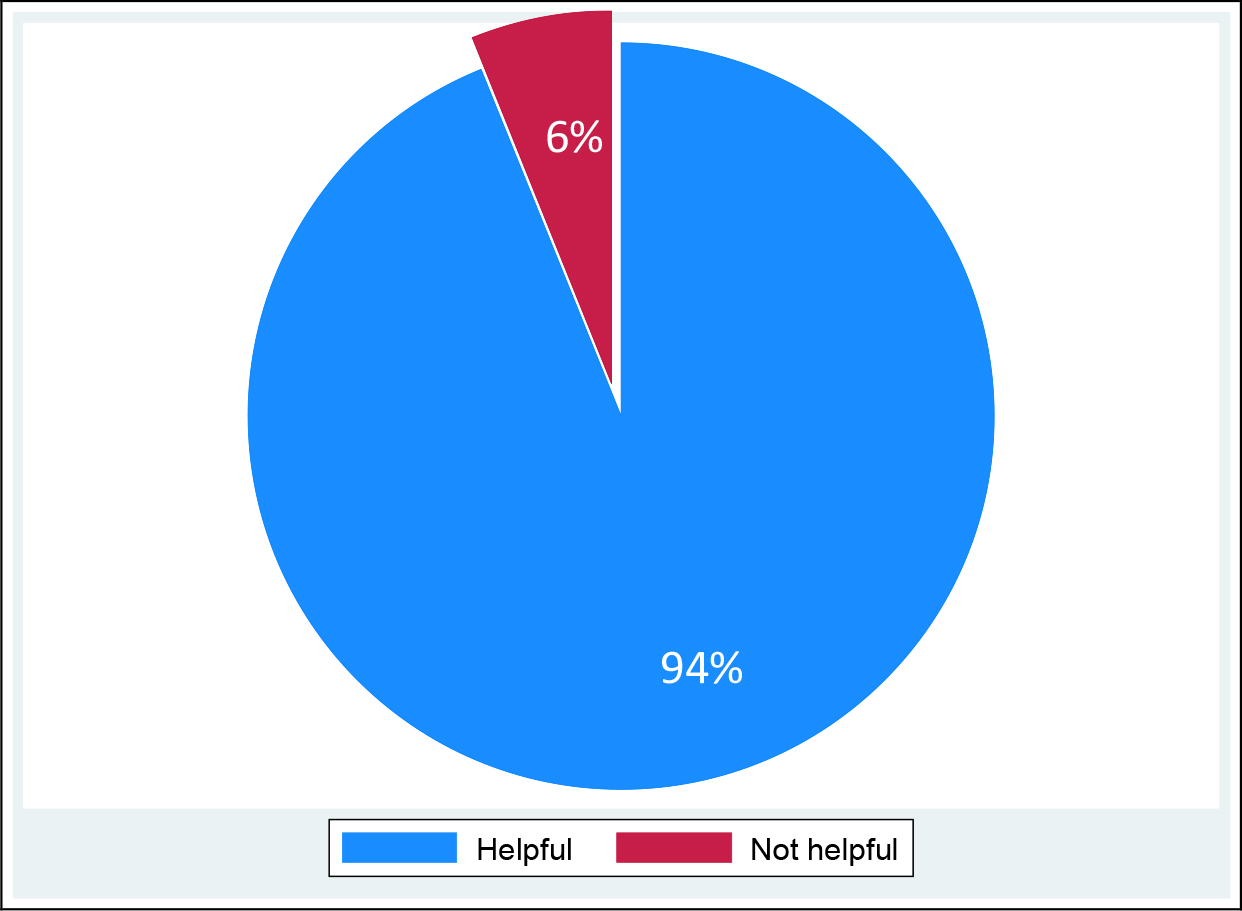
  5. Baqui AH, Choi Y, Williams EK, Arifeen SE, Mannan I, et al. (2011) Levels, timing, and etiology of stillbirths in Sylhet district of Bangladesh. BMC Pregnancy Childbirth 11: 25. [crossref]
  6. Black RE, Victora CG, Walker SP, Bhutta ZA, Christian P, et al. (2013) Maternal and child undernutrition and overweight in low-income and middle-income countries. Lancet 382: 427–451.
  7. Ozaltin E, Hill K, Subramanian SV (2010) Association of maternal stature with offspring mortality, underweight, and stunting in low- to middle-income countries. JAMA 303: 1507–1516.
  8. Black M, Bhattacharya S (2013) Maternal Obesity and the Risk of Stillbirth. In: Mahmood T, Arulkumaran S, (eds). Obesity. Oxford: Elsevier; Pg No: 371–382.
  9. Wells JC (2017) The New “Obstetrical Dilemma”: Stunting, Obesity and the Risk of Obstructed Labour. Anat Rec (Hoboken) 300: 716–731.
  10. Jehn M, Brewis A (2009) Paradoxical malnutrition in mother-child pairs: untangling the phenomenon of over- and under-nutrition in underdeveloped economies. Econ Hum Biol 7: 28–35.
  11. Lee J, Houser RF, Must A, de Fulladolsa PP, Bermudez OI (2010) Disentangling nutritional factors and household characteristics related to child stunting and maternal overweight in Guatemala. Econ Hum Biol 8: 188–196. [crossref]
  12. Lee J, Houser RF, Must A, de Fulladolsa PP, Bermudez OI (2012) Socioeconomic disparities and the familial coexistence of child stunting and maternal overweight in Guatemala. Econ Hum Biol 10: 232–241. [crossref]
  13. Florêncio TT, Ferreira HS, Cavalcante JC, Luciano SM, Sawaya AL (2003) Food consumed does not account for the higher prevalence of obesity among stunted adults in a very-low-income population in the Northeast of Brazil (Maceió, Alagoas). Eur J Clin Nutr 57: 1437–1446. [crossref]
  14. Dieffenbach S, Stein AD (2012) Stunted child/overweight mother pairs represent a statistical artifact, not a distinct entity. J Nutr 142: 771–773.
  15. Samper-González J, Burgos N, Bottani S, Fontanella S, Lu P, et al. (2018) Reproducible evaluation of classification methods in Alzheimer’s disease: Framework and application to MRI and PET data. Neuroimage 183: 504–521. [crossref]
  16. Khan JR, Islam MM, Awan N, Muurlink O (2018) Analysis of low birth weight and its co-variants in Bangladesh based on a sub-sample from nationally representative survey. BMC Pediatr 18: 100.
  17. Authors (2019) Child mortality, nutrition and cerebral palsy: a cross sectional survey in northern Bangladesh. Nutrients 2019.
  18. Efevbera Y, Bhabha J, Farmer PE, Fink G (2017) Girl child marriage as a risk factor for early childhood development and stunting. Soc Sci Med 185: 91–101. [crossref]
  19. Nour NM (2009) Child marriage: a silent health and human rights issue. Rev Obstet Gynecol 2: 51–56. [crossref]
  20. Raj A (2010) When the mother is a child: the impact of child marriage on the health and human rights of girls. Arch Dis Child 95: 931–935. [crossref]
  21. UNICEF (2011) Working towards a common goal: ending child marriage [Internet]. [2019 Jun 6]. Available from: https://www.unicefusa.org/stories/working-towards-common-goal-ending-child-marriage/7086.
  22. Parsons J, Edmeades J, Kes A, Petroni S, Sexton M, et al. (2015) Economic impacts of child marriage: A review of the literature. The Review of Faith & International Affairs 13: 12–22.
  23. Adhikari R (2003) Early marriage and childbearing: risks and consequences. In: Bott S, Jejeebhoy S, Shah I, Puriet C, editors. Towards adulthood: Exploring the sexual and reproductive health of adolescents in South Asia; 2000; Mumbai, India. Geneva: World Health Organization Pg No: 62–66.
  24. Chowdhury FD (2014) The socio-cultural context of child marriage in a Bangladeshi village. Int J Soc Welf 13: 244–253.
  25. Lee-Rife S, Malhotra A, Warner A, Glinski AM (2012) What works to prevent child marriage: a review of the evidence. Stud Fam Plann 43: 287–303. [crossref]
  26. Gupta PC, Ray CS (2004) Epidemiology of betel quid usage. Ann Acad Med Singapore 33: 31–36. [crossref]
  27. Kuo FC, Wu DC, Yuan SS, Hsiao KM, Wang YY, et al. (2005) Effects of arecoline in relaxing human umbilical vessels and inhibiting endothelial cell growth. J Perinat Med 33: 399–405. [crossref]
  28. Garcia-Algar O, Vall O, Alameda F, Puig C, Pellegrini M, et al. (2005) Prenatal exposure to arecoline (areca nut alkaloid) and birth outcomes. Arch Dis Child Fetal Neonatal Ed 90: 276–277.
  29. Senn M, Baiwog F, Winmai J, Mueller I, Rogerson S, et al. (2009) Betel nut chewing during pregnancy, Madang province, Papua New Guinea. Drug Alcohol Depend 105: 126–131.
  30. Yang MS, Lee CH, Chang SJ, Chung TC, Tsai EM, et al. (2008) The effect of maternal betel quid exposure during pregnancy on adverse birth outcomes among aborigines in Taiwan. Drug Alcohol Depend 95:134–139.
  31. Government of the People’s Republic of Bangladesh, Ministry of Health and Family Welfare. Dhubaura Upazila Health Complex Health Bulletin 2015 [Internet]. [Mohakhali, Dhaka]: Government of the People’s Republic of Bangladesh, Ministry of Health and Family Welfare; 2015 [cited 2019 Jun 6].

[1] de Onis M, et al. (2012) Worldwide implementation of the WHO Child Growth Standards. Public Health Nutrition 15: 1603–1610.

[2] de Onis M (2006) Reliability of anthropometric measurements in the WHO Multicentre Growth Reference Study. Acta Pædiatrica 95: 8–46.