Archives

Discussing Why Hemochromatosis Is Ignored

DOI: 10.31038/IMROJ.2016114

Abstract

Hereditary Hemochromatosis is the most common, life threatening genetic disorder in the Western World. It is an autosomal recessive disorder, which means it is passed on to an individual by both parents who each have the HFE gene. When this gene mutates, it causes the small intestine to absorb high levels of iron from the diet into the bloodstream. The iron is commonly deposited in the liver, but it can also accumulate in the heart, lungs, brain, and the pancreas. This excessive accumulation of iron in the body can lead to toxicity and eventually to organ failure. Although, quite common, there is little public awareness of the disease with only 4 known cases diagnosed in the Grand Cayman. Some affected individuals have no symptoms. Those that have early signs and symptoms have nonspecific ones that resemble those of other common conditions. In a survey, conducted by the Centers for Disease Control and Prevention (CDC), 67% of those with the right symptoms had initially received various multiple diagnoses, including arthritis, liver disease, hormonal deficiencies, and diabetes (Centers for Disease Control and Prevention, 2008). Since, according to CDC, it takes approximately 9.5 years after the onset of symptoms for a patient to be diagnosed, early diagnosis and treatment is essential to prevent the development of severe complications such as diabetes mellitus, hepatocellular carcinoma, liver failure, cardiomyopathy, and even death. Consequently this raises the question, of whether the small number of known cases in Grand Cayman was due to lack of awareness or misdiagnosis of this common, but rarely diagnosed disease.

Key words

cirrhosis, Hemochromatosis, HFE = High Iron, Mutation, Phlebotomy, Transferrin

Introduction And Historical Background

In 1865, the first medical description of a patient with hemochromatosis was first described in a French pathology publication, by legendary diagnostician and educator Dr. Armand Trousseau [1]. He described it as an unrecognized illness involving the triad skin bronzing, cirrhosis, and diabetes. Two decades later in 1889, the German Pathologist Friedrich von Recklinghausen autopsied a series of patients dying of mysterious “bronze diabetes.” He noted that what Trousseau described was related to iron accumulation leading to the pigment changes in tissues, this prompted him to name the disorder hemochromatosis. Joseph Sheldon later explained the inherited nature of the disease in 1935. He organized a detailed written study of published cases of hemochromatosis, in which he concluded that the disease was not a complication of diabetes, cirrhosis, or excess copper but a familial disorder.

For more than 125 years, hemochromatosis was thought to be extremely rare [1]. Treatment for this disease was not effective until 1950 when Davis and Arrowsmith cleverly suggested phlebotomy as a treatment option. At the same time, progress was made when autopsy studies showed a much higher prevalence of the disease in the general population than previously known. Unfortunately, numerous supporting studies did not lead to changes in clinical practice. Nearly 150 years later in 1996, after Dr. Trosseau’s initial report, researchers identified the genetic culprit: a mutated HFE gene encoding a tyrosine molecule instead of the intended cysteine at the 282nd position of the protein chain (a mutation abbreviated as C282Y by biochemists). Since then, researchers have estimated that the C282Y mutation occurring on the HFE gene originated 60-70 generations ago. This means that the appearance of Hemochromatosis can be traced back between 600 to 1100 C.E. [2]

While hemochromatosis is prevalent worldwide, the likelyhood of carrying at least one copy of the HFE gene was most common in people of Western European descent. Specifically the chance of carrying this gene for people of Western European ancestry is about one in three individuals. Yet, only one in two hundred actually have hemochromatosis and its symptoms. This is particularly important since Caymanians not only have African ancestry and European ancestry as well.

In the United States, approximately 1 in 10 Caucasian population are heterozygous for the C282Y mutation while 4.4 per 1000 are homozygous for this same mutation [3]. Roughly, one million people have this disease in the USA. Since this is an autosomal-recessive condition, a difference in disease rates between the sexes would not be expected. Nonetheless, the clinical disease is more common in men, other than women because it is thought that women are protected from it by the loss of iron by their bodies during menses and pregnancy [3].

In the Grand Cayman, there were four confirmed cases of the disease 2 men and 2 women in 2013. One of the females was recently diagnosed and all four of them were light skin Caymanians from the district of West Bay [4]. Although the number of people with hemochromatosis is quite low, there could be cases out there that have yet to be diagnosed or that have been mistaken for other chronic diseases.

Iron is an essential part of our diet. Although it is mainly found in red meat, it is also found in green leafy vegetables and fortified foods such as cereal and breads. Iron is essential to the human body because it is required for vital functions. For example, it is crucial for the transportation of oxygen through the bloodstream, energy production, formation of the hemoglobin in the red blood cells and myoglobin in muscles, DNA synthesis, and numerous enzymatic metabolic processes. Normally, iron is absorbed in the duodenum located in the small intestine. Once absorbed, the iron is transported by a glycoprotein called Transferrin and is thereby distributed to sites of iron utilization and storage. This carrier protein plays a role in regulating the transport of iron from the site of absorption to virtually all tissues [5]. Depending on the need for iron, the body is able to increase or decrease the amount absorbed by the intestinal tract and thus maintain iron homeostasis. Hepcidin is the hormone responsible for controlling iron homeostasis. It controls how much iron is absorbed by the intestines, how iron is used in various body processes, and how it is stored in various organs [6].

Initially, iron is stored in ferritin molecules abundantly found in the heart and liver. A single one of these molecules can store up to 4000 iron atoms [5]. When excess iron from the diet is absorbed, the body responds by producing more ferritin to facilitate iron storage. On average, 3.5 g of iron is contained within the body and is maintained such that mucosal absorption of iron is equal to the iron loss. Men lose only about 1 mg of iron daily through the shedding of skin cells and secretions of the gut and skin. Women end up losing an additional milligram of iron due to menstrual bleeding and can lose approximately 500 mg when pregnant.

The daily intake of iron is about 10mg. Healthy people usually absorb about 10% of this iron, which is enough to meet normal requirements. In a person with hemochromatosis, 30% is absorbed because mucosal absorption is greater than body requirements. The mutated HFE gene causes a false signal that iron stores are low and thus, dietary iron is absorbed 2-4 times the normal rate amounting to approximately 4mg or more of iron per day [7] . This leads to accumulation of 0.5-1.0g of iron per year [5]. The progressive accumulation of iron increases plasma iron, saturation of transferrin, and results in a progressive increase of plasma ferretin. Although iron absorption is greater, the excretion rate remains the same. As there is no natural way for the body to excrete excess iron other than through blood loss, it is stored in synovial joints and various tissues, such as the liver, heart, pancreas, brain and lungs [8]. Over many years, this excess stored iron accumulates to toxic levels and can damage and bring about organ failure. The iron overload can cause many health problems, most frequently a form of diabetes that is often resistant to insulin treatment [9].

The gene responsible for regulating iron absorption from the diet is called the HFE gene which stands for High Fe (iron). Hemochromatosis is caused by the mutations in the HFE gene. As mentioned previously, hemochromatosis is an autosomal recessive disease and thus an individual must inherit two mutated genes for the disorder to manifest. This is termed homozygous. While researchers have identified more than 20 mutations in the HFE gene, only two in particular are responsible for this disorder. Each of these mutations changes one of the protein building blocks (amino acids) used to make the HFE protein [10]. The two main mutations that can occur on the HFE gene are the C282Y mutation, which accounts for 90 to 95% of cases, and the H63D mutation. C282Y is associated with a more severe form of iron absorption than the H63D mutation. Individuals who inherit one of the mutated genes and a normal gene are heterozygous for hemochromatosis. They are generally asymptomatic, but in rare cases they may also display signs and symptoms of the disease [9].

Signs and Symptoms

The signs and symptoms of this disease are so varied, non-specific and so vague that proper diagnosis is often difficult. Some of the early signs and symptoms include fatigue, weakness, weight loss, abdominal pain, and arthralgia. As iron accumulation progresses, patients may also experience arthritis, shortness of breath/ dyspnea or symptoms of gonadal failure such as amenorrhea, early menopause, loss of libido, and impotence. Iron accumulates in the parenchymal cells of several organs; the liver is a major site, followed by the heart and pancreas. Conditions associated with advanced stages of hemochromatosis include: arthritis, abnormal liver function such as elevated transaminase and clinical liver disease, glucose intolerance and diabetes, chronic abdominal pain, severe fatigue, hypopituitarism, hypogonadism, cardiomyopathy (enlargement of heart) and arrhythmia (abnormal heart beat), cirrhosis, liver cancer, heart failure, and gray or bronze skin pigmentation similar to a suntan [5].

Obviously, as seen by the extensive list of symptoms, hemochromatosis can be extremely difficult to diagnose. Most advanced hemochromatosis complications are also common primary disorders. Therefore, a hemochromatosis diagnosis can be missed even in advanced stages unless it is looked for specifically. Looking back at the low number of cases diagnosed in the Grand Cayman and some hospitals in the United States, one has to wonder if physicians in the Cayman Islands (Territory of Briatain) and their counter parts from all over the world are actively screening for hemochromatosis or mistaking its signs and symptoms for other common primary disorders. In speaking with a handful of physicians, most of them were vaguely aware of what hemochromatosis is. Most noted that it was “too much iron in the blood”. However, when asked about signs, symptoms, and treatments, none could recall any.

Some complications of hemochromatosis are not clearly related to excess iron, yet, when excess iron is removed, many individuals report feeling better [5]. Manifestations of iron accumulation can vary from person to person. The most common presenting symptom is chronic fatigue which occurs in about 50-75% of individuals. Over 70% of patients have liver function abnormalities, weakness, and lethargy at the time of diagnosis. Excessive skin pigmentation is present in more than 90% of symptomatic patients at diagnosis. The liver is usually the first organ affected. Hepatomegaly is one of the most frequent findings in clinical presentation, followed by cirrhosis. Primary hepatocellular carcinoma is more common in those with hemochromatosis than those in the general population. Diabetes mellitus occurs in 25%-75% of people and is more likely to develop in those with family histories of diabetes, suggesting that direct damage to pancreatic islets by iron absorption occurs in combination with genetic predisposition. Arthropathy develops in 25%-50% of people and usually occurs after age 50, but it may also occur as a first manifestation. Cardiac involvement is another presenting manifestation in about 15% of people, but the most common manifestation is palpitations as symptoms of arrhythmia [5].

The signs of hereditary hemochromatosis usually do not appear until about age between 40 and 60 years, when iron in the body has reached damaging levels. The reason for this is that it takes many years for iron to accumulate to the level at which clinical manifestations occur. Because women lose iron to a greater extent than men because of menses, pregnancy, and lactation, they tend to become symptomatic slightly later in life than men, often after menopause [8].

Penetrance is a term indicating the likelihood that a given gene will actually develop into disease. Thus, an individual with two mutated HFE genes does not necessarily mean have to exhibit symptoms and may actually remain symptom-free for life. Early studies that used both self-reported symptoms and clinical signs to define hemochromatosis, reported clinical penetrance estimates ranging from 40% to 70%. In contrast, more recent studies that used clinical signs or objective laboratory measures to define hemochromatosis have reported clinical penetrance estimates ranging from 1% to 50%. Inconsistencies regarding penetrance estimates persist and so further studies are needed to more fully understand the role of genetic and environmental factors that may affect penetrance [5]. Of people with the HFE mutations, only a subset will develop elevated transferrin saturation (TS). Of these, only a subset will develop an elevated serum ferritin (SF), only a further subset will develop hemochromatosis symptoms. Of those with symptoms, only a subset will develop clinical signs consistent with hemochromatosis. Thus, diagnosis is reserved for those whose signs and symptoms are clearly referable to documented iron overload [5].

Diagnosis

Currently, the clinical guidelines recommend that testing for hemochromatosis should be performed in individuals with any unexplained signs or symptoms associated with hemochromatosis, those with porphyria, hepatitis, or other liver diseases, and those with abnormal blood tests consistent with hemochromatosis. Individuals that have a family member with the condition should specially be examined for this inherited disorder because these individuals have an increased risk of developing iron overload and are an ideal group for targeted prevention efforts.

A number of laboratory tests are available to measure the amount of iron in the blood and diagnose iron overload.  Biochemical tests include: Serum iron (SI), total iron-binding capacity (TIBC), unsaturated iron-binding capacity (UIBC), transferrin saturation (TS), and serum ferritin (SF). The Centers for Disease Control and Prevention (CDC) has established a testing protocol involving 3 steps to determine a diagnosis of hereditary hemochromatosis. Involving a transferrin saturation test, a serum ferritin test, and a confirmation of the hemochromatosis diagnosis.

Transferrin is a blood protein that measures the amount of iron absorbed by the intestines and transports if from on location to another. When iron absorption is abnormally high, transferrin proteins become more saturated with iron. An elevated TS value therefore reflects an increase in iron absorption. This transferrin saturation test (TS) is a sensitive and relatively inexpensive biochemical measure of iron overloading [5]. When interpreting the results of a fasting transferrin saturation (TS), it is important to keep in mind that several factors can falsely elevate TS values, including the use of vitamin C, dietary supplements containing iron, medicinal iron, and estrogen preparations. Individuals should be advised to avoid these products for 24 hours prior to the fasting blood draw. On the other hand, colds, inflammation, liver disease, and malignancies can falsely lower TS values. Pathologic blood loss or a history of frequent blood donations should be considered reasons for normal iron status in those who have symptoms consistent with hemochromatosis [5].

Those with elevated TS values should proceed with serum ferritin testing and additional workup as needed. As mentioned before, ferritin is a protein that stores iron. The body increases serum ferritin production when excess iron is absorbed. Serum ferritin levels therefore reflect the body’s iron stores. It is important to note that because serum ferritin is also an acute phase reactant affected by cancer and inflammatory or infectious processes, SF values may increase if these underlying conditions are present.

The final test involves acquiring additional biochemical evidence of iron overload and is typically required before the hemochromatosis diagnosis can be made. This confirmation can be achieved in three ways: indirectly by quantitative phlebotomy, HFE genotyping, and directly by liver biopsy.

Quantitative phlebotomy is considered as a confirmatory test choice because the amount of mobilizable iron removed from the body by weekly or biweekly phlebotomy aids in measuring the degree of iron overload. This typically requires approximately 15 phlebotomies, each removing 500ml of blood. Each 500mL of blood extracted then removes approximately 200mg of iron. The goal is to reduce the ferritin level.

Genotyping for HFE mutations can provide additional confirmatory evidence though this information should be combined with clinical history, examination, and laboratory assessment. Identifying any HFE mutation alone is insufficient for diagnosing hereditary hemochromatosis [5]. Other genes involved in iron metabolism may also be responsible for iron overloading. Therefore, if a patient is negative for an HFE mutation yet has disease symptoms and iron overload, phlebotomy treatment and proper management of the patient’s iron overload are still important.

Another method of confirming hemochromatosis after getting elevated iron levels is liver biopsy. Since liver biopsy directly evaluates the amount of iron per gram of liver tissue, it is more commonly used for prognostic reasons to determine the level of damage [5].

Once used as the definitive confirmation test for hemochromatosis, liver biopsy is now recommended for those with high risk of liver involvement or liver damage. Most health care providers use liver biopsy in patients with elevated liver enzymes and serum ferritin levels greater than 1,000 ng/mL.

Screening

The screening process is the main thrust of this paper, since the disease is common and complications can be easily prevented with early diagnosis and treatment, the question of community screening has been raised and much debate has ensued. Concerns include: incomplete knowledge about disease penetrance, the potential for discrimination with insurance and employment, potential for increased anxiety in people who may never develop manifestations of the disease, the cost effectiveness of screening, compliance with clinical management, and whether screening should be by iron studies or genetic testing [11]. One major concern regarding screening is that people who test positive may never return for confirmation testing or may not take action to treat their disease. A study performed in Italy found that 67% of people who had elevated iron levels upon screening did not return for definitive testing [11]. Talking with the Genetic Councilor at Health Service Authority (HSA) of Cayman Islands, it was determined that HFE screening in the Grand Cayman was non-existent due to similar concerns.

Here in the USA a number of medical doctors (from Graves Gilbert hospital in Bowling green Kentucky, Wood county hospital in Bowling green Ohio, University of Toledo Medical center in Toledo Ohio, Toledo Hospital in Ohio) whom I interviewed for condition have indicated they don’t really “screen” people in the typical sense of the word, “screening” is usually reserved for asymptomatic individuals. One named hematologist said he usually checked for iron overload in patients with unexplained liver disease or in patients with underlying hematologic diseases that predispose to iron overload such as hemolytic anemia and transfusion dependent conditions. One cardiologists said, there was no current recommendation to screen for hemochromatosis unless they have symptoms or disease. Definitely there are several genotypes as well as accompanying phenotypes. Some patients are quite unlikely to have an end organ damage even with a quite elevated ferritin whereas other patients may have evidence of an end organ damage with moderate elevations in ferritin. The public health departments throughout USA and even in the Cayman Islands (territory of Britain) do conduct sporadic screening of certain diseases such as Hypertension, Diabetes, in public places (Myers stores here in USA, Foster’s food fair in Cayman Islands), this is good because people can be treated early once they have been diagnosed with these diseases and make informed decisions regarding their diets. May be the Department of public health in conjunctions with hospital hematologists, cardiologists could come up with a similar program that could implement the screening of people for hemochromatosis. People that have been diagnosed with diabetes, hypertension etc as a result of screening programs, take precaution regarding what they eat and they go back to the hospital for regular checkups to make sure the blood sugar levels or blood pressure is within normal range.

Individuals diagnosed with hemochromatosis can modify their diet accordingly; again each person is unique which must be taken into consideration before using the following suggested diet modifications in Table 1 below. This is exactly what happens with individuals diagnosed with hypertension (take low or no salt diet) or diabetes mellitus (on sugar substitutes or no sugar) do once they have known their status.

Table 1. Iron Fe (mg) content of selected foods per common measure

Food common measure content per measure
Alcohol beverage, beer 12 fl oz 0.11
Apples raw with skin 1 apple 0.17
Apple raw without skin 1 cup 0.08
Asparagus, canned drained solids 4 spears 1.32
Asparagus, cooked boiled drained 4 spears 0.55
Bananas, raw 1 banana 0.42
Beans, baked, canned plain 1 cup 3.00
Beans, baked, canned with pork/ tomato 1 cup 8.20
Beef, chuck 3 oz 3.13
Beef, ribs 3 oz 1.99
Beef, round 3 oz 2.09
Beef, ground 3 oz 2.21
Blackberries raw 1cup 0.89
Broccoli raw 1 spear 0.23
Broccoli raw 1 cup 0.64
Carrots raw 1 carrot 0.22
Carrot raw 1 cup 0.33
Chicken, broilers, cooked, roasted 3 oz 0.96
Chicken, broilers, cooked meat/ skin 1 thigh 1.25
Fish, salmon smoked 3 oz 0.72
Fish, salmon , pink, solids/bone 3 oz 0.71

Treatment and Management

Initial treatment and long-term management of hemochromatosis often depends on the level of iron in the body and associated symptoms at the time of diagnosis. In addition to treatment, diseases caused by hemochromatosis also need separate management, such as liver disease and diabetes mellitus [12]. Phlebotomy is the most common treatment and management method. Phlebotomy works by stimulating the bone marrow to make new red blood cells as old ones are extracted. Iron is moved out of iron stores in the body to make more hemoglobin. Therefore, phlebotomy reduces the patient’s iron level and can restore it to a healthy level.

In the initial de-ironing phase, normalization of iron stores involves weekly removal of blood by phlebotomy until mid hypoferritinemia occurs. That is, ferritin should equal 20ng/ml. This phase usually takes from 3 months to 1 year. The volume of blood to be removed varies among patients. Typically, 1 unit (500ml) of blood is removed per week but those who are smaller in size (less than 110lbs), elderly, and those with anemia, heart and lung problems can only manage 250ml of blood removal per week [5]. Careful monitoring of each patient throughout treatment is essential. If the treatment is too aggressive, anemia may result. Post-treatment monitoring is required and is key to appropriate patient management. Phlebotomy should be performed throughout a patient’s life to keep ferritin levels between 25 and 50ng/ml. Table 2: indicates the expected benefits from the pre-treatment state of individuals experiencing symptoms from hemochromatosis.

Table 2. Symptoms and benefits of Hemochromatosis management

Pretreatment State Expected Benefit
No symptoms prevention of complications of iron over­load; normal life expectancy.
Weakness, fatigue, lethargy Resolution or marked improvement if iron related.
Elevated serum concentrations of hepatic enzyme. Resolution or marked improvement
Diarrhea Cessation if iron related
Hepatomegaly Resolution often occurs
Hepatic cirrhosis No change or slower progression of liver failure
Right upper quadrant pain Resolution or marked improvement
Arthropathy Some improvements in arthralgia, change in joint deformity; progression sometimes seen.
Hypogonadotrophic hypogonadism Resolution is rare

Chelation therapy is an option for patients who are not allowed to bleed due to other heritable and acquired anemias [13]. Iron chelation is the pharmacological removal of metals by chemicals that bind metal so that it is excreted in urine. However, the only pharmacological iron-chelating agent approved by the FDA for use in humans is intravenous deferoxamine, or desferrioxamine or Desferal. This approach lacks the complete efficacy of phlebotomy and should be used only when absolutely necessary [5].

There are lifestyle and home remedies that may reduce the risk of complications from hemochromatosis. Those with hemochromatosis should avoid iron supplements and multivitamins containing iron because these can further increase the iron levels.  Individuals with the disease need to limit their intake of alcoholic beverages to lessen the effects of liver cirrhosis. They should also refrain from consuming Vitamin C which increases the absorption of iron from within the intestinal tract, and consume minimal amounts of red meat which is high in iron. They should avoid eating raw shellfish because individuals with hemochromatosis are susceptible to infections, especially those caused by certain bacteria in raw shellfish [6]. Also, increasing intake of substances that inhibit iron absorption, such as high tannin tea, and calcium may help slow the accumulation of iron in the body.

Conclusion

Hemochromatosis is a common yet rarely diagnosed genetically disorder. It is more common than the well-known sickle cell disease. Left untreated this disease leads to certain end organ damage and consequently death. Fortunately, if the condition is diagnosed and treated early, the damage from hereditary hemochromatosis is completely preventable. The HFE gene mutation responsible for hemochromatosis is found in a small but significant proportion of the general Caucasian population. Although it is rare to find HFE mutations in African Americans who have iron overload, these mutations have been found in a few individuals. It has been suggested that their appearance is due to admixture [5]. This might also hold true for Caymans. However, it is important to remember that only 4 known cases were in the Cayman Islands in 2013, thus, the disease might be under recognized by both physicians and individuals. It would thus be beneficial for Countries of the world to become more aware of the symptoms and management of this condition. The ongoing under diagnosis of hemochromatosis exhibited by screening individuals who have an end organ damage is not enough, or hematologists have a low sensitivity to the condition when symptoms compatible with the early stages of the disease are present and even sometimes when late complications are present. With early screening and diagnosis, preventive therapy can be instituted in the form of regular phlebotomy. If treatment is begun before end organ damage (cirrhosis or diabetes) has occurred, the prognosis is good. However, late and missed diagnoses lead to under- utilization of this readily accessible preventive treatment. This is worse in developing countries in Africa and elsewhere where the screening of hemochromatosis is never done and where most patients due to end organ damage die of the preventable diseases.

Acknowledgements

The author gratefully acknowledges support from Cynthia Powell and Jody Sims students at University college of Cayman Islands. Dr. David Kennedy University of Toledo for linking me up with Physicians from University of Toledo Medical Center, Federman Douglas MD University of Toledo medical Center Ohio, Robert Grande MD Toledo Hospital in Ohio and Jamie Jarboe MD Graves Gilbert Medical Center, Bowling green, KY.

References

  • Moalem, S. (2007) Survival of the sickest. New York, NY: HarperCollins Publishers.
  • Moalem S, Weinberg ED, Percy ME (2004) Hemochromatosis and the enigma of misplaced iron: implications for infectious disease and survival. Biometals 17: 135-139 [crossref]
  • Connor RF (2013) Haemochromatosis. Retrieved on November 10th, 2013, from Best Practice database http://bestpractice.bmj.com/bestpractice/monograph/134/basics/epidemiology.html
  • S.A (2013) Health Services Authority of Cayman Islands, Records 2013.
  • Centers for Disease Control and Prevention (2010) Training & Education- Epidemiology Retrieved on November 23rd, 2013 from the Centers for Disease Control and Prevention Web Site: http://www.cdc.gov/ncbddd/hemochromatosis/training/epidemiology/prevalence.html
  • Mayo Clinic (2008) Hemochromatosis. Retrieved November 17th, 2013 from Mayo Clinic Web Site: http://www.mayoclinic.com/health/hemochromatosis/DS00455
  • Colledge N, Ralston S, Walker B (2010) Hemochromatosis. Davidson’s Principles and Practice of Medicine. 21st ed. Textbook.
  • Adams P, Beaton M (2013) Hemochromatosis: A Guide to Diagnosis and Treatment. Retrieved on November 26th, 2013 from the British Medical Journal Database http://learning.bmj.com/learning/module-intro/haemochromatosis-diagnosis-treatment.html?moduleId=10012540&locale=en_GB
  • Plaut D, McLellan W(2009). Hereditary hemochromatosis. Journal of Continuing Education Topics & Issues 11(1): 18-21.
  • Genetics Home Reference (2009) HFE. Retrieved November l7, 2013th from the U.S. National Library of Medicine http://ghr.nlm.nih.gov/gene/HFE
  • Allen K, Nisselle A, Collins V, Williamson R, Delatycki M (2008) Asymptomatic Individuals at Genetic Risk of Haemochromatosis take appropriate steps to prevent disease related to iron overload. Liver International: Official Journal of the International Association for the Study of the Liver 28: 363-369.
  • National Heart Lung and Blood Institute (2009)
  • Dunet DO, Reyes M, Grossniklaus D, Volansky M, Blanck HM (2008) Using evaluation to guide successful development of an online training course for healthcare professionals. J Public Health Manag Pract 14: 66-75. [crossref]
Novel Agents for the Treatment of Hereditary Hemorrhagic Telengiectasia: Are They Effective Enough?

DOI: 10.31038/IMROJ.2016113

Editorial

Hereditary hemorrhagic telangiectasia (HHT) is a relatively rare (1/5000) autosomal dominant disorder characterised with arteriovenous malformations located in mucosal areas, gastrointestinal tract, pulmonary, hepatic and cerabral circulations. Several mutations (endoglin, activin A receptor type II-like 1, and less frequently SMAD4 gene) are determined, however the main cause of HHT remains unclear [1, 2]. Current guideliness recommend to take measures for the prevention of bleeding, avoidance of antiplatelet or anticoagulant agents (if possible), electrical or chemical coagulation techniques via endoscopic procedures, and treatment of iron-deficiency anemia [2].

Circulating vascular endothelial growth factor (VEGF) levels are elevated in HHT. Recently bevacizumab, a VEGF inhibitor, was administered parenterally to patients with HHT in order to investigate whether it has systemic anti-angiogenic effects in HHT. The bevacizumab dose administered was the same as its usual dose recommended for metastatic colorectal cancer patients (5 mg/kg, every 2 weeks, for 6 cycles). Among the evaluable subjects (n= 5), all patients had a decrease in transfusion requirements, and one of them gained transfusion independency. Improvement in hemoglobin levels were detected 2 months following bevacizumab administration. Some patients (n= 2) needed additional infusions of bevacizumab, but no serious (grade III or IV) side effects were reported. Bevacizumab was found to be more effective in patients suffering from epistaxis [3]. To avoid its systemic side-effects bevacizumab was also administered locally. In ELLIPSE phase-1 study which was performed on 40 HHT patients, nazal bevacizumab was well tolerated but showed no efficacy at the doses of 12.5, 25, 50, 75, and 100 mg/mL, respectively [4]. Subsequently, in a placebo-controlled and double-blind study with 15 HHT patients, a single intranasal submucosal bevacizumab injection (10 mL, 100 mg) reduced epistaxis severity and visual analog scores (27% vs 3%) non-significantly [5].

Beyond its immunomodulatory effects, thalidomide has anti-angiogenenic potency, and also suppresses tumor necrosis factor alpha  [1]. The efficacy of thalidomide in preventing gastrointestinal hemorrhages from angiodysplasias was proven in 2011. This prospective study included 2 arms, 100 mg/day thalidomide versus 400 mg/day iron (controls) were administered for 4 months. As expextedly, the subjects in thalidomide arm had significantly higher response rate which was described as a decrease by ≥50% in bleeding episodes. Thalidomide treatment was associated with a reduction in VEGF levels without any serious adverse events [6]. These promising results led clinicians to administer thalidomide for patients with HHT. Although no randomised clinical trial is reported, some small case series have emerged its clinical efficacy in HHT patients presenting with epistaxis at a dose of 50-250 mg/day (most commonly 100-200 mg/day). These patients have also showed less transfusion requirements and have described improvements in quality of life scores [7]. Special attention needs be paid while prescribing thalidomide. Teratogenicity, sedation, peripheral sensorial neuropathy, hematologic cytopenias, and venous thrombosis are the potential adverse effects of thalidomide. 100 mg/day thalidomide should be used to avoid from neuropathy instead of 300 mg/day. Interestingly, thromboembolic events were not reported in previous studies including patients with HHT [1].

Lenalidomide, a novel immunomodulatory drug which has less side effects than thalidomide, was successfully used in a 69-year-old women with chronic gastrointestinal bleeding due to HHT. Initially she was under thalidomide therapy (50-100 mg/day), but the drug was stopped because of thalidomide-induced grade-3 peripheral neuropathy. She has became free of gastrointestinal hemorrhage and drug side effects, with higher hemoglobin values (10.9 vs. 13.2 g/dL) and reduced iron and blood transfusion requirements after a 13-months period of lenalidomide treatment [8]. Both thalidomide and lenalidomide carry anti-angiogenic properties in a dose-dependent manner [9]. Additionally, the inhibitory potency of lenalidomide on growth factor-induced Akt phosphorylation and anti-migratory effects on endothelial cells were clearly shown in a rat mesenteric window assay by Dredge and colleagues [10]. Lenalidomide can suppress bone marrow activity, and therefore individual dosing should be monitored according to regular blood counts. However, high treatment costs, lack of endication in patients with HHT regarding health insurance, and most importantly limited evidence-based data about the efficacy of lenalidomide in HHT should be kept in mind.

In conclusion, novel agents such as bevacizumab or IMIDs should be used cautiously because of their potential side effects. Bevacizumab and thalidomide seems to be effective in HHT patients presenting with epistaxis. However, IMIDs could be preferred in gastrointestinal hemorrhages in HHT. These new treatment options will also provide improvements in quality of life in HHT. Although serious side effects are not reported in the recommended doses of these agents, there is insufficient evidence to recommend them as first line therapy. Further randomised and well-designed studies are needed to better identify the optimal treatment modality for the prevention and treatment of bleeding episodes in HHT.

References

  • Bauditz J (2016) Effective treatment of gastrointestinal bleeding with thalidomide–Chances and limitations.World J Gastroenterol 22: 3158-3164. [crossref]
  • Faughnan ME, Palda VA, Garcia-Tsao G, Geisthoff UW, McDonald J, et al. (2011) International guidelines for the diagnosis and management of hereditary haemorrhagic telangiectasia. J Med Genet 48: 73-87. [crossref]
  • Epperla N, Kapke JT, Karafin M, Friedman KD, Foy P (2016) Effect of systemic bevacizumab in severe hereditary hemorrhagic telangiectasia associated with bleeding. Am J Hematol 91:E313-4.
  • Dupuis-Girod S, Ambrun A, Decullier E, Samson G, Roux A, et al. (2014) ELLIPSE Study: a Phase 1 study evaluating the tolerance of bevacizumab nasal spray in the treatment of epistaxis in hereditary hemorrhagic telangiectasia. MAbs 6:794-9.
  • Riss D, Burian M, Wolf A, Kranebitter V, Kaider A, et al. (2015) Intranasal submucosal bevacizumab for epistaxis in hereditary hemorrhagic telangiectasia: a double-blind, randomized, placebo-controlled trial. Head Neck 37:783-7.
  • Ge ZZ, Chen HM, Gao YJ, Liu WZ, Xu CH, et al. (2011) Efficacy of thalidomide for refractory gastrointestinal bleeding from vascular malformation. Gastroenterology141:1629-37.e1-4.
  • Franchini M, Frattini F, Crestani S, Bonfanti C (2013) Novel treatments for epistaxis in hereditary hemorrhagic telangiectasia: a systematic review of the clinical experience with thalidomide. J Thromb Thrombolysis 36:355-7.
  • Bowcock SJ, Patrick HE (2009) Lenalidomide to control gastrointestinal bleeding in hereditary haemorrhagic telangiectasia: potential implications for angiodysplasias? Br J Haematol 146:220-2.
  • Dredge K, Marriott JB, Macdonald CD, Man HW, Chen R,et al. (2002) Novel thalidomide analogues display anti-angiogenic activity independently of immunomodulatory effects. Br J Cancer  87:1166-72.
  • Dredge K, Horsfall R, Robinson SP, Zhang LH, Lu L, et al. (2005) Orally administered lenalidomide (CC-5013) is anti-angiogenic in vivo and inhibits endothelial cell migration and Akt phosphorylation in vitro. Microvasc Res 69:56-63.

Ileum Ulcer Bleeding By Cytomegalovirus Infection In A Colon Cancer Patient

DOI: 10.31038/IMROJ.2016112

Abstract

We present an immunocompromised case of colon cancer who received a compound of tegafur and uracil as postoperative adjuvant chemotherapy. However, massive bloody stool passage was found and endoscopy revealed hemorrhagic erosions and ulcers at the ileum, which also caused partial obstruction of proximal small bowel. As persistent massive bleeding, segmental bowel resection was performed and the pathology of the resected lesion confirmed cytomegalovirus ileitis. Meanwhile, the polymerase chain reactions for cytomegalovirus DNA in the stool and peripheral blood samples were both positive. After surgical intervention, however, the intestinal bleeding still persisted and was stopped soon by ganciclovir therapy. In conclusion, intestinal bleeding due to cytomegalovirus ileitis may not be easily controlled without appropriate antiviral therapy. The polymerase chain reactions may be helpful in the earlier detection of cytomegalovirus intestinal disease and provide early initiation of pre-emptive therapy before the histopathological diagnosis is made.

Key words

cytomegalovirus, immunocompromised patients, ileitis

Introduction

Cytomegalovirus (CMV) is a virus that belongs to the family of Herpesviridae and usually causes an asymptomatic infection or produces mild flulike symptoms. Afterward, it remains latent throughout life and may reactivate in the immunocompromised status, thus causing a serious disease with significant morbidity and mortality of the patients [1]. CMV infection can affect any field of the gastrointestinal tract. The most common affected areas are the colon and the rectum, whereas other locations such as the duodenum and ileum are rarely reported [2-4]. Clinical symptoms of CMV ileitis include fever, abdominal pain, anorexia, nausea, vomiting, diffuse abdominal pain, lower abdominal pain, diarrhea, hematochezia or melena [2-4]. Herein we reported a rare case of CMV ileitis in a colon cancer patient presenting with partial small intestine obstruction and massive intestinal bleeding.

Case Report

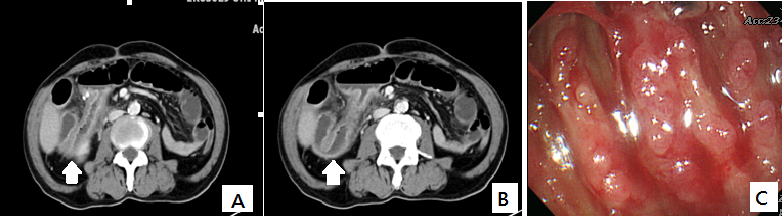
This 75-year-old man had history of diabetes, gout and chronic hepatitis B virus infection. He was diagnosed with colon cancer and received laparoscopic radical right-sided hemicolectomy and subsequent adjuvant chemotherapy with tegafur/uracil (UFUR) 2 months prior to the admission. He suffered from nausea and vomiting with watery diarrhea since July 23, 2015. The laboratory data showed leukocytosis and the computed tomography (CT) of the abdomen showed segmental small bowel swelling at distal ileum (Figure 1A), causing partial obstruction of the proximal small bowel (Figure 1B). Then, he was admitted to the intensive care unit due to septic shock with acute respiratory failure. However, intermittent bloody stool passage was found. Colonoscopy through the right-sided colostomy showed diffuse hemorrhagic erosions and ulcers at distal ileum (Figure 1C). Thereafter, massive lower gastrointestinal bleeding persisted, thus requiring surgical intervention. Enterolysis and segmental bowel resection with end ileostomy were performed on August 17, 2015. Meanwhile, the polymerase chain reactions (PCRs) for CMV DNA in the stool and peripheral blood sample were both positive. The pathology of the biopsied ileum lesion confirmed CMV ileitis with evidence of some scattered stromal or endothelial cells with eosinophilic nuclear inclusion, which were highlighted by anti-CMV immunostain. Nonetheless, small bowel bleeding persisted even after surgery. Therefore, ganciclovir therapy was initiated and stopped the bleeding soon. Then the patient reached successful weaning from mechanical ventilation and he was uneventfully discharged.

Figure 1. The CT of the abdomen shows segmental small bowel swelling at distal ileum till anastomosis (arrow, A), causing proximal small bowel partial obstruction (arrow, B). Colonoscopy through the right-sided colostomy reveals diffuse hemorrhagic erosions and ulcers at the ileum (C).

Figure 1. The CT of the abdomen shows segmental small bowel swelling at distal ileum till anastomosis (arrow, A), causing proximal small bowel partial obstruction (arrow, B). Colonoscopy through the right-sided colostomy reveals diffuse hemorrhagic erosions and ulcers at the ileum (C).

Discussion

CMV enteritis with lower gastrointestinal (GI) haemorrhage is a rare presentation. As CMV infection in immunocompromised patients can be lethal, it is important to diagnose and initiate early treatment. In systemic CMV infections, ulceration of the GI tract is common, which could be a primary infection, a superimposed infection, reactivation of latent infection or re-infection with a new virus (1). CMV ileitis is rarely reported in the literature, but could still occur in the immunocompetent patients [2-4]. However, even in an immmunocompromised patient like our presented patient with colon cancer, CMV ileitis bleeding is usually not considered in the earlier course of the GI bleeding disease. Most gastrointestinal CMV infections respond well to ganciclovir treatment. Therefore, the patient should be offered an antiviral treatment as soon as possible. Early diagnosis of suspected CMV infection in immunosuppressed patients with gastrointestinal symptoms is of the utmost importance. Delayed management of CMV ileitis might cause stenosis of the ileum [4] and massive lower gastrointestinal bleeding [5, 6], just like our case; or could also result in small bowel perforation [7]. Nonetheless, CMV ileitis in an immunocompetent patient with mild symptom of epigastric pain may spontaneously recover without antiviral therapy [2].

Repeat endoscopy may be considered if previous study did not meet a concluding gastrointestinal CMV disease. The ileum ulcer is difficult to approach by endoscopy. In the current patient, we could easily assess the lesion site through the right-sided colostomy but endoscopic biopsy was not performed during bleeding episode. CMV-infected hemorrhagic ileitis was diagnosed by subsequent surgical biopsy and thereby antiviral therapy was rather delayed. In this scenario, we recommend pre-emptive antiviral therapy based on the positive results for stool and/or blood CMV-PCRs.

Authorship

Hui-Chun Chao contributed to acquisition of data and drafting the article. Khee-Siang Chan contributed to the patient care and analysis and interpretation of data. Wen-Liang Yu contributed to conception, design and critical revision of the article. All authors approved the final version to be published and agreed for all aspects of the work related.

Conflict of interests

We declare no funding and no conflict of interests. The above study has been granted exemption from review by the Institutional Review Board of Chi-Mei Medical Center (application no.10410-E02).

References

  • Ljungman P, Griffiths P, Paya C (2002) Definitions of cytomegalovirus infection and disease in transplant recipients. Clin Infect Dis 34: 1094-1097. [crossref]
  • Ryu KH, Yi SY (2006) Cytomegalovirus ileitis in an immunocompetent elderly adult. World J Gastroenterol 12: 5084-5086. [crossref]
  • Varma V, Perera MT, Olliff S, Taniere P, Isaac J, Mirza DF (2011) Cytomegalovirus ileitis causing massive gastrointestinal haemorrhage in a patient following hepatic resection. Tropical Gastroenterology 32:145-7.
  • Tejedor Cerdeña MA, Velasco Guardado A, Fernández Prodomingo A, Concepción Piñero Pérez MC, Calderón R, et al. (2011) Cytomegalovirus ileitis in an immunocompetent patient. Rev Esp Enferm Dig 103: 154-156. [crossref]
  • Meza AD, Bin-Sagheer S, Zuckerman MJ, Morales CA, Verghese A (1994) Ileal perforation due to cytomegalovirus infection. J Natl Med Assoc 86: 145-148. [crossref]
  • Lai IR, Chen KM, Shun CT, Chen MY (1996) Cytomegalovirus enteritis causing massive bleeding in a patient with AIDS. Hepatogastroenterology 43: 987-991. [crossref]
  • Vilaichone RK, Mahachai V, Eiam-Ong S, Kullavanuaya P, Wisedopas N, et al. (2001) Necrotizing ileitis caused by cytomegalovirus in patient with systemic lupus erythematosus: case report. J Med Assoc Thai 84 Suppl 1: S469-473. [crossref]

Congenital Hypercoagulable Disorders

DOI: 10.31038/IMROJ.2016111

Abstract

The blood coagulation in the body’s vessels represents a main cause of thrombosis arterial and venous acute and chronic events. The causes of hypercoagulation can be acquired or inherited. Acquired hypercoagulable disorders most frequently occurs. It can be present in several conditions, included advanged age, and must be reported to one or more factors of Virchow’s triad. On the contrary, hereditary thrombophilia is less frequent and little known too. Its pictures manifest with repeated vascular acute events in subjects in young age, often belonging to the same family, in the absence of factor of Virchow’s triad . Inherited hypercoagulation is due to some genetic anomaly of MTHFR, Factor V Leiden, Factor II. Nevertheless, these states can be caused by a deficiency of anticoagulant proteins (Protein C, Protein S, Antithrombin III) or by antiphospholipid antibodies syndrome. But the anticoagulant tendency , besides congenital, may be also dependent by some acquired conditions, such as liver disease, pregnancy, some infection and the use of drugs, as estrogen, heparin or warfarin. The genetic causes and the pathogenetic mechanisms of inherited thrombophilia were briefly illustrated.

Key words

Hypercoagulability, hereditary thrombophilia, MTHFR, Factor V Leiden, Prothrombin, Anticoagulant proteins, Lupus Anticoagulant

Introduction

Hemostasis is highly regulated by coagulant and anticoagulant factors to maintain a balance between bleeding and coagulation. On the contrary, the prevalence of pro-coagulant on anti-coagulant factors causes an impaired hemostasis balance, inducing thrombosis that blocks or reduces blood supply in tissues. That represents a most frequent and important life-threatening human disease. Hypercoagulable states can be acquired and congenital [1]. Both conditions likely to develop clots in venous and arterial vessels. Venous thrombosis is the most common cause of potentially life-threatening blood clots in the lungs, the deep leg veins, the arm veins, the kidney veins, or others. Conversely, arterial thrombosis consists in clot-formation in the arteries, that can cause some complications associated with significant morbidity and mortality, such as acute myocardial infarction, stroke or TIA [2].

Acquired Hypercoagulability

Acquired form can happen in some conditions, as advanced age, diabetes, inflammation, cancer, obesity, immobility, and others. These act favouring one or more factors of Virchow’s triad (stasis, endothelial dysfunction, hypercoagulability) causing procoagulant tendency [3].

Congenital Hypercoagulability

Also defined hereditary thrombophilia, it occurs lesser than acquired type. It is the result of abnormal gene deriving from one (heterozygous) of both parents (homozygous). It should be suspected in patients with individual and/or familiar history of recurrent ischemic-thrombotic events, in absence of any of the risk factors related to the conditions reported above (Virchow’s triad). But, hereditary thrombophilia generally is also present in subjects at a young age (40 years), with history of thrombosis in unusual sites (mesenteric, renal, hepatic, retinal veins) or cerebral thrombosis [4].

Genes mostly codifying for hereditary thrombophilia include the following:

  • MTHFR (Methylene-Tetra-Hydro-Folate-Reductase);
  • Factor V Leiden (factor V);
  • Prothrombin (factor II).

Reduced MTHRF activity may be responsible for increased homocysteine levels (HHcy) that is a risk factor for arterial and venous blood clots. HHcy exerts its thrombotic effect acting both directly on endothelial layer and indirectly through DNA-hypomethylation [5,6] . Factor V Leiden (FVL) is factor of hereditary thrombophilia in Caucasian populations. Heterozygous FVL is much more common than homozygous. FVLa causes the activation of prothrombin in thrombin [7]. It predisposes mainly to venous thrombosis (especially retinal vein occlusion). Finally, activated prothrombin induces fibrinogen in to fibrin conversion and favours deep venous thrombosis.

Other conditions causing a hypercoagulable state are induced by the deficiencies (inherited or acquired) of  the following proteins defined as natural anticoagulants: Protein C; Protein S; Antithrombin III.

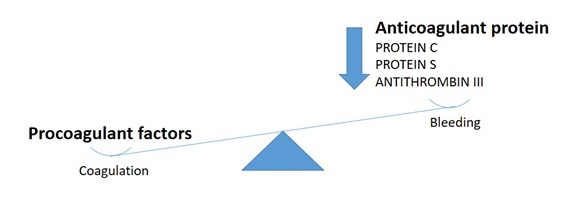
Once the coagulation process begins, these act limiting the process in accordance with the scheme following: (figure.1)

Figure.1: Prevalence of coagulation on bleeding induced by reduction of anticoagulant proteins

Figure 1. Prevalence of coagulation on bleeding induced by reduction of anticoagulant proteins

Activated protein C and protein S act by inhibiting the action of the cofactors (factor Va and factor VIIIa). Antithrombin inhibits the serine proteases (factor III, X, XI, XII). Obviously, deficiencies of these proteins are associated with thromboembolic disease [8].

Deficiencies of anticoagulant factors are inherited for patient’s parents. People born with deficiencies of one of the abnormal gene from either mother or father is heterozygous for this gene (more frequent). Conversely, patients can inherit abnormal gene from both parents. These are homozygous and rarely occurs. Nevertheless,  deficiencies of  anticoagulant factors can also be acquired. Individuals with normal levels of anticoagulants may develop deficiencies in certain situations, such as pregnancy, liver disease, some infections or vitamin K deficiency and the use of certain medication, such as  estrogen, heparin, warfarin [9].

Finally, antiphospholipid antibodies syndrome (also called lupus anticoagulant) must be considered such as a cause of inherited thrombophilia. It occurs in about 20% of patients with systemic lupus erythematous (SLE) and may be also associated with other autoimmune diseases [10]. The inappropriate name for  antibodies is due to the initial discovery in patients with SLE, although they can also occur in individuals without lupus. The mechanisms of thrombosis in this syndrome are not yet defined. Nevertheless, activation of platelets to enhance endothelial adherence or production of antibodies against protein C or protein S must be considered [11].

Conclusions

Arterial and/or thromboembolic events deriving from acquired hypercoagulability represent the most frequent causes of morbidity and mortality of the whole population and were enough studied. On the contrary, disorders deriving from inherited thrombophilia less frequently occur and its physiopathology barely is known. Thus, the better knowledge of its numerous types is requested to successfully contrast its dreadful complications.

References

  • Kitchens CS (1985) Concept of hypercoagulability: a review of its development, clinical application, and recent progress. Semin Thromb Hemost 11: 293-315. [crossref]
  • Reiner AP, Siscovick DS, Rosendaal FR (2001) Hemostatic risk factors and arterial thrombotic disease.Thromb Haemost 85: 584-595. [crossref]
  • Franchini M, Mannucci PM (2008) The hemostatic balance revised through the lessons of markind evolution. Intern Emerg Med 3: 3-8
  • Khan S, Dickerman JD (2006) Hereditary thrombophilia. Thromb J 4: 15. [crossref]
  • Welch GN, Loscalzo J (1998) Homocysteine and atherothrombosis.N Engl J Med 338: 1042-1050. [crossref]
  • Cacciapuoti F (2011) Hyper-homocysteinemia: a novel risk factor or a powerful marker for cardiovascular diseases? Pathogenetic and therapeutical uncertainties. J Thromb Thrombolysis 32: 82-88. [crossref]
  • De Stefano V, Chiusolo P, Paciaroni K, Leone G (1998) Epidemiology of factor V Leiden: clinical implications. Semin Thromb Hemost 24: 367-379. [crossref]
  • High KA (1988) Antithrombin III, protein C, and protein S. Naturally occurring anticoagulant proteins. Arch Pathol Lab Med 112: 28-36. [crossref]
  • Lipe B, Ornstein DL (2011) Deficiencies of natural anticoagulants, protein C, protein S, and antithrombin. Circulation 124: e365-368. [crossref]
  • Lockshin MD (2008) Update on antiphospholipid syndrome. Bull NYU Hosp Jt Dis 66: 195-197. [crossref]
  • Negrini S, Pappalardo F, Murdaca G, Indiveri F, et al. (2016) The antiphospholipid syndrome: from pathophysiology to treatment. Clin Exp Med . [crossref]

LSD2/KDM1B/AOF1 and Human Cancer Pathways: A Literature Review

DOI: 10.31038/CST.2016115

Abstract

Lysine-Specific Demethylase 2 (LSD2), is a flavin-dependent demethylase which acts on the fourth and ninth lysine residues of the histone protein H3 (H3K4 and H3K9). Its homolog, Lysine-Specific Demethylase 1 (LSD1), has been found to be an oncogene in several cancer pathways; due to the two enzymes’ similar structures, LSD2 can be considered a target for the treatment of human cancers. However, the current literature on LSD2 does not agree upon its function in cancer, i.e., whether it functions as a tumor-suppressor or an oncogene, but rather suggests that it may be integral to pathways that serve both effects in human cancer. This paper discusses five major studies on LSD2 in cancer. The first two directly involve human cancer cell lines and disagree on LSD2’s role; Katz et al. found LSD2 in breast cancer to function as an oncogene while Yang et al. studied LSD2 in lung cancer and found it to be vital to a tumor-suppressive pathway, due to its role as an E3 ligase in the autoubiquitylation of O-GlcNAc Transferase (OGT). The other two studies indicate that LSD2 may play multiple roles in human cancer cell survival; LSD2 was found to work in a feed-forward loop with the Nuclear Factor Kappa-light-chain-enhancer of activated B cells (NF-кB), a protein involved in tumor viability, but found to be underexpressed in glioblastomas, where it acts as a target of microRNA-215 (miR-215), which is vital to the survival of glioblastomas under hypoxic conditions. Finally, LSD2 serves as part of an expression pathway in human stem cell carcinomas that controls chemosensitivity and apoptosis. Ultimately, these results indicate that LSD2 is an important target for further study and may play a crucial role in understanding pathways that illuminate novel treatments for human cancer.

Key words

LSD2/KDM1B/AOF1, oncogene, tumor-suppressor, OGT, NF-кB, miR-215

Introduction

Post-translational modification (PTM) of proteins plays important functional roles in gene expression patterns and various cellular pathways. Gene expression within a cell and the maintenance of cell phenotype is highly regulated, and orchestrated by epigenetic PTM such as histone modification and DNA methylation. Carcinogenesis and tumor expression are heavily dependent on alteration of normal gene expression, and thus epigenetic modifications, such as methylation and demethylation, play an important role in tumor progression [1].

The regulation of methylation state, specifically the insertion and deletion of methyl groups on lysine residues of proteins, is carried out by lysine methyl transferases (KMTs) and lysine-specific demethylases (KDMs), respectively. While they were originally classified as histone-modifying enzymes, their role in PTM of non-histone proteins is increasingly being recognized. The KDMs are divided into two distinct categories – the flavin adenine dinucleotide (FAD) dependent amine oxidases (KDMs 1A and 1B) and the iron-and α-ketoglutarate-dependent KDMs (KDMs 2-6) – based on the mechanism of demethylation each utilizes [2]. The roles that such epigenetic enzymes play in the malignant states of human cancer cells are pressing to elucidate, as these can reveal targets for novel therapeutic cancer treatments.

LSD2/KDM1B/AOF1 is a flavin-dependent, lysine-specific demethylase that functions on the mono- and di-methylated states of histone H3K4 (H3K4me1/2) [3], and also shows demethylase activity against di-methylated H3K9 (H3K9me2) [4]. It is a closely related homolog of a more widely studied protein, LSD1/KDM1A/AOF2, which has been shown to be primarily oncogenic in the context of human cancers [5]. Demethylases have been tied to carcinogenesis as they control epigenetic regulation of processes such as cellular motility, apoptosis, and angiogenesis [1]. However, much of the histone demethylase and non-histone substrate functions of LSD2 have yet be explored, and there is a strong case for further study of the role of LSD2 in cancer.

First, LSD2 is, in both structure and function, similar to LSD1, a protein known for its role as an oncogene [5, 6]. LSD2’s location on chromosome 6, cytoband p22.3[7], an area with high concentrations of chromosomal disarrangements in many types of cancers, also indicates that it may play a role in either the promotion or suppression of tumorigenesis [8]. Additionally, LSD2 has been shown to form a complex with methyltransferases euchromatic histone-lysine N-methyltransferase 2 (EHMT2/G9a) and the histone-lysine N-methyltransferase (NSD3) [3], which have been shown to be upregulated in breast cancers [9].

Current research on LSD2’s role in cancer is nascent and primarily focuses on five LSD2 interactions: LSD2 and its synergy with DNA methyltransferase (DNMT) inhibitors in breast cancer [3, 10], LSD2 and O-GlcNAc transferase (OGT) degradation in lung cancer [11], LSD2 as part of a feed-forward circuit with NF-кB [4], LSD2 as a mediator in glioblastoma tumorigenesis under hypoxic conditions [12], and LSD2 as part of an apoptosis and chemotherapy resistance pathway in cancer stem cells [13]. Additionally, available literature disagrees on the fundamental nature of LSD2’s role in human cancers – it is unknown whether it functions as an oncogene or a tumor-suppressor [10, 11]. LSD2 has been shown to be highly upregulated in breast, colorectal, thyroid, and liver cancers [7], and therefore, the study of LSD2 may lead to the discovery of both epigenetic pathways vital to oncogenes as well as potential therapeutic targets.

LSD2 is a demethylase in the KDM1 family that associates primarily with the body regions of actively transcribed genes [14]. It positively regulates gene transcription through binding chromatin in H3K36me3-enriched coding regions that are downstream of gene promoters [6]. The demethylase consists of three major domains: 1) a SWIRM domain (residues 264-372), 2) a C-terminal catalytic amine oxidase domain (AOD), (residues 372-822), and 3) an N-terminal dual zinc finger domain (residues 50-264) composed of an N-terminal zinc finger, a CW-type zinc finger, and two linker sequences [6] (Figure 1).

Figure 1:  Representation of the domains contained in LSD1 and LSD2[3, 6, 15].   A) Structural representation of LSD2   B) Structural representation of LSD1


A) Structural representation of LSD2    
B) Structural representation of LSD1

Figure 1. Representation of the domains contained in LSD1 and LSD2 [3, 6, 15].

LSD2 shares with LSD1 a <25% sequence identity, but has often been grouped with its better-known homolog [16]. The two proteins share some features, such as a SWIRM domain, plasticity of active sites, and a mechanism for catalysis (due to the similarities between their respective AOD regions). However, LSD2 has several defining characteristics distinct from those of LSD1 which merit further investigation into its unique role in cancer proliferation [6].

Structurally, LSD2 has several notable features. The first, the SWIRM domain of LSD2, has a 24% sequence identity with that of LSD1. Significantly, and unlike that of LSD1, the SWIRM domain of LSD2 packs closely to the N-terminal domain. It also lacks a C-terminal helix, which is replaced by a coiled loop that may serve as a secondary binding site for the N-terminal tail of the histone H3. LSD2 also lacks a coiled tower domain, which indicates that LSD2 cannot share LSD1’s cofactor, the corepressor of the RE1-silencing transcription factor (CoREST), or its ability to bind with histone deacetylases (HDAC’s) [6].

LSD2 forms a complex with polymerase II and the SET family histone methyl transferases, NSD3 and G9a, which maintain the methylation status of H3K36 and H3K9, respectively. As part of this complex, LSD2 cofactors with glyoxylate reductase 1 homolog (GLYR1/NPAC), a H3K36me3 reader consisting of a Pro-Trp-Trp- Pro (PWWP) domain, AT-hook motif, and a dehydrogenase domain. This interaction with GLYR1 enhances the demethylase activity of LSD2 at H3K4. The linker region of GLYR1 drives its cofactor activity regardless of the substrate used, indicating that the cofactor has a direct purpose in histone demethylation. GLYR1 has been theorized to operate on the tail of histone H3, and does not alter the shape of LSD2 or of its catalytic domain, thus having no effect on LSD2’s substrate specificity [15].

Analogous to LSD1, whose function can differ depending on its binding partners, LSD2 also serves as an activator of gene expression through its non-histone functions, for example, by being recruited to promoters of inflammatory genes in response to the NF-кB subunit c-Rel. This interaction potentiates demethylation of H3K9, leading to the expression of NF-кB in a forward feedback loop [4].

Methods and Materials

A literature search was carried out using the following search terms: LSD2, AOF1 and KDM1B. In order to be examined in depth, each paper was required to study LSD2, though LSD2 was not required to be part of the primary aim of the paper. However, the interaction between LSD2 and human cancer cells, or LSD2 and a related protein with a relevant pathway in human cancers, must be examined within each paper as one of the aims. Papers that focused primarily on LSD1/ KDM1A/AOF2 were excluded. Papers that discussed LSD2 as part of their primary aim, but did not involve human cancer cells or a known human cancer cell pathway, were also excluded. 67 total papers were found using the above search criteria, and 50 were ruled out for reasons including non-relationship to LSD2 (for example, many papers were instead about lipid-storage droplet 2 or grouped LSD2 with LSD1 as the same protein) and non-relationship to cancer (papers on stem cells, hyperinsulinemia, and other diseases were ruled out). 5 of these papers explicitly investigated LSD2 in cancer, and these are discussed in detail hereafter.

Results

Current literature disagrees on the nature of LSD2 in carcinogenesis

Two major studies have specifically discussed the role of LSD2’s chromatin-remodeling functions in cancers. The first is a study by Katz et al. which examines the interactions of DNMTs and LSD2 in breast cancer [10]; the second by Yang et al. [11] which discusses the role of LSD2 as an E3 ligase in lung cancer. Interestingly, these primary studies differ on their categorization of the role of LSD2 in cancer: Katz denotes it oncogenic while Yang describes it as having tumor-suppressing functions.

LSD2 in breast cancer

In Katz et al.’s investigation of LSD2 in breast cancer, short hairpin RNA (shRNA) was used to produce up to 90% LSD2-knockdown (KD) in MDA-MB-231 breast cancer cells, with no impact on LSD1 expression. A 2D colony-formation assay in MDA-MB-231 and MCF7 cells showed that LSD2-KD led to a 25-50% decrease in colony formation, demonstrating that LSD2 promotes the survival of breast cancer cells, and may have an oncogenic role in breast cancer.

A 30% reduction in acetyl H3K9, a marker of active transcription, was also observed, demonstrating that LSD2-KD cells have lower global levels of DNA methylation. This study also found that nuclear protein lysates from LSD2-KD cells demonstrated lower demethylase activity than those of a scramble-cell control line. Additionally, the expression levels of several DNMTs did not change substantially in LSD2-KD cells, suggesting that the reduced DNA methylation seen in LSD2-KD does not result from the downregulation of protein expression of DNMT’s, but rather the blockade of DNMT activity through LSD2-KD. Thus LSD2-KD and decrease in DNMT activity are closely related in breast cancer.

LSD2 and DNMT inhibition

Katz et al. also examined the synergy between decitabine (DAC), a DNMT inhibitor, and LSD2 inhibition. They found that LSD2-KD cells had a higher sensitivity to DAC, as evidenced by lower IC- 50 values of DAC in LSD2-KD cells. DAC-treated cells exhibited re-expression of the progesterone receptor (PRA) gene (which is usually silenced in breast cancer) as well as increased global protein expression. A combination of LSD2 knockdown, DAC treatment, and tranylcypromine, another DNMT inhibitor, limited growth of MDA-MB-231 cancer cells, due to higher levels of cell death by apoptosis. Thus this combination of DNMT inhibition and LSD2-KD may have therapeutic merit as it induces apoptosis and results in the re-expression of silenced candidate genes in breast cancer cells.

LSD2 as an E3 ligase regulates OGT in a non-histone-dependent manner

The second major study that examines the function of LSD2 in cancer was conducted by Yang et al. in 2015. The study investigated the non-histone demethylase functions of the enzyme in an effort to elucidate the less-examined functions of histone demethylases as a whole. Their first major finding was that LSD2 demonstrates E3 ligase activity through autoubiquitylation of OGT, likely due to the zinc-finger domains specific to the structure of LSD2. Using shRNA, two mutants were produced. One, with the mutation of zinc-chelating residues (C53A/C58A/C92/C95A, LSD24CA) produced cells with E3 ubiquitin ligase activity, but without LSD2 histone demethylase activity. The second had a mutation of two surface residues E71A/R72A of LSD2 (LSD2ER-AA) which largely decreased its E3 ligase activity in an in vitro ubiquitylation assay. The zinc finger domains were needed for both functions, as their mutation resulted in a decrease in both demethylase and E3 ubiquitin ligase activity. However, each function was shown to be independent from the other.

LSD2’s ability to selectively demonstrate E3 ubiquitin ligase activity on OGT indicates that a part of its role in cancer may be through this pathway. OGT, an enzyme involved in O-GlcNAcylation, a process vital to cell growth, and has been shown to encourage the growth of tumor cells [17]. OGT is regulated by LSD2 at a protein level through a ubiquitin-dependent pathway, rather than through regulation of the transcription of OGT, as demonstrated through similar mRNA and expression levels of OGT in human embryonic kidney 293 cells (HEK-293).

shRNA mutants of A549 cells without LSD2 (chosen for their nearly undetectable expression of LSD2 in lab tests) grew larger colonies in soft agar assays, indicating that in lung cancer, LSD2 may selectively inhibit cell growth. The downregulation of OGT in cells in vivo had a similar effect, and the degradation of OGT was shown to be dependent only on LSD2’s E3 ligase activity, indicating that LSD2’s tumor-suppressor properties may be independent of its histone demethylase capabilities and instead dependent upon its E3 ubiquitin ligase activity. Through expression tests, oncogenes involved in the regulation of the cell cycle as well as in some cellular signaling cascades were found to be suppressed by LSD2’s E3 ligase activity. The histone demethylase capabilities of LSD2 were found instead to regulate various functions such as the Wnt receptor signaling pathway, cellular responses to stimuli, cell adhesion, and cellular immune response.

LSD2 is recruited by c-Rel to promoters of inflammatory genes to demethylate H3K9me2 leading to expression of NF-кB-driven gene expression

The interactions of LSD2/KDM1B/AOF1 and NF-кB demonstrate one role of LSD2 in gene activation by demethylation of H3K9me2, and its implications in cancer. While this study by van Essen et al. does not directly involve human cancer cells, NF-кB has been shown to serve a role in many human cancers [9]. LSD2 was found to serve as part of a feed-forward circuit involving the subunits of NF-кB, p65 and c-Rel, and the gene promoters for interleukin-II and Mdc. LSD2 was first found to have H3K9 demethylase activity in addition to H3K4 activity, though to a lesser extent. Its action against dimethyl H3K9 regulates these two genes, interleukin-II and Mdc, which are both targets of NF- кB. van Essen et al. demonstrated that in response to LPS stimulation, LSD2 is actively recruited by c-Rel to target promoters through H3K9 demethylation. Without stimulation, this demethylation occurs when a weak presence of c-Rel, while insufficient to drive transcription on its own, recruits LSD2 to the promoter. Through inhibiting each portion of this pathway, the study demonstrates that through a feed-forward loop, weak c-Rel values result in H3K9 demethylation by LSD2, recruitment of NF-кB with both of its subunits, and activation of interleukin-II and Mdc expression.

LSD2 and microRNA

Another study conducted by Hu et al. describes the interactions between microRNA (miR), glioma-initiating cells (GICs), and LSD2 in glioblastoma (GBM). In this study, miR-215 was found, using a screen, to induce hypoxia in GICs, as well as to mediate their responses under hypoxic conditions. miR-215 has been shown to act differently in different types of cancers, but in GBM has been shown to have tumorigenic capabilities. Hu found that attenuating miR-215 using inhibitors reduced growth rate and the ability to form neurospheres in GBM in both in vitro and in vivo assays. LSD2 is a target of miR- 215, and when it was inhibited with miR-215, GBM tissues showed a significant return of tumor growth. Hu has demonstrated that the miR-215-LSD2 pathway helps to adapt GICs to hypoxic conditions. Paired with the observation that LSD2 is under-expressed in GBM patients and tissues, Hu’s work may indicate that LSD2 serves a tumor-suppressive role in this pathway [12].

LSD2 and head and neck squamous cell carcinoma (HNSCC)

Bourguignon et al. studied cancer stem cell signaling pathways in the context of HNSCC [13]. They demonstrate that LSD1, LSD2, and DNMT1 are downregulated by the Oct4-Sox2-Nanog signaling pathway, which results in gene expression patterns that allow cancer stem cells to be self-renewing and resist apoptosis. The Oct4-Sox4- Nanog signaling pathway is activated by microRNA-302 (miR-302). Inhibition of miR-302 caused the upregulation of LSD1 and LSD2, a decrease in global DNA demethylation, apoptosis, and increased sensitivity to chemotherapy. This suggests that in this pathway in HNSCC, LSD2 serves a tumor-suppressive role. Table 1 summarizes the nature of current literature on LSD2 in cancer.

Table 1. Summary of the functions of LSD2 in cancer

Research Group Connection to LSD2 Primary Results
Katz et al. LSD2 in Breast Cancer LSD2 functions as an oncogene. LSD2 knockdown leads to a 25% percent decrease in colony formation and increases sensitivity to the DNMT inhibitor DAC.
Yang et al. LSD2 as an E3 Ubiquitin Ligase LSD2 functions as a tumor-suppressor. LSD2 works as an E3 ubiquitin ligase to regulate OGT, which encourages the growth of tumor cells.
van Essen et al. LSD2 and NF-кB LSD2 serves as part of a feed-forward circuit, operating on H3K9 and regulating two target genes of NF-кB. LSD2 is recruited by and helps to recruit c-Rel, a subunit of NF-кB.
Hu et al. LSD2 and miR-215 LSD2 is targeted by miR-215, which controls GIC responses in GBM under hypoxic conditions. Inhibiting LSD2 along with miR-215 results in an increase in tumor growth.
Bourguignon et al. LSD2 and miR-302 LSD2 is inhibited by miR-302 in the Oct4-Sox2-Nanog signaling pathway in cancer stem cells. LSD2 upregulation via miR-302 inhibition results in increased apoptosis and chemosensitivity.

Discussion

LSD2/KDM1B/AOF1 has been investigated in cancer primarily in breast, lung, GBM, and HNSCC cell lines. However, the current literature disagrees on the role of LSD2 in cancer as well as the pathways in which its oncogenic or tumor-suppressive properties are found. We found that in most work on histone demethylases in cancer, LSD2 has been grouped with LSD1 as a variant and is less researched in comparison to its homolog [8, 16, 18]. Further research on LSD2/ KDM1B/AOF1 is necessary in order to determine and elaborate on its role in human cancers. However, there are many important implications of available research discussing LSD2.

LSD2 as an oncogene

If LSD2 functions as an oncogene as observed by Katz et al., LSD2 can be considered a potential therapeutic target for the development of new compounds that inhibit its activity. LSD2-specific compounds are as yet uncommon, and many LSD1-targeting compounds also have been shown to also target LSD2 due to the similarities in their catalytic domains [6]. This necessitates further research on known LSD1-specific therapeutic compounds to determine LSD2 specificity, as well as the development of compounds that effectively target LSD2 alone.

LSD2 as a tumor-suppressor

Conversely, LSD2 may have tumor-suppressive functions. This would also have important implications in the development of targeted therapies for histone demethylases. Due to the similarities of structure between LSD2 and LSD1, LSD1-targeted therapies must be reexamined for specificity to LSD2, and modified to ensure that they will not impede tumor-suppressive activity of LSD2. Additionally, LSD2’s tumor-suppressive qualities must be further researched – they may elucidate oncogenes or tumor-promoting pathways that may occur in the absence or dysregulation of LSD2. Furthermore, the LSD2 mechanism can provide models for novel approaches to cancer therapies.

LSD2 has complex non-histone functions that serve multiple roles in carcinogenesis

LSD2’s roles in the OGT pathway in lung cancer, the miR-215 pathway in GBM, and the Oct4-Sox2-Nanog pathway in HNSCC are all tumor-suppressive. However, the summary of LSD2’s functions as examined in this review indicate that LSD2 may serve both roles: that its non-histone functions work to suppress tumors, but other functions including some histone demethylase activity of the protein may promote tumor growth. In this case, further research must be conducted to determine whether each function is independent and can be isolated, in order to create effective therapies that utilize LSD2’s tumor-suppressive functions while targeting its oncogenic ones.

LSD2 may be connected to proteins that are independently involved in cancer pathways

LSD2’s interactions with NF-кB are significant in that NF-кB has been increasingly identified as having a vital role in tumor cell survival. Activation of this protein is common in states of inflammation and malignancy in carcinoma. To a certain extent, the proinflammatory process can reduce tumorigenicity via immune surveillance; however, chronic inflammatory states can work to the advantage of transformed cells by promoting immune escape and prosurvival pathways in cancer [19]. Thus NF-кB works to activate survival genes in cancer cells [20]. LSD2, as part of a feed-forward circuit that controls activation of NF-кB and its target inflammatory genes, and as a previously identified target for oncogenesis, may serve as part of a cell pathway that promotes survival in tumor cells. Beyond this specific case, this interaction between LSD2 and NF-кB indicates that avenues for the exploration of the role of LSD2 in cancer can be found in other such possibly oncogenic or tumor-suppressive pathways or proteins and their connection to LSD2.

Conclusion

The conflicting nature of current literature on LSD2 in cancer, namely the uncertainty of its role as either a tumor-suppressor or an oncogene, presents a challenge, and suggests that LSD2’s function in cancer may be more complicated than previously believed. Therapies targeting LSD2 modeled after research on LSD1 may not prove effective because of the fundamental differences in function between the two proteins. LSD2 provides a method of exploring the complex cellular interactions that create tumors, and thus research involving this demethylase must be expanded. Ultimately, the study of LSD2 may serve an important role in elucidating epigenetic mechanisms behind oncogenesis as well as in illuminating paths to potential therapeutic cancer treatments.

Future Work

Future work on LSD2 may include the use of proteomic studies to categorize and analyze its functions and how they may operate in tumorigenesis. Induced overexpression and knockdown studies in a panel of cancer cell lines as well as in normal cells may provide more insight into the biological and oncological roles of LSD2.

Acknowledgements

The authors would like to acknowledge the Huntsman Cancer Institute, and more specifically the Center for Investigational Therapeutics, for the opportunity to work with LSD2 and for the materials and support required to carry out this review.

Competing Interests

We have no competing interests to declare.

Funding Information

The funding for this manuscript’s production and publication was provided by the Center for Investigational Therapeutics, Huntsman Cancer Institute, University of Utah and Salarius Pharmaceuticals.

References

  • Kisseljova NP, Kisseljov FL (2005) DNA demethylation and carcinogenesis. Biochemistry (Mosc) 70: 743-752. [crossref]
  • Kang MK, Mehrazarin S, Park NH, Wang CY (2016) Epigenetic gene regulation by histone demethylases: Emerging role in oncogenesis and inflammation. Oral Dis . [crossref]
  • Rui Fang, Andrew J. Barbera, Yufei Xu, Michael Rutenberg, et al. (2010) Human LSD2/KDM1b/AOF1 Regulates Gene Transcription by Modulating Intragenic H3K4me2 Methylation. Molecular Cell 39:222.
  • Van Essen D, Zhu Y, Saccani S (2010) A Feed-Forward Circuit Controlling Inducible NF-?B Target Gene Activation by Promoter Histone Demethylation. Molecular Cell 39:750-60.
  • Wang Y, Zhu Y, Wang Q, Hu H, Li Z2, et al. (2016) The histone demethylase LSD1 is a novel oncogene and therapeutic target in oral cancer. Cancer Lett 374: 12-21. [crossref]
  • Burg JM, Link JE, Morgan BS, Heller FJ, et al. (2015) KDM1 Class Flavin-Dependent Protein Lysine Demethylases. Biopolymers 104:213-46.
  • KDM1B: Knut and Alice Wallenberg Foundation 7: 28.
  • Mino K, Nishimura S, Ninomiya S, Tujii H, et al. (2014) Regulation of tissue factor pathway inhibitor-2 (TFPI-2) expression by lysine-specific demethylase 1 and 2 (LSD1 and LSD2). Bioscience, biotechnology, and biochemistry 78:1010-7.
  • Angrand PO, Apiou F, Stewart AF, Dutrillaux B, et al. (2001) NSD3, a new SET domain-containing gene, maps to 8p12 and is amplified in human breast cancer cell lines. Genomics 74:79-88.
  • Katz TA, Vasilatos SN, Harrington E, Oesterreich S, et al. (2014) Inhibition of histone demethylase, LSD2 (KDM1B), attenuates DNA methylation and increases sensitivity to DNMT inhibitor-induced apoptosis in breast cancer cells. Breast cancer research and treatment 146:99-108.
  • Yang Y, Yin X, Yang H, Xu Y (2015) Histone demethylase LSD2 acts as an E3 ubiquitin ligase and inhibits cancer cell growth through promoting proteasomal degradation of OGT. Mol Cell 58:47-59.
  • Hu J, Sun T, Wang H, Chen Z2, Wang S3, et al. (2016) MiR-215 Is Induced Post-transcriptionally via HIF-Drosha Complex and Mediates Glioma-Initiating Cell Adaptation to Hypoxia by Targeting KDM1B. Cancer Cell 29: 49-60. [crossref]
  • Bourguignon LY, Wong G, Earle C, Chen L (2012) Hyaluronan-CD44v3 interaction with Oct4-Sox2-Nanog promotes miR-302 expression leading to self-renewal, clonal formation, and cisplatin resistance in cancer stem cells from head and neck squamous cell carcinoma. The Journal of biological chemistry 287:32800-24.
  • Chen F, Yang H, Dong Z, Fang J, Wang P, et al. (2013) Structural insight into substrate recognition by histone demethylase LSD2/KDM1b. Cell Res 23: 306-309. [crossref]
  • Fang R, Chen F, Dong Z, Hu D, Barbera AJ, et al. (2013) LSD2/KDM1B and its cofactor NPAC/GLYR1 endow a structural and molecular model for regulation of H3K4 demethylation. Mol Cell 49: 558-570. [crossref]
  • Kakizawa T, Mizukami T, Itoh Y, Hasegawa M, et al. (2016) Evaluation of phenylcyclopropylamine compounds by enzymatic assay of lysine-specific demethylase 2 in the presence of NPAC peptide. Bioorganic & medicinal chemistry letters 26:1193-5.
  • de Queiroz RM, Carvalho E2, Dias WB1 (2014) O-GlcNAcylation: The Sweet Side of the Cancer. Front Oncol 4: 132. [crossref]
  • Binda C, Valente S, Romanenghi M, Pilotto S, et al. (2010) Biochemical, Structural, and Biological Evaluation of Tranylcypromine Derivatives as Inhibitors of Histone Demethylases LSD1 and LSD2. Journal of the American Chemical Society 132:6827-33.
  • Hoesel B, Schmid JA (2013) The complexity of NF-κB signaling in inflammation and cancer. Mol Cancer 12: 86. [crossref]
  • DiDonato JA, Mercurio F, Karin M (2012) NF-κB and the link between inflammation and cancer. Immunol Rev 246: 379-400. [crossref]

Cancer Education in Nigeria: Reflections on a Community-based Intervention by a Physicians’ Association

DOI: 10.31038/CST.2016114

Abstract

Background

Cancer has become an increasingly important source of morbidity and mortality in Nigeria; however our country lacks an organized cancer control system. Low awareness about the disease spectrum among health professionals (HCP) and health policymakers (HPM) is among the challenges affecting cancer control in Nigeria. This reflection describes the process of providing cancer education in Nigeria to HCP and HPM, through the Cancer Control in Primary Care (CCPC) course. It also shares our experiences during the planning, and challenges encountered.

Methods

Medical Women’s Association of Nigeria partnered with American Society of Clinical Oncology to deliver cancer education in Akwa Ibom State of Nigeria in February 2016. The main learning objectives were:

  • Provide HCP working in Akwa Ibom State with essential knowledge on cancer control
  • Provide evidence-based management strategies
  • Promote multidisciplinary approach for managing breast and cervical cancers
  • Promote the formulation of a cancer control policy in the state
  • Share knowledge and experiences with others working in the field

Course lasted 3 days, and featured didactic lectures (n=11); demonstrations and simulations (n=4); and plenary sessions (n=7). Course was planned using emails, phone calls, WhatsApp® chats and text messages.

Results

Course was successful with a daily attendance of >140 participants comprising physicians, nurses and policymakers in primary, secondary, tertiary and private health facilities in the state. Over 97% of the participants had improved their knowledge of cancers through the course. We also identified local priorities for cancer control. Use of multiple approaches to recruitment and funding, as well as working with various local partners were crucial to our success.

Conclusion

Challenges encountered in providing cancer education through this medium include funding, recruitment of participants and event management. Overall, the use of the CCPC course to improve cancer education has proven to be successful, cost-effective and important in building practice networks among HCP and HPM in Akwa Ibom State. We recommend this approach for improving cancer education in resource-limited settings. Outcome of course evaluation will be shared in a different communication.

Key words

Medical Education, Health Resources, Medical Oncology, Text Messaging, Nigeria, Multimedia, Primary Health Care

Introduction

Cancer has become an increasingly important source of morbidity and mortality in Nigeria. This trend is largely attributed to improved survival from infectious diseases, increasing life expectancy, as well as rise in risk factors such as cigarette smoking, physical inactivity, obesity and changing dietary patterns. [1-3] Between 2009 and 2010, 4, 521 new cases of invasive cancers were reported in some population cancer registries, with 66% of the cancer occurring in females. (1) Common cancers in Nigeria include breast, cervical, prostate and colorectal cancers [1,2]. Despite the rising burden of cancer, many countries in sub-Saharan Africa, including Nigeria, do not have organized national cancer control systems [2,4]. The absence of an organized cancer control program has adversely affected patient outcomes in Nigeria [5-7]. Cancer control, as used in this discourse refers to an organized public health approach to reduce cancer burden using evidence-based interventions on the cancer continuum, from prevention to palliation.

One of the challenges affecting the control of cancers is the low awareness about the disease spectrum among health professionals (HCP) in the country. Deficient knowledge, ignorance and inappropriate beliefs are among features of poor cancer awareness among HCP in Nigeria [8,9]. It is not surprising then that only about 12% of physicians in a Nigerian city ever informed their patients about cancer screening.  The level of knowledge and clinical competence of health care providers also affect cancer control in Nigeria. Various researchers have highlighted the inadequate training of Nigerian professionals [10,11] For example, there is only one post-basic nursing training program on oncology in Nigeria, in comparison to more than 14 programs in perioperative and psychiatric nursing [12]. The inadequate competence manifests in advocacy/screening practices [13], patient management, [14] and other aspects of cancer care. Some scholars have emphasized the need to improve the knowledge of HCP regarding cancers, as they are a leading source of information for the rest of the public [13,15,16]. This informed the decision of Medical Women’s Association of Nigeria, Akwa Ibom State Branch (MWAN-AKS) to lead the cancer-related education of health care professionals in the state.

This reflective article seeks to describe the process of providing cancer education in Nigeria to health care professionals and policy makers, through the Cancer Control in Primary Care course. It also shares our experiences in planning and challenges encountered. The outcome of the conference will be shared in a different communication.

About Medical Women’s Association of Nigeria, Akwa Ibom State branch (MWAN – AKS)

MWAN – AKS is a non-governmental, non-political, non-profit organization of female medical doctors and dentists. Established in 1990 MWAN – AKS has over 30 active members in various medical specialties, including public health, internal medicine, surgery, pathology, anesthesia, ophthalmology, etc. The association meets monthly. MWAN-AKS also provides free screening for cervical and breast cancers to women living in Akwa Ibom State as a way of giving back to the community. Through our professional and community interactions, MWAN-AKS has realized the need for improved training of local health professionals in Akwa Ibom State on cancer control, including advocacy, prevention, diagnosis and treatment, palliation as well as research.

The Cancer Control in Primary Care (CCPC) course

In February 2016, MWAN-AKS collaborated with American Society of Clinical Oncology (ASCO) to help improve the cancer-related awareness/competence of health care providers and policy makers in Akwa Ibom State, especially at the primary care level. This is motivated by the recognition of training and education as vital components of efforts to tackle the problem of cancer control in Nigeria. ASCO has an existing program called Cancer Control in Primary Care (CCPC) course. The “CCPC course aims to enable participants to better understand resources for cancer diagnosis and treatment in their country and feel more comfortable referring patients suspected of having cancer to a specialist” [17]. MWAN-AKS applied to ASCO in April 2015 for approval to run the CCPC course in Uyo, Nigeria. Akwa Ibom State (with Uyo as capital) has an estimated population of 5,451,277, 49.2% of whom are women. Majority of the residents come from the Ibibio, Annang and Oro nations. A significant number of residents are farmers and petty traders, although the state has a large public sector [18].

The CCPC course was delivered using a combination of teaching methods. There were didactic lectures with multimedia components (n=11), demonstrations and simulations (n=4), as well as plenary sessions (n=7). The lectures included topics in epidemiology, especially regarding breast and cervical cancers. Lectures were simple, easy to understand and key concepts were explained exhaustively. Short videos, hands-on demonstrations with models and color images were used to improve retention and hold the attention of the participants. Interactive sessions were used to discuss issues such as cancer control framework, inter-professional collaboration and strategies for implementing the lessons from the conference. Furthermore, there were real-life; expository accounts from a cancer survivor, relatives of cancer patients and health professionals who had worked with cancer patients, on their experiences with cancer care in the State and Country. This helped demystify the disease spectrum and set the stage for open discussions.

The course was held over 3 days (February 17-19), with each day lasting 8 hours. Each day of the conference began with a summary and questions from the previous day. Course participants were health care professionals (physicians and nurses), primary health care coordinators in each of the 31 Local Government Areas in Akwa Ibom State as well as students (medical and nursing). The faculty for the course included surgeon (1), family physician (1), Community Physicians (3), Anesthesiologist (1), Obstetrician/Gynecologist (1) and Nurse (1). Funding for the course was largely provided by the American Society of Clinical Oncology (ASCO). Other organizations that supported the conference include Clement Isong Foundation, Obong University, Zitadel Medical Diagnostics, Akwa Ibom State Ministry of Health, University of Uyo Teaching Hospital and Stand-Up to Cancer Foundation.

Conference planning

Communication

The planning of this conference involved individuals in 3 countries (Nigeria, United States and Canada), most of whom were on different time zones. As can be imagined, one challenge was finding a suitable time to hold meetings. We relied heavily on emails, telephone calls, text messaging and social media chats (WhatsApp®). Bulky information (such as programs and budgets) was shared through emails. This helped reduce ambiguity. We held more than 3 conference phone calls during the planning of the conference. We also created a WhatsApp group to facilitate discussions. Urgent information was shared through text messages. We considered this to be the quickest way to reach people as most people have their phones handy. To attract policy makers, personal letters were sent to them and these were followed up with phone calls and reminders via text messaging as the date of the event drew closer.

The following is an estimated use of the respective communication media: E-mails >200; text messages >230; WhatsApp chats >356.

In reflecting on the communication between team members during the planning of the conference, we can say that using multiple media was quite helpful. Given the fact that internet service was not very reliable in Nigeria, members were able to get prompt updates through text messages. It also helped us to be more inclusive in our planning. We are actually thrilled at the capability of social media (WhatsApp®) to aid in the planning of this event. Unfortunately, not all members of our planning committee were able to use WhatsApp®

The planning of this event had dual leadership; one aspect focused on course content and delivery (led by Dr. Eguzo) while the other component focused on course administration (led by Dr. Akwaowo). A local organizing committee was constituted to help with event planning/management, fund raising, recruitment of participants and other logistics. We created sub-committees to look after Registration, Venue, Publicity, Entertainment and Communiqué. The leadership of MWAN-AKS was quite involved, attracting top government functionaries and other medical leaders to the conference. We also involved the national leadership of MWAN in the planning of this conference, as it would reflect on the larger organization.

The main learning objectives for conference delegates were the following:

  • To provide health care providers (physicians and nurses) working in primary care in Akwa Ibom State with essential knowledge on cancer control
  • To provide evidence-based management strategies
  • To promote multidisciplinary approach to help improve care for people dealing with cancers, especially for breast and cervical cancers
  • To promote the formulation of a cancer control policy in the State
  • Share knowledge and common experiences with others working in the field

We also sought to do a pilot research on the cancer-related experience and expectations of patients, health care professionals and health policymakers in Akwa Ibom State regarding cancer control. In addition, pre-and post-conference questionnaires were designed to gain an understanding of the concerns and priorities of participants. They also assessed how the workshop may influence their professional practice in the future, as well as their evaluation of the speakers/conference organization.

Recruitment

We used a multi-pronged approach to recruit conference participants. Our target was to recruit at least 120 individuals from across the state. First, we worked with the Ministry of Local Government and Chieftaincy Affairs (MOLGCA) to recruit people from the Primary Health Care system. The leadership of MOLGCA contacted the primary health care coordinators in each LGA to send at least 2 individuals (a nurse and the PHC coordinator) to attend. Through the Hospital Management Board, we recruited physicians and nurses who work in the secondary health care sector (general hospitals). We worked with the local branch of Nigerian Medical Association to recruit physicians in private practice. The University of Uyo Teaching Hospital was asked to send resident doctors and nurses to attend the conference. We also recruited students from University of Uyo and Methodist General Hospital School of Nursing, Ituk Mbang.

Individuals who were selected for the course were informed through a combination of methods. Formal circulars/letters were sent from the relevant government agencies. Non-governmental organizations, like the Nigerian Medical Association, used text messaging (SMS) to inform their members. Due to space considerations, we did not open the invitation to everyone who could attend. We had also considered advertising the course using Facebook groups. The conference was well-attended by over 140 individuals daily (17% above target). The majority of participants (51%) were nurses from Akwa Ibom State, especially those working in Primary Health Care facilities across the 31 Local Government Areas in the state.

Challenges

Organizing a workshop of this nature commonly poses some challenges. Getting all planners on the same page was not an easy task, considering the differences in time, location and professional perspectives. The guidelines and conference agenda template provided by ASCO were helpful in focusing our planning. We also kept open minds in welcoming new ideas. One expression that was used frequently during our planning discussions was that ‘nothing is set in stone’. This helped us navigate through many of the interpersonal issues that typically affect event planning.

Funding was another challenge with organizing the conference. Although ASCO had approved a grant for the conference, we had difficulty with accessing funds. This was due to changes in Nigerian banking regulations and other bureaucratic delays. In retrospect, we have learned that it is better to sort out the banking aspect of things at least 4 weeks before the conference starts. In addition, we had difficulties with raising funds locally, as Nigeria was experiencing economic difficulties at the time. Our expectations were to access funds from the government and the oil industry. However, Nigeria was facing economic crises around the time of the conference, thus making it difficult to access funds from that source. It would have been better to explore other potential funders early, especially the banking industry.

Despite contacting the Hospitals Management Board about two months prior to the workshop, most of the physicians expected did not get the letters of invitation. This led to the skewed participation on Day 1 as doctors invited from the Local Government Areas (equivalent to districts) failed to turn up and there were more nurses present. We managed this challenge by marketing the event as a Continuing Medical Education activity (awarding CME points) to all doctors in the state. New invitations were sent via text messages through the Nigerian Medical Association and Association of General and Private Medical Practitioners of Nigeria (AGPMPN) in the State. The Local Organizing Committee also invited members of the private sector within the state capital to the workshop. This led to an increase the number of participants registration. By the second and third days, eighty doctors who were not on the original invitation list participated in the workshop.

We thank the Local Government Service Commission for the donation of their auditorium although we experienced some challenges in using the venue with regards to logistics. Choosing a venue is very important in holding a successful conference [19]. Interestingly, few of the conference participants complained about the challenges with the venue; in fact 97% of them rated the conference to be very successful and impactful. This suggests that enriching a conference with quality content could compensate for deficiencies encountered at the venue. Findings from this conference will be shared in another communication.

Conclusion

Cancer control is an emerging public health concept in Nigeria, given the rising cancer morbidity and mortality. In the midst of significant challenges to cancer control in Nigerian and other resource-limited countries, cancer control workshops, like the CCPC, provide a good starting point to improve cancer care. We used multiple approaches to improve our planning, and explored an array of options to fund the conference. Our approach was very cost-effective and led to the building of important networks among clinicians and policy makers across Akwa Ibom State. We were also able to identify local priorities for cancer control.

Following the successful conclusion of the CCPC conference, MWAN-AKS was commissioned by the Akwa Ibom State Ministry of Health to provide breast and cervical cancer screening services to women in Uyo as part of the 2016 International Women’s Day. Our organization is also making plans to further share the content of this conference with more health providers in the grassroots by organizing step-down workshops in each of the 3 senatorial district in Akwa Ibom State. It is our expectation that we will as well be approved by ASCO to hold the Multidisciplinary Cancer Management Course in 2017. This course will build on the gains made from the CCPC course, and further strengthen our efforts at building a local cancer control system. Finally, in the words of Farmer et al (20), “the time has come to challenge and disprove the widespread assumption that cancer will remain untreated in poor countries”.

References

  • Jedy-Agba E, Curado MP, Ogunbiyi O, Oga E, Fabowale T, Igbinoba F, et al. (2013) Cancer incidence in Nigeria: a report from population-based cancer registries. Cancer Epidemiology 36:e271-8.
  • Eguzo K, Camazine B (2013) Beyond limitations: practical strategies for improving cancer care in Nigeria. Asian Pacific Journal of Cancer Prevention: Apjcp 14:3363-8.
  • Love RR, Ginsburg OM, Coleman CN (2012) Public health oncology: a framework for progress in low- and middle-income countries. Ann Oncol 23: 3040-3045. [crossref]
  • Adebamowo C (2010) Bringing vision and leadership to confront the cancer epidemic in Africa… Clement A. Adebamowo. ASCO Connection 1:32-33.
  • Okobia MN, Aligbe JU (2005) Pattern of malignant diseases at the University of Benin Teaching Hospital. Trop Doct 35: 91-92. [crossref]
  • Abubakar Malami S, Pindiga UH, Abimiku BA, Mungadi IA, Abdullahi AD, Dauda A, et al. (2007) A descriptive retrospective study of the pattern of malignant diseases in Sokoto, North Western Nigeria. Journal of Medical Sciences 7:1033-38.
  • Mohammed AZ, Edino ST, Ochicha O, Gwarzo AK, Samaila AA (2008) Cancer in Nigeria: a 10-year analysis of the Kano cancer registry. Nigerian Journal of Medicine: Journal of the National Association of Resident Doctors of Nigeria 17:280-4.
  • Gharoro EP, Ikeanyi EN (2006) An appraisal of the level of awareness and utilization of the Pap smear as a cervical cancer screening test among female health workers in a tertiary health institution. International Journal of Gynecological Cancer 16:1063-8.
  • Unang I, Abasiattai AM, Udoma E (2011) Awareness and practice of cervical smear as a screening procedure for cervical cancer among female nurses in a tertiary hospital in south-south Nigeria. Turk Silahl Kuvvetleri, Koruyucu Hekimlik Bulteni 10:675-80.
  • Nwogu C, Mahoney M, George S, Dy G, Hartman H, Animashaun M, et al. (2014) Promoting cancer control training in resource limited environments: Lagos, Nigeria. Journal of Cancer Education 29:14-8.
  • Ogboli-Nwasor E, Makama J, Yusufu L (2013) Evaluation of knowledge of cancer pain management among medical practitioners in a low-resource setting. J Pain Res 6: 71-77. [crossref]
  • Obong G (2016) List of Approved Schools. Abjua, Nigeria: Nursing and Midwifery Council of Nigeria.
  • Anorlu RI, Ribiu KA, Abudu OO, Ola ER (2007) Cervical cancer screening practices among general practitioners in Lagos Nigeria. Journal of Obstetrics & Gynaecology 27:181-4.
  • Nwankwo KC, Anarado AN, Ezeome ER (2013) Attitudes of cancer patients in a university teaching hospital in southeast Nigeria on disclosure of cancer information. Psycho-Oncology 22:1829-33.
  • Anyebe EE, Opaluwa SA, Muktar HM, Philip F (2014) Knowledge and practice of cervical cancer screening amongst nurses in Ahmadu Bello University Teaching Hospital Zaria. Research on Humanities and Social Sciences 4:33-40.
  • Nwogu C, Mahoney M, George S, Dy G, Hartman H, Animashaun M, et al. (2014) Promoting cancer control training in resource limited environments: Lagos, Nigeria. Journal of cancer education : the official journal of the American Association for Cancer Education 29:14-18.
  • Affairs AI (2016) ASCO’s first Cancer Control in Primary Care Course in India a Success. ASCO Connection.
  • Communication AISMoIa (2016) AKWA IBOM STATE HISTORY. Akwa Ibom State Government. The Ten Commandments for Organizing a Conference. Journal of Economic Surveys 11:231-33.
  • McAleer M. The Ten Commandments for Organizing a Conference. Journal of Economic Surveys 1997;11(2):231-33.
  • Farmer P, Frenk J, Knaul FM, Shulman LN, Alleyne G, et al. (2010) Expansion of cancer care and control in countries of low and middle income: a call to action. Lancet 376: 1186-1193. [crossref]

Predictors Of Fear Of Recurrence In Breast Cancer Survivors

DOI: 10.31038/CST.2016113

Abstract

Objective: Fear of recurrence is a phenomenon associated with breast cancer survivorship that has been shown to cause pervasive and prominent distress, and poorer overall quality of life. Determining the factors that predict fear of recurrence is important for understanding its consequences on breast cancer survivors.

Design: This study examined whether certain demographic and medical factors influence and predict a fear of recurrence. The factors included time since diagnosis, age at diagnosis, the stage of breast cancer, and the number and average age of children.

Main outcome measures: Fear of recurrence was measured using the Concerns About Recurrence Scale. Over 3000 participants were recruited online with a final sample of 1116 breast cancer survivors.

Results: Five multiple regression models were performed to explore whether particular demographic and medical variables significantly predicted overall fears and worries associated with role, death, womanhood, and health. All five regression models were significant and analyses revealed commonalities underlying certain fears.

Conclusions: The study identified characteristics of women who may be at greater risk for chronic psychological distress and would benefit from ongoing supportive care.

Key words

breast cancer; fear of recurrence; demographics; children; time since diagnosis; age at diagnosis;

Introduction

Breast cancer is one of the most frequently diagnosed diseases; currently it is estimated that 1 in 9 women in Canada will be diagnosed with breast cancer and that 1 in 29 women will succumb to the disease [1]. With the exception of non-melanoma skin cancers, breast cancer is the second leading cause of death from cancer in Canadian women [1]. Fortunately, due to improvements in screening programs and treatments, death rates in women have decreased considerably since the mid-1980s [2,3]. The survival rate of breast cancer patients is now estimated to be 88% [1] and if diagnosed in an early localized stage, 98% [3]. The increase in breast cancer survivorship rates raises concerns for the quality of life experienced by the survivors. Quality of life in relation to breast cancer survivors refers to their physical, psychological, and social well-being in terms of their health after treatment [4].

Survivorship can be defined as corresponding to the period either following completion of active treatments – surgery, radiation, chemotherapy, or hormonal therapy [5] or immediately following the diagnosis [6]. For our purposes, breast cancer survivorship is defined as the time since diagnosis until death [6]. Additionally, while the term “survivor” can refer to the diagnosed individual as well as individuals providing care, in this study, we are reserving the use of “survivors” to individuals diagnosed with breast cancer, and “caregivers” will be used to refer to individuals who are providing care and support to an individual diagnosed with breast cancer.

A breast cancer diagnosis is a lifelong burden. The diagnosis and treatment of breast cancer are universally viewed as stressful and life-threatening experiences [7]. Moreover, there are long-term pervasive effects and residual symptoms, such as fatigue, neuropathy, and pain, even after successful treatment [5,8]. Other challenges that breast cancer survivors have to endure include the adjustment to life after treatment, having sufficient access to health services and support, and living with the fear of cancer recurrence.

Paradoxically, even though support is often needed more during the adjustment period, it is also often during this period that services provided by health care professionals are greatly reduced [5,9]. Breast cancer survivors move from very frequent to infrequent visits, resulting in increased levels of stress due to apprehension and health-related concerns [5,9]. Indeed, past studies have shown that the stress associated with breast cancer survivorship is an important factor to consider in evaluating survivors’ quality of life following treatment [5]. In fact, it has been reported that survivors have higher emotional distress and lower physical and psychological quality of life [7]. Although social support is often reported in the literature as a determinant of emotional well-being in breast cancer survivors, there is no extensive literature investigating the facets of social support that affect quality of life. According to Fong et al. [9], it is the quality of social support, rather than the quantity, that predicts emotional well-being.

Based on a sample of 157 female breast cancer survivors, Fong et al. [9] assessed their availability to social support and emotional well-being (i.e., depression symptoms, stress, negative and positive affect) at baseline (3 to 6 months post-treatment) and after one year (15 to 18 months post-treatment). They reported that quantity of social support significantly declined over the year, and it was associated with increased depression symptoms and stress. Social support quality generally remained stable, but for participants with declining quality of social support, they found that survivors experienced increased depression symptoms, stress, and negative affect. However, when modeled together, it was found that only change in social support significantly predicted change in depression, stress, and negative affect. In their study, the quality of social support explained an additional 4 to 6% of variance in the emotional well-being outcomes.

Aside from the availability of social support as a determinant of well-being and quality of life, a pervasive dread for survivors is the fear of cancer recurrence. Fear of recurrence is defined as the “fear or worry that cancer will return or progress in the same organ or in another part of the body” [6]. Fear of recurrence can be an intrusive and debilitating stressor for breast cancer survivors, potentially inducing high levels of stress due to the uncertainty of whether there will be a cancer recurrence or metastasis [6]. Previous studies report that approximately 33% to 56% of survivors, regardless of stage of breast cancer diagnosis, have moderate to high risk fears, which are associated with lower quality of life and psychological distress [6,7,10,11].

These fears primarily affect the survivors’ emotional and mental states resulting in debilitating stress and worry. Sometimes the fears are so overwhelming that the survivor has difficulty performing daily and social activities causing impairment that is disproportionate to the actual risk of recurrence [12]. Needless to say, fear of recurrence is a common phenomenon for a diagnosis of any type of cancer. Recently, Wanat et al. [13] conducted a meta-ethnography of 17 qualitative studies published between 1996 and 2014, on patients’ experience with recurrence. The studies included patients from a range of cancer types, with breast and ovarian cancers being the most common. After synthesizing the studies, Wanat et al. [13] identified six constructs that encompassed patients’ experience with recurrence.

The first identified construct was experiencing emotional turmoil following diagnosis, that is, the emotional impact of the diagnosis such as shock, fear, anger, devastation, and hopelessness. Wanat et al. [13] reported that 15 of the 17 studies found that the awareness of the possibility of recurrence did not reduce the emotional impact. The second identified construct was experiencing otherness, which primarily referred to the social impacts that a recurrence had on the patients’ existing relationships (e.g., sharing feelings and emotional and physical suffering with others, managing social lives). Next, it was found that seeking support in the health care system was found to be an important part of patients’ experience. This refers to the relationship between the patient and health care professionals and the access (and understanding) of medical information. The last three identified constructs were adjusting to a new prognosis and uncertain future, finding strategies to deal with recurrence, and facing mortality and pertained to balancing worries of disease progression and possibility of death with hope, regaining control over the cancer, taking responsibility for one’s health, and preserving emotional well-being. Wanat et al. [13] reported that common steps towards preservation of emotional well-being involved stopping activities that induced stress such as employment, and adopting activities that restored emotional balance such as connecting with nature.

In an effort to further understand the pervasiveness that fear of recurrence may have on breast cancer survivors, Bloom, Stewart, Chang, & Banks [14] interviewed 185 breast cancer survivors at two time points (time of diagnosis and again five years later when they were cancer free) to assess their quality of life in four domains: physical, psychological, social, and spiritual. The authors reported a significant decrease in worry about the future. Survivors who did not experience a recurrence or metastasis improved in their physical and mental well-being and 92% of the survivors rated their health as good or excellent after the five-year period.

Later research also corroborated the finding that longer time since diagnosis, although it cannot extinguish the fears and worries, could reduce the extent of fears and worries. In a study conducted by Kornblith et al. [15], younger survivors from 18 to 55 years old, scored significantly worse than survivors 65 years old or more) on a range of quality of life measures, including fear of recurrence. It was reasoned that younger survivors experience more distress due to the responsibilities that they may have as primary caretakers for younger children [15]. Parenting children while coping with breast cancer has been shown to cause lower well-being in breast cancer survivors [16] and young mothers especially, experience greater fears of having a recurrence. In an earlier study, we reported that breast cancer survivors under the age of 35 displayed greater levels of fear of recurrence in all domains [10]. Results suggested that being a mother was associated with greater fear of cancer recurrence, but the age of children (i.e., under or over the age of 18) did not impact the magnitude of fear.

Koch et al. [12] reported similar findings in their examination of fear of recurrence in long-term breast cancer survivors, that is, five or more years since diagnosis. Additionally, they showed that fear of recurrence appeared to be independent of cancer stage. However, most studies on fear of recurrence typically do not report whether the participant’s stage of diagnosis affected her level of fear towards a possible recurrence or metastasis, or whether the fear experienced depends on age at or time since diagnosis.

Recently, Cohee et al. [17] tested the theory that social constraints, that is avoidance of the person or discussion, minimizing concerns, and being critical or expressing discomfort negatively impact cognitive processing, which would ultimately affect overall quality of life and increase distress and negative affect. Based on a sample of 222 young, long-term breast cancer survivors (3 to 8 years post-diagnosis and 45 years of age or younger at time of diagnosis) and their partners, Cohee et al. [17] reported that cognitive processing, as defined by intrusive thoughts and cognitive avoidance, mediated the relationship between social constraints and fear of recurrence. They also examined a number of demographic variables, finding ‘current age’ in the mediation analysis for breast cancer survivors and ‘years of education’ for partners to be relevant predictors. In conclusion, Cohee et al. [17] reported that the demographic variables were not significant predictors for fear of recurrence in the respective mediation models.

While time since diagnosis has generally been reported to be associated with decreased fear and worry, there have been mixed findings in regards to the impact that age of breast cancer diagnosis may have on fear of recurrence. Some studies suggest that all survivors may experience fear of recurrence independently of age, while others, including our group, report that women diagnosed at a younger age tend to have higher psychological distress and lower quality of life which may lead to a greater magnitude of fear of recurrence [10,14,15,18]. Taken together, these findings demonstrate how common fear of recurrence is in survivors and its elusive nature.

Although fear of recurrence is a well-studied topic in the cancer survivorship literature and some correlates have been identified, we have yet to distinguish characteristics that may help identify survivors who are at high-risk for developing a significant fear of recurrence. Understanding this relationship is important because it will help inform whether sufficient services are provided to individuals to alleviate their fears, stress, and concerns. There has been some insight on potential interventions, however. Bower et al. [19] found that mindfulness meditation is efficacious in the short-term in reducing stress, behavioural symptoms, and proinflammatory signalling in premenopausal breast cancer survivors. However, as with other studies in the literature, the longevity of the effects is unclear [19], and more research is needed to prolong intervention effects and identify the parameters and characteristics and interventions appropriate for different cancer populations and age groups. The present study will aim to provide more insight on the determinants of vulnerable groups that would benefit from psychosocial interventions and allow us to develop interventions that guarantee the highest possible well-being and quality of life of breast cancer survivors.

Current Study

Our group has shown that breast cancer survivors who were diagnosed at a young age, had a recent diagnosis, or identified as a mother have a heightened fear of recurrence [10,14–16]. While we have not seen a relationship between the age of children and the extent of fear of recurrence [10], the influence of the number of children in this context has not been explored. As mentioned above, being a mother has been demonstrated to be an important factor in the fear of recurrence due to increased responsibilities such as raising a child; therefore, it is relevant to explore the impact that the number of children at the time of diagnosis may have. Moreover, to our knowledge, the impact of medical variables such as time since diagnosis and stage of diagnosis have not been explored in conjunction with these variables on fear of recurrence in breast cancer survivors.

To address this gap, the current study examined the following demographic and medical variables as possible predictors of fear of recurrence: Time since diagnosis, age at diagnosis, stage of breast cancer, number of offspring, and average age of offspring, as well as their interactions. Based on the literature, we expected a greater fear of recurrence for breast cancer survivors who were diagnosed at a young age, had more than one child at the time of diagnosis, and were diagnosed with a later stage of breast cancer.

Measures

Demographic and medical questionnaires

The demographic questions included age, ethnicity, country of origin, occupation, income, education, number, and age of each child. The medical characteristics were age at diagnosis, time since diagnosis, stage of breast cancer, and type of treatment received. The demographics variables for this study were chosen based on previous literature.

Concerns About Recurrence Scale (CARS [6])

This multidimensional scale was designed to determine to what extent fear of recurrence impacts breast cancer survivors. It also investigates what the sources of those fears may be based on a 30-item questionnaire. The CARS includes five subscales; the first subscale Overall Fear of recurrence is addressed with four questions pertaining to the frequency, potential for upset, consistency, and intensity of fears. These four questions are rated on a 6-point scale ranging from 1 (I don’t think about it at all) to 6 (I think about it all the time).

The other four subscales were designed to measure the source of the fears. This section contains 26 questions with a 5-point scale ranging from 0 (not at all), to 1 (a little), to 2 (moderately), to 3 (a lot) and to 4 (extremely). These four sub-scales include Health Worries, Womanhood Worries, Role Worries, and Death Worries. Health worries address the concerns about future treatment, emotional upset, and physical health. Womanhood worries address body image issues, femininity, sexuality, and identity. Role worries address roles and responsibilities in home life and within the work place. Death worries address the fear that breast cancer could lead to death. Higher scores on all scales indicate greater fears. This scale has demonstrated high validity and internal reliability with a Cronbach’s alpha value of 0.87.

Procedure

Participants completed an on-line survey that was administered through iSurvey.ca. The consent form, which outlined the purpose of the data collection, was completed on-line. The survey took approximately 45 minutes to complete and participants could return to the survey at a later date if not completed. Various other questionnaires were included as part of the survey but for the purposes of this study, only scores associated with the Concerns About Recurrence Scale were analyzed in relation to the demographic and medical variables. This study was approved by the University of Ottawa Research Ethics Board (#04-09-04).

Data Analyses

Multiple regression analyses were used to develop models that predict individual worries (health, womanhood, role, death) and overall fears based on the physical and medical demographic variables – time in years since diagnosis, age, age at diagnosis, stage of breast cancer, number of offspring, and average or median age of offspring. Prior to analysis, the statistical assumptions were reviewed for violations. Participant scores were deemed to be outliers if their associated Mahalanobis Distance was greater than the critical value of χ2 = 16.81 at p < .01

Due to multicollinearity, “age” was removed from the model. The five remaining variables met all assumptions and were entered in one step since we had no reason to expect that any particular variable would have a more or less impact on the results. All analyses were performed using SPSS, V22.

Results

Figure 1, plots A to E, show the frequency distributions associated with each demographic variable. The age of participants at diagnosis (Figure 1A) ranged between 25 to 75 years (M = 48 ± 9 years SD). The participants were diagnosed with stage 0 to stage 3 breast cancer (Figure 1B) with the majority identified with stage 1; stage 4 was excluded due to metastases to other sites. Years since diagnosis ranged from 1 to 28 years (Figure 1C). They reported having between one and five children at the time of diagnosis (Figure 1D) with average age ranging from 1 to 50 years old (Median and Mean age = 18 ± 10 years SD, Figure 1E).

Figure 1. Frequency distributions of the medical (A, B) and demographic variables (C, D, E).


      Figure 1. Frequency distributions of the medical (A, B) and demographic variables (C, D, E).

Table 1 provides the overall results of each model, in order of level of significance and variance accounted for. The overall fears subscale produced the greatest strength, explaining 14% of the variance associated with fear of recurrence, followed by Role Worries, Womanhood Worries, Death Worries, and Health Worries; overall the combination of the four Worries was associated with roughly 4% of the variance. See Table 2 for a summary of the zero-order correlations.

Table 1. Overall model summary of multiple regression analyses on CARS subscales.

Subscale F P R2 adj
Overall Fears 35.77 <.001 .135
Role Worries 4.66 <.001 .016
Womanhood Worries 3.28 .006 .010
Death Worries 2.62 .023 .007
Health Worries 2.29 .044 .006

Table 2. Summary of the zero-order correlations on CARS subscales.

                                                                              r
Stage of Diagnosis Age of

Diagnosis

Number of Children at Time of Diagnosis Average Age of Children at Diagnosis Years since Diagnosis Years x Age Interaction
Overall Fears -.085 to .141

(p < .001)

-.191

(p < .001)

.004

(p = .448)

-.190

(p < .001)

-.253

(p < .001)

.091

(p = .001)

Health Worries .025

(p – .200)

-.086

(p = .002)

-.009

(p = .388)

-.070

(p = .009)

-.031

(p = .153)

Interaction not tested
Death Worries .046

(p = .063)

-.088

(p = .002)

.024

(p = .209)

-.070

(p = .010)

-.026

(p = .193)

Interaction not tested
Role Worries .038

(p = .101)

-.118

(p < .001)

-.001

(p = .484)

-.099

(p < .001)

-.056

(p = .032)

.047

(p = .057)

Womanhood worries .005

(p = .440)

-.082

(p = .003)

-.036

(p = .116)

-.072

(p = .008)

-.064

(p = .016)

.014

(p = .322)

Table 3 lists the demographic and/or medical characteristics that significantly predicted specific Worries. Neither the number nor the average/median age of offspring contributed significantly to any of the models, suggesting that fear of recurrence is independent of these factors.

Worries related to course of illness

Age at diagnosis had a negative relationship with all Worries and uniquely contributed to Death and Health Worries (see Table 3), suggesting that younger age at diagnosis is associated with more fears and worries specific to the course of illness.

Identity-related fears

Age at diagnosis and Time since diagnosis were found to be common negative predictors for identity-related fears, that is, Role and Womanhood Worries, indicating that more recent diagnoses and younger survivors experience greater fear of recurrence and exhibit greater worries in these specific domains.

As a follow-up test, we entered the individual predictors associated with Role Worries and Womanhood Worries as well as their interaction term; as shown in Table 4, these analyses did not reveal significant interactions and the individual predictors maintained their significance.

    Table 3. Significant predictors determined by the multiple regression analyses.

CST 2016-104 Table3

    * How long it has been since diagnosis of breast cancer in years

Overall fears

Overall fears measure the extent to which women worry about recurrence based on its frequency, intensity, consistency, and potential for upset. The analyses revealed that Time since diagnosis, age at diagnosis, and stage of breast cancer (see Table 4) were significant predictors. Stage of diagnosis contributed uniquely and positively to Overall Fears – higher stage equalled more fear. The results suggest that the more recent the diagnosis, the higher the fear. Moreover, individuals diagnosed at a younger age identified as having more overall fears. Lastly, stage of breast cancer indicated a positive relationship showing that a higher stage of breast cancer was associated with greater fear.

To follow up, we centered the two of the three significant predictors, time since diagnosis and age at diagnosis, and created dummy variables to represent each individual stage in the third significant predictor: stage. With the newly created variables, we created two-way interaction terms to enter in a simple multiple regression model with the original predictors. When accounting for the interactions, only two of the original three predictors remained significant (see Table 4). We also found an interaction between Time since diagnosis and Stage 3 (t = -2.77, p = .006) and Age at diagnosis and Stage 2 (t = -2.18, p = .029). For an illustration of the interactions, see Figure 2.

Figure 2. Schematic illustration of the interactions. Left: Age of diagnosis (median-split) and Stage. Right: Time since diagnosis (median-split) and Stage.


Figure 2. Schematic illustration of the interactions.
Left: Age of diagnosis (median-split) and Stage. Right: Time since diagnosis (median-split) and Stage.

The literature suggests that fear of recurrence is independent of Stage (e.g., Koch et al., 2014); however, our results suggest that Stage is a significant predictor of Overall fears. To explore the relationship between Stage and the remaining four predictors, we conducted a hierarchical regression analysis, with Stage entered before our set of predictors. Change statistics indicated that Stage accounted for 3.8% (p < .001) and our four predictors accounted for 10.1% of the variance (p < .001) in our model.

Table 4. Regression results after accounting for interaction terms for Overall Fears, Role Worries, and Womanhood Worries

cst-2016-104-table-4

* How long it lias been since diagnosis of breast cancer in years

Discussion

The main objective of this study was to determine whether particular demographic and medical variables predict fear of recurrence in a large sample of breast cancer survivors. In particular, we examined the relations between a selection of demographic and medical variables to fear of recurrence in a sample of first-time breast cancer survivors with children at the time of diagnosis. We hypothesized that the five demographic and medical variables entered into the regression analysis would have varying influences on fear of recurrence and would all be significant predictors of fear and worry in each subscale. While all the models were significant for each subscale, we also found common predictors for certain fears – suggesting that these were related to each other and belong to a broader class of fears.

In our earlier studies (see [10] and [16]), motherhood was a significant predictor of fear of recurrence in breast cancer survivors. For example, Lebel et al. [10] reported that young mothers had a higher fear of recurrence than older mothers or women without children; later Arès et al. [16] found that mothers, more than non-mothers, experienced greater fears both in the short and long term. Arès et al. [16] also explored determinates of higher fear of recurrence in young mothers but did not identify any of significance. Our current study differs from these on a few essential points.

Although we did not intend to examine the effects of motherhood on fear of recurrence per se, based on the literature, we included two unexplored predictors that were related to motherhood that may influence fear of recurrence: Age of children at the time of diagnosis and number of children at the time of diagnosis. In the current study we also employed more stringent inclusion criteria. Notably, all the participants included in the current study were first-time breast cancer survivors without a prior diagnosis of cancer, with children at the time of the diagnosis. Our earlier findings did suggest that ‘age’ was an important factor to consider but was not explored thoroughly. In the current study, age at diagnosis was a common predictor for all subscales, demonstrating that the individual’s age at the time of diagnosis significantly affects fear of recurrence in all domains. This outcome is in agreement with the hypothesis that fears and worries are higher depending on the age of the survivor at diagnosis, that is, younger survivors being associated with greater fears.

In this study the examination of breast cancer survivors who self-identified as mothers more closely, with more stringent inclusion criteria, revealed some nuances. Specifically, age and number of children at the time of diagnosis did not influence the magnitude of fear that the participants experienced in regards to a cancer recurrence. Our results revealed that having children, or more broadly, ‘motherhood’, did not appear to have an impact on the level of fear experienced in first-time breast cancer survivors. Unlike our previous studies which used a younger cut-off and segregated age into categories, our analyses were based on the full range of ages, from 25 to 75 years old. Therefore, the importance and relationship of age and number of children at the time of diagnosis could unfold differently and reflect a finer tuning of the data. Building on our previous work, although mothers may experience higher levels of fear of recurrence [10], the results of the current study exemplifies the complexity of fear of recurrence and breast cancer survivorship, and the importance to consider additional facets and determinants such as cancer history, when exploring this construct.

Time since diagnosis was shown to influence fear of recurrence in specific life domains such as roles and womanhood. That is, participants with a recent diagnosis scored, on average, higher than other participants in terms of their distress towards a potential recurrence. This is not surprising as more recent survivors would have greater concerns, especially in the domains of their roles and responsibilities associated with being a woman. However, studies have shown that such fears and worries tend to dissipate over time [12,14] and supportive care, at least, in the short run, would be very useful.

Stage of breast cancer at diagnosis influenced the extent to which survivors worried about a possible recurrence. Although previous studies have suggested that fear of recurrence is independent of breast cancer stage [7], our data suggest otherwise and indicate that survivors with higher stages of breast cancer are associated with a heightened amount of distress. Higher stages of breast cancer are more threatening to the life of the survivor and have more negative symptoms [1]. This may evoke more uncertainties and worries in breast cancer survivors in regards to the possibility of a recurrence.

The characteristics that did not appear to be associated with greater uncertainties and worries in breast cancer survivors were the number and average or median age of children at diagnosis. In the study conducted by Kornblith et al., [15], more than 50% of the younger breast cancer survivors had children living with them (n = 61), while this was true for only 9% of the older survivors (n = 67). While this study suggests that higher fear and worry in younger mothers could be due to the responsibility of having younger children and being a primary care taker, we did not see this relationship in the current study, using a much larger sample. This outcome suggests that the number of children does not have an important impact on the fears of a mother.

These results are consistent however, with the idea that fears are present in all mothers due to the possibility of leaving their children regardless of their age [10,20] or number of children. In our study, participants had at least one child and at most five children. We reasoned that the number of children would be associated with more distress; however, our findings suggest that it is not the number or age of children that is an important generator of distress in breast cancer survivors who are mothers. In the study conducted by Adams et al. [20] they found that young mothers have the hard task of balancing priorities such as their health and treatment needs as well as the physical and emotional demands of children and family. In addition, communicating the illness to their children was shown to be a difficult task [20]. This may explain the increase in fear and worry in young mothers who are survivors as there is an additional stress to balance with their diagnoses when they have to consider their children in the process [20].

Limitations

One major limitation of this study is the use of the demographic predictor variable, average age of children at the time of diagnosis. This variable represents the average age of all children at the time of diagnosis, which means some meaningful data may be lost or misinterpreted. The impact of having children who are dependent (i.e., infants, toddlers, children, and adolescents) and independent (i.e., young and older adults,) are important factors to consider; however, using an average number may encompass both categories of children. Additionally, we examined and compared the range of ages of the children and the median age of children, to the average age of all children; however, the effects were identical regardless of the metric used. It may be useful in the future to rank the average age of the children based on the standard deviations of the mean of the combined ages. Future studies should also consider examining additional parameters, such as marital status of the mothers, health of children, and availability of caretakers, to fully explore and understand the relationship between motherhood and fear of recurrence.

Another limitation of this study is that this sample only represents English-speaking mothers from North America; in order to generalize this to a larger population a more representative and diverse sample should be used. This study was conducted through an online survey, and while this was earlier thought to limit the demographic to those who had internet access, there are now data showing that this is no longer an issue and online surveys actually reach a larger global group of participants [21]. Using survey methods as a tool for data collection has been shown to be a very reliable and valid method [21].

There are other demographic variables that may influence fear of recurrence that were not considered in this study. These variables include education, marital status, income, social economic status, and social support. Nonetheless, the most significant model found explained 14% of the variance in our data, which may provide some explanation of a causal mechanism between breast cancer characteristics and fear of recurrence.

Implications and Future Directions

While this study is consistent with the literature with respect to predictors of fear of recurrence, it has also demonstrated that while mothers (especially young mothers) have greater fear of recurrence, the number of children and age of children at diagnosis does not affect the amount of fear or worry of the survivor. This highlights instead the need for supportive care programs for breast cancer survivors aimed at protecting those who are at greater risk (for instance young mothers) for chronic psychological distress associated with fear of recurrence. These results have confirmed that younger survivors especially need more priority in this context and indicates the importance of sensitivity towards the individual characteristics of the patient in order to detect whether they are experiencing high emotional distress and the need for early interventions to assist them in managing their fears and worries.

In the current study, we explored several specific interactions in the regression models and our results suggest that there may be a relationship between particular stages of breast cancer diagnosis and certain medical variables. But, it is important to note that although these interactions were significant, they accounted for less than 1% of the variance (see part correlation on Table 4). The majority of our participants were diagnosed with Stage 1 breast cancer, we suggest that future studies explore whether fear differs as a function of stage, treatment, and number of recurrences in more advanced breast cancer diagnoses; and to determine if it is a moderator depending on the age of the survivor at diagnosis, demographics of the survivor’s children (e.g., sex, health, age), and the availability of a caregiver to provide care to the survivor as well as her children at the time of diagnosis. This would allow insight into the detailed levels of the variables tested that are important influences in fear of recurrence. Since fear of recurrence is so prevalent, determining the timing and the different ways to cope with fear of recurrence effectively is imperative to help alleviate fears in breast cancer survivors.

Acknowledgements and Funding Information

We would like to thank Avon Army of Women and Canadian Breast Cancer Research Alliance for their support of this study.

Disclosure statement

No potential conflict of interest was reported by the authors.

References

  • Canadian Cancer Society. Canadian cancer statistics 2015: Predictions of the future burden of cancer in Canada 2015.
  • Canadian Cancer Society. Breast cancer statistics 2015.
  • National Breast Cancer Foundation. Breast Cancer Facts.
  • Ferrell BR, Grant M, Funk B, Garcia N, Otis-Green S, et al. (1996) Quality of life in breast cancer. Cancer Pract 4: 331-340. [crossref]
  • Ganz PA, Kwan L, Stanton AL, Krupnick JL, Rowland JH, Meyerowitz BE, et al. (2004) Quality of life at the end of primary treatment of breast cancer: first results from the moving beyond cancer randomized trial. J Natl Cancer Inst 96:376–87.
  • Vickberg SM (2003) The Concerns About Recurrence Scale (CARS): a systematic measure of women’s fears about the possibility of breast cancer recurrence. Ann Behav Med 25:16–24.
  • Waldrop D, O’Connor T, Trabold N (2011) “Waiting for the Other Shoe to Drop:” Distress and Coping During and After Treatment for Breast Cancer. J Psychosoc Oncol 29:450–73.
  • Ganz PA, Kwan L, Stanton AL, Bower JE, Belin TR (2011) Physical and Psychosocial Recovery in the Year After Primary Treatment of Breast Cancer. J Clin Oncol 29:1101–9.
  • Fong AJ, Scarapicchia TMF, McDonough MH, Wrosch C, Sabiston CM (2016) Changes in social support predict emotional well-being in breast cancer survivors. Psychooncology.
  • Lebel S, Beattie S, Arès I, Bielajew C (2013) Young and worried: Age and fear of recurrence in breast cancer survivors. Health Psychol 32: 695-705. [crossref]
  • van den Beuken-van Everdingen M, Peters ML, Rijke J de, Schouten HC, Kleef M van, ET AL. (2008) Concerns of former breast cancer patients about disease recurrence: a validation and prevalence study. Psychooncology 17:1137–45.
  • Koch L, Bertram H, Eberle A, Holleczek B, Schmid-Höpfner S, Waldmann A, et al. (2014) Fear of recurrence in long-term breast cancer survivors—still an issue. Results on prevalence, determinants, and the association with quality of life and depression from the Cancer Survivorship—a multi-regional population-based study. Psychooncology 23:547–54.
  • Wanat M, Boulton M, Watson E (2016) Patients’ experience with cancer recurrence: a meta-ethnography. Psychooncology 25:242–52.
  • Bloom JR, Stewart SL, Chang S, Banks PJ (2004) Then and now: quality of life of young breast cancer survivors. Psychooncology 13:147–60.
  • Kornblith AB, Powell M, Regan MM, Bennett S, Krasner C, Moy B, et al. (2007) Long-term psychosocial adjustment of older vs younger survivors of breast and endometrial cancer. Psychooncology 16:895–903.
  • Arès I, Lebel S, Bielajew C (2014) The impact of motherhood on perceived stress, illness intrusiveness and fear of cancer recurrence in young breast cancer survivors over time. Psychol Health 29:651–70.
  • Cohee AA, Adams RN, Johns SA, Von Ah D, Zoppi K, et al. (2015) Long-term fear of recurrence in young breast cancer survivors and partners. Psychooncology . [crossref]
  • Ziner KW, Sledge GW, Bell CJ, Johns S, Miller KD, Champion VL (2012) Predicting fear of breast cancer recurrence and self-efficacy in survivors by age at diagnosis. Oncol Nurs Forum 39:287–95.
  • Bower JE, Crosswell AD, Stanton AL, Crespi CM, Winston D, Arevalo J, et al. (2015) Mindfulness meditation for younger breast cancer survivors: A randomized controlled trial. Cancer 121:1231–40.
  • Adams E, McCann L, Armes J, Richardson A, Stark D, Watson E, et al. (2011) The experiences, needs and concerns of younger women with breast cancer: a meta-ethnography. Psychooncology 20:851–61.
  • Greenlaw C, Brown-Welty S (2009) A Comparison of Web-Based and Paper-Based Survey Methods Testing Assumptions of Survey Mode and Response Cost. Eval Rev 33:464–80.

What Is The Main Cause Of Cancer?

DOI: 10.31038/CST.2016112

Editorial

Tobacco use, most people would say. Smoking tobacco increases the risk of developing many types of cancer and is responsible for approximately one-third of all cancer deaths. The association between tobacco use and lung cancer is well known; lung cancer occurs about 20 times more often in heavy smokers than in nonsmokers [1]. However, many lung cancers are diagnosed in never smokers [2], and most smokers do not develop lung cancer [3,4].

Aging, many epidemiologists would probably say. According to SEER cancer statistics review, 1975-2012, cancer incidence increases dramatically with age [5]. The risk of being diagnosed with cancer is 1 in 128 in people under 30 years old, 1 in 10 in people between 30 and 60, and 1 in 3 in people over 60. The rise is more pronounced for the most common cancers. Breast, colon, lung and prostate cancers are over 150 times, 180 times, 600 times and 2,800 times more frequently diagnosed in people over 60 years old than in people under 30. However, cancer incidence decreases late in life for most cancers; men in their 80s have approximately half the risk of developing prostate cancer than men in their 70s. In addition, the risk of some cancers does not correlate well with age; brain cancer and leukemia are more frequently diagnosed in the first decade of life than in one of the following three decades [5].

The self-renewal capacity of the body tissues, some researchers might say. Tissues with a high self-renewal capacity give rise to cancer almost a million times more often than tissues without this capacity. The incidence of breast, prostate or lung cancer is approximately seven cases per 100 people [5], whereas the incidence of heart cancer is 34 cases per 100 million people [6]. Lung cancer in nonsmokers is about 10,000 times more common than heart cancer in smokers [5,6]. However, some tissues with similar self-renewal capacities have different cancer risks [7].

The accumulation of mutations in oncogenes and tumor suppressor genes, many cancer researchers would conclude [8-10]. However, other cancer researchers would present evidence challenging this theory, e.g., sequencing studies showing zero genetic mutations in human tumor samples, and human studies linking non-mutagenic agents with increased cancer risks [11-16]. It has repeatedly been shown that the risk of developing cancer is increased by a variety of non-mutagenic factors, including hormone therapy (several cancer types) [17-19], drinking very hot beverages (esophageal cancer) [20-22], shift work that involves circadian disruption (breast cancer) [23-25], and exposure to non-ionizing electromagnetic fields (childhood leukemia) [26-31]. Carcinogenesis experiments in laboratory rodents have also shown that non-mutagenic factors can have a major impact on cancer incidence. Implanting foreign bodies of different materials under the skin of rodents leads to the formation of tumors; the shape of the implanted material, but not the composition, determines tumorigenesis [11,32-34]. For example, all mice implanted with Millipore filters with a pore size of 0.025 micrometers developed tumors, whereas none of the animals implanted with filters with pore sizes equal or higher than 0.22 micrometers developed any malignancy [32]. There is also consistent evidence that interruption of nerve connections alters cancer incidence and tumor growth. For example, the early phases of prostate tumor development are prevented by surgical interruption of the sympathetic nervous system [35]. Denervation of the stomach also suppresses gastric tumorigenesis [36].

It is known that cancer is ultimately caused by an uncontrolled cell proliferation that threatens life. The uncontrolled cell division of some cells leads to the accumulation of abnormal cell populations that threaten life by interfering with vital body functions [16]. However, despite decades of research, the main biological cause of such an uncontrolled proliferation remains to be elucidated. Not having the answer to the question raised in this Editorial is a major barrier to reducing the burden of the disease [37]. To be widely accepted, the answer should explain the striking differences in cancer risk by age and among tissues. It should also explain why non-mutagenic agents increase the risk of developing the disease. Cancer Studies and Therapeutics welcomes submissions addressing this key question.

References

  • Doll R, Peto R, Wheatley K, Gray R, Sutherland I. Mortality in relation to smoking: 40 years’ observations on male British doctors. BMJ. 1994; 309(6959): 901-911.
  • Sun S, Schiller JH, Gazdar AF (2007) Lung cancer in never smokers–a different disease. Nat Rev Cancer 7: 778-790. [crossref]
  • Villeneuve PJ, Mao Y (1994) Lifetime probability of developing lung cancer, by smoking status, Canada. Can J Public Health 85: 385-388. [crossref]
  • Bach PB, Kattan MW, Thornquist MD, Kris MG, Tate RC, et al. (2003) Variations in lung cancer risk among smokers. J Natl Cancer Inst 95: 470-478. [crossref]
  • SEER Cancer Statistis Review, 975-2012. http://seer.cancer.gov/archive/csr/1975_2012/results_merged/topic_lifetime_risk.pdf
  • Oliveira GH, Al-Kindi SG, Hoimes C, Park SJ2 (2015) Characteristics and Survival of Malignant Cardiac Tumors: A 40-Year Analysis of >500 Patients. Circulation 132: 2395-2402. [crossref]
  • Tomasetti C, Vogelstein B (2015) Cancer etiology. Variation in cancer risk among tissues can be explained by the number of stem cell divisions. Science 347: 78-81. [crossref]
  • Vogelstein B, Kinzler KW (2004) Cancer genes and the pathways they control. Nat Med 10: 789-799. [crossref]
  • Vaux DL (2011) In defense of the somatic mutation theory of cancer. Bioessays 33: 341-343. [crossref]
  • Vogelstein B, Kinzler KW (2015) The Path to Cancer –Three Strikes and You’re Out. N Engl J Med 373: 1895-1898. [crossref]
  • Baker SG (2014) A cancer theory kerfuffle can lead to new lines of research. J Natl Cancer Inst 107. [crossref]
  • Mack SC, Witt H, Piro RM, Gu L, Zuyderduyn S, et al. (2014) Epigenomic alterations define lethal CIMP-positive ependymomas of infancy. Nature 506: 445-450. [crossref]
  • Versteeg R1 (2014) Cancer: Tumours outside the mutation box. Nature 506: 438-439. [crossref]
  • Soto AM, Sonnenschein C. The somatic mutation theory of cancer: growing problems with the paradigm? Bioessays. 2004; 26(10): 1097-1107.
  • López-Lázaro M (2015) Stem cell division theory of cancer. Cell Cycle 14: 2547-2548. [crossref]
  • Lopez-Lazaro M. Understanding cancer: 15 questions and answers. ResearchGate, 2016; DOI: 10.13140/RG.2.1.4180.6323: http://dx.doi.org/10.13140/RG.2.1.4180.6323.
  • Beral V; Million Women Study Collaborators (2003) Breast cancer and hormone-replacement therapy in the Million Women Study. Lancet 362: 419-427. [crossref]
  • Grady D, Gebretsadik T, Kerlikowske K, Ernster V, Petitti D (1995) Hormone replacement therapy and endometrial cancer risk: a meta-analysis. Obstet Gynecol 85: 304-313. [crossref]
  • Mørch LS, Løkkegaard E, Andreasen AH, Krüger-Kjaer S, Lidegaard O (2009) Hormone therapy and ovarian cancer. JAMA 302: 298-305. [crossref]
  • Islami F, Pourshams A, Nasrollahzadeh D, Kamangar F, Fahimi S, et al. (2009) Tea drinking habits and oesophageal cancer in a high risk area in northern Iran: population based case-control study. BMJ 338: b929. [crossref]
  • Islami F, Boffetta P, Ren JS, Pedoeim L, Khatib D, et al. (2009) High-temperature beverages and foods and esophageal cancer risk–a systematic review. Int J Cancer 125: 491-524. [crossref]
  • Loomis D, Guyton KZ, Grosse Y, Lauby-Secretan B, El Ghissassi F, et al. (2016) Carcinogenicity of drinking coffee, mate, and very hot beverages. Lancet Oncol 17: 877-878. [crossref]
  • Schernhammer ES, Laden F, Speizer FE, Willett WC, Hunter DJ, et al. (2001) Rotating night shifts and risk of breast cancer in women participating in the nurses’ health study. J Natl Cancer Inst 93: 1563-1568. [crossref]
  • Hansen J (2001) Increased breast cancer risk among women who work predominantly at night. Epidemiology 12: 74-77. [crossref]
  • Stevens RG, Brainard GC, Blask DE, Lockley SW, Motta ME (2014) Breast cancer and circadian disruption from electric lighting in the modern world. CA Cancer J Clin 64: 207-218. [crossref]
  • 26. Ahlbom A, Day N, Feychting M, Roman E, Skinner J, Dockerty J, Linet M, McBride M, Michaelis J, Olsen JH, Tynes T, Verkasalo PK. A pooled analysis of magnetic fields and childhood leukaemia. Br. J. Cancer. 2000; 83(5): 692-698.
  • Greenland S, Sheppard AR, Kaune WT, Poole C, Kelsh MA (2000) A pooled analysis of magnetic fields, wire codes, and childhood leukemia. Childhood Leukemia-EMF Study Group. Epidemiology 11: 624-634. [crossref]
  • Kheifets L, Ahlbom A, Crespi CM, Draper G, Hagihara J, et al. (2010) Pooled analysis of recent studies on magnetic fields and childhood leukaemia. Br J Cancer 103: 1128-1135. [crossref]
  • Zhao L, Liu X, Wang C, Yan K, Lin X, et al. (2014) Magnetic fields exposure and childhood leukemia risk: a meta-analysis based on 11,699 cases and 13,194 controls. Leuk Res 38: 269-274. [crossref]
  • Grellier J, Ravazzani P, Cardis E (2014) Potential health impacts of residential exposures to extremely low frequency magnetic fields in Europe. Environ Int 62: 55-63. [crossref]
  • Schuz J, Dasenbrock C, Ravazzani P, Roosli M, Schar P, Bounds PL, Erdmann F, Borkhardt A, Cobaleda C, Fedrowitz M, Hamnerius Y, Sanchez-Garcia I, Seger R et al. Extremely low-frequency magnetic fields and risk of childhood leukemia: A risk assessment by the ARIMMORA consortium. Bioelectromagnetics. 2016; 10.
  • Karp RD, Johnson KH, Buoen LC, Ghobrial HK, Brand I, et al. (1973) Tumorigenesis by Millipore filters in mice: histology and ultrastructure of tissue reactions as related to pore size. J Natl Cancer Inst 51: 1275-1285. [crossref]
  • Ferguson DJ (1977) Cellular attachment to implanted foreign bodies in relation to tumorigenesis. Cancer Res 37: 4367-4371. [crossref]
  • Moizhess TG (2008) Carcinogenesis induced by foreign bodies. Biochemistry (Mosc) 73: 763-775. [crossref]
  • Magnon C, Hall SJ, Lin J, Xue X, Gerber L, et al. (2013) Autonomic nerve development contributes to prostate cancer progression. Science 341: 1236361. [crossref]
  • Zhao CM, Hayakawa Y, Kodama Y, Muthupalani S, Westphalen CB, et al. (2014) Denervation suppresses gastric tumorigenesis. Sci Transl Med 6: 250ra115. [crossref]
  • Fitzmaurice C, Dicker D, Pain A, Hamavid H, Moradi-Lakeh M, MacIntyre MF, Allen C, Hansen G, Woodbrook R, Wolfe C, Hamadeh RR, Moore A, Werdecker A et al. The Global Burden of Cancer 2013. JAMA Oncol. 2015; 1(4): 505-527.

Pursuing Cancer Research with Open Mind and Open Journal

DOI: 10.31038/CST.2016111

Editorial

Cancer represents one of the most threatening diseases in mankind. It is hazardous enough to endanger the health and lives of a vast population around the world, and constitutes the major cause of death in human. The clinicopathologic features of the disease vary greatly depending on the sites of origin, cell type, tumor staging and even gender, and the response to each treatment modality also differs among cancers and individuals. Establishing personalized treatment regimens for achieving the longest survival with supreme quality of life is the ultimate goal of cancer research and treatment. However, the treatment results of patients suffering from cancer are far from satisfaction because of heterogeneity in response to different therapeutic regimens by tumors. In this regard, more in-depth and long-lasting investigations are definitely needed for overcoming this embarrassing situation.

Year around the year, numerous investigators plunge themselves into the work of cancer research to unveil the most intriguing features of cancer, which provides impetus for innovating concepts and treatment strategies in the management of the disease. So far, a lot of progresses have been made in different aspects of cancer study. For instances, investigations on cancer microenvironments have disclosed some of the most mysterious parts in the pathogenesis and progression, therapeutic resistance, recurrence and metastasis of cancer; studies on molecular biology of miscellaneous cancers prompted targeted therapies by finding some specific marker proteins or molecules in the cancer cell signaling; understandings of clinicopathologic characters of different cancers greatly improved the strategic planning for surgical or non-surgical treatment; introduction of new concepts, strategies, therapeutic agents and special techniques such as induction chemotherapy, concurrent chemoradiotherapy, immnunotherapy and targeted therapies, etc. improved the treatment results and outcomes of assorted human cancers; development of new therapeutic agents added much to the multidisciplinary treatment of malignancies arising in different parts of the body. Lately, precision medicine is likely to be playing important roles in directing cancer research.

Based on our understandings and achievements that have been made in cancer prevention and treatment, it is reasonable to believe that we are getting closer to the goal of curing cancer. However, when we open arms to embrace the bright future of cancer research, we have to realize that there is still a lot to do and a long way to go before we can conquer this horrible disease. Recurrence, metastasis and resistance to various treatment modalities remain to be major challenges, which obstacle the treatment planning and strategic decisions for tumor control, and thus the treatment results and outcomes of various cancers, especially for tumors in the advanced stages. Besides, the mechanisms behind these sophisticated, uncontrollable and notorious biological behaviors are not fully understood. To solve these problems, a broad spectrum of topics and related issues have to be taken into consideration in cancer investigation, most important of which are novel concepts, new methods, new regimens, new therapeutic agents, and alternative approaches for early detection and intervention of cancer. These specific areas are all major focuses of Cancer Studies and Therapeutics (CST).

When pursuing cancer research, we do need a transparent and easy-reaching platform, such as an authentic open access scientific journal, for presenting, exchanging, searching and transmitting new ideas, concepts and methodologies associated with cancer prevention and treatment without any limitation and barrier. Meanwhile, it is necessary to adhere to the principle of open mind, open science and open journal. Our primitive motivation for launching this journal, CST, is to deliver the best communication on the fast moving, and continually evolving, global oncology landscape. To merit this peculiar motivation, we will be aiming at making this journal a real open access platform, capable of providing swift, worldwide, totally free access to the full content of every distributed article without any charge to readers or their institutions for access. Under this policy, readers are authorized to retrieve, read, download, copy, print, disseminate, or link to the full-texts of all articles published in CST.

To be frank, CST is a new member of the journal family relating to cancer research, and there is pretty much to do to develop CST into a scientific journal with high impact and reputation. Looking into the list of the editorial board members of CST, we immediately notice that they are all prominent experts with vast experience in different areas of cancer research, prevention and treatment. As the editor-in-chief, I am confident that, with the rigorous, tight and harmonious cooperation among the all prestigious editorial board members, we can make CST a prosperous and fast-going scientific periodical. It is anticipated, without any doubt, that CST will be becoming a real open access platform with truly open mind and open policy, for presenting, exchanging and circulating new ideas, concepts, regimens, and treatment modalities in the scope of cancer research.